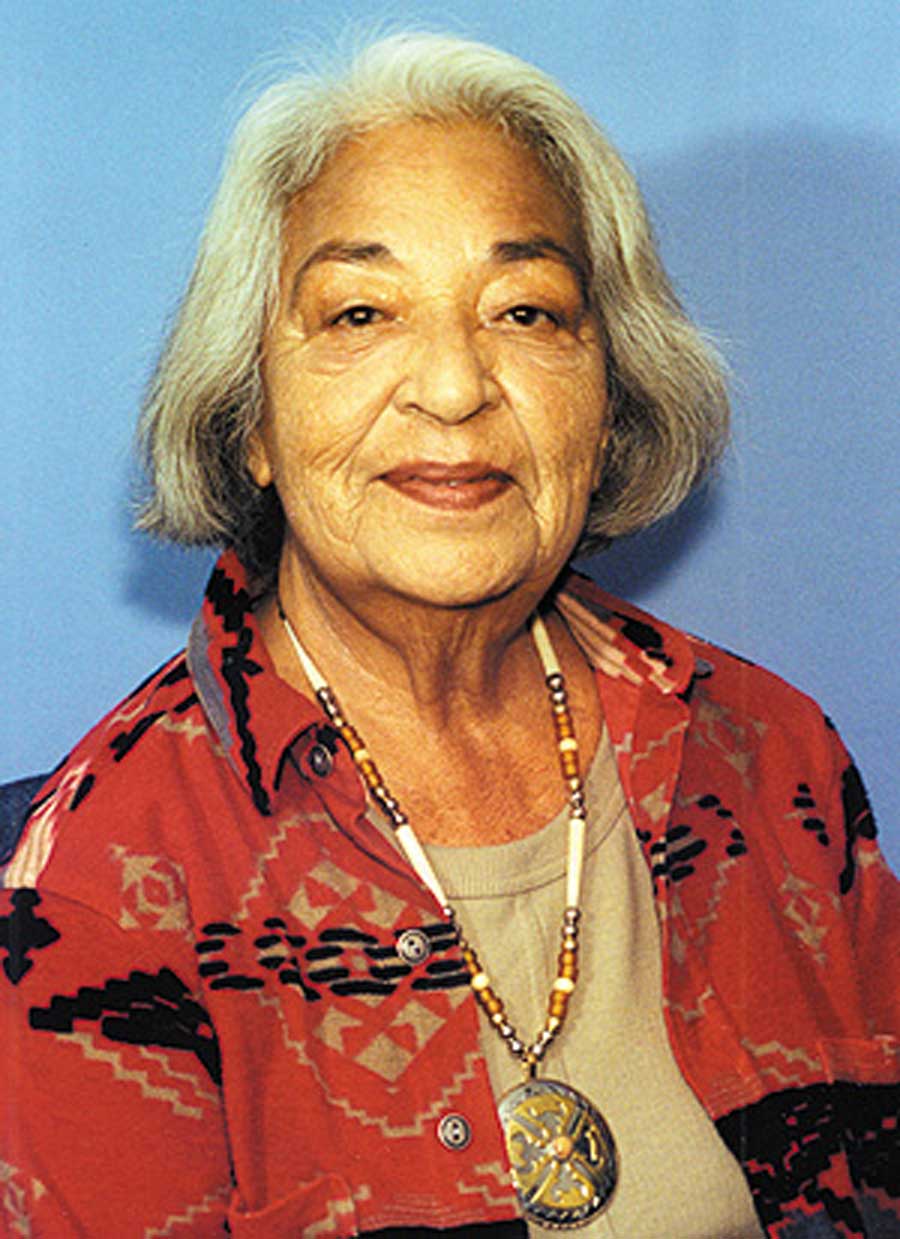


Sarah Farmer: A Life Sacrificed for Peace

[ad_1]
I vividly remember all my trips to Green Acre: A Baha’i Center of Learning.
I remember watching the peace flag flutter outside in the wind, and I remember praying each morning in the room where Abdu’l-Baha, one of the central figures of the Baha’i Faith, stayed when he visited. While there, I called to mind his wish for all of us that he expressed more than a century ago:
I want you to be happy in Green Acre, to laugh, smile and rejoice in order that others may be made happy by you. I will pray for you.
Early Baha’is Horace Holley and Louise Boyle described Green Acre as “a tract of some two hundred acres, situated along the banks of the Piscataqua River in Eliot, Maine, only four miles up from the sea, and opposite the historic city of Portsmouth, New Hampshire. On this tract, and also round about the countryside, are magnificent pine groves; the combination of river, sea, pines and sunswept rolling farm lands making an environment of unsurpassed charm and healthfulness.”
Every time I participated in a program at Green Acre, I met so many Baha’is from around the country. Then, I had not yet known about the sacrificial visionary who is the reason that the center existed. Her name is Sarah Jane Farmer.
Sarah Farmer’s Family and Early Life
Sarah Farmer was born on July 21, 1847, to parents Moses Gerrish Farmer and Hannah Tobey Shapleigh Farmer.

Her father, Moses, was a manufacturer and inventor of over 130 inventions, including the first electric railway car and the first electric fire alarm system. Her mother, Hannah, was a prominent philanthropist, abolitionist, and feminist who founded Rosemary Cottage in 1888, a summer retreat in Eliot, Maine, for unwed and weary mothers and their children to regain their health and recover from the effects of inner-city pollution.

Moses and Hannah set a great example for their daughter of being the change they wanted to see in the world. At a time when chattel slavery was legal in the U.S., they opened their home as a way station on the Underground Railroad. Sarah grew up knowing influential writers, abolitionists, and activists like Harriet Beecher Stowe, Sojourner Truth, and Harriet Tubman — connections that helped Sarah understand the importance of working for social justice and world peace.
The Beginning of Green Acre: A Center for Peace
In 1890, Sarah partnered with four businessmen to open an inn in Eliot. Their goal was to provide a quiet retreat for those seeking to escape the hustle and bustle of the city and relax in a serene environment. However, since Eliot was six miles from the sea, they failed to attract the tourists who visited York Beach nearby, and the enterprise failed. So, Sarah proposed that they use the inn for lectures and founded the “Green Acre Conferences.”
“Green Acre was established for the purpose of bringing together all who were looking earnestly toward the New Day which seemed to be breaking over the entire world,” Sarah declared. “The motive was to find the Truth, the Reality, underlying all religious forms, and to make points of contact in order to promote the unity necessary for the ushering in of the coming Day of God.”
At the dedication of the conferences in 1894, Sarah raised the world’s first known peace flag, saying, “In looking for an emblem, we wanted something that would be a call to everybody and fit everybody and we felt that the Message that had been brought to the world by prophet after prophet was the message of ‘Peace.’ So we have put on a large banner over our heads: PEACE.”

Although they had many well-known speakers like Dr. George Washington Carver and Dr. W.E.B. Du Bois, and the conferences were well-attended with people from around the world of different cultural and religious backgrounds, Sarah insisted that the programs at Green Acre be free to all and assumed full financial responsibility for everything. Her business partners were not happy with her refusal to turn Green Acre into a corporation.
She wrote, “The moment that a corporation gains possession, the Spirit of Green Acre is gone.” Her business partners planned to force her to sell the property at their meeting in December 1899 but were surprised to learn that Sarah had left to take a trip.
How Sarah Farmer Learned About the Baha’i Faith
In 1900, Sarah and her best friend sailed from New York to Egypt. They met two other friends on board who, they discovered, were secretly traveling from Egypt to meet Abdu’l-Baha, who was held as a prisoner of conscience in the Ottoman penal colony of ‘Akká, Palestine (now present-day Israel). Sarah asked to join them, and when she returned to the United States, she was excited to share that she was a member of the Baha’i Faith — a Faith centered around oneness — one God, one human race, and one unfolding revelation.
Years later, after Abdu’l-Baha was freed, he gave talks at Green Acre and said:
This is a delightful spot; the scenery is beautiful, and an atmosphere of spirituality haloes everything. In the future, God willing, Green Acre shall become a great center, the cause of the unity of the world of humanity, the cause of uniting hearts and binding together the East and the West. This is my hope.
He later shared that the purpose of the Green Acre Conferences “must be the furtherance of universal peace, investigation of reality, brotherhood, tolerance, sympathy to all mankind, the cultivation of a better understanding between the nations of the world, the elimination of dogmas and superficialities, the illumination of the hearts with the light of truth, mutual assistance and co-operation, social service, the study of the fundamental principles of all the religions and their comparative co-ordination.”
The Backlash Sarah Farmer Received
Sadly, some people were not happy that Sarah became a Baha’i and planned to build a university and a second Bahá’í House of Worship at Green Acre. Some relatives were reportedly upset that Sarah was leaving her property to the Baha’is in her will, and special interest groups feared that her new religion might restrict their freedom at Green Acre.
The New England press turned against her, and The Portsmouth Herald made false and slanderous statements about the Baha’i Faith, referring to the world religion as “a Persian cult” that Sarah was “obsessed” with. During a time when women expressing strong emotions, like religious exultation, were often dismissed as “hysterical” and subjected to psychological scrutiny and testing, she was later imprisoned in a private sanitarium for many years based on the assumption that she had lost her sanity.
She was under the control of Dr. Edward S. Cowles, who heavily drugged, isolated, and administered electroshock therapy to his patients, screened her correspondence, forbade her family visits, and kept her locked up behind bars as battles for control over Sarah and her property ensued.
In 1912, Abdu’l-Baha managed to arrange a visit with Sarah and take her on a ride to Green Acre under the watchful eye of Dr. Cowles, who joined them in the car. Dr. Cowles sat in the front seat of the automobile on Tuesday, August 20, 1912, vigilantly guarding against any attempt by the Green Acre crowd to liberate Miss Farmer from his control. An eyewitness reported that Abdu’l-Baha told Sarah, “This is hallowed ground made so by your vision and sacrifice.”

The Baha’is were eventually able to obtain a warrant for Sarah’s release. According to another eyewitness account in the local newspaper, “officers wrapped Miss Farmer in blankets and carried her down the stairs. When Dr. Cowles again locked the door and pocketed the key, officers pinned him against the wall. Cowles then tried to prevent the officers from putting his patient in a car, but was again restrained by the police.”
After she was rescued from that traumatic experience and was able to return home, she collapsed four months later while walking through her family cemetery and passed away at age 69.
The Legacy of Green Acre
The inn that Sarah opened in 1890 is now called the Sarah Farmer Inn, one of the many buildings at Green Acre: A Baha’i Center of Learning.
In “The Bahá’í World Volume II,” Horace Holley and Louise Boyle wrote:
Green Acre exists entirely to serve these awakening souls of the new day. Green Acre will serve them first of all by using their capacities at their best, kindled by the vision of what remains to be done in the spot blessed by Miss Farmer’s life and work. Green Acre will draw them out of themselves, teach them the laws and principles of unity and reveal hidden sources of conviction and joy. For a day, for a week, for a season, for a lifetime, Green Acre needs workers — but Green Acre will give more than she takes.
Source link