Baha'i Women

Home Baha'i Women

Invoking a Higher Power: Tahirih and Sojourner Truth

[ad_1]

One common theme often emerges from the biographies of social trailblazers — their acknowledgment of a higher force guiding their lives.  

In those biographies and autobiographies, we hear of “callings” and “visions” and a sense that the individual’s contributions add to the larger orchestra of humanity’s progress and advancement. Since spiritual forces transcend time and place, we sometimes note that individuals in vastly different environments seem to be “moving” to a common harmony at play at that moment in human history. 

RELATED: Tahirih: Lighting the Unquenchable Flame

Those things all happened in the contemporaneous lives of two great women of modern history – Tahirih (born Fatimeh) from Iran and Sojourner Truth (born Isabella Baumfree) from the United States of America.

Isabella Baumfree was born into slavery in 1797 in Ulster County, New York, and endured decades of hardship and suffering. She was separated from her parents at age 9 and sold with a flock of sheep for $100. Ten years later, in 1827, she escaped slavery but continued to endure much suffering. When she moved to New York City, her religious faith deepened, and although she had no formal education, she acquired a vast and deep knowledge of the Bible. She recognized her strong voice and became a traveling orator. She chose her new name, Sojourner Truth, in 1843 and turned her life over to God, traveling from church to church, sharing the message of Jesus Christ. She died in 1883 after a life of sacrifice for the greater good. 

Tahirih was born as Fatimeh in the city of Qazvin, Iran, in 1817. From a young age, she showed great interest in religion and spirituality and sought knowledge at every opportunity. She was attracted to the message of spiritual teachers who were preparing their followers for a new religion, and when she came upon the writings of Siyyid Ali Muhammad — the Bab — she readily accepted him as the new prophet of God for that era:

There is no paradise more wondrous for any soul than to be exposed to God’s Manifestation in His Day, to hear His verses and believe in them, to attain His presence, which is naught but the presence of God, to sail upon the sea of the heavenly kingdom of His good-pleasure, and to partake of the choice fruits of the paradise of His divine Oneness. – The Bab, Selections from the Writings of the Bab, p. 77.

As a result of becoming a follower of the Bab, her Muslim family ostracized and disowned her, and she was ultimately murdered for her beliefs in 1852 after leading a life dedicated to truth and freedom.  

As one reads the biographies of these two amazing women, several common themes emerge from their lives. Both women rose above seemingly unsurmountable oppression to become clear clarions of truth and reality. Centuries later, their messages are widely accepted, but it is awe-inspiring to imagine that they recognized the reality of oneness when nearly none of their contemporaries were able to similarly do so. Both of these remarkable contemporary women invoked a higher power and were thus able to transcend their environments.  

A Calling from God

What precipitates a handful of human souls throughout history to rise among their peers to speak out? What gives them such a burning interest in influencing the social norms of their communities? In the case of Tahirih and Sojourner Truth, a soon-to-be-published book titled “The Calling“ suggests there is a spirit of the age that vibrates throughout civilizations, touching the hearts and souls of humanity. Some souls are highly moved by this spirit, and their response is a source of the quickening of other hearts.

Both Tahirih and Sojourner Truth attributed their awakening spirit to a higher force that came to them. In Tahirih’s case, her recognition of the Bab came to her in a dream. For Sojourner True, a vision confirmed and caused her to fully align her life with the teachings of Jesus Christ.

The Power of the Word

Both Tahirih and Sojourner Truth were able to articulate their vision and spirit very effectively. Tahirih was a well-admired writer and poet, and her spoken word moved masses of people to follow her, even in a culture that held women in very low regard. Likewise, Sojourner Truth, although not formally educated, was a masterful orator whose speeches moved people’s hearts. She delivered her most famous speech, titled “Ain’t I a Woman?” in 1851 at the Ohio Women’s Rights Convention.

The combination of these two women’s non-constrainable spirits and their gift for touching hearts resulted in a great deal of travel and a departure from their homes and families to connect with an ever-growing number of individuals who succeed in inspiring others through their speeches.

Sacrifice

Their suffering and sacrifice most tightly bind together Tahirih and Sojourner Truth — and they did so willingly. Both women had families but chose their calling over the advantages and ease that would have perhaps accompanied a safer, more domestic life. Tahirih left her family to look for the Promised One, and ultimately, her family betrayed her. Sojourner Truth was also separated from her first husband, whom she loved, and then her child was sold illegally without her knowledge. She unwillingly sacrificed the chance to raise her child. Both women found a higher calling than their physical families and associated themselves with an allegiance to the broader spiritual and social good.  

RELATED: Harlem, 1920: An Entire Black Church Embraces the Baha’i Faith

An Absence of Fear

Why did Sojourner Truth and Tahirih exhibit such courage in their respective communities? Those who’ve studied their lives point to one theme that emerges very clearly: they both exhibited a seemingly unquenchable fearlessness. Notwithstanding what they had to overcome – deeply ingrained, violent prejudices based on race, gender, and faith–they continued to speak out day after day. Sojourner Truth was so confident that her son should not have been illegally sold that she overcame tremendous obstacles and became one of the first Black women to challenge a white man in court. Tahirih, for her part, must have known that her actions would result in her death, and nevertheless, she carried forward fearlessly, regardless of the consequences. In societies steeped in prejudice against women and people of color, they stood firm and triumphed in their fearless commitment to social good.

These precious women are now surely reunited with their beloved Creator. Although they came from vastly different societies and contexts, they emerged through their spiritual capacities to be quite similar in their worldview and vision. They are champions for all those who yearn for the recognition of the equality of women and men, the establishment of human rights for every single human soul, and the oneness of humanity. Who are the souls among us today breaking the norms of their society and emerging as leaders of our collective consciousness?

[ad_2]
Source link

Patience and Perseverance: The Story of Bahiyyih Khanum

[ad_1]

Among all the various inner qualities we need right now, patience probably ranks right up there near the top. I know I need it.

We can feel impatient about a host of things today, from the boredom of sheltering-in-place to being unable to freely pursue all the things we value. We could be impatient or unhappy with how the pandemic itself has been dealt with. We can impatiently miss our loved ones, our social lives, our work and our usual recreation, among the many dissatisfactions available to us at the moment. 

The Baha’i teachings call on each of us to develop the virtue of patience: “O Son of Man! For everything there is a sign. The sign of love is fortitude under My decree and patience under My trials.” – Baha’u’llah, The Hidden Words

So, to try and work through my own impatient pandemic frustrations I have taken to reading about and studying the lives of some very admirable people, who had it much, much worse.  

Let me tell you about a woman whose long life of patience and perseverance has to rank among the most enduring and noble examples ever – Bahiyyih Khanum, the daughter of Baha’u’llah, the prophet and founder of the Baha’i Faith. 

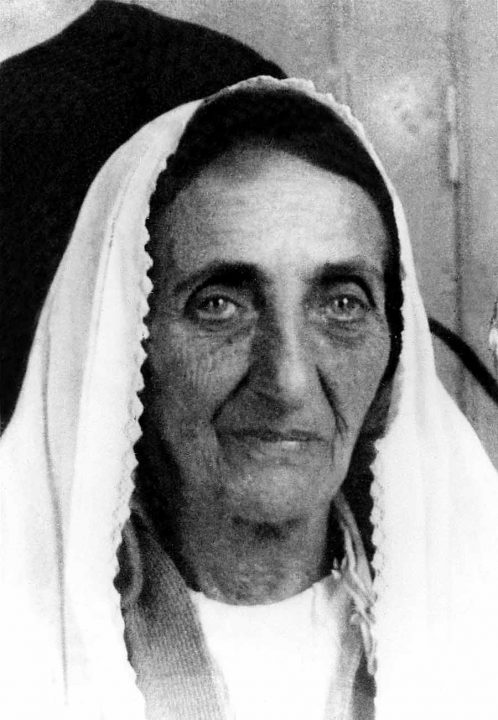
Portrait of Bahiyyih Khanum, The Greatest Holy Leaf, daughter of Baha’u’llah, c. 1895


Born in Iran in 1846, Bahiyyih Khanum was raised by Baha’u’llah and his wife Navvab in one of the wealthier families of Tehran. She spent the early years of her childhood playing in beautiful gardens with her older brother Abdu’l-Baha, and going to school where she learned Arabic, Persian and Turkish, receiving a formal education unlike most other girls during that time. She also grew up in a tradition of helping and serving others, influenced by her parents’ well-known devotion to society’s most disadvantaged people, indicated by their informal titles, “Mother and Father of the Poor.” 

The years immediately preceding and following her birth were also the first years of the Babi Faith, the millennial spiritual movement that took Persia by storm in the 1840s. Her father Baha’u’llah involved himself in that movement from the beginning through correspondence with the Bab, its founder.  

The Bab’s progressive teachings soon stirred up the entire nation, alarming the orthodox clerical leaders and the government. With their ties to power the clerics sought to extinguish this revolution of thought and faith. A wave of oppression soon washed over everyone associated with the Bab, so extreme in its violent implementation that accounts reached the chronicles of the West, especially after the Bab himself was martyred by a government firing squad in 1850. 

Because he was identified as a Babi leader, the Persian authorities imprisoned Baha’u’llah in Tehran’s notorious, “black pit,” called the Siyah-Chal, in 1852. At the same time his family was stripped of their riches and properties. Baha’u’llah’s wife and children became homeless in a single day. They did not know from one moment to the next whether Baha’u’llah would be executed, the fate so many other Babis had already faced. After four months of torturous confinement, Baha’u’llah was released and exiled to Baghdad. The family, with insufficient attire and few possessions, made the long journey on foot and by mule in the winter over snow-topped mountains to Iraq.  

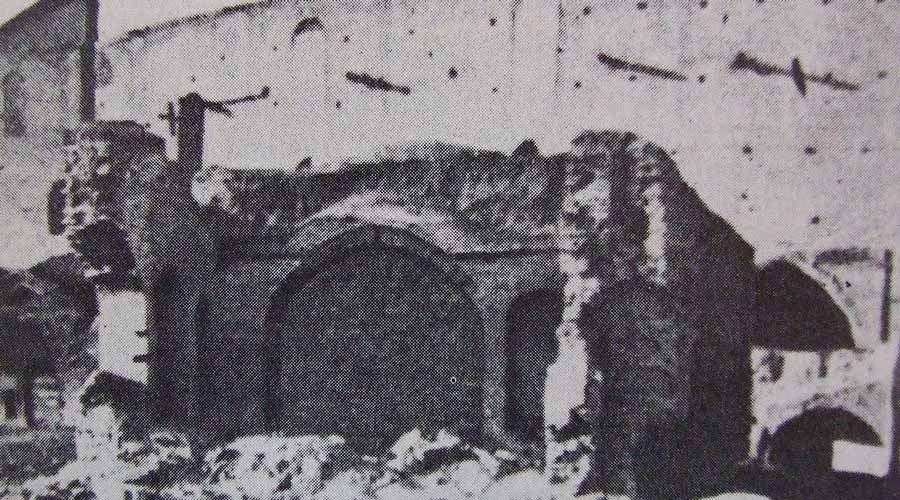
The entrance to the Siyah-Chal (Black-Pit) where Baha’u’llah was imprisoned in Iran.The entrance to the Siyah-Chal (Black-Pit) where Baha’u’llah was imprisoned in Iran.
The entrance to the Siyah-Chal (Black-Pit) where Baha’u’llah was imprisoned in Iran.

Thus began the 80 years of Bahiyyih Khanum’s remaining life, living in exile, poverty, and imprisonment. After a number of years in Baghdad, it became evident to many close to him that Baha’u’llah was the messenger of God as foretold by the Bab. His children, all under 10, recognized Baha’u’llah’s station and declared their loyalty and devotion to him. 

In 1863 Baha’u’llah announced his new Faith publicly. As his reputation for deep spiritual insight and wisdom grew and his teachings spread, people of all kinds flocked to him and adopted the progressive principles of his Faith. Despite the danger of persecution, thousands became Baha’is. Once more the Faith grew rapidly, at an alarming rate to the enemies of the Faith, who thought they had sufficiently suppressed it. Again the unfounded fears of the Persian and Turkish governments incited by the religious authorities caused them to further banish Baha’u’llah, his family and some core believers, to try to crush the Baha’i Faith. 

From Baghdad they were exiled and imprisoned three more times, the last to the prison city of Akka, in Palestine (now Israel). Considered the worst prison in the world at the time, its inhabitants were not expected to live more than a year, which made it a death sentence. His family, imprisoned with him, suffered severe hardships. However, Baha’u’llah lived 24 years there, before passing away in 1892. 

Bahiyyih Khanum and her beloved brother Abdu’l-Baha, survived as well, to be freed in their later years when the Ottoman Empire fell apart. Abdu’l-Baha, named by Baha’u’llah as his successor, became the head of his father’s Faith for the next 29 years, until his passing in 1921.

Bahiyyih KhanumBahiyyih Khanum
Bahiyyih Khanum, titled the Greatest Holy Leaf

So Bahiyyih Khanum only had six years of childhood, of what we would consider a normal life. She endured her remaining eighty years while facing the greatest imaginable difficulties with a universally-acknowledged nobility, dignity and calmness. In spite of the deplorable living conditions, the frequent lack of potable water, a poverty sometimes so acute her mother had to give her a handful of flour as her sole daily sustenance, and the constant persecution by the authorities, Bahiyyih Khanum persisted patiently. She prevailed through the constant threats on Baha’u’llah’s life and the several unsuccessful attempts that were actually made. She faced the tragic death of her beloved younger brother, Mirza Midhi, while the family was imprisoned. All these and more were her lot in life.

“The Greatest Holy Leaf,” the title given to his daughter Bahiyyih Khanum by Baha’u’llah, exemplified her uncommon attitude about patience. That rare quality, developed through dire tests and trials, can best be described by reading her own advice on the subject:

“… We ought to never be known to complain or lament. It is not that we would “make the best of things” but that we may find in everything, even in calamity, the gems of enduring wisdom. We ought never be impatient. We ought be as incapable of impatience as one would be of revolt. This not being so much long-suffering as quiet awareness of the forces that operate in the hours of dark or years of waiting and inactivity. Always we ought to move with the larger rhythm, the wider sweep, towards our ultimate goal, in that complete acquiescence, that perfect chord which underlies the spirit of the Faith itself.” – Bahiyyih Khanum

I leave it to you to contemplate these powerful thoughts, and hope they give you, as they have given me, a light on how to live under difficulties.

[ad_2]
Source link

Home Privacy Policy Terms Of Use Anti Spam Policy Contact Us Affiliate Disclosure DMCA Earnings Disclaimer