

Daily News

Home Daily News Page 117
Daily News

California workers get the nation’s highest premium pay – Press Enterprise

0
California workers get the nation’s highest premium pay – Press Enterprise


California’s better-paid workers received the nation’s largest wage bump above typical compensation.

In honor of the Labor Day weekend, my trusty spreadsheet delved into some curious federal statistics that track the pay ladder, so to speak, across the 50 states. The latest edition of the report tracks pay for key segments of the workforce in May 2024.

The figures reveal a key pay boost that enables many Californians to afford a costly lifestyle. Yet that same cash flow also inflates the price of many California goods and services – most notably, housing.

Let me explain, starting with the annual pay for the typical worker using the median wage. That’s the midpoint between what the top-paid workers earn and the half who earn less.

California ranked No. 9 among the states at $56,900. That’s 18% above the 50-state median of $48,400. That’s not very impressive pay, considering the Golden State’s expensive living.

Top pay? Massachusetts at $62,300, Washington state at $61,600, and Alaska at $59,400. Lowest? Mississippi at $39,100, Arkansas at $41,000, and West Virginia at $43,300.

Additionally, California’s economic rival, Texas, ranked No. 30 at $47,500. Another competitor, Florida, ranked No. 35 at $46,900.

The upper half

To have a shot at personal economic viability in the Golden State, your paycheck could be in the ballpark of what statisticians call the “75th percentile” – or the median of the top half of wages.

California’s 75th-percentile income of $96,300 was 29% higher than the nation’s $74,400 and ranked No. 4 among the 50 states.

Where are the biggest paychecks for this pay grade? Massachusetts at $99,900, Washington state at $99,500, and New York at $96,400. Lowest? Mississippi at $58,900, Arkansas at $60,400, and South Dakota at $62,100.

Texas ranked 23rd at $75,600. Florida was No. 28, at $73,300.

Secret sauce

Focus on the gap between the median wage and the loftier 75th percentile.

Think of this spread as the premium pay given to high-skill jobs, highly coveted industries, or top-performing workers. It’s the secret sauce to balance the cost of living for numerous Californians.

This pay bump for California workers – the gap between the median ($56,900) and the 75th percentile ($96,300) – amounts to a 69% bonus. That’s the largest among the states and easily surpassed the 54% bump across all 50 states.

Just behind California were Maryland, New York and New Jersey, all with premium pay at 65%. The smallest gaps were in South Dakota at 36%, followed by Iowa and Kentucky at 40%.

Texas ranked 10th-biggest at 59%. Florida was No. 17 at 56%.

Mixed message

You can cheer California’s premium pay as one measurement of the state’s economic opportunity.

At the same time, it serves as an example of how income inequality makes California a challenging place for many people to thrive.

Ponder how this wage gap creates pricing pressures. Think about the size of a mortgage a worker could theoretically obtain.

For example, the median-wage worker in California who’d spend 30% of their salary on a house payment with a 6.5% mortgage rate could borrow $223,000. However, a 75-percentile paycheck gets a Californian a $377,000 loan.

Yes, both wage levels fall short of what’s needed for the common home purchase. In early 2024, the median-priced single-family home in the Golden State cost $814,000, according to the California Association of Realtors. The typical condo ran $655,000.

Well, is it any surprise that the Realtors’ “affordability” math showed just 17% of all California households could qualify to buy a single-family house? And only 24% for condos?

These gaps help explain why two-income families are the norm in California – with 1.34 jobs per household, the fifth-highest among states. Housing statewide is also densely populated, with 2.95 people per household, ranking No. 4 nationally.

Additionally, the wage gap is behind the choice of many individuals to live in inland areas or outside major job hubs. That’s where the cost of living, especially housing, can be slightly less stressful.

Jonathan Lansner is the business columnist for the Southern California News Group. He can be reached at jlansner@scng.com


Source link

As U.S. fleet steams toward coast, Venezuelans face uncertainty, fear and, for some, hope

0
As U.S. fleet steams toward coast, Venezuelans face uncertainty, fear and, for some, hope

U.S. warships steam toward the southern Caribbean. The Trump administration denounces embattled “narco-president” Nicolás Maduro and doubles a bounty on his head to $50 million. Rumors of an invasion, coup or other form of U.S. intervention flood social media.

For the beleaguered people of Venezuela, mired in more than a decade of crisis — hyperinflation, food shortages, authoritarian rule and rigged elections — a new phase of anxiety is once again rattling nerves. Even so, Venezuelans are trying to soldier on.

“We try to keep up our activities, our schedules despite the uncertainty,” said Leisy Torcatt, 44, a mother of three who heads a baseball school in a nation where a passion for sports helps fend off despair.

Students of the little league team for the Los Angeles de Baruta school practice in a park in Caracas.

“Our daily problems continue, but we cannot become paralyzed. … We keep on going forward, trying to work out our differences,” she said.

There is an inescapable sense here that matters are largely out of people’s control. The massive anti-Maduro street protests of past years did little to dislodge, or undermine, Maduro, and the opposition has long been deeply divided. Authorities have jailed dissenters and broken up coup attempts.

And now, once again, Venezuela appears to be in Washington’s crosshairs.

“We have already seen it all,” said Mauricio Castillo, 28, a journalist. “It’s not that we have lost faith in the possibility of real change. But we are fed up. We cannot just stop our lives, put them on hold waiting for ‘something’ to happen.”

People shop in the central business district downtown.

Here in the capital, Venezuelans are accustomed to the enhanced martial ritual: more blockaded avenues, more troops on the streets, more barricades shielding the presidential palace of Miraflores, where Maduro launches diatribes against the “imperialist” would-be invaders.

Yet, despite the current naval buildup in the Caribbean, the Trump administration has given very mixed signals on Venezuela.

During Trump’s first presidency, his administration recognized a shadow opposition president, indicted Maduro on drug-trafficking charges and imposed draconian sanctions on the oil and financial sectors. The sanctions effectively collapsed an already shaky economy in what was once South America’s wealthiest nation.

The economic meltdown led to an exodus of some 8 million Venezuelans, almost a third of the population. Most ended up elsewhere in South America, but hundreds of thousands made it to the United States. Trump has signaled emphatically that they are not welcome, ending Biden administration-era protections and stepping up deportations.

A man fixes a Spider-Man costume at the San Jacinto popular market in Caracas.

During the presidential campaign — and since returning to the White House — Trump has repeatedly said, without evidence, that Venezuela had emptied its prisons and sent the worst offenders to the U.S.

But shortly after taking office for his current term, Trump dispatched a special envoy, Richard Grenell, to meet with Maduro, generating hopes of improved relations. Washington later granted Chevron, the U.S. oil giant, a license to continue operating in Venezuela — home to the globe’s largest oil reserves — in a move that provided much-needed hard cash for Caracas, and oil for the U.S. market.

Then, in July, the Trump administration hailed the release of 10 U.S. citizens and permanent residents being held in Venezuela in exchange for the return of hundreds of Venezuelan nationals who had been deported to El Salvador.

Meantime, the United States has regularly been sending other deportees back to Venezuela in another sign of bilateral cooperation.

“So far we’ve seen President Trump very clearly endorse a policy of engagement with Venezuela,” said Geoff Ramsey, senior fellow with the Atlantic Council, a Washington-based research group. “The U.S. is not going to invade Venezuela anytime soon.”

Janeth, 45, a teacher of a community school, poses for a portrait in Caracas.

Others say they’re not so sure, despite Trump’s stated aversion to getting involved in more wars — and the likely negative blowback in much of Latin America, where the prospect of U.S. intervention inevitably revives memories of past invasions, land grabs and support for right-wing dictators.

In the view of U.S. officials, Maduro and drug trafficking are inextricably entwined. The White House labels Maduro the head of the “Cartel of the Suns,” a smuggling network allegedly tied to the Venezuelan government and military. And Trump has reportedly directed the Pentagon to plan possible military action against Latin America cartels. (Maduro denies the drug charges, dismissing them as a U.S. disinformation campaign.)

The massive scope of the U.S. naval employment seems to reflect the policy viewpoint of hawks such as Secretary of State Marco Rubio, who has long championed a hard-line stance against Venezuela.

The buildup reportedly includes more than a half-dozen warships, including at least one submarine, and thousands of Marines and sailors. The White House says it’s meant to deter maritime narcotics trafficking, not topple Maduro.

“This is a lot of effort to put into something that’s performance, no?” said Laura Cristina Dib, who heads Venezuelan research at the Washington Office on Latin America, a research group.

1

2

1. “Faith in our people” says a billboard with President Nicolás Maduro’s face in Caracas. 2. A patriotic backpack with the Venezuelan flag colors and stars.

In response, Maduro has bolstered militia sign-ups, deployed 15,000 troops to the border with Colombia and insisted there’s “no way” U.S. forces can enter Venezuela. He scoffs at the U.S. contention that the naval buildup is an anti-smuggling effort, noting — correctly — that most cocaine is produced in neighboring Colombia and enters the United States via Mexico.

“It’s ridiculous to say they are fighting drug trafficking with nuclear submarines,” Samuel Moncada, Venezuela’s U.N. ambassador, told reporters Thursday.

By most independent accounts, Maduro likely lost last year’s election — monitors disputed his claimed victory — but his many backers are making a high-profile show of support given the U.S. saber-rattling.

1

2

1. People walk in front of a politically charged mural near Bolivar Square. The Iranian Forest vessel depicted on the right side of the mural arrived in Venezuela during fuel shortages in 2020. 2. An old military tank at Los Próceres near the Fuerte Tiuna military base in Caracas.

The government has orchestrated public sign-ups of militia members demonstrating their eagerness to fight for the socialist legacy of the late Hugo Chávez, Maduro’s mentor and predecessor in Miraflores Palace.

“None of us will be afraid when the moment comes to defend our country from foreign aggression,” said Orlando López, 54, a grandfather and proud militiaman. “It’s not justified that the president of some other country wants to impose his will.”

He rejected the notion of a pervasive sense of nervousness.

“The climate in the city is one of tranquility, of peace,” said López, who is part of a more-than-1-million civilian militia force backing Maduro.

On a recent Sunday at Santo Domingo de Guzmán Roman Catholic Church in the capital’s Baruta district, Father Leonardo Marius urged parishioners to ignore the drumbeat of war pounding the airwaves and internet. Venezuelans, he said, should focus on more basic concerns.

“In Venezuela, a half a million children don’t have enough to eat — no one talks about that,” Marius told parishioners in his sermon. “But we love the Hollywood stories of boats and aircraft carriers, the show. … ‘They are coming! They are are disembarking!’ Please! Hollywood has done a lot of damage. Let the stories be.”

An all-girls skating team skates at Los Próceres near the Fuerte Tiuna military base in Caracas.

Across town, at an upscale sports club, Javier Martín, a businessman, said the noise was hard to ignore.

“The atmosphere across the country, but especially here in Caracas, is one of fear, distress, uncertainty,” said Martín. “You see hooded officials on the streets and it makes you feel fear, like you are in a war.”

Venezuelans, he explained, live a kind of “surreal” existence, struggling to maintain their lives and families while always anticipating improvements, and changes, that never seem to come.

“We live cornered every day,” he said. “It’s not sustainable.”

What’s next?

“Everyone expects something to happen,” Martín said. “I just hope it’s positive.”

Special correspondent Mogollón reported from Caracas and Times staff writer McDonnell from Mexico City.


Source link

After high hopes, Hollywood’s summer box office falls flat again

0
After high hopes, Hollywood’s summer box office falls flat again

Stitch, Superman and a flock of creepy children drew audiences to movie theaters this summer, but it wasn’t enough to jolt box office revenue past even the dreary levels reached last year.

The total theatrical haul for the summer — which, for industry watchers, stretches from the first weekend of May through Labor Day — grossed $3.67 billion in the U.S. and Canada, down slightly from $3.68 billion in 2024, according to Comscore. The numbers are even more sobering compared with 2023’s Barbenheimer-fueled summer sum of $4 billion, a target the industry used to hit routinely.

Though the season started with high hopes after spring hits including “Sinners” and “A Minecraft Movie,” and particularly since there were several big franchise blockbusters on the lineup, the softer summer shows cracks in the movie business that have been growing for years.

Theaters have been grappling with declining attendance since before the pandemic, though the COVID-19-related shutdowns exacerbated that trend. Not only did audiences get used to streaming movies from home, but certain mid-tier films, such as comedies, increasingly migrated over to those platforms, making them rarer sights at the box office. Studios continue to suffer from an overreliance on franchises that are losing steam.

A series of massive hits can change the mood, but those were lacking this summer. For starters, no single film emerged as an unstoppable hit on the level of last year’s Walt Disney Co. and Pixar animated sequel “Inside Out 2” and Marvel Studios’ “Deadpool & Wolverine,” which each hauled in more than $600 million domestically (and had global grosses exceeding $1 billion).

Disney’s live-action adaptation of “Lilo & Stitch” was the heaviest hitter this summer, with about $420 million in domestic box office revenue and more than $1 billion globally.

Going into the summer, many in the industry felt that the major effects of the pandemic and the dual writers’ and actors’ strikes of 2023 had finally evaporated from theatrical lineups.

The planned release of several franchise titles also encouraged that optimism, including Universal Pictures’ “Jurassic World Rebirth,” Warner Bros. and DC Studios’ “Superman,” Marvel Studios’ “The Fantastic Four: First Steps” and the Brad Pitt-led “F1 The Movie,” from Apple and distributed by Warner Bros. Pictures.

But while those movies put up big numbers, most weren’t overwhelming. “Jurassic World Rebirth” did worse than any of its predecessors since 2001’s “Jurassic Park III,” and the “Fantastic Four” reboot plummeted after a promising opening weekend.

Several blockbusters also faltered internationally, including “Fantastic Four” and “Superman,” which both made less overseas than in the U.S. and Canada. (“Superman,” in particular, may have suffered from the comic book character’s historical association with explicitly American ideals.)

“There weren’t very many flops,” said Eric Handler, media and entertainment analyst at Roth Capital. “Everything did reasonably well, for the big movies. Just nothing really hit it huge.”

Those big blockbuster titles also tended to skew toward male audiences, and there were fewer films that were explicitly female-focused this summer. The dearth of those female-leaning films may also have been a factor in the lower box office results, said Andrew Cripps, head of theatrical distribution at Disney.

“Compared to other years, there’s been some breakouts that have catered more strongly to females,” he said. “That was lacking this year.”

On top of that, several films straight-up bombed, including Universal and Blumhouse’s horror sequel “M3GAN 2.0” and the original animated film “Elio,” which notched Disney-owned Pixar’s lowest opening weekend ever.

The miss reignited a debate about audience interest in original animated films, which have had a harder time at the box office than sequels or movies based on existing intellectual property.

As if to hammer home the issue, Netflix’s animated “KPop Demon Hunters” became a cultural phenomenon after it hit the streaming service in June. It avoided theaters until a special release last weekend for a limited run of sing-along screenings.

Though Netflix does not disclose box office grosses, the film, which centers on a girl group that fights demons and features several high-octane earworms, was the No. 1 movie in theaters with about $18 million in ticket sales, according to industry estimates.

That translated into sold-out showings, particularly with younger audiences. Its popularity was a bright spot for exhibitors including Regal Cineworld.

“We saw a big uptick in young audiences coming into theaters for big cultural moments,” said Adam Rymer, chief commercial officer for the Britain-based chain, who noted a similar phenomenon with April’s “A Minecraft Movie.”

That younger demographic is one movie exhibitors hope to increasingly court, particularly with the success of PG-rated movies like “Lilo & Stitch” and Universal’s live-action adaptation of “How to Train Your Dragon.”

“I’m really hoping that the momentum that has been created with that this summer will continue into next year,” said Michael O’Leary, chief executive of theater trade group Cinema United. “You get younger demographics there, and you’re creating the moviegoer of the future.”

There were also some surprise hits, with Warner Bros.’ horror flick “Weapons” opening to a solid $43.5 million and continuing to show longevity at the box office, thanks to strong word-of-mouth and critics’ reviews. The Zach Cregger-directed chiller has grossed more than $120 million domestically.

Industry analysts and insiders expect this September’s results to be softer than last year’s, when the decades-later sequel “Beetlejuice Beetlejuice” propelled the box office. But the latter part of the year has a number of potentially big films, including James Cameron’s latest “Avatar: Fire and Ash,” Universal’s “Wicked: For Good” and Disney’s animated sequel “Zootopia 2.”

Though 2025 is shaping up to be weaker than many had hoped for, it’s likely the year-end totals will come in above that of last year and 2023, Handler said.

“The end of the year is going to be very big,” he said.


Source link

Newsom should put as much effort into governing as he does talking – Press Enterprise

0
Newsom should put as much effort into governing as he does talking – Press Enterprise


If Gavin Newsom put as much passion into governing as he does disparaging President Trump, he would have been a competent governor. Leaving the Governor’s Mansion in Sacramento, he deflects attention away from his many failures and accuses the president of being an authoritarian dictator. A whiny voice coupled with hand signs while he speaks exposes his lack of leadership skills. While displaying a high degree of self-confidence, he also displays a low level of self-esteem.

Stephen Lucas, Van Nuys


Source link

LAFC falls to San Diego FC in Son Heung-min’s home debut – Press Enterprise

0
LAFC falls to San Diego FC in Son Heung-min’s home debut – Press Enterprise

1 of 10

LAFC celebrate a goal during the first half of an MLS soccer match against San Diego FC Sunday, Aug. 31, 2025, in Los Angeles, Calif. (AP Photo/Eric Thayer)

Expand

LOS ANGELES — Hosting San Diego FC for the first time, the Los Angeles Football Club showed up with grand plans.

Their guests had something else in mind.

With South Korean superstar Son Heung-min’s home debut garnering the bulk of the attention at BMO Stadium on Sunday – the announced crowd of 22,937 was the most for an LAFC match since BMO Stadium opened eight years ago – Western Conference-leading SDFC stole the show, winning 2-1.

Anders Dreyer scored the game-winner after assisting Hirving Lozano earlier in the match, ruining a beautiful finish from LAFC’s Denis Bouanga that appeared to put the home team on the right track.

The loss dropped LAFC 15 points behind San Diego (17-7-5, 56 points), with eight games remaining in the regular season.

In front of a heavily Korean crowd that showed up in force to see their 33-year-old hero, the pent-up stadium, which went four weeks without an LAFC home match, buzzed from start to finish.

“Today was very special,” Son said. “I feel the fans were amazing. That’s why I’m more upset. They deserve more than one goal or zero points. I think they were fantastic. I can’t wait to play again at home. It felt like really, really home. They welcomed me. I couldn’t wait for this night. I feel I let the fans down but we are gonna keep our heads up, accept the result. As a professional, you can’t always win the game.”

Six hundred visiting fans loved the outcome, banging drums and chanting while LAFC’s 3252 supporters group showed its passion in the club’s second regular-season clash.

San Diego won in March, becoming the first expansion team to beat LAFC (11-7-8, 41 points) in nine tries.

Competing without midfielder Igor Jesus, who went on the season-ending injury list with a knee injury, LAFC used two instead of their usual trio in the middle of the park. Mark Delgado and Mathieu Choinière started in front of three center backs – Nkosi Tafari, Eddie Segura and Ryan Porteous in his first start for LAFC – while Son and Bouanga worked alongside David Martínez.

Son’s companions in the attack combined for the game’s opening goal in the 15th minute.

From 40 yards out, Martínez found Bouanga down the middle with a chipped pass that bounced once inside the box before the Frenchman tipped it over goalkeeper CJ dos Santos for his 15th goal of the regular season.

Said Bouanga: “It’s hard to score first and see the outcome of the game.”

LAFC entered the match with a stellar record when it got the opening goal, going 14-1-6 in all competitions in 2025 before Sunday. Under head coach Steve Cherundolo, LAFC is now 58-4-7 in the MLS regular season when it connects first.

“Tonight, I think if you look at the stats (17 shots compared to six shots, with both teams putting four on target), xG (2.7 to 0.7), and the moments we have in front of goal, it’s crazy you walk away with nothing,” Cherundolo said.

“The execution was a little déjà vu for us,” he added. “We’ve seen this motion picture before this season. It’s kind of been the story of the year. You play well enough. You play very well. But you’re not getting the results that maybe you deserve.”

Before Bouanga’s finish, neither side established dominance. They moved from one end to the other, with San Diego preferring quick passing in small spaces to LAFC’s more direct attacks.

Shortly after the half-hour mark, a few minutes after Bouanga nearly scored a second, SDFC tied thanks to their big-name international, Mexico’s Hirving Lozano. Circling around Tafari, Lozano collected a first-time volley over the top by Dreyer. Tafari attempted to get back in the place and defend, but for the second straight week, an opponent scored on a shot that deflected off the center back’s long legs past LAFC goalkeeper Hugo Lloris.

Son’s clearest opportunity of the opening 45 minutes came near the end. With LAFC swarming the San Diego box, Bouanga had a crack that was blocked. The ball worked its way to Son, who turned and put it on his left foot. Son’s shot was hit well, enough to make his supporters in the stands cry out in anticipation, but it lacked the pace or placement needed to give LAFC an edge at the half.

The regional rivals pushed and pulled, looking to break the deadlock.

In the 66th minute, San Diego capitalized when Dreyer added his 14th goal to go with his 18th assist from Lozano’s ninth finish. The MLS most valuable player contender received a long ball in behind, charged into the box, cut back once, smoothly let another defender slide by, and put away his left-footed shot.

Unbeaten in six straight, San Diego stayed perfect against Californian opposition, sweeping the Galaxy and LAFC, with a chance to do the same to San Jose at the end of September. They remain one point behind Philadelphia in the Supporters’ Shield race.

Though LAFC fought to salvage a point through the remainder of regulation and nine minutes of stoppage time, those opportunities came and went.

Son slammed a shot off the post in the 78th minute. In the 82nd, Bouanga found himself alone in the opponent’s box but couldn’t get the ball out of his feet before the San Diego goalkeeper closed him down.

The attackers, joined by Nathan Ordaz from the 54th minute on after Martínez got the bad end of a 50/50 duel, created havoc. Sometimes with teammates. Sometimes alone. However, they didn’t create a second goal, leaving LAFC where it began the weekend, fifth in the west.

LAFC returns Sept. 13, playing San Jose at Levi’s Stadium. In the meantime, LAFC will send Son (South Korea), Bouanga (Gabon), Martínez (Venezuela), Choinière (Canada), Ordaz (El Salvador) and Adrian Wibowo (Indonesia).

“When I come back from the national team, we have a very important period for two months,” Son said, “so we have to push for that.”

Originally Published:


Source link

RCC football team defeats Long Beach in Kevin Craft’s head coaching debut – Press Enterprise

0
RCC football team defeats Long Beach in Kevin Craft’s head coaching debut – Press Enterprise

RIVERSIDE — This season’s quarterback competition at Riverside City College is just beginning.

1 of 24

Riverside’s Kayvion Sibley (8) celebrates with team mates after scoring a touchdown in a game against Long Beach City College at Riverside City College in Riverside on Saturday Aug. 30, 2025. (Photo by Nick Koon, Contributing Photographer)

Expand

Bryan Wilson got the start but Jared Doolittle applied the finish on Saturday night as RCC ran away from Long Beach City for a 53-30 season-opening victory in Kevin Craft’s debut as the Tigers’ head coach.

“We were always thinking we’d play both quarterbacks (but) whatever it is or whoever we have to play to get into a rhythm on offense, that’s what’s important,” Craft said.

Wilson, who starred at Ayala and Roosevelt high schools, struggled on his first two drives but completed 17 of 24 pass attempts for 205 yards and two touchdowns.

Doolittle, a graduate of Western Christian and last year’s backup, played mostly in the second half and was 13 of 17 for 133 yards and three touchdowns.

“We weren’t executing very well on the first couple of series and we need confidence out there,” Craft said. “We were slow starters last year so I’m focused on changing that.”

Ross Nickson had three receiving touchdowns as Riverside (1-0) compiled 565 yards on offense and won its 12th consecutive season opener.

“It’s good to get a first game under the belt,” Craft said. “We had to get a lot of the off-season cobwebs out of the way.”

Forced to punt early after starting its opening possession of the season at the 2, Riverside did not gain a first down on its own until running back Marquise Monroe (Ayala High) got consecutive carries for the Tigers.

“It was a pretty slow start but it’s all about getting that tempo up,” said Monroe, who finished with a game-high 77 rushing yards. “Getting that tempo up got their defensive line tired.”

Jonathan Marshall (Kaiser High) put Riverside up 7-3 with a 1-yard run midway through the first quarter, and Wilson shook off some early jitters to connect with Donavon Ferguson from 7 yards for touchdown and a 14-3 lead.

Long Beach gave Riverside two points when a long snap went out of the back of the end zone for a safety, and new place kicker Timothy Tynan made it 19-9 with a 22-yard field goal.

Ferguson hauled in a second touchdown catch from Wilson just before halftime and the Tigers went into the break with a 26-16 lead.

Long Beach, under first-year coach Marques Cooper, mounted a 9-minute drive to start the third quarter but the Vikings stalled at the 1-yard line.

RCC was unable to move the ball, however, and Long Beach scored on a screen pass on its next possession to make it 26-23. The Tigers fired back with a long touchdown pass from Doolittle to Nickson to keep it a 10-point game.

In the fourth quarter, Doolittle pinpointed touchdown passes to Logan Quates and Nickson, and Kayvion Sibley broke through on a 74-yard run for a touchdown as the Tigers pulled away.

Wyatt McCauley was 13 of 27 for 308 yards and three touchdowns for Long Beach. The Vikings (0-1) have not beat Riverside since 2016.


Source link

Earthquake destroys villages in Afghanistan and kills at least 250 people

0
Earthquake destroys villages in Afghanistan and kills at least 250 people

KABUL, Afghanistan — A strong earthquake in eastern Afghanistan near the Pakistan border has destroyed numerous villages and and caused extensive damage, killing at least 250 people and injuring at least 500 others, officials said. The deaths and injuries were expected to increase as search and rescue teams reached the area.

The quake late Sunday hit a series of towns in the province of Kunar, near the city of Jalalabad in neighboring Nangahar province. The 6.0 magnitude at 11:47 p.m. was centered 27 kilometers (17 miles) east-northeast of the city of Jalalabad in Nangarhar province, the U.S. Geological Survey said. It was just 8 kilometers (5 miles) deep. Shallower quakes tend to cause more damage.

The Kunar Disaster Management Authority said in a statement that at least 250 people were killed and 500 others injured in the districts of Nur Gul, Soki, Watpur, Manogi and Chapadare.

“Rescue operations are still underway there, and several villages have been completely destroyed. The figures for martyrs and injured are changing. Medical teams from Kunar, Nangarhar and the capital Kabul have arrived in the area,” said Sharafat Zaman, a spokesman for the ministry of public health.

He said many areas had not been able to report casualties figures and that “the numbers were expected to change” as death and injuries are reported.

Nearby Jalalabad is a bustling trade city due to its proximity with neighboring Pakistan and a key border crossing between the countries. Although it has a population of about 300,000 according to the municipality, it’s metropolitan area is thought to be far larger. Most of its buildings are low-rise constructions, mostly of concrete and brick, and its outlying areas include homes built of mud bricks and wood. Many are of poor construction.

Jalalabad also has considerable agriculture and farming, including citrus fruit and rice, with the Kabul River flowing through the city.

A magnitude 6.3 earthquake struck Afghanistan on Oct. 7, 2023, followed by strong aftershocks. The Taliban government estimated at least 4,000 people perished.

The U.N. gave a far lower death toll of about 1,500. It was the deadliest natural disaster to strike Afghanistan in recent memory.


Source link

Asian shares mixed as reports show a marginally improved factory outlook for China

0
Asian shares mixed as reports show a marginally improved factory outlook for China

BANGKOK — Shares were mixed in Asia on Monday, with markets in China gaining after surveys showed a slight improvement in Chinese factory data, suggesting manufacturing is holding up despite higher U.S. tariffs.

Investors were awaiting further developments after the U.S. Court of Appeals for the Federal Circuit ruled Friday that U.S. President Donald Trump went too far when he declared national emergencies to justify imposing sweeping import taxes on almost every country on earth.

Hong Kong’s Hang Seng jumped 2% to 25,571.91, while the Shanghai Composite index added 0.3% to 3,869.62 in sluggish trading.

A government survey showed China’s factory activity improved marginally in August, with the purchasing managers index issued by the National Statistics Bureau rising to 49.4 from 49.3 in July. The survey is on a scale of 0 to 100 where 50 marks the cutoff for expansion.

Another, private sector survey called the RatingDog China General Manufacturing PMI showed the general PMI at 50.5 last month, up from 49.4 in July. Averaging the two surveys yields a PMI of 49.9, suggesting some resilience in the manufacturing sector, Zichun Huang of Capital Economics said in a commentary.

China and the U.S. are still negotiating over a broad trade agreement that will influence how much import duty companies and consumers will pay on goods shipped to the U.S.

“The PMIs suggest that China’s economy accelerated last month, thanks to faster growth across manufacturing and services. But we don’t see much upside over the rest of the year,” Huang said.

Japan’s Nikkei 225 index fell 1.5% to 42,101.37, while the Kospi in South Korea shed 1.4% to 3,140.61.

Shares also fell in Australia, with the S&P/ASX 200 losing 0.5% to 8,924.70.

Taiwan’s benchmark lost 0.7% while New Zealand’s gained 0.5%.

Shares fell 0.7% in Jakarta after Indonesia’s president, Prabowo Subianto, pledged Sunday to revoke lawmakers’ perks and privileges, to try to ease public fury after nationwide protests left six people dead. It was a rare concession in response to mounting public anger.

U.S. markets will be closed on Monday for the Labor Day holiday.

On Friday, Wall Street closed out another winning month though benchmarks ended below their latest all-time highs.

The S&P 500 fell 0.6% a day after climbing to a record high, ending the week at 6,460.26. The benchmark index ended August with a 1.9% gain, its fourth straight month of gains. It’s now up 9.8% so far this year.

The Dow Jones Industrial Average also came off its own record high, slipping 0.2% to 45,544.88. The Nasdaq composite closed 1.2% lower at 21,455.55.

Losses in technology weighed on the market, offsetting gains in health care and other sectors.

Dell Technologies slid 8.9% for the biggest decline among S&P 500 stocks a day after the company reported second-quarter revenue that exceeded analysts’ expectations, but noted that margin pressures and weakness in PC revenue.

Among other tech companies that ended the day in the red: Tech giant Nvidia fell 3.3%, Broadcom dropped 3.6% and Oracle slid 5.9%.

Mixed economic data gave traders an excuse to sell and pocket some profits following the market’s milestone-setting week.

The Commerce Department said prices rose 2.6% in July compared with a year earlier, as measured by the personal consumption expenditures index. That’s the same as in June and in line with what economists expected.

Excluding volatile food and energy categories, prices rose 2.9% last month from a year earlier, up from 2.8% in June and the highest since February.

The most recent government data suggests hiring has slowed sharply since this spring, raising alarm over the direction of the broader economy.

Meanwhile, the latest reading in a survey of U.S. consumers by the University of Michigan showed sentiment soured in August, hitting its lowest level since May due to concerns about prices and the economy.

In other dealings early Monday, U.S. benchmark crude oil shed 23 cents to $63.78 per barrel. Brent crude, the international standard, fell 25 cents to $67.23 per barrel.

The U.S. dollar slipped to 146.92 Japanese yen from 147.02 yen. The euro rose to $1.1713 from $1.1696.


Source link

Rudy Giuliani injured in New Hampshire car crash, his spokesperson says

0
Rudy Giuliani injured in New Hampshire car crash, his spokesperson says

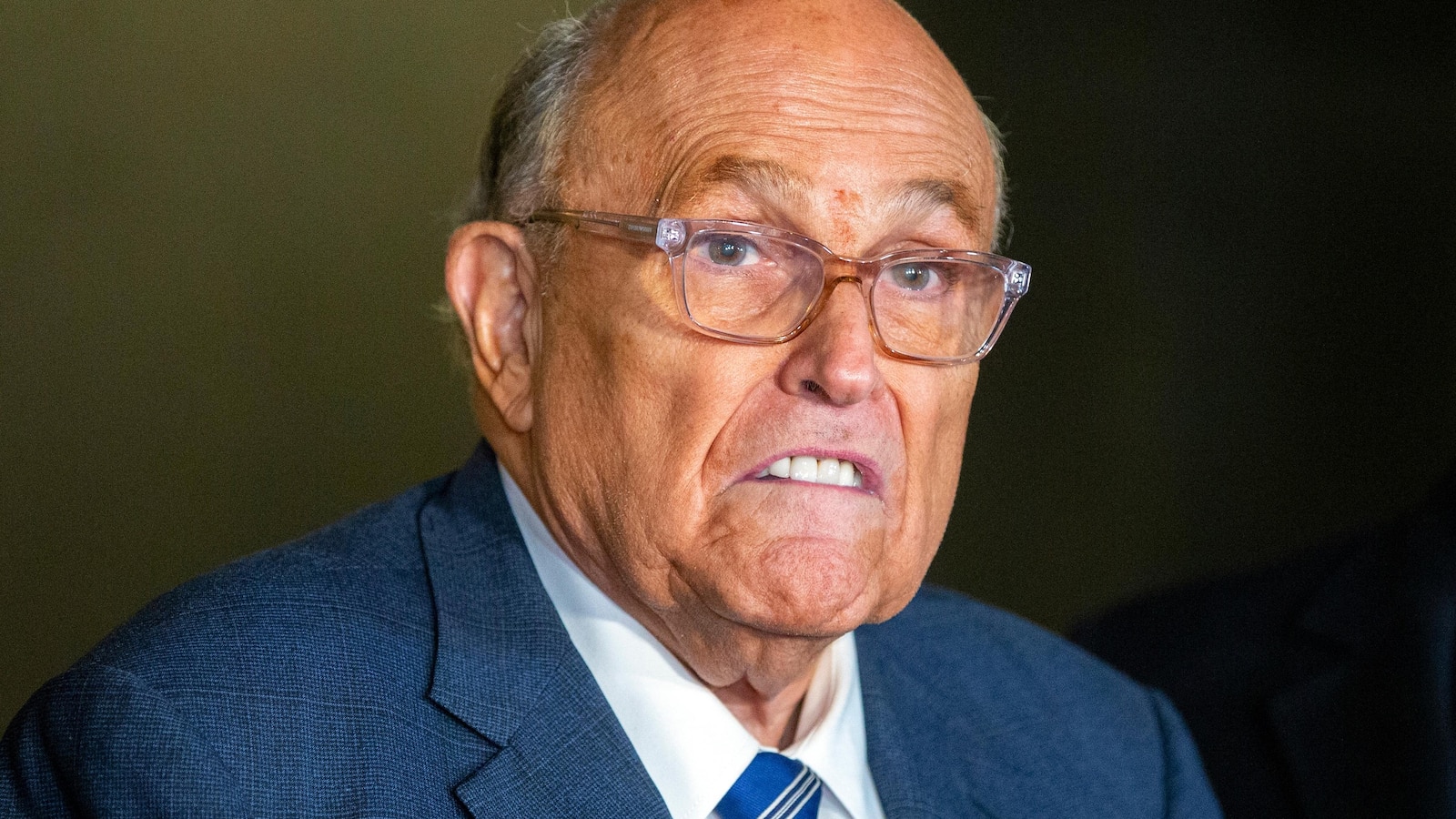
Rudy Giuliani is recovering from a fractured vertebra and other injuries following a car crash in New Hampshire in which he was a passenger, a spokesperson for the former New York City mayor said Sunday.

Giuliani was being driven in a rented Ford Bronco by his spokesperson Ted Goodman when their vehicle was struck from behind by a Honda HR-V driven by a 19-year-old woman late Saturday evening, New Hampshire State Police said in a statement.

Troopers witnessed the crash, which caused both vehicles to hit the highway median and left them “heavily damaged,” state police said. Goodman and the 19-year-old suffered “non-life-threatening injuries” and were taken to hospitals for treatment, the agency added.

State police said they are investigating the crash and no charges have been filed.

Giuliani, 81, was taken to a nearby trauma center and was being treated for a fractured thoracic vertebra, multiple lacerations and contusions, as well as injuries to his left arm and lower leg, according to a statement posted on X by Michael Ragusa, Giuliani’s head of security.

Giuliani “sustained injuries but is in good spirits and recovering tremendously,” Ragusa said, adding: “This was not a targeted attack.”

Prior to the accident, Giuliani had been “flagged down by a woman who was the victim of a domestic violence incident” and contacted police assistance on her behalf, Ragusa said. After police arrived, Giuliani continued on his way and his vehicle was hit shortly after pulling onto the highway in a crash that was “entirely unrelated” to the domestic violence incident, Ragusa told The Associated Press in an emailed statement.

State police said troopers were investigating a domestic violence report on the southbound Interstate 93 highway shortly before 10 p.m. and observed the crash, which occurred on the northbound lanes. Troopers and fire personnel quickly crossed to provide help.

New Hampshire State Police declined to comment on whether Giuliani had contacted the agency regarding the account of a domestic violence incident.

Goodman did not respond to requests for comment and Giuliani’s team did not provide additional details about the circumstances surrounding the crash.

“Thank you to all the people that have reached out since learning the news about my Father,” Andrew Giuliani, Rudy Giuliani’s son, wrote in a post on X. “Your prayers mean the world.”

The crash follows some rocky years for the onetime Republican presidential candidate, who was dubbed “America’s mayor” in light of his leadership in New York after the Sept. 11 attacks in 2001.

Giuliani later became President Donald Trump’s personal attorney for a time and a vocal proponent of Trump’s allegations of fraud in the 2020 election, won by Democrat Joe Biden. Trump and his backers lost dozens of lawsuits claiming fraud, and numerous recounts, reviews and audits of the election results turned up no signs of significant wrongdoing or error.

Two former Georgia elections workers later won a $148 million defamation judgment against Giuliani. As they sought to collect the judgment, the former federal prosecutor was found in contempt of court and faced a trial this winter over the ownership of some of his assets. He ultimately struck a deal that let him keep his homes and various belongings, including prized World Series rings, in exchange for unspecified compensation and a promise to stop speaking ill of the ex-election workers. ____

Associated Press writer Jennifer Peltz in New York City contributed to this report.


Source link

Departures roil the CDC leadership. What’s next for the agency?

0
Departures roil the CDC leadership. What’s next for the agency?

The firing of the director of the U.S. Centers for Disease Control and Prevention and the resignation of several high-profile agency leaders pose immediate challenges to the operations of the nation’s premiere public health agency, experts said.

It could take “several months” to identify and confirm a replacement for CDC Director Susan Monarez, who was terminated Wednesday after less than a month on the job, said Dr. Georges Benjamin, director of the American Public Health Association. And it could take more time to fill at least four key vacated positions that oversee disease outbreaks, vaccines and public health data.

“The whole chain of command has just been disrupted,” Benjamin told The Associated Press. “It’s like getting rid of your generals in the middle of a war.”

Health experts said Americans could see immediate effects, from confusion over the availability of COVID-19 vaccines to delayed responses to outbreaks of infectious diseases such as measles or foodborne illnesses caused by germs such as E. coli or listeria.

“The average American should worry about their safety and their health and whether information coming out of Health and Human Services is reliable or trustworthy,” said Dr. Anne Schuchat, former principal deputy director of the CDC, who left the agency in 2021.

Here’s what you need to know about the sudden changes at the CDC.

The White House ousted Monarez on Wednesday after apparent clashes between the CDC director and Health Secretary Robert F. Kennedy Jr. over changes to the nation’s vaccine policy.

Officials at the White House said Monarez was dismissed because she was not aligned with President Donald Trump’s agenda and refused to resign.

That action coincided with the resignation this week of at least four top CDC agency leaders: Dr. Debra Houry, the agency’s deputy director; Dr. Daniel Jernigan, leader of the agency’s work on emerging infectious diseases; Dr. Demetre Daskalakis, a top vaccine official; and Dr. Jennifer Layden, who led public health data efforts.

Monarez was the first CDC director to require Senate confirmation under a law that took effect in 2023. Replacing her would require Trump to nominate a new director, who would then need to be considered and confirmed by the Senate. On Thursday, Republican Sen. Bill Cassidy said the high-profile departures will “require oversight” of the Senate Health, Education, Labor and Pensions Committee, which he chairs.

In the meantime, the president could name an acting CDC director, Benjamin noted.

Replacing the leaders in the other positions, including those who held the jobs for years, will be difficult, Schuchat said.

“The four people who resigned led important parts of the agency and had the respect of the nation and the world,” she said.

In an appearance on “Fox & Friends,” Kennedy declined to directly comment on the CDC shake-up. But he said he is concerned about CDC officials adhering to the administration’s view of health policies.

“So we need to look at the priorities of the agency, if there’s really a deeply, deeply embedded, I would say, malaise at the agency,” Kennedy said. “And we need strong leadership that will go in there and that will be able to execute on President Trump’s broad ambitions.”

The clash at CDC was apparently triggered by conflict over changes in policy regarding recommendations for COVID-19 vaccinations that could make getting a shot more complicated for people.

The Food and Drug Administration approved updated COVID-19 shots on Wednesday but limited their use for many Americans — and removed one of the two vaccines available for young children. The new jabs from three manufacturers are approved for all seniors, but the FDA narrowed their use for adults and children to those with high-risk health conditions, such as asthma or obesity.

The FDA approval is typically reviewed by a CDC vaccine advisory committee, which makes recommendations for use. Monarez said she would not automatically sign off on recommendations of the committee, which was handpicked by Kennedy, according to Dr. Richard Besser, a former CDC acting director. (Besser is now president of the Robert Wood Johnson Foundation, which helps support The Associated Press Health and Science Department.)

The changes present new barriers to access for millions of Americans, who would have to prove their risk, and others who may want the shots but suddenly no longer qualify. The vaccines were previously recommended for Americans 6 months and older.

“These decisions, made without supporting evidence, reflect a troubling pattern by HHS of interfering in the relationship between patients and their healthcare providers and limiting access to vaccines — public health tools proven to save lives and reduce costs,” said Michael Osterholm, a University of Minnesota infectious disease researcher.

In addition, the disruption at the CDC could jeopardize many local health services undergirded by the agency’s support and expertise, Schuchat noted. That could mean tracking a simmering infectious disease outbreak, such as measles, or outbreaks of foodborne illness.

“It’s the water that you drink, the lead in your pipes. Look around your community,” she said. “If people are doing well and healthy, it’s probably partly because of the CDC.”

___

The Associated Press Health and Science Department receives support from the Howard Hughes Medical Institute’s Department of Science Education and the Robert Wood Johnson Foundation. The AP is solely responsible for all content.


Source link

House Oversight has withdrawn subpoena for Robert Mueller; new report says he has Parkinson’s disease

0
House Oversight has withdrawn subpoena for Robert Mueller; new report says he has Parkinson’s disease

The GOP-led House Oversight Committee has officially withdrawn its request for former special counsel Robert Mueller to testify before the panel, a committee spokesperson told ABC News.

“We’ve learned that Mr. Mueller has health issues that preclude him from being able to testify,” the spokesperson said.

PHOTO: FBI Director Robert Muller Holds News Conference

Then-FBI Director Robert Mueller speaks during a news conference at the FBI headquarters June 25, 2008, in Washington, D.C. The news conference was to mark the 5th anniversary of Innocence Lost initiative. (Photo by Alex Wong/Getty Images)

Alex Wong/Getty Images

Chairman James Comer subpoenaed Mueller to appear on Tuesday, Sept. 2, as part of the committee’s broad investigation into the Jeffrey Epstein files.

Mueller served as Federal Bureau of Investigation director from 2001 to 2013.

“Because you were F.B.I. director during the time when Mr. Epstein was under investigation by the F.B.I., the committee believes that you possess knowledge and information relevant to its investigation,” Comer wrote in a letter sent to Mueller on Aug. 5.

Mueller’s family told The New York Times that he has been battling Parkinson’s disease, prohibiting him from coming before Congress.

“Bob was diagnosed with Parkinson’s disease in the summer of 2021,” the family said in a statement to The New York Times. “He retired from the practice of law at the end of that year. He taught at his law school alma mater during the fall of both 2021 and 2022, and he retired at the end of 2022. His family asks that his privacy be respected.”


Source link

How is artificial intelligence affecting job searches?

0
How is artificial intelligence affecting job searches?

Artificial intelligence programs like ChatGPT use AI to do thinking or writing or creating for you. Pretty amazing, but also a little terrifying. What happens to the people who used to do those jobs?

Olivia Fair graduated four years ago. “I’ve applied to probably over a hundred jobs in the past, I don’t know, six months,” she said. “And yeah, none of them are landing.”

She’s had a series of short-term jobs – one was in TV production, transcribing interviews. “But now they don’t have a bunch of people transcribing,” she said. “They have maybe one person overseeing all of that, and AI doing the rest. Which I think is true for a lot of entry-level positions. And it can be a very useful tool for those people doing that work. But then there’s less people needed.”

According to Laura Ullrich, director of economic research at Indeed, the job-listings website, job postings have declined year over year by 6.7 percent. “This is a tough year,” she said. “Younger job seekers, specifically those who are recent grads, are having a harder time finding work.”

Asked if there is a correlation between the rise in AI and the decline in jobs for recent graduates, Ullrich said, “I think there is a cause-and-effect, but it’s maybe not as significant as a lot of people would think. If you look specifically at tech jobs, job postings are down 36% compared to pre-pandemic numbers. But that decline started happening prior to AI becoming commonly used.”

Ullrich said in 2021-22, as the effects of the COVID pandemic began to ebb, there was a hiring boom in some sectors, including tech: “Quite frankly, I think some companies overhired,” she said.

The uncertain national situation (tariffs, taxes, foreign policy) doesn’t help, either. Ullrich said, “Some other people have used the analogy of, like, driving through fog. If it’s foggy, you slow down a bit. But if it’s really foggy, you pull over. And unfortunately, some companies have pulled over to sit and wait to see what is gonna happen.”

That sounds a little more nuanced than some recent headlines, which make it pretty clear that AI is taking jobs:

“I read today an interview with a guy who said, you know, ‘By 2027, we will be jobless, lonely, crime on the streets,'” said David Autor, a labor economist at MIT. “And I said, ‘How do I take the other side of that bet?’ ‘Cause that’s just not true. I’m sure of that. My view is, look, there is great potential and great risk. I think that it’s not nearly as imminent on either direction as most people think.”

I said, “But what it does seem to do is relieve the newcomers, the beginning, incoming novices we don’t need anymore.”

“This is really a concern,” Autor said. “Judgment, expertise, it’s acquired slowly. It’s a product of immersion, right? You know, how do I care for this patient, or land this plane, or remodel this building? And it’s possible that we could strip out so much of the supporting work, that people never get the expertise. I don’t think it’s an insurmountable concern. But we shouldn’t take for granted that it will solve itself.”

Let’s cut to the chase. What are the jobs we’re going to lose? Laura Ullrich said, “We analyzed 2,800 specific skills, and 30% of them could be, at least partially, done by AI.” (Which means, 70% of job skills are not currently at risk of AI.) 

So, which jobs will AI be likely to take first? Most of it is jobs in front of a screen:

  • Coding
  • Accounting
  • Copy writing
  • Translation
  • Customer service
  • Paralegal work
  • Illustration
  • Graphic design
  • Songwriting
  • Information management

As David Autor puts it: “What will market demand be for this thing? How much should we order? How much should we keep in stock?”

AI will have a much harder time taking jobs requiring empathy, creative thinking, or physicality:

  • Healthcare
  • Teaching
  • Social assistance
  • Mental health
  • Police and fire
  • Engineering
  • Construction
  • Wind and solar
  • Tourism
  • Trades (like plumbing and electrical)

And don’t forget about the new job categories that AI will create. According to Autor, “A lot of the work that we do is in things that we just didn’t do, you know, 50 or 100 years ago – all this work in solar and wind generation, all types of medical specialties that were unthinkable.”

I asked, “You can’t sit here and tell me what the new fields and jobs will be?”

“No. We’re bad at predicting where new work will appear, what skills it will need, how much there will be,” Autor said, adding, “There will be new things, absolutely.”

“So, it sounds like you don’t think we are headed to becoming a nation of people who cannot find any work, who spend the day on the couch watching Netflix?”

Autor said, “No, I don’t see that. Of course, people will be displaced, certain types of occupations will disappear. People will lose careers. That’s going to happen. But we might actually get much better at medicine. We might figure out a way to generate energy more cheaply and with less pollution. We might figure out a better way to do agriculture that isn’t land-intensive and so ecologically intensive.”

Whatever is going to happen, will likely take a while to happen. The latest headlines look like these:

Until then, Laura Ullrich has some advice for young job seekers: “The number one piece of advice I would give is, move forward. So, whether that is getting another job, getting a part-time job, finding a post-graduate internship – reach out to the professors that you had. They have a whole network of former students, right? Reach out to other alumni who graduated from the school you went to, or majored in the same thing you majored in. It might be what gets you a job this year.”

So far, Olivia Fair is doing all of the above. I asked her, “You’re interested in creativity and writing and production. So let me hear, as a human, your pitch, why you’d be better than AI doing those jobs?”

“Okay,” Fair replied. “Hmm. I’m a person, and not a robot?”

      
For more info:

     
Story produced by Gabriel Falcon. Editor: Chad Cardin.

     
See also:


Source link

How is artificial intelligence affecting job searches?

0
How is artificial intelligence affecting job searches?

Artificial intelligence has already become a disruptor in the labor market, as job postings declined over the past year by 6.7 percent, with entry-level positions especially hard-hit. But as David Pogue learns, not all industries are affected by the push for AI.


Source link

Judge blocks deportation of Guatemalan migrant children as flights were ready to take off

0
Judge blocks deportation of Guatemalan migrant children as flights were ready to take off

A federal judge on Sunday blocked the Trump administration from sending any unaccompanied migrant child to Guatemala unless they have a deportation order, just hours after lawyers alerted her of what they described as a hurried government effort to deport hundreds of children.

U.S. District Court Judge Sparkle Sooknanan issued her order as the deportation effort was fully underway, with planes with migrant children on board ready to take off from Texas.

Earlier Sunday, in the overnight hours, Sooknanan issued a temporary restraining order barring officials from sending a group of 10 migrant children between the ages of 10 and 17 to Guatemala, granting a request from attorneys who alleged the effort would skirt legal protections Congress established for these minors. She also scheduled a hearing in the afternoon to weigh the case’s next steps.

But Sooknanan abruptly moved up the hearing earlier on Sunday, saying she had been alerted that some migrant children were already in the process of being deported.

As that hearing got underway, Sooknanan announced she had just issued a broader temporary restraining order blocking any deportations of unaccompanied children from Guatemala and in U.S. custody who did not have a deportation order. She instructed Drew Ensign, the Justice Department lawyer representing the Trump administration, to quickly inform officials they had to halt their deportation plans.

Ensign acknowledged deportation planes had been prepared to take off on Sunday, but said they were all “on the ground” and still on U.S. soil. He said he believed one plane had taken off earlier but had come back. 

At the request of Sooknanan, Ensign said he confirmed that the children on the planes would be deplaned and returned to the custody of the Department of Health and Human Services, which is responsible for caring for migrant minors who enter the U.S. without authorization and without their parents or legal guardians.

The Justice Department said 76 unaccompanied children were slated to be sent to Guatemala on Sunday before the effort was blocked. Of those, 16 had been returned to HHS custody as of Sunday evening and the rest were expected to be in HHS care by 10:30 p.m.

HHS houses unaccompanied children in shelters or foster homes until they turn 18 or until they can be placed with a suitable sponsor in the U.S., who are often family members.

Sooknanan conceded her temporary restraining order, which is set to last 14 days, is “extraordinary” but justified it on the grounds that the government had decided to “execute a plan to remove these children” in the “wee hours” of a holiday weekend.

In their lawsuit, lawyers for the group of Guatemalan children said the Trump administration had launched an effort to deport more than 600 migrant minors to Guatemala without allowing them to request humanitarian protection, even though U.S. law protects them from speedy deportations. They alleged the children could face abuse, neglect or persecution if returned to Guatemala.

Ensign, the Justice Department attorney, said the Trump administration was not trying to formally deport the Guatemalan children under U.S. immigration law, but instead repatriate them to Guatemala so they could reunite with relatives there. He said the Guatemalan government and the children’s relatives had requested the reunifications.

But lawyers for the children disputed the government’s claims, citing one case in which they say a child’s parents did not request any repatriation. They also said a law known as the Trafficking Victims Protection Reauthorization Act says unaccompanied migrant children who are not from Mexico must be allowed to see an immigration judge and apply for legal protections before any deportation effort.  Some of the children facing return to Guatemala still have pending immigration cases, the attorneys said.

Ensign said the government’s legal position is that it can “repatriate” these children, based on authority given to HHS to reunite “unaccompanied alien children with a parent abroad in appropriate cases.”

Representatives for the Department of Homeland Security did not immediately respond to a request for comment on the deportation plans. 

President Trump on Sunday night said on social media that the judge should recuse herself from the case. 

Neha Desai, an attorney at the California-based National Center for Youth Law who works with migrant minors, said the U.S. government was attempting to deport children with “already filed claims for legal relief based on the abuse and persecution that they experienced in their home country.”

“This is both unlawful and profoundly inhumane,” Desai added.

Most of the unaccompanied children who cross the U.S. southern border without legal permission hail from Central America and tend to be teenagers. Once in the U.S., many file applications for asylum or other immigration benefits to try to stay in the country legally, such as a visa for abused, abandoned or neglected youth.

As part of its larger crackdown on illegal immigration, the Trump administration has sought to make drastic changes to how the U.S. processes unaccompanied children. It has made it harder for some relatives, including those in the country illegally, to sponsor unaccompanied children out of government custody and offered some teenagers the option to voluntary return to their native countries.

The Trump administration has also directed agents from Immigration and Customs Enforcement (ICE) and other agencies to conduct “welfare checks” on children released from HHS custody, a move it has said is in response to disputed claims that the Biden administration “lost” hundreds of thousands of migrant minors.

There are currently roughly 2,000 migrant children in HHS care. 


Source link

8/27: CBS Evening News Plus

0
8/27: CBS Evening News Plus


8/27: CBS Evening News Plus – CBS News


Watch CBS News


How the Minneapolis shooting unfolded; Reporter’s Notebook: The price children pay for inaction on gun violence


Source link

Kennedy Fuller’s evolution on the field continues for Angel City Football Club

0
Kennedy Fuller’s evolution on the field continues for Angel City Football Club


In her second year as a professional, Angel City FC midfielder Kennedy Fuller is settling into a valuable role, for new coach Alex Straus.

“I have had lots of talks with all of our technical staff,” the 18-year-old midfielder said. “I’m really focused on performing and doing what I can and what I’m asked to do for the team. I think whether that’s deeper (on the field), or whether that’s higher, as long as I’m able to help the players around me is the most important. I’ve had fun learning both (the 10 and the 6 positions).”

With the arrival of Straus, Fuller was moved into a deeper position on the field. However, with the absence of Jun Endo, the last couple of games, Fuller has been moved back into an attacking role in the 10.

“From last season to this season at the 10, I feel like I’ve grown in my knowledge, but also being able to drop into the 6, I’m excited to complete myself as a player,” she said. “Even though they’re both in the midfield, they are completely different, and being able to complete my game is what I’m learning to do. I am 18, and so development is super important, and that’s something that I’m learning and hopefully able to do through the changes of both positions.”

Fuller made 19 appearances last season and has 17 heading into Monday’s Labor Day clash against Northern California rival Bay FC at BMO Stadium.

Recently, Angel City moved three internationals (Katie Zelem, Alanna Kennedy and Julie Dufour), shortening the roster, which should allow for more moments of growth for Fuller in her development.

“We have had some issues with our injury situations and availability for some players, so we needed to use our roster and she was moved up a little bit higher (on the field),” Straus said. “I believe very much that instead of having 30 players on a roster, it’s good to have a smaller roster. You also need to have the talent in your roster that can play in different positions and that they’re not just limited to one position, and Kennedy is one of those players.”

“We tend to forget she’s (Fuller) just turned 18 and she’s already played enormously (well) and in many games in the NWSL for a player that age. I’m really looking forward to seeing Kennedy Fuller play when she is 25. I think she’s gonna be really good. If it’s as a 6 or if it’s as a 10, I don’t know. I think she can do both.”

Bay FC is in 12th in the standings with 17 points. Angel City is in 10th on 20 points.

BAY FC at ANGEL CITY FC

When: Monday, 6 p.m.

Where: BMO Stadium

How to watch: CBSSN, FanDuel Sports Network SoCal


Source link

Powerball jackpot grows to $1.1 billion after Saturday drawing ends without a winner – Press Enterprise

0
Powerball jackpot grows to .1 billion after Saturday drawing ends without a winner – Press Enterprise


DES MOINES, Iowa (AP) — Powerball players will get another chance Monday at a jackpot estimated at over $1 billion, after no one won the big prize Saturday night.

No one has matched all six numbers since May 31, allowing the jackpot to swell to $1.1 billion, which would be the fifth-largest prize in the game’s history. Payments would be spread over 30 years, or a winner could choose an immediate lump sum of an estimated $498.4 million, again before taxes.

The odds of matching all six numbers are astronomical: 1 in 292.2 million. The likelihood of getting struck by lightning is far greater. But with so many people putting down money for a chance at life-changing wealth, someone eventually wins.

The numbers drawn Saturday were 3, 18, 22, 27 and 33, with the Powerball 17.

Powerball, which costs $2 per ticket, is played in 45 states, the District of Columbia, Puerto Rico and the U.S. Virgin Islands. Drawings are held each week on Monday, Wednesday and Saturday nights.


Source link

The Democrats are in ‘shambles.’ Here’s how that could change

0
The Democrats are in ‘shambles.’ Here’s how that could change

The Democratic Party’s standing in public opinion polls has sunk to its lowest point in more than 30 years. Many of the party’s own voters think their leaders aren’t fighting hard enough against President Trump. In one survey, the words they used most often were “weak” and “tepid.”

“The party is in shambles,” said James Carville, the political strategist who helped Bill Clinton win the White House after a similar bout of disarray a generation ago.

And yet, in recent weeks, the beleaguered party has begun to exhibit signs of life.

Its brand is still unpopular, but its chances of winning next year’s congressional elections appear to be growing; in recent polls, the share of voters saying they plan to vote Democratic has reached a roughly 5% lead over the GOP. Potential presidential candidates, led by California Gov. Gavin Newsom and Illinois Gov. J.B. Pritzker, are competing noisily for the title of fiercest Trump-fighter. And they have an ace in the hole: As unloved as the Democratic Party is, Trump is increasingly unpopular, too, with an approval rating sagging to 40% or below in some polls.

“There’s no requirement that people love the Democratic Party in order to vote for it,” Republican pollster Patrick Ruffini said last week. “In an era of negative partisanship, people are motivated to vote more by dislike of the other party than by love for their own.”

So Carville, despite his diagnosis of “shambles,” thinks things are looking up in the long run.

“The Democratic Party’s present looks pretty bad, but I think its future looks pretty good,” he said. “I think we’re going to be fine.”

He cited several straws in the wind: the Democrats’ new energy as they campaign against Trump; the encouraging poll numbers on next year’s congressional elections; and an impressive bench of up-and-coming leaders.

“The talent level in the current Democratic Party is the highest I’ve ever seen,” he said. “Whoever comes out on top of that competition is going to be a pretty strong candidate.”

But that nomination is three years away — and meanwhile, Democrats face daunting hurdles. For one, Trump has pressed Texas and other Republican-led states to redraw congressional maps to cement GOP control of the House of Representatives — an effort that could succeed despite Newsom’s attempt to counter it in California.

Gov. Gavin Newsom is pushing a measure to redraw California’s congressional map to aid Democrats.

(Rich Pedroncelli / Associated Press)

The Democrats, by comparison, remain leaderless and divided — arguing over the lessons of their 2024 defeat and debating how to regain their lost support among working-class and minority voters.

In a historical sense, the party is going through a familiar ordeal: the struggle a party normally faces after losing an election.

So Carville and other strategists have sketched out variations of what you might call a three-step recovery plan: First, get out of Washington and rally public opposition to Trump. Second, focus their message on “kitchen table issues,” mainly voters’ concerns over rising prices and a seemingly sluggish economy. Third, organize to win House and Senate elections next year.

“We have to do well in 2026 to demonstrate we’re not so toxic that people won’t vote for us anymore,” said Doug Sosnik, another former Clinton aide.

They’re arguing over the lessons of defeat and debating how to regain lost support among working-class and minority voters.

In battling Trump, they say they’ve found a starting point.

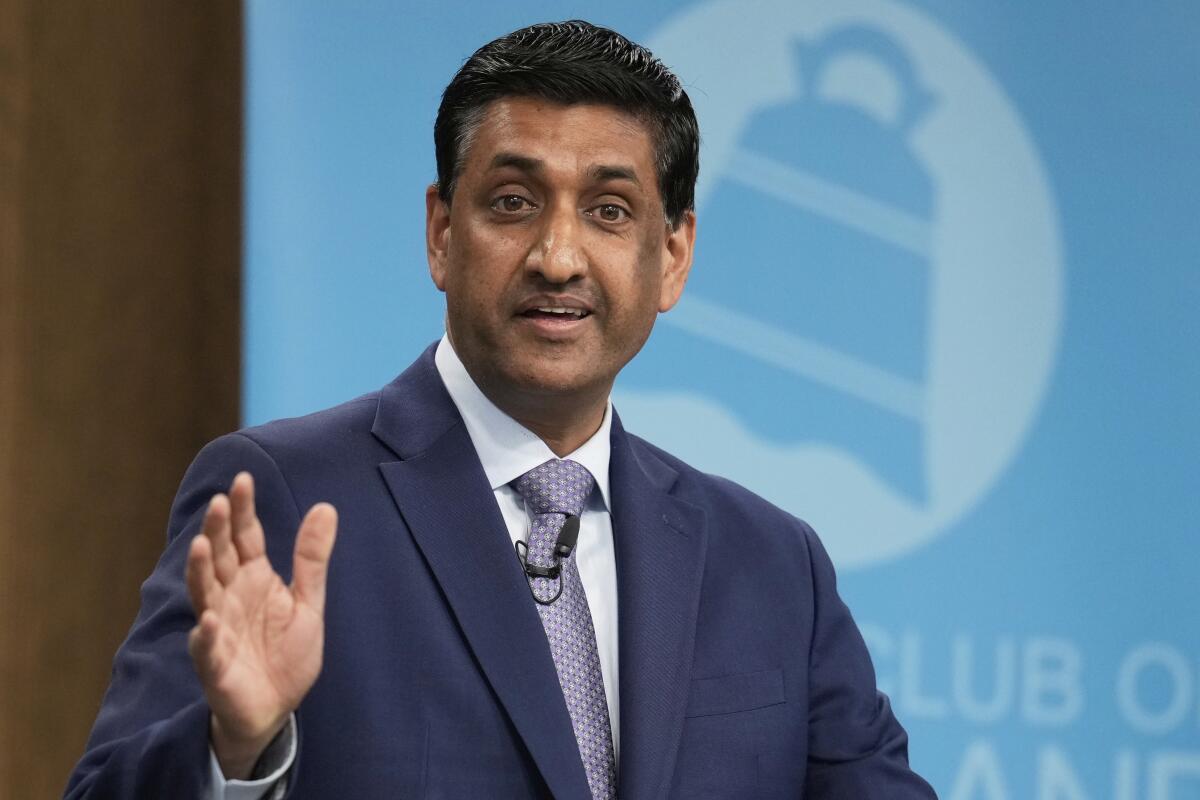
“We’ve found our footing. We’ve gone on the offensive,” argued Rep. Ro Khanna (D-Fremont), who spent most of the summer campaigning across the country. “Trump’s cuts to Medicaid and tax breaks for billionaires have given us a message we can unite around.”

They still have plenty of differences over specific policies — but a spirited debate, some say, is exactly what the party needs.

“The most important task of the Democratic Party is to organize … the most robust debate Democrats have had in a generation,” said William A. Galston of the Brookings Institution, a former Clinton aide who argues that the party needs to move to the center.

Here’s what most Democratic leaders agree on: They’ve heard their voters’ demands for a more vigorous fight against Trump. They agree that they need to reconnect with working-class voters who don’t believe the party really cares about them. They need to cast themselves as a party of change, not the status quo. And they need to begin by regaining control of the House of Representatives next year.

Rep. Ro Khanna (D-Fremont) says the Democrats have “found our footing.”

(Sue Ogrocki / Associated Press)

Most Democrats also agree that they need to focus on a positive message on economic issues such as the cost of living — to use this year’s buzzword, “affordability.”

But they differ on the specifics.

Progressives like Sen. Bernie Sanders (I-Vt.) and Rep. Alexandria Ocasio-Cortez (D-N.Y.) have focused on “fighting oligarchy,” including higher taxes on the wealthy and government-run health insurance.

Khanna, a Silicon Valley progressive, is campaigning for a program he calls “economic patriotism” — essentially, industrial policies to spur investments in strategic sectors.

Sen. Ruben Gallego of Arizona, a blunt-spoken populist, wants to make capitalism do more for ordinary workers. “Every Latino man wants a big-ass truck,” he said in an interview with the New York Times. “We’re afraid of saying, like, ‘Hey, let’s help you get a job so you can become rich.’”

And from the party’s centrist wing, former Obama Chief of Staff Rahm Emanuel describes his program as “build, baby, build,” arguing that Democrats should focus on making housing affordable and expanding technical and vocational education.

A sharper debate has opened over social and cultural issues: Should Democrats break with the identity politics — the stuff Republicans deride as “woke” — that animates much of their progressive wing? Moderate Democrats argue that “wokeness” has alienated voters in the center and made it impossible to win presidential elections.

“I think there’s a perception that Democrats became so focused on identity that we no longer had a message that could actually speak to people across the board,” former Transportation Secretary Pete Buttigieg told NPR last month.

The controversy over transgender women and girls in women’s sports has become an early test. Newsom, Buttigieg and Emanuel have broken with the left, arguing that there’s a case for barring transgender women from competition. “It is an issue of fairness,” Newsom said on his podcast in March.

Their statements prompted fierce backlash from LGBTQ+ rights advocates. “I’m now going to go into a witness protection plan,” Emanuel joked in an interview with conservative podcaster Megyn Kelly in July.

Other Democrats have tread more cautiously. “We need to make a compelling economic vision … our first, second and third priority,” Khanna said. Meanwhile, be said, “we can stay true to our values.”

Democratic National Committee Chair Ken Martin was blunter. “We have to stand up for every LGBTQ kid and their family who want to play sports like any other kid,” he said last week.

Those battles will play out over the long campaign, already in its first stirrings, for the next presidential nomination — the traditional way American political parties settle on a single message.

“It takes time for a party to get up off the mat,” acknowledged Sosnik, the former Clinton strategist. “We didn’t get here overnight. We’re not going to get out of it overnight.”


Source link

Judge rules homeowner can probe State Farm claims practices

0
Judge rules homeowner can probe State Farm claims practices


Policyholders critical of State Farm General’s response to January’s firestorms won a court victory this week when a judge ruled a Pacific Palisades homeowner can probe the insurer’s claims handling practices during a rate hearing.

In doing so, Administrative Law Judge Karl Fredric Seligman denied a motion by the Department of Insurance to move an inquiry into the insurer’s claims practices by Merritt Farren, whose home burned down, to a separate hearing after the rate increase is first considered.

“The outcome could easily result in chaos and challenges … on numerous grounds that would only operate to cause delay,” the judge wrote of the department’s motion in his Wednesday ruling.

State Farm is seeking to raise its homeowner rates 11% after receiving an emergency 17% hike in May from Insurance Commissioner Ricardo Lara, who adopted a decision by Seligman at the time that the insurer deserved the hike given its weak financial position even prior to the fires. State Farm also is seeking increases in other lines of property insurance.

The insurer said this week it has received more than 13,000 claims and paid over $4.5 billion to policyholders. State Farm has said it expects claims payments to top $7 billion from the Jan. 7 fires, but losses under $700 million due to reinsurance agreements with its parent company. State Farm contends an “overwhelming majority” of its local policyholders are satisfied with its services.

However, policyholders led by the Eaton Fire Survivors Network have demanded there should be no rate hike until hundreds of complaints over alleged payment delays, underpayments and claims denials are looked into and resolved — a position also voiced by area legislators at a news conference this week.

Also opposing the increase is Los Angeles advocacy group Consumer Watchdog, which says State Farm’s possible total increase, including the 17% hike it already has received, would cost consumers $1.2 billion.

Farren, 64, a former attorney for Disney and Amazon, was granted permission in July to participate in the rate hearing under a provision of Proposition 103, which regulates the industry and allows for public participation in rate hearings.

He said he was thankful for the judge’s ruling this week, as well as a second decision that gave him time to seek documents from State Farm through the discovery process.

He said any rate increases should be tied to the actual value homeowners receive from their policies, which crucially should include how their claims are handled. “I think it’s completely common sense and that it just really shouldn’t be done any other way,” Farren said.

State Farm spokesperson Bob Devereux, in a statement said, “We thank the judge for the ruling on this matter, and we are looking forward to moving the rate hearing process forward toward conclusion later this year.”

The Department of Insurance also said it looked forward to the rate hearing, which has been delayed and is now set for December.

In court filings, the department has argued that combining the two issues — the proposed rate increase and allegations the company has mishandled claims — could slow review of the rate request, which State Farm has said is critical to stabilize its finances.

The company’s financial strength has been downgraded by ratings agencies, including S&P Global this month. However, the agency said it benefited from its strategic importance to its highly rated Bloomington, Ill., parent company.

The department also maintained that state law calls for handling claims issues through separate proceedings, including a market conduct exam of State Farm General’s practices that Lara announced in June. It said a separate hearing would allow those findings when they are released to be considered with Farren’s own probe of the issue.

Farren said that while he lost his Mount Holyoke Drive home where he lived with this two sons, his request to look into claims practices wasn’t driven by his personal experience with State Farm — which he deemed likely “better than most’’ — but from what he heard from other policyholders.

In particular, he said he wants to look into the insurer’s practices regarding payments for personal property losses and how it calculates building-cost estimates for reconstruction, as well as how it has handled claims for smoke-damaged houses. The insurer has been accused of being “stingy” in handling such claims.

Farren said he has heard of situations in which State Farm has advanced payments for personal property coverage and then after receiving an itemized list of losses, has sought to offset what it has deemed overpayments from future payouts.

Meanwhile, Palisades homeowners have received reconstruction cost estimates under $400 a square foot from State Farm, he alleged, when other insurers are issuing estimates of $800 to $1,200 per square foot.

After the hearing, Joy Chen, chief executive of the Eaton Fire Survivors community group, issued an email to its more than 7,000 members, criticizing Lara for the department’s legal position, saying Seligman had “sided with fairness.”


Source link

Del Mar horse racing consensus picks for Sunday, August 31, 2025 – Press Enterprise

0
Del Mar horse racing consensus picks for Sunday, August 31, 2025 – Press Enterprise


The consensus box of Del Mar horse racing picks comes from handicappers Bob Mieszerski, Eddie Wilson, Kevin Modesti and Mark Ratzky. Here are the picks for thoroughbred races on Sunday, August 31, 2025.

Trouble viewing on mobile device? See consensus picks

Enjoy the consensus horse racing picks online? Subscribe

Sign up for Ponies Express newsletter and get the latest news and tips on wagers for weekend Horse Racing at Santa Anita and other Southern California tracks in your inbox. Subscribe here.


Source link

Rough start for UCLA football, in more ways than one

0
Rough start for UCLA football, in more ways than one


PASADENA — So this was what all the secrecy was about, eh?

Really, I don’t want to be too hard on UCLA’s football Bruins and coach DeShaun Foster for doing what … well, what the vast majority of college football coaches do, parceling out information sparingly, limiting access and keeping as much under wraps as possible. (I’d do it differently, but that’s one reason – of many – that I’m not in coaching.)

And I certainly don’t want to discourage Foster and the Bruins from scheduling ambitiously and challenging themselves. Opening against Utah, a former Pac-12 foe, is far more attractive to the casual fan than guaranteeing themselves a victory against an outmatched foe.

(Although scheduling your opener at 8 p.m. is pushing it just a bit. And yes, this edition of Big Ten After Dark came to you courtesy of Fox.)

All of that said … it’s got to get better than this, right?

Saturday’s debut of Foster’s second UCLA team, which was also the homecoming of Long Beach’s Nico Iamaleava, was a dud. The transfer who took Tennessee to the College Football Playoff last year – and then took less in NIL money to return home than he could have gotten elsewhere – had his very first pass flutter harmlessly to the turf, deflected by Utah defensive end Logan Fano.

It didn’t get much better for Iamaleava (11 for 22 for 136 yards, one touchdown, one interception, 47 rushing yards on 13 carries) or his team in the course of Utah’s 43-10 triumph. Utah’s Devon Dampier, a transfer from New Mexico, was the best quarterback on the field. His offense was more efficient, his team’s defense more stingy, his team’s fans more noisy.

Oh, and about that idea of opening with an attractive opponent? The upshot Saturday night was that Utah fans showed up, be they locally based alumni or diehards making the trip from Salt Lake City.

Bruin fans, wherever they are? Couldn’t be bothered.

Even with the huge tarps at both ends – which, as a university spokesperson said in 2021, reduce capacity from the listed 91,136 to 69,747 – the Rose Bowl was discouragingly empty Saturday night. Attendance was announced as 35,032, and while the students won’t be on campus for another few weeks, there are plenty of other people in greater L.A. who could have filled those empty seats but chose not to.

One message here? This program may still be trying to dig out of the wreckage of a string of lost seasons, dating back to the start of Chip Kelly’s reign of error.  Those first three miserable seasons under Kelly – 3-9 in 2018, 4-8 in ’19 and 3-4 in the COVID season of 2020 – sent attendance spiraling downward and damaged the UCLA football brand.

In this market, with this much competition for customers, maybe it’s time for desperate measures to get those seats filled again. Two-for-one tickets, maybe, or family deals on hot dogs and sodas. Or bobbleheads. Something. Anything.

Maybe even quality football. That, at least, is within the players’ and coaches’ control.

To be sure, the scene as the clock struck 11 Saturday night was stark, the red-clad Ute fans staying to cheer as discouraged UCLA fans headed for the exits. It had to have been depressing to anyone who remembered when Bruins football really was a hot ticket.

And yes, that era in the ’80s when Terry Donahue’s teams won conference championships and bowl games, resided in the upper levels of the AP poll and filled the Rose Bowl without need for tarps represented what now could be considered the Paleozoic era of college football. The current age, in which universities can now legally pay players, isn’t exactly an optimal environment for an athletic program that has run a deficit for several years.

(Plus, UCLA, the UC system, and major universities in general have enough other problems these days that the football team’s struggles are relatively small in comparison.)

But at ground level, this experience of getting punched in the mouth in Week 1 could ultimately be beneficial. If so, the new quarterback will be the one with the responsibility of rallying his team.

“Nico’s a competitor, you know?” Foster said afterward. “He’s not going to quit, he keeps playing hard, he kept motivating the guys around him, so we’ve just got to do a better job of protecting him and keeping him upright.”

Foster said he liked what he saw in the locker room afterward, in terms of moving forward and staying together. Iamaleava echoed that sentiment.

“The guys, guys in the locker room, we’re all still together,” he said. “We know that we can be better than (what) we displayed and yeah, man, the only way is up from here.

“… Everything we want is still ahead of us, man.”

If Iamaleava does rally his team and turns this into a success story, he will have earned his keep. Literally.

And if not …

jalexander@scng.com


Source link

All of the scores from Friday’s Week 1 games – Press Enterprise

0
All of the scores from Friday’s Week 1 games – Press Enterprise


All of the scores from the Week 1 high school football games on Friday, Aug. 29.

FRIDAY’S RESULTS

CIF-SS

Nonleague

Anaheim 34, Katella 13

Anaheim Canyon 26, Ayala 7

Apple Valley 16, Highland 6

Aquinas 34, Glendora 7

Arroyo Valley 38, Nuview Bridge 0

Bell Gardens 14, El Rancho 7

Bishop Diego 42, West Ranch 6

Bonita 37, Diamond Ranch 0

Brentwood 38, Hueneme 7

Buena 44, Canyon Country Canyon 30

Camarillo 22, Rio Mesa 14

Cathedral City 6, San Bernardino 0

Century 41, Santa Clara 0

Cerritos 35, Gahr 7

Claremont 50, Diamond Bar 42

Colton 28, Eisenhower 21

Corona del Mar 28, Santa Barbara 27

Crean Lutheran 42, St. Pius X-St. Matthias 9

Crespi 41, Golden Valley 16

Crescenta Valley 13, Knight 9

Cypress 21, Brea Olinda 20

Damien 34, JSerra 31

Dana Hills 30, Modena 14

Desert Christian Academy 25, Riverside Prep 6

Dominguez 71, Pasadena Marshall 0

Don Lugo 36, Carter 32

Dos Pueblos 19, Royal 0

Downey 35, Orange Vista 34

El Dorado 31, Redondo Union 6

El Monte 40, Alhambra 0

El Segundo 42, Temescal Canyon 0

Elsinore 30, Temecula Valley 0

Esperanza 35, Fountain Valley 17

Estancia 29, Costa Mesa 21

Etiwanda 35, Citrus Valley 13

Fillmore 21, Chaffey 14

Fontana 55, Jurupa Valley 3

Fullerton 50, Indio 0

Garden Grove Pacifica 28, Garden Grove 21

Glendale 35, Duarte 14

Grace 40, Arrowhead Christian 14

Granite Hills 23, Patriot 19

Hart 49, Burbank Burroughs 0

Hawthorne 46, Firebaugh 7

Hesperia 35, Jurupa Hills 7

Kaiser 35, Heritage 20

La Canada 41, Santa Paula 14

Laguna Beach 42, Santa Monica 0

Lakewood 35, St. Anthony 14

La Habra 57, Northview 21

La Palma Kennedy 37, Woodbridge 0

La Puente 41, Temple City 0

La Quinta 32, Yucca Valley 14

La Serna 28, Schurr 0

Leuzinger 61, Palmdale 0

Long Beach Wilson 37, Marina 14

Los Amigos 47, Silver Valley 12

Loyola 35, Millikan 25

Magnolia 35, Compton Early College 8

Mary Star of the Sea 42, Eastside 7

Mira Costa 45, St. Francis 19

Mission Viejo 58, St. Paul 14

Montebello 30, Cantwell-Sacred Heart 8

Moreno Valley 34, Paloma Valley 27

Newport Harbor 42, Lancaster 26

Norco 55, Colony 7

Nordhoff 31, Hoover 13

Norte Vista 45, Rancho Christian 7

Northwood 38, Sonora 14

Ocean View 16, Bolsa Grande 0

Orange 46, Laguna Hills 43

Orange Lutheran 27, Rancho Cucamonga 24

Oxnard Pacifica 62, Oxnard 0

Palm Springs 28, Grand Terrace 21

Paraclete 49, San Marcos 0

Portola 7, Irvine 0

Ramona 33, Arlington 13

Rancho Mirage 30, Coachella Valley 7

Redlands East Valley 32, Perris 25

Rialto 56, Temecula Prep 14

Ridgecrest Burroughs 8, Adelanto 6

Rim of the World 35, Big Bear 13

Rio Hondo Prep 28, Quartz Hill 21

Riverside Poly 55, Riverside North 13

Rowland 41, Hacienda Heights Wilson 10

Salesian 48, Hemet 0

San Dimas 57, Pasadena 14

San Gabriel 35, Rosemead 0

San Jacinto 30, Riverside King 7

San Jacinto Valley Academy 22, Desert Mirage 0

Santa Ana Calvary Chapel 33, Valley Christian 19

Santa Rosa Academy 46, California Military Institute 14

Saugus 51, Oak Park 19

Savanna 22, Glenn 18

Segerstrom 63, Santa Ana Valley 7

Sherman Oaks Notre Dame 42, Alemany 0

Servite 56, Murrieta Valley 35

Sierra Canyon 63, Oaks Christian 0

Sierra Vista 42, Keppel 12

Silverado 37, Yucaipa 14

South Hills 49, Ontario Christian 0

South Pasadena 55, Arcadia 16

South Torrance 28, Arroyo 21

St. Bernard 44, Littlerock 13

St. Monica 25, Peninsula 7

Summit 28, Chino 25

Sunny Hills 35, California 14

Tahquitz 55, Lakeside 16

Thousand Oaks 31, Ventura 6

Torrance 30, West Torrance 12

Trabuco Hills 20, Huntington Beach 19

Tustin 44, Santa Ana Foothill 0

Valencia 34, Chaminade 21

Viewpoint 42, Del Sol 15

Vista Murrieta 35, Murrieta Mesa 17

Walnut 21, Montclair 14

Western 27, Villa Park 20

Western Christian 56, Riverside Notre Dame 6

Westlake 31, Agoura 14

Westminster La Quinta 21, Godinez 0

Whittier 34, Gabrielino 25

Xavier Prep 31, Desert Hot Springs 0

INTERSECTIONAL

Beckman 21, Chula Vista Eastlake 0

Burbank 41, Mesa (Ariz.) Westwood 27

Canyon Springs 35, Fallbrook 14

Capistrano Valley 26, Campo Verde (Ariz.) 16

Chino Hills 35, Oceanside El Camino 3

El Centro Central 33, Palm Desert 14

Fresno Bullard 15, Mayfair 9

Lake Mead Christian Academy (Nev.) 7, Nogales 6

Heritage Christian 26, El Camino Real 0

Shadow Ridge of Las Vegas 41, Simi Valley 40

Moorpark 21, Bakersfield Centennial 0

Newbury Park 28, Arroyo Grande 27

North County San Marcos 45, Tesoro 14

Palos Verdes 47, ‘Aiea (Hawaii) 6

San Clemente 35, Riverton (Utay) 15

San Diego Lincoln 36, Long Beach Poly 20

Scripps Ranch 25, Warren 7

Shadow Hills 19, Blythe Palo Verde Valley 6

St. Bonaventure 42, Birmingham 10

St. John Bosco 66, El Paso (Texas) Eastwood 7

Victor Valley 45, North Las Vegas (Nev.) Legacy 17

Village Christian 43, North Hollywood 13

8-MAN

Coast Union 37, Malibu 34

Faith Baptist 30, Chadwick 6

Southlands Christian 42, Lucerne Valley 0

Calvary Baptist 64, Noli Indian 0

PAL Charter 40, Highland Entrepreneur 0

CSDR 60, Animo Jackie Robinson 0

Lancaster Baptist 36, Frazier Mountain 15

Laton 49, Desert Christian 28

Alpaugh 14, Maricopa 12

New Designs Watts 34, Valley Oaks Charter 19


Source link

The success of AI music creators sparks debate on future of music industry

0
The success of AI music creators sparks debate on future of music industry

LONDON — When pop groups and rock bands practice or perform, they rely on their guitars, keyboards and drumsticks to make music. Oliver McCann, a British AI music creator who goes by the stage name imoliver, fires up his chatbot.

McCann’s songs span a range of genres, from indie-pop to electro-soul to country-rap. There’s just one crucial difference between McCann and traditional musicians.

“I have no musical talent at all,” he said. “I can’t sing, I can’t play instruments, and I have no musical background at all.”

McCann, 37, who has a background as a visual designer, started experimenting with AI to see if it could boost his creativity and “bring some of my lyrics to life.” Last month, he signed with independent record label Hallwood Media after one of his tracks racked up 3 million streams, in what’s billed as the first time a music label has inked a contract with an AI music creator.

McCann is an example of how ChatGPT-style AI song generation tools like Suno and Udio have spawned a wave of synthetic music. A movement most notably highlighted by a fictitious group, Velvet Sundown, that went viral even though all its songs, lyrics and album art were created by AI.

It fueled debate about AI’s role in music while raising fears about “AI slop” — automatically generated low quality mass produced content. It also cast a spotlight on AI song generators that are democratizing song making but threaten to disrupt the music industry.

Experts say generative AI is set to transform the music world. However, there are scant details, so far, on how it’s impacting the $29.6 billion global recorded music market, which includes about $20 billion from streaming.

The most reliable figures come from music streaming service Deezer, which estimates that 18% of songs uploaded to its platform every day are purely AI generated, though they only account for a tiny amount of total streams, hinting that few people are actually listening. Other, bigger streaming platforms like Spotify haven’t released any figures on AI music.

Udio declined to comment on how many users it has and how many songs it has generated. Suno did not respond to a request for comment. Both have free basic levels as well as pro and premium tiers that come with access to more advanced AI models.

“It’s a total boom. It’s a tsunami,” said Josh Antonuccio, director of Ohio University’s School of Media Arts and Studies. The amount of AI generated music “is just going to only exponentially increase” as young people grow up with AI and become more comfortable with it, he said.

Yet generative AI, with its ability to spit out seemingly unique content, has divided the music world, with musicians and industry groups complaining that recorded works are being exploited to train AI models that power song generation tools.

Record labels are trying to fend off the threat that AI music startups pose to their revenue streams even as they hope to tap into it for new earnings, while recording artists worry that it will devalue their creativity.

Three major record companies, Sony Music Entertainment, Universal Music Group and Warner Records, filed lawsuits last year against Suno and Udio for copyright infringement. In June, the two sides also reportedly entered negotiations that could go beyond settling the lawsuits and set rules for how artists are paid when AI is used to remix their songs.

GEMA, a German royalty collection society, has sued Suno, accusing it of generating music similar to songs like “Mambo No. 5” by Lou Bega and “Forever Young” by Alphaville.

More than 1,000 musicians, including Kate Bush, Annie Lennox and Damon Albarn, released a silent album to protest proposed changes to U.K. laws on AI they fear would erode their creative control. Meanwhile, other artists, such as will.i.am, Timbaland and Imogen Heap, have embraced the technology.

Some users say the debate is just a rehash of old arguments about once-new technology that eventually became widely used, such as AutoTune, drum machines and synthesizers.

People complain “that you’re using a computer to do all the work for you. I don’t see it that way. I see it as any other tool that we have,” said Scott Smith, whose AI band, Pulse Empire, was inspired by 1980s British synthesizer-driven groups like New Order and Depeche Mode.

Smith, 56 and a semi-retired former U.S. Navy public affairs officer in Portland, Oregon, said “music producers have lots of tools in their arsenal” to enhance recordings that listeners aren’t aware of.

Like McCann, Smith never mastered a musical instrument. Both say they put lots of time and effort into crafting their music.

Once Smith gets inspiration, it takes him just 10 minutes to write the lyrics. But then he’ll spend as much as eight to nine hours generating different versions until the song “matches my vision.”

McCann said he’ll often create up to 100 different versions of a song by prompting and re-prompting the AI system before he’s satisfied.

AI song generators can churn out lyrics as well as music, but many experienced users prefer to write their own words.

“AI lyrics tend to come out quite cliche and quite boring,” McCann said.

Lukas Rams, a Philadelphia-area resident who makes songs for his AI band Sleeping With Wolves, said AI lyrics tend to be “extra corny” and not as creative as a human, but can help get the writing process started.

“It’ll do very basic rhyme schemes, and it’ll keep repeating the same structure,” said Rams, who writes his own words, sometimes while putting his kids to bed and waiting for them to fall asleep. “And then you’ll get words in there that are very telling of AI-generated lyrics, like ‘neon,’ anything with ‘shadows’.”

Rams used to play drums in high school bands and collaborated with his brother on their own songs, but work and family life started taking up more of his time.

Then he discovered AI, which he used to create three albums for Sleeping With Wolves. He’s been taking it seriously, making a CD jewel case with album art. He plans to post his songs, which combine metalcore and EDM, more widely online.

“I do want to start putting this up on YouTube or socials or distribution or whatever, just to have it out there,” Rams said. “I might as well, otherwise I’m literally the only person that hears this stuff.”

Experts say AI’s potential to let anyone come up with a hit song is poised to shake up the music industry’s production pipeline.

“Just think about what it used to cost to make a hit or make something that breaks,” Antonuccio said. “And that just keeps winnowing down from a major studio to a laptop to a bedroom. And now it’s like a text prompt — several text prompts.”

But he added that AI music is still in a “Wild West” phase because of the lack of legal clarity over copyright. He compared it to the legal battles more than two decades ago over file-sharing sites like Napster that heralded the transition from CDs to digital media and eventually paved the way for today’s music streaming services.

Creators hope AI, too, will eventually become a part of the mainstream music world.

“I think we’re entering a world where anyone, anywhere could make the next big hit,” said McCann. “As AI becomes more widely accepted among people as a musical art form, I think it opens up the possibility for AI music to be featured in charts.”


Source link

China’s Xi and India’s Modi vow to resolve border differences at a meeting in Tianjin

0
China’s Xi and India’s Modi vow to resolve border differences at a meeting in Tianjin

TIANJIN, China — Chinese leader Xi Jinping and Indian Prime Minister Narendra Modi pledged on Sunday to resolve their border differences and bolster cooperation ahead of the opening of a regional summit in Tianjin.

Modi is on his first visit to China since relations between the two countries deteriorated after Chinese and Indian soldiers engaged in deadly border clashes in 2020. Modi is visiting as part of India’s membership in the Shanghai Cooperation Organization, a regional political, economic and security group founded by China.

Modi said in his opening remarks that relations with China have moved in “a meaningful direction,” adding that “there is a peaceful environment at the borders after disengagement.”

He also noted “the importance of peace and tranquillity on the border areas for continued development of bilateral relations,” according to a statement from India’s Ministry of External Affairs.

Xi said he hoped the Tianjin meeting will “further elevate” and “promote the sustained, healthy and stable development of bilateral relations,” according to state broadcaster CCTV.

The two sides should “not let the border issue define the overall China-India relationship,” Xi said, adding that economic development should be their main focus.

“As long as they remain committed to the overarching goal of being partners, not rivals, and providing development opportunities, not threats, China-India relations will flourish and move forward steadily,” Xi said.

Russian President Vladimir Putin, who arrived in Tianjin on Sunday, is due to meet with both leaders in the coming days.

Earlier in August, China’s top diplomat Wang Yi flew to New Delhi, as the two sides announced their rapprochement. Both governments pledged to restart border talks, and resume issuing visas and direct flights.

Wang’s visit coincided with U.S. President Donald Trump’s decision to impose 50% tariffs on India over its purchase of Russian oil, but New Delhi’s process of rebuilding ties with Beijing had been in the works for months.

Modi made that message clear Sunday, saying that “India and China both pursue strategic autonomy, and their relations should not be seen through a third country lens,” according to India’s foreign ministry.

China and India this year have increased official visits and discussed easing some restrictions on trade and the movement of people across the border. In June, Beijing allowed pilgrims from India to visit holy sites in Tibet.

___

AP video journalist Rishi Lekhi in New Delhi contributed to this report.


Source link

Home Privacy Policy Terms Of Use Anti Spam Policy Contact Us Affiliate Disclosure DMCA Earnings Disclaimer