


Daily News

Home Daily News Page 124
Daily News

How a Grand Canyon ‘good fire’ exploded into a raging inferno

0
How a Grand Canyon ‘good fire’ exploded into a raging inferno

When lightning sparked a small fire amid the stately ponderosa pines on the remote North Rim of the Grand Canyon last month, national parks officials treated it like a good thing.

Instead of racing to put the fire out immediately, as was the practice for decades, they deferred to the doctrines of modern fire science. The prevailing wisdom says the American West was forged by flames that nourish the soil and naturally reduce the supply of dry fuels.

So officials built containment lines to keep the fire away from people and the park’s historic buildings and then stepped back to let the flames perform their ancient magic.

That strategy worked well — until it didn’t. A week later, the wind suddenly increased and the modest, 120-acre controlled burn exploded into a “megafire,” the largest in the United States so far this year. As of Saturday, the blaze had burned more than 145,000 acres and was 63% contained.

“The fire jumped our lines on Friday, July 11,” said a still shaken parks employee who was on the front line that day and asked not to be named for fear of official retaliation. “By 3 in the afternoon, crews were struggling to hold it,” the employee said through a hacking cough, attributing it to smoke inhaled that chaotic day.

“By 9 p.m., there was nothing we could do. Embers were raining down everywhere and everything that could burn was burning,” the employee added.

In this time lapse footage, the Dragon Bravo Fire produces a pyrocumulus cloud. According to the Southwest Area Incident Management Team, these clouds form when intense heat from a wildfire pushes smoke high into the cooler atmosphere. As the smoke rises, water vapor in the air condenses at high altitudes, creating what is known as a pyrocumulus cloud, or fire cloud. (Cliff Berger/Southwest Area Incident Management Team)

Whether the Dragon Bravo fire’s escape from confinement was due to a colossal mistake, incredibly bad luck, or some tragic combination of the two, will be the focus of multiple investigations.

But the fact that it happened at all, and especially in such a public place — on the rim of one of the world’s most popular tourist attractions, with seemingly the whole planet watching — is already a nightmare for a generation of biologists, ecologists, climate scientists and progressive wildland firefighters who have spent years trying to sell a wary public on the notion of “good fire.”

Stephen Pyne, a prolific author and renowned environmental historian at Arizona State University, summed up their collective anxiety, saying, “I hope one very bad fire won’t be used to destroy a good policy.”

But the magnitude of the setback for good-fire advocates — especially at a time when federal officials seem actively hostile toward any ideas they view as tree-hugging environmentalism — is hard to overstate.

On July 10, the day before the wind changed, the fire had been burning sleepily for a week without any apparent cause for alarm. The park service confidently posted on social media that it was “no threat to public safety or the developed area” of the North Rim and that the “fire continues to be managed under a confine and contain strategy, which allows for the natural role of fire on the landscape.”

Less than 48 hours later, some 70 buildings, including guest cabins, park administrative offices and employee housing units, had been reduced to ash.

The Dragon Bravo fire burns in this photo supplied by Santa Fe National Forest Engine 651.

(Santa Fe National Forest Engine 651)

One was the Grand Canyon Lodge, originally designed by Gilbert Stanley Underwood with a Spanish-style exterior. It was completed in 1928, and then burned down four years later. So Underwood redesigned the structure, creating a more rustic lodge out of the original stonework, perched on the very edge of the canyon. Admirers claimed it had one of the most serene and awe-inspiring views in the world.

By July 12, it was a smoldering ruin.

The front entrance to Grand Canyon Lodge as it appeared on July 18.

(Matt Jenkins / National Park Service)

In the days that followed, tourists on the South Rim of the canyon, and social media viewers around the globe, watched in awe as the fire grew so big and hot it created its own weather, sending pyrocumulus clouds billowing hundreds of feet into the air and dense smoke streaming down into the idyllic canyon below.

As the spectacle raged, and word spread that officials had initially let the small fire burn for the good of the environment, Arizona’s top politicians demanded explanations.

Both of the state’s Democratic senators called for investigations, and Gov. Katie Hobbs, also a Democrat, took to X to demand “intense oversight and scrutiny” of the federal government’s decision “to manage that fire as a controlled burn during the driest, hottest part of the Arizona summer.”

The people of Arizona “deserve answers for how this fire was allowed to decimate the Grand Canyon National Park,” Hobbs added.

Tourists take photos as smoke and a pyrocumulus cloud rise at sunset from the Dragon Bravo fire at the Grand Canyon as seen from Mather Point near Grand Canyon Village, Ariz., on July 28.

(Jon Gambrell / Associated Press)

Smoke from the Dragon Bravo Fire, seen from the Desert View Watchtower on the Grand Canyon South Rim, on August 11, 2025. (Mikayla Whitmore/For The Times)

Tourists at the Desert View Watchtower on the Grand Canyon South Rim, August 11, 2025. (Mikayla Whitmore/For The Times)

Those tough questions are predictable and fair, said Len Nielson, the staff chief in charge of prescribed burns and environmental protection for the California Department of Forestry and Fire Protection. He hopes investigators will be able to identify a specific failure — such as a bad weather forecast — and take concrete steps to prevent the next disaster.

“But I hope we don’t overreact,” he said, and turn away from the notion of good fire. “Let’s not throw the baby out with the bathwater.”

The logic behind intentionally igniting fires on wild land, or simply containing natural fires without attempting to extinguish them, is based on the the fact that fires have long been part of the West’s landscape, and are deemed essential for its ecological health.

Before European settlers arrived in the American West and started suppressing fire at every turn, forests and grasslands burned on a regular basis. Sometimes lightning ignited the flames; sometimes it was Indigenous people using fire as an obvious, and remarkably effective, tool to clear unwanted vegetation from their fields and create better sight lines for hunting. Whatever the cause, it was common for much of the land, including vast tracts in California, to burn about once a decade.

That kept the fuel load in check and, in turn, kept fires relatively calm.

But persuading private landowners and public officials that it’s a good thing to deliberately start fires in their backyards is a constant battle, Nielson said. Even when things go right — which is 99% of the time, he said — smoke can drift into an elementary school or an assisted living facility, testing the patience of local residents.

It took three years to get the necessary permits from air quality regulators and other local authorities for a modest, 50-acre prescribed burn in Mendocino County early this year. The goal was to clear brush from the roads leading out of a University of California research facility so they could be used as emergency exits in the event of an actual wildfire. The main obstacle? Nearby vineyard owners worried the burn would make their world-class grapes too smoky for discerning wine lovers.

Fire danger was still “very high” in Fredonia, AZ, near the Grand Canyon’s north rim, on August 12, 2025. (Mikayla Whitmore/For The Times)

The welcome center at the entrance of the Grand Canyon’s north rim was still wrapped to protect it from fire on August 12, 2025. (Mikayla Whitmore/For The Times)

So the amount of damage control and cajoling it will take to keep things on track after the disaster in Arizona is enough to make a good fire advocate’s head spin.

“It’s always a roll of the dice,” Nielson acknowledged with a sigh. Wind, in particular, is hard to predict, and getting harder with federal cuts to the National Weather Service and the National Oceanic and Atmospheric Administration.

“If they weren’t getting accurate weather predictions in Arizona, that would be a really big deal,” Nielson said.

Riva Duncan, a retired fire chief for the U.S. Forest Service and vice president of the nonprofit Grassroots Wildland Firefighters, also pointed to federal cuts as a possible contributing factor, specifically the job cuts at the forest and parks service orchestrated by President Trump’s Department of Government Efficiency earlier this year.

Although actual firefighters were spared from the firings, and were not eligible for buyouts, crucial support people were let go, including meteorologists and people who specialize in predicting fire behavior.

“So we have fewer people running models, giving forecasts and telling firefighters on the ground what they can expect,” Duncan said.

A National Park Service spokesperson did not respond to questions about the weather forecast, but a review of National Weather Service data and fire weather forecasts issued by NOAA showed only light winds predicted before the flames jumped the containment lines.

Timothy Ingalsbee, another former Forest Service firefighter and the executive director of the nonprofit Firefighters United for Safety, Ethics, and Ecology, said the federal firefighting workforce has been shrinking for years due to an inability to recruit new employees for the remote, grueling work.

But losing so many experienced people this year created a huge and sudden “brain drain,” he said.

It hasn’t helped that this part of Arizona has been struck by severe drought in recent years, with the period from July 2020 to June 2025 being the fifth-warmest and fourth-driest on record, according to the Arizona Department of Water Resources. In this harsh and remote landscape, the lack of rain has dried up both the desert chaparral and the ponderosa pines and other conifers that occupy the higher elevations of the Grand Canyon’s North Rim — creating a landscape that was primed to ignite.

For Ingalsbee, it seemed reasonable to him to let some of the land burn, especially the steep terrain inside the canyon. “That’s really, really gnarly ground. Why put your people at risk?”

But he was shocked by photos he saw of shrubs growing right up against the windows of the lodge, which is an invitation for disaster during a wildfire. “At some point that glass shatters with the heat and pulsing flame, and then you’ve got pandemonium.”

Pyne said it’s still too soon to say whether the federal workforce’s “downsizing and whimsical firings” had anything to do with the Dragon Bravo’s fire’s disastrous escape. But he can’t help wondering why the people in charge didn’t see it coming.

Trees burned along the road leading to the Grand Canyon’s North Rim on Aug. 12.

(Mikayla Whitmore / For The Times)

The Southwest depends on late summer monsoons to replenish moisture in trees and plants, making them less likely to burn. Every large fire in the region, he said, occurs in the hot, dry period leading up to those monsoon rains.

The Hermit’s Peak fire in New Mexico in 2022, which started with a controlled burn that got out of control and exploded to more than 300,000 acres, becoming Exhibit A for what can go wrong, began in the lead-up to the monsoon, Pyne said. So did several lesser-known fires that escaped in the Grand Canyon over the years, he said.

And the monsoon was already behind schedule this year when officials decided to let the Dragon Bravo fire burn.

“Maybe they knew something I don’t,” Pyne said, “but my sense is that the odds were really against them.”

Pyne, who spent 15 years on a fire crew in the Grand Canyon, has a personal interest in the outcome of the pending Dragon Bravo investigations. Though he doesn’t want a bad fire to destroy a good policy, he said, he also doesn’t want officials to claim they were following a good policy to justify bad decisions.

“Was letting this fire burn within the range of acceptable risks?” Pyne asked. “That seems like a very legitimate line of inquiry.”


Source link

Trump backs Arizona copper mine as Apache win lifeline in court

0
Trump backs Arizona copper mine as Apache win lifeline in court

President Trump this week threw his full support behind a massive project to turn a sacred Apache site outside Phoenix into one of the world’s largest copper mines, meeting with mining executives at the White House and ridiculing a recent court decision that temporarily halted the transfer of federal lands to their companies.

Trump and Interior Secretary Doug Burgum met in the White House on Tuesday with several executives from Rio Tinto and BHP, the two multinational mining companies behind the planned Resolution Copper mine. As proposed, the mine would turn Oak Flat — a long-preserved site of rocky outcroppings and desert waterways in the Tonto National Forest — into a nearly 2-mile-wide, 1,000-foot-deep industrial crater.

Trump also posted about the project on his Truth Social site, calling the three-judge U.S. 9th Circuit Court of Appeals panel that blocked the transfer a “Radical Left Court” and saying it was “sad” that “Radical Left Activists” could stall such a project.

“3,800 Jobs are affected, and our Country, quite simply, needs Copper — AND NOW!” Trump wrote.

He also wrote, without evidence, that those fighting the mine are “Anti-American” and working on behalf of “other Copper competitive Countries.”

The San Carlos Apache Tribe, which is among the plaintiffs suing to block the mine, called the court’s decision a “last minute victory” in its ongoing battle to save the land.

“The Apache people will never stop fighting for Chí’chil Biłdagoteel,” tribe Chairman Terry Rambler said in a statement, using the traditional Apache name for Oak Flat. “We thank the court for stopping this horrific land exchange and allowing us to argue the merits of our pending lawsuit in court.”

Trump’s decision to directly weigh in further elevates the already large profile of a monumental legal battle. It has aligned environmental activists and religious liberty proponents, and has major implications for the nation’s ability to meet its rapidly growing demand for copper, which is an essential element in telecommunications networks, electric vehicles and other growing technologies.

Oak Flat was federally protected land for decades. Members of the San Carlos Apache Tribe describe it as sacred land home to spiritual guardians akin to angels, and say it has been used for coming-of-age and other tribal ceremonies for generations.

In 2004, prospectors discovered that one of the world’s largest copper ore deposits, estimated to hold enough copper to supply up to a quarter of U.S. demand, sat 5,000 to 7,000 feet below the surface.

The battle to extract the deposit has raged ever since, but particularly since 2014, when former Arizona Republican Sens. John McCain and Jeff Flake inserted language mandating the land transfer into a last-minute defense appropriations bill.

A lawsuit brought by the group Apache Stronghold and led by Apache elder Wendsler Nosie Sr. resulted in a split 9th Circuit ruling against the Apache and in favor of the mining companies in March 2024.

In May, the Supreme Court declined to hear an Apache appeal of that decision, clearing the way for the U.S. Forest Service to issue a final environmental impact report and hear a last round of public comment before handing the land over to Resolution Copper.

The decision marked a major loss to the mine opponents, but it did not end other lawsuits filed to stop it — including one filed by the San Carlos Apache Tribe and another by a group called the Arizona Mining Reform Coalition.

On Aug. 15, a district judge in Arizona issued an order clearing the way for the land transfer to move forward Tuesday.

The groups appealed, and the three-judge 9th Circuit panel put the District Court decision on hold Monday, pending its own hearing of arguments over the transfer — one of which is that the federal government bypassed a required step in the environmental review process.

The panel — composed of two Clinton appointees and one Trump appointee — said it was not taking a position on the merits of those arguments, and would expedite the case, with all briefs due by Oct. 14.

The court’s reprieve, if only temporary, was cheered by Apache groups and other organizations whose members use the Oak Flat land for rock climbing and other recreation. Some also spoke out against Trump’s remarks, calling them anti-American.

Rambler, the San Carlos tribe chairman, said the mine’s opponents “are working to save the U.S. from making a disastrous decision that would give up American resources to foreign interests,” and that Trump had been “misinformed” to think otherwise by the mine’s supporters.

Rambler said BHP and Rio Tinto are foreign companies with ties to Chinese state-owned companies and will be exporting the copper taken from Oak Flat — “likely to China.”

Rambler said he looks forward “to sitting down with the administration and providing factual information to protect American assets.”

Nosie, in a statement provided to the The Times, also accused Trump of siding with foreign interests over those of Indigenous Americans.

“Our nation cannot survive if we sacrifice what is sacred in pursuit of temporary profits,” he said.

Wendsler Nosie Sr., a longtime opponent of the proposed Resolution Copper mine, gathers with other opponents to the mine at Oak Flat in 2023.

(Luis Sinco/Los Angeles Times)

He said the Apache people are grateful for all of the support they have received from people of all political stripes and religious backgrounds, who he said have recognized the fight for what it is — a “moral one.”

“If we destroy our sacred land and poison our environment, we are betraying our children and grandchildren and hurting ourselves,” he said. “The future of the entire human race is at stake.”

A Resolution Copper spokesperson said the company is confident the 9th Circuit will “ultimately affirm” the District Court’s “well-reasoned” ruling in favor of the land transfer.

“Over the past 11 years, the Resolution Copper project has undergone a rigorous, independent review under the National Environmental Policy Act, led by the U.S. Forest Service. This review has included extensive consultation with numerous Native American Tribes with ancestral ties to this land, local communities, civil society organizations, and a dozen federal, state, and county agencies,” the spokesperson said. “The collaborative process has directly led to major changes to the mining plan to preserve and reduce potential impacts on Tribal, social, environmental, and cultural interests.”

The spokesperson said the project has other local support and “the potential to become one of America’s biggest copper mines, contributing $1 billion annually to Arizona’s economy and creating thousands of local jobs in a region where mining has played an important role for more than a century.”

Tuesday’s meeting at the White House included Trump and Burgum, as well as current Rio Tinto Chief Executive Jakob Stausholm, incoming Rio Tinto Chief Executive Simon Trott and BHP Chief Executive Mike Henry, as well as other White House officials.

The Resolution Copper spokesperson said the discussion centered on “the mining industry’s capacity to deliver long-term domestic supplies of copper and other critical minerals” from the Oak Flat deposit.


Source link

Prop. 103 repeal is a good if unlikely idea – Press Enterprise

0
Prop. 103 repeal is a good if unlikely idea – Press Enterprise


News reports have pointed to a newly proposed ballot initiative that would repeal California’s system of insurance regulation that took effect after voters approved Proposition 103 in 1988.

If voters approve the “California Market Reform Act of 2026,” it would impose dramatic—and largely laudable—changes in the state’s insurance system.

Think of it as a useful thought experiment, given there’s little chance of that happening.

Submitted by a Sacramento-area insurance agent, the measure appears to lack the kind of insurance-industry and political backing that would be necessary to gather the requisite signatures—and then run a multimillion-dollar political campaign to get it approved.

Anyone in California with a spare $2,000 can submit an initiative.

People sometimes do so to make a serious point, while others introduce asinine measures that generate outraged newspaper headlines (such as one named after the alleged killer of a healthcare CEO).

This one falls into the former category, as it highlights what’s wrong with California’s struggling insurance markets, even if it is, as CalMatters describes it, a long shot.

As California homeowners have noticed, property insurers have been reducing their underwriting here, making it harder to find policies and overburdening the state-created last-resort plan.

The proximate cause: losses from a series of wildfires. But the main cause is Prop. 103, which instituted a prior-approval system whereby the elected insurance commissioner has the power to approve rate hikes or even roll back prices.

This price-control system has limited insurers’ ability to price their policies at market rates.

As explained by columnist Adam Summers in May, “For insurance markets to work properly, insurers must be able to set their own prices and utilize accurate actuarial data, not be subject to the arbitrary whims of state regulators and so-called consumer advocate organizations like Consumer Watchdog, which have formed their own cottage industry recovering legal fees when they challenge rate hikes.”

Yet that is the bind insurance markets are in because of Prop. 103 and the political profitability of demonizing insurance companies. Unable to make up for wildfire losses, many insurers have been leaving, thus reducing competition and increasing prices over time.

Insurance Commissioner Ricardo Lara has, however belatedly, approved some needed reforms by allowing insurers to factor rising reinsurance rates into their calculation and use forward-looking catastrophe models.

These reforms are helping, but the state’s insurance system still is in trouble and will need further liberalizing if it’s going to work properly.

As Summers further explained, “By restoring a free and competitive market, insurers would have the confidence to start writing policies again, and price signals and risk models would more accurately tell us where we should build—and where we should not.”

At some point, California voters need to revisit Prop. 103, but it’s not going to happen until the industry and some prominent politicians realize that doing so is the answer.


Source link

Trump resembles these South American authoritarians – Press Enterprise

0
Trump resembles these South American authoritarians – Press Enterprise


When President Trump fired the Commissioner of Labor Statistics earlier this month, hours after a weak jobs report, it gave me a déjà vu from my youth in Argentina. In 2007, leftist President Cristina Kirchner similarly fired those responsible for government statistics and installed loyalists who’d issue “friendlier” numbers.

Trump and the Kirchner coalition sit on opposite sides of the conventional left–right political spectrum, yet they share myriad commonalities. Why? And what can the case of Argentina teach Americans?

The Kirchnerist coalition governed Argentina for nearly 20 years—from 2003 to 2015, and then again from 2019 to 2023. During that time, their left-leaning, nationalistic policies caused a 211% annual inflation rate and crushing poverty in a country once prosperous. They are largely responsible for the long-standing chaos that President Javier Milei is attempting to fix.

From 2007 to 2015, the Kirchner government manipulated statistics on poverty and inflation. Kirchner controlled INDEC (the National Institute for Statistics and Census) after it issued allegedly “inaccurate” reports that reflected poorly on the government. INDEC then began issuing reports that favored the regime (for example, by claiming poverty was at 4,7% in 2013, when independent agencies put it at 26-27%, before stopping issuing statistics altogether). These fake numbers were meant to manipulate Argentinians and make them question their own eyes.

Similarly, President Trump fired the head of the Bureau of Labor Statistics due to the numbers being allegedly “rigged” against him. He’s nominated E.J. Antoni, a partisan pick widely criticized by other conservative economists. We don’t yet know whether “friendlier” numbers will be issued in the future, but we know the Trump administration has a history of attempting to re-write facts (e.g.: by claiming that Jan. 6 was “a day of love”).

The resemblance doesn’t end there.

Kirchner’s nationalist agenda imposed import restrictions that forced companies to manufacture locally or “balance” imports with exports. The Trump administration is trying to force local manufacturing and employment by imposing hefty tariffs on foreign goods. 

When businesses raised prices due to myriad strangling regulations, the Kirchners admonished them alleging that they were “looters,” threatening and condemning them for trying to make a profit. Trump recently scolded and threatened Walmart for raising prices due to tariffs, declaring that they should “eat the tariffs” (including because they had “made billions of dollars last year”) and that he’d be “watching.”

The Kirchners attacked critical media, framing them as enemies. They sponsored an antitrust media law for large media groups they disapproved of. Donald Trump has said that dissenting “fake news media” are “the enemy of the people” and is targeting media companies for content he dislikes.

There are more commonalities, including attacks on the judiciary and praising of foreign dictators. These policies are largely responsible for the destruction of the Argentinian economy and the erosion of freedom in the last 20 years.

What explains these parallels in seemingly ideologically opposed leaders?

Trump and the Kirchners are not truly opposed. They attack freedom because they are nationalists. Note the core premise behind their policies: trade barriers and attacks on businesses effectively demand producers to sacrifice for a nationalist agenda—in defense of the Argentinian “homeland” or to “make America great again.” 

It doesn’t matter if producers don’t make a profit or lose money. It doesn’t matter if consumers aren’t free to pursue their goals and to purchase the goods that they want (Trump recently said “[American kids might] have two dolls instead of 30 dolls,” admitting his policy requires consumers to sacrifice). What matters is pushing the alleged “greater good” of the nation, even when it requires sacrificing individual freedom on its altar

This is nationalism, a form of collectivism: the view that individuals (including businesses) are merely cogs in a machine and means to serve the nation, for which they must sacrifice. Individual freedoms and rights (to trade, to speak and dissent, to run one’s own business) don’t matter—what matters is fulfilling a nationalist, collectivistic goal decided by the leaders, and people matter only insofar they can contribute to that goal.


Source link

Civilian Riverside County District Attorney employee accused of on-duty sexual battery – Press Enterprise

0
Civilian Riverside County District Attorney employee accused of on-duty sexual battery – Press Enterprise


A civilian employee of the Riverside County District Attorney’s Office was arrested on suspicion of sexual battery on Thursday, Aug. 21, a day after the DA’s Office received a complaint that the employee had assaulted a person while on duty.

Jaiquin Devon Moore, 52, a Lake Elsinore resident, was being held at Robert Presley Detention Center in Riverside in lieu of $25,000 bail. He has been placed on administrative leave.

The DA’s Office said it handed off the investigation to the Sheriff’s Department to avoid a conflict of interest.

Moore is an investigative technician. Those employees assist sworn investigators by interviewing witnesses, collecting and documenting information and recording statements, among other duties, said Amy McKenzie, a district attorney’s spokeswoman.

The Sheriff’s Department asks anyone with information on Moore to call the Special Victims Unit at 951-955-1698.


Source link

Great white sharks head north, following seals and alarming beachgoers

0
Great white sharks head north, following seals and alarming beachgoers

SCARBOROUGH, Maine — Rick Clough spent some four decades fishing for lobsters and sea urchins off the Maine coast before spotting one of the ocean’s most recognized predators — a great white shark.

The approximately 8-foot (2.4-meter) shark, seen off the beach town of Scarborough in July, surprised Clough, but didn’t make him fear the ocean — though he admitted, “I’m not sure I’d want to go urchin diving now.”

Boaters, beachgoers and fishermen like Clough who spend time in the chilly waters of New England and Atlantic Canada are learning to live with great white sharks, the creatures made famous by the 1975 film “Jaws.” Sightings of the apex predators are up in places like Maine, where they were once very rarely spotted.

Scientists link the white shark sightings to increased availability of the seals the sharks feast on, and say beachgoers are generally very safe from shark bites. The sharks can grow close to 20 feet (6 meters) long, though most don’t get that big.

David Lancaster, a commercial clam digger in Scarborough, used a drone to get a look at an approximately 12-foot (3.6-meter) shark near the town’s famed beaches earlier this month. He described the animal as “magnificent” and “really amazing” to see. But he also said the shark’s presence reminded him that swimmers need to look out for the big fish.

Sightings of great whites off Cape Cod, Massachusetts, have become increasingly frequent in recent years, and the Atlantic White Shark Conservancy has documented hundreds of the animals over more than a decade. But new data shows the sharks are heading even farther north into New Hampshire, Maine and beyond, said Greg Skomal, a senior fisheries biologist with the Massachusetts Department of Marine Fisheries and a veteran white shark researcher.

The number of white sharks detected off Halifax, Nova Scotia, increased about 2.5 times from 2018 to 2022, according to a paper published by Skomal and others in May in the journal Marine Ecology Progress Series. Even farther north, the number detected in the Cabot Strait that separates Nova Scotia and Newfoundland increased nearly four times over, the paper said.

Skomal said the average residency in these northern waters has also increased from 48 days to 70 days, suggesting that white sharks appear to be increasingly comfortable farther north.

A key reason for the shift seems to be the successful conservation of seals off New England and Canada via laws such as the Marine Mammal Protection Act, which has allowed seals to thrive and provide a food source for the predatory sharks, Skomal said.

“It could be a function of a growing prey base,” Skomal said. “And that would be seals.”

Great white sharks also benefit from protections, including a ban on fishing for them in U.S. federal waters that has stood since 1997. They are still considered vulnerable by the International Union for the Conservation of Nature.

In Massachusetts, the marine fisheries department said it strengthened its fishing laws after fishermen in 2024 chose to target white sharks anyway. The state prohibited the use of certain kinds of heavy fishing gear in shoreline areas where white sharks are most commonly found.

“We believe here in Massachusetts that targeting white sharks from the beach is not a safe practice,” Skomal said. “Not only because it could result in the death of the shark, but because it could be a public safety issue.”

Despite the size and strength of the sharks, dangerous encounters between white sharks and humans are vanishingly rare. Worldwide, there have been fewer than 60 fatal great white shark bites on humans in recorded history, according to the International Shark Attack File at the Florida Museum of Natural History.

The first recorded fatal shark attack in Maine happened in 2020 when a great white shark killed 63-year-old Julie Dimperio Holowach off Bailey Island.

“It’s an exceedingly rare event. But we’re providing all of this information to mitigate human behavior and hopefully reduce any negative encounters between humans and sharks,” said Ashleigh Novak, research coordinator with the Atlantic White Shark Conservancy.

The growth of social media has made shark sightings go viral in recent summers. A smartphone app called Sharktivity also allows shark spotters to report their sightings.

Lancaster, a surfer, said living with great whites is just something people in New England are going to have to adjust to.

“It’s crazy that they are around, as fishermen and surfers, and something we have to accept,” Lancaster said. “It’s in the back of your head, but you have to accept it.”

___

Associated Press photojournalist Robert F. Bukaty contributed to this story in Scarborough, Maine.

___

This story was supported by funding from the Walton Family Foundation. The AP is solely responsible for all content.


Source link

As bikes and strollers fill Central Park, its managers want to push horse carriages out

0
As bikes and strollers fill Central Park, its managers want to push horse carriages out

NEW YORK — For more than 150 years, horse-drawn carriages have been trotting through Manhattan’s Central Park, weathering the arrival of the automobile, years of criticism from animal rights activists and even a mayoral administration that vowed to ban the tourist activity.

But now the influential nonprofit that manages the 843-acre park — and has previously stayed out of the debate — has now thrown its support behind a proposal to wind down the industry as early as next summer.

The Central Park Conservancy argued in an Aug. 12 letter to the City Council that horse carriages have an outsized impact on public safety and road infrastructure in the increasingly crowded park.

“We can’t be just frozen in time,” said Elizabeth Smith, the conservancy’s CEO, in an interview this week. “Horses are too unpredictable and the roadways are too busy with too many different kinds of users now — bikers, runners, pedestrians, strollers.”

Smith noted other cities have done away with the nostalgic rides, including San Antonio, which passed a five-year phase out of the industry last year. Chicago banned it starting in 2021 and Montreal did the same the year prior.

The carriage industry argues it’s being unfairly singled out, despite the number of horses in the park barely budging since World War II.

There are currently 68 licensed carriage owners with a total of about 200 horses and 170 drivers, according to the Transport Workers Union, which represents industry employees.

Meanwhile, Central Park sees some 40 million visitors annually, many of them increasingly zipping around on rental bikes or hitching a ride on one of the human-powered pedicabs that line the park’s entry points. Cars were banned from the park’s drives in 2018.

Eliminating carriage horses also goes against famed landscape architect Frederick Law Olmsted’s vision for the park, with its hilly paths and undulating roads tailor-made for leisurely carriage rides, argues Christina Hansen, a longtime carriage driver and industry spokesperson.

“We’re seeing the park the way it was meant to be seen,” she said as she gave a recent tour, which runs about $72 for the first 20 minutes and $29 for each additional 10 minutes.

Animal rights groups have long complained the horses can get easily spooked on city streets, leading to accidents and injuries. They also claim the horses are overworked and live in inadequate stables and their drivers flaunt city regulations, including leaving behind piles of horse manure. All animals are supposed to be fitted with manure-catching devices.

“There’s simply no way to operate horse-drawn carriages and have it be safe or humane for the horses,” said Edita Birnkrant, executive director of the animal rights group New Yorkers for Clean, Livable, and Safe Streets. “No amount of regulation can change that. Lord knows we have tried.”

The conservancy’s call came after a carriage horse collapsed and died near its stables earlier this month, with videos and photos of the animal’s body in a city street circulating widely online.

But the organization, which was formed to revitalize the park in the 1980s, didn’t weigh in on the animal welfare concerns in its letter to the council.

Smith said the tipping point was two recent incidents of carriage horses running amok: in May, a spooked horse bolted from its handler and ran loose through the park. Days later, two more horses broke free from their drivers and crashed into a fleet of parked pedicabs, breaking a driver’s wrist and causing other injuries.

City Council Speaker Adrienne Adams’ office declined to say this week whether the proposed ban would even be heard, let alone put to a vote this session.

Zachary Nosanchuk, a spokesperson for Mayor Eric Adams, said the Democratic administration will meet with industry representatives and advocates to discuss a “better path forward” on the “sensitive issue,” acknowledging Adams’ predecessor spent eight years unsuccessfully trying to end the industry.

Former Mayor Bill de Blasio, also a Democrat, vowed to shut down the industry “on day one” during his winning 2013 campaign, only to come up against years of council opposition and even the ire of actor Liam Neeson, who remains an outspoken supporter of the carriage industry.

Carriage horse owners and drivers maintain their horses enjoy a life of relative ease compared to rigorous farm life in Pennsylvania Amish country, where most are purchased.

Under city regulations, each is inspected by a veterinarian twice a year and the maximum age they can work at is 26.

They work a maximum of nine hours a day and must stop giving rides if it’s above 89 degrees (32 degrees Celsius) or above 80 F (27 C) with high humidity.

They also don’t work if the temperature plummets below 19 F (minus 7 C) or if there’s severe weather, and must get at least five weeks vacation a year outside city limits with daily access to pasture.

“My horses, I give them a nice life,” Onur Altintas, a longtime carriage owner and driver. “In Kentucky, they’re racing the horses. That’s abuse, if you are looking for abuse.”

On a visit to one of the Manhattan stables this week, ornately decorated carriages were parked on the ground level and horses were housed on the second and third floors in stalls measuring at least 8-by-10 foot (2.4-by-3 meter) and padded down with hay, although there was no outside pasture.

Lynn Buckalew, a tourist from Utah lined up for a carriage ride earlier this week, said a guided jaunt through the park was high on her to-do list. But she was taken aback when she learned about the complaints of abuse and the Aug. 5 death of a 15-year-old mare from an aortic rupture less than two months into the job.

“You know that’s sad, if that’s the case. It makes me look at it a little different,” Buckalew said as her husband hopped on the carriage and the driver called her aboard.

___

Follow Philip Marcelo at https://x.com/philmarcelo


Source link

How Hurricane Katrina shaped these New Orleans educators

0
How Hurricane Katrina shaped these New Orleans educators

NEW ORLEANS — Twenty years ago, Hurricane Katrina changed the face of education in New Orleans forever. The school system was utterly destroyed and then utterly transformed, becoming the first and only all-charter school district in the country.

Ahead of the storm’s anniversary, The Associated Press asked three survivors to reflect on what it was like to be a student or a teacher during that tumultuous period.

For some, connections they developed with educators who helped them through the crisis inspired careers as teachers. Their experiences also offer lessons for teachers and schools going through natural disasters today.

What follows are the educators’ accounts in their own words, condensed for publication.

    1. Chris Dier, a history teacher at Benjamin Franklin High School in New Orleans, was just starting his senior year of high school in neighboring Chalmette when Katrina hit. He evacuated to a hotel, then a shelter for Katrina survivors in Texas.

I remember waking up to my Aunt Tina banging on the hotel door. I remember she said, ‘There are hundreds of bodies everywhere,’ that the levees broke. I’ll never forget getting that knock on the door that let me know that everything has changed, that everything is different.

There was an elderly couple that came to the shelter and talked with us, and they offered us their trailer so we could actually have a space to live. We stayed in that trailer for the remainder of the year, and I finished my high school in Texas, Henderson High School.

One of the reasons I wanted to become a teacher was because of how these teachers treated us at our lowest points. I remember Coach Propes, the soccer coach who got us soccer cleats and took care of us in that way. I remember Mrs. Rains, the English teacher who had us in our class and had all the supplies ready. I remember Ms. Pellon, the Spanish teacher who also had supplies for us. Mr. McGinnis, he would come in in the early hours to tutor me in chemistry because I missed weeks of school.

They made me feel welcome. They made me feel like I belong. They made me feel that I was part of a larger community, as opposed to just a statistic.

The last thing I wanted to do growing up was be a teacher, because I saw how my mom was a teacher and all the time and effort she put into her craft. She would be cooking with her left hand and grading papers with her right hand. I wanted more in life. But Katrina changed me in that way, because I saw how these teachers responded.

Everything we talk about is ‘before Katrina’ and ‘after Katrina.’ Now I have ‘before COVID’ and ‘after COVID.’ I started seeing the parallels right away, right when the schools closed down, March 16 (in 2020). The questions that (students) had, those same questions I had after we evacuated during Hurricane Katrina. I remember thinking, ‘Are we really never coming back to school?’

I went home that weekend and wrote an open letter to seniors, offering some support and advice. I wrote about what it’s like to lose your senior year. I said that folks will downplay the situation, because they don’t know what it feels like to have their senior year stripped. But I do know. I try to tell them that they’re not forgotten: Teachers are thinking of them. We care for them.

    2. Jahquille Ross has been an elementary school teacher and principal and now works for the education nonprofit New Schools for New Orleans. When Katrina hit, he was an eighth grader at Edna Karr Magnet School on the West Bank of New Orleans.

We decided after watching the news on Friday, to leave Saturday. I just remember being on the highway forever. Literally forever. I lived with my brother and my sister-in-law during that time, because my mother had passed away when I was 12, in 2003. We were heading to Alexandria, where my sister-in-law is from. I just remember being hungry for a long time.

It was devastating to see what all was taking place in New Orleans on national TV during this time. When you saw the large amount of people, the impact of the water and the flooding and the damage that was done because of the wind, it was like: Oh, we’re going to be in Alexandria a while.

At that time, ‘a while’ to me was like, maybe another week or two. And that wasn’t the case.

It was one, two, three, four schools in one year. Exhausting. It was hard to make friends wherever I went, because I was unsure at that time, how long are we gonna be in a particular setting? Places just don’t feel like New Orleans.

We moved to Plano, Texas, for about six months. Really nice area, really nice people. There were more white people than I’ve ever seen before at school. I felt the racism a little bit more. It was more prevalent from students.

I was not performing academically at the level that I had normally been in New Orleans. Just trying to stay afloat in my classes was a struggle. The teachers didn’t really go out of their way. They were strictly, like, ‘This is the lesson, this is the material, this is when the test is.’ I just didn’t get the love and attention that I was accustomed to in New Orleans.

I came back to New Orleans in March or April. It felt good to be back home. I had my friend base from middle school. I had friends from elementary school. I was back amongst family and elders, like my grandma, my auntie, my cousins, everybody. We lived 10, 15 minutes within each other, which is really good. We had neighborhood-based schooling, you know, prior to Katrina.

It changed the trajectory of my life. I did not want to always become an educator. With my mother passing away, it was school that grounded me. It was the teachers and leaders inside of those school buildings that supported me, pushed me and encouraged me.

I had some pivotal educators in my life who played a big role in my education and my journey. In return, I felt like I could do that for other children of New Orleans. I chose to go into elementary education, so that students in their early years of education would have the opportunity to be educated by a Black male.

    3. Michelle Garnett was an educator in New Orleans for 33 years, mostly in kindergarten and pre-K, before retiring in 2022. She was teaching kindergarten at Parkview Elementary in New Orleans when Katrina hit and had to evacuate to Baton Rouge.

When we were able to come back to the city, going back to my original school, Parkview, it was devastating to see the school just completely destroyed. That memory, I wouldn’t want to go through that again if I could be spared of that.

My mother was a classroom teacher, and she had given me a lot of things. Just memories that you just can’t get back. My mother was a little bit of an artist, so she drew a lot of the storybook characters for me. My dad also gave me a cassette tape with the song “Knowledge is Power” that I used to play for my kids. I lost the tape that he had given me. So, you know, sentimental things. Everybody in the city lost a lot.

My classroom was just molded and water warped, and it smelled, and it was just horrific. I can say, nobody could salvage anything from that particular school. It was just all — all was lost.

We were all in Baton Rouge together as a family, 23 of us strong in my daughter’s house. Siblings, cousins, aunts and uncles. On top of the 23 people in my daughter’s house, she was eight months pregnant at the time. But we were happy. Everybody was safe, and we had to accept things that we couldn’t change.

I loved what I did. Got into it strictly by necessity. My second daughter, who is now deceased, had a very rare form of muscular dystrophy. Orleans Parish hired me as my own child’s specific aide. She was only in school a short time from December to May, and the next month, two days after her sixth birthday, she passed. I was asked to continue work as a child-specific aide. During that process is when I got the passion and desire to go back to school, to be certified in education.

We think we choose a path for ourselves, and God puts us in the place where he wants us to be. Teaching is where I needed to be. And I absolutely enjoyed it.

___

The Associated Press’ education coverage receives financial support from multiple private foundations. AP is solely responsible for all content. Find AP’s standards for working with philanthropies, a list of supporters and funded coverage areas at AP.org.


Source link

India’s Supreme Court orders stray dogs released to New Delhi streets in modified ruling

0
India’s Supreme Court orders stray dogs released to New Delhi streets in modified ruling

Activists hold placards during a protest against recent ruling by the country’s top court ordering authorities in New Delhi to remove all stray dogs from the streets and to sterilize and permanently relocate them to shelters,Thursday, Aug 14, 2025.(AP Photo/ Rafiq Maqbool)

The Associated Press


Source link

Russia hits Ukraine with drones as Kyiv celebrates independence day

0
Russia hits Ukraine with drones as Kyiv celebrates independence day

LONDON — Russia launched drones and a missile into Ukraine overnight into Sunday, the air force in Kyiv said, as the country kicked off independence day celebrations marking the anniversary of its 1991 declaration of independence from the Soviet Union.

Ukraine’s air force said Russia launched 72 drones and one Iskander-M ballistic missile into the country in its latest overnight barrage, of which 48 drones were intercepted or suppressed. The missile and 24 drones impacted across 10 locations, the air force said.

On Sunday morning, Ukrainian President Volodymyr Zelenskyy’s office published a statement to mark 34 years of independence, in which Zelenskyy said the previous 1,278 days of war with Russia constitute the country’s “war for independence.”

Ukraine marks its independence day amid U.S.-led efforts to end Russia’s full-scale invasion of the country, which began in February 2022 and followed nearly a decade of cross-border aggression and land grabs by Moscow.

The Independence Monument is pictured as Ukrainian flags blow in the wind in Kyiv, Ukraine, on Aug. 23, 2025.

Sean Kilpatrick/AP

Zelenskyy posted to social media to share a letter from U.S. President Donald Trump, in which the American leader said that the Ukrainian people “have an unbreakable spirit, and your country’s courage inspires many. The United States respects your fight, honors your sacrifices, and believes in your future as an independent nation.”

“Now is the moment to bring an end to the senseless killing,” Trump continued, calling for a “negotiated settlement that leads to a durable, lasting peace that ends the bloodshed and safeguards Ukraine’s sovereignty and dignity.”

Zelenskyy thanked Trump for his letter. “We appreciate your kind words for the Ukrainian people, and we thank the United States for standing shoulder to shoulder with Ukraine in defending what is most valuable: independence, freedom, and guaranteed peace,” Zelenskyy wrote.

“We believe that by working together, we can put an end to this war and achieve real peace for Ukraine,” he added.

Ukraine continued its own long-range attacks on Russia overnight, according to Russia’s Defense Ministry. Russian forces shot down 95 Ukrainian drones over 14 regions during the latest exchange, the ministry said in a Sunday morning statement.

At least one drone was shot down on approach to Moscow, local officials said, with at least six shot down over the Leningrad region and St. Petersburg, according to the Defense Ministry.

Two people were injured by drone attacks in the western Russian region of Bryansk, according to local authorities, with damage reported to homes and cars.

There were reports of explosions related to drone attacks at the Syzran oil refinery in Samara region, as well as a fire at the Novatek gas terminal at the port of Ust-Luga, west of St. Petersburg.

Ukrainian servicemen practice firing an anti-tank weapon during training in Kharkiv region, Ukraine, on Aug. 23, 2025.

Sofiia Gatilova/Reuters

Russia’s federal air transport agency, Rosaviatsiya, reported temporary flight restrictions at at least 11 airports across Russia, including in Pskov, Saratov, Volgograd and St. Petersburg.

In the western Kursk region, officials said a downed Ukrainian drone caused a fire at the Kursk Nuclear Power Plant. “Upon impact, the drone detonated, resulting in damage to an auxiliary transformer,” the plant’s press service wrote on Telegram.

The statement said that radiation levels were normal and there was no immediate danger.

The International Atomic Energy Agency said in a post to X that its Director General Rafael Grossi stressed that “every nuclear facility must be protected at all times.”

ABC News’ Natalya Kushnir, Anna Sergeeva and Dragana Jovanovic contributed to this report.


Source link

Las Vegas tourism slumps this summer, signaling trouble for U.S. economy

0
Las Vegas tourism slumps this summer, signaling trouble for U.S. economy


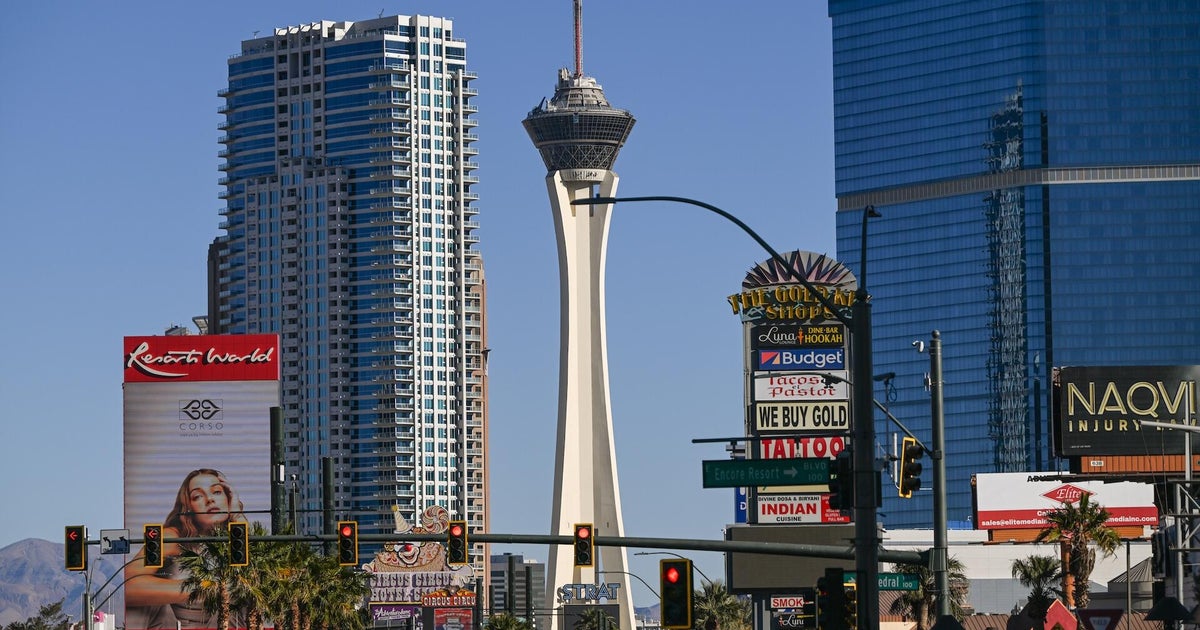
Tourism in Las Vegas is slumping this summer, costing the city billions. That could signal trouble ahead for the U.S. economy. Andres Gutierrez has new details.


Source link

TikTok faces lawsuits over mental health risks

0
TikTok faces lawsuits over mental health risks


Attorneys general in 14 states and Washington, D.C., accuse TikTok of designing its app to keep users hooked. Court-released edited video shows some company staff discussing the toll it can take on children and teens.


Source link

North Korea test fires 2 new antiair missiles

0
North Korea test fires 2 new antiair missiles

North Korean leader Kim Jong Un supervised the test-firing of two types of new antiair missiles, state media said Sunday, displaying his expanding military capabilities as the South Korean and U.S. militaries carry out joint drills.

The North’s official Korean Central News Agency said the test Saturday proved the missiles effective in countering aerial threats such as drones and cruise missiles, and that Kim assigned unspecified “important” tasks to defense scientists ahead of a major political conference expected early next year.

The report did not specify the missiles that were tested or where the event took place. It did not mention any remarks by Kim directed at Washington or Seoul.

North Korean leader Kim Jong Un

North Korean leader Kim Jong Un, left, supervises the test-firing of two types of new anti-air missiles at an undisclosed location in North Korea. 

Korean Central News Agency/Korea News Service via AP


The test coincided with new South Korean President Lee Jae Myung ‘s trip to Tokyo for a summit with Japanese Prime Minister Shigeru Ishiba, where they vowed to strengthen bilateral cooperation and their trilateral partnership with the United States to address common challenges, including North Korea’s nuclear ambitions. Lee was to depart for Washington on Sunday for a summit with President Trump.

Kim’s government has repeatedly dismissed calls by Seoul and Washington to restart long-stalled negotiations aimed at winding down his nuclear weapons and missiles programs, as he continues to prioritize Russia as part of a foreign policy aimed at expanding ties with nations confronting the United States.

Since Russia’s invasion of Ukraine, Kim has sent thousands of troops and large shipments of weapons, including artillery and ballistic missiles, to help fuel President Vladimir Putin’s warfighting.

That has raised concerns Moscow could provide technology that strengthens Kim’s nuclear-armed military, with experts pointing to North Korea’s aging antiair and radar systems as a likely area of cooperation.

South Korea’s previous conservative government said in November that Russia supplied missiles and other equipment to help strengthen air defenses of the North Korean capital of Pyongyang, but did not specify which systems were provided.

Kim held a ceremony in Pyongyang last week to honor North Korean soldiers who fought in Ukraine, awarding state “hero” titles to those who returned and placing medals beside 101 portraits of the fallen, praising them as “great men, great heroes and great patriots,” state media reported.

According to South Korean assessments, North Korea has sent around 15,000 troops to Russia since last fall and about 600 of them have died in combat. Kim has also agreed to send thousands of military construction workers and deminers to Russia’s Kursk region, a deployment South Korean intelligence believes could happen soon.


Source link

8/23: CBS Weekend News – CBS News

0
8/23: CBS Weekend News – CBS News


Watch CBS News


Texas Republicans take victory lap after redistricting vote, Democrats vow to fight back; Minnesota hunting dog Bruno chases down foul balls


Source link

Del Mar horse racing consensus picks for Sunday, August 24, 2025 – Orange County Register

0
Del Mar horse racing consensus picks for Sunday, August 24, 2025 – Orange County Register


The consensus box of Del Mar horse racing picks comes from handicappers Bob Mieszerski, Eddie Wilson, Kevin Modesti and Mark Ratzky. Here are the picks for thoroughbred races on Sunday, August 24, 2025.

Trouble viewing on mobile device? See consensus picks

Enjoy the consensus horse racing picks online? Subscribe

Sign up for Ponies Express newsletter and get the latest news and tips on wagers for weekend Horse Racing at Santa Anita and other Southern California tracks in your inbox. Subscribe here.


Source link

Angels’ Robert Stephenson hopes to finish season healthy – Press Enterprise

0
Angels’ Robert Stephenson hopes to finish season healthy – Press Enterprise


ANAHEIM — Robert Stephenson is back. Again.

This time, he’s hoping it’s for good.

A day after Stephenson pitched in a game for the first time in 2½ months, he was somewhat reserved in celebrating the end of what has been nearly two full seasons of rehab.

“It’s definitely not 100%,” Stephenson said. “It obviously feels good, but there’s definitely times that I’ll have to just be careful with it and know that I can’t push it and really just let things go if it doesn’t feel good. Yesterday was kind of one of those days where I felt like I didn’t want to let it go too much, just to be careful with it. But having this offseason to help it fully recover in the next year, I can come back and be completely back to 100%.”

Asked for what he hopes to get out of the final five weeks of the season, he said: “The No. 1 thing is my health. I’d like to stay active the whole time. I don’t want to go back on the IL. I want to prioritize my health and be able to pitch these last five weeks of the season.”

Stephenson, 32, signed a three-year, $33-million deal prior to the 2024 season. He missed all of last season rehabbing from Tommy John surgery, finally making his Angels debut in May. Two games later, Stephenson was out again, this time with what described as a stretched nerve in his bicep.

He pitched a perfect inning Friday night, ending his latest rehab.

“Everything felt good,” Stephenson said Saturday. “I wasn’t quite as sharp as I was last time in May, but we’ll get there. It’s just going to take a little bit to just get better burying breaking balls, especially with two strikes. But I’m not going to be unhappy or not going to be mad about quick innings.”

For now, Stephenson is probably not going to be able to pitch on back-to-back days.

“We have this guy signed for a multi-year deal,” interim manager Ray Montgomery said. “We saw a setback earlier in the year. We don’t want to do anything that jeopardizes that.”

Stephenson has one year left on his contract. The Angels also have an option for just $2.5 million in 2027, the result of a clause that was triggered when he had elbow surgery.

If the Angels could keep Stephenson healthy, he could provide needed depth for the bullpen.

“It sets the bullpen up in a better flow,” Montgomery said.

TAYLOR IMPROVING

Utilityman Chris Taylor took ground balls Saturday and declared that he’s almost ready to return to action. Taylor has been out since July 25 with a broken hand.

Taylor broke his hand in early June and needed six weeks of rehab. The second time, though, he said the fracture was displaced, so he had surgery to have a screw inserted, and that’s sped up the recovery.

“I’m 3½ weeks since surgery and compared to where it was 3½ weeks after the first time, it’s like night and day,” Taylor said.

Taylor said just needs some live at-bats. The Angels could send him for a rehab assignment or some type of simulated game.

“I don’t know for sure,” Taylor said, “but I feel close.”

NOTES

Right-hander José Soriano was transferred from the paternity list to the restricted list Saturday. It was simply a paperwork move because the paternity list has a three-day limit and Soriano needed one more day to get back from the Dominican Republic, where the baby was born. Soriano is expected to rejoin the team Sunday, at which point the Angels will have to take one of their other pitchers off the roster. Soriano is scheduled to start Monday in Texas. …

Designated hitter Jorge Soler (back) continues to run and throw, but he still hasn’t taken any swings, Montgomery said. “He is progressing,” Montgomery said. “It’s just a tolerance thing. Day to day.” …

Closer Kenley Jansen said he was happy to hear that the Baseball Writers’ Assn. of America established a Relief Pitcher of the Year Award, to begin in 2026. “I think it’s nice to show credit or importance of what a bullpen means to a team,” Jansen said. Jansen is a strong Hall of Fame candidate, but he’s received Cy Young votes in only one season. He finished fifth in 2017. Jansen won the Trevor Hoffman National League Reliever of the Year, which is awarded by MLB, in 2016 and 2017. …

Former Angels infielder Kevin Newman signed a minor league deal with the Detroit Tigers. The Angels released Newman when they acquired Oswald Peraza at the trade deadline.

UP NEXT

Cubs (RHP Jameson Taillon, 8-6, 4.26) at Angels (RHP Kyle Hendricks, 6-8, 4.93), 1:07 p.m. Sunday, FanDuel Sports Network West, 830 AM


Source link

Judge rules Trump can’t deny funds to L.A., other ‘sanctuary’ cities

0
Judge rules Trump can’t deny funds to L.A., other ‘sanctuary’ cities

The Trump administration cannot deny funding to Los Angeles and 30 other cities and counties because of “sanctuary” policies that limit their cooperation with federal immigration agencies, a judge ruled late Friday.

The judge issued a preliminary injunction that expands restrictions the court handed down in April that blocked funding cuts to 16 cities and counties, including San Francisco and Santa Clara, after federal officials classified them as “sanctuary jurisdictions.”

U.S. District Judge William Orrick of the federal court in San Francisco ruled then that Trump’s executive order cutting funding was probably unconstitutional and violated the separation of powers doctrine.

Friday’s order added more than a dozen more jurisdictions to the preliminary injunction, including Los Angeles, Alameda County, Berkeley, Baltimore, Boston and Chicago.

Mayor Karen Bass applauded the court’s decision.

“Another win for our city as the courts continue to make clear that the federal government’s attempts to inflict their cruel policies on Angelenos are unlawful,” Bass said in a statement to the Times. “We will always defend the rights of Angelenos in the face of these continued assaults on our city.”

In a statement, a spokesperson for the White House said the Trump administration expected to ultimately win in its effort on appeal.

“The government — at all levels — has the duty to protect American citizens from harm,” Abigail Jackson, a spokesperson for the White House, said in a statement. “Sanctuary cities interfere with federal immigration enforcement at the expense and safety and security of American citizens. We look forward to ultimate vindication on the issue.”

The preliminary injunction is the latest chapter in an ongoing effort by the Trump administration to force “sanctuary cities” to assist and commit local resources to federal immigration enforcement efforts.

Earlier this month, the U.S. Department of Justice published a list of what it determined to be sanctuary jurisdictions, or local entities that have “policies, laws, or regulations that impede enforcement of federal immigration laws.”

“Sanctuary policies impede law enforcement and put American citizens at risk by design,” Atty. Gen. Pamela Bondi said in a statement accompanying the published list.

Several cities and counties across the country have adopted sanctuary city policies, but specifics as to what extent they’re willing — or unwilling — to do for federal immigration officials have varied.

The policies typically do not impede federal officials from conducting immigration enforcement activities, but largely keep local jurisdictions from committing resources to the efforts.

The policies also don’t prevent local agencies from enforcing judicial warrants, which are signed by a judge. Cooperation on “detainers” or holds on jailed suspects issued by federal agencies, along with enforcement of civil immigration matters, is typically limited by sanctuary policies.

Federal officials in the suit have so far referred to “sanctuary” jurisdictions as local governments that don’t honor immigration detainer requests, don’t assist with administrative warrants, don’t share immigration status information, or don’t allow local police to assist in immigration enforcement operations.

Orrick noted that the executive orders threatened to withhold all federal funding if the cities and counties in question did not adhere to the Trump administration’s requests.

In the order, the judge referred to the executive order as a “coercive threat” and said it was unconstitutional.

Orrick, who sits on the bench in the Northern District of California, was appointed by former President Obama.

The Trump administration has been ratcheting up efforts to force local jurisdictions to assist in immigration enforcement. The administration has filed lawsuits against cities and counties, vastly increased street operations and immigration detentions, and deployed National Guard troops to Los Angeles as it increased immigration operations.

The U.S. Department of Justice in June sued Los Angeles, and local officials, alleging its sanctuary city law is “illegal.”

The suit alleged that the city was looking to “thwart the will of the American people regarding deportations” by enacting sanctuary city policies.


Source link

L.A. unions push for ‘New Deal’ ahead of 2028 Olympics

0
L.A. unions push for ‘New Deal’ ahead of 2028 Olympics


A crowd of local union members and organizers formed in front of the classical-style arches of the Los Angeles Memorial Coliseum early Thursday morning, holding a banner with the colorful, iconic Olympic rings and “Fair Games” printed across them.

With the city of Los Angeles set to become a mega sporting events capital of the world — scheduled to host the FIFA World Cup, the Super Bowl, the Olympic and Paralympic Games all in the next few years — labor groups pushed for what they are calling a “New Deal” to get the city and the LA28 Olympics organizing committee to make commitments to improve the lot of working people.

The unions are calling for multibillion-dollar investments to build 50,000 units of housing, a prohibition on Airbnb and other short-term rentals, more transparency in venue agreements and protections for immigrant workers — as well as foreign visitors and fans — from federal raids.

“Let’s fight for our future, let’s fight for our democracy. Because together we can hold LA28 and the [International Olympic Committee] accountable,” said Victor Sanchez, executive director of advocacy group Los Angeles Alliance for a New Economy, at the Thursday rally.

Union officials noted that world sporting events have often failed to produce lasting benefits for host cities, causing price increases that displace low-income residents and leaving communities indebted.

“After the Games are over, what’s left for L.A.? “ said Armando Elenes, secretary-treasurer of United Farm Workers, in an interview.

Olympic organizers and corporate partners rejected the idea that local residents would be left out of the economic benefits of hosting the Games.

Jacie Prieto Lopez, a spokesperson for LA28, said in a statement that the Olympic and Paralympic Games “will mean good-paying jobs and real opportunities for working people in Los Angeles, including benefits that reach the neighborhoods and families who keep this city running.”

“In collaboration with the City of Los Angeles, we look forward to our partnerships with local unions and remain confident the Games will bring positive economic impact to the region and leave behind a stronger future for working people,” Lopez said.

The region’s intractable housing and homelessness crisis is at the core of the union push.

The campaign calls for the International Olympic Committee to end its partnership with Airbnb, which it announced in 2019 and is set to last through 2028, covering five Games. Short-term rental companies have been accused of depleting housing stock by removing them from the long-term rental market, thereby driving up rents and exacerbating L.A.’s homelessness crisis.

And it calls on the Olympic committee as well as LA28 to contribute $5 billion to fund housing construction.

Airbnb representatives pushed back on claims that it hurt housing stock. The company cited a study it published last year that found it had generated $4.4 billion in economic activity in L.A. in 2023, supporting thousands of jobs and bringing in $1.2 billion in tax revenue.

“Airbnb is focused on ensuring Los Angeles’ visitors have an affordable place to stay, while the city gets the revenue it needs to prevent cuts to public services — all without taxing Angelenos,” Justin Wesson, a senior public policy manager at Airbnb, said in a statement. “UNITE HERE continues to put hotel special interests ahead of what’s best for locals.”

The company said it fills a crucial lodging gap, with the 2028 Olympics expected to draw as many as 2.3 million tourists to the Los Angeles region. Hotels in the Los Angeles area can accommodate approximately 174,000 guests per day, out of the estimated need of accommodating about 575,000 guests per day, according to Airbnb.

The International Olympic Committee did not immediately respond to a request for comment.

Kurt Petersen, co-president of Unite Here Local 11, said that in the early stages LA28 Chairman Casey Wasserman had said that if Los Angeles won its bid to host the Olympics, it would build an Olympic Village with 17,000 beds for athletes, coaches and staff that would later be converted into permanent housing. Those plans in L.A. fell through, Petersen said.

“Housing is the No. 1 problem for everyone,” Petersen said. “We gave [housing construction] up here. and we’re saying ‘no no no.’ We need to have that vision — that vision that somehow disappeared.”

A spokesperson for LA28 said Wasserman’s comments were made before a bid was submitted. The city’s official bid to host the Olympics had named UCLA’s campus as the site for the Olympic and Paralympic Village.


Source link

Taiwan edges Aruba to make title game – Press Enterprise

0
Taiwan edges Aruba to make title game – Press Enterprise


SOUTH WILLIAMSPORT, Pa. — Liu Wei-Heng pitched 5⅓ scoreless innings to help Taiwan beat Aruba 1-0 in their Little League World Series international semifinal Saturday, giving Taiwan a chance to win its first LLWS title since 1996.

The Taiwanese on Sunday will play the winner of the U.S. semifinal between Connecticut and Nevada.

In a game dominated by defense, Chen Shi-Hong opened up the third inning with a full-count walk. He advanced on a passed ball and a single, then scored on an errant throw from third baseman Liam Peña Caraballo to first.

Facing runners on second and third with nobody out, Aruba pitcher Jayderick Wederfoor limited the damage by escaping the jam.

Taiwan has won 17 Little League World Series titles – including five straight from 1977 to 1981 – the most of any country besides the United States. Aruba was trying for its first championship appearance.

Liu allowed four hits and struck out seven, leading his team from Taipei to its third shutout in four games at the tournament.

Aruba threatened in its last at-bat when Emerson Mercado hit a leadoff single and advanced on a passed ball. Liam drew a one-out walk, and the runners advanced on a sacrifice bunt. But Chen Qi-Sheng struck out Prinze Kingsale, ending the game.


Source link

Hemet woman accused of $195,000 Ponzi scheme and threatening victims with deportation – Press Enterprise

0
Hemet woman accused of 5,000 Ponzi scheme and threatening victims with deportation – Press Enterprise


A Hemet woman was arrested this week on suspicion of defrauding seven people out of nearly $200,000 in a Ponzi scheme that falsely promised profits from a wholesale avocado business, authorities said on Friday, Aug. 22.

Riverside County sheriff’s deputies received a fraud report on April 23. Investigators determined that between 2023 and 2025, Consuelo Carrasco-Ramirez, 53, persuaded victims to invest thousands of dollars each in what she claimed was a lucrative produce venture, according to a news release.

Instead, Carrasco-Ramirez pocketed the roughly $195,000 for personal use, investigators said. She allegedly targeted members of the Hispanic community and, in some cases, threatened to have them deported if they did not comply, the release stated.

Carrasco-Ramirez was arrested Wednesday, Aug. 20, and booked into the Cois Byrd Detention Center on suspicion of theft by false pretenses, grand theft and passing counterfeit checks. Her bail was set at $193,000.

Sheriff’s officials said they believe there may be additional victims. Anyone with information is asked to contact Master Investigator Lance Colmer through Riverside Sheriff’s dispatch at 951-776-1099 or the Perris Sheriff’s Station at 951-210-1000.


Source link

Riverside school board urged to take stand on transgender athletes – Press Enterprise

0
Riverside school board urged to take stand on transgender athletes – Press Enterprise

Speakers called out the Riverside school board Thursday, Aug. 21, for not taking a stand for or against transgender athletes and accused the district of allowing a trans student to be bullied online.

The comments came nearly a week after a district social media post announced the forfeit of a girls volleyball game between Poly High School and Jurupa Valley High School. The district’s post drew criticism by some who say it allowed for the targeting and bullying of a transgender athlete on the Jurupa Valley High team.

RELATED: Riverside Unified social media post on volleyball forfeit encouraged trans bullying, say students

The Riverside Unified School District’s Aug. 15 Instagram post did not say why the team forfeited that day’s match, but speculation on social media, by Poly students who protested this week and parents of Poly players who spoke to Fox News allege the team did so in protest of  AB Hernandez, a transgender athlete from Jurupa Valley who has been criticized in the past.

In a Wednesday, Aug. 20, statement, Riverside schools spokesperson Liz Pinney-Muglia did not explain why Poly forfeited the game. She said later she could not comment on individual students or athletes.

During Thursday’s meeting, Riverside school board member Amanda Vickers suggested that the decision to forfeit was made by team members.

1 of 7

Riverside mother Maria Carrillo, wearing a Save Girls’ Sports T-shirt, is seen Thursday, Aug. 21, 2025, after speaking to the Riverside Unified School District board. (Photo by Terry Pierson, The Press-Enterprise/SCNG)

Expand

Riverside school board President Brent Lee said the board could not ignore what was happening but said trustees and the district had to follow state law and the state Education Code.

“Every young person entrusted to our schools deserves dignity and respect and the opportunity to learn and participate fully in the life of their school,” Lee said.

He said the district was committed to following the law AB 1266, the School Success and Opportunity Act. The 2014 law allows transgender and gender-nonconforming students to use sex-segregated facilities and participate in school programs.

“We don’t get to pick and choose which laws we like or don’t like,” Lee said.

Twenty speakers on both sides of the issue called on the board to take a stance during the meeting at the Riverside Adult School.

Abigail Jones, an alum of Riverside’s Martin Luther King High School and a former track athlete, said that in her 12 years in the district she had never seen the announcement of a canceled game.

She said that, when other athletes refused to play against her because she was a transgender athlete, the rest of the team still showed up to play. Canceling the game was unfair to the athletes and the community, Jones said.

“There is no middle ground,” Jones said. “To try to take a neutral stance is to allow the injustice and harassment to continue.”

Jones was the subject of controversy last year after a student filed a lawsuit that accused Jones of taking her place on a cross country team and alleged that the district violated her free speech.

Jones called the post another example of the district creating a platform for anti-LGBTQ viewpoints. She alleged that last year the district allowed hundreds of students to violate the dress code by wearing T-shirts that said “XX ≠ XY” to harass her.

“Take down the post, protect all students,” Jones said.

Sandy Roy said the district doesn’t have accountability for what other people say because they have freedom of speech.

But that freedom applies to the board as well, Roy said, and constituents want to know where board members stand — particularly with two of the board’s seats coming up for election in 2026.

Roy applauded the girls’ volleyball team for standing up against something in which it didn’t believe.

“We don’t want to play in a co-ed game, we want to play against girls,” Roy said the students were saying.

She called it a safety issue and said women were a protected class under Title IX, the 1972 federal law that prevents sex-based discrimination, harassment and violence in education institutions that receive federal money.

“That is the whole point of Title IX,” Roy said.

Hernandez is a senior who has competed on Jurupa Valley’s girls varsity volleyball and track and field teams since 2022-23. Hernandez was the subject of protests during last season’s track and field season. Hernandez placed first in the girls high jump and triple jump events at the California Interscholastic Federation State Championships in May and also finished second in the girls long jump.

The CIF introduced a pilot entry program before the state meet that allowed an additional student to compete in the events in which Hernandez entered. The program allowed a cisgender female competitor who was displaced by Hernandez to share placings in those events.

Nereyda Hernandez, Hernandez’s mother, was among those who spoke Thursday.

She said the state Education Code protects all students from discrimination and that denying her daughter equal participation was a violation of the law.

Hernandez said her daughter was not the issue, and that a coordinated effort outside the district was spreading fear and pitting parents against each other by using religion.

“This has nothing to do with fairness in sports and everything to do with erasing transgender children,” Hernandez said.

Hernandez said Vickers invited harassment of her child through an interview with Fox News in which Vickers said the forfeit was “significant for the sake of the safety of the female athletes.”

Lee said the district has started another year in a spotlight that does not focus on the district’s missions.

“We are the adults in the room,” Lee said. “… We have not done our job as adults.”

He said this is a nuanced issue and that students on either side have stepped up to lead the conversation, referring to the girls’ volleyball team’s forfeit of the match and a student-led protest at Poly on Wednesday, Aug. 20, that accused the district of creating a platform for anti-LBGTQ+ rhetoric via its social media announcement.

“I don’t know what the answer is, but the answer is not the status quo,” Lee said.

Board member Dr. Jesse Tweed, said that it was a polarizing topic and one that was not taken lightly. The district must follow the law and is not in a position to change it.

“I don’t want to burn the institution over something that we can’t stop or control,” Tweed said. “I want to come together where we can.”

The focus, he said, should be kept on students and he encouraged dialogue, even if it was hard to hear at times.

“I take a position of neutrality because I feel like I can serve best in that capacity,” Tweed said.

Vickers congratulated the girls team on its decision not to play and said that courage demands respect.

“They stood not out of hate, but out of conviction,” Vickers said.


Source link

Trump says he’ll keep extending TikTok shutdown deadline

0
Trump says he’ll keep extending TikTok shutdown deadline

WASHINGTON — President Donald Trump is calling national security and privacy concerns related to TikTok and its Chinese parent company “highly overrated” and said Friday he’ll keep extending the deadline for the popular video-sharing platform until there’s a buyer.

Congress approved a U.S. ban on TikTok unless its parent company, ByteDance, sold its controlling stake. But Trump has so far extended the deadline three times during his second term — with the next one coming up on Sept. 17.

“We’re gonna watch the security concerns,” Trump told reporters, but added, “We have buyers, American-buyers,” and “until the complexity of things work out, we just extend a little bit longer.”

The first extension was through an executive order on Jan. 20, his first day in office, after the platform went dark briefly when a national ban — approved by Congress and upheld by the U.S. Supreme Court — took effect. The second was in April, when White House officials believed they were nearing a deal to spin off TikTok into a new company with U.S. ownership that fell apart after China backed out following Trump’s tariff announcement.

His comments follow the White House starting a TikTok account this week.

“I used TikTok in the campaign,” Trump said.

“I’m a fan of TikTok,” he said. “My kids like TikTok. Young people love TikTok. If we could keep it going.”

As the extensions continue, it appears less and less likely that TikTok will be banned in the U.S. any time soon. The decision to keep TikTok alive through an executive order has received some scrutiny, but the administration has not faced a legal challenge in court — unlike many of Trump’s other executive orders.

Americans are even more closely divided on what to do about TikTok than they were two years ago.

A recent Pew Research Center survey found that about one-third of Americans said they supported a TikTok ban, down from 50% in March 2023. Roughly one-third said they would oppose a ban, and a similar percentage said they weren’t sure.

Among those who said they supported banning the social media platform, about 8 in 10 cited concerns over users’ data security being at risk as a major factor in their decision, according to the report.


Source link

Trump halts work on nearly complete New England offshore wind project

0
Trump halts work on nearly complete New England offshore wind project

The Trump administration halted construction on a nearly complete offshore wind project near Rhode Island as the White House continues to attack the battered U.S. offshore wind industry that scientists say is crucial to the urgent fight against climate change.

Danish wind farm developer Orsted says the Revolution Wind project is about 80% complete, with 45 out of its 65 turbines already installed.

Despite that progress — and the fact that the project had cleared years of federal and state reviews — the Bureau of Ocean Energy Management issued the order Friday, saying the federal government needs to review the project and “address concerns related to the protection of national security interests of the United States.”

It did not specify what the national security concerns are.

President Donald Trump has made sweeping strides to prioritize fossil fuels and hinder renewable energy projects. Trump recently called wind and solar power “THE SCAM OF THE CENTURY!” in a social media post and vowed not to approve wind or “farmer destroying Solar” projects. “The days of stupidity are over in the USA!!!” he wrote on his Truth Social site this week.

Scientists across the globe agree that nations need to rapidly embrace renewable energy to stave off the worst effects of climate change, including extreme heat and drought; larger, more intense wildfires and supercharged hurricanes, typhoons and rainstorms that lead to catastrophic flooding.

Rhode Island Gov. Dan McKee criticized the stop-work order and said he and Connecticut Gov. Ned Lamont “will pursue every avenue to reverse the decision to halt work on Revolution Wind” in a post on X.

Construction on Revolution Wind began in 2023, and the project was expected to be fully operational next year. Orsted says it is evaluating the financial impact of stopping construction and is considering legal proceedings.

Revolution Wind is located more than 15 miles (24 kilometers) south of the Rhode Island coast, 32 miles (51 kilometers) southeast of the Connecticut coast and 12 miles (19 kilometers) southwest of Martha’s Vineyard. Rhode Island is already home to one offshore wind farm, the five-turbine Block Island Wind Farm.

Revolution Wind was expected to be Rhode Island and Connecticut’s first commercial-scale offshore wind farm, capable of powering more than 350,000 homes. The densely populated states have minimal space available for land-based energy projects, which is why the offshore wind project is considered crucial for the states to meet their climate goals.

“This arbitrary decision defies all logic and reason — Revolution Wind’s project was already well underway and employed hundreds of skilled tradesmen and women. This is a major setback for a critical project in Connecticut, and I will fight it,” Connecticut Sen. Richard Blumenthal said in a statement.

Wind power is the largest source of renewable energy in the U.S. and provides about 10% of the electricity generated in the nation.

Green Oceans, a nonprofit that opposes the offshore wind industry, applauded the BOEM’s decision. “We are grateful that the Trump Administration and the federal government are taking meaningful action to preserve the fragile ocean environment off the coasts of Rhode Island and Massachusetts,” the nonprofit said in a statement.

This is the second major offshore wind project the White House has halted. Work was stopped on Empire Wind, a New York offshore wind project, but construction was allowed to resume after New York Sen. Chuck Schumer and Gov. Kathy Hochul intervened.

“This administration has it exactly backwards. It’s trying to prop up clunky, polluting coal plants while doing all it can to halt the fastest growing energy sources of the future – solar and wind power,” said Kit Kennedy, managing director for the power division at Natural Resources Defense Council, in a statement. “Unfortunately, every American is paying the price for these misguided decisions.”

___

Reporter Jennifer McDermott contributed from Providence, Rhode Island, and Matthew Daly contributed from Washington.

___

The Associated Press’ climate and environmental coverage receives financial support from multiple private foundations. AP is solely responsible for all content. Find AP’s standards for working with philanthropies, a list of supporters and funded coverage areas at AP.org.


Source link

Texas Gov. Abbott vows to approve GOP-leaning congressional voting map

0
Texas Gov. Abbott vows to approve GOP-leaning congressional voting map

AUSTIN, Texas — Texas Gov. Greg Abbott on Saturday promised to quickly sign off on a new, Republican-leaning congressional voting map gerrymandered to help the GOP maintain its slim majority in Congress.

“One Big Beautiful Map has passed the Senate and is on its way to my desk, where it will be swiftly signed into law,” Abbott said in a statement.

Texas lawmakers approved the final plans just hours before, inflaming an already tense battle unfolding among states as governors from both parties pledge to redraw maps with the goal of giving their political candidates a leg up in the 2026 midterm elections.

In California, Democratic Gov. Gavin Newsom has approved a special election to take place in November for residents to vote on a redrawn congressional map designed to help Democrats win five more House seats next year.

Meanwhile, President Donald Trump has pushed other Republican-controlled states, including Indiana and Missouri, to also revise their maps to add more winnable GOP seats. Ohio Republicans were also already scheduled to revise their maps to make them more partisan.

In Texas, the map includes five new districts that would favor Republicans.

The effort by Trump and Texas’ Republican-majority Legislature prompted state Democrats to hold a two-week walkout and kicked off a wave of redistricting efforts across the country.

Democrats had prepared for a final show of resistance, with plans to push the Senate vote into the early morning hours in a last-ditch attempt to delay passage. Yet Republicans blocked those efforts by citing a rule violation.

“What we have seen in this redistricting process has been maneuvers and mechanisms to shut down people’s voices,” said state Sen. Carol Alvarado, leader of the Senate Democratic caucus, on social media after the new map was finalized by the GOP-controlled Senate.

Democrats had already delayed the bill’s passage during hours of debate, pressing Republican Sen. Phil King, the measure’s sponsor, on the proposal’s legality, with many alleging that the redrawn districts violate the Voting Rights Act by diluting voters’ influence based on race.

King vehemently denied that accusation, saying, “I had two goals in mind: That all maps would be legal and would be better for Republican congressional candidates in Texas.”

“There is extreme risk the Republican majority will be lost” in the House if the map does not pass, King said.

On a national level, the partisan makeup of existing districts puts Democrats within three seats of a majority. The incumbent president’s party usually loses seats in the midterms.

The Texas redraw is already reshaping the 2026 race, with Democratic Rep. Lloyd Doggett, the dean of the state’s congressional delegation, announcing Thursday that he will not seek reelection to his Austin-based seat if the new map takes effect. Under the proposed map, Doggett’s district would overlap with that of another Democratic incumbent, Rep. Greg Casar.

Redistricting typically occurs once a decade, immediately after a census. While some states have their own limitations, there is no national impediment to a state trying to redraw districts in the middle of the decade.

The U.S. Supreme Court in 2019 ruled that the Constitution does not prohibit partisan gerrymandering to increase a party’s clout, only gerrymandering that’s explicitly done by race.

More Democratic-run states have commission systems like California’s or other redistricting limits than Republican ones do, leaving the GOP with a freer hand to swiftly redraw maps. New York, for example, cannot draw new maps until 2028, and even then only with voter approval.

Republicans and some Democrats championed a 2008 ballot measure that established California’s nonpartisan redistricting commission, along with a 2010 one that extended its role to drawing congressional maps.

Both sides have shown concern over what the redistricting war could lead to.

California Assemblyman James Gallagher, the Republican minority leader, said Trump was “wrong” to push for new Republican seats elsewhere. But he warned that Newsom’s approach, which the governor has dubbed “fight fire with fire,” is dangerous.

“You move forward fighting fire with fire, and what happens?” Gallagher asked. “You burn it all down.”

___

Cappelletti reported from Washington and Golden from Seattle. Associated Press writer Kimberlee Kruesi contributed to this report from Providence, Rhode Island.


Source link

Home Privacy Policy Terms Of Use Anti Spam Policy Contact Us Affiliate Disclosure DMCA Earnings Disclaimer