Twenty-two years ago, Silicon Valley executive Henry Evans had a massive stroke that left him mute and paralyzed from the neck down. But that didn’t prevent him from becoming a leading advocate of adaptive robotic tech to help disabled people – or from writing country songs, one letter at a time. Correspondent John Blackstone talks with Evans about his upbeat attitude and unlikely pursuits.
Washington — Russia’s Vladimir Putin agreed at his summit with President Trump to allow the U.S. and its European allies to offer Ukraine a security guarantee resembling NATO’s collective defense mandate as part of an eventual deal to end the 3 1/2-year war in Ukraine, special U.S. envoy Steve Witkoff said Sunday.
“We were able to win the following concession: That the United States could offer Article 5-like protection, which is one of the real reasons why Ukraine wants to be in NATO,” he told CNN’s “State of the Union.” He added that it “was the first time we had ever heard the Russians agree to that” and called them “game-changing.”
Article 5, at the heart of the 32-member military alliance, states that an armed attack against one or more of the members shall be considered an attack against all members.
Witkoff, who had joined Secretary of State Marco Rubio for the talks Friday at a military base in Alaska, offered few details on how such an agreement would work. But it appeared to be a major shift for Putin and could serve as a workaround to his long-standing objection to Ukraine’s potential NATO membership.
Outlining some of the details about the private discussions, Witkoff also said Russia had agreed to enact a law that it would not “go after any other European countries and violate their sovereignty. And there was plenty more.”
European Commission President Ursula von der Leyen, speaking at a news conference in Brussels with Ukrainian President Volodymyr Zelenskyy, applauded the move. “We welcome President Trump’s willingness to contribute to Article 5-like security guarantees for Ukraine and the ‘Coalition of the willing’ — including the European Union — is ready to do its share,” she said.
Zelenskyy thanked the United States for recent signals that Washington was willing to support such guarantees, but said much was unclear.
“It is important that America agrees to work with Europe to provide security guarantees for Ukraine,” he said, “But there are no details how it will work, and what America’s role will be, Europe’s role will be and what the EU can do, and this is our main task, we need security to work in practice like Article 5 of NATO, and we consider EU accession to be part of the security guarantees.”
Witkoff defended Mr. Trump’s decision to abandon his push that Russian agree to an immediate ceasefire, which the president had set as a benchmark going into the meeting. Witkoff said the Republican president had pivoted toward a peace deal because so much progress was made.
“We covered almost all the other issues necessary for a peace deal,” Witkoff said, without elaborating. “We began to see some moderation in the way they’re thinking about getting to a final peace deal.”
“If he did this now, the moment the president puts those additional sanctions, that’s the end of the talks,” Rubio said. “We want to wind up with a peace deal that ends this war so Ukraine can go on with the rest of their lives and rebuild their country and be assured that this is never going to happen again. That’s the goal here.”
Rubio said that Kyiv “is going to have to accept things, but they’re going to have to get things too.”
“For example, Ukraine is a sovereign country. They have a right, like every sovereign country does in the world, to enter into security alliances with other countries to prevent an invasion in the future, to prevent threats to their national security,” Rubio said. “That’s not an unreasonable request. That’s something needs to be worked on.”
Zelenskyy and Europeans leaders, who heard from Mr. Trump after the summit, are scheduled to meet with him at the White House on Monday.
“I’m not saying we’re on the verge of a peace deal, but I am saying that we saw movement, enough movement to justify a follow up meeting with Zelenskyy and the Europeans, enough movement for us to dedicate even more time to this,” Rubio said.
WEST SACRAMENTO — Right fielder Jo Adell was camped under a fly ball, with a runner at third getting ready to tag up. Suddenly, center fielder Bryce Teodosio came flying into the picture. He made the catch on a full sprint, then he fell to the ground, as the run scored.
“When I caught that ball, I knew that I definitely should have let him catch it,” Teodosio said on Sunday, two days later. “We talked about it. We’re going to continue to communicate and work.”
The Angels put Teodosio in center field just about two weeks ago in hopes that he would solve a defensive problem the Angels have faced all year.
“The communication piece is real,” interim manager Ray Montgomery said. “It’s important to go after everything and catch balls, but there’s also times when you defer, given the situation.”
Adell, who spent most of the year having priority as the center fielder, said that it’s a good problem to have when two outfielders can cover enough ground that conflicts could arise.
“He’s being aggressive, and we’ve kind of got to find the rhythm and the language for what we want to do in the gaps,” Adell said. “We’re getting there. I told him, ‘I’m glad that you’re erring on the side of being aggressive.’…
“That’s all the learning process. He’s definitely a smart kid. He’s learning every day.”
When Ward ran into Teodosio in Detroit, he said it was because Teodosio didn’t call the ball.
“I’m just instilling in him you gotta call it, even if you don’t think I’m there or nobody’s there,” Ward said. “It doesn’t hurt to call it.”
Ward said he enjoys playing next to a center fielder who covers so much ground.
“It’s great for the corner outfielders to take less off our legs,” Ward said. “It’s awesome that he has that capability. I don’t care if he takes a ball that I should catch. It doesn’t matter to me.”
PERAZA’S TURN
Third baseman Oswald Peraza got his second start of the week on Sunday. Not coincidentally, both games have been started by José Soriano.
Soriano is a ground ball specialist, and Peraza is known for his defense.
The Angels acquired Peraza at the trade deadline. He had just one hit in his first eight at-bats with the Angels, after hitting .152 with the New York Yankees.
Montgomery said Angels hitting coaches have done “extensive stuff” with Peraza to try to get more out of him at the plate.
“I think a big piece to what he’s trying to do is just to really stay grounded in his legs and use a little bit more of the middle of the field so he can kind of shorten the movements in his swing,” Montgomery said. “He hits the ball hard, like there’s a lot of good under-the-hood type things, so we’ve just got to access those.”
NOTES
The Angels designated right-hander Connor Brogdon for assignment on Sunday. They recalled right-hander José Fermin from Triple-A. …
Right-hander Victor Mederos will be good to go for a full start on Monday. Mederos threw just 72 pitches in four innings in his previous start, because he was working on three days rest. He’ll be on six days rest when he pitches on Monday. …
Nolan Schanuel’s three-hit game on Saturday followed a 4-for-40 slump. “If you ask him, he probably felt like he was a little jumpy, and he just settled down last night and let the ball come to him a little bit more instead of trying to go out and get it,” Montgomery said.
UP NEXT
Reds (RHP Brady Singer, 10-9, 4.31) at Angels (RHP Victor Mederos, 0-0, 5.63), Monday, 6:38 p.m., FanDuel Sports Network West, 830 AM
WEST SACRAMENTO — Right fielder Jo Adell was camped under a fly ball, with a runner at third getting ready to tag up. Suddenly, center fielder Bryce Teodosio came flying into the picture. He made the catch on a full sprint, then he fell to the ground, as the run scored.
“When I caught that ball, I knew that I definitely should have let him catch it,” Teodosio said on Sunday, two days later. “We talked about it. We’re going to continue to communicate and work.”
The Angels put Teodosio in center field just about two weeks ago in hopes that he would solve a defensive problem the Angels have faced all year.
“The communication piece is real,” interim manager Ray Montgomery said. “It’s important to go after everything and catch balls, but there’s also times when you defer, given the situation.”
Adell, who spent most of the year having priority as the center fielder, said that it’s a good problem to have when two outfielders can cover enough ground that conflicts could arise.
“He’s being aggressive, and we’ve kind of got to find the rhythm and the language for what we want to do in the gaps,” Adell said. “We’re getting there. I told him, ‘I’m glad that you’re erring on the side of being aggressive.’…
“That’s all the learning process. He’s definitely a smart kid. He’s learning every day.”
When Ward ran into Teodosio in Detroit, he said it was because Teodosio didn’t call the ball.
“I’m just instilling in him you gotta call it, even if you don’t think I’m there or nobody’s there,” Ward said. “It doesn’t hurt to call it.”
Ward said he enjoys playing next to a center fielder who covers so much ground.
“It’s great for the corner outfielders to take less off our legs,” Ward said. “It’s awesome that he has that capability. I don’t care if he takes a ball that I should catch. It doesn’t matter to me.”
PERAZA’S TURN
Third baseman Oswald Peraza got his second start of the week on Sunday. Not coincidentally, both games have been started by José Soriano.
Soriano is a ground ball specialist, and Peraza is known for his defense.
The Angels acquired Peraza at the trade deadline. He had just one hit in his first eight at-bats with the Angels, after hitting .152 with the New York Yankees.
Montgomery said Angels hitting coaches have done “extensive stuff” with Peraza to try to get more out of him at the plate.
“I think a big piece to what he’s trying to do is just to really stay grounded in his legs and use a little bit more of the middle of the field so he can kind of shorten the movements in his swing,” Montgomery said. “He hits the ball hard, like there’s a lot of good under-the-hood type things, so we’ve just got to access those.”
NOTES
The Angels designated right-hander Connor Brogdon for assignment on Sunday. They recalled right-hander José Fermin from Triple-A. …
Right-hander Victor Mederos will be good to go for a full start on Monday. Mederos threw just 72 pitches in four innings in his previous start, because he was working on three days rest. He’ll be on six days rest when he pitches on Monday. …
Nolan Schanuel’s three-hit game on Saturday followed a 4-for-40 slump. “If you ask him, he probably felt like he was a little jumpy, and he just settled down last night and let the ball come to him a little bit more instead of trying to go out and get it,” Montgomery said.
UP NEXT
Reds (RHP Brady Singer, 10-9, 4.31) at Angels (RHP Victor Mederos, 0-0, 5.63), Monday, 6:38 p.m., FanDuel Sports Network West, 830 AM
José Antonio Rodríguez held a bouquet of flowers in his trembling hands.
It had been nearly a quarter of a century since he had left his family behind in Mexico to seek work in California. In all those years, he hadn’t seen his parents once.
They kept in touch as best they could, but letters took months to cross the border, and his father never was one for phone calls. Visits were impossible: José was undocumented, and his parents lacked visas to come to the U.S.
Now, after years of separation, they were about to be reunited. And José’s stomach was in knots.
He had been a young man of 20 when he left home, skinny and full of ambition. Now he was 44, thicker around the middle, his hair thinning at the temples.
Would his parents recognize him? Would he recognize them? What would they think of his life?
José had spent weeks preparing for this moment, cleaning his trailer in the Inland Empire from top to bottom and clearing the weeds from his yard. He bought new pillows to set on his bed, which he would give to his parents, taking the couch.
Finally, the moment was almost here.
Gerardo Villarreal Salazar, 70, left, is reunited with his grandson Alejandro Rojas, 17.
Leobardo Arellano, 39, left, and his father, José Manuel Arellano Cardona, 70, are reunited after 24 years.
Officials in Mexico’s Zacatecas state had helped his mother and father apply for documents that allow Mexican citizens to enter the U.S. for temporary visits as part of a novel program that brings elderly parents of undocumented workers to the United States. Many others had their visa applications rejected, but theirs were approved.
They had packed their suitcases to the brim with local sweets and traveled 24 hours by bus along with four other parents of U.S. immigrants. Any minute now, they would be pulling up at the East Los Angeles event hall where José waited along with other immigrants who hadn’t seen their families in decades.
José, who wore a gray polo shirt and new jeans, thought about all the time that had passed. The lonely nights during Christmas season, when he longed for the taste of his mother’s cooking. All the times he could have used his father’s advice.
His plan had been to stay in the U.S. a few years, save up some money and return home to begin his life.
But life doesn’t wait. Before he knew it, decades had passed and José had built community and a career in carpentry in California.
Juan Mascorro sings for the reunited families.
He sent tens of thousands of dollars to Mexico: to fund improvements on his parents’ house, to buy machines for the family butcher shop. He sent his contractor brother money to build a two-bedroom house where José hopes to retire one day.
His mother, who likes talking on the phone, kept him informed on all the doings in town. The construction of a new bridge. The marriages, births, deaths and divorces. The creep of violence as drug cartels brought their wars to Zacatecas.
And then one day, a near-tragedy. José’s father, jovial, strong, always cracking jokes, landed in the hospital with a heart that doctors said was failing. He languished there six months on the brink of death.
But he lived. And when he got out, he declared that he wanted to see his eldest son.
A framed artwork depicting the states of California and Zacatecas is a gift for families being reunited.
A full third of people born in Zacatecas live in the U.S. Migration is so common, the state has an agency tasked with attending to the needs of Zacatecanos living abroad. It has been helping elderly Mexicans get visas to visit family north of the border for years.
The state tried to get some 25 people visas this year. But the United States, now led by a president who has vilified immigrants, approved only six.
José had a childhood friend, Horacio Zapata, who also migrated to the U.S. and who hasn’t seen his father in 30 years. Horacio’s father also applied for a visa, but he didn’t make the cut.
Horacio was crestfallen. A few years back, his mother died in Mexico. He had spent his life working to help get her out of poverty, and then never had a chance to say goodbye. He often thought about what he would give to share one last hug with her. Everything. He would give everything.
He and his wife had come with José to offer moral support. He put his arm around his friend, whose voice shook with nerves.
Horacio Zapata, 48, hoped his father would be able to come to Los Angeles through the reunion program, but his visa request was denied.
East L.A. was normally bustling, filled with vendors hawking fruit, flowers and tacos. But on this hot August afternoon, as a car pulled up outside the event hall to deposit José’s parents and the other elderly travelers, the streets were eerily quiet.
Since federal agents had descended on California, apprehending gardeners, day laborers and car wash workers en masse, residents in immigrant-heavy pockets like this one had mostly stayed inside.
The thought crossed José’s mind: What if immigration agents raided the reunion event? But there was no way he was going to miss it.
Suddenly, the director of the Federation of Zacatecas Hometown Assns. of Southern California, which was hosting the reunion, asked José to rise. Slowly, his parents walked in.
Of course they recognized one another. His first thought: How small they both seemed.
José Antonio Rodríguez and his mother, Juana Contreras Sánchez, wipe tears from their eyes after being reunited.
José gathered his mother in an embrace. He handed her the flowers. And then he gripped his father tightly.
This is a miracle, his father whispered. He’d asked the Virgin for this.
His father, whose heart condition persists, was fatigued from the long journey. They all took seats. His father put his head down on the table and sobbed. José stared at the ground, sniffling, pulling up his shirt to wipe away tears.
A mariachi singer performed a few songs, too loudly. Plates of food appeared. José and his parents picked at it, mostly in silence.
At the next table, José Manuel Arellano Cardona, 70, addressed his middle-aged son as muchachito — little boy.
In the coming days, José and his parents would relax into one another’s company, go shopping, attend church. Most evenings, they would stay up past midnight talking.
José Antonio Rodríguez holds a bouquet of flowers for his mother and father.
Eventually, the parents would head back to Zacatecas because of the limit on their visas.
But for now, they were together, and eager to see José’s home. He took them by the arms as he guided them out into the California sun.
Playboy Enterprises announced on Wednesday that it will relocate its headquarters from Los Angeles to Miami Beach, becoming the latest high-profile company to abandon California in favor of what some call more business-friendly environments.
Ben Kohn, chief executive of Playboy, described California as being “anti-business,” saying the state is an “extremely expensive place” to operate.
“We are excited to move the company to the city of Miami Beach, which has been phenomenal to deal with, very pro-business,” Kohn said. “When you look at the cost of doing business in California against the cost of doing business in Florida, and you combine that with the energy of Miami Beach, it made all the sense in the world for Playboy to move there.”
The once-influential media and lifestyle brand, founded in 1953 by the late Hugh Hefner, will establish its new corporate base in a luxury office building called Rivani in Miami Beach. The company, which operates out of an office on Wilshire Boulevard in Westwood, said it plans to be fully moved into the new Miami office by next year.
The publicly traded company did not disclose how many employees it has.
The relocation includes plans for a new Playboy Club with a restaurant and members-only space, as well as multimedia content studios to support the company’s creator network and licensing business.
Developer Robert Rivani has invested over $100 million in the commercial complex, which features wellness facilities, restaurants and meeting spaces.
Miami Beach officials have welcomed the relocation as a significant economic development. The move comes after months of courtship by city commissioners, who successfully competed against offers from other South Florida locations and cities across the country.
Playboy’s departure adds to a growing list of major corporations that have left California in recent years, citing the state’s challenging business environment. Tesla moved its headquarters from Palo Alto to Texas in 2021, while financial services giant Charles Schwab relocated from San Francisco to north Texas the same year. More recently, oil company Chevron announced its departure after 145 years in California, and In-N-Out owner Lynsi Snyder revealed plans to expand into Tennessee.
The corporate exodus has intensified scrutiny of California’s business climate, particularly its high tax rates and complex regulatory environment. California taxes its highest earners at 13.3% on regular income and applies the same rate to investment profits, among the nation’s steepest rates.
Despite the high-profile departures, economists note that California remains the world’s fourth-largest economy and continues to attract investment in technology, biotechnology and entertainment.
For Playboy, the Miami move represents a strategic return to South Florida, where the brand once maintained a significant presence. The company operated its second Playboy Club in Miami, which opened in May 1961, and the Playboy Plaza hotel on Miami Beach in the 1970s.
The company, known for its once ubiquitous men’s magazine, has been hard hit by the travails of the print advertising industry and the rise of online adult entertainment sites.
Playboy reported a net loss of $7.7 million in the second quarter, including one-time charges. Revenue jumped 13% to $28.1 million over the same period a year ago, reflecting a boost in licensing revenue.
Playboy shares, which fell 1.16% to close at $1.71 on Friday, have jumped 17% this year.
California’s public employees not only receive the most generous pension benefits in the nation, but they also receive enviable healthcare and dental benefits. Such generosity, of course, is paid by taxpayers—and in many cases not paid at all. California is amassing a growing level of debt as the costs for those benefits exceed direct state payments.
A new report from California State Controller Malia Cohen explains that “the state’s net liability for retiree health and dental benefits—also known as other post-employment benefits (OPEB)—increased to $91.5 billion.”
That’s a $6.3-billion boost. The reasons include inflation, higher claims and changes in “plan design” that boosted costs, per her office’s statement.
For context, California’s total general-fund budget receipts are around $208 billion and the state recently struggled to shave $20 billion (mostly through gimmicks) from its spending. These liabilities aren’t paid in a single year, but it shows the depth of the problem.
The controller’s report is filled with detail, but paints an unrealistically rosy picture by pointing to ongoing state pre-funding efforts.
As the Sacramento Bee reported, the state began those efforts in 2010 with the goal for having these OPEB benefits fully funded by 2046—but only 9% currently are funded.
The Bee was correct that these liabilities reflect “a long-term financial challenge for California” and “recent decisions to suspend contributions for two years threaten to delay that goal.”
The state’s decision to take that kick-the-can approach is just one example of Gov. Gavin Newsom’s and the Legislature’s reliance on gimmicks—rather than spending cuts—to paper over projected deficits.
What good is a long-term plan to pre-fund benefits if the state simply suspends contributions to temporarily shave $700 million in annual spending?
As noted by David Crane of Govern for California, this is entirely a self-inflicted problem. “California is an embarrassing outlier in providing such an expensive retiree health benefit; e.g., a retired Washington State employee of Medicare age costs 1/10th as much as the same retiree costs California,” he noted in a recent Substack post.
Worse still, this is a problem also mirrored at local government entities. “The state’s extravagance is also mirrored in many of its cities, counties, schools (e.g., LAUSD alone is spending $318 million this year on retiree health costs), colleges, universities and special districts,” he explained.
To what extent Californians believe it is in their interest to lavishly spend on former government workers isn’t clear. But this is a status quo propped up and defended by the state’s powerful government worker unions.
This comes at great cost to taxpayers, both directly in the form of the dollars going toward these perks but also indirectly as fewer tax dollars go toward things that actually benefit the public and instead go toward poorly designed and bloated benefit programs.
It might be news to our state’s leaders at this point, but the national economy is showing signs of recession—and it’s a big risk to expect roaring stock-market gains to bail us out from growing liability costs.
At some point, California will need to stand up to its powerful public-employee unions and pare back these unaffordable benefits.
The consensus box of Del Mar horse racing picks comes from handicappers Bob Mieszerski, Eddie Wilson, Kevin Modesti and Mark Ratzky. Here are the picks for thoroughbred races on Sunday, August 17, 2025.
Enjoy the consensus horse racing picks online? Subscribe
Sign up for Ponies Express newsletter and get the latest news and tips on wagers for weekend Horse Racing at Santa Anita and other Southern California tracks in your inbox. Subscribe here.
In his 22 years climbing the ranks of the Riverside County District Attorney’s Office, Chief Deputy District Attorney John Henry always remained close to his academic roots.
The veteran prosecutor has simultaneously served as a visiting associate clinical professor at his alma mater, LMU Loyola Law in Los Angeles, over the past 26 years, mentoring hundreds of future lawyers in how to conduct trials from start to finish.
And now, Henry, 50, has decided to take an early retirement from the District Attorney’s Office to accept a full-time position as director of trial advocacy programs and associate clinical professor at Loyola Law.
While Henry attributes his departure to personal family reasons that he chose not to disclose, he said the opportunity arose to take the job at Loyola, and he was eager to return to his roots and continue mentoring students.
“The idea that I get to go back to the place where I started and shepherded (students) would be the only thing I would want do other than being at the DA’s Office,” said Henry, who has prosecuted some of the highest profile murder cases in Riverside County during his tenure.
‘Highly decorated coach’
In a statement Friday, Aug. 15, LMU Loyola Law School called Henry a “highly decorated coach” of the law school’s Byrne Trial Advocacy Team since 1999. As such, he helped guide the team to victory at key national competitions, such as the William W. Daniel National Invitational Mock Trial Competition, Loyola’s National Civil Trial Competition, and St. Mary’s Lone Star Classic competition.
After earning his juris doctor degree from Loyola in 1999, Henry went to work as a prosecutor at the Los Angeles County District Attorney’s Office in 2000, working there until 2003, when he left to begin his career as a deputy district attorney for the Riverside County District Attorney’s Office.
The entire time, Henry’s wife, Kamaria, was working alongside him.
“She and I started and finished law school together, started and left the LADA together, and got hired in Riverside together,” Henry said.
Over the decades, Henry proved himself to be an asset to the Riverside County District Attorney’s Office and one of its most valued leaders as he ascended the ranks. Henry supervised the Banning office and the special prosecutions unit and now heads the appellate division. The Riverside resident said he has prosecuted about 10,000 cases over the past two decades.
Office spokesperson Amy McKenzie said Henry was being considered for a promotion to assistant district attorney when he decided to retire and take the job at Loyola. She said Henry has committed to remaining with the office as long as necessary to facilitate a smooth transition until his replacement is appointed.
Meanwhile, Henry said he will commute between Riverside and Los Angeles while temporarily working both jobs.
Major prosecutions
Asked about some of the big cases he prosecuted, Henry noted the September 2006 brutal murder of 16-year-old Moreno Valley runaway Kayla Wood and the November 2006 murder of 4-year-old Javier Terrones Jr. in Wildomar.
Wood’s body was found in the bathtub of a burning duplex in Moreno Valley. Prosecutors said she had been stabbed, sexually assaulted, beaten with beer bottles and had her hair set on fire. Her killers — Roman Aldana, then 18, and his two cousins, Jose Solorza and Anthony Bobadilla, both 15 at the time — were all convicted. Aldana was sentenced to death in 2010.
Henry said it was his only death penalty case, and the only time his father, then a robbery-homicide detective for the Santa Monica Police Department, got to see him in action in the courtroom trying a case.
In the Terrones case, the boy’s father, Javier Terrones Sr., believing his wife was cheating on him with his brother, drove his Cadillac Escalade off the Clinton Keith Road offramp on the southbound 15 Freeway in Wildomar. The vehicle’s rear tire clipped a guardrail and sent the vehicle into a tailspin, ejecting his son and killing him, Henry said.
Terrones, who Henry said was in a meth-induced state at the time, survived, as did his 10-year-old daughter, who also was in the vehicle. Terrones was convicted of murder and attempted murder and sentenced to life in prison.
Henry said it was difficult to keep his composure when he questioned the victim’s sister and mother during trial.
“When I put the victim’s sister on the (witness) stand almost a year later, the sister was describing what they were doing that morning, the day the murder happened, talking about helping Javier Jr. put his shoes on,” Henry said. “I’m standing there, asking these two people questions, and they’re up there crying, and I’m trying hard not to cry myself.”
Looks forward to next chapter
Now, Henry said he is looking forward to this new chapter in his life, and extended gratitude to all those who helped him get to where he is and made sure he “knew what he was doing.”
“At this point in my career,” he said, “it’s nice to do something that doesn’t involve seeing people either in their worst moment or suffering their worst moment. This is all positive.”
ADDIS ABABA, Ethiopia — The human ancestor fossil known as Lucy left Ethiopia for display in a European museum, Ethiopian national media reported Friday, citing Tourism Minister Selamawit Kassa.
Lucy’s skeleton, which is 40% complete, left Ethiopia on Friday and will be displayed at the Czech National Museum in Prague for approximately two months.
Lucy was recovered in Ethiopia in 1974 from what was an ancient lake near fossilized remains of crocodiles, turtle eggs and crab claws. She was a member of Australopithecus afarensis, an early human species that lived in Africa between about 4 million and 3 million years ago.
This is the second time Lucy has left Ethiopia. The first was in 2013, when she toured the United States.
Lucy’s fragmented bones will be exhibited alongside Selam, the fossil of an Australopithecus baby that is about 100,000 years older than Lucy and was discovered in the same region 25 years later.
“As an iconic specimen, she belongs to the whole world, so sharing her with the rest of humanity is something that everyone would love to see,” said Yohannes Haile-Selassie, Director of the Institute of Human Origins at Arizona State University.
While many experts believe Lucy’s trip to Europe presents a once-in-a-lifetime opportunity for people in Europe and beyond, there are safety concerns about the transportation of her fragile bones.
“The fragmented bones of Lucy are truly unique and need utmost care. Traveling to Europe has its own risks,” said Gidey Gebreegziabher, an archaeologist and Ph.D. candidate at the University of Warsaw, Poland, “She will also be exposed to different climate conditions, which could potentially have negative impacts on her preservation.”
Even in Ethiopia, the public has only occasionally seen the real Lucy fossil. At the National Museum of Ethiopia, a replica of Lucy is exhibited while the actual remains are stored in a secure vault.
“I’ve seen how she was packed, so I have no worries about anything happening to Lucy anymore,” Yohannes said.
Lucy’s quiet departure on Thursday night also raises questions about transparency as many Ethiopians —who take pride in her — were unaware of her journey to Europe.
“It’s unbelievable! The government appears to be deliberately sidelining its people from the narrative of their own heritage,” Gebreegziabher said.
Bekele Reta, 43, a resident who lives just 50 meters (164 feet) from the museum where Lucy is housed, was unaware of Lucy’s departure until he saw it on social media.
“I learned this morning on Facebook that Lucy has departed for Prague. It’s unfortunate that most Ethiopians only have the opportunity to see her showcased elsewhere.” he said.
Early this year, the director general of the Czech National Museum, Michal Lukeš, in a statement announcing the exhibition of Lucy and Selam, expressed his appreciation of the Ethiopians for agreeing to “lend” the remains.
“These priceless exhibits give us a unique insight into the past and deepen our understanding of humanity’s roots,” said Lukeš.
———
Associated Press writer Evelyne Musambi contributed from Nairobi, Kenya.
WASHINGTON — A year after being lauded for its plan to replace thousands of aging, gas-powered mail trucks with a mostly electric fleet, the U.S. Postal Service is facing congressional attempts to strip billions in federal EV funding.
In June, the Senate parliamentarian blocked a Republican proposal in a major tax-and-spending bill to sell off the agency’s new electric vehicles and infrastructure and revoke remaining federal money. But efforts to halt the fleet’s shift to clean energy continue in the name of cost savings.
Donald Maston, president of the National Rural Letter Carriers’ Association, said canceling the program now would have the opposite effect, squandering millions of dollars.
“I think it would be shortsighted for Congress to now suddenly decide they’re going to try to go backwards and take the money away for the EVs or stop that process because that’s just going to be a bunch of money on infrastructure that’s been wasted,” he said.
Beyond that, many in the scientific community fear the government could pass on an opportunity to reduce carbon emissions that contribute to global warming when urgent action is needed.
A 2022 University of Michigan study found the new electric postal vehicles could cut total greenhouse gas emissions by up to 20 million tons over the predicted, cumulative 20-year lifetime of the trucks. That’s a fraction of the more than 6,000 million metric tons emitted annually in the United States, said professor Gregory A. Keoleian, co-director of the university’s Center for Sustainable Systems. But he said the push toward electric vehicles is critical and needs to accelerate, given the intensifying impacts of climate change.
“We’re already falling short of goals for reducing emissions,” Keoleian said. “We’ve been making progress, but the actions being taken or proposed will really reverse decarbonization progress that has been made to date.”
Many GOP lawmakers share President Donald Trump’s criticism of the Biden-era green energy push and say the Postal Service should stick to delivering mail.
Sen. Joni Ernst, R-Iowa, said “it didn’t make sense for the Postal Service to invest so heavily in an all-electric force.” She said she will pursue legislation to rescind what is left of the $3 billion from the Inflation Reduction Act allocated to help cover the $10 billion cost of new postal vehicles.
Ernst has called the EV initiative a “boondoggle” and “a textbook example of waste,” citing delays, high costs and concerns over cold-weather performance.
“You always evaluate the programs, see if they are working. But the rate at which the company that’s providing those vehicles is able to produce them, they are so far behind schedule, they will never be able to fulfill that contract,” Ernst said during a recent appearance at the Iowa State Fair, referring to Wisconsin-based Oshkosh Defense.
“For now,” she added, “gas-powered vehicles — use some ethanol in them — I think is wonderful.”
Corn-based ethanol is a boon to Iowa’s farmers, but the effort to reverse course has other Republican support.
Rep. Michael Cloud, R-Texas, a co-sponsor of the rollback effort, has said the EV order should be canceled because the project “has delivered nothing but delays, defective trucks, and skyrocketing costs.”
The Postal Service maintains that the production delay of the Next Generation Delivery Vehicles, or NGDVs, was “very modest” and not unexpected.
“The production quantity ramp-up was planned for and intended to be very gradual in the early months to allow time for potential modest production or supplier issues to be successfully resolved,” spokesperson Kim Frum said.
The independent, self-funded federal agency, which is paid for mostly by postage and product sales, is in the middle of a $40 billion, 10-year modernization and financial stabilization plan. The EV effort had the full backing of Democratic President Joe Biden, who pledged to move toward an all-electric federal fleet of car and trucks.
The “Deliver for America” plan calls for modernizing the ground fleet, notably the Grumman Long Life Vehicle, which dates back to 1987 and is fuel-inefficient at 9 mpg. The vehicles are well past their projected 24-year lifespan and are prone to breakdowns and even fires.
“Our mechanics are miracle workers,” said Mark Dimondstein, president of the American Postal Workers Union. “The parts are not available. They fabricate them. They do the best they can.”
The Postal Service announced in 2022 it would deploy at least 66,000 electric vehicles by 2028, including commercial off-the-shelf models, after years of deliberation and criticism it was moving too slowly to reduce emissions. By 2024, the agency was awarded a Presidential Sustainability Award for its efforts to electrify the largest fleet in the federal government.
In 2021, Oshkosh Defense was awarded a contract for up to 165,000 battery electric and internal combustion engine Next Generation vehicles over 10 years.
The first of the odd-looking trucks, with hoods resembling a duck’s bill, began service in Georgia last year. Designed for greater package capacity, the trucks are equipped with airbags, blind-spot monitoring, collision sensors, 360-degree cameras and antilock brakes.
There’s also a new creature comfort: air conditioning.
Douglas Lape, special assistant to the president of the National Association of Letter Carriers and a former carrier, is among numerous postal employees who have had a say in the new design. He marvels at how Oshkosh designed and built a new vehicle, transforming an old North Carolina warehouse into a factory along the way.
“I was in that building when it was nothing but shelving,” he said. “And now, being a completely functioning plant where everything is built in-house — they press the bodies in there, they do all of the assembly — it’s really amazing in my opinion.”
The agency has so far ordered 51,500 NGDVs, including 35,000 battery-powered vehicles. To date, it has received 300 battery vehicles and 1,000 gas-powered ones.
Former Postmaster General Louis DeJoy said in 2022 the agency expected to purchase chiefly zero-emissions delivery vehicles by 2026. It still needs some internal combustion engine vehicles that travel longer distances.
Frum, the Postal Service spokesperson, said the planned NGDV purchases were “carefully considered from a business perspective” and are being deployed to routes and facilities where they will save money.
The agency has also received more than 8,200 of 9,250 Ford E-Transit electric vehicles it has ordered, she said.
Ernst said it’s fine for the Postal Service to use EVs already purchased.
“But you know what? We need to be smart about the way we are providing services through the federal government,” she said. “And that was not a smart move.”
Maxwell Woody, lead author of the University of Michigan study, made the opposite case.
Postal vehicles, he said, have low average speeds and a high number of stops and starts that enable regenerative braking. Routes average under 30 miles and are known in advance, making planning easier.
“It’s the perfect application for an electric vehicle,” he said, “and it’s a particularly inefficient application for an internal combustion engine vehicle.”
____
Associated Press writer Hannah Fingerhut in Des Moines, Iowa, contributed to this report.
NEW ORLEANS — Months before New Orleans Mayor LaToya Cantrell was set to leave office because of term limits, she has been indicted in what prosecutors allege was a yearslong scheme to conceal a romantic relationship with her bodyguard.
Prosecutors say bodyguard Jeffrey Vappie was being paid as if he was working when he and Cantrell were really alone in apartments and visiting vineyards, hiding their communication by sending encrypted messages through WhatsApp and then deleting them. Although the pair have said their relationship was strictly professional, the indictment described it as “personal and intimate.”
The first female mayor in New Orleans’ 300-year history has been charged with conspiracy, fraud and obstruction. Vappie was already facing charges of wire fraud and making false statements. He has pleaded not guilty. A grand jury returned an 18-count indictment Friday that added Cantrell to the case.
The City of New Orleans said in a statement that it was aware of the indictment and that the mayor’s attorney was reviewing it.
Cantrell hasn’t sent out a message on her official social media feed on X since July 15, when she said the city was experiencing historic declines in crime. She and her remaining allies have said that she has been unfairly targeted as a Black woman and held to a different standard than male officials.
Here are things to know about the mayor and the indictment:
The indictment paints a detailed picture of Cantrell and her bodyguard traveling to vineyards and spending time alone in apartments at the same time it says Vappie was being paid as if he was working.
Vappie reminisced in a WhatsApp exchange cited in the indictment about joining Cantrell in Scotland in October 2021, saying that was “where it all started.”
Cantrell had told local reporters she needed a security detail “due to COVID,” saying her travel accommodations were “a matter of safety, not of luxury.”
The following year, instead of Cantrell attending a conference in Miami, authorities said the pair rendezvoused on Martha’s Vineyard. Vappie’s travel to the island was covered by the city to attend a separate conference.
“The times when we are truly (traveling) is what spoils me the most,” the mayor wrote to him that month.
That same year, they also visited several California wineries, according to the indictment. After a “trusted staff member” posted a photo of the three of them on social media, one of Cantrell’s associates asked them to remove it.
They met in an apartment while Vappie claimed to be on duty, and Cantrell arranged for him to attend 14 trips, Acting U.S. Attorney Michael Simpson said. The trips, he added, were described by her as times “when they were truly alone.”
In all, New Orleans taxpayers paid more than $70,000 for Vappie’s travel, Simpson said.
The pair used WhatsApp for more than 15,000 messages, including efforts to delete evidence, make false statements to FBI agents, “and ultimately to commit perjury before a federal grand jury,” he said.
Cantrell, a Democrat, won a historic election in 2017 by portraying herself as a candidate for the people and not of the city’s political class.
Her mayoral tenure started strong with her securing tens of millions of dollars for city infrastructure improvements and taking decisive steps during the pandemic. There wasn’t strong opposition to her 2021 election for a second term.
But it was around that time that the wheels started to come off her administration. After Hurricane Ida pounded south Louisiana in 2021, residents were left without trash collection for weeks, while crime rates were surging.
Meanwhile, Cantrell drew criticism for taking first-class trips abroad at the city’s expense, violating a policy that requires city employees to use cheaper fares. She eventually agreed to repay the difference. A WVUE television investigation also found she was using a city-owned apartment as a part-time residence.
Cantrell survived a recall campaign launched in 2022 by disgruntled Black Democrats and largely funded by wealthy white Republicans.
She is also among more than 100 people brought up on corruption charges in Louisiana in the wake of Hurricane Katrina, which devastated New Orleans two decades ago, said Rafael Goyeneche, a former prosecutor who is president of the Metropolitan Crime Commission, a watchdog group that provided photographs and information to federal authorities in the latest case.
Although Cantrell is New Orleans’ first mayor to be charged while in office, this is far from the first corruption case to impact the city.
“Public corruption has crippled us for years and years,” Simpson said. “And this is extremely significant.”
In 2014, former New Orleans Mayor Ray Nagin was sentenced to a decade in prison for bribery, money laundering, fraud and tax crimes. The charges relate to actions during his two terms as mayor from 2002 to 2010. He was released early in 2020 during the pandemic.
In 2022, Rodney J. “Jack” Strain, a former Louisiana sheriff, was sentenced to 10 years in prison for a federal bribery conviction. He also received four life sentences for earlier convictions for raping boys. After serving five terms, he admitted he used his authority as sheriff to steer profits from a $1 million work-release contract to himself, his family and two deputies.
G. Thomas Porteous Jr., a federal judge from New Orleans, was impeached and removed from the bench after the U.S. Senate in 2010 determined he took money from attorneys and bail bondsmen and lied in a personal bankruptcy filing, among other offenses. He never faced criminal charges as a result of the probe, which ran from 1999 to 2007. He died in 2021.
TORONTO — Canada’s government forced Air Canada and its striking flight attendants back to work and into arbitration Saturday after a work stoppage stranded more than 100,000 travelers around the world during the peak summer travel season.
Federal Jobs Minister Patty Hajdu said now is not the time to take risks with the economy, noting the unprecedented tariffs the U.S. has imposed on Canada. The intervention means the 10,000 flight attendants will return to work soon.
The government’s action came less than 12 hours after workers walked off the job.
“The talks broke down. It is clear that the parties are not any closer to resolving some of the key issues that remain and they will need help with the arbitrator,” Hajdu said.
Hajdu said the full resumption of services could take days, noting it is up to the Canada Industrial Relations Board. Meanwhile, Wesley Lesosky, president of the Air Canada Component of the CUPE union, accused the government of violating the flight attendants’ constitutional right to strike — and decried Hajdu for only waiting hours to intervene.
“The Liberal government is rewarding Air Canada’s refusal to negotiate fairly by giving them exactly what they wanted,” Lesosky said.
Air Canada did not immediately have additional comments when reached Saturday afternoon. But Air Canada Chief Operating Officer Mark Nasr previously said it could take up to a week to fully restart operations. It’s likely that travelers will continue to see disruptions in the coming days.
The shutdown of Canada’s largest airline early Saturday is impacting about 130,000 people a day, and some 25,000 Canadians may be stranded. Air Canada operates around 700 flights per day.
According to numbers from aviation analytics provider Cirium, Air Canada had canceled a total of 671 flights by Saturday afternoon — following 199 on Friday. And another 96 flights scheduled for Sunday were already suspended.
Hajdu ordered the Canada Industrial Relations Board to extend the term of the existing collective agreement until a new one is determined by the arbitrator.
“Canadians rely on air travel every day, and its importance cannot be understated,” she said.
Union spokesman Hugh Pouliot didn’t immediately know what day workers would return to work. “We’re on the picket lines until further notice,” he said.
The bitter contract fight escalated Friday as the union turned down Air Canada’s prior request to enter into government-directed arbitration, which allows a third-party mediator to decide the terms of a new contract.
Flight attendants walked off the job around 1 a.m. EDT on Saturday. Around the same time, Air Canada said it would begin locking flight attendants out of airports.
Ian Lee, an associate professor at Carleton University’s Sprott School of Business, earlier noted the government repeatedly intervenes in transportation strikes.
“They will intervene to bring the strike to an end. Why? Because it has happened 45 times from 1950 until now,” Lee said. “It is all because of the incredible dependency of Canadians.”
Last year, the government forced the country’s two major railroads into arbitration with their labor union during a work stoppage. The union for the rail workers is suing, arguing the government is removing a union’s leverage in negotiations.
The Business Council of Canada had urged the government to impose binding arbitration in this case, too. And the Canadian Chamber of Commerce welcomed the intervention.
“With valuable cargo grounded and passengers stranded, the government made the right decision to refer the two sides to binding arbitration,” said Matthew Holmes, the executive vice president for the Chamber of Commerce — adding that “close to a million Canadians and international visitors could be impacted” if it takes Air Canada a week to be fully operational again.
Hajdu maintained that her Liberal government is not anti-union, saying it is clear the two sides are at an impasse.
Passengers whose flights are impacted will be eligible to request a full refund on the airline’s website or mobile app, according to Air Canada.
The airline said it would also offer alternative travel options through other Canadian and foreign airlines when possible. Still, it warned that it could not guarantee immediate rebooking because flights on other airlines are already full “due to the summer travel peak.”
Many travelers expressed frustration over Air Canada’s response to the strike.
Jean‐Nicolas Reyt, 42, said he had heard little from Air Canada just hours before his upcoming flight from France scheduled for Sunday.
“What’s stressful is to not hear anything from Air Canada,” said Reyt, who is trying to return to Montreal, where he is an associate professor of organizational behavior at McGill University. He said he only received one email from the airline on Thursday warning of potential strike disruptions, but had no further information as of Saturday evening in Cannes, where he was visiting family.
Reyt assumes his upcoming flight could be canceled — much like the scores of other lengthy disruptions this weekend. “I’m just very surprised that Air Canada let it go this far,” he said. “It’s really a bit disheartening that they fly you somewhere abroad and then they just don’t fly you back.”
Jennifer MacDonald, of Halifax, Nova Scotia, expressed similar frustration. She has been trying to help her brother and cousin get home to Edmonton, Alberta since the second leg of their Air Canada trip was canceled during what was supposed to be a 1-hour layover in Montreal on Friday night.
The two had to pay $300 out of their own pocket for a hotel, MacDonald said. All Saturday morning, they tried to look for rebooking options, but everything was sold out, she added. Eventually, they opted to book a new flight for Aug. 22 out of Halifax, with another family member volunteering to make an eight-hour drive to pick them up in Montreal and bring them back east on Saturday.
“It will be a multiday ordeal and a multi thousand dollar trip,” MacDonald said. But as stressful as the disruptions have been, she added that her family stands in solidarity with the flight attendants. “We hope that Air Canada lifts the lockout and negotiates fairly.”
Following the news of the Canadian government forcing arbitration on Saturday, Reyt also expressed concern for Air Canada’s flight attendants. “I think the flight attendants are making some reasonable arguments,” he said, adding that he hopes the intervention isn’t “a way just to silence them.”
Air Canada and the Canadian Union of Public Employees have been in contract talks for about eight months, but they have yet to reach a tentative deal.
Both sides say they remain far apart on the issue of pay and the unpaid work flight attendants do when planes aren’t in the air.
“We are heartbroken for our passengers. Nobody wants to see Canadians stranded or anxious about their travel plans but we cannot work for free,” Natasha Stea, an Air Canada flight attendant and local union president, said before the government intervention was announced.
The attendants are about 70% women. Stea said Air Canada pilots, who are male dominated, received a significant raise last year and questioned whether they are getting fair treatment.
The airline’s latest offer included a 38% increase in total compensation, including benefits and pensions over four years, that it said “would have made our flight attendants the best compensated in Canada.”
But the union pushed back, saying the proposed 8% raise in the first year didn’t go far enough because of inflation. ___
Grantham-Philips reported from New York. Airlines reporter Rio Yamat contributed to this report from Las Vegas.
Talks aimed at a global treaty to cut plastic pollution fizzled in Geneva this week, with no agreement to meaningfully reduce the harms to human health and the environment that come with the millions of tons of plastic water bottles, food containers and packaging produced today.
Though as many as 100 countries sought caps on production, powerful oil-producing nations like Saudi Arabia and the United States stood against them. They argued the caps were unnecessary and a threat to their economies and industries.
That means any progress continues to depend on efforts to improve recycling, reuse and product design — the very things that powerful nations argued were sufficient to address the problem without resorting to production cuts.
Here’s what to know about how successful those efforts have been.
The world makes more than 400 million tons of new plastic each year, and the Organisation for Economic Co-operation and Development estimates that could increase by about 70% by 2040 without meaningful change. A great deal of that ends up in landfills or, worse, the environment.
Pollution isn’t the only problem. Plastics, made almost entirely from fossil fuels, are a major contributor to greenhouse gas emissions. Plastics generated 3.4% — or 1.8 billion tons — of planet-warming emissions across the globe in 2019, the United Nations says.
Not very.
It’s notoriously difficult to recycle plastics; only 6% of what’s made gets recycled, according to the OECD. That’s largely because different kinds of plastic cannot be recycled together. They have different chemical compositions, making it costly and time-consuming, and requiring a lot of manual sorting.
“There are many different colors of plastics, many different types of plastics called polymers, and 16,000 to 17,000 different chemicals used to make plastics, so by design, plastics are not easily recyclable,” said Judith Enck, president of Beyond Plastics, an organization that works to cut plastic pollution.
Experts say plastic is different from materials like paper, cardboard, metal and glass, which all get reused at much higher rates. The Environmental Protection Agency estimates glass recycling at about 31%, and things like steel cans at about 71%. As much as 64% of paper and 74% of cardboard get recycled, according to the American Forest & Paper Association.
But “If you just think of your own home or apartment, you might have a bright orange hard plastic detergent container on top of your washing machine, and then you might have a plastic bag,” Enck said. “Those two things cannot get recycled together.”
The plastics industry says innovations in material science are helping to incorporate more recycled plastics into products and enable more plastic products to be recyclable. Ross Eisenberg, president of America’s Plastic Makers, noted the need for an “all-of-the-above approach.”
He said this also includes upgrading recycling infrastructure or improving sorting to capture more used plastics. This also means making recycling more accessible and helping consumers know what can and can’t go in the recycling bin.
But there are a lot of limitations to this.
Depending on consumers for accurate pre-sorting is a lot to ask. And cities may hesitate to make costly infrastructure improvements to their recycling programs if there is little financial incentive or market for the recycled material.
“Local recycling facilities, or markets for the recycled material, don’t always exist. Where the collection and processing infrastructure does exist, the recycling plants are essentially plastic production facilities, with the same air, water, and soil pollution problems that are harmful to local residents,” said Holly Kaufman, director of The Plastics & Climate Project and senior fellow at World Resources Institute.
Further, mechanical recycling mixes used plastic with new plastic, and the addition of more chemicals. It also requires other steps that shed much smaller plasticparticles into the environment.
Plastics recycling also usually requires plastic that’s never been recycled before — called virgin plastic — as used plastic is weak, Kaufman said. “It does not make much of a dent.”
Because of this, Kaufman says, “The aim should be to significantly reduce plastic production, use, and waste, not recycle more.”
“Reuse means creating packaging or products designed to be used multiple times, like refillable containers, or more durable zippered bags that can be washed and refilled many times, extending their lifespan and reducing waste,” Eisenberg, of America’s Plastic Makers, said.
Experts say reuse is extremely important, but reusable products shouldn’t necessarily be used for consumables because of the risk of microplastics.
Redesigning plastic often means making it easier to recycle. That can be using one material in packaging instead of several, or printing labels directly onto a container rather than using a separate one that is glued on, but that is more complex.
Alternatives to plastics could also be made out of sustainable, less harmful and even regenerative materials, such as seaweed, Kaufman said. There has been progress on this front, but most solutions have not scaled up yet.
___
Alexa St. John is an Associated Press climate reporter. Follow her on X: @alexa_stjohn. Reach her at ast.john@ap.org.
___
Read more of AP’s climate coverage at http://www.apnews.com/climate-and-environment
___
The Associated Press’ climate and environmental coverage receives financial support from multiple private foundations. AP is solely responsible for all content. Find AP’s standards for working with philanthropies, a list of supporters and funded coverage areas at AP.org.
Old shipping containers are plentiful in the U.S., and architect Brian Stark knows exactly what to do with them.
He began by designing buildings out of old shipping containers, which are scattered across the streetscape of Phoenix. His projects are as much about cost-saving as they are about being environmentally friendly, with the long-term goal of helping tackle America’s affordable housing crisis.
“We’re not consuming or producing that steel, it already exists,” Stark said. “There’s a huge ability to save. And that’s how I think we have to start thinking that way, is using what we have versus just keep on consuming.”
How the design process works
Stark took his concept a step further and began designing homes for Phoenix’s unhoused people out of the steel containers. The project was developed for the City of Phoenix with sustainable living company Steel + Spark, and the housing units are called “X-WING” shelters as an ode to the unit’s “X” design.
Each “X-WING” is made up of four containers, topped with solar panels and joined together in an “X” shape that also creates courtyards for its residents when placed beside another unit. Each container has five rooms, with one resident per room. The units are fully air-conditioned, which is crucial for a city that reaches record temperatures every year.
Most importantly, the shelters only take a week to construct.
Jay Spicer, who lives in one of the “X-WING” rooms with his dog, Dino, qualified for the unit by staying sober for eight months and holding a job as a forklift operator.
Though it’s a small space, it’s his own.
“It is my space for now,” Spicer says, “we keep the door shut, it stays nice and cool in here.”
Approximately 771,480 people in the U.S. experienced homelessness on a single night in 2024, an 18% increase from 2023, according to data from the U.S. Department of Housing and Urban Development.
In Arizona, approximately 14,737 people experienced homelessness on a single night in 2024, up 3% from 2023, according to the Homelessness in Arizona Annual Report published by the Arizona Department of Economic Security.
Plans for shipping containers
Stark doesn’t plan on stopping with the “X-WING” shelters, either. His next big plan is to tackle the country’s affordable housing crisis by building a 105-unit apartment complex out of shipping containers, specifically for low-income or unhoused senior citizens.
Despite challenges with selling his ideas to certain developers, Stark can tell he’s making a huge difference for people.
“It’s great talking to people who are living in the X-WING that say, ‘I can hear myself think for the first time, and I’m improving my life,'” Stark says, “to be part of the solution is great, it’s unbelievable.”
David Schechter is a national environmental correspondent and the host of “On the Dot with David Schechter,” a guided journey to explore how we’re changing the earth and earth is changing us.
Swiss pilot Raphael Domjan beat the altitude record for a solar-powered electric plane in a flight that took him soaring to 9,521 meters, or 31,237 feet, his team announced Wednesday.
The SolarStratos plane made the landmark flight from Sion airport in southwest Switzerland on Tuesday, taking advantage of warm air thermals to go beyond the record that has stood for 15 years.
The certified altitude record for a solar plane stands at 9,235 meters, or 30,298 feet.
The achievement is “one of those unforgettable peaks that define great human and technological adventures,” the SolarStratos mission said in a statement.
Solar-powered plane SolarStratos piloted by Swiss pilot Raphael Domjan is seen taking off at the Sion airport, on Aug. 8, 2025, during his first attempt of the season at setting a new aviation record by reaching an altitude of 10,000 meters.
FABRICE COFFRINI/AFP via Getty Images
At cruising altitude, Domjan actually crossed paths with a commercial airliner, SolarStratos said, calling the moment “a powerful symbol of what the decarbonized aviation of tomorrow might look like.”
Domjan’s flight lasted five hours and nine minutes.
“I share this moment of joy with all the people who have been preparing for this achievement for years,” the 53-year-old said.
The data will be sent to the World Air Sports Federation governing body, which will decide whether to validate the new record.
“It is the pressure altitude corrected to standard density altitude that is recognized as the official reference for aviation altitude records,” the SolarStratos team said.
Domjan — whose company bio describes him as a “eco-adventurer” and lecturer who pilots planes, gliders and helicopters — is aiming to be the first to take a solar-powered plane above 10,000 meters, flying at the same altitude as airliners. If that barrier is broken, the team hopes to go on and make a first manned solar-powered flight into the stratosphere, which at Switzerland’s latitude begins at around 12,000 meters.
“This achievement marks a major milestone on the path toward reaching the stratosphere using only solar power — and already fulfils the mission’s goal: to capture imaginations with emblematic, spectacular challenges that promote solar energy and the protection of our biosphere and planet,” SolarStratos said.
The front-mounted single propeller plane, registration HB-SXA, is made of carbon fiber to ensure lightness and strength. SolarStratos is 9.6 meters long, and its huge wingspan of 24.8 meters accommodates the 22 square meters of high-spec solar panels topping the wings, and allows for flying at low speeds.
The plane, which SolarStartos calls “daring and finely engineered,” can take off at low speeds, from 50 kilometers per hour upwards. Its maximum speed is 140 kph, while its cruising speed is around 80 kph.
“Tomorrow can be better than what we have today”
In 2012, the pioneering Domjan became the first person to sail around the world in a fully solar-powered boat, a journey that began in Miami in 2010.
“It’s important to demonstrate what we can achieve with solar energy,” the adventurer told AFP.
“The dream of flight is probably the oldest dream of mankind,” he said.
“My goal is to show to the young generation of today and tomorrow that tomorrow it will still be possible to fly without burning any fossil energies,” he said.
“This is what we want to achieve: it’s really to show that the world of tomorrow can be better than what we have today,” he added.
A warm-up flight on July 31 got to 6,589 meters, surpassing the plane’s previous best in 2024.
Swiss pilot Raphael Domjan gives a thumbs up prior to takeoff in his first attempt of the season at setting an aviation record by reaching an altitude of 10,000 meters onboard the solar-powered plane SolarStratos at the Sion airport, in Sion, southwestern Switzerland on Aug. 8, 2025.
FABRICE COFFRINI/AFP via Getty Images
A first attempt on Friday was quickly abandoned when the forecast thermals failed to materialize, saving the batteries for Sunday when the plane got to 8,224 meters.
During the first phase of record attempts, the aircraft has to make maximum use of rising warm air currents to climb to around 4,000-5,000 meters. It then has to recharge its batteries at this altitude before climbing again.
Before takeoff, the batteries must be fully charged using solar energy, and the plane has to land under its own power — it cannot glide back in on zero charge — and have at least 16% charge in the batteries.
If the flight is to be certified as a record, all the energy used during the flight must have been produced by the solar cells. The current record was set in 2010 by the Solar Impulse experimental plane, with Swiss pilot Andre Borschberg at the controls.
The murders of two young women, killed months apart while riding their bikes along a canal in Phoenix, Arizona, went unsolved for more than two decades and would become known as the Phoenix canal murders.
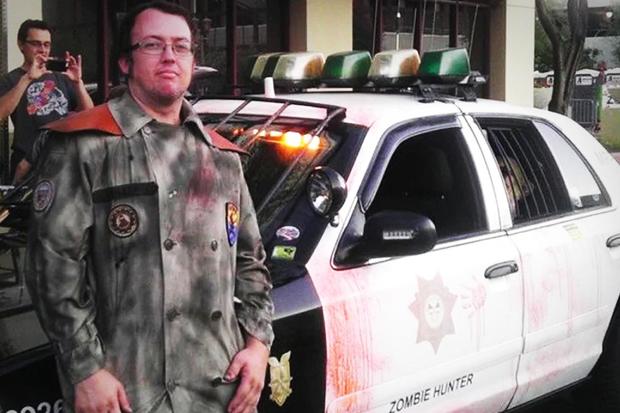
Investigators got a break 21 years after the murders thanks to DNA and genetic genealogy. They zeroed in on Bryan Patrick Miller, 42, a divorced father raising his teenage daughter. Investigators soon discovered Miller had an alter ego. He was a local celebrity known for participating in parades and festivals as the Zombie Hunter.
A person of interest, detectives just needed a sample of Miller’s DNA to make the case or eliminate him as a suspect.
TWO YOUNG WOMEN VICIOUSLY MURDERED ALONG BIKE PATH
Clark Schwartzkopf: It’s one of those cases that you just don’t forget … you can’t unsee what happened to those girls, you just can’t.
Long before the man known as the Zombie Hunter became the prime suspect in the canal murders, Clark Schwartzkopf was a detective with the Phoenix Police Department’s cold case squad. His mission was simple but pointed: find the killer responsible for those vicious murders of two young women from the early 1990s.
Clark Schwartzkopf: To this day, I’m still not exactly sure about what … happened on those … bike paths.
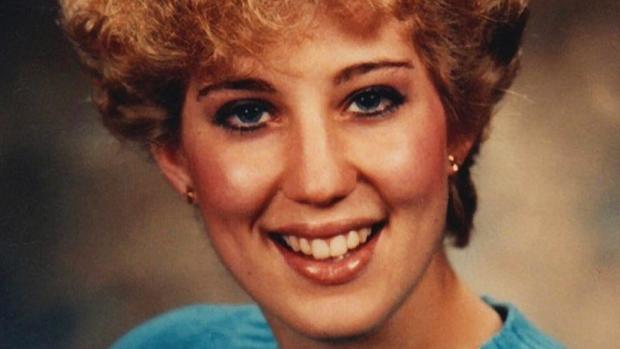
The case began on Nov. 8, 1992. Angela Brosso, a tech worker who had recently moved to Phoenix, was taking advantage of beautiful weather to get in a little exercise, says Briana Whitney, the true crime reporter for the CBS affiliate KPHO in Phoenix.
Briana Whitney: Each night, she would go out for her evening bike ride just at golden hour at sunset, the best time to be riding out here.
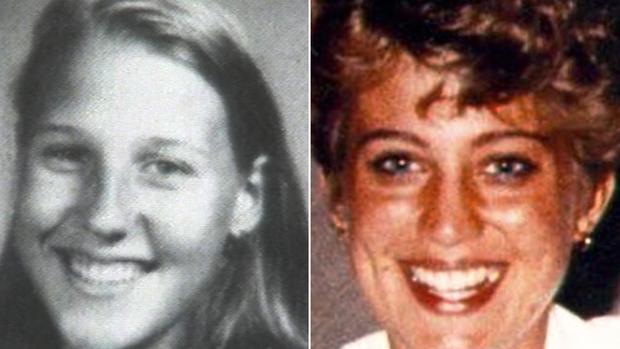
Angela Brosso was viciously murdered on the eve of her 22nd birthday.
Cedar Cliff High School
Angela was only hours away from turning 22, and, like a lot of locals, she liked to bike on the paths that ran alongside the city’s distinctive canals, says Schwartzkopf, a “48 Hours” consultant.
Peter Van Sant: Are there places that are sort of natural ambush sites if somebody wants to attack someone?
Clark Schwartzkopf: Yeah, they are … there’s a lot of tunnels that go underneath the interstate.
That November evening in 1992, Angela left her apartment around 7 p.m., her boyfriend Joe later told police. He said he stayed home to bake Angela a birthday cake and didn’t expect her to be gone long.
Briana Whitney: Hours go by, and Joe grows concerned. Angela hasn’t come home. And that’s not like her.
Joe told police he took his bike out three times that night, frantically searching for Angela on the canal paths. He spoke to her friends — even her mother back in Pennsylvania. Finally, he reported Angela missing to police. The next morning, searchers came upon a horrific scene.
Detectives at the Angela Brosso crime scene.
KPHO
Briana Whitney: Angela Brosso’s torso was found in a field next to the trail that she had been riding her bike on.
Angela had been stabbed to death.
Approximately 10 days after Angela’s headless body was discovered, a man fishing along this section of the canal, spotted her head stuck on a grate.
Morgan Loew, an investigative reporter who also works at KPHO and is a “48 Hours” consultant, has been working on the canal killer case for more than a decade.
Morgan Loew: And from what we have heard from witnesses … the head was in amazingly good condition, especially considering this was days after the murder. … We’ve heard that the head looked like it had been preserved … Like it was a memento for the killer.
Angela’s purple mountain bike was also missing. There were no solid leads, and the case went quiet until September 1993—10 months after Angela’s murder—when the mother of 17-year-old Melanie Bernas returned from a dinner date to find her daughter had broken her curfew and was not home. She then noticed that Melanie’s bicycle was missing.
Melanie Bernas, 17, was a student at Arcadia High School. “My time and my life froze at that very moment the day we found out,” said friend Rachael Schepemaker. “I made a promise to myself … I just never stopped talking about her.”
Maricopa County Court
Morgan Loew: Melanie decides to go on a bike ride … by around 10:30 when Melanie did not return, her mother … started calling her friends. “Is Melanie there?”
Rachel Schepemaker: Well, my mom took the phone call … said that Melanie’s mom was frantic and like nervous …
Rachel Schepemaker was one of Melanie’s close friends in high school.
Peter Van Sant: So initially when you hear … that her mother’s looking for her … You’re not thinking something terrible has happened to your friend?
Rachel Schepemaker: Definitely not. I thought she was with a friend and just forgot to communicate with her mom where she was.
Early the next morning Charlotte Pottle, a local resident, happened to be riding along the canal with her young daughter in a bicycle seat. Just as they came out of one of those tunnels that ran under the interstate, she spotted a puddle.
Charlotte Pottle: There was just a big puddle of something. … Ended up riding right through it … and having it splash up over me.
Pottle says something about the puddle bothered her, so a few minutes later she doubled back. That’s when she made a horrible realization.
Charlotte Pottle: I could tell that it was a puddle of red, that it was a puddle of blood.
Charlotte Pottle (pointing to a tree): And all of a sudden, as I’m looking at it, I noticed that there are some drag marks that went along over here.
Peter Van Sant: Toward that tree.
Charlotte Pottle: Towards that tree. Yes. … And then went around the tree and was drugged back … you could see the drag marks right here to the canal.
Pottle went home and called police. Later that night, the local news reported that a woman’s body had been found in the canal, close to where Angela Brosso’s head had been located.
Rachel Schepemaker: They found the body in a teal bodysuit. I was told by some other friends that Melanie did not own that. It can’t be her.
Schepemaker went to sleep convinced the body in the canal was not Melanie. But the next day —
Rachel Schepemaker: I’m at school … my friends just come up to me crying and saying it was Melanie.
Detectives strongly suspected Melanie had been targeted and stabbed in the back by the same person who had killed Angela.
Morgan Loew: Police believe that somehow, the killer got her off of her bike, whether he knocked her off of her bike or whether he asked her a question.
Schwartzkopf says the evidence indicates the killer approached the women from behind.
Clark Schwartzkopf :Both the knife wounds were the exact same position.
Investigators say the killer dragged Melanie’s body off the canal path removed her clothes and dressed her in that teal bodysuit.
Peter Van Sant: Along with the stabbing and the dismemberment, there was another component to these murders, wasn’t there?
Briana Whitney: Yeah, both women were sexually assaulted.
And that meant investigators had a crucial piece of evidence: DNA.
Clark Schwartzkopf: when the DNA from Melanie’s scene was finally tested later, it … matched to Angela’s scene. So, we knew for sure that we were dealing with the same perpetrator.
Investigators noted that the initial stab wounds to the backs of each woman were fatal and so precise that detectives suspected the killer might be a surgeon.
Morgan Loew: The details about what happened … were the kinds of things that kept parents from letting their kids out when the sun went down.
THE TRAIL LEADING TO THE “CANAL KILLER” BEGINS WITH DNA FROM THE CRIME SCENE
The murders of Angela Brosso and Melanie Bernas in the early 1990s created fear in Phoenix that lasted for a generation.
Morgan Loew: They watched the news and read the newspaper every day, hoping that police would make an arrest. And it just kept going on and — nothing and nothing and nothing.
Investigators had collected matching male DNA from both the victims. But more than two decades passed and the canal murder cases went cold. Then, science finally caught up with the calendar.
Briana Whitney: It’s in 2014, Phoenix police detectives are at a DNA conference. … and a forensic genealogist from California is also at the conference.
Colleen Fitzpatrick, founder of Identifinders International, was there to meet with law enforcement.
Briana Whitney: And she goes up to these detectives, and says, hey, I can take Y chromosomes and create these DNA profiles and try to match … with genealogy to help solve criminal cases.
Fitzpatrick’s company had developed software that could mine public genealogy databases, searching for matches to crime scene DNA. The detectives heard her out.
Colleen Fitzpatrick: And then several weeks later, they sent me the Y-DNA profile … from the crime scene for the Phoenix canal murders.
Fitzpatrick’s company started crunching the data, hoping to provide Phoenix detectives with a name.
Colleen Fitzpatrick: We entered the numbers from the forensic profile into our software. … That’s where I came up with six matches to the name Miller.
While the genetic genealogy search produced the name Miller, it is also one of the most common last names. Detective Schwartzkopf started digging.
Peter Van Sant: You check your files and what do you find?
Clark Schwartzkopf: I think there were a total of six Millers that were on what I called my master list. … And I went down through the list … got to Bryan Patrick Miller.
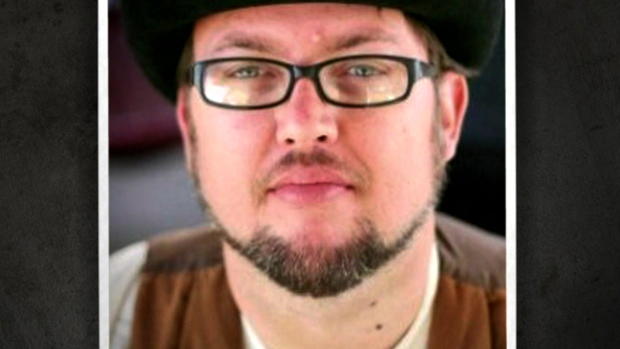
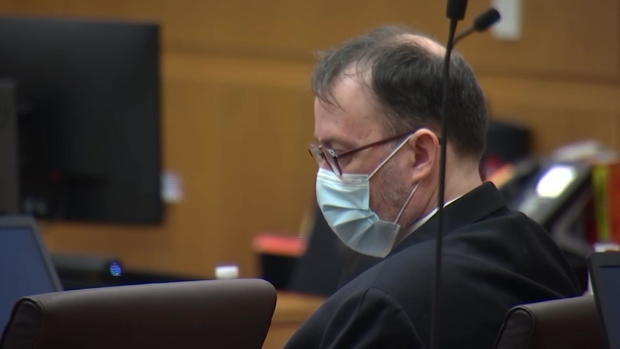
Bryan Patrick Miller
LinkedIn
But who was Bryan Patrick Miller? Records showed he was 42 years old with a Phoenix address. That name was just one of more than 600 persons of interest who had lived in those case files for years, placed there by a tip. Police at the time seemingly did not pursue Miller.
Clark Schwartzkopf: We discovered his file downstairs.
Police learned Bryan Miller had a record dating back to before the canal murders. In May 1989, when he was just 16 years old, Miller crossed paths with Celeste Bentley.
Celeste Bentley: I was 24, and I was going to work. … I had … just noticed … a young boy on the bus.
Bentley says she and the boy got off at the same stop. Moments later, she felt something in her back.
Celeste Bentley: He had ran by me, I thought he had just hit me. … I just yelled at him. I was like … “why — why’d you do that,” you know? And then, I reached back and touched my back and realized that it was blood … I had been stabbed.
With a single knife wound to her upper back, Bentley screamed and managed to make it to the store where she worked. A coworker called for help. About 30 minutes later, when Bentley was in the back of an ambulance —
Celeste Bentley: The police came and said they found him, and they wanted to bring him to the ambulance to show him to me.
Bentley identified her assailant. Bryan Miller was charged with aggravated assault.
Celeste Bentley: They said that if he had held the blade the other way, he would’ve gone straight through my ribs, and I could have died.
Miller pleaded guilty and was sentenced to juvenile detention until he turned 18. It was a far cry from where Miller’s life had begun.
Briana Whitney: He was living in Hawaii for a while as a kid with his mom and his dad. But his dad died early on in a motorcycle accident.
Years later, Miller and his mother Ellen moved to Phoenix.
Briana Whitney: So, for most of his life and early years, it was Bryan Miller and his mom.
While Miller was in juvenile detention, his mother made a disturbing discovery.
Morgan Loew: Bryan Miller’s mom was looking through his stuff, and she found a note that he wrote.
A disturbing note written by a teenage Bryan Patrick Miller that his mother found while he was in juvenile detention. It spelled out how he wanted to find, abduct, rape, murder and dismember a young woman.
Phoenix Police Department
The pages detailed a sinister plan: kidnap the girl, tie her up in the truck and cut her clothes off.
Morgan Loew: This note spelled out how he wanted to find, abduct, rape, murder and dismember a young woman. And Bryan’s mom was so disturbed by this piece of paper that she took it to Phoenix police.
It was Miller’s 18th birthday and he had just been released as an adult.
Clark Schwartzkopf: She flat out told police at the time that she was really scared for her safety. … And that she was not going to allow him to come home.
So, after his release, Miller ended up at a Phoenix halfway house. When Schwartzkopf read that note in 2014, he was struck by something.
Clark Schwartzkopf: There was a lot of things in there that were close or similar to what happened specifically to Angela.
Including a description of decapitating a victim and preserving the head. Phoenix police wanted to locate Miller. Luckily, he was very easy to find.
INVESTIGATORS MEET BRYAN MILLER BUT DISCOVER HE IS THE ZOMBIE HUNTER
In December 2014, Phoenix police continued digging into potential suspect Bryan Miller who they discovered was actually a local celebrity.
Briana Whitney: Everybody at the time in the Phoenix area knew Bryan Patrick Miller as this character called the Zombie Hunter.
Peter Van Sant: The Zombie Hunter. … Like a comic book character?
Briana Whitney: Yeah, like a comic book character. Like a … good guy fighting the bad guys.
Miller’s alter ego was a costumed figure who participated in parades and festivals around town.
Briana Whitney: He wore this long trench coat with these goggles and helmet and had this large Gatling gun.
Bryan Patrick Miller in costume as the Zombie Hunter.
Ben Garcia
And if you’re going to hunt zombies, you need a way to get around.
Briana Whitney: He bought … an old police car and tricked it out … wrote “Zombie Hunter” on it.
Morgan Loew: And it had a full-size zombie mannequin in the back and blood on the side.
Friend Eric Braverman says Miller’s zombie hunter persona attracted a big fan base — including law enforcement officers who lined up to pose with him.
Eric Braverman: Collected pictures of himself with the cops like trophies. … They’re all smiling big with him leaning on the car.
Bryan Patrick Miller
Maricopa County Court
Braverman says Miller’s superhero character was the opposite of what Miller was like when he wasn’t in costume.
Eric Braverman: He seemed like a harmless marshmallow that was immersed in this goofy lifestyle. … He’s just that unassuming guy.
But could Miller be the canal killer? The only way to find out was to get his DNA. Investigators began to surveil Miller, who worked at an Amazon warehouse. Every day when he got there, Miller parked the zombie mobile in the same spot.
Clark Schwartzkopf: He would come out for his 15-minute break, blast his music really loud. … Lunchtime came out to the car, same thing. … Blast this God-awful music.
Schwartzkopf came up with an elaborate plan to get his DNA.
Clark Schwartzkopf: I went up and introduced myself to Miller. He was in his car.
Peter Van Sant: What did you introduce yourself as?
Clark Schwartzkopf: I introduced myself as a security consultant.
Schwartzkopf told Miller that thieves had been stealing goods from a warehouse across the way.
Clark Schwartzkopf: I said, “would you be interested in working for me as a security officer watching the building while you’re outside?”
Peter Van Sant: Did his eyes light up?
Clark Schwartzkopf: Yeah, because it was a good paying job. I said, look—”I’ll pay you 20 bucks an hour.”
On Jan. 2, 2015, Schwartzkopf met Miller at a Chili’s restaurant to fill out a job application. The cold case unit was behind the scenes ready to bag anything that had Miller’s DNA on it, such as utensils or a glass.
Clark Schwartzkopf: They set a table for me and Mr. Miller away from everybody else in a part of the restaurant where nobody else is at.
Miller arrived with a surprise guest — his 15-year-old daughter, Sarah. Miller was a divorced, single dad.
Eric Braverman: He was very gentle in caring about his daughter. He often brought his daughter … where he would be going.
The trio sat down and ordered hamburgers. When the food arrived —
Clark Schwartzkopf: He swallows his hamburger, in like, five bites. … Won’t take a drink of his water. And I’m sitting there going, “Are you sure you … don’t want … something else to drink? You just got water.” “No, no, I’m good, I’m good, I’m good.”
Schwartzkopf started to worry this operation would be a bust.
Peter Van Sant: And what does he finally do that makes this mission accomplished?
Clark Schwartzkopf: He finally took a drink from the water glass … That’s when I knew that, OK, now we’ve at least got his DNA.
The mug Bryan Patrick Miller drank from during the sting.
Maricopa County Court
Despite knowing about Miller’s juvenile record, as their meal ended, the veteran detective’s gut told him Miller was nottheir man.
Clark Schwartzkopf: Seeing him with his daughter. … I just don’t see this guy as being the monster in 1992 and ’93 that would do this to these women.
Miller gave Schwartzkopf a quick tour of his Zombie Hunter mobile, and the two parted ways with the detective saying he’d be in touch. The cold case unit sent Miller’s water glass off to the crime lab.
Eleven days later, Schwartzkopf says there was a call from the lab.
Clark Schwartzkopf: And we’re sitting there and we’re like, “what is this all about?”
Briana Whitney: And in this meeting, these Phoenix detectives say, as a joke, “Huh, they must have solved the canal murders.”
But Detective Schwartzkopf says it was no joke when the head of the lab arrived.
Clark Schwartzkopf: She leans down to me, she goes, “It’s him.” I go “What?” She goes, “Bryan Miller, it’s him.” … Well, the blood rushed from my head. … I kind of sat back and I went, “You’ve gotta be kidding.”
Bryan Miller’s DNA from that water glass matched the DNA recovered from Angela Brosso and Melanie Bernas more than 20 years before. Miller was arrested within hours. During a police interview shortly after, Miller was told why he’d been taken into custody in connection with the canal murders.
DETECTIVE: We have DNA that links you to those two ladies.
BRYAN MILLER: I don’t see how that’s possible.
Clark Schwartzkopf: He just kind of … went through it in his dopey kind of, I don’t know what you’re kind of talking about.
DETECTIVE: Would help you get it off your chest if you did something like that.
BRYAN MILLER: I didn’t kill anyone.
DETECTIVE: You didn’t kill anybody?
BRYAN MILLER: No.
Investigators got a search warrant for Miller’s house, the home he shared with his teenage daughter and just about everything he’d ever collected in his life.
Bryan Patrick Miller’s kitchen.
Phoenix Police Department
Clark Schwartzkopf: I can remember like it was yesterday walking up to the front door and everybody going, “you can’t get in that way” … “It’s full of crap.”
Morgan Loew: Bryan Miller’s house was like it came from the show “Hoarders.”
Clark Schwartzkopf: There was a little pass where you could get to a bathroom and the kitchen and where the TV was, and that’s it. Everything else is just stacked to the roof with garbage.
Peter Van Sant: Did you look around and go, “This is madness?”
Clark Schwartzkopf: Not only madness, I go, “This is a nightmare.”
Schwartzkopf and his investigators would have to sift through all of it looking for other possible evidence. Detective Schwartzkopf also focused on a new source — someone Miller himself had ominously singled out in his interview.
BRYAN MILLER (to detective): It’s the one person on the face of the earth I could probably honestly say I hate.
Miller’s ex-wife Amy, who would end up revealing gruesome details from Miller’s violent past.
Clark Schwartzkopf: He had told her about the murder of a young girl who had come to his door accidentally.
BRYAN MILLER’S VIOLENT PAST REVEALED
In January 2015, more than 21 years after the canal murders, Bryan Miller was charged with first-degree murder in both Angela Brosso and Melanie Bernas’ deaths. Melanie’s friend Rachel Schepemaker says she felt a wave of relief.
Rachel Schepemaker: A very joyous moment of “Oh my gosh, this is what we’ve been waiting for, for decades upon decades.”
Detective Schwartzkopf wanted to talk to the one person who probably knew Miller best, his ex-wife Amy.
Clark Schwartzkopf: They had been married for eight years. There was a divorce.
Amy told Schwartzkopf that she was just 19 when she met Bryan Miller in 1996. They married less than a year later and moved to Everett, Washington. Amy had a shocking revelation for the detective. She told Schwartzkopf Miller had revealed a gruesome secret to her: that he had killed a young girl in Phoenix years earlier, before he’d ever met Amy. Schwartzkopf says Amy never reported it to police before for a number of reasons; she didn’t know if it was true, she was afraid of Miller and she said she wanted to be a good wife.
Clark Schwartzkopf: You support your man no matter what.
Detective Schwartzkopf says Amy told him what Miller had said.
Clark Schwartzkopf: That a young girl had come to his door. … That he had grabbed this young female, pulled her in, killed her immediately.
Amy said Miller told her he dismembered the girl and disposed of her remains in trash left on the curb. Although Amy claimed Miller never told her the child’s name, investigators used the information Amy provided to piece together who Miller may have been talking about.
Briana Whitney: Thirteen-year-old Brandy Myers was a little girl collecting money for a school book-a-thon in her north Phoenix neighborhood, going door to door.
Kristin Dennis: I was a tomboy, and she was a girlie girl.
Brandy Myers, 13, disappeared on May 26, 1992, six months before the murder of Angela Brosso. She has never been found.
Phoenix Police Department
Brandy’s sister, Kristin Dennis.
Kristin Dennis: So, she would try to learn how to climb trees or jump fences because she wanted to play with me. She was my best friend.
It was May 26, 1992, six months prior to the murder of Angela Brosso. Miller was living in the halfway house following his time in juvenile detention for the aggravated assault of Celeste Bentley.
Kristin Dennis: This is one block from our school, his home, and then three blocks is our house. So, every single day, we walked right by here.
Dennis says Brandy left home alone that evening, never to return.
Kristin Dennis: She was last seen two doors down from Bryan’s … walking in the direction of his house.
Despite an extensive search, Brandy’s body was never found. Schwartzkopf says even though Amy couldn’t provide a name, the clues in her account add up to just one conclusion.
Clark Schwartzkopf: I believe that person is in fact, Brandy Myers.
Her sister believes that as well.
Kristin Dennis: Brandy went to the landfill … like something of no importance.
Even with Amy’s account, investigators did not have enough evidence to charge Miller in Brandy’s disappearance.
Clark Schwartzkopf: So, the fact that she was disposed of … there’s nothing physical, nothing forensically to grab onto.
“48 Hours” contacted Miller who said he had no involvement in Brandy’s disappearance and never confessed to Amy that he had killed a young girl. But there isanother case in Miller’s past.
Morgan Loew: In 2002, a woman named Melissa Ruiz-Ramirez is walking down the street in Everett at night … Somebody pulls over.
In 2002, Melissa Ruiz-Ramirez says she was stabbed by Miller.
Clark Schwartzkopf
It was Bryan Miller. Ruiz-Ramirez would later tell police she’d seen him before, talking to a friend of hers. Ruiz-Ramirez said she got in Miller’s car and told him she needed to make a call and he drove her to his workplace so she could use the phone.
Morgan Loew: She tells police she’s on the phone and from out of the clear blue, Bryan Miller comes running out with a 12-inch serrated kitchen knife and stabs her in the back. They fight over … the weapon.
Ruiz-Ramirez said she escaped and contacted police. They picked up Miller shortly after. He didn’t deny stabbing Ruiz-Ramirez, but claimed it was self-defense. He said he was at work when Ruiz-Ramirez walked in off the street and asked to make a call.
Clark Schwartzkopf: He said … she goes to use a phone. And then … all of a sudden out of the clear blue … she tries to rob him with a knife.
Miller was arrested and charged with first degree assault with a deadly weapon. He was jailed from May 2002 until his December trial.
Clark Schwartzkopf: The jury just didn’t buy Melissa’s story. … It was a “he said, she said” … and they acquitted him of the charge.
Amy says a chilling change followed Miller’s return home. She said it began with the letters she’d received from her jailed husband while he awaited trial.
Clark Schwartzkopf: They first started out as … professing his innocence, and then it would turn into sexual deviance. Like, here’s what I’m going to do when I get out to you.
Amy told Schwarzkopf that Miller followed up his words with action.
Clark Schwartzkopf: She said he came back with an unbelievable, ugly, dark sexual deviant side that she’d never seen before.
Clark Schwartzkopf: There were times where there was sex between them where he held a knife to her throat.
Amy told Schwartzkopf that Miller claimed something happened to him as a child — something that would become the cornerstone of his defense for murdering Angela Brosso and Melanie Bernas. His unique defense? His mother had created a monster.
THE TRIAL OF THE ZOMBIE HUNTER
At the start of Bryan Miller’s trial for the murders of Angela Brosso and Melanie Bernas in October 2022, his attorneys opened with a startling defense—they admitted their client was the canal killer.
Morgan Loew: They had to concede right off the bat that he is the actual killer, but that he was not guilty by reason of insanity.
His defense attorneys say Miller was tortured by his mother Ellen as a child, and that led to his violent sexual behavior. She died in 2010.
Morgan Loew: If you imagine the making of a monster, this is kind of the household … that story begins in.
Miller told investigators after his arrest that the beatings began when he was just 5 years old.
Morgan Loew: She was a detention officer. Discipline in their house was mental as well as physical.
BRYAN MILLER (to detective): She used her security belt, and it was like a law enforcement belt, and usually I got hit by the buckle.
Ellen and Bryan Miller.
Clark Schwartzkopf
The defense opted for a bench trial, which meant there would be no jury. His lawyers told Judge Suzanne Cohen that Miller’s mother also exposed her young son to violent sexual content.
Morgan Loew: He was exposed to her interests in pornography and extremely violent films.
Miller’s lawyers said his mother’s abuse caused Miller to develop severe mental health problems.
Bethany Brand: He feels like there are different TVs playing in his head.
Psychologist Bethany Brand testified that Miller developed a condition known as dissociative amnesia — an inability to remember some traumatic events. Morgan Loew summed up the defense argument.
Morgan Loew: There were two Bryans. There’s the one you see over there at the defense table, who’s a fairly normal person who has friends, who had a job, who was a dad, who was a husband. … And then there’s the killer. There’s bad Bryan.
And Miller, claimed his attorneys, had no memory—none—of the two murders he was charged with.
Prosecutors undermine the defense claim that Miller has no memory of the killings. They point out that he remembers details related to other stabbings.
Remember, Miller admitted stabbing Celeste Bentley when he was 16 years old, and in 2002 he had also testified about the stabbing of Melissa Ruiz-Ramirez in Washington.
To show Miller’s deviant side, prosecutors called the only person in the world Miller said he despised: his ex-wife Amy. The judge did not allow cameras to record her face. Under questioning by prosecutor Elizabeth Reamer, Amy testified that later in their marriage, Miller grew increasingly violent during sex.
ELIZABETH REAMER: Did you ever say anything to him about wanting it to stop because it was scary?
AMY MILLER: No.
ELIZABETH REAMER: Why not?
AMY MILLER: I was avoiding any confrontation with him at all at that point and (sighs) wanted to be as compliant as possible so that I would say, will he love me enough not to kill me?
ELIZABETH REAMER: Did he ask permission prior to using needles on you?
AMY MILLER: No.
ELIZABETH REAMER: Did he ask permission prior to tying you up?
AMY MILLER: No.
ELIZABETH REAMER: What percentage of your sex life after he got out of jail in Washington included bondage, the pins or other things that were not the normal sex you’d been having early in your marriage?
AMY MILLER: Probably at least 95 percent.
The trial continued and after 6 months and 36 witnesses, the judge delivered her verdict.
JUDGE COHEN: As to count one, first-degree murder Angela Brosso is as follows: guilty. … As to count two, first-degree murder victim Melanie Bernas as follows: guilty.
Bryan Patrick Miller during his murder trial.
Pool
Peter Van Sant: How did Bryan Miller react to the guilty verdict?
Morgan Loew: He didn’t react. … He didn’t give any real emotion.
But Angela’s mother, who addressed the court remotely, was emotional.
LINDA BROSSO STROCK: The defendant broke my heart … took all hope and light from me and my family. The hole in my heart is so big and empty.
Melanie’s older sister Jill Bernas also spoke remotely about how painful it was that Melanie’s life ended violently at the age of 17.
JILL BERNAS CANETTA: For 30 years now, we’ve had to live without Melanie because the defendant murdered her … Words cannot even begin to describe the level of excruciating pain we experienced with the news of her horrific death.
Miller—who didn’t take the stand during his trial—was allowed to give a statement before he was sentenced.
BRYAN MILLER: I am not looking for sympathy today. This time is for the family and friends of the victims. I cannot imagine what pain they have endured for all these years. … I know I am different. … I thought it had to do with what my mother did to me.
Defense counsel RJ Parker urged Judge Cohen to show mercy before she delivered her judgement on Miller’s sentence, life in prison or death.
RJ PARKER: You do not have to kill Bryan in order to see justice done.
Judge Cohen agreed with the centerpiece of the defense case.
JUDGE COHEN: The defendant’s abuse as a child was proven.
But eight months after the trial began, Miller’s abuse at the hands of his mother did not dissuade Judge Cohen from handing down the ultimate sentence.
JUDGE COHEN: There is no question that what the defendant did deserves the death penalty.
JUDGE COHEN: Mr. Miller, anything you wish to say to the court?
BRYAN MILLER:I guess, thanks for, uh, listening to everything that was said and giving us at least the opportunity to try and convince you otherwise.
Det. Clark Schwartzkopf: Justice was carried out in this case.
Melanie Bernas and Angela Brosso
Arcadia High School/Phoenix Police Department
Detective Schwartzkopf hopes family and friends of Angela and Melanie might finally find some peace — people like Melanie’s friend Rachael Schepemaker.
Rachel Schepemaker: Just knowing that justice was served … it doesn’t make anything easier.
Peter Van Sant: How do you want your good friend to be remembered?
Rachel Schepemaker: Just that she’s the all-American good kid.
Rachel Schepemaker: I want her family to know that we haven’t forgotten her … She changed us all for the better … She was a gift.
Under Arizona law, Bryan Miller’s death sentence will be automatically appealed.
“POST MORTEM” PODCAST
Correspondent Peter Van Sant, producer Paul La Rosa and host Anne-Marie Green discuss what actually went into how investigators recovered the smoking gun evidence from a Chili’s and how Bryan Miller’s defense team’s “dissociative amnesia” argument held up at trial.
Produced by Paul LaRosa, Susan Mallie and Kat Teurfs. Cindy Cesare is the development producer. Anthony Venditti is the content research manager. Morgan Canty and Cameron Rubner are the associate producers. Michelle Harris, Marcus Balsam, Phil Tangel and Mike Baluzy are the editors. Anthony Batson is the senior producer.Nancy Kramer is the executive story editor. Judy Tygard is the executive producer.
Peter Van Sant is an award-winning correspondent for “48 Hours, where his true crime and justice reporting is featured across multiple CBS News broadcasts and platforms. During a career that spans nearly five decades, Van Sant has covered many of the most significant events of our lifetime. Additionally, Van Sant hosts the “Trained to Kill” and “Blood is Thicker” podcasts.
Moore, their top position player prospect, was on the bench again on Saturday, as he has been for five of the last seven games. Before that, he started five in a row.
“He’s going to get the lion’s share of this thing between now and 2030, for sure,” interim manager Ray Montgomery said.
Montgomery’s big picture perspective notwithstanding, it’s reasonable to ask why Moore isn’t playing every day right now.
“I don’t want to sacrifice his development any more than I want to limit what Yo and Luis can do at the same time,” Montgomery said. “I don’t know the answer to that entirely, other than to say I agree that if (Moore) sits too long, it can be detrimental. We don’t want to do that. We’re managing through that.”
Montgomery has been asked about Moore just about every day that he has not put him in the lineup over the past week. Moore didn’t start any of the three games against the Dodgers earlier this week, which could at least partly be explained by the Dodgers having four lefties in the bullpen. Moncada can’t hit from the right side, so as soon as a lefty came in from the bullpen, Moore replaced Moncada. Moore came off the bench in all three games, getting five plate appearances.
Moore is likely to start on Sunday, making two of three starts in this series, because the A’s are starting a left-hander.
Montgomery’s oft-repeated point over the past week has been that Moore is still playing enough to gain some experience, and also that he’s engaged enough on the bench to be learning from that too.
“If we’re talking about a two-week period, we’re talking about 30-40, at-bats,” Montgomery said. “In the grand scheme of things, if you’re only measuring it on actual playing time versus the long term, what he learns from watching, pinch hitting, coming in on defense, whatever it is, it’s nothing but gain for him. He’s going to play. I’m not worried about that.”
Moore, 22, who was drafted in the first round just 13 months ago, said he is “100 percent” confident that he’s still benefiting from being around even when he’s not playing.
“Watching guys and picking their brains and understanding certain situations, kind of slowing the game down,” Moore said. “Obviously, when you’re playing every day, it’s hard to slow the game down or see certain things.”
Moore is hitting .185 with a .648 OPS. (Rengifo has a .643 OPS, including an .800 OPS since June 13. Moncada has a .779 OPS.) Moore’s 13% walk rate is above average, a good sign that he’s remaining disciplined and seeing the ball well. His 30% strikeout rate is too high, though.
“Before the injury, I was real comfortable,” Moore said. “Now, just getting back out there and just getting back to my routine. Doing everything I was doing before the injury. Obviously, it’s a hard lease. You just try fight and scrap and grind through ABs. Do whatever you can do to flip the lineup over. That’s what I’m trying to do.”
When Montgomery was asked specifically about Trout taking too many pitches, he expressed no concern with his approach.
“Mike’s fine,” Montgomery said. “Mike knows what he needs to work on, and obviously he goes in and out of feeling good, just like anybody else. I’m not going to complain about a .400 on-base for him, walking at a high clip. Sure, there’s going to be times where he swings more and misses more and there’s going to be times when he swings less and hits balls out of the park. I think it’s just part of the game. When you accumulate as much as he’s accumulated, it takes time.”
LOS ANGELES – Reinforcements for the Dodgers’ depleted bullpen are getting closer.
Tanner Scott threw to hitters in a simulated-game setting on Friday and Kirby Yates did the same Saturday afternoon. The two veteran relievers will both head to Triple-A Oklahoma City and start rehab assignments with the Comets on Tuesday. Right-hander Michael Kopech (on the 60-day injured list and ineligible to return until Aug. 27) has already started a rehab assignment with OKC and pitched on Thursday.
“The health feels pretty good,” said Yates, who went on the IL almost three weeks ago with an unspecified lower body issue. “There’s a baseball aspect to this, too. I don’t think I was doing that great before I went on the IL. So there are some things I’ve got to get back to doing, feels, all of that stuff on the mound. I have a little bit of time to do that now, and I love where it’s going. I think overall we’re in a good spot.”
Yates threw a simulated inning to hitters Buddy Kennedy and Hyeseong Kim (who could start his own rehab assignment soon).
“I thought it was good,” Dodgers manager Dave Roberts said. “I thought the fastball was good. It’s been good. The split – that’s kind of been the thing that he’s been mindful of. I think he probably threw nine of them, something like that, and I thought five or six of them he caught really good. The other ones weren’t bad.”
Yates’ splitter is the pitch that elevated him to elite reliever status midway through his big-league career. But he has struggled with it this year, making it difficult to finish off hitters and making him particularly vulnerable to left-handed hitters (a .947 OPS against him this season). Yates spent time on the IL with a hamstring injury earlier this season and his lower-body issues might have affected his mechanics, leading to a lack of effectiveness with his splitter. The downtime has given him a chance to work on that, along with his health.
“I think for right now I like the way the lower half is firing,” the 38-year-old Yates said. “I think we’re back to being able to use the lower half and be explosive and not try to manipulate the baseball too much. I feel like I’m strong. I feel like I’m in a much better spot than I was three weeks ago.
“I don’t know if one thing led to another. I don’t know if the health led to mechanical stuff. I don’t know how that all kind of unfolded. But it’s in the past. There’s nothing you can do about it. You just kind of move forward. Get healthier. Get better. Standing here, I do like where I’m at. I feel we’re on to some good things, starting to repeat it, starting to get some results that I haven’t felt in a while. I’m encouraged by that.”
STEWART STATUS
Right-hander Brock Stewart has a long history of physical issues, including Tommy John surgery in 2021 and arthroscopic shoulder surgery last year. The fact that he spoke up about the “tendinitis-y” discomfort he was having after just four appearances with the Dodgers is a sign of maturity, he said.
“I think every athlete deals with that, especially being on a new team. These guys traded for me, so they expected me to help out. Yeah, it sucks,” Stewart said of being sidelined. “But the old Brock probably would have not said anything for however long, a couple weeks, and that would have made it worse, and I would have been worse off in the end –– even going into the offseason and potentially next season.
“So, I’ve grown up a lot in the past couple years, so I definitely wanted to get out ahead of this, and hopefully we’ve done that. … Old Brock would have been in denial still: ‘No, I’m good, I’m good. Let’s just see how it feels today.’ And that would be an everyday thing. But no, I’m definitely glad I said something. Hopefully get it taken care of now, and be able to help through September into the playoffs.”
Stewart said his MRI showed “a little fluid in the bursa in my shoulder, just a little inflammation in the (rotator) cuff” but no structural damage.
He received a cortisone injection on Tuesday and a platelet-rich plasma injection on Wednesday. He won’t start a throwing program for at least a week after that.
“Obviously, nothing I haven’t been through before, unfortunately,” Stewart said. “Timelines are great and everything, plans are great and everything, but I still like to take it one day at a time. … Just take everything one day at a time and try to put my best foot forward and attack the rehab. The only thing on my mind is getting back and helping the team, so I’m gonna do my best.”
ALSO
Roki Sasaki has rejoined the Dodgers in Los Angeles this weekend but Roberts said Sasaki will make another rehab start in the minors at some point next week. Sasaki threw 41 pitches in two-plus innings with OKC on Thursday.
UP NEXT
Padres (RHP Yu Darvish, 2-3, 5.61) at Dodgers (RHP Tyler Glasnow, 1-1, 3.08 ERA), Sunday, 1:10 p.m., SportsNet LA, MLB Network (out of market only), 570 AM
Diving in a kelp forest in Monterey Bay recently, I watched a tubby 200-pound harbor seal follow a fellow diver, nibbling on his flippers. The diver, a graduate student, was using sponges to collect DNA samples from the ocean floor. Curious seals, he told me, can be a nuisance. When he bags his sponges and places them in his collection net, they sometimes bite into them, puncturing the bags and spoiling his samples.
Under the Marine Mammal Protection Act, coming closer than 50 yards to seals and dolphins is considered harassment, but they’re free to harass you, which seems only fair given the centuries of deadly whaling and seal hunting that preceded a generational shift in how we view the world around us.
The shift took hold in 1969, the year a massive oil spill coated the Santa Barbara coastline and the Cuyahoga River, in Cleveland, caught fire. Those two events helped spark the first Earth Day, in 1970, and the shutdown of America’s last whaling station in 1971. Protecting the environment from pollution and from loss of wilderness and wildlife quickly moved from a protest issue to a societal ethic as America’s keystone environmental legislation was passed at around the same time, written by a Democratic Congress and signed into law by a Republican president, Richard Nixon.
Those laws include the National Environmental Policy Act (1969) , the Clean Air Act (1970), the Clean Water Act (1972) and the Marine Mammal Protection Act (1972), which goes further than the Endangered Species Act (1973) in protecting all marine mammals, not just threatened ones, from harassment, killing or capture by U.S. citizens in U.S. waters and on the high seas.
All these “green” laws and more are under attack by the Trump administration, its congressional minions and longtime corporate opponents of environmental protections, including the oil and gas industry. Republicans’ disingenuous argument for weakening the Endangered Species Act and the Marine Mammal Protection Act is that the legislation has worked so well in rebuilding wildlife populations that it’s time to loosen regulations for a better balance between nature and human enterprise. When it comes to marine mammal populations, that premise is wrong.
On July 22, at a House Natural Resources subcommittee meeting, Republican Rep. Nick Begich of Alaska introduced draft legislation that would scale back the Marine Mammal Protection Act. Among other things, his proposal would limit the ability of the federal government to take action against “incidental take,” the killing of whales, dolphins and seals by sonic blasts from oil exploration, ship and boat strikes or by drowning as accidental catch (also known as bycatch) in fishing gear. Begich complained that marine mammal protections interfere with “essential projects like energy development, port construction, and even fishery operations.”
Rep. Jared Huffman (D-San Rafael), the ranking member on the House Resources Committee, calls the legislation a “death sentence” for marine mammals.
It’s true that the marine mammal law has been a success in many ways. Since its passage, no marine mammal has gone extinct and some species have recovered dramatically. The number of northern elephant seals migrating to California beaches to mate and molt grew from 10,000 in 1972 to about 125,000 today. There were an estimated 11,000 gray whales off the West Coast when the Marine Mammal Protection Act became law; by 2016, the population peaked at 27,000.
But not all species have thrived. Historically there were about 20,000 North Atlantic right whales off the Eastern Seaboard. They got their name because they were the “right” whales to harpoon — their bodies floated for easy recovery after they were killed. In 1972 they were down to an estimated 350 individuals. After more than half a century of federal legal protection, the population is estimated at 370. They continue to suffer high mortality rates from ship strikes, entanglement in fishing gear and other causes, including noise pollution and greater difficulty finding prey in warming seas.
Off Florida, a combination of boat strikes and algal pollution threaten some 8,000-10,000 manatees. The population’s recovery (from about 1,000 in 1979) has been significant enough to move them off the endangered species list in 2017, but since the beginning of this year alone, nearly 500 have died. Scientists would like to see them relisted, but at least they’re still covered by the Marine Mammal Protection Act.
A 2022 study in the Gulf of Mexico found that in areas affected by the BP Deepwater Horizon oil spill 12 years earlier, the dolphin population had declined 45% and that it might take 35 years to recover. In the Arctic Ocean off Alaska, loss of sea ice is threatening polar bears (they’re considered marine mammals), bowhead and beluga whales, walruses, ringed seals and harp seals.
On the West Coast the number of gray whales — a Marine Mammal Act success story and now a cautionary tale — has crashed by more than half in the last decade to fewer than 13,000, according to a recent report by National Oceanic and Atmospheric Administration (NOAA, the nation’s lead ocean agency, is an endangered species in its own right in the Trump era). Declining prey, including tiny shrimp-like amphipods, in the whales’ summer feeding grounds in the Arctic probably caused by warming water are thought to be a major contributor to their starvation deaths and reduced birth rates.
The whale’s diving numbers are just one signal that climate change alone makes maintaining the Marine Mammal Act urgent. Widespread marine heat waves linked to a warming ocean are contributing to the loss of kelp forests that sea otters and other marine mammals depend on. Algal blooms off California, and for the first time ever, Alaska, supercharged by warmer waters and nutrient pollution, are leading to the deaths of thousands of dolphins and sea lions.
What the Trump administration and its antiregulation, anti-environmental-protection supporters fail to recognize is that the loss of marine mammals is an indicator for the declining health of our oceans and the natural world we depend on and are a part of. This time, saving the whales will be about saving ourselves.
David Helvarg is executive director of Blue Frontier, an ocean policy group. His next book, “Forest of the Sea: The Remarkable Life and Imperiled Future of Kelp,” is scheduled to be published in 2026.
A great horned owl found itself in a seriously sticky situation after becoming stuck in a glue trap in Orange County, rendering it both flightless and food-less.
Fortunately, a Good Samaritan found the bird and brought it to a local wildlife center in Huntington Beach. Unfortunately, the person used scissors to cut the bird’s wings out of the tacky material intended to trap rodents and pests.
“The person was thinking they were doing the right thing by cutting most of the feathers to get the owl unstuck from the trap,” said Debbie McGuire, executive director of the Wetlands and Wildlife Care Center. “But that seriously set back the bird’s rehabilitation because now it has to go through a complete molt to be able to grow those feathers back.”
Bird feathers, unlike hair, do not keep growing if cut. Most owls undergo a complete molt once a year, shedding their feathers and growing new ones. However, larger species such as great horned owls tend to molt slower, and can take two or more years to replace all their feathers.
An owl that was stuck in a glue trap was brought to the Wetlands and Wildlife Care Center in Huntington Beach. It was then transported to the Orange County Bird of Prey Center for rehabilitation.
(Wetlands and Wildlife Care Center)
In a best-case scenario, the injured bird will regrow enough feathers to fly and return to the wild within a year. But there is a chance it could take longer to heal, in which case the raptor’s stint in captivity may be too long for it to successfully reintegrate into nature.
“If that’s true, he might never be released and may become an educational ambassador to teach all of us how not to use glue traps,” McGuire said.
The bird was brought to the Wetlands and Wildlife Care Center in Huntington Beach on July 23, where staff used vegetable oil and solvents to gradually and gently remove the remaining glue. The bird was washed, fed and given water before being transported to the Orange County Bird of Prey Center, where it will begin its rehabilitation journey.
It’s unclear how long it will take the owl to recover, or whether it will be able to return to the wild afterward.
(Wetlands and Wildlife Care Center)
The center hopes that the bird’s ordeal serves as a warning about the dangers of glue traps — which are banned in nations such as England, Iceland and New Zealand, as well as in the cities of West Hollywood and Ojai.
“We are begging the public not to use glue traps because it traps lots of other wildlife besides the intended pests,” said Elizabeth Woods, the veterinarian who treated the bird, in a public service announcement on the center’s social media accounts. “Even for those pests it’s a terrible way to die.”
McGuire said that the center gets calls to rescue animals from glue traps at least once a month — which is “way too often.” Oftentimes, birds will see a snake or rodent caught in the trap, land there to try to eat it, and become trapped themselves.
In addition to the great horned owl, the center has recently rescued orioles and barn owls from similar traps.
In January 2024, U.S. Rep. Ted Lieu (D-Los Angeles) introduced a bill to place a national ban on the “ruthless and inhumane” use of glue traps to catch rodents. However, the proposed legislation failed to progress beyond the House Subcommittee on Conservation, Research, and Biotechnology.
Should members of the public encounter birds stuck in glue traps, McGuire said it’s important that they do not try to cut or rip their feathers to free them. The best course of action is to wrap the bird and the trap in a towel and bring it to an animal rescue center.
Last year, the Wetlands and Wildlife Care Center rehabilitated around 8,600 injured or sick animals. McGuire said that people who live outside of Orange County are always welcome to call the organization, which can advise them on a local treatment center in their area.