Daily News

Home Daily News Page 97
Daily News

Ja’Kobi Lane’s injury status remains unclear for USC – Press Enterprise

0

[ad_1]

LOS ANGELES — The injury status of USC receiver Ja’Kobi Lane, who did not play in Saturday’s 45-31 victory over Michigan State, remains uncertain as of Tuesday afternoon.

Head coach Lincoln Riley did not give an update during a post-practice media availability, but did say that Lane’s status would be released on the Big Ten Conference availability report that is released prior to games.

Jaden Richardson started the game in Lane’s place and had two catches for 23 yards. The 21st-ranked Trojans (4-0 overall, 2-0 Big Ten) finished with 234 passing yards.

“J. Rich came in and played well,” Riley said. “He can play any of the receiver positions in our offense. Just does a lot of things well – things that still show up in the box score. The way he blocks, the way he communicates, he’s a really good route runner. Strong, tough kid.”

Quarterback Jayden Maiava has remained a humble, accurate passer throughout it all and hasn’t had a completion percentage lower than 60% in any game this season. He’s thrown for 1,223 yards in four games without an interception.

Part of that is due to the preparation of the entire offense – especially the offensive line and its ability to protect Maiava from pressure.

The quarterback has also worked on his footwork, which has led to increased confidence.

“His footwork has radically improved,” Riley said. “That’s been the biggest physical difference, which I think is a product of just him being more comfortable with what we’re doing and knowing exactly where his feet are supposed to be on every play.”

RILEY’S CONFIDENCE AT AN ALL-TIME HIGH

USC’s four-game win streak and three games with more than 500 yards of total offense has Riley feeling good, even in comparison to his first season with the program, in which the Trojans reached the Pac-12 championship game and the Cotton Bowl.

“Some of the player-led leadership and vibe around this team kind of gives me a little bit of those first-year feels a little bit,” Riley told reporters, “but this is a more talented, more capable football team right now by a pretty significant margin.”

His confidence is affecting players and is coming at a good time, since the Trojans will be taking on their first Top 25 opponent this Saturday in a road game at No. 23 Illinois (3-1, 0-1).

“It means a lot,” Maiava said. “Once you see that, it kind of fires everybody up. We all feed off of him. We bring that energy. We really have each other’s backs, and this team is real close. So that’s what I really enjoy. We just keep firing away, no matter what happens.”

LEMON EARNS NATIONAL RECOGNITION

Receiver Makai Lemon is this week’s Paul Hornung National Player Of the Week, an award that highlights the most versatile player in college football.

The Los Alamitos product recorded 225 all-purpose yards against Michigan State and scored both through the air and on the ground in addition to being the primary punt returner.

He hauled in eight passes for 127 yards and one touchdown while carrying the ball two times for 11 yards and a touchdown – the first rushing touchdown of his career.

Lemon’s 88.4 is the highest Pro Football Focus receiving grade in the Big Ten and fourth-highest in the Power Four.

[ad_2]
Source link

He’s back! Schwarzenegger aims to terminate gerrymandering once again in California

0

[ad_1]

Former Gov. Arnold Schwarzenegger, who championed the creation of an independent commission to draw California’s congressional districts, returned to state voters’ TV sets on Tuesday in a new ad opposing a November ballot measure by state Democrats to boost their party’s ranks in Congress.

A committee opposing Proposition 50, which would replace districts drawn by an independent commission with ones crafted by partisans, plans to spend $1 million per day airing the ad statewide. Schwarzenegger describes the ballot measure as one that does not favor voters but is in the interest of entrenched politicians.

“That’s what they want to do, is take us backwards. This is why it is important for you to vote no on Proposition 50,” the Hollywood celebrity and former governor says in the ad, which was filmed last week when he spoke to USC students. “The Constitution does not start with ‘We, the politicians.’ It starts with ‘We, the people.’ … Democracy — we’ve got to protect it, and we’ve got to go and fight for it.”

A USC official sent a letter to the campaign’s lawyer saying the university had not given permission for a camera crew to film Schwarzenegger’s remarks for an ad.

“The event was intended to be an inspiring discussion about Gov. Schwarzenegger’s remarkable life, his public service and the importance of democracy,” Michael Blanton, vice president of USC’s office of professionalism and ethics, wrote to attorney Steven S. Lucas. “USC is neutral on Proposition 50 and intends to remain neutral.”

The university did not give permission for the use of its name or logos for campaign purposes, nor did USC interim President Beong-Soo Kim, who interviewed Schwarzenegger at the event, give permission for the use of his name or image, Blanton wrote.

The campaign supporting Proposition 50 countered by releasing an ad on Tuesday featuring Rep. Alexandria Ocasio-Cortez (D-N.Y.).

“California, you know, we don’t back down from a fight, and this November, the fight belongs to you,” the liberal firebrand says in the ad. “Donald Trump is redrawing election maps to force through a Congress that only answers to him, not the people. If he gets away with it, all bets are off for our healthcare, our paychecks and our freedoms. With Prop. 50, we can stop him.”

Redistricting is the redrawing of congressional boundaries that typically occurs once a decade following the U.S. census to account for population shifts. The process rarely attracts the attention it has this year because of a heated battle to determine control of a closely divided Congress in the final two years of President Trump’s tenure.

After Trump urged Texas and other GOP-led states to redraw their congressional districts earlier this year to boost the number of Republicans in the House, California Democrats, led by Gov. Gavin Newsom, countered by putting a rare mid-decade redistricting on a special-election November ballot that would likely boost the number of Democrats in the body.

Schwarzenegger, long a champion of political reform, is not part of any official Proposition 50 campaign. Since leaving office, he has prioritized good governance at his institute at USC and campaigned for independent redistricting across the nation.

The ad is being aired by the most well-funded effort opposing Proposition 50, one that is bankrolled by Charles Munger Jr., a major GOP donor who underwrote the ballot measures that created California’s independent commission.

Munger has already donated $30 million to a campaign opposing the November ballot measure, according to fundraising disclosures filed with the secretary of state’s office. The other large opposition effort has raised more than $5 million.

The main group supporting Proposition 50, led by Newsom, has raised more than $54 million.

These fundraising figures are based on required disclosures of large contributions. More complete fundraising numbers must be filed with the state Thursday.

[ad_2]
Source link

Nvidia to invest $100 billion in OpenAI to build data centers

0

[ad_1]

Nvidia plans to invest $100 billion in OpenAI, giving the ChatGPT maker a huge war chest to build data centers with the chip maker’s chips.

OpenAI will gain access to millions of Nvidia chips in the coming years.

“Everything starts with compute,” Sam Altman, chief executive of OpenAI, said in a joint news release. “Compute infrastructure will be the basis for the economy of the future, and we will utilize what we’re building with Nvidia to both create new AI breakthroughs and empower people and businesses.”

For OpenAI, the $100-billion investment will trickle in progressively as each gigawatt of the 10 planned gigawatts of power needed for the data centers is deployed. The first gigawatt data center is scheduled to go online in the second half of 2026.

“This investment and infrastructure partnership mark the next leap forward — deploying 10 gigawatts to power the next era of intelligence,” Jensen Huang, founder and CEO of Nvidia, said in a news release.

Globally, companies are expected to spend $375 billion on artificial intelligence infrastructure in 2025. Nvidia’s graphics processing units underlie most modern AI data centers. This makes its chips a critical commodity in the AI boom and has propelled it to the forefront of global geopolitics.

Nvidia has become a puppet master of the AI ecosystem. In the last year, the company has been at the center of several big-ticket deals, including a $250-million investment in CoreWeave, a cloud service provider that rents Nvidia GPUs. Soon after the investment, CoreWeave signed a $6.3-billion deal with the chip maker, ensuring any unsold cloud computing capacity will be purchased by Nvidia.

Last week, Nvidia picked up a $5-billion stake in its ailing rival Intel to develop data center and PC products. The same week, Nscale, another London-based cloud service provider that uses Nvidia chips, received a $500–million investment from Nvidia, which was followed by a $2.7–billion commitment to develop AI infrastructure in the U.K.

Critics are concerned that this could be an example of “circular financing,” in which a company invests in its biggest customers who then use the money to buy the investor’s products.

The concern is that this could lead to an overestimation of demand for Nvidia’s chips. Nvidia bulls see the $100-billion investment in OpenAI as another sign of the massive unmet demand for AI as companies and countries race to deploy computing infrastructure.

“We believe the Street is underestimating demand in this 4th Industrial Revolution,” said Dan Ives, senior equity analyst at Wedbush Securities. “We believe this is a multiplier impact as Nvidia is investing in Big Tech’s future and for every $1 Jensen puts into Nvidia, they will get $8 to $10 of revenue over the coming years.”

In 2016, Huang donated one of its first supercomputers, powered by eight GPUs, to OpenAI, which would go on to launch ChatGPT in 2022, marking the beginning of the generative AI boom.

OpenAI is currently valued at $500 billion, with 700 million weakly active users.

In January, alongside Japanese investor Softbank and database provider Oracle, OpenAI committed $100 billion to build AI infrastructure in the United States. As part of the “Stargate project,” the companies have started building out a 4.5-gigawatt data center in Texas. They plan to invest $500 billion over the next four years.

OpenAI signed a deal in May to build out a one-gigawatt data center complex in the United Arab Emirates, a deal that was brokered by the Trump administration. Oracle, Nvidia, Softbank, Cisco and G42, a royals-backed Emirati AI company, are set to back the project.

[ad_2]
Source link

Angels’ Mike Trout believes he’s found the ‘solution’ to his problems this season – Press Enterprise

0

[ad_1]

ANAHEIM — This time, Mike Trout means it.

After Trout hit his 400th career home run on Saturday night, a moment of celebration amid a frustrating season, he said that he had finally figured out a “solution” to the issue with his swing this year.

On Tuesday, Trout acknowledged that he has said that before, only to drop back into a slump.

“Before, it was like a Band-Aid, to make it work,” Trout said. “I think this is more of a solution this time. To be able to confidently know what I’m doing, and be able to get to a spot and start early and be on time every single time, I think it’s something to build on in the offseason.”

Trout, 34, is a three-time league MVP and a certain first-ballot Hall of Famer. This season, despite playing more games than he had since 2019, he posted some of the worst numbers of his career. Trout is hitting .229 with 22 homers and a .772 OPS. His 32% strikeout rate is the highest of his career.

Trout has explained throughout the season that the problem has been a mechanical issue that caused his head to move in such a way that he didn’t have two eyes on the ball.

Trout said his mechanics in the cage were good, but when he would get into the game, he would revert to what was causing the problem, and he couldn’t see the ball as well as he needs to see it.

As an example, Trout described an at-bat last week in Milwaukee.

“It was a sinker and I thought it was down and in, and then I look at the video and it’s middle away,” Trout said.

He added that all the times he’s looked passive at the plate were not because that was his approach. It was because he wasn’t seeing the ball.

“There’s a lot of times this year where I would take a fastball down the middle, early in the count,” Trout said. “I was up there swinging. Just wasn’t able to pull the trigger. Then I get to two strikes and it’s like I’m playing defense when I should be playing offense. It was just a different feel this year for me.”

Although Trout has maintained all season that it was this mechanical issue, and not a problem with his vision, on Tuesday he flat-out insisted that he’s sure his eyes are fine.

“My eyes are good,” he said.

The last week of the season will be a key test to see if Trout really has found a “solution” and not another “Band-Aid.” Even though the games don’t matter for the standings, if Trout can have a big week it would provide some confirmation that he’s truly discovered what he needs to do this winter to return to some semblance of the player he was.

“I know what I need to work, and I can master it,” Trout said.

Trout said he’s also going to change his two-strike approach.

“Whether it’s lowering the leg kick or just trying to be a lot earlier,” Trout said. “In the past, I just choked up, just made the bat a little shorter. But I think in this offseason, maybe just think of something or talk to the guys and figure out a way. Obviously, striking out sucks. Definitely one of my goals for for next year is to cut down the strikeouts.”

Trout, who has five years and about $180 million left on his contract, said he’d also like to return to the outfield next year. He’s been limited to DH ever since he returned from a bone bruise in his left knee in late May.

“DH-ing sucks,” Trout said. “I’m not on the field. Definitely going to go into this offseason trying to strengthen the knee and get the lower half back to normal. … I definitely want to be out there as much as I can next year.”

SIGH OF RELIEF

Left-hander Reid Detmers revealed that he does not need surgery on his elbow. Detmers was placed on the injured list after the Angels’ previous home game, on Sept. 10. Since then, he’d undergone tests, but the team never released the results and Detmers was not available to talk to the media until Tuesday.

“I’m good,” Detmers said. “No structural issues. So no (Tommy John surgery). It’s just gonna be a normal offseason. We’re doing rehab stuff every day. I’ll be ready for spring training. I’m not too worried about it.”

Detmers said his preference would be to return to the rotation next year. Right-hander José Soriano and left-hander Yusei Kikuchi are the only two pitchers who are locked into the 2026 rotation.

“All I’ve ever known is starting,” Detmers said. “I would like to start again. I think taking from what I learned this year about my mentality and stuff like that, I think I can transfer that over to starting and have a good year starting. But at the same time, it’s up to them. I’m willing to do whatever they want me to do, like I said at the beginning of the year. Anything that helps the team win.”

NOTES

Right-hander Robert Stephenson (elbow inflammation) said he’s still awaiting more information after undergoing tests. …

Catcher Travis d’Arnaud (concussion) is doing better, according to interim manager Ray Montgomery. “With these things, day to day you don’t know how you’re going to feel,” Montgomery said. “Talking to him upstairs just now, (he’s) a lot better than when I had talked to him initially.” …

Shortstop Zach Neto (strained left wrist) returned to the team after being away for the final week of the trip. He said he’s not sure when the strain occurred, or if it was a lingering injury from when he was hit by a pitch on Aug. 20. He said he’ll be fine by spring training.

UP NEXT

Royals (RHP Stephen Kolek, 5-6, 3.54 ERA) at Angels (LHP Yusei Kikuchi, 6-11, 4.05 ERA), Tuesday, 6:38 p.m., FDSN West, 830 AM

[ad_2]
Source link

OpenAI shows off Stargate AI data center in Texas and plans 5 more elsewhere with Oracle, Softbank

0

[ad_1]

By MATT O’BRIEN

ABILENE, Texas (AP) — The afternoon sun was so hot that OpenAI CEO Sam Altman traded his usual crewneck sweater for a T-shirt on the last legs of a Tuesday visit to the massive Stargate artificial intelligence data center complex that will power the future of ChatGPT.

[ad_2]
Source link

Ex-employee critically injures woman at Riverside tow yard, then kills himself – Press Enterprise

0

[ad_1]

A former employee of a Riverside towing service critically wounded a woman at that business before shooting himself to death on Tuesday morning, Sept. 23, Riverside police said.

The victim was undergoing surgery, said Officer Ryan Railsback, a police spokesman.

The shooting was reported at 8:10 a.m. at Pepe’s Towing Service at 6158 Columbus Ave.

The man, who had recently separated from the company, arrived and started shooting outside the business, Railsback said. It was not known whether the woman was targeted.

The man also shot at others outside the business, but no one else was hit, Railsback said.

The motive was unclear.

He then killed himself nearby, Railsback said.

The identities of the victim and the shooter have not been publicly announced.

[ad_2]
Source link

How a SIM farm like the one found near the UN threatens telecom networks

0

[ad_1]

NEW YORK — The U.S. Secret Service has found and is quietly dismantling a massive network of “SIM farms” across the New York area just as world leaders gather for meetings at the United Nations.

Matt McCool, the special agent in charge of the Secret Service’s New York field office, said agents found multiple sites filled with servers and stacked SIM cards, of which more than 100,000 cards were already active. Though the investigation is ongoing and no arrests have been made, he described it as a well-funded, highly organized enterprise and possibly run by nation-state actors — perpetrators from particular countries.

Officials also warned of the havoc the network could have caused if left intact. McCool compared the potential impact to the cellular blackouts that followed the Sept. 11 attacks and the Boston Marathon bombing, when networks collapsed under strain.

So what are these SIM farms and what are they capable of?

SIM farms are hardware devices that can hold numerous SIM cards from different mobile operators. These devices then exploit voice over internet protocol (VoIP) technology to send and receive bulk messages or calls.

While initially developed for legitimate purposes, such as low cost international calling, the technology has become a cornerstone of organized fraud targeting mass audiences — phishing texts and scam calls.

“Scams have become so sophisticated now. Phishing emails, texts, spoofing caller ID, all of this technology gives scammers that edge,” said Eva Velasquez, president and CEO of the Identity Theft Resource Center.

In this case, the devices were concentrated within 35 miles of the U.N. building. The investigation is ongoing, but McCool said forensic analysis currently believe the system could have been used to send encrypted messages to organized crime groups, cartels and terrorist organizations.

Anthony J. Ferrante, the global head of the cybersecurity practice at FTI, an international consulting firm, said the photos show a very sophisticated and established SIM farm that could be used for any number of nefarious activities, including the potential to overwhelm cellular networks with millions of calls in just a few minutes.

“So if you can imagine that type of magnitude on cellular networks, it would just overwhelm them and cause them to shut down,” Ferrante said in an interview. He also notes that it’s possible the system could be used for surveillance operations, given its proximity to the United Nations, “potentially that equipment could be used to either intercept communications, eavesdrop on communications, or actually, clone devices, as well.”

Ferrante, who previously served in key security positions at the White House and the FBI, says he’s awaiting the results of the investigation before drawing any conclusions about the nature of the setup, but he emphasizes that the scale of the operation shows how simple tools can pose real risks to critical infrastructure.

“The masterminds could have set this up a long time ago and be operating from thousands of miles away,” he said. “It’s a stark reminder of how deeply interconnected our world has become, where local vulnerabilities can be exploited globally.”

[ad_2]
Source link

Build-A-Bear keeps racking up market gains, despite tariffs, teetering mall traffic

0

[ad_1]

NEW YORK — NEW YORK (AP) — Tariffs and years of teetering mall traffic have roiled much of the toy industry. But Build-A-Bear investors are continuing to reap sizeable gains.

Shares of Build-A-Bear Workshop are up more than 60% since the start of 2025, trading at just under $72 apiece as of Tuesday afternoon. That compares to just 13% for the S&P 500 since the start of the year, and marks dramatic growth from five years ago, when the St. Louis-based retailer’s stock sat under $3.

The toy industry overall has been “reasonably soft” in recent years, notes Neil Saunders, managing director of GlobalData — but certain categories, including craft-oriented products, have done very well following the height of the COVID-19 pandemic. And that’s key to Build-A-Bear’s core business model: welcoming consumers into their brick-and-mortar stores to make their own plush animals.

That may also set Build-A-Bear apart from the malls its stores are often inside, many of which have struggled to see overall traffic rebound over the years.

“The mall may not be a destination, but Build-A-Bear often is — because it’s often a planned trip,” Saunders said. “It’s a store within a mall that many consumers make a beeline for.”

Build-A-Bear is still not isn’t entirely immune to macroeconomic pressures, but the company’s profit has soared to record after record in recent quarters. Last month, the retailer reported what it said were the best results for a second quarter and first half of a fiscal year in the history of the Build-A-Bear, which opened its first store in 1997. Company executives pointed to strong store performance and other expansion efforts.

In the first half of its 2025 fiscal year, the company’s revenues hit $252.6 million and its pre-tax income climbed to $34.9 million — up 11.5% and 31.5%, respectively, year-over-year.

The company also raised its financial outlook for the full year, despite anticipated costs of President Donald Trump’s steep tariffs on goods coming into the U.S. from around the world and other headwinds.

“Tariffs are a real cost that we are facing,” Voin Todorovic, chief financial officer at Build-A-Bear, said in the company’s Aug. 28 earnings call — pointing to current U.S. import tax rates of 30% on China and 20% on Vietnam, where the retailer sources much of its products. Some of that has already trickled down to the cost of Build-A-Bear’s merchandise in North America, but Todorovic noted that such levies would impact the company “even more in the second half of the year.”

Still, he and other executives pointed to preparations Build-A-Bear had made to lessen the blow, including previous inventory increases. The company also maintained that consumer-facing price impacts would be limited.

While the retailer offers some ready-made toys and toy clothing, “what Build-A-Bear generally buys is materials,” Saunders noted. This can “hedge against tariffs much more effectively,” he explained, as they reduce labor costs and potentially allow for more flexibility on sourcing.

Still, Saunders notes that everyone is going to be affected by tariffs and Build-A-Bear isn’t an exception. He adds that consumers will probably “eat that extra cost because they’re paying for the entertainment value.”

Barring any significant changes, Todorovic said in August’s earnings call that tariffs are anticipated to cost Build-A-Bear under $11 million for the 2025 fiscal year. But despite that and other costs, he noted that the company is still on track to approach or slightly beat last year’s earnings.

The company’s latest guidance expects its pre-tax income to reach between $62 million to $70 million for the full 2025 fiscal year, compared to just over $67 million reported in 2024.

[ad_2]
Source link

Video Medical groups push back on Trump administration’s Tylenol and autism claims

0

[ad_1]

Medical groups push back on Trump administration’s Tylenol and autism claims

Major medical organizations are pushing back against the Trump admin’s claim that the use of Tylenol during pregnancy may be linked to an increased risk of autism.

September 23, 2025

[ad_2]
Source link

Nexstar says it will continue to preempt “Jimmy Kimmel Live!” after it returns to ABC

0

[ad_1]

Nexstar Media on Tuesday said it will continue to preempt “Jimmy Kimmel Live!” on its television stations when the late-night show returns tonight after an almost week-long hiatus on ABC. 

Nexstar’s move parallels that of local TV station owner Sinclair, which on Monday said it would also continue to preempt the show after it returns to ABC. Both Nexstar and Sinclair own ABC-affiliated television stations.

On Tuesday, Nexstar said it will “monitor the show as it returns to ABC.”

Last week, ABC had indefinitely preempted the show following comments Kimmel made on the show in response to the shooting death of conservative activist Charlie Kirk. The decisions by Nexstar and Sinclair, two of the largest owners of TV affiliates, mean “Jimmy Kimmel Live!” won’t appear tonight on dozens of ABC stations in cities across the U.S. 

The two corporations collectively control about a quarter of ABC affiliates.

At the same time, Nexstar has a $6.2 billion deal pending to purchase Tegna, a smaller rival, and requires approval from the Federal Communications Commission to move forward with the acquisition.

Last week, a Nexstar spokesperson told CBS News that the decision was “made unilaterally by the senior executive team at Nexstar, and they had no communication with the FCC or any government agency prior to making that decision.”

In its Tuesday statement, Nexstar said it stands by its decision last week to preempt the show “pending assurance that all parties are committed to fostering an environment of respectful, constructive dialogue in the markets we serve.”

It added, “In the meantime, we note that ‘Jimmy Kimmel Live!’ will be available nationwide on multiple Disney-owned streaming products, while our stations will focus on continuing to produce local news and other programming relevant to their respective markets.”

Nextar operates 29 ABC affiliates, with its largest ABC market represented by WKRN-TV in Nashville. Sinclair runs about 40 ABC stations, including KOMO-TV in Seattle. 

contributed to this report.

[ad_2]
Source link

Meta’s AI glasses could mean more independence for the blind community

0

[ad_1]

Emeline Lakrout, a busy New Yorker with a knack for running, rock climbing and swimming, doesn’t let being legally blind stop her from living an active lifestyle. 

Despite being declared blind at 8 years old, Lakrout has taken on challenges, such as running the New York City Marathon and joining the U.S. National Paraclimbing Team. A new piece of technology — Meta’s AI glasses — is her latest tool to help her stay savvy and adaptable on a daily basis.

“The glasses make my life easier,” said the 27 year old. “They make things faster and they make me able to do more in the day because it’s just quicker and easier to do things and I feel less tired at the end of the day.”

Meta originally designed the glasses for users to stream video on the go and interact with the world around them using AI. The newest iteration of the technology was unveiled last week and includes the Meta Ray-Ban Display glasses, the Ray-Ban Meta Gen 2 glasses and a new model of smart Oakley glasses aimed at sports enthusiasts. 

Members of the blind community have found new ways to use the technology.

Users are able to connect their glasses to the “Be My Eyes” app which connects blind and visually impaired users with volunteers to assist with recognizing objects and managing everyday tasks in real time. Such activities may include going through mail, or helping individuals grocery shop.

The new AI glasses also use optical character recognition, or OCR, which can recognize and read aloud text for users on menus, receipts and mail. For Lakrout, having access to text-based information like signs in a subway station or on street corners is what makes AI technology useful. She says Meta’s AI glasses are bringing blind communities one step closer to accessing this information.

The glasses, however, are work in progress says Mark Riccobono, president of the National Federation of the Blind.

“(They) work well for some things, doesn’t work well in other situations,” he said.

Lakrout discovered this for herself. When she tried the glasses on in a restaurant, they read the menu to her perfectly but couldn’t tell her the price for a specific item on second prompt. When using some of the AI-powered features, the glasses’ battery died, and so she regularly had to keep them in their case to charge.

More importantly, Riccobono said, is that Meta has “taken an interest in working with blind people to make the technology better, make it more accurate, make it more meaningful to the experience of blind people.” 

Lakrout and Riccobono both agree that AI technology and Meta’s glasses are a useful step in enhancing the blind and visually impaired community’s independence. But in the end, the glasses do not “replace the need for human capacity,” Riccobo said. “So we need to teach blind people and we still need to make sure that blind people develop the skills that blind people need to be successful.” 

[ad_2]
Source link

WIRED global editorial director on tech’s growing political power under Trump

0

[ad_1]

For the first time in its history, WIRED is dedicating an issue to politics, citing concerns about the tech industry’s alignment with President Trump. Katie Drummond, the magazine’s global editorial director, explains what this shift means for Silicon Valley and for readers.

[ad_2]
Source link

Tembi Locke on love, loss and new beginnings

0

[ad_1]
Actor and bestselling author Tembi Locke joins “CBS Mornings” to discuss her new audio memoir “Someday, Now,” reflecting on motherhood, grief, and navigating life as her daughter Zoela leaves for college.

[ad_2]
Source link

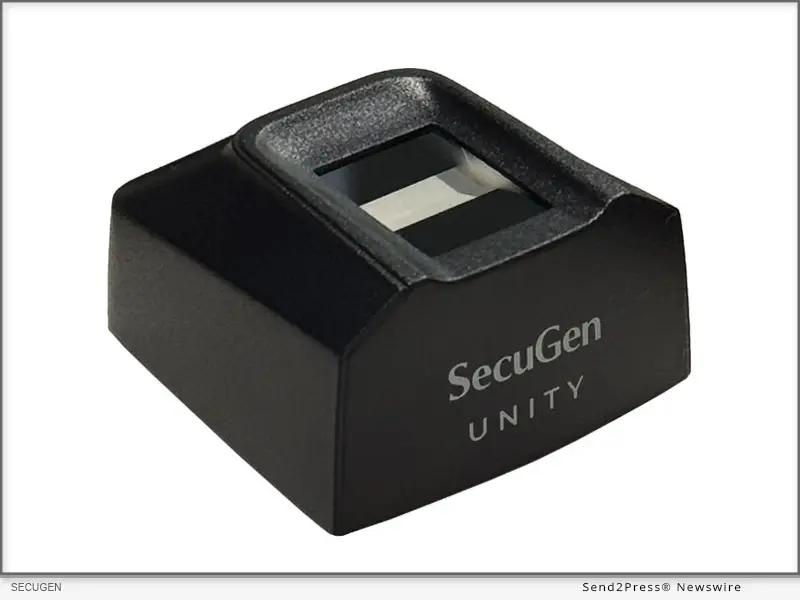
SecuGen Announces its new Unity 20 USB-S Smart Fingerprint Reader for Any System

0

[ad_1]

SANTA CLARA, Calif. /California Newswire/ — SecuGen, a world leader in fingerprint technology, today announced the Unity™ 20 USB-S, the newest addition to its Unity line of smart fingerprint readers. Ultra-compact, affordable, and FBI-certified for image quality, the Unity 20 USB-S delivers secure biometric authentication across a wide range of industries.

With its single-cable USB connection and Serial-over-USB design, the Unity 20 USB-S connects easily to Windows®, Android®, Linux®, and macOS® hosts-no proprietary drivers required-making it fast to deploy especially in tightly managed IT environments and resource-constrained ones such as embedded systems.

SecuGen Unity 20 USB-S Fingerprint Reader

The Unity 20 USB-S isn’t just a reader – it’s a fully programmable fingerprint recognition system. It can capture, extract, and match fingerprints and securely store templates directly on the same device. It also supports Auto-On™ finger detection and Smart Capture™ to handle difficult conditions such as dry or wet skin.

This powerful, all-in-one device is ideal for a wide range of uses, including in ATMs, kiosks, retail point-of-sale, healthcare terminals, government systems, and enterprise security applications.

“Our customers and partners have been asking for a solution that combines simplicity, security, and flexibility,” said Jeff Brown, Vice President of Sales for SecuGen. “The Unity 20 USB-S answers that call by offering a powerful fingerprint reader that can be deployed quickly and reliably across virtually any environment.”

“SecuGen focuses on providing high-quality, affordable fingerprint solutions,” added Won Lee, CEO of SecuGen. “The Unity 20 USB-S takes that mission further by delivering a versatile, easy-to-use device that works anywhere, right out of the box.”

More information about the product is available here: https://secugen.com/products/unity-20-usb-s.

About SecuGen

SecuGen Corporation (secugen.com) is a world-leading provider of advanced, optical fingerprint recognition technology, products, tools and platforms for physical and information security. SecuGen designs and develops FBI-certified fingerprint sensors and readers, OEM components, developer kits, and software, including NIST/MINEX-compliant algorithms. Known for high quality, ruggedness, and performance in a wide variety of applications and environmental conditions, SecuGen products are used by world-leading financial, medical, government, educational and corporate institutions and are sold through an extensive network of reseller partners including original equipment manufacturers, independent software vendors and system integrators around the world.

SecuGen, Auto-On, Smart Capture, and Unity are trademarks or registered trademarks of SecuGen Corp. in the United States and other countries. Windows is a registered trademark of Microsoft Corporation. Android is a registered trademark of Google LLC. Linux is the registered trademark of Linus Torvalds. macOS is a trademark of Apple Inc. All other trademarks are the property of their respective owners.

Sales and media contacts: https://secugen.com/contact

Learn More: https://secugen.com/

This version of news story was published on and is Copr. © 2025 California Newswire® (CaliforniaNewswire.com) – part of the Neotrope® News Network, USA – all rights reserved.

Information is believed accurate but is not guaranteed. For questions about the above news, contact the company/org/person noted in the text and NOT this website.

[ad_2]
Source link

Ducks rout Mammoth for 1st preseason win – Orange County Register

0

[ad_1]

ANAHEIM — The Ducks returned to Honda Center for the first time since April and earned their first victory of the preseason on Monday night, making light work of the Utah Mammoth in a 6-1 win.

Drew Helleson contributed a goal and two assists, matching the point total of his defense partner Jackson LaCombe’s three-assist evening. Matthew Phillips deposited two goals while Troy Terry produced two primary assists. Beckett Sennecke, Ryan Strome and Ross Johnston each picked up a goal. Petr Mrázek had 25 saves.

Dylan Guenther had a goal for Utah. Karel Vejmelka started the game, allowing three goals on 17 shots through 40 minutes before being replaced by Jaxson Stauber, the son of former Kings goalie Robb Stauber, who ceded three more.

Ducks coach Joel Quenneville got his first win while sporting an orange tie – during the regular season, he has more victories than every coach in NHL history except Scotty Bowman – and was pleased with the effort.

He lauded newcomer Mikael Granlund as having a “special game.” He described the undersized Phillips’ performance as a “good start for the little guy.” Quenneville even compared the closeness of LaCombe and Helleson to that of three-time Stanley Cup winners Duncan Keith and Brent Seabrook, whom he guided in Chicago.

“They’re together a lot, and they’ve got a lot of synergy. They’re both Minnesotans, they’re best friends, they’ve got the same agent [Pat Brisson] and they’re a left and a right pair, so it fits nice,” Quenneville said. “They’re as close of a pair as I’ve had.”

The opening 20 minutes brought the game’s first penalty, taken by Olen Zellweger and killed by the Ducks; its first fight, won by Utah’s Montana Onyebuchi against Judd Caufield; and the opening goal, scored by Helleson.

Terry drew a crowd toward the middle of the ice and dished to the left dot for Helleson, who swept a shot through traffic and past Vejmelka, with 2:55 left in the period.

After a power play for each side in the middle frame, the Ducks cracked the game open with a pair of goals that came 68 seconds apart, at the 4:10 and 5:18 marks.

Helleson was paired with his buddy since the nascent stages of elementary school, LaCombe, presumably with Helleson being the stay-at-home partner for the Ducks’ leading scorer from the blue line last year. But it was LaCombe swiping a simple, direct pass to Helleson, who deked through two defenders and delivered the puck to Phillips for a redirection goal.

Last year’s No. 3 overall draft pick, Sennecke, extended the Ducks’ edge to 3-0. Another lottery pick, Leo Carlsson, twice impeded Utah’s progress up the ice. He and Tyson Hinds got the puck ahead to Sennecke with a step on two defenders for a hard drive to the net that allowed him to finish in tight.

Sennecke said from his first preseason to his second there were no major changes for him, apart from the obvious given the Ducks’ coaching change.

“You should keep it simple, and he said, just play the game, don’t think,” Sennecke said Quenneville imparted to him.

After the faceoff following Sennecke’s goal, Noah Warren fought for the second time in two days, squaring off with Curtis Douglas after taking on the Kings’ Samuel Helenius on Sunday. Hinds scrapped with Utah’s Ben McCartney in the third tilt of the evening, early in the third period.

Utah also put up at least something of a fight on the scoreboard at 14:48 of the second period, when Guenther glided toward Mrázek at a sharp angle and snuck the puck off his backhand and into the net.

The Ducks stretched their lead to 4-1, 5:33 into the third period. Again it was Terry buzzing around the offensive zone, this time flicking the puck toward the net for a deflection goal by Strome.

At 9:18, Johnston tipped Jan Myšák’s shot for a redirection tally of his own, and with 5:53 to play Phillips tacked on his second goal, this one coming off the rush.

Next up, the Ducks will host the Kings on Wednesday night.

[ad_2]
Source link

Yucaipa boys water polo team defeats Murrieta Valley in battle of Inland powers – Press Enterprise

0

[ad_1]

YUCAIPA — Yucaipa High School boys water polo coach Ty Hudson has long preached the importance of movement.

Monday afternoon, the Thunderbirds used movement of both body and ball to take control against Murrieta Valley and walk away with a 13-7 victory in a nonleague showdown between Inland Empire powerhouses at Crafton Hills College.

Yucaipa (13-4) outscored Murrieta Valley 6-1 in the second period, with the goals being scored by six different players.

“That’s how we like to play,” Hudson said. “Ball movement, player movement is a big part of our strategy. We look to move the ball around and find those drivers…. And when we play like that and execute the plan, we’re pretty hard to stop at the offensive end.”

Murrieta Valley (7-5) was able to match the Thunderbirds early, with Titus Elliott scoring twice to give the Nighthawks leads of 1-0 and 3-2 in the opening quarter. Bradley Hull helped Yucaipa tie the score at 3 with 1:31 left in that period.

Yucaipa used its pressure to disrupt Murrieta Valley’s offense and held their opponent scoreless for nearly 7 minutes across the first and seconds quarters. The Thunderbirds, meanwhile, executed their offense game plan to near perfection in the second period, with Tate Hudson, Ryder Romain, Axton Smith, Harrison Saluja, Blake Minkler and Hull scoring goals.

“We didn’t come out very strong in that first quarter,” Tate Hudson said. “So we talked things over at the quarter break. All we needed to do is move in the water and move the ball a lot better.  I think we did amazing job of that the final three quarters.”

Murrieta Valley bounced back offensively in the third quarter, as Josiah Remmick, Logan Fox and Elliot scored goals during that period. However, the closest the Nighthawks got during the second half was four goals (three times).

“They are extremely good at attacking the goal and attacking space,” Murrieta Valley coach Bryan Lynton said about the T-Birds. “And defending that is not really our strong suit…. We play Yucaipa every year, so it wasn’t a surprise. We knew what to expect, but Ty does a great job getting his players to execute. We also didn’t capitalize of some of our scoring opportunities.”

Yucaipa held Murrieta Valley scoreless over the final seven minutes to put the finishing touches on another victory.

Tate Hudson and Smith each scored a goal in the fourth quarter to complete their hat tricks. Minkler and Hull finished with two goals apiece for the T-Birds. Cutler Henrie registered six saves in the cage.

Elliott scored three goals to lead the way for Murrieta Valley, while Leif Pederson added a pair of goals for the Nighthawks. Cannon Smith finished with eight blocks in the cage,

[ad_2]
Source link

In a dizzying few days, Trump ramps up attacks on political opponents and 1st Amendment

0

[ad_1]

President Trump has harnessed the weight of his office in recent days to accelerate a campaign of retribution against his perceived political enemies and attacks on 1st Amendment protections.

In the last week alone, Trump replaced a U.S. attorney investigating two of his political adversaries with a loyalist and openly directed the attorney general to find charges to file against them.

His Federal Communications Commission chairman hinted at punitive actions against networks whose journalists and comedians run afoul of the president.

Trump filed a $15-billion lawsuit against the New York Times, only to have it thrown out by a judge.

The acting U.S. attorney in Los Angeles asked the Secret Service to investigate a social media post by Gov. Gavin Newsom’s press office.

The Pentagon announced it was imposing new restrictions on reporters who cover the U.S. military.

The White House officially labeled “antifa,” a loose affiliation of far-left extremists, as “domestic terrorists” — a designation with no basis in U.S. law — posing a direct challenge to free speech protections. And it said lawmakers concerned with the legal predicate for strikes on boats in the Caribbean should simply get over it.

An active investigation into the president’s border advisor over an alleged bribery scheme involving a $50,000 payout was quashed by the White House itself.

Trump emphasized his partisan-fueled dislike of his political opponents during a Sunday memorial service for conservative activist Charlie Kirk, who he said “did not hate his opponents.”

“That’s where I disagreed with Charlie,” Trump said. “I hate my opponents and I don’t want the best for them.”

It has been an extraordinary run of attacks using levers of power that have been seen as sacred arbiters of the public trust for decades, scholars and historians say.

The assault is exclusively targeting Democrats, liberal groups and establishment institutions, just as the administration moves to shield its allies.

Erik Siebert, the U.S. attorney in Virginia, resigned Friday after facing pressure from the Trump administration to bring criminal charges against New York Atty. Gen. Letitia James over alleged mortgage fraud. In a social media post later that day, Trump claimed he had “fired” Siebert.

A few hours later, on Saturday, Trump said he nominated White House aide Lindsey Halligan to take over Siebert’s top prosecutorial role in Virginia, saying she was “tough” and “loyal.”

Later that day, Trump demanded in a social media post addressed to “Pam” — in reference to Atty. Gen. Pam Bondi — that she prosecute James, former FBI Director James Comey and Sen. Adam Schiff (D-Calif.).

“We can’t delay any longer, it’s killing our reputation and credibility,” Trump wrote. “They impeached me twice, and indicted me (5 times!), OVER NOTHING. JUSTICE MUST BE SERVED, NOW!!!”

White House Press Secretary Karoline Leavitt defended Trump’s remarks, saying Monday that the president is “rightfully frustrated” and that he “wants accountability for these corrupt fraudsters who abuse their power, who abuse their oath of office, to target the former president and then candidate for the highest office in the land.”

“It is not weaponizing the Department of Justice to demand accountability for those who weaponize the Department of Justice, and nobody knows what that looks like more than President Trump,” Leavitt told reporters.

As the president called for prosecution of his political opponents, it was reported that Tom Homan, the White House border advisor, was the subject of an undercover FBI case that was later shut down by Trump administration officials. Homan, according to MSNBC, accepted $50,000 in cash from undercover agents after he indicated to them he could get them government contracts.

At Monday’s news briefing, Leavitt said that Homan did not take the money and that the investigation was “another example of the weaponization of the Biden Department of Justice against one of President Trump’s strongest and most vocal supporters.”

“The White House and the president stand by Tom Homan 100% because he did absolutely nothing wrong,” she said.

Some see the recent actions as an erosion of an expected firewall between the Department of Justice and the White House, as well as a shift in the idea of how criminal investigation should be launched.

“If the Department of Justice and any prosecution entity is functioning properly, then that entity is investigating crimes and not people,” said John Hasnas, a law professor at Georgetown University.

The Trump administration has also begun a military campaign against vessels crossing the Caribbean Sea departing from Venezuela that it says are carrying narcotics and drug traffickers. But the targeted killing of individuals at sea is raising concern among legal scholars that the administration’s operation is extrajudicial, and Democratic lawmakers, including Schiff, have introduced a bill in recent days asserting the ongoing campaign violates the War Powers Resolution.

Political influence has long played a role with federal prosecutors who are political appointees, Hasnas said, but under “the current situation it’s magnified greatly.”

“The interesting thing about the current situation is that the Trump administration is not even trying to hide it,” he said.

Schiff said he sees it as an effort to “try to silence and intimidate.” In July, Trump accused Schiff — who led the first impeachment inquiry into Trump — of committing mortgage fraud, which Schiff has denied.

“What he wants to try to do is not just go after me and Letitia James or Lisa Cook, but rather send a message that anyone who stands up to him on anything, anyone who has the audacity to call out his corruption will be a target, and they will go after you,” Schiff said in an interview Sunday.

Trump campaigned in part on protecting free speech, especially that of conservatives, who he claimed had been broadly censored by the Biden administration and “woke” leftist culture in the U.S. Many of his most ardent supporters — including billionaire Elon Musk and now-Vice President JD Vance — praised Trump as a champion of free speech.

However, since Trump took office, his administration has repeatedly sought to silence his critics, including in the media, and crack down on speech that does not align with his politics.

And in the wake of Kirk’s killing on Sept. 10, those efforts have escalated into an unprecedented attack on free speech and expression, according to constitutional scholars and media experts.

“The administration is showing a stunning ignorance and disregard of the 1st Amendment,” said Erwin Chemerinsky, dean of the UC Berkeley Law School.

“We are at an unprecedented place in American history in terms of the targeting of free press and the exercise of free speech,” said Ken Paulson, former editor in chief of USA Today and now director of the Free Speech Center at Middle Tennessee State University.

“We’ve had periods in American history like the Red Scare, in which Americans were to turn in neighbors who they thought leaned left, but this is a nonstop, multifaceted, multiplatform attack on all of our free speech rights,” Paulson said. “I’m actually quite stunned at the velocity of this and the boldness of it.”

Bondi recently railed against “hate speech” — which the Supreme Court has previously defended — in an online post, suggesting the Justice Department will investigate those who speak out against conservatives.

FCC Chairman Brendan Carr threatened ABC and its parent company, Disney, with repercussions if they did not yank Jimmy Kimmel off the air after Kimmel made comments about Kirk’s alleged killer that Carr found distasteful. ABC swiftly suspended Kimmel’s show, though Disney announced Monday that it would return Tuesday.

The Pentagon, meanwhile, said it will require news organizations to agree not to disclose any information the government has not approved for release and revoke the press credentials of those who publish sensitive material without approval.

Critics of the administration, free speech organizations and even some conservative pundits who have long criticized the “cancel culture” of the progressive left have spoken out against some of those policies. Scholars have too, saying the amalgam of actions by the administration represent a dangerous departure from U.S. law and tradition.

“What unites all of this is how blatantly inconsistent it is with the 1st Amendment,” Chemerinsky said.

Chemerinsky said lower courts have consistently pushed back against the administration’s overreaches when it comes to protected speech, and he expects they will continue to do so.

He also said that, although the Supreme Court has frequently sided with the president in disputes over his policy decisions, it has also consistently defended freedom of speech, and he hopes it will continue to do so if some of the free speech policies above reach the high court.

“If there’s anything this court has said repeatedly, it’s that the government can’t prevent or stop speech based on the viewpoint expressed,” Chemerinsky said.

Paulson said that American media companies must refuse to obey and continue to cover the Trump administration and the Pentagon as aggressively as ever, and that average Americans must recognize the severity of the threat posed by such censorship and speak out against it, no matter their political persuasion.

“This is real — a full-throttle assault on free speech in America,” Paulson said. “And it’s going to be up to the citizenry to do something about it.”

Chemerinsky said defending free speech should be an issue that unites all Americans, not least because political power changes hands.

“It’s understandable that those in power want to silence the speech that they don’t like, but the whole point of the 1st Amendment is to protect speech we don’t like,” he said. “We don’t need the 1st Amendment to protect the speech we like.”

[ad_2]
Source link

‘Extremely chaotic.’ Tech industry rattled by Trump’s $100,000 H-1B visa fee

0

[ad_1]

President Trump’s new sky-high visa fees have shaken Silicon Valley’s tech giants as they contemplate a surge in the cost of hiring global talent and a new tactic the White House can use to keep Silicon Valley in line.

The tech industry was already navigating an economy with higher and unpredictable tariffs, when last week the Trump administration threw another curveball aimed directly at its bottom line: a $100,000 fee for the visas used to hire certain skilled foreign workers. The industry relies heavily on the H-1B visa program to bring in a wide range of engineers, coders, and other top talent to the United States.

The rollout has sparked confusion among businesses, immigration lawyers and current H-1B visa holders.

Over the weekend, the Trump administration clarified that the new fee will apply to new visas, isn’t annual and doesn’t prevent current H-1B visa holders from traveling in and outside of the country. Companies would have to pay the fee with any new H-1B visa petitions submitted after a specific time on Sept. 21, the White House said.

On Monday, the Trump administration also clarified that certain professions, such as doctors, may be exempt from the fee. Some observers are concerned that a selective application of the fee could be a way the White House can reward its friends and punish its detractors.

Meta, Apple, Google, Amazon and Microsoft have been strengthening their ties with the Trump administration by committing to invest hundreds of billions of dollars in the United States.

Still, immigration has long been a contentious issue between the Trump administration and tech executives, some of whom were on a H-1B visa before they co-founded or led some of the world’s largest tech companies.

One of the most vocal supporters of the H-1B visas: Elon Musk, who backed Trump but has publicly sparred with him after he led the federal government’s efforts to slash spending. Musk, who runs multiple companies, including Tesla, SpaceX and xAI, is a naturalized U.S. citizen born in South Africa and has held an H-1B visa.

Tech executives have said the H-1B visa program has been crucial for hiring skilled workers. Competition to attract the world’s best talent has been intensifying since the popularity of OpenAI’s ChatGPT sparked a fierce race to rapidly advance artificial intelligence.

The new fee could slow California’s development and the United States’ position in the AI race by making it tougher for companies — especially startups with less money — to bring in international employees, experts said.

So far this fiscal year, more than 7,500 companies in California have applied for H-1B visas and 61,841 have been approved, data from the U.S. Citizenship and Immigration Services shows.

Tech companies use the visa program to hire computer scientists and engineers because the U.S. isn’t producing enough workers with the skills needed, said Darrell West, a senior fellow in the Center for Technology Innovation at the Brookings Institution.

Trump “likes to talk tough on immigration, but he fails to recognize how important immigrants are to our economy,” he said. “Companies in technology, agriculture, hotels, restaurants and construction rely heavily on immigrants, and slowing that flow is going to be devastating for companies in those areas.”

In his executive order, the Trump administration noted that some companies, such as information technology firms, have allegedly misused the program, citing mass layoffs in the tech industry and the difficulty young college graduates face in landing jobs.

“President Trump promised to put American workers first, and this commonsense action does just that by discouraging companies from spamming the system and driving down American wages,” Taylor Rogers, a White House spokesperson, said in a statement.

Economists and tech executives, though, have pointed to other factors affecting hiring, including economic uncertainty from tariffs, a shift in investments and the rise of AI tools that could complete tasks typically filled by entry-level workers.

California’s unemployment rate of 5.5% in August was higher than the U.S. unemployment rate of 4.3%, according to the U.S. Bureau of Labor Statistics.

The rollout of the new changes has been “extremely chaotic,” and while the White House has tried to clear up some of the confusion, tech companies still have a lot of questions about how the fee would work, said Adam Kovacevich, chief executive of the Chamber of Progress, a center-left tech industry policy coalition.

“You never know what you’re gonna end up with the final policy in Trump world,” he said. “Somebody within the administration drives an announcement, there’s blowback, and then they end up modifying their plans.”

Tech companies have been trying to navigate a fine line in their relationship with Trump.

During Trump’s first term, high-profile tech executives, including those from Meta, Amazon, Google and Apple, spoke out about his administration’s order to restrict travel from several majority-Muslim countries. But in his second term, those same executives have cozied up to the Trump administration as they seek to influence AI policy and strike lucrative partnerships with the government.

They’ve contributed to his inauguration fund, appeared at high-profile press events, and attended a White House dinner, where Trump asked them how much they’re investing in the United States.

Microsoft declined to comment. Meta, Google and Apple didn’t immediately respond to a request for comment.

Changes to the H-1B program could also worsen relations with other countries, such as India, that send skilled tech workers to the U.S., experts said.

Indian nationals are the largest beneficiaries of the H-1B visa program, accounting for 71% of approved petitions, followed by those from China, at approximately 12%.

Some Indian venture capitalists and research institutes see a silver lining in this murky future. On social media, some have posted that the uncertainty surrounding H-1B visa rules could encourage talented engineers to return home to build startups, thereby fueling India’s tech sector. That would mean more competition for U.S. tech companies.

Kunal Bahl, an Indian tech investor and entrepreneur, posted “Come, build in India!” on social media. His firm, Titan Capital, launched a seed funding and mentorship program aimed at attracting students and professionals rethinking their future in the U.S. after the visa troubles.

Global tech companies might also consider opening more centers abroad where workers can work remotely and not have to move to the U.S., said Phil Fersht, the founder and chief executive of HFS Research.

“The more the U.S. makes itself a less attractive place to bring in talent,” he said, “the more it is going to harm its economy.”

[ad_2]
Source link

First flights arrive at San Diego airport’s new Terminal 1

0

[ad_1]

As the San Diego airport prepared for Terminal 1’s first full day of operations on Tuesday, the new 19-gate facility on Monday night welcomed the first of 15 flights, arriving from across the country, from San Jose and Austin to Honolulu and Denver.

The nighttime arrivals mark the official opening of the first phase of the new Terminal 1, which replaces the 1960s-era existing facility that has grown cramped and outdated. Its last flight was to take off shortly after the arrival of the new terminal’s first flight.

 Deborah McCarthy, left, and Aileen Dwyer are passengers on board Southwest Airlines flight 4298, which was among the first group of flights to arrive at the new Terminal 1 of San Diego International Airport. (Nelvin C. Cepeda / The San Diego Union-Tribune)
Deborah McCarthy, left, and Aileen Dwyer are passengers on board Southwest Airlines flight 4298, which was among the first group of flights to arrive at the new Terminal 1 of San Diego International Airport. (Nelvin C. Cepeda / The San Diego Union-Tribune)

Ashley Jancsek, on board the flight from San Jose into San Diego, didn’t realize she was going to be among the first passengers to use the new terminal. “It’s exciting. I didn’t know we were (arriving at the new terminal). We had just driven by it last week and it was still, we thought, under construction.”

Demolition of the 336,000 square-foot building is expected to begin within about seven to 10 days and should take about three months before construction begins on the remainder of the new terminal.  The full 30-gate building will be completed by early 2028. While it will eventually house eight airlines, Southwest Airlines will be the single-largest tenant.

Passengers arriving in the new Terminal 1 will enter a far more spacious facility — almost three times the size of its predecessor — where they might make a pit spot at one of the new luxe restrooms before retrieving their luggage at the seven-carousel, high-tech baggage claim system.

A Southwest Airlines flight from Honolulu is the first to arrive at the new Terminal 1 at San Diego International Airport on Monday night. The terminal opens for its first full day of service on Tuesday. (Alejandro Tamayo / The San Diego Union-Tribune)

Along their path to the exit they’ll be treated to an array of new public art, including brightly colored, mosaic-clad columns meant to represent the progression from sunrise to sunset, as well as a striking sculpture of Torrey Pines fashioned from hundreds of gold-mirrored stainless-steel panels suspended from the ceiling.

Departing passengers will navigate a roomier security screening area with 13 lanes, three more than at the old terminal. Anticipating no meal service on their flights, they might grab some al pastor tacos at The Taco Stand or a cocktail at Cutwater Sprits, just two of several local restaurant brands showcasing their San Diego menus at new Terminal 1. Early risers will be able to purchase coffee at Better Buzz to accompany the macarons and quiche sold at Parfait Paris.

The new terminal is part of a $3.8 billion project that started construction four years ago and includes a new parking garage, a three-lane on-airport roadway that bypasses North Harbor Drive, and a second taxiway that will relieve congestion on the airfield of what is the country’s largest single-runway airport.


Originally Published:

[ad_2]
Source link

Ducks rout Mammoth for 1st preseason win – Press Enterprise

0

[ad_1]

ANAHEIM — The Ducks returned to Honda Center for the first time since April and earned their first victory of the preseason on Monday night, making light work of the Utah Mammoth in a 6-1 win.

Drew Helleson contributed a goal and two assists, matching the point total of his defense partner Jackson LaCombe’s three-assist evening. Matthew Phillips deposited two goals while Troy Terry produced two primary assists. Beckett Sennecke, Ryan Strome and Ross Johnston each picked up a goal. Petr Mrázek had 25 saves.

Dylan Guenther had a goal for Utah. Karel Vejmelka started the game, allowing three goals on 17 shots through 40 minutes before being replaced by Jaxson Stauber, the son of former Kings goalie Robb Stauber, who ceded three more.

Ducks coach Joel Quenneville got his first win while sporting an orange tie – during the regular season, he has more victories than every coach in NHL history except Scotty Bowman – and was pleased with the effort.

He lauded newcomer Mikael Granlund as having a “special game.” He described the undersized Phillips’ performance as a “good start for the little guy.” Quenneville even compared the closeness of LaCombe and Helleson to that of three-time Stanley Cup winners Duncan Keith and Brent Seabrook, whom he guided in Chicago.

“They’re together a lot, and they’ve got a lot of synergy. They’re both Minnesotans, they’re best friends, they’ve got the same agent [Pat Brisson] and they’re a left and a right pair, so it fits nice,” Quenneville said. “They’re as close of a pair as I’ve had.”

The opening 20 minutes brought the game’s first penalty, taken by Olen Zellweger and killed by the Ducks; its first fight, won by Utah’s Montana Onyebuchi against Judd Caufield; and the opening goal, scored by Helleson.

Terry drew a crowd toward the middle of the ice and dished to the left dot for Helleson, who swept a shot through traffic and past Vejmelka, with 2:55 left in the period.

After a power play for each side in the middle frame, the Ducks cracked the game open with a pair of goals that came 68 seconds apart, at the 4:10 and 5:18 marks.

Helleson was paired with his buddy since the nascent stages of elementary school, LaCombe, presumably with Helleson being the stay-at-home partner for the Ducks’ leading scorer from the blue line last year. But it was LaCombe swiping a simple, direct pass to Helleson, who deked through two defenders and delivered the puck to Phillips for a redirection goal.

Last year’s No. 3 overall draft pick, Sennecke, extended the Ducks’ edge to 3-0. Another lottery pick, Leo Carlsson, twice impeded Utah’s progress up the ice. He and Tyson Hinds got the puck ahead to Sennecke with a step on two defenders for a hard drive to the net that allowed him to finish in tight.

Sennecke said from his first preseason to his second there were no major changes for him, apart from the obvious given the Ducks’ coaching change.

“You should keep it simple, and he said, just play the game, don’t think,” Sennecke said Quenneville imparted to him.

After the faceoff following Sennecke’s goal, Noah Warren fought for the second time in two days, squaring off with Curtis Douglas after taking on the Kings’ Samuel Helenius on Sunday. Hinds scrapped with Utah’s Ben McCartney in the third tilt of the evening, early in the third period.

Utah also put up at least something of a fight on the scoreboard at 14:48 of the second period, when Guenther glided toward Mrázek at a sharp angle and snuck the puck off his backhand and into the net.

The Ducks stretched their lead to 4-1, 5:33 into the third period. Again it was Terry buzzing around the offensive zone, this time flicking the puck toward the net for a deflection goal by Strome.

At 9:18, Johnston tipped Jan Myšák’s shot for a redirection tally of his own, and with 5:53 to play Phillips tacked on his second goal, this one coming off the rush.

Next up, the Ducks will host the Kings on Wednesday night.

[ad_2]
Source link

UC Riverside’s fall quarter 2025 gets underway – Press Enterprise

0

[ad_1]

It was time Monday, Sept. 22, for one more back-to-school day.

RELATED: New UC Riverside Chancellor Jack Hu hopes his story inspires students

Most Inland Empire students from kindergarten to colleges and universities returned to their classrooms some time ago.

Now UC Riverside students have joined them.

1 of 16

UC Riverside students lock up bikes and scooters on Monday, Sept. 22, 2025, the first day of the fall quarter. (Photo by Anjali Sharif-Paul, The Sun/SCNG)

Expand

Fall quarter classes started at UCR as parking lots buzzed, dorm cafeterias were busy and backpack-carrying youths walked the campus.

UCR Welcome Week 2025 was underway and will feature events such as registration for intramural sports, free chair massages and an ice cream social.

[ad_2]
Source link

Nvidia to invest $100B in OpenAI to help expand ChatGPT maker’s computing power

0

[ad_1]

Chipmaker Nvidia will invest $100 billion in OpenAI as part of a partnership announced Monday that will add at least 10 gigawatts of Nvidia AI data centers to ramp up the computing power for the owner of the artificial intelligence chatbot ChatGPT.

Per the letter of intent signed by the companies, the first gigawatt of Nvidia systems will be deployed in the second half of 2026. Nvidia and OpenAI said they would be finalizing the details of the arrangement in the coming weeks.

“This partnership complements the deep work OpenAI and Nvidia are already doing with a broad network of collaborators, including Microsoft, Oracle, SoftBank and Stargate partners, focused on building the world’s most advanced AI infrastructure,” the companies said in a release.

The Nvidia-OpenAI partnership comes about 10 days after OpenAI said it had reached a new tentative agreement that will give Microsoft a $100 billion equity stake in its for-profit corporation. OpenAI is technically controlled by its nonprofit.

OpenAI was founded as a nonprofit in 2015 and its nonprofit board has continued to control the for-profit subsidiary that now develops and sells its AI products.

OpenAI’s corporate structure and nonprofit mission are the subject of a lawsuit brought by Elon Musk, who helped found the nonprofit research lab and provided initial funding. Musk’s suit seeks to stop OpenAI from taking control of the company away from its nonprofit and alleges it has betrayed its promise to develop AI for the benefit of humanity.

Earlier this month, the attorneys general of California and Delaware warned OpenAI that they have “serious concerns” about the safety of ChatGPT, especially for children and teens.

The two state officials, who have unique powers to regulate nonprofits such as OpenAI, noted “deeply troubling reports of dangerous interactions between” chatbots and their users, including the suicide of one young Californian after he had prolonged interactions with an OpenAI chatbot. The parents of the 16-year-old California boy, who died in April, sued OpenAI and its CEO, Sam Altman, last month.

OpenAI says it has 700 million weekly active users.

Also, just last week Nvidia announced that it was investing $5 billion in fellow chipmaker Intel, which has struggled to keep up with the frenzied demand for artificial intelligence.

[ad_2]
Source link

Trump’s Federal Reserve appointee seeks steeper rate cuts

0

[ad_1]

WASHINGTON — President Donald Trump’s appointee to the Federal Reserve’s Board of Governors said Monday that the central bank’s key interest rate should be much lower than its current 4.1% level, staking out a position far different than his colleagues.

Stephen Miran, who is also a top economic adviser to Trump, said in remarks to the Economic Club of New York that sharp declines in immigration, rising tariff revenue, and an aging population all suggest that the Fed’s rate should be closer to 2.5% instead. According to projections released last week, that’s almost a full percentage point lower than any of his 18 colleagues on the Fed’s rate-setting committee, an unusually high divergence.

Miran’s comments underscore the different perspective he brings to the Fed’s deliberations over interest rate policy. His appointment has been controversial because he has kept his position as the head of the White House’s Council of Economic Advisers while taking unpaid leave, raising concerns about the Fed’s traditional independence from day-to-day politics.

His term on the Fed’s board expires in January, and Miran has said he expects to return to the White House after that, and is keeping his position because his Fed term is so short. But he could remain on the board until a successor is appointed. There hasn’t been a member of the executive branch on the Fed’s board since the 1930s.

Concerns about the Fed’s independence are heightened because Trump has also repeatedly attacked Chair Jerome Powell and has called for the Fed to reduce its rate to as low as 1.2%. He he is now seeking to fire Lisa Cook, a Fed governor, who has fought her removal in the courts. It is the first time that a president has tried to fire a Fed governor.

So far, courts have ruled that Cook can keep her job while her suit seeking to overturn her firing is considered. The Trump administration has appealed that ruling to the Supreme Court.

During a question and answer session Monday, Miran said he would operate independently, and that Trump had not pushed him to follow any specific policy.

“At the end of the day, I make my own analysis based on my own understanding of economics and how the economy works,” Miran said. In his conversations with Trump, the president “never asked me to set policy in a specific way.”

In his speech, Miran said, “it should be clear that my view of appropriate monetary policy diverges from those of other” members of the committee. “I view policy as very restrictive,” he added, meaning that it is holding back the economy and “poses material risks” to the Fed’s congressional mandate of seeking maximum employment.

Miran said that fewer immigrants should free up more housing and lower rental costs, reducing inflationary pressures. And tariff revenues — which may top $300 billion a year, according to Congressional Budget Office estimates — should reduce the deficit, he added. Over time, that would mean the Fed doesn’t have to keep its benchmark interest rate as high as it is now to bring inflation down.

[ad_2]
Source link

NASA introduces its newest astronauts: 10 chosen from more than 8,000 applicants

0

[ad_1]

CAPE CANAVERAL, Fla. — NASA introduced its newest astronauts Monday, 10 scientists, engineers and test pilots chosen from more than 8,000 applicants to help explore the moon and possibly Mars.

For the first time, there were more women than men in a NASA astronaut class. They included a geologist who worked on NASA’s Curiosity Mars rover, a SpaceX engineer who flew on a billionaire-sponsored spaceflight that featured the world’s first private spacewalk and a former SpaceX launch director.

The group will undergo two years of training before becoming eligible for spaceflight. Acting Administrator Sean Duffy said one of them could become the first person to step on Mars.

It is the 24th astronaut class for NASA since the original Mercury Seven made their debut in 1959. The previous class was in 2021.

Only 370 people have been selected by NASA as astronauts, making it an extraordinarily small and elite group composed mostly of men. The latest additions — revealed during a ceremony at NASA’s Johnson Space Center in Houston — will join 41 active U.S. astronauts currently serving in the corps.

NASA’s flight operations director Norm Knight said competition was stiff and called the newcomers “distinguished” and “exceptional.”

___

The Associated Press Health and Science Department receives support from the Howard Hughes Medical Institute’s Department of Science Education and the Robert Wood Johnson Foundation. The AP is solely responsible for all content.

[ad_2]
Source link

Home Privacy Policy Terms Of Use Anti Spam Policy Contact Us Affiliate Disclosure DMCA Earnings Disclaimer