SHANGHAI — The head of a U.S. congressional delegation visiting China said Thursday that much need to be done to resolve the U.S.-China trade conflict, which he said is creating difficulties for companies on both sides of the Pacific.
His biggest takeaway was that a lot of business is going on between the two economies despite the trade war, Rep. Adam Smith, a Democrat from Washington state, said on the final day of a five-day trip.
“We have a lot of work to do to resolve those issues, but China, the U.S. and the world can benefit from resolving some of our differences and working better together,” he told journalists after a meeting with the American Chamber of Commerce in Shanghai.
The group of three Democrats — Smith and Reps. Ro Khanna and Chrissy Houlahan — and Republican Rep. Michael Baumgartner could be seen having a coffee at a Starbucks in an office building lobby after their meeting with the Chamber.
The Democrats are all members of the House Armed Services Committee, and Smith repeated his call from the outset of the trip for more communication between the U.S. and Chinese militaries.
“Two of the largest nuclear powers in the world need to be talking to each other, particularly considering the fact that we do have some disagreements,” he said.
The lawmakers arrived in Shanghai on Wednesday after three days of meetings with Chinese political leaders in Beijing including Premier Li Qiang, Foreign Minister Wang Yi and Defense Minister Dong Jun.
Smith said the main purpose of trip was to open up lines of communication between the governments. Theirs was the first by a delegation from the U.S. House of Representatives since 2019. A U.S. Senate delegation visited in 2023.
U.S. President Donald Trump said recently that he would meet Chinese leader Xi Jinping at a regional summit in South Korea in late October and visit China in the early next year. China has not confirmed the meetings.
RED LION, Pa. — Hundreds of police officers are expected to attend a closed funeral Thursday for three Pennsylvania detectives shot and killed last week by a man who had been inside the home of a woman he was accused of stalking.
The service at Living Word Community Church in Red Lion gets underway at noon, following a motorcade to escort the bodies of Northern York County Regional Police detectives Cody Michael Becker, Mark Edward Baker and Isaiah Emenheiser from a funeral home.
Autopsy results released this week indicated that all three officers died of multiple gunshot wounds.
A prosecutor said the stalking suspect, 24-year-old Matthew James Ruth, fired on the officers as they opened the door to the woman’s home. The three were killed and two other officers were seriously wounded.
York County District Attorney Tim Barker said he believes Ruth, who died in the exchange of gunfire, had planned to ambush the woman he was accused of stalking.
The three veterans of the police force have been remembered as devoted to their families and community.
Becker, 39, a resident of Spring Grove, had been a star multisport athlete in high school. Baker, 53, who lived in Dover, was a computer forensics investigation specialist. Emenheiser, 43, of York, was called a perfectionist with dreams of opening a gym.
Becker served as sergeant of detectives and had been on the Northern Regional force for 16 years. His obituary recounted how in 2010 he climbed to the second story of a burning building to catch children who were escaping through a window. He is survived by a wife and two children. A second service, a public funeral for Becker, will be held Sunday at Spring Grove Area High School in Spring Grove.
Baker, a U.S. Army veteran, spent three years with the Philadelphia Police Department before he joined Northern Regional in 2004, first as a patrol officer and then in computer forensics. He had been a detective for 15 years. He was an Eagle Scout and an adult Scouting leader. Survivors include a wife and four children; a fifth child predeceased him.
Emenheiser was a York College criminal justice graduate and served in the U.S. Secret Service before being hired by Northern Regional. He made 104 DUI arrests in 2010 and was named officer of the year, among other professional honors over two decades with the department.
In 2005, Emenheiser broke a window in a burning mobile home in Thomasville and carried a man to safety. Emenheiser’s interests included fitness, home renovations and coaching youth soccer. His surviving family includes a wife and two children.
BOGOTA, Colombia — Seven Indigenous groups in Ecuador’s Amazon have denounced a government plan to offer dozens of blocks of land for oil exploration, saying it threatens their ancestral lands and violates constitutional protections.
The criticism targets a plan from the Ministry of Energy and Mines in August to auction the rights for 49 oil and gas projects worth more than $47 billion.
Officials say the “hydrocarbon roadmap” is a strategy to modernize Ecuador’s oil industry, attract foreign capital and boost production. Their plan includes contract renegotiations and new licensing rounds that the government says comply with existing legal frameworks.
Indigenous groups say 18 of the proposed oil blocks overlap their territories — an area roughly the size of Belgium.
Leaders from the Andwa, Shuar, Achuar, Kichwa, Sapara, Shiwiar and Waorani peoples say their communities were not consulted and accuse the government of ignoring court rulings that struck down earlier consultations as unconstitutional.
“The government is pushing ahead with plans to auction 18 oil blocks in our ancestral territories without free, prior and informed consent. That is a constitutional and international right the state is violating,” said Nemo Guiquita, a Waorani leader with the Confederation of Indigenous Nationalities of the Ecuadorian Amazon.
Noboa’s administration has moved to scrap Ecuador’s independent Environment Ministry. He also supported a law passed by the National Assembly that lets private and foreign entities co-manage conservation zones that critics say weakens protections and threatens Indigenous land rights.
“There have been protests, lawsuits and companies forced to withdraw in the past, but now they are once again offering up Amazon oil fields,” Guiquita said. “We are resisting, and we call on the international community to oppose this expansion and help protect the Amazon and our rights.”
Ecuador’s Ministry of Energy and Mines did not immediately respond to questions from The Associated Press. The government has maintained that a 2012 consultation remains valid and that the hydrocarbon plan follows existing regulations.
The Noboa government has already opened new licensing rounds. In April 2025, international firms submitted bids for four oil blocks, and the government said it planned further auctions in Amazon and sub-Andean regions in late 2025 and 2026.
“The Amazon is not for sale. We will defend our territories because we have not been consulted — this is our home,” said Nadino Calapucha, a Kichwa leader.
The dispute comes amid a state of emergency and a national strike over fuel prices, extractive projects and the government’s failure to honor a referendum limiting drilling in Yasuní National Park. On Tuesday, farmers, Indigenous groups and transport unions clashed with police outside the town of Tabacundo as nationwide protests entered a second day.
“Ecuador already showed its will in the Yasuní referendum, when 59% voted to keep oil in the ground. Yet the government insists on imposing extraction, violating our rights,” Calapucha said.
Oil is Ecuador’s top export, accounting for about a third of government revenue in some years. The country produces around 480,000 barrels per day, though output has declined over the past decade. Successive governments have tried to lure foreign capital into the Amazon, but projects have often stalled amid legal battles and Indigenous resistance.
Noboa, who took office in late 2023, has staked much of his fiscal plan on boosting resource revenues to stabilize public finances. His administration is also promoting mining investment, drawing fire from Indigenous leaders who say he is ignoring constitutional guarantees of free, prior and informed consent.
“Ecuador’s plans to auction new oil blocks in the Amazon are doomed to fail,” Kevin Koenig, Amazon Watch’s director for climate, energy and extraction industry said. “Indigenous resistance, civil society mobilization, and growing international pressure will continue to expose these projects as illegitimate, unlawful, and unfinanceable.”
California’s state senate recently expressed concern over imports of Amazon crude and approved a resolution to examine the state’s role as one of the world’s top buyers, underscoring how Ecuador’s oil strategy could reverberate beyond its borders.
___
The Associated Press’ climate and environmental coverage receives financial support from multiple private foundations. AP is solely responsible for all content. Find AP’s standards for working with philanthropies, a list of supporters and funded coverage areas at AP.org.
A defense attorney has been appointed to represent Tyler Robinson, who is charged with shooting and killing conservative activist Charlie Kirk during an appearance at a Utah university earlier this month.
Kathryn Nester was chosen to represent Robinson under a contract with the Utah County Commission, which appoints lawyers for defendants who cannot afford private counsel.
“This action fulfills the Commission’s constitutional responsibility to ensure that individuals accused of a crime—who cannot afford legal representation—are provided with a qualified defense,” Utah County officials said in a statement announcing the appointment.
Tyler Robinson, 22, the suspect in the fatal shooting of Charlie Kirk, appears before Judge Tony Graf of the 4th District Court via a video conference call during a hearing on September 16, 2025 at the Fourth Judicial District Courthouse in Provo, Utah.
Pool/Getty Images
Robinson, 22, has been charged with aggravated murder, felony discharge of a firearm causing serious bodily injury, obstruction of justice, two counts of witness tampering and commission of a violent offense in the presence of a child, Utah County prosecutors announced last week, saying they intend to seek the death penalty.
Nester, the defense attorney, previously served as the head of the federal public defender offices in Salt Lake City and San Diego for over 10 years, according to a biography on the webpage of her law firm.
Judge Tony Graf of the 4th District Court reads the charging documents during a hearing for Tyler Robinson, the suspect in the fatal shooting of Charlie Kirk, on September 16, 2025 at the Fourth Judicial District Courthouse in Provo, Utah.
Pool/Getty Images
Her law firm, Nester-Lewis, has represented another defendant in a high-profile Utah case: Kouri Richins, the Utah mother accused of murdering her husband with a lethal dose of fentanyl, who then wrote and self-published a children’s book on grief following her husband’s death. Richins, who has pleaded not guilty, has yet to go to trial.
Nester’s bio says she has over 30 years of experience trying cases in federal and state courtrooms, including prior capital murder cases and complex fraud cases.
Robinson is being held without bond. His next court appearance is set for Sept. 29.
Retailers around the U.S. are expected to sharply reduce the number of workers they add for the holidays, a shift from their usual seasonal hiring sprees to help cope with the annual crush of customers.
Outplacement firm Challenger, Gray and Christmas attributes the weak demand for extra workers this year to companies bearing the heavier costs from U.S. tariffs on foreign goods, as well as on rising inflation and their growing reliance on technology to improve efficiency.
The firm expects retail hiring fo the holidays to fall to its lowest level since 2009, when the economy was emerging from a recession caused by the global financial crisis.
“Seasonal employers are facing a confluence of factors this year: tariffs loom, inflationary pressures linger, and many companies continue to rely on automation and permanent staff instead of large waves of seasonal hires,” Andy Challenger, workplace expert and senior vice president of Challenger, Gray & Christmas, said in a statement.
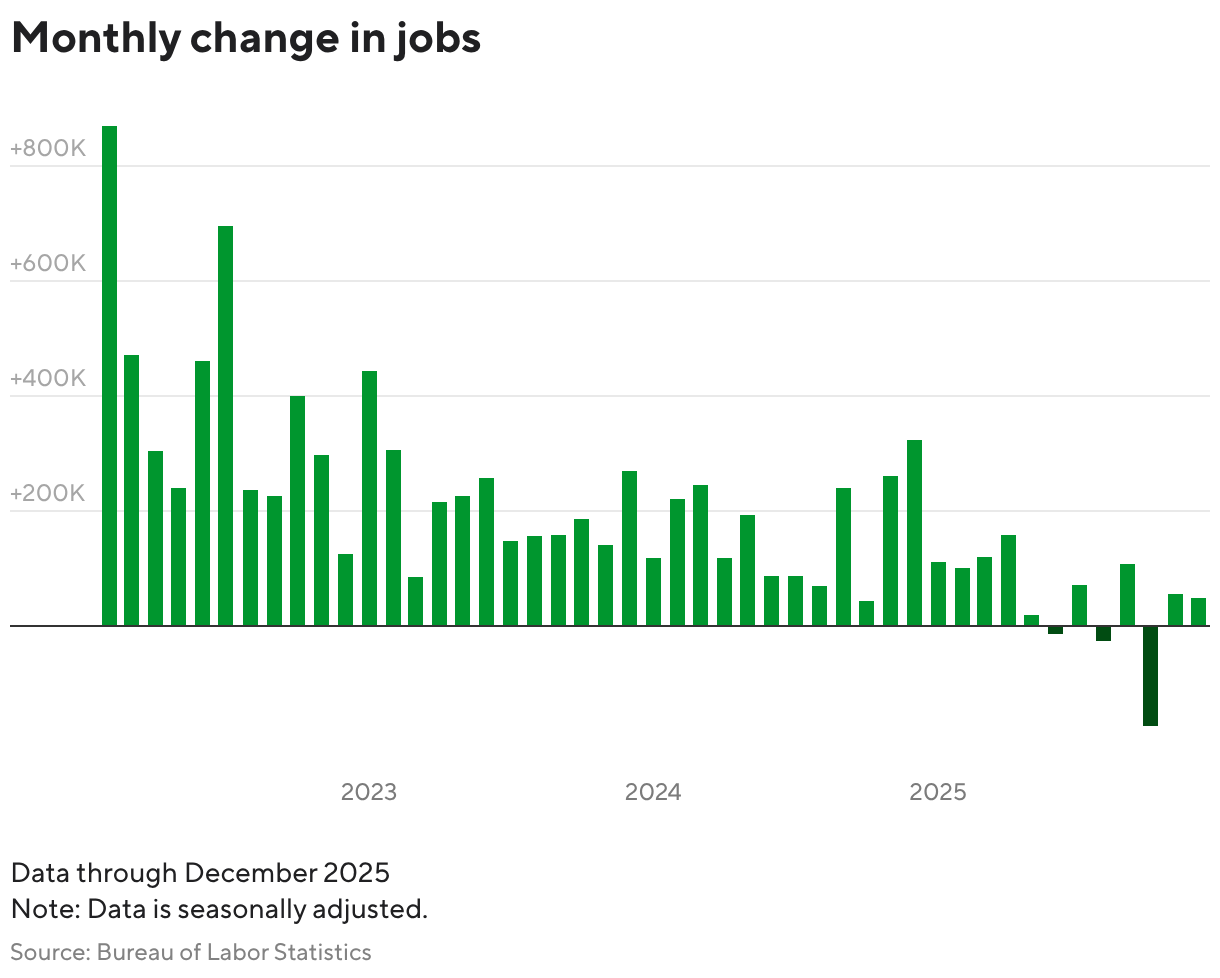
The weaker seasonal hiring forecast comes as the U.S. job market is faltering. Employers added only 22,000 jobs in August, falling far short of economists’ expectations.
Inflation has also edged up in recent months. The Consumer Price Index, which in March had sunk to an annual rate of 2.3%, in August rose at a 2.9% pace from a year ago.
In the last quarter of 2024, retailers added just over 543,000 seasonal workers, down roughly 4% compared to 2023. Companies are projected to add fewer than 500,000 jobs during the last three months of 2025, according to Challenger. Such a figure would mark the smallest seasonal gain in 16 years.
Challenger pointed to fewer seasonal hiring announcements than usual from retailers as a sign they plan to hire fewer workers for the holidays.
“While we could see a late hiring push if holiday sales surprise to the upside, the cautious pace of announcements so far suggests that companies are not betting on a big seasonal surge. This year may be more about doing more with less,” Challenger said.
Tariffs are causing some consumers to pull back on spending, recent data shows. An August survey of consumers from the University of Michigan found that most U.S. adults plan to spend less on goods that see tariff-driven price hikes. Just 24% of consumers surveyed said they expected to spend as usual on items that rise substantially in price, according to the report.
Tariffs have already driven up the cost of some categories of goods for U.S. consumers. For example, in August, audio equipment rose in price by 12% compared to one year earlier, while the cost of household goods rose 10%, the latest Consumer Price Index report shows.
“A wave of uncertainty is impacting not just retailers, but also consumers heading into the final quarter of the year. With hiring slowing across the board, Retailers may hire fewer workers themselves, while many of their shoppers slow spending,” Challenger added.
Megan Cerullo is a New York-based reporter for CBS MoneyWatch covering small business, workplace, health care, consumer spending and personal finance topics. She regularly appears on CBS News 24/7 to discuss her reporting.
Robot umpires are getting called up to the big leagues next season.
Major League Baseball’s 11-man competition committee on Tuesday approved use of the Automated Ball/Strike System in the major leagues in 2026.
Human plate umpires will still call balls and strikes, but teams can challenge two calls per game and get additional appeals in extra innings. Challenges must be made by a pitcher, catcher or batter — signaled by tapping their helmet or cap — and a team retains its challenge if successful. Reviews will be shown as digital graphics on outfield videoboards.
Adding the robot umps is likely to cut down on ejections. MLB said 61.5% of ejections among players, managers and coaches last year were related to balls and strikes, as were 60.3% this season through Sunday. The figures include ejections for derogatory comments, throwing equipment while protesting calls and inappropriate conduct.
Big league umpires call roughly 94% of pitches correctly, according to UmpScorecards.
ABS, which utilizes Hawk-Eye cameras, has been tested in the minor leagues since 2019. The independent Atlantic League trialed the system at its 2019 All-Star Game and MLB installed the technology for that year’s Arizona Fall League of top prospects. The ABS was tried at eight of nine ballparks of the Low-A Southeast League in 2021, then moved up to Triple-A in 2022.
In 2019, Fred DeJesus became the first umpire in a regular-season game to use ABS. He remembers the first pitch he tested – it was a strike – and how he was hesitant about the new technology at first.
“Initially, it was like, no way, we’re not doing this. I spent way too much money trying to learn the craft of calling balls and strikes,” he told CBS News in 2021.
At Triple-A at the start of the 2023 season, half the games used the robots for ball/strike calls and half had a human making decisions subject to appeals by teams to the ABS.
MLB switched Triple-A to an all-challenge system on June 26, 2024, then used the challenge system this year at 13 spring training ballparks hosting 19 teams for a total of 288 exhibition games. Teams won 52.2% of their ball/strike challenges (617 of 1,182) challenges.
At Triple-A this season, the average challenges per game increased to 4.2 from 3.9 through Sunday and the success rate dropped to 49.5% from 50.6%. Defenses were successful in 53.7% of challenges this year and offenses in 45%.
ABS was used in this year’s All-Star Game as well and has generally received positive reviews, CBS Sports reported. Four of five challenges of plate umpire Dan Iassogna’s calls were successful in July.
Teams in Triple-A do not get additional challenges in extra innings. However, the proposal approved by the MLB on Tuesday included a provision granting teams one additional challenge each inning if they don’t have challenges remaining.
MLB has experimented with different shapes and interpretations of the strike zone with ABS, including versions that were three-dimensional. Currently, it calls strikes solely based on where the ball crosses the midpoint of the plate, 8.5 inches from the front and the back. The top of the strike zone is 53.5% of batter height and the bottom 27%.
This will be MLB’s first major rule change since sweeping adjustments in 2024. Those included a pitch clock, restrictions on defensive shifts, pitcher disengagements such as pickoff attempts and larger bases.
The challenge system introduces ABS without eliminating pitch framing, a subtle art where catchers use their body and glove to try making borderline pitches look like strikes. Framing has become a critical skill for big league catchers. While there was concern that full-blown ABS would make some strong defensive catchers obsolete, not everyone considers the skill a good thing.
“The idea that people get paid for cheating, for stealing strikes, for moving a pitch that’s not a strike into the zone to fool the official and make it a strike is beyond my comprehension,” former manager Bobby Valentine said.
Texas manager Bruce Bochy, a big league catcher from 1978-87, maintained old-school umpires such as Bruce Froemming and Billy Williams never would have accepted pitch framing. He said they would have told him: “‘If you do that again, you’ll never get a strike.’ I’m cutting out some words.”
Management officials on the competition committee include Seattle chairman John Stanton, St. Louis CEO Bill DeWitt Jr., San Francisco chairman Greg Johnson, Colorado CEO Dick Monfort, Toronto CEO Mark Shapiro and Boston chairman Tom Werner.
Players include Arizona’s Corbin Burnes and Zac Gallen, Detroit’s Casey Mize, Seattle’s Cal Raleigh and the New York Yankees’ Austin Slater, with the Chicago Cubs’ Ian Happ at Detroit’s Casey Mize as alternates. The union representatives make their decisions based on input from players on the 30 teams.
Bill Miller is the umpire representative.
The competition committee can unilaterally implement on-field rule changes with 45 days’ notice to the MLB Players Association, according to CBS Sports.
Carver, Massachusetts — For Jarrod Rhodes, a fourth-generation cranberry farmer in Carver, Massachusetts, a 30-acre state project is taking a portion of his family’s land back in time.
“In 10 years, I hope it looks like a natural swamp,” Rhodes told CBS News of the project’s outcome. “And just, kind of, everything that it may have looked like, you know, before we were here.”
As cranberry prices fall due to global competition and costs increase due to labor issues, higher utility costs and extreme weather, cranberry farmers like Rhodes are part of the Massachusetts Division of Ecological Restoration’s Cranberry Bog Program that pays farmers to turn unproductive bogs back into wetlands.
The restoration project for the bogs owned by the Rhodes family is about 95% complete. It will be only a matter of time before native plants begin to return.
Massachusetts has restored over 500 acres of wetlands over the past 15 years through the program, with another 500 acres planned.
According to the Massachusetts Division of Ecological Restoration, the state has about 13,250 acres of cranberry farms. Massachusetts is the second-largest grower of cranberries in the U.S. behind Wisconsin, according to the U.S. Department of Agriculture.
The state allocates around $1 million a year to the restoration program, while leveraging other local and federal grants to do these restorations.
For Massachusetts cranberry farmers, the program is one way to preserve their land as a generation of farmers nears retirement.
“They want to make sure that the land that they’ve tended to for so long is like, in good hands, whether that be a restoration program, or passing it on to the next generation,” said Karen Cahill, deputy executive director of the Cape Cod Cranberry Growers Association, a trade group which represents cranberry farmers in the state.
Under the program, the farmers keep the land, but the public can enjoy it too. An example of a restoration process that worked was the Eel River headwaters in Plymouth in 2010, where 60 acres of former bogs are now beautiful wetlands, filtering water, storing carbon and providing storm resilience. They are also open for hiking and wildlife.
Beth Lambert helps oversee the state’s restoration program, including the projects at Eel River and Carver.
“Many of the cranberry farms in Massachusetts were constructed on wetlands,” Lambert said. “And what we’re doing is, we’re restoring those underlying drivers of water, the soil, and then we let Mother Nature take it from there.”
Back on Rhodes’ farm, streams now wind through areas where cranberry vines once grew.
“It’s cool to see it kind of all bare,” Rhodes said. “Just kind of waiting for it to grow back and see if it actually works the way that it was supposed to.”
Jacob Wycoff is a meteorologist at WBZ-TV and will contribute to weekend morning newscasts. Jacob is a member of the National Weather Association and the American Meteorological Society.
For the second time since July, there has been a shooting at an ICE facility in Texas. The gunman opened fire, killing at least one detainee inside a van and wounding two others, before taking his own life. Camilo Montoya-Galvez spoke to acting ICE director Todd Lyons.
The reaction over Charlie Kirk’s assassination touched yet another constituency this week: the collection of world leaders gathered at the United Nations.
Two weeks after Kirk was shot and killed in Utah, several of the world leaders gathered at the U.N. General Assembly this week referenced the conservative activist’s slaying — and some of the divisive outpouring of reaction to it — as evidence of deeper fissures in global society.
Decrying the “sick expression of joy for the crime committed against an innocent person,” Serbian President Alexsandar Vucic told assembled leaders on Wednesday that reaction to Kirk’s death represents “the best confirmation of that.”
Social media lit up in the days after Kirk’s Sept. 10 death with people mourning his loss — some of whom said they disagreed with Kirk’s ideological stances but supported his right to voice them — as well as those celebrating it.
It set off a national discussion about freedom of speech. Comments led to the firings of numerous people, from political analysts and opinion writers to school employees. Several conservative activists sought to identify social media users whose posts about Kirk they viewed as offensive or celebratory, targeting everyone from journalists to teachers.
On Wednesday, Vucic said reaction to the conservative activist’s assassination was demarcated “less by ideological but much more by emotional hate driven differences.”
“Such a development devastates in a deepest and clearest way the world political community much more than conflicts with clear and visible actors,” Vucic said, remarking on how such a seemingly singular event can evoke such strong reactions across the globe.
“He was savagely assassinated just because his killer did not like his ideas,” Vucic said of Kirk, suggesting that some of the reaction in the slaying’s aftermath caused yet more damage in terms of the division it sowed. “He was shot even after death by the same ones who had prepared political and media grounds for his assassination.”
Kirk was assassinated during a Sept. 10 event at Utah Valley University. President Donald Trump and other administration leaders gathered Sunday at a memorial service, where other speakers noted the worldwide reaction to Kirk’s death, mentioning areas around the world where memorials had sprung up.
Paraguayan President Santiago Peña also mentioned Kirk in his speech Wednesday, saying in Spanish that he was “shaken, saddened, and distressed” by Kirk’s killing and arguing that the “macabre response must awaken us from our sleepy state of complacency.”
Earlier in the day, Ukrainian President Volodymyr Zelenskyy mentioned Kirk, as well as last month’s stabbing death of Ukrainian refugee Iryna Zarutska on Charlotte’s light rail system, as representative of “headlines about violent attacks happening all around the world.”
“Sadly, his life was short by a bullet,” Zelenskyy said of Kirk. “Once again, violence with a rifle in hand.”
WASHINGTON (AP) — President Donald Trump has added a Presidential Walk of Fame to the exterior of the White House, featuring portraits of each of the previous commanders-in-chief — except for one.
Instead of a headshot of Joe Biden, the Republican incumbent instead hung a photo of an autopen signing the Democrat’s name — a reference to Trump’s frequent allegation that the former president was addled by the end of his term in office and not really the one making decisions.
The snub amounts to the latest attempt by Trump to delegitimize a predecessor he routinely belittles, including in front of more than 100 world leaders on Tuesday at the United Nations General Assembly gathering. Trump has never acknowledged his own defeat to Biden in the 2020 election, instead falsely chalking up the outcome to voter fraud.
Trump had previously signaled he would represent Biden with an autopen on the Presidential Walk of Fame. Trump has alleged without evidence that Biden administration officials might have forged their boss’s signature by using the autopen and taken broad actions he wasn’t aware of.
He’s also cast doubt on the validity of pardons and other documents that Biden signed with an autopen, even though other presidents before him have also relied on the device to sign key papers. A key Republican-led House committee also is investigating the Biden administration’s autopen use.
A sign reading “The Presidential Walk of Fame” and pieces of brown paper are taped along the wall of the White House colonnade next to the Rose Garden, Sunday, Sept. 21, 2025, in Washington. (AP Photo/Mark Schiefelbein)
White House staff sent out a burst of social media posts Wednesday afternoon gleefully promoting the finished project. The media may get its first in-person glimpse of the Walk of Fame when Trump hosts a dinner Wednesday night on the new Rose Garden patio that sits adjacent to the West Wing Collonad on which the portraits hang.
The addition of the Walk of Fame is the latest in a series of design changes he’s made at the White House since resuming office. He’s also added gold flourishes to the Oval Office walls, installed massive new flagpoles on both lawns, replaced the grass in the Rose Garden with patio stone and started construction on a massive new ballroom.
Obviously, both things can’t be true, so which is it?
That depends on which of the polls you choose to believe.
Political junkies, and the news outlets that service their needs, abhor a vacuum. So there’s no lack of soundings that purport to show just where Californians’ heads are at a mere six weeks before election day — which, in truth, is not all that certain.
Newsom’s pollster issued results showing Prop. 50 winning overwhelming approval. A UC Berkeley/L.A. Times survey showed a much closer contest, with support below the vital 50% mark. Others give the measure a solid lead.
Not all polls are created equal.
“It really matters how a poll is done,” said Scott Keeter, a senior survey advisor at the Pew Research Center, one of the country’s top-flight polling organizations. “That’s especially true today, when response rates are so low [and] it’s so difficult to reach people, especially by telephone. You really do have to consider how it’s done, where it comes from, who did it, what their motivation is.”
Longtime readers of this space, if any exist, know how your friendly columnist feels about horse-race polls. Our best advice remains the same it’s always been: Ignore them.
Realizing, however, the sun will keep rising and setting, that tides will ebb and flow, that pollsters and pundits will continue issuing their prognostications to an eager and ardent audience, here are some suggestions for how to assay their output.
The most important thing to remember is that polls are not gospel truth, flawless forecasts or destiny carved in implacable stone. Even the best survey is nothing more than an educated guess at what’s likely to happen.
That said, there are ways to evaluate the quality of surveys and determine which are best consumed with a healthy shaker of salt and which should be dismissed altogether.
Given the opportunity, take a look at the methodology — it’s usually there in the fine print — which includes the number of people surveyed, the duration of the poll and whether interviews were done in more than one language.
Size matters.
“When you’re trying to contact people at random, you’re getting certain segments of the public, rather than the general population,” said Mark DiCamillo, director of the nonpartisan Berkeley IGS Poll and a collaborator with The Times. “So what needs to happen in order for a survey to be representative of the overall population … you need large samples.”
Which are expensive and the reason some polls skimp on the number of people they interview.
The most conscientious pollsters invest considerable time and effort figuring out how to model their voter samples — that is, how to best reflect the eventual composition of the electorate. Once they finish their interviews, they weight the result to see that it includes the proper share of men and women, young and old, and other criteria based on census data.
Then pollsters might adjust those results to match the percentage of each group they believe will turn out for a given election.
The more people a pollster interviews, the greater the likelihood of achieving a representative sample.
That’s why the duration of a survey is also something to consider. The longer a poll is conducted — or out in the field, as they say in the business — the greater the chances of reflecting the eventual turnout.
It’s also important in a polyglot state like California that a poll is not conducted solely in English. To do so risks under-weighting an important part of the electorate; a lack of English fluency shouldn’t be mistaken for a lack of political engagement.
“There’s no requirement that a person be able to speak English in order to vote,” said Keeter, of the Pew Research Center. “And in the case of some populations, particularly immigrant groups, that have been in the United States for a long time, they may be very well-established voters but still not be proficient in English to the level of being comfortable taking a survey.”
It’s also important to know how a poll question is phrased and, in the case of a ballot measure, how it describes the matter voters are being asked to decide. How closely does the survey track the ballot language? Are there any biases introduced into the poll? (“Would you support this measure knowing its proponents abuse small animals and promote gum disease?”)
Something else to watch for: Was the poll conducted by a political party, or for a candidate or group pushing a particular agenda? If so, be very skeptical. They have every reason to issue selective or one-sided findings.
Transparency is key. A good pollster will show his or her work, as they used to say in the classroom. If they won’t, there’s good reason to question their findings, and well you should.
A sensible person wouldn’t put something in their body without being 100% certain of its content. Treat your brain with the same care.
Among the government programs that produce more confusion than benefits, H-1B visas are right up there.
If you’ve been hearing about H-1B visas, it’s probably because President Trump abruptly changed its rules with a proclamation on Sept. 19.
As is typical of Trump’s shoot-from-the-hip policy-making, the proclamation produced an outbreak of fear and chaos, in this case among holders of the visas. That’s because it seemed at first that the administration was imposing a $100,000 fee not only on applicants for the visas, but on current holders reentering the U.S. from abroad, say from home leave or a business trip.
This is a de facto ban, as few organizations will be able to afford it.
— Robert D. Atkinson, Information Technology and Innovation Foundation
Until the White House clarified that the charge would be a one-time fee for new H-1B applications, not charged annually or for renewals or reentry, holders were advised by some employers not to leave the U.S. for the present; those who were caught off-guard overseas scurried to get home by Sunday, when the fee began.
A Sept. 19 Emirates flight from San Francisco to Dubai had to abort its departure to allow several panicky passengers to debark, according to Bloomberg.
Newsletter
Get the latest from Michael Hiltzik
Commentary on economics and more from a Pulitzer Prize winner.
You may occasionally receive promotional content from the Los Angeles Times.
The administration’s subsequent assurances have quelled the panic. But the proclamation has created new befuddlements, including over whether it opens the door to illicit dealings between Trump and companies bidding for the visas, and whether it’s even legal.
Importantly, there’s room to question whether the proclamation will solve long-standing problems with H-1B visas. So let’s take a look at the program’s malodorous history.
H-1B visas were created in 1990, under President George H.W. Bush, to relieve what high-tech companies asserted was a chronic shortage of U.S.-born workers in the STEM fields (science, technology, engineering and math).
The idea was to give highly-skilled foreign workers in “specialty occupations” the right to three years of U.S. residence renewable for a further three years — an opportunity to obtain permanent residency or even citizenship.
After a few rounds of tweaking, the annual cap on new applications was set at 85,000, including 20,000 holders of advanced degrees from U.S. universities. Higher education and nonprofit research institutions are exempt from the cap.
Things didn’t work out as anticipated. U.S. employers came to see the H-1B visas as tools to replace native-born technicians with cheaper foreign workers. Scandalously, some of the American workers were required as conditions of their severance to train the newcomers to do their jobs.
I documented that practice at Southern California Edison in 2015. The giant utility acknowledged that the outsourcing of workers would cost the jobs of 500 technicians who did the work of installing, maintaining and managing Edison’s computer hardware and software for payroll and billing, dispatching and electrical load management.
Essentially, Edison was replacing domestic IT specialists earning $80,000 to $160,000 with workers provided by two India-based outsourcing firms, Tata Consultancy Services and Infosys, which were paying their recruits $65,000 to $71,000. By the time the outsourcing process was complete, Edison said, its IT expenses would fall by about 20%.
“They told us they could replace one of us with three, four, or five Indian personnel and still save money,” one laid-off Edison worker told me at the time, recounting a group meeting with supervisors. “They said, ‘We can get four Indian guys for cheaper than the price of you.’ You could hear a pin drop in the room.”
Then there’s the University of California, which announced in 2016 that it would lay off 49 career IT staffers and eliminate 48 other IT jobs that were vacant or filled by contract employees. The American workers were ordered to train their own replacements, who were employees of the Indian outsourcing firm HCL Technologies.
Although the visa law specified that hiring foreign workers would not harm American workers, “the H-1B program is most definitely harming American workers, harming them badly, and on a large scale,” Ronil Hira of Howard University, an expert in the visa program, told the Senate Judiciary Committee in 2015. “Most of the H-1B program is now being used to import cheaper foreign guestworkers, replacing American workers, and undercutting their wages.”
The high-tech industry’s dirty little secret, I reported, was that the STEM shortage was a myth. The same companies wringing their hands over the supposed dearth of STEM-qualified workers were simultaneously laying them off by the tens of thousands. Indeed, experts in technology employment consistently found that “the supply of graduates is substantially larger than the demand for them in industry,” one told me. Anyway, a significant portion of H-1B recruits weren’t in jobs demanding unique skills, but workaday technicians.
Since 2020, the top employer of H-1B visa holders has been Amazon, with a total of 43,375 workers over that period — followed closely by the Indian outsource companies Infosys and Tata. In the current fiscal year, Amazon reigns, with more than 14,000 H-1B holders, followed by Tata, Microsoft, Meta Platforms, Apple and Google. I asked Amazon why it needs so many foreign workers and what work they do, but didn’t receive a reply.
The Indian outsourcing firms have dominated the H-1B system since at least 2009. For years their role has stoked controversy, in part because their employment practices have come under question.
In court, government prosecutors and civil plaintiffs have alleged that Infosys and Tata were exploiting the guest workers they brought to the U.S. Infosys settled federal fraud charges with a $34-million payment in 2013, the largest penalty in an immigration case at that time. The company denied the allegations.
That same year, Tata settled a class action lawsuit with a $29.8-million payment. The plaintiffs alleged that workers imported by Tata were forced to sign over their federal and state tax refunds to Tata, among other claims. The company didn’t admit wrongdoing.
Over the years, the H-1B program has made for political controversy, though Congress hasn’t taken a firm hand in correcting its issues. Conservatives and progressives alike have found reason to complain that it undermines domestic employment. Near the end of his first term, Trump shut down H-1B issuance entirely, along with some other specialty visa programs, but his initiative was blocked in federal court.
But the program remains enormously popular in the high-tech world, which has long agitated for an expansion. Its fans include Elon Musk, who tweeted in December that “the reason I’m in America along with so many critical people who built SpaceX, Tesla and hundreds of other companies that made America strong is because of H-1B.” He underscored his position with a burst of profanity, but he did promise to “go to war on this issue,” although he acknowledged that some fixing is in order.
That brings us to the issues with Trump’s proclamation. Its shortcomings resemble those that prompted federal Judge Jeffrey S. White of Oakland to overturn Trump’s ban in 2020 in a case brought by the National Assn. of Manufacturers and the U.S. Chamber of Commerce, among others.
White ruled that the authority to change the terms of the visas belonged to Congress, not the president, and that the administration hadn’t evaluated the effect of the ban on the domestic economy, as federal law required. The case was rendered moot when Trump’s ban was reversed by President Biden. I asked the White House if it was concerned that this proclamation could also be blocked in court, but got no reply.
A bigger question concerns the ramifications of the $100,000 fee. “H-1B visa fees of this magnitude will strongly discourage the hiring of the most talented members of the global labor force,” says University of Chicago economist Steven Durlauf. Instead, the policy will create incentives to move high-tech and scientific activity to other countries, effectively offshoring economic activity that should occur in the U.S., he says.
The fee is so high that only the biggest and richest employers will be able to pay it, locking out small start-ups that have tried to use H-1B visas to build their professional teams. The proclamation doesn’t make clear whether universities and research institutions will be exempt from the fee. Even financially well-endowed universities would find it hard to justify paying $100,000 to import a faculty member from abroad.
“This is a de facto ban, as few organizations will be able to afford it,” says Robert Atkinson, president of the Information Technology and Innovation Foundation, a high-tech think tank.
The White House says it intends to replace the current system, a random lottery apportioning available H-1B slots among all applicants, with one favoring applications to fill the highest-paid slots.
The proclamation states that H-1B abuses “present a national security threat by discouraging Americans from pursuing careers in science and technology, risking American leadership in these fields.” Never mind that students considering careers in scientific and technical fields are being profoundly discouraged by Trump’s freezes on research funding across the scientific landscape.
So the bottom line is that, as is usual, Trump’s H-1B policy works at cross-purposes with his other initiatives. For decades, the H-1B program has been ripe for fixing. If only the Trump White House took the time to craft a sensible repair.
For decades, home sellers typically covered both their own agent’s commission and the fee for the buyer’s broker, a structure that left little room for negotiation. But a recent legal settlement has shaken up that system, opening the door for buyers and sellers to haggle over who pays what — and how much.
In the Bay Area, many agents ask for a 2.5% or 3% commission — a rate they say is justified given their experience and market knowledge, and the time they take to help clients navigate the process of buying and selling a home. Agents may also face pressure from brokerages, which may receive anywhere between 15% to 30% of that commission, to keep fees close to 2.5%.
Although some agents don’t budge on their rates, some will under the right circumstances. Here’s how a buyer or seller can strengthen their hand in negotiations:
Show that you’re serious. Matt Castillo, an East Bay agent, said that part of the reason agents set their fees around 2.5% is because it’s so uncertain whether their client will actually close — and the agent will get paid. “You might be working with someone for a year, and they may never buy,” he said.
As a buyer, show an agent that you’ll make their time worthwhile. Get preapproved for a loan. Make sure you understand your budget and how much home you can afford. If an agent feels that you’re likely to buy a home with them, they may be more willing to negotiate.
As a seller, make it clear that you’re motivated to sell, so that the agent doesn’t think there’s a risk that you’ll take the property off the market.
Define how much help you really need. Some buyers want their agent to come along to every showing. Others want someone who will come in at the end and help negotiate the price. If you don’t need an agent who will hold your hand, tell them.
The same goes for sellers — if you’re handling certain parts already, like the staging or the photos, you may be able to get a price reduction.
“That’s a good way for clients to negotiate, is defining what services they need from an agent,” said Kyle Henry, an agent in Burlingame.
Price matters. If you’re buying or selling a more expensive property, you may be able to reduce your fee since the agent’s overall payout will be larger.
Use the same agent for multiple transactions. If you’re selling one home and buying a new one with the same agent, they may reduce their fee, since they earn two commissions.
Shop around. Knowing the market and what others charge will put you in a better position to negotiate.
Point out that you don’t want to be at a disadvantage to others who do negotiate. Stephen Brobeck, senior fellow at the Consumer Policy Center, a consumer advocacy group, had advice for buyers and sellers.
If an agent insists that their fee doesn’t matter because the sellers are the ones who pay, push back. Buyers should ask, “Won’t that put my offer at a disadvantage if another buyer has successfully negotiated a lower rate?” he said.
Sellers should instruct the agent not to offer a specific rate to inquiring buyer agents, and simply say it is negotiable. Then offer a rate a half a percentage point below what the buyers ask, Brobeck said. “Many buyer agents will accept that, and they will amend their agreement with the buyer.”
The celebration will take place from Friday, Sept. 26 through Sunday, Sept. 28.
Friday will see the release of bottles of Nightmare Express, a 12.5% alcohol by volume barrel-aged amber ale, along with food by Smokin’ Cubana Cuisine.
On Saturday, the Teenage Mutant Ninja Turtles will make an appearance from 1-3 p.m., plus the re-release of Bad Monk in cans and food by Gordo’s Tacos.
Sunday’s events include brunch by Carnes Mi Roob and music from Ray McNamara.
Carbon Nation Brewing is at 9860 Indiana Ave., Unit 19, Riverside.
This week, the Rancho Cucamonga restaurant posted this announcement on its Instagram page: We are close (sic). Stay tuned — a new concept is coming soon!
That’s it. I’m guessing more will be revealed in the weeks to come.
Also closed — permanently — is Vegan District Asian Eatery.
However, the restaurant is continuing to host pop-ups locally, including one last week in Grand Terrace (check its Instagram page for locations) and a sister restaurant, House of Fortune Vegan Cuisine, remains open at 13788 Roswell Ave., Suite 101, Chino.
NEW YORK — NEW YORK (AP) — Robot umpires are getting called up to the big leagues next season.
Major League Baseball’s 11-man competition committee on Tuesday approved use of the Automated Ball/Strike System in the major leagues in 2026.
Human plate umpires will still call balls and strikes, but teams can challenge two calls per game and get additional appeals in extra innings. Challenges must be made by a pitcher, catcher or batter — signaled by tapping their helmet or cap — and a team retains its challenge if successful. Reviews will be shown as digital graphics on outfield videoboards.
New York Yankees outfielder Austin Slater, one of four players on the competition committee, said three voted in favor after getting support from 22 of the 30 teams. All six management reps voted in favor.
“I think with any sort of technology, there’s not 100% certainty of the accurateness of the system,” Slater said. “I think the same can be said of umpires. So I think it’s just coming to grips with the impact that technology is going to have and whether or not we were willing to live with that error that was associated with the system, even if the error is very, very miniscule.”
Big league umpires call roughly 94% of pitches correctly, according to UmpScorecards.
Adding the robot umps is likely to cut down on ejections. MLB said 61.5% of ejections among players, managers and coaches last year were related to balls and strikes, as were 60.3% this season through Sunday. The figures include ejections for derogatory comments, throwing equipment while protesting calls and inappropriate conduct.
Yankees manager Aaron Boone, who leads the American League in ejections for the fifth straight year, called the adoption “inevitable.”
“Throughout the year, I’ve been a little not totally on board with it or exactly how it’s going to be implemented but it’s going to be here and hopefully that’s a good thing,” he said. “A lot of the things that Major League Baseball has done I think have been really successful in the changes they’ve made and hopefully this is another one of them.”
Guardians manager Stephen Vogt said players will have to adjust.
“You can like it, dislike it, it doesn’t matter,” Vogt said as Cleveland prepared to open a critical three-game series with Detroit. “It’s coming. It’s going to change the game. It’s going to change the game forever.”
At Triple-A at the start of the 2023 season, half the games used the robots for ball/strike calls and half had a human making decisions subject to appeals by teams to the ABS.
MLB switched Triple-A to an all-challenge system on June 26, 2024, then used the challenge system this year at 13 spring training ballparks hosting 19 teams for a total of 288 exhibition games. Teams won 52.2% of their ball/strike challenges (617 of 1,182).
“I love it. I loved it in spring training,” Phillies manager Rob Thomson said. “Not all of the players, but most of the players, if you ask them, they really liked it too. I think it keeps everybody accountable. It keeps everybody on their toes.”
At Triple-A this season, the average challenges per game increased to 4.2 from 3.9 through Sunday and the success rate dropped to 49.5% from 50.6%. Defenses were successful in 53.7% of challenges this year and offenses in 45%.
In the first test at the big league All-Star Game, four of five challenges of plate umpire Dan Iassogna’s calls were successful in July.
Teams in Triple-A do not get additional challenges in extra innings. The proposal approved Tuesday included a provision granting teams one additional challenge each inning if they don’t have challenges remaining.
MLB has experimented with different shapes and interpretations of the strike zone with ABS, including versions that were three-dimensional. Currently, it calls strikes solely based on where the ball crosses the midpoint of the plate, 8.5 inches from the front and the back. The top of the strike zone is 53.5% of batter height and the bottom 27%.
“Throughout this process we have worked on deploying the system in a way that’s acceptable to players,” Commissioner Rob Manfred said in a statement. “The strong preference from players for the challenge format over using the technology to call every pitch was a key factor in determining the system we are announcing today.”
This will be MLB’s first major rule change since sweeping adjustments in 2024. Those included a pitch clock, larger bases, and restrictions on defensive shifts and pitcher disengagements such as pickoff attempts.
The challenge system introduces ABS without eliminating pitch framing, a subtle art where catchers use their body and glove to try making borderline pitches look like strikes. Framing has become a critical skill for big league catchers, and there was concern that full-blown ABS would make some strong defensive catchers obsolete.
“Unless you have a really good eye … only getting two (challenges), I think a lot of the borderline ones are going to stay the same,” Rangers catcher Kyle Higashioka said. “So it keeps some of the human element in in the game.”
In addition to Slater, the other players on the competition committee are Arizona’s Corbin Burnes and Zac Gallen and Seattle’s Cal Raleigh, with the Chicago Cubs’ Ian Happ at Detroit’s Casey Mize as alternates. The union representatives make their decisions based on input from players on the 30 teams.
Bill Miller is the umpire representative. The Major League Baseball Umpires Association declined to comment Tuesday, saying its members “are focused on the 2025 season and postseason.”
___
AP Baseball Writer Stephen Hawkins in Arlington, Texas, and AP freelance writers Larry Fleisher in New York, Anthony SanFilippo in Philadelphia and Tom Withers in Cleveland contributed to this report.
UNITED NATIONS — Iranian President Masoud Pezeshkian took the stage at the U.N. on Wednesday to blast Israeli and U.S. attacks in June as inflicting “a grievous blow upon international trust and the very prospect of peace in the region.”
His comments at the General Assembly are the first time he has spoken in a global forum since the 12-day Israel-Iran war over the summer that saw the assassination of many of the Islamic Republic’s highest military and political leaders.
Pezeshkian is in New York as a series of crippling U.N. sanctions loom over Tehran if it does not make a deal with European leaders by Saturday. But before even landing in New York, any diplomatic efforts by Pezeshkian and Iran’s foreign minister Abbas Araghchi were overshadowed when the country’s Supreme Leader, Ali Khamenei rejected any direct nuclear talks with the United States.
Pezeshkian also repeated Tehran’s claims that it odes not seek a nuclear weapon through its domestic nuclear activities.
“I hereby declare once before this assembly that Iran has never and will never seek to build a nuclear bomb,” he said.
The president also criticized the Britain, German and France’s efforts to trigger the so-called “snapback” mechanism to reinstate sanctions — barring a last-minute accord — over Iran’s failure to comply with conditions of a 2015 nuclear deal aimed at preventing Tehran from developing nuclear weapons.
He said that the countries — known as the E3 — have operated in “bad faith” for years to dictate Iranian compliance with a deal that the U.S. abandoned in 2018. “They falsely presented themselves as parties of good standing to the agreement and they disparaged Iran’s sincere efforts as insufficient.
THIS IS A BREAKING NEWS UPDATE. AP’s earlier story follows below.
Iran’s rial currency fell to a new all-time low on Wednesday, reaching 1,074,000 to the U.S. dollar just before Iranian President Masoud Pezeshkian was due to address the United Nations.
The currency’s fall follows Iranian Supreme Leader Ayatollah Ali Khamenei rejecting direct talks with the United States over its nuclear program.
Khamenei’s announcement likely boxes in the diplomacy that Pezeshkian and Iranian Foreign Minister Abbas Araghchi could have done in New York. It also suggested that last-minute talks between Iran and European nations won’t stop the coming reimposition of U.N. sanctions on Iran over its nuclear program. A 30-day window to stop the sanctions will end Sunday.
France, Germany and the United Kingdom triggered the so-called snapback mechanism to reinstate sanctions — barring a last-minute accord — over Iran’s failure to comply with conditions of a 2015 nuclear deal aimed at preventing Tehran from developing nuclear weapons.
“Snapback” was designed to be veto-proof at the U.N. It started a 30-day window for the resumption of sanctions unless the West and Iran reach a diplomatic agreement.
European nations have said that they would be willing to extend the deadline, if Iran resumes direct negotiations with the U.S. over its nuclear program, allows U.N. nuclear inspectors access to its nuclear sites, and accounts for the more than 400 kilograms (880 pounds) of highly enriched uranium that the U.N. watchdog says it has. Iran is the only nation in the world that enriches uranium up to 60% — a short, technical step away from weapons-grade levels — that doesn’t have a weapons program.
If no diplomatic deal is found this week, the sanctions will automatically “snapback” on Sunday. That would again freeze Iranian assets abroad, halt arms deals with Tehran and penalize any development of Iran’s ballistic missile program, among other measures, further squeezing the country’s reeling economy.
Earlier this month, the U.N. nuclear watchdog and Iran signed an agreement mediated by Egypt to pave the way for resuming cooperation, including on ways of relaunching inspections of Iran’s nuclear facilities. However, that agreement has yet to fully take hold.
In July, Pezeshkian had signed a law adopted by his country’s parliament suspending all cooperation with the International Atomic Energy Agency. That followed Israel’s 12-day war with Iran in June, during which Israel and the U.S. bombed Iranian nuclear sites.
Iran has long insisted its program is peaceful, though Western nations and the Vienna-based IAEA assess that Tehran had an active nuclear weapons program until 2003. Khamenei again said Tuesday that Iran doesn’t seek atomic bombs.
“We do not have a nuclear bomb and we will not have one, and we do not plan to use nuclear weapon,” he said.
However, he added: “Science will not be demolished by threats and bombing.”
___
Amir Vahdat in Tehran, Iran, and Jon Gambrell in Dubai, United Arab Emirates, contributed to this report.
Thomasina Clarke has watched school after school close in her once thriving St. Louis neighborhood, which was hit by a tornado this spring and whose population has plummeted in recent decades.
“It’s like a hole in the community,” Clarke said. She fears a new round of closure discussions could strip the historically Black community of a storm-damaged high school, whose alumni include Tina Turner and Chuck Berry.
St. Louis Public Schools is among the districts nationwide weighing how many urban schools to keep open due to shrinking budgets, the falling birthrate and a growing school choice movement. A district-commissioned report released this year found that the school system has more than twice the schools it needs.
Such decisions are gut wrenching. It’s a financial strain to operate half-empty schools, but research shows kids often fare badly after closures.
Elsewhere, Philadelphia, Boston, Houston and Norfolk, Virginia, are considering shuttering schools, while a public outcry over potential closures has stopped them — for now — in Seattle and San Francisco.
From 2019 to 2023, enrollment declined by 20% or more at nearly 1 in 12 public schools — roughly 5,100, according to a report published last year by the Thomas B. Fordham Institute, a conservative-leaning education think tank. Many were chronically low-performing schools in high poverty neighborhoods, the report found.
Public school enrollment is projected to tumble 5.5% between 2022 and 2031, largely due to changing demographics, according to the National Center for Education Statistics. Other factors include the shift by some students to private education or homeschooling and some immigrant families’ decisions to leave the country.
Federal funds allowed many schools to stay open during the COVID-19 pandemic, despite tumbling enrollment numbers. But now the relief money is gone, and those under-populated schools are a problem, said Aaron Garth Smith, director of education reform at Reason Foundation, a libertarian think tank.
“The takeaway is pretty clear,” Smith said: Public school enrollment is declining. “It’s going to continue to fall for years to come. And so generally, state and local policymakers have to adapt to this new reality.”
Chicago shuttered around 50 schools in 2013 — the largest school closure in U.S. history. Afterward, fighting and bullying increased as displaced students settled into new schools, said Marisa de la Torre, managing director and senior research associate at the UChicago Consortium on School Research.
Test scores dipped in the schools slated for closure, and while the displaced students’ reading scores eventually recovered, math performance issues persisted for years.
“There were a lot of communities pitted against each other,” de la Torre said. “It was a very long process, a lot of uncertainty. All of this really affected the staff and the kids.”
Under pressure from the Chicago’s powerful teachers union, the city issued a moratorium on closures through 2027. Around a third of classroom seats remain empty.
St. Louis Public Schools’ student population plummeted from 115,543 in 1967 to 18,122 last year, reflecting an exodus of families to the suburbs. That number could drop further as residents leave their tornado-damaged homes.
Sumner and an elementary school — both in the Ville neighborhood — are among seven St. Louis schools that didn’t open this fall because of tornado damage. At a school board meeting in July, consultants argued that the district can’t support all its schools, which on average were built 79 years ago. Closures, they said, could free up money for improvements.
Board member Donna Jones wasn’t buying it.
“Stop playing like we’re not living in a catastrophe here,” she said.
Several shuttered schools already dot the Ville. In June, Superintendent Millicent Borishade said the district remains committed to Sumner, saying there’s no plan to permanently close it. More recently, officials have been quiet on its fate. Frustrated, the teachers union issued a no-confidence vote against the superintendent.
“It just adds more trauma already to those who are suffering,” said Ray Cummings, president of the American Federation of Teachers St. Louis Local 420. “Those neighborhoods need hope.”
When the 150-year-old Sumner was considered for closure four years ago, a coalition including the nonprofit 4theVille and the St. Louis Shakespeare Festival concocted a plan to save it by expanding its arts curriculum.
Mack Williams, an instructor paid by 4theVille, turned lockers into museum displays honoring the school’s most well-known graduates, including tennis legend Arthur Ashe. There was a waiting list for his museum studies class and his students participated in a National History Day competition.
School enrollment rose.
Even now, Williams sees hope, despite Sumner’s estimated $2 million in tornado damage.
“Yes, there’s damage, but it’s still standing and that’s reflective of the resilience of this community,” he said.
Dakota Scott started at Sumner as a sophomore after struggling so much at a college preparatory magnet school that she was asked to leave.
“At the time, I wasn’t really studious. I was kind of rough around the edges,” Scott said.
But, she said, Sumner helped her get on track. She made a movie and joined choir, junior ROTC and student council. She competed in the history competition, and modeled in a Chicago fashion show with classmates.
“From being a kid who was skipping class, I was a kid who was literally on time and attending all of my classes,” said Scott, now a University of Missouri freshman.
Noting the “rich history” of the school and the once wealthy neighborhood, Clarke, who taught Sumner’s movie-making class as a volunteer, suggested all is not lost.
“People left, the community land, businesses left. Schools left. Productivity left. Nothing but a lot of decay left,” she lamented. “And we’re trying to bring it back. Oh my gosh. If we could just get one fourth of what was going on.”
___
The Associated Press’ education coverage receives financial support from multiple private foundations. AP is solely responsible for all content. Find AP’s standards for working with philanthropies, a list of supporters and funded coverage areas at AP.org.
COPENHAGEN, Denmark — At age 13, Katrine Petersen was fitted with a contraceptive device by Danish doctors without her consent.
She had become pregnant, and after doctors in the Greenlandic town of Maniitsoq terminated her pregnancy, they fitted her with an intrauterine contraceptive device, commonly known as an IUD, or coil.
Now 52 and living in Denmark, Petersen recalled being told she had been fitted with the device before leaving the hospital.
“Because of my age, I didn’t know what to do,” she said tearfully. “I kept it inside me and never talked about it.”
Petersen said her trauma led to “anger, depression, and too much to drink,” as she suppressed memories of her experiences and didn’t speak about it with doctors.
Later in life, after she married, she was unable to have children.
At a ceremony in Greenland ‘s capital of Nuuk on Wednesday, Danish Prime Minister Mette Frederiksen and her Greenlandic counterpart Jens-Frederik Nielsen will offer their official apologies for their governments’ roles in the mistreatment of Greenlandic Indigenous girls and women who were given invasive contraception by the Danish health authorities against their will, with cases dating back to the 1960s.
“We cannot change what has happened, but we can take responsibility and we can create the conditions for reconciliation with the past,” Frederiksen said in a statement released Monday, adding the Danish government intends to establish a reconciliation fund to financially compensate victims.
Last month, Denmark and Greenland already published apologies for their roles in the mistreatment of the women and girls just ahead of the publication of an independent investigation into the abuse.
Meanwhile, Denmark has sought to placate the independence movement in Greenland but historical abuses committed by the former colonial power have tainted their efforts at a rapprochement.
The forced contraception of Indigenous women and girls was part of centuries of Danish policies that dehumanized Greenlanders and their families.
The policies included the removal of young Inuit children from their parents to be given to Danish foster families for reeducation and controversial parental competency tests that resulted in the forced separation of Greenlandic families.
An independent investigation, published earlier this month, found Inuit victims, some 12 years old and younger, were either fitted with IUDs or given hormonal birth control injections. They were not told details about the procedure, nor did they give their consent.
Some described traumatic experiences that left them with feelings of shame as well as physical side effects, from pain and bleeding to serious infections.
While the report covered the experiences of 354 women who spoke with investigators, Danish authorities say more than 4,000 women and girls — reportedly half the fertile women in Greenland at the time — received IUDs between the 1960s and mid-1970s. It’s not known how many of those cases lacked consent.
“Of course, I’m thinking about all the women who were treated like I was,” said Petersen, who had her IUD removed earlier this year, after not speaking about her experiences for over 30 years. “I feel with my fellow women from this episode of our life.”
The alleged purpose of the forced contraception was to limit population growth in Greenland by preventing pregnancies. The population on the Arctic island was rapidly increasing at the time because of better living conditions and better health care. Greenland took over its own health care programs in 1992.
Kirstine Berthelsen, 66, who now lives in Copenhagen, will attend Wednesday’s event in Nuuk. She believes she was 14 when she was fitted with an IUD in Greenland. She recalls being taken to a hospital, but not being given a reason why. Later, she remembers she was in “endless pain.”
At 34 she gave birth to a son, but believes two subsequent failed pregnancies were a result of complications caused by the contraception.
“Of course, I am angry at the Danish state because of this act,” Berthelsen said, as she packed a suitcase for her flight to Greenland. “I wanted to join, so I’ve booked a one-way ticket to Nuuk.”
For Berthelsen, now a retiree, the official apology comes at “the right time.”
“I am ready for a reconciliation, because it will help me,” she said. “It will personally be a big event for me, and I’m sure it will ease.”
LONDON — Ukrainian President Volodymyr Zelenskyy praised his “productive meeting” with U.S. President Donald Trump on the sidelines of the United Nations General Assembly on Tuesday, after which Trump appeared to jettison his long-held skepticism of Kyiv’s battlefield ambitions.
Shortly after the meeting, Trump wrote on social media, “After getting to know and fully understand the Ukraine/Russia Military and Economic situation and, after seeing the Economic trouble it is causing Russia, I think Ukraine, with the support of the European Union, is in a position to fight and WIN all of Ukraine back in its original form.”
It was not immediately clear whether Trump’s rhetorical shift would be matched with a policy pivot. But the post was met with cautious optimism in Kyiv, Oleksandr Merezhko — a member of the Ukrainian parliament representing Zelenskyy’s party and chair of the body’s foreign affairs committee — told ABC News.
Trump’s statement marked a dramatic pivot away from the White House’s established position that Kyiv will not be able to liberate the 20% or so of its internationally-recognized territory occupied by Russian forces since 2014.
Trump has repeatedly suggested that Zelenskyy will have to cede — or “swap” — some territory to achieve a peace deal with Russian President Vladimir Putin, telling the Ukrainian president at a fractious February Oval Office meeting, “You don’t have the cards.”
President Donald Trump meets with Ukrainian President Volodymyr Zelenskiy during the 80th United Nations General Assembly, in New York City, September 23, 2025.
Alexander Drago/Reuters
But on Tuesday, the president appeared to have changed his tune. “With time, patience, and the financial support of Europe and, in particular, Nato, the original Borders from where this War started, is very much an option. Why not?” Trump wrote.
“Russia has been fighting aimlessly for three and a half years, a war that should have taken a Real Military Power less than a week to win,” he continued, suggesting Moscow was a “paper tiger” citing its battlefield failures.
Kremlin spokesperson Dmitry Peskov disputed Trump’s comments, telling the RBC news agency on Wednesday, “Russia is not a tiger; Russia is more closely associated with a bear. There are no paper bears. Russia is a real bear.”
Peskov also rejected Trump’s suggestion that the Russian economy was struggling. “Let’s not forget that the world has entered a stage of completely unpredictable macroeconomic conditions,” he told RBC.
“We are continuing our special military operation to protect our interests and achieve the goals” set by Putin, Peskov said. “We are doing this for the present and future of our country. For many generations to come. Therefore, we have no alternative.”
Trump, Peskov said, “heard Zelenskyy’s version of events. Apparently, this version was the reason for the assessment we heard. We cannot agree with everything here.”
Russian Foreign Minister Sergei Lavrov is expected to meet with Secretary of State Marco Rubio on the sidelines of the UNGA on Wednesday.
Noting that planned meeting, Peskov said that Russia-U.S. “channels of dialogue are working, we are talking to the Americans, and President Putin still highly values Trump’s willingness to help, Trump’s willingness to seek a solution together.”
A Russian soldier stands outside a school in the town of Kurakhove, in the occupied Donetsk region, on Sept. 23, 2025.
Alexander Ermochenko/Reuters
On Tuesday, Zelenskyy said in a post to Telegram that he was “grateful to President Trump for strong cooperation with the United States.”
“The president clearly understands the situation and is well informed about all aspects of this war,” Zelenskyy added. “We highly appreciate his determination to help end this war.”
Speaking to reporters after the meeting, Zelenskyy described Trump’s pivot as “a big shift, a really big shift.”
Asked if the social media post by Trump is a “game changer” for the war, Zelenskyy responded: “Trump is a game changer by himself.”
Zelenskyy added that he thinks the president is now aware of “more details” of what is happening on the battlefield, and suggested that U.S. intelligence on the situation is aligned with Ukraine’s.
Zelenskyy also said it was “good news” that Russia’s economy is struggling amid the strains of its full-scale invasion, but that it was “bad news” that Moscow still has the resources to fund its war.
President Donald Trump meets with Ukrainian President Volodymyr Zelenskyy during the 80th United Nations General Assembly, in New York City, New York City, September 23, 2025.
Evan Vucci/AP
“Trump agreed with me that Putin won’t wait for the war in Ukraine to end,” he added. “He will try to exploit weak places in Europe, in NATO countries, he will try to do it.”
Merezhko said he saw Trump’s statement as a “pleasant surprise, giving some hope that he finally is starting to view Russia’s war against Ukraine in a different light.”
“At the same time, knowing how often Trump might change his stance, we should be cautiously optimistic,” Merezhko added. “What matters are his actions, concrete steps to help Ukraine, not only rhetoric, however good it might be.”
“Trump’s statement implies that the U.S. will continue to sell weapons to the European and NATO countries for Ukraine,” he added. “And also it can be inferred from this statement that Ukraine won’t be restricted in the use of American weaponry in the territory of Russia.”
Oleksiy Goncharenko, a prominent opposition member of parliament, was less sanguine.
Russian President Vladimir Putin attends an online meeting with leaders of BRICS group of states from Sochi, Russia, on Sept. 8, 2025.
Vyacheslav Prokofyev/via Reuters
“Trump’s statement is not about Ukraine’s victory, it is about washing hands of the war,” he wrote on Telegram. “He directly says: ‘You deal with the EU there. I hope you succeed. Good luck to everyone!'”
“Obviously, right now Russia does not want to stop,” Goncharenko added. “But our task is not to risk the lives of hundreds of thousands, but to be on the defense.”
“The reality is that we are neither losing nor winning,” he continued, warning that embarking on a costly “war of attrition” would be “idiocy.”
ABC News’ Karen Travers, Michelle Stoddart, Hannah Demissie, Mariam Khan, Anna Sergeeva and Joe Simonetti contributed to this report.
For car buyers interested in electric vehicles, the clock is ticking to take advantage of federal tax credits on new and used EVs before they expire on Sept. 30.
Introduced in 2022 under the Inflation Reduction Act signed, the federal tax credits — $7,500 for new and $4,000 for used — are being phased out due to President Trump’s One Big Beautiful Bill Act, which is also ending a series of other clean energy credits over the next several months.
With just one week to go until the expiration date of the Biden-era EV credit, customers are flocking to dealerships to cash in. EV sales reached a record high in August, with new EV sales up 17.7% year over year and used EV sales up 59% for the same period, data from Cox Automotive shows.
“As we approach the sunset of the IRA tax credit, we expect September to mirror August’s elevated sales activity, driven by time-sensitive purchase and lease offers,” Cox Automotive said in its report.
The findings jibe with data from Cars Commerce — whose holdings include Cars.com — that shows a 33% surge in EV demand since last year as shoppers rush to take advantage of the credits. The automotive tech company also found that used EVs are on dealers’ lots for 46 days on average, a nearly 30% decrease from last last year that indicates the sector of the EV market is rising in popularity.
Deals to be had
Anxious to clear out EV inventory before the arrival of new models in November, dealerships have been offering their own incentives, such as monthly lease rates that are are as little as 1% of the car’s sticker price.
The Emich Volkswagen dealership in Denver has lowered EV lease rates to $40 a month. “This deal is absurd and it’s never gonna happen again,” Philip De Jong, the marketing director at Emich, told CBS MoneyWatch.
One customer at the Denver dealership, Stephen Hynes, told CBS News’ senior transportation correspondent Kris Van Cleave that that he would save as much as $400 a month compared with his last car payment.
“I’m getting an electric vehicle now; it’s because of this tax credit,” said Hynes.
A chart below from Cars.com shows which vehicles are still eligible for the federal tax credit, based on information from Environmental Protection Agency.
What will happen after the tax credit ends?
September 2025 could end up being the “single biggest EV month in history,” Tim Horvick, owner of the San Tan Ford dealership outside of Phoenix, told CBS’ Van Cleave. But come October, when the EV credit is no longer in effect, the sales landscape could shift.
“It is the concern,” Horvick said. “It could be challenging.”
As a result of the coming end of the tax credit, along with other policy changes introduced by the Trump administration, automakers have already slowed their production of electric vehicles, shifting their attention to more popular gas and hybrid models, CBS News reported.
But not all experts believe the expiration of the tax credit will have a huge effect on future EV sales, and that’s simply because sales were low to begin with.
EV sales “can’t fall off a cliff because they’re not very high,” Patrick Anderson, CEO of Anderson Economic Group, a Michigan-based economic consultancy, told CBS News’ Van Cleave. “They’re gonna fall off a small hill because that’s as high as they got.”
Electric vehicles make up about 7% of new car sales, according to Anderson Economic Group. A recent analysis from Kelley Blue Book shows EV sales in August accounted for a record 9.9% of total car sales, up from 9.1% in July.
Mary Cunningham is a reporter for CBS MoneyWatch. Before joining the business and finance vertical, she worked at “60 Minutes,” CBSNews.com and CBS News 24/7 as part of the CBS News Associate Program.
The Secret Service has disrupted a sprawling telecommunications network in the New York Tri-State Area that investigators say posed a serious potential disruption to New York’s telecom systems and a possible threat to the United Nations General Assembly meetings this week.
In the largest seizure of its kind, the U.S. Secret Service announced Tuesday that the agency found active SIM farms at abandoned apartment buildings located at more than five sites. In total, law enforcement discovered 300 SIM servers – over 100,000 SIM cards – enabling encrypted, anonymous communication and capable of sending 30 million text messages per minute. Officials say the servers were so powerful they could have disabled cell phone towers and launched distributed denial of services attacks with the ability to block emergency communications like EMS and police dispatch.
“This network had the potential to disable cell phone towers and essentially shut down the cellular network in New York City,” U.S. Secret Service Special Agent in Charge Matt McCool said in a video released by the agency.
An official briefed on the investigation told reporters that this week, the sophisticated network “could text message the entire country within 12 minutes,” later adding, “This was well organized and well funded.”
Telephonic threats to multiple senior U.S. officials this past spring – including multiple people protected by the Secret Service – first triggered the investigation, but officials say the network was seized within the last three weeks.
“We cannot share which officials were targeted out of concerns for their privacy, but as the forensics investigation continues, we do expect that we will find more targeted officials once we get through that data,” McCool said.
Early analysis shows the network was used for communication between foreign governments and individuals known to U.S. law enforcement, including members of known organized crime gangs, drug cartels and human trafficking rings, according to multiple officials briefed on the investigation. The U.S. Secret Service says it is combing through the more than 100,000 SIM cards in an ongoing, exhaustive forensic analysis.
“Each SIM basically has the equivalent data of a cell phone. So we’re working through every call, every text, every search made on those SIM cards,” an official told CBS News, adding, “Early analysis indicates that this network was used for communication between foreign governments and individuals that are known to federal law enforcement here in the U.S.”
The equipment was found within 35 miles of the United Nations in New York, ahead of the U.N. General Assembly. Investigators also found 80 grams of cocaine, illegal firearms, plus computers and phones.
“This isn’t a group of people in a basement playing a video game and trying to play a prank,” one official said. “This was well organized and well funded.”
“The timing, the location, the proximity of this network had the potential to impact the U.N. and that was clear and something that we had to consider,” added McCool.
The investigation was launched by a new division within the U.S. Secret Service established by Director Sean Curran and dubbed the “Advanced Threat Interdiction Unit,” in conjunction with Homeland Security Investigations.
“These devices no longer pose any threat to New York,” an official said. “We’ve taken care of and dismantled that threat…There is currently no credible threat against the UN.”
Still, another official added that “it would be unwise to assume” there aren’t other such networks in the U.S.
The investigation remains ongoing, according to the U.S. Secret Service. There have been no arrests yet, but officials said, “there could be arrests down the road,” adding that “from an operational perspective, we want those behind the network to know that the Secret Service is aware and that we’re kind of coming for them.”
Homeland Security Investigations is leading the criminal investigation into individuals involved in coordinating this large scheme, while the U.S. Secret Service is running down threats tied back to its protectees, according to multiple U.S. officials.
In a statement released by the U.S. Secret Service, the agency also thanked the Department of Justice, the Office of the Director of National Intelligence and the NYPD, as well as other state and local law enforcement partners, for providing technical advice and assistance.
Man convicted in Trump assassination attempt tries to stab himself with pen after verdict; Major League Baseball will use so-called robot umpires for challenge system
All United Airlines flights departing in the U.S. and Canada were briefly suspended Tuesday night, as the airline asked the Federal Aviation Administration to issue a ground stop over an unspecified technological issue.
United, which grounded its flights for about half an hour, said it had “experienced a brief connectivity issue just before midnight Central time on Tuesday, but has since resumed normal operations.”
It was the second time in less than two months that the U.S. airline had requested a halt to its departures over an unspecified technical glitch. In early August, United flights were subjected to ground stop across major U.S. airports including Newark, Denver, Houston and Chicago, which lasted several hours.
Arriving United Airlines planes sit on the tarmac at Chicago O’Hare Airport, in an Aug. 8, 2025 file photo during a ground stop prompted by technical issues.
CBS News
The airline said at the time that it was a “technology issue,” which caused widespread delays throughout its network.
Tucker Reals is CBSNews.com’s foreign editor, based in the CBS News London bureau. He has worked for CBS News since 2006, prior to which he worked for The Associated Press in Washington, D.C., and London.
Head coach Lincoln Riley did not give an update during a post-practice media availability, but did say that Lane’s status would be released on the Big Ten Conference availability report that is released prior to games.
Jaden Richardson started the game in Lane’s place and had two catches for 23 yards. The 21st-ranked Trojans (4-0 overall, 2-0 Big Ten) finished with 234 passing yards.
“J. Rich came in and played well,” Riley said. “He can play any of the receiver positions in our offense. Just does a lot of things well – things that still show up in the box score. The way he blocks, the way he communicates, he’s a really good route runner. Strong, tough kid.”
Quarterback Jayden Maiava has remained a humble, accurate passer throughout it all and hasn’t had a completion percentage lower than 60% in any game this season. He’s thrown for 1,223 yards in four games without an interception.
Part of that is due to the preparation of the entire offense – especially the offensive line and its ability to protect Maiava from pressure.
The quarterback has also worked on his footwork, which has led to increased confidence.
“His footwork has radically improved,” Riley said. “That’s been the biggest physical difference, which I think is a product of just him being more comfortable with what we’re doing and knowing exactly where his feet are supposed to be on every play.”
RILEY’S CONFIDENCE AT AN ALL-TIME HIGH
USC’s four-game win streak and three games with more than 500 yards of total offense has Riley feeling good, even in comparison to his first season with the program, in which the Trojans reached the Pac-12 championship game and the Cotton Bowl.
“Some of the player-led leadership and vibe around this team kind of gives me a little bit of those first-year feels a little bit,” Riley told reporters, “but this is a more talented, more capable football team right now by a pretty significant margin.”
His confidence is affecting players and is coming at a good time, since the Trojans will be taking on their first Top 25 opponent this Saturday in a road game at No. 23 Illinois (3-1, 0-1).
“It means a lot,” Maiava said. “Once you see that, it kind of fires everybody up. We all feed off of him. We bring that energy. We really have each other’s backs, and this team is real close. So that’s what I really enjoy. We just keep firing away, no matter what happens.”
LEMON EARNS NATIONAL RECOGNITION
Receiver Makai Lemon is this week’s Paul Hornung National Player Of the Week, an award that highlights the most versatile player in college football.
The Los Alamitos product recorded 225 all-purpose yards against Michigan State and scored both through the air and on the ground in addition to being the primary punt returner.
He hauled in eight passes for 127 yards and one touchdown while carrying the ball two times for 11 yards and a touchdown – the first rushing touchdown of his career.
Lemon’s 88.4 is the highest Pro Football Focus receiving grade in the Big Ten and fourth-highest in the Power Four.