Early Baha'is

Home Early Baha'is

Baha’is, the 1960s, and a Spiritual Revolution
Baha’is, the 1960s, and a Spiritual Revolution

The second Baha’i century began and World War II neared its end in 1944 — and the first second-century Baha’is were born. That generation made a major impact on the fortunes of the Baha’i Faith in the West.

Nineteen years later, in 1963, the first Universal House of Justice was elected by the world’s Baha’is, launching its initial plans for sharing the Baha’i teachings globally. During that period, the Baha’i Faith grew exponentially, fed by the fresh energy of a new and unique generation of youth. In its retrospective of the 20th century called “Century of Light,” the Universal House of Justice wrote:

No segment of the [Baha’i] community made a more energetic or significant contribution to this dramatic process of growth than did Baha’i youth … During the past hundred years our world underwent changes far more profound than any in its preceding history, changes that are, for the most part, little understood by the present generation. These same hundred years saw the Baha’i Cause emerge from obscurity, demonstrating on a global scale the unifying power with which its Divine origin has endowed it. As the century drew to its close, the convergence of these two developments became increasingly apparent.

RELATED: Yamamoto and Fujita: The First Japanese Baha’is

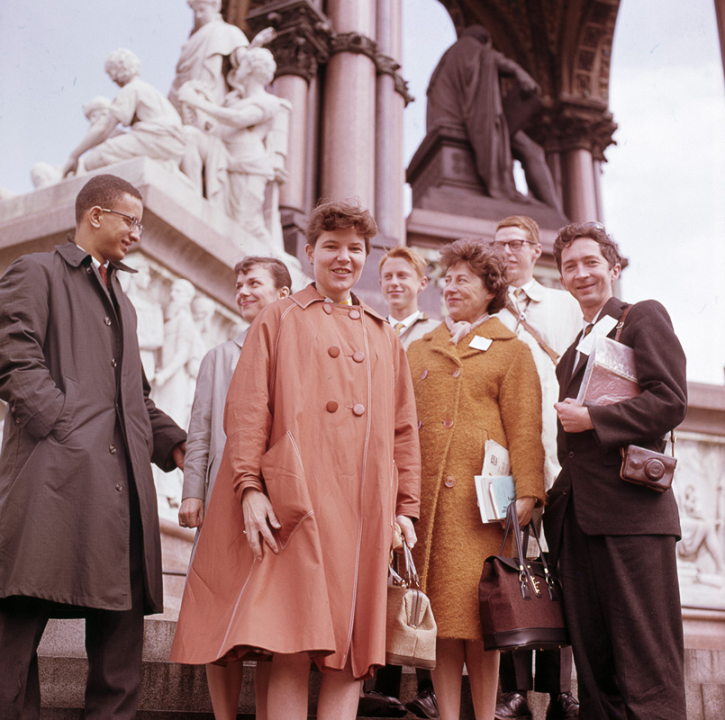
American Bahá’ís at the World Congress. Copyright © Gregory C. Dahl

Babies born since 1944 began to come of age in the 1960s, deemed one of the top three decades of spiritual revival in history, because of its huge increase in the range of beliefs and worldviews. 

I wanted to preserve the feelings experienced by this generation who became Baha’is during their teens and early twenties — those “second century believers” — who, after their independent searches for truth, accepted the Baha’i Faith. I gathered responses about their feelings and experiences during those unique times, including what attracted them, why they became Baha’is, and why they’ve remained in the Faith. 

New trends emerged in the 1960s: environmentalism, second-wave feminism, all brought about by a youth counterculture that aimed to counteract materialism, racism, tradition, and war. In the United States, a youthful President Kennedy brought an energy that inspired the youth, challenging them to contribute to the public good by saying, “Ask not what your country can do for you — ask what you can do for your country.” The U.S. government created the Peace Corps, spurring young people to volunteer to altruistically serve in other countries. 

People of color increasingly asserted their rights. In 1963, the African American civil rights leader Reverend Dr. Martin Luther King Jr. delivered to a quarter million pro-civil rights demonstrators a speech envisioning a world where citizens would all live in racial harmony. The American Indian Movement formed in 1968 to support Indigenous people seeking to gain tribal sovereignty. Movements dedicated to freedom, equality, and peace flourished throughout the world.

When I reached out to those who had become Baha’is during that turbulent period in history, the respondents shared these thoughts:

Together with our parents and teachers, we organized public talks and protests. We also lobbied the faculty to create a Black history course.  

In my area, the social atmosphere was mostly subtle racism … I was protesting the racism.

Our generation were social activists at a very young age …That was so important to my life. … I was working with the Black Panthers’ food programs before and after I became Baha’i.

Clergy seldom supported the noble protests of Black people about their treatment in America.

International crises arose, such as the United States naval blockade of Cuba because Soviets placed nuclear missiles there aimed at US targets. Future Baha’is were paying attention:

One of my defining moments was during the Cuban missile crisis — we would walk to school wondering where to build our bomb shelters. I wondered why we hated the Russians and decided I would someday go talk to them, so I started studying Russian — our school actually offered it in sixth through twelfth grade.

The decade spawned the war in Vietnam, which ravaged the lives of young American men who were drafted and sent on nebulous missions in chaotic jungle terrain. They returned home with stories of hellish anarchy and suicidal missions, along with a new commitment to oppose war:

… my generation realized we were being used. Americans had always wanted to believe we lived in the most perfect and just country in the history of the planet [which] is what we were constantly told, except by a few protestors popularly labeled fools …

I couldn’t even imagine the horror of anyone that was drafted. There was a very strong sense of dread when becoming draft age. They didn’t even know what they were fighting and dying for. The Vietnam war was a big part of our life.

Respondents lamented how their churches ignored the war and the racism that seemed to be devouring the country. They expressed dismay over clergy who voiced support for the war:

I was dismayed … by the political war support of Christian clergy who seemed not to care about the fate of the young men of my generation … my closest friends had come back deeply wounded mentally and physically.

Many intuited that there must be a pathway to world peace and love, and searched independently, prompted by a feeling that answers would be available:

From when I was around nine or ten years old, I used to walk to my hometown library to check out books attributed to Buddha and Krishna and also Zen thinking, because I felt moved to find out if those writings provided any clues, any wisdom, about life.

RELATED: Forging a Path From Mexico: The First Latino Baha’i Community

Those who searched for answers often objected to the magical thinking they’d encountered in churches, and others felt deeply troubled by religious leaders who couldn’t answer their questions:

I loved Jesus and identified as a Christian, but at seven I was ‘excused’ from my Presbyterian Sunday School after suggesting that if the Magi who visited the infant Jesus were — as our teacher explained — priests of another religion, then God’s truth must have been given other Faiths.

Previously, the Baha’i Faith had been relatively unknown in the United States, and embracing it often seemed like a daring step. Some future Baha’is first heard of the Faith from classmates:

I was taking a World Religion course and it occurred to me that to solve the world’s problems, everyone should have the same religion. Making that statement to about the only person in the enormous cafeteria at the time, I got this reaction: ‘Are you a Baha’i?’ At first, I rejected it outright. When I realized what the implications were that Baha’u’llah was the return of the spirit of Christ, I went ballistic.

Other accounts focused on the mystical aspects of the Baha’i teachings, like this one which describes the effects on a visitor at a Baha’i fireside gathering:

The feeling in that room was powerfully uplifting like nothing I had experienced before. In fact, I experienced that same extraordinary feeling, which I am not certain was the Holy Spirit, over the next few months which convinced me, even more than the beautiful and very logical writings of the Faith, that Baha’u’llah  was indeed the Promised return of Jesus.

Many respondents reported experiencing dreams, coincidences, and premonitions that led them to the Baha’i Faith:

… one night, I was just talking to God and saying something like, ‘I wish there was a religion that taught that all of these religions had come from God.’ Literally within a few days of that ‘prayer’, I ran into a Baha’i who spent two or three hours talking to me about his religion.

After this girl learned about the Baha’i Faith at age 14, it changed her behavior so thoroughly that her mother was astonished — and also became a Baha’i:

I’d call [becoming a Baha’i] an awakening … I made drastic changes right away, but it was not pushed on me. I had sought it out … It was like being reborn. I put away pot, etc., became chaste, started listening to my parents. My mom even joined the  Faith, after seeing my turnaround.

This man could feel a spirit emanating from a house on the street where a Baha’i fireside was being held:

The Holy Spirit was so tangible that people walked off the street to ask what was going on there. There were 20+ people of all ages and types and colors — hippies, students, working people aged 18-40 — which for me was unusual enough, but the feeling in that room was powerfully uplifting like nothing I had experienced before.

Asked about the reasons for remaining in the Baha’i Faith, this respondent said:

… the Holy Spirit, which the [Baha’i] writings make easier to bring to mind, is the most convincing and powerful proof of the validity of faith in God, in this and in all of the inspired dispensations of His prophets.

When these children of the 1960s encountered the Baha’i teachings, the social upheaval going on around them compelled further investigation — and the Baha’i Faith expanded rapidly.


Source link
Sadie Oglesby’s Message About Standing Up for Racial Justice

Sadie Oglesby’s Message About Standing Up for Racial Justice

What does standing up for racial justice look like? What behaviors does it require? What actions does it necessitate?

RELATED: How to Be a Better Ally for Racial Justice

Learn from Sadie Oglesby, a historical Black Baha’i from Boston, who understood how urgent it was for everyone to make working for race unity a priority. She and her husband Mabry became Baha’is in 1914 and spoke about what standing up for racial justice and unity entails.

Standing Up for Racial Justice: Sadie and Mabry Oglesby’s Response to the Red Summer of 1919

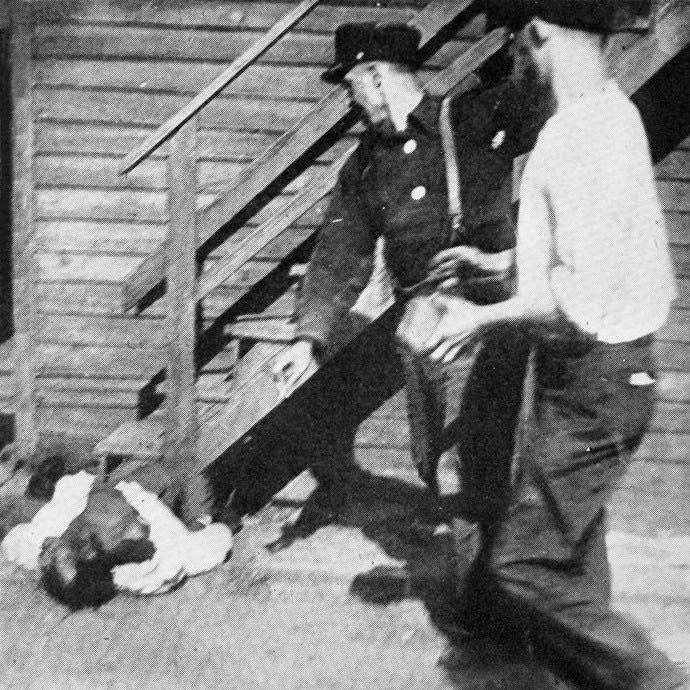
In the early 20th century, hundreds of thousands of African Americans migrated from the South to the Northeast, Midwest, and West to flee from the racial violence and massacres and the return of the Ku Klux Klan

A photo of white men stoning an African American during the 1919 Chicago race riot

The central figures of the Baha’i Faith understood the urgent need to work for race unity and eradicate racism from society. Shoghi Effendi, the Guardian of the Baha’i Faith, wrote:

No less serious is the stress and strain imposed on the fabric of American society through the fundamental and persistent neglect, by the governed and governors alike, of the supreme, the inescapable and urgent duty—so repeatedly and graphically represented and stressed by ‘Abdu’l-Bahá in His arraignment of the basic weaknesses in the social fabric of the nation—of remedying, while there is yet time, through a revolutionary change in the concept and attitude of the average white American toward his Negro fellow citizen, a situation which, if allowed to drift, will, in the words of ‘Abdu’l-Bahá, cause the streets of American cities to run with blood, aggravating thereby the havoc which the fearful weapons of destruction, raining from the air, and amassed by a ruthless, a vigilant, a powerful and inveterate enemy, will wreak upon those same cities.

During this period, as stated by the U.S. National Archives and Records Administration, “the political and legal gains won by African Americans during Reconstruction were dismantled, particularly by denying African Americans their voting rights and legalizing racial segregation, most notably in the 1896 U.S. Supreme Court decision Plessy v. Ferguson, which made racial segregation legal until 1954. In addition to those suffering these political and legal injustices, thousands of African Americans were hanged, burned to death, shot to death, tortured, mutilated, and castrated by white mobs who almost never were prosecuted for their crimes.”

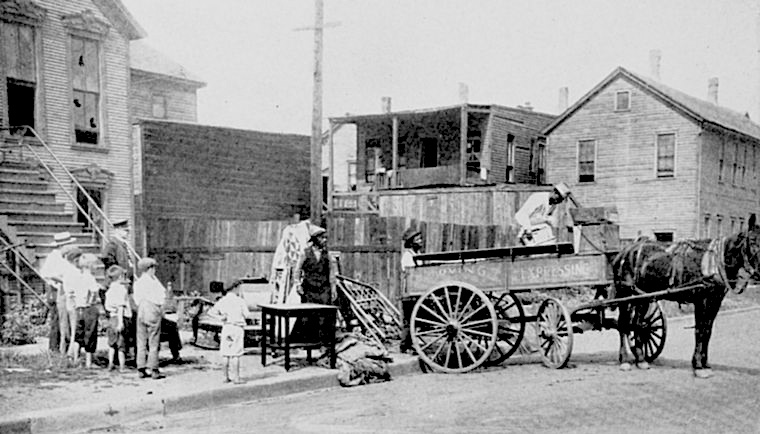
The Red Summer was a pattern of violence that white Americans inflicted on African American individuals, veterans, homes, and communities after World War I during the summer of 1919. More than 24 cities had their own Red Summers, including but not limited to, Elaine, Arkansas, Charleston, Chicago, Houston, and Washington D.C. In Chicago, for example, white rioters burned down at least 1,000 Black homes, and they never faced any consequences.

Black family leaving damaged home after the Chicago race riot of 1919Black family leaving damaged home after the Chicago race riot of 1919
A photo of an African American family leaving their home that was damaged from the Chicago race riot of 1919

“These hate campaigns are on in every group being fanned into flames so rapidly by the ignorant that it does not require one to be a prophet to see that society is sleeping on an active volcano which shows every sign of eruption at any moment,” wrote Sadie and Mabry Oglesby in their letter dated September 1, 1919, to a fellow Baha’i after the riots in Washington, D.C., and Chicago. 

“We believe that the Bahá’ís have a great opportunity as well as a great responsibility to bring this great life-giving information to the world. … To this end we suggest the following for your consideration: 1st. United prayers over a continued period. … 2nd. Conference initiated by Bahá’ís visiting together leaders of races, churches, groups. … We believe that the general unrest at this time properly handled can be used to stimulate great Bahá’í activities everywhere and will be the means of opening many doors for spreading the Cause never before opened. ‘To sit to talk, to listen—there is no virtue in that. To rise, to act, to help—that is a Baha’i life. Deeds are the standard.’”

As Baha’u’llah, the prophet and founder of the Baha’i Faith, wrote:

Let deeds, not words, be your adorning.

Between 1921 and 1936, Baha’is hosted race amity conventions in major cities across the country to bridge the racial divide during segregation.

What Sadie Oglesby Learned About the Importance of Working for Unity in Diversity After Meeting Shoghi Effendi

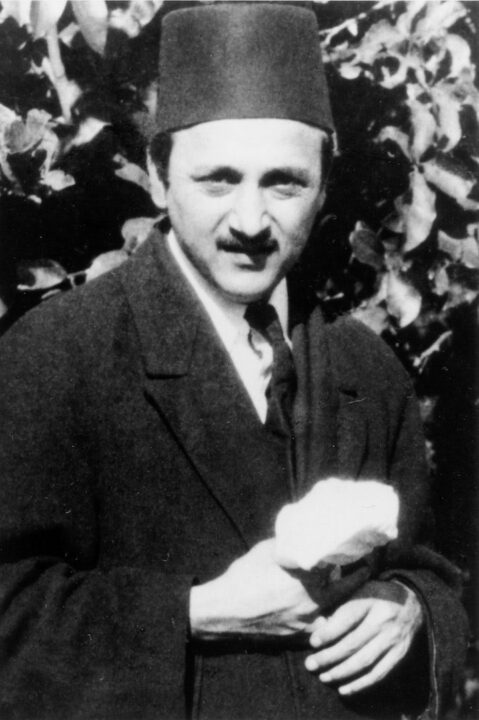
Sadie and her daughter Bertha made history by being the first African American women to go on a Baha’i pilgrimage and visit Acre and Haifa, Israel in 1927. Sadie was also the first African American to meet Shoghi Effendi during his time in Haifa as the Guardian of the Baha’i Faith.

A photo of Shoghi Effendi in 1921, Copyright © Bahá’í International Community

In Sadie’s first conversation with Shoghi Effendi, he asked her how many Black Baha’is there were in the United States. It’s important to keep in mind that the two major racial demographics during this time in the United States were white and Black people. When Sadie told him that there were very few, he — using the respectful terminology to refer to Black people at the time — said that Abdu’l-Baha, one of the central figures of the Baha’i Faith, “loved the colored people very much and that the Cause needs the colored people and cannot be established without them.” 

Shoghi Effendi stressed how important diverse representation was in the Baha’i Faith. According to Sadie’s notes, he said, “a colored believer should be elected upon each committee even if it required that the same one be elected upon each committee.”

Before American scientists widely published data that all humans descend from a common ancestor in Africa, Sadie understood this truth about humanity’s origins. She said, “Shoghi Effendi, it presents itself to me thuswise: since the infancy of the human family, races and nations one after another have arisen and fallen in their long march around the cycles and to maturity and at this time, the oldest race represented upon the earth is the colored race, while the youngest or last to have attained a high civilization is the white race, and in order to close this cycle and save the civilization of this day, the oldest and youngest or first and last, that is the white and colored, or outer ends of the cycle must link together, then the inner, or intermediate races will automatically take their places in the circle.”

Shoghi Effendi said, “That is true, but if we fail to do this, we will be dispersed.”

Shoghi Effendi encouraged her to share the unifying messages of the Baha’i Faith in the South when she felt that she had done everything she could in the Northeast. He also emphasized how important it was for Baha’is to speak up about racism and be perfect examples of race unity. 

Sadie recorded her last conversation with Shoghi Effendi. He told her, “You must be earnest and constant in your effort to press to the understanding of the believers the vital need of a perfect unity between the white and colored people. Be eager, earnest and forceful in this matter, and be assured that the invisible concourse will assist you in your work and we will support you, I will pray for you, I will pray for you at the Holy Shrine. I will pray for you. Be confident.”

Sadie did as Shoghi Effendi asked her to when she returned to the U.S. At the 1927 National Baha’i Convention, she spoke extensively about her conversations with Shoghi Effendi about the urgency of working for race unity. She said, “We are not the same people we were before we went away. …So I know what my work is now, as I never knew it before.”

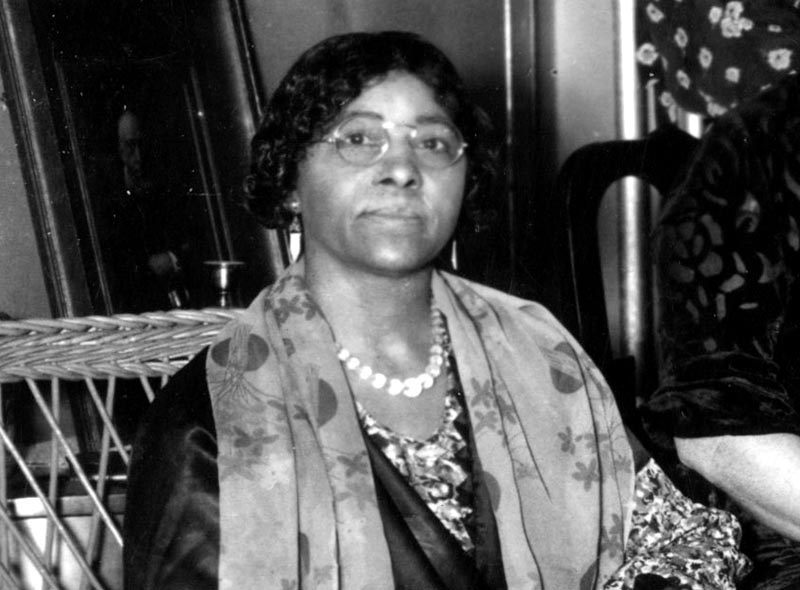
Sadie Oglesby at a meeting among Boston Baha’is in the 1920s. Photo courtesy of National Baha’i Archives.Sadie Oglesby at a meeting among Boston Baha’is in the 1920s. Photo courtesy of National Baha’i Archives.
Sadie Oglesby at a meeting among Boston Baha’is in the 1920s. Photo courtesy of National Baha’i Archives.

For the next ten years, Sadie worked tirelessly to bridge the racial divide at a time when it was dangerous to do so in the U.S. She regularly wrote to Shoghi Effendi and updated him about her efforts. And, he always answered her letters and prayed for her success.

In a letter Shoghi wrote to Mabry dated May 23, 1927, he wrote, “My dear co-worker: Just a word that I wish to add in person in order to express my pleasure and delight at having met our dear and devoted Baha’i sister Mrs. Oglesby, whose pure faith, tender devotion and ardent zeal I shall ever remember.”

In a letter written by Shoghi Effendi to the Bahá’ís of North America in 1938, he wrote:

As to racial prejudice, the corrosion of which, for well-nigh a century, has bitten into the fiber, and attacked the whole social structure of American society, it should be regarded as constituting the most vital and challenging issue.

…The ceaseless exertions which this issue of paramount importance calls for, the sacrifices it must impose, the care and vigilance it demands, the moral courage and fortitude it requires, the tact and sympathy it necessitates, invest this problem, which the American believers are still far from having satisfactorily resolved, with an urgency and importance that cannot be overestimated.

May we all heed the wise words of Shoghi Effendi and follow the fearless examples of the Oglesbys in our efforts to work for racial justice and unity today.


Source link

Home Privacy Policy Terms Of Use Anti Spam Policy Contact Us Affiliate Disclosure DMCA Earnings Disclaimer