Race

Home Race

‘The Brave Ones’: Exploring Untold Stories of Solidarity

[ad_1]

Set in the 1940s American Southwest, Michael Orona’s novel “The Brave Ones” shines a light on an important but lesser-known chapter of American history. Through the shared struggles of Indigenous Yaqui miners and African Americans, this story explores the untold partnerships of resilience, unity, and solidarity in the pursuit of racial equality and justice. 

As Abdu’l-Baha, one of the central figures of the Baha’i Faith, said at a talk in Colorado in 1912:

The stronger the ties of fellowship and solidarity amongst men, the greater will be the power of constructiveness and accomplishment in all the planes of human activity.

Drawing from his Apache and Yaqui heritage, an extensive career in foreign policy and advocacy for the rights of Indigenous people, and the Baha’i teachings, Michael Orona’s insights highlight the relevance of these stories for today. 

Michael Orona

Radiance Talley: Hi, Michael! Thank you for taking the time to answer my questions with such detail and depth. What inspired you to set “The Brave Ones” in the 1940s American Southwest? How does this time and place shape the story’s themes of collaboration and resistance? 

Michael Orona: Set in the American Southwest during the 1940s, “The Brave Ones” offers a unique Native American perspective on the struggle for equality and social justice. Rampant social and racial discrimination offered little opportunity for a recently arrived community of Indigenous Yaqui miners from Sonora, Mexico. However, members of this community had the courage to challenge the status quo and forge a new way of life through an unintentional partnership with African Americans. The story offers a unique Indigenous perspective in the struggle for equity, social justice, and racial integration that has long been forgotten or ignored.   

The setting was chosen because of the critical period that represented a complex intersection of Native American, Latino, and Anglo cultures, with deep-rooted systems of profound racial tension and discrimination, particularly for Indigenous peoples. This era provided a powerful backdrop to explore the themes of a shared humanity, resistance, and collaborative struggles that are central to the book. 

Stories about Indigenous peoples are often confined to the 1800s due to longstanding stereotypes, historical biases, and the way history has traditionally been taught and represented in popular culture. The “vanishing Indian” stereotype ignores the survival, resilience, and adaption of Native peoples, perpetuating the idea that we belong only to the past. The setting was also chosen to educate readers of the important contributions made by Indigenous peoples prior to the civil rights movement. 

RELATED: From Media to Movies: Addressing Native American Stereotypes

This period in American history represented a crucible of racial dynamics — a place where discrimination was explicit and brutal, but also where the seeds of resistance and mutual understanding could take root. The Indigenous community of Yaqui miners that is central to the book, fled from Sonora, Mexico to the United States to escape extreme social and racial barriers. However, in the United States, they were essentially trapped in a system that offered little opportunity beyond dangerous labor in the copper mines and a lack of educational opportunities for their children.  By setting the story in this specific time and place, I wanted to illuminate a powerful, often-forgotten chapter of American history where marginalized communities found strength in unity.

Also, the 1940s represented a pivotal moment in our nation’s history as that era served as a crucial precursor to the Civil Rights Movement, making the setting an ideal lens to examine these themes. During World War II, large numbers of Native Americans and African Americans volunteered to serve their country in the fight against tyranny abroad, yet systemic racism and segregation at home persisted. This contradiction is a theme also explored in the book.  

I am a product of a long line of Native American storytellers and artists. The book draws directly from personal and family experiences, particularly stories shared by my Yaqui grandfather and elders about the challenges they faced during that era. The book is based on the struggle for dignity and respect shared with me by my elders and others of that generation. 

RELATED: Finding Strength and Unity: Native American Proverbs About Life

Moreover, this period resonates deeply with universal principles of the oneness of humanity and justice that have guided my work. The story becomes not just a historical account, but a testament to the transformative power of recognizing our shared humanity, even, or especially, in the most challenging circumstances. 

Radiance: Can you share more about the historical relationship between Indigenous Yaqui miners and African Americans? How did their experiences of discrimination intersect?

Michael: The experiences of Indigenous peoples and African Americans not only in the 1940s, but throughout history, are deeply interconnected through shared experiences of systemic discrimination and oppression. Both communities faced brutal marginalization yet found strength in solidarity — a theme explored in the book and a passion of mine that I find time to underscore in public talks and presentations.  

For the Indigenous Yaqui community portrayed in the book, life in the American Southwest was defined by limited opportunities. They were essentially trapped due to limitations imposed upon them by a racist system. However, they had the courage to challenge the status quo and forge a new way of life. This mirrors the experiences of African Americans during the same period — albeit that took place largely in another region of the country — constrained by racist systems that limited economic mobility and freedom. 

What fascinated me was the potential for unexpected solidarity. The book explores how Indigenous and African American communities, both experiencing systemic oppression, could forge an unintentional partnership to challenge the status quo. This wasn’t theoretical solidarity. It was practical, lived cooperation in the face of systemic racism. Both groups understood intimately how discriminatory systems worked to suppress their potential, and they recognized that collaboration offered the best path forward.  They recognized their shared humanity. A lived reality that has been largely overlooked in American historical narratives but is central to the history of this country.

The book, “The Brave Ones,” isn’t just a historical account. It’s a testament to human resilience, to the power of recognizing our shared humanity even, and especially, when systems are designed to divide us.

Radiance: As you know, the Baha’i Faith emphasizes the unity of humanity, the elimination of racial prejudice, and the spiritual roles of the standard bearers and the pupil of the eye. How did these teachings influence your depiction of the partnership between Indigenous people and African Americans in “The Brave Ones”? Are there specific Baha’i quotes or principles that guided your writing?

Michael: The Baha’i teachings and its universal principles were fundamental to me writing “The Brave Ones.” The principles of the Faith weren’t just background — they were the heartbeat of the narrative.

One of the most powerful guiding principles came from Abdu’l-Baha’s profound statement:

Attach great importance to the Indigenous population of America…should they be educated and guided, there can be no doubt that they will become so illumined as to enlighten the whole world.

This quote deeply influenced how I approached the creation of the Indigenous characters in the book — not as victims, but as resilient sources of profound wisdom and transformation.

The “pupil of the eye” metaphor was particularly transformative in my development of the African American characters. The pupil is the source of light — not just for the eye, but for humanity. Both powerful quotes recognize the unique historical witness of the members of these two powerful communities. Indigenous peoples and African Americans have endured tremendous suffering, which has cultivated an extraordinary sensitivity to oppression and a deep capacity for empathy and social justice.

RELATED: The Pupil of the Eye: A Cosmic Hole to Unleash Black Girl Magic

The 2020 letter from the Universal House of Justice was another crucial inspiration. The letter underscores that racism “deprives a portion of humanity of the opportunity to cultivate and express the full range of their capability and to live a meaningful and flourishing life.” This guided my narrative approach, showing how systemic racism constrains human potential, but also how solidarity can break those constraints.

Another pivotal Baha’i principle I wove throughout the book is the concept of the “two wings” — that humanity can only truly progress when women and men are equal. I use this as an analogy for racial unity as well. Just as a bird cannot fly with one weak wing, society cannot advance while entire communities are marginalized. 

Shoghi Effendi’s powerful directive from “The Advent of Divine Justice” was always in my mind: Every Baha’i community should feel it their “first and inescapable obligation to nurture, encourage, and safeguard every minority.” This isn’t a theoretical principle for me, but a lived commitment to amplifying voices that have been historically silenced.

The Faith’s approach of “constructive resistance” was crucial. This isn’t about opposing or fighting, but about transforming through unity, dialogue, education, collaboration, and mutual understanding. My characters don’t just resist — they create alternative possibilities through cooperation and a shared vision.

Baha’u’llah’s revolutionary message was about more than reform — it was about radical reimagining. His teachings didn’t just challenge racial superiority — they disintegrated those notions entirely. My book attempts to show not just the pain of discrimination, but the transformative power of recognizing our shared humanity.

Ultimately, “The Brave Ones” is my humble attempt to put these Baha’i principles into narrative form — to show how all communities around the world can transcend historical divisions and create something miraculous together.

Radiance: How did you develop the characters in “The Brave Ones” to authentically reflect the struggles and triumphs of Indigenous peoples and African Americans during that time?

Michael: Developing the characters for “The Brave Ones” was intensely personal and deeply rooted in research, investigation, and conversations with individuals and living family members that witnessed this period of history. My approach was rooted in honoring the lived experiences of my ancestors, my grandparents, my elders, and members of the broader Indigenous and African American community.

First and foremost, I drew from family stories, historical narratives, and my own lived experience growing up in the Southwest. Being from a long line of Native American storytellers — my late father, Dr. Joel Orona, was an Apache author and poet, and my mother, Esther Orona, is of Yaqui heritage who both went through their own trials and tribulations — I had a wealth of generational narratives to draw upon. The characters aren’t fictional constructs, but composites of real people, even family members, who lived through extraordinary times.

I was intentional about avoiding stereotypical representations. Too often, Indigenous and African American characters are relegated to supporting roles or simplified narratives. I wanted to put Indigenous peoples at the forefront of telling our own stories. This meant creating multidimensional characters with agency, complexity, and inner lives.

More importantly, I wasn’t interested in creating a narrative of pure victimhood. I wanted the Indigenous and African American characters to demonstrate incredible courage, creativity, and resilience. They challenge the status quo not through grand, Hollywood-style moments, but through daily acts of dignity, solidarity, and hope. 

I also felt it was important to underscore the internal struggles of characters navigating multiple identities. Life in the Southwestern United States during the 1940s was a complex landscape of racial discrimination, and my characters reflect the nuanced ways people survived and resisted. They’re not just fighting external oppression, but also wrestling with questions of identity, belonging, and possibility. I must say, I appreciate the positive response I have received from members of these communities on how the characters are portrayed in the book.  

Every character carries the weight of historical trauma, but also the potential for transformation. They embody what Abdul-Baha spoke about — the possibility of being “illumined” and potentially “enlightening the whole world.”

Ultimately, developing these characters was an act of love — love for my ancestors, for the communities that have been marginalized, and for the potential of human beings to transcend the systems that seek to divide us.  

Radiance: Why do you think the partnership between Indigenous peoples and African Americans has been largely overlooked in American history, and what do you hope your novel achieves in addressing this gap?

Michael: This is a question that’s deeply personal and critically important to me.

Indigenous peoples and African Americans have been forged by historical hardships in this country. Members of both communities have had to transcend unspeakable tragedy and indescribable suffering. This includes the Trans-Atlantic slave trade, forced displacement, assimilation, and genocide.  

Consider the historical context. From the 1830s to 1850s, when Native Americans were being forcibly removed from their traditional lands through the Indian Removal Act, African Americans were simultaneously being enslaved to produce the cotton on the same Indigenous land that fueled America’s economic rise. These weren’t separate histories — they were interconnected systems of oppression. 

But there is also a powerful shared humanity — a historical intersection that I have shared in previous presentations. There are numerous historical intersections between Black and Native peoples that have led to groundbreaking collaboration, innovation, and new perspectives that have been ignored, forgotten, or erased to our own detriment. Keeping these communities from recognizing their shared humanity was a deliberate strategy of colonial and post-colonial power structures.

If humanity is to achieve its full potential, then every individual and support from all members of society are needed to overcome this vital and challenging issue. It’s important to underscore that preventing a segment of humanity from expressing or achieving its full capability is detrimental to the rest of society.

My novel aims to do several critical things: First, it makes visible a history that has been intentionally obscured. By putting Indigenous peoples at the center of the narrative, I’m challenging the typical marginalization of these communities in American storytelling. Second, I want to demonstrate the power of collective resistance and collaboration between two important communities — Indigenous peoples and African Americans. The characters in “The Brave Ones” don’t just suffer; they create alternative possibilities through cooperation and a shared vision. Third, I hope to inspire contemporary conversations about collaboration and the oneness of humanity. As James Baldwin powerfully said, “You think your pain and your heartbreak are unprecedented in the history of the world, but then you read.” 

The Baha’i principle of unity deeply informs this approach. We are not separate — we are interconnected. As Archbishop Desmond Tutu said, “A person is a person because they recognize others as persons.”

My goal is not just to tell a historical story, but to create a bridge of understanding. By revealing these hidden histories of collaboration, I hope to inspire current and future generations to recognize our shared humanity and work together for justice and equality.

This isn’t just a book — it’s an invitation to see our history, and ourselves, differently.

Radiance: Thank you for sharing your inspiration behind “The Brave Ones” and the historical importance of unearthing this shared journey of Indigenous and African Americans. If you all enjoyed this interview, be sure to check out part two where we’ll explore how the characters embody this transformative courage and challenge systemic oppression while holding onto their dignity and hope!

[ad_2]
Source link

How to Promote Unity and Harmony in Society

[ad_1]

In part one, Michael Orona and I explored untold stories of solidarity between Indigenous Yaqui miners and African Americans. In part two, we delved into the power of spiritual courage and resilience. Now, in part three, we turn our focus to how we can promote unity and harmony in society.

The Baha’i writings call us to practice a high standard of love and unity. In a tablet to the Baha’is of the United States and Canada in 1916, Abdu’l-Baha wrote:

The divine friends must be attracted to and enamored of each other and ever be ready and willing to sacrifice their own lives for each other.

Yet, we can only achieve this profound unity through justice. Baha’u’llah, the prophet and founder of the Baha’i Faith, emphasized:

Justice is vital to the establishment of unity and harmony at all levels of society, as it provides the standard by which individual conduct and collective effort are judged. A requirement for living a life of service to humanity, then, is constant effort to develop truthfulness, trustworthiness, and justice, ensuring that they are ever-present in thought and action.

RELATED: How to Be a Better Ally for Racial Justice

Radiance Talley: Hi, Michael! In your novel, “The Brave Ones,” your characters create unity and challenge societal norms through their actions. What Baha’i teachings or personal reflections inspire your vision of unity, and what actions can readers take to promote justice and harmony in their own communities?

Michael Orona: Unity is not just an abstract concept, but a transformative power that can reshape societal structures. In “The Brave Ones,” the unintentional partnership between members of the Indigenous Yaqui community and African Americans represents a profound truth: our shared humanity transcends the artificial boundaries created by racism and discrimination.

The Baha’i teachings of the oneness of humanity are fundamental to my understanding of social transformation. We believe that humanity is like a garden — its beauty lies in its diversity. Just as a garden thrives when different flowers grow together, societies flourish when diverse communities recognize their interconnectedness. This principle guided the development of the characters in my book to look beyond their immediate circumstances and forge a collective path forward.

In my decades of human rights work around the world, I’ve witnessed how unity can emerge from the most challenging circumstances. The Baha’i principle of universal education is crucial here. Education is not just about academic knowledge, but about developing empathy, understanding, and the capacity to see beyond superficial differences. Readers can start by educating themselves about the histories and experiences of marginalized communities.

Michael Orona

Practical Actions to Promote Unity, Justice, and Harmony in Society

Some practical actions for promoting justice and harmony might include:

1. Active Listening:

Truly hear the stories of communities different from your own. Understanding comes before solidarity and collaboration.

2. Amplify Marginalized Voices: 

Use your platforms, whether personal or professional, to create space for Indigenous, Black, and other underrepresented narratives. Give these individuals the opportunity to lead discussions and share their unique perspectives. 

3. Build Unexpected Partnerships: 

Like the characters in my book, seek connections across apparent divides. Unity often emerges from the most unexpected places.

4. Practice Extreme Empathy: 

Go beyond sympathy. Develop a genuine commitment to understanding the lived experiences of others. This means spending the time to build lasting friendships. 

RELATED: What Is Intercultural Empathy, and Why Is It Important?

My Chihene Apache and Yaqui heritage, along with my belief as a member of the Baha’i Faith, has taught me that justice is not a destination but a continuous journey. Each small act of understanding, each moment of genuine connection, contributes to a more harmonious world.

The story of the Yaqui miners is a microcosm of a larger truth: when we recognize our shared humanity, we can challenge even the most entrenched systems of oppression. It’s not about erasing our differences, but about celebrating them while recognizing our fundamental unity.

I often reflect on a Baha’i quote that says:

The well-being of mankind, its peace and security, are unattainable unless and until its unity is firmly established.

This is not just a spiritual principle, but a practical blueprint for social transformation. To the readers of “The Brave Ones,” I say this: Be courageous. Be curious. See the humanity in every person. The most profound revolutions begin with individual acts of understanding and compassion. Our world doesn’t need more division. It needs more bridges.

Radiance: Absolutely, that’s beautifully said. I would also add that this extreme empathy should result in compassionate action, where people speak up and stand up within their spheres of influence to advocate for the rights of marginalized voices and effect meaningful and lasting change. Thank you, Michael, for taking the time to answer my questions with such wisdom and heart. 

[ad_2]
Source link

From Media to Movies: Addressing Native American Stereotypes

[ad_1]

On November 7, The Washington Post reported, “The FBI and authorities in several states are investigating racist text messages sent to Black people nationwide this week saying they would be brought to plantations to work as enslaved people and pick cotton.”

This recent rise in proud, hateful intimidation tactics reminds me of a racist sign that was waved at a 2020 rally that left the news anchor in shock. The disturbing handwritten poster read: “Coming for Blacks and Indians first…”

RELATED: 5 Abolitionists Who Show Us What White Allyship Looks Like

Thinking about all this hate against the two most historically oppressed racial demographics in our nation’s history brings tears to my eyes. Sadly, I’m not surprised that, as the National Spiritual Assembly of the Baha’is of the United States wrote, “​​racism continues to work its evil upon this nation.”  In “The Vision of Race Unity” in 1991, they stated:

The recent resurgence of divisive racial attitudes, the increased number of racial incidents, and the deepening despair of minorities and the poor make the need for solutions ever more pressing and urgent. To ignore the problem is to expose the country to physical, moral and spiritual danger.

I’ve written articles about the stereotypes fueling misogynoir, and in this article, I’m focusing on the stereotypes driving anti-Indigeneity. After all, aren’t stereotypes the fallacies behind prejudice? I’m grateful to share the perspectives of Native American Baha’i friends on this important matter.

RELATED: How Chief Sitting Bull’s Great-Great-Granddaughter Became the First Lakota Baha’i

Native American Stereotypes in Media, TV Shows, and Movies

Medicine Eagle, a practicing holistic healthcare practitioner and member of the Anishinaabe nation residing on the Omaha Indian Reservation in Macy, Nebraska, wrote in an email to me, “The biggest misconception of Native people is that we are ’savages.’”

Photo of Medicine Eagle, courtesy of Medicine Eagle.

As stated in the article “I is for Ignoble: Stereotyping Native Americans,” published online by The Jim Crow Museum, Native Americans are “represented as barbarous, with tomahawk and scalping knife in hand. In contrast, Euro-Americans are depicted as innocent victims of savagery, especially from Indian males.”

I’m sure many of you have heard of or seen those Westerns depicting our nation’s Indigenous people attacking Euro-American colonizers. In reality, to use the words of the Jim Crow Museum, “many American Indians were taken captive by non-Indians, tortured, incarcerated, murdered, and expelled into slavery. Because Europeans and Euro-American colonists threatened Native peoples, many resisted mightily to defend their families and homelands.”

When Native Americans are not stereotyped as savage in these movies and television shows, they are rarely represented at all. 

Medicine Eagle continued, “Depictions of the Indian peoples in the media are always that of Natives, not human beings that are doctors, lawyers, teachers, artists, farmers, etc.”

He shared that his dear friend, an actor on a popular Western television program, “went into show business to dispel the type cast, only to face the reality that he can only be cast as a Native.”

Every person wants to be seen as a multifaceted individual, recognized for their diverse talents, professions, perspectives, and qualities, rather than being confined to a race-based role and the harmful stereotypes that reduce their full humanity.

In addition to being depicted as savages, Native Americans are often portrayed as impoverished, uneducated, and struggling with addictions. Louise Profeit-LeBlanc, a retired National Indigenous Arts Administrator for the Canada Council of Canada and member of the Nacho N’yak Dän First Nation of central Yukon, Canada, explained that “so much of the media only portrays the weakness of Indigenous people.” 

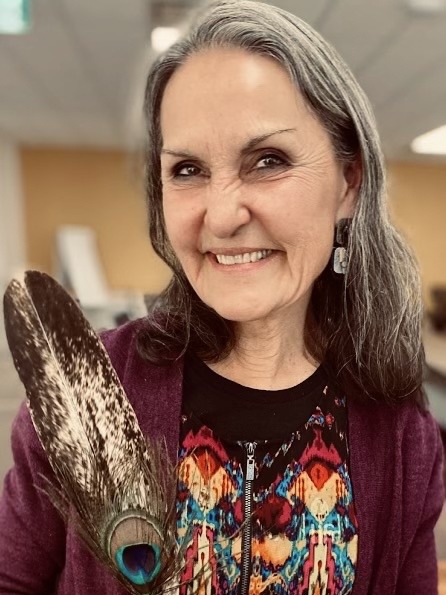
Louise Profeit-LeBlanc,  a retired National Indigenous Arts Administrator for the Canada Council of Canada and member of the Nacho N’yak Dän First Nation of central Yukon, Canada Louise Profeit-LeBlanc,  a retired National Indigenous Arts Administrator for the Canada Council of Canada and member of the Nacho N’yak Dän First Nation of central Yukon, Canada
Photo of Louise Profeit-LeBlanc, courtesy of Louise Profeit-LeBlanc.

“These stereotypes have weakened the people and also have prevented those who might like to get to know us from doing so,” wrote Louise Profeit-LeBlanc, whose Northern Tutchone name is Tsé Itsoh — Beaver Woman.

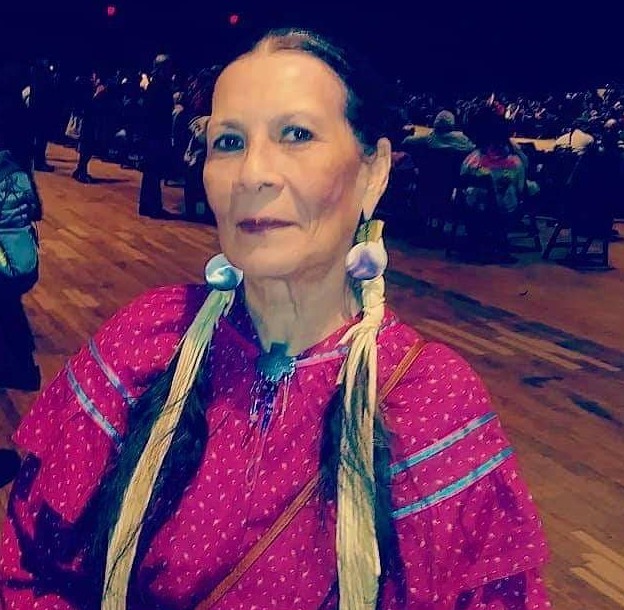
Nadema Agard — whose Lakota name is Winyan Luta, meaning Woman Holy Red — is a Cherokee, Lakota, and Powhatan artist, educator, consultant, curator, and storyteller. She also emphasized how these highly sexualized images of Native Women are contributing to the high rates of assaults, kidnapping, and murder of Indigenous women.

How We Can Combat These Harmful Stereotypes Against Native Americans

Medicine Eagle wrote, “We need to return to our original teachings, and the teachings of the Baha’i Faith that there is only one race — the human race. This understanding will aid in eliminating racism.”

Certainly, at a talk in Paris in 1911, Abdu’l-Baha, one of the central figures of the Baha’i Faith, said:

For God created us all of one race. There were no differences in the beginning, for we are all descendants of Adam. In the beginning, also, there were no limits and boundaries between the different lands; no part of the earth belonged more to one people than to another. …How can we uphold war caused by an illusion?

Louise Profeit-LeBlanc suggested that we “work with Indigenous people to find the sacred line of reconciliation and build a new world together.” She shared that “there are many books that have been written by Indigenous people, and there are many filmmakers, theater artists, poets, and educators who can be called upon to help bring better understanding.”

Nadema Agard highlighted the importance of having a “better Native American curriculum in our school system and more exposure in the media.” She also stressed the need for allies “to support the Native community members but not speak for them.”

Photo of Nadema Agard, courtesy of Nadema Agard.

Louise Profeit-LeBlanc wished that more people understood that Indigenous people are “community-minded” and want to share their “knowledge of what the land has taught [them] with the rest of the population.” She wrote, “We have always been hard workers, thinkers, healers, providers, hunters, etc. who care about our human family.” 

So, let’s all care about them and work together to dispel these harmful Native American stereotypes that are stoking hatred and oppression. 

[ad_2]
Source link

Geledés: How Afro Brazilians Are Combatting Racism

[ad_1]

A quote often attributed to James Baldwin expresses a profound truth, “To be African American is to be African without any memory and American without any privilege.”

African Americans endure systemic and institutionalized racism as people of African descent, while also not being able to identify with any specific ancestral country — and hold on to the language, culture, and heritage that comes with it — because the passing down of these ancestral roots was forbidden in slavery.

Initially, I thought this experience was unique to the African American community. However, after speaking with two Afro Latinas — Black women in Brazil who are leading powerful efforts to advocate for Afro-Brazilian rights — I realized that the oppression and cultural homicide for those of us who descend from enslaved Africans is universal across the Americas.

The Racism and Sexism That Black Women in Brazil Face

Despite 56 percent of Brazilians identifying as Black — the largest population of African descent outside of Africa — Blackness in Brazil is still often linked to inferiority.

RELATED: How MLK Sought to Restore Dignity to Black People

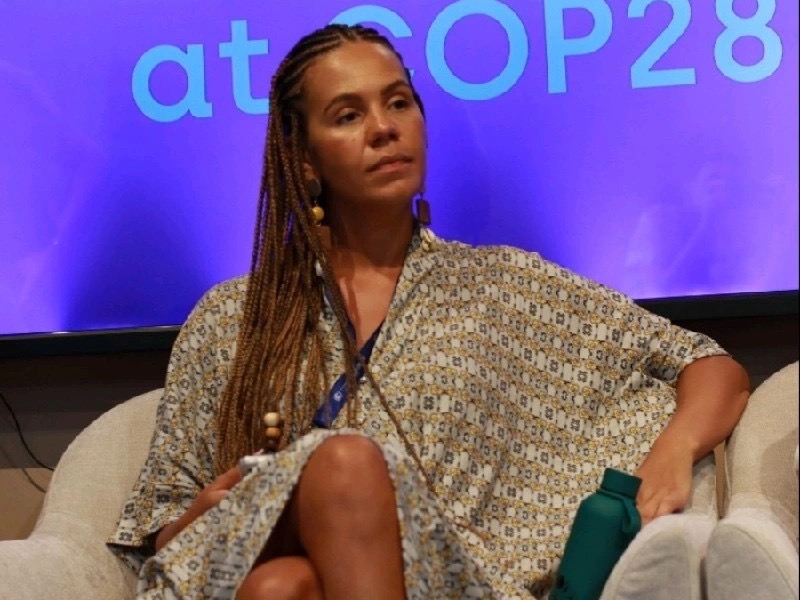
Carolina Almeida, a philosopher, internationalist, and political scientist, shared that as children, they are raised with the understanding that the farther they are away from Blackness, the greater the person they are going to be.

She says, “So, identifying as a Black woman or as a Black man in Brazil is a great step, actually a great social and, also, emotional step to be achieved, because we are constantly being persuaded by everything around us that being Black is bad, it’s ugly, it’s not interesting.”

Carolina Almeida

In a 2022 letter to the Baha’is in the Democratic Republic of the Congo, the Universal House of Justice, the globally elected governing council of the Baha’i Faith, discussed how this “crisis of identity is directly related to the spread of prejudice.”

Leticia Leobet, a social scientist specializing in anthropology, added:

In terms of my daily life as a Brazilian, the impact of racism added to misogyny is notable. And more than in my daily life, it has an impact on the construction of [my] self, my inner identity. So, it is an action that devoids you from any perspective of [the] future — who you want to be, what you want to do, and how you see yourself in the world. So you lose all that. We are forged in a way that we don’t believe in our potential, in our capacities.

Leticia LeobetLeticia Leobet
Leticia Leobet

Her experience echoes the insights shared by the Universal House of Justice in a 2020 letter to the Baha’is of the United States, which emphasized how racism suppresses individuals’ abilities to realize their full potential:

Racism is a profound deviation from the standard of true morality. It deprives a portion of humanity of the opportunity to cultivate and express the full range of their capability and to live a meaningful and flourishing life, while blighting the progress of the rest of humankind.

Carolina says, “For us Black women in Brazil, especially, we are always hitting this glass ceiling because you can see, but you cannot achieve” due to “social and political barriers.”

These challenges prevent many from pursuing professions like becoming physicians or engineers, and, as she noted, “In Brazil, the Black women have been at the [bottom] of the social pyramid since slavery.” 

Stepping into leadership roles in politics is particularly difficult, and this struggle is so ingrained that it affects their mindset, limiting their ability to envision themselves in positions of power. Carolina says, “I would never have imagined I would be working inside the UN [United Nations]…and the Baha’i International Community has helped us a lot on this path.”

How Geledés Advocates for Afro Brazilians

Carolina represents Geledés – Instituto da Mulher Negra in the United Nations’ periodic review mechanisms and the G20, while Leticia serves as an international advisor for the organization. Founded by Black women in 1988, Geledés is a Brazilian non-governmental organization that combats racism and sexism in all its forms while ensuring equal access to rights and opportunities for people of African descent.

In September 2022, Geledés was granted consultative status with the United Nations Economic and Social Council (ECOSOC), enabling the organization to access various human rights mechanisms and special events. Since obtaining this status, Geledés has been able to independently produce shadow reports requested by UN committees, focusing specifically on the urgent needs of women and girls of African descent in Brazil, who face the harshest violations. These detailed reports assess the current situation and offer recommendations for actions the Brazilian government should take. Notably, many of these recommendations have been integrated into the official guidance provided by UN committees to Brazil.

Geledés tackles a variety of critical issues, including hunger and poverty, violence against people of African descent, the mass incarceration of Black people, public health disparities, economic crises, climate change, and religious freedom. Additionally, the organization highlights the significant problem of violence against women and girls of African descent within the Public Health System. The UN often cites the data collected by Geledés to advocate for the Brazilian government to take action against femicide.

RELATED: Over 90,000 Black Women and Girls Are Missing and Forgotten

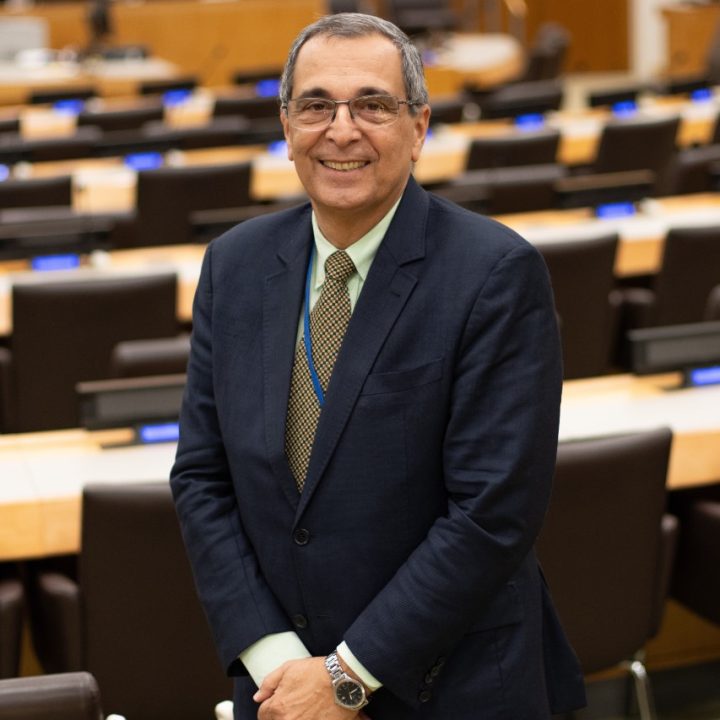
Geledés is mentored by Iradj Eghrari, an international consultant and former member of the National Spiritual Assembly of the Baha’is of Brazil. As a Baha’i, Iradj recognizes that Geledés’ goals align with one of the missions of the Baha’i Faith, which is to be “an upholder and defender of the victim of oppression.” He expresses his support, stating, “Religion is converting your spiritual principles into action.”

Iradj EghrariIradj Eghrari
Iradj Eghrari

How Everyone Can Help Eradicate Misogynoir

As we think of how we can eradicate misogynoir, this intersectionality of racism and sexism that is wounding Black women in Brazil and across the globe, let’s call to mind the following words from the Universal House of Justice: 

To distrust, fear, hate, or discriminate against another person or a whole group on the basis of ethnicity is a spiritual disease. It is also a scourge that infects social structures and causes instability. In this light, eradicating ethnic prejudice requires transformation at the level of both the individual and the social environment.

At the individual level, Iradj says “we have to empower women of African descent to recognize their potential.” This empowerment is “not a question of just giving some tools,” it’s embracing, loving, and being there for them. At the level of the social environment, Iradj expresses the need for us “to have policies established” and change “racist structures.”

He continued, “So what I can do as an individual is to implement action. This thought of: how can I be of service to another human being?”

[ad_2]
Source link

Home Privacy Policy Terms Of Use Anti Spam Policy Contact Us Affiliate Disclosure DMCA Earnings Disclaimer