World

Home World

If We’re Spiritual Beings, Why Do We Live in a Physical World?

If We’re Spiritual Beings, Why Do We Live in a Physical World?

During my half-century as a university professor and publishing scholar, I devoted a good deal of time to an obvious but puzzling question: If we presume an omnipotent Creator exists, why did He decide to give a physical dimension to His creation? 

Or, stated in more personal terms, if the creation of human beings lies at the heart of the purpose of physical reality—as most religions suppose—then why did the Creator decide that we would benefit from waking up in an environment where we think we are physical beings, when we really aren’t; where we think we own stuff, when we actually don’t; and where we seem to constantly worry about dying, when our conscious self together with all our essential human powers will endure forever as properties of our eternal soul?

My first attempt to get to the heart of this question, a book entitled The Metaphorical Nature of Physical Reality, discussed the premise that physical reality is a poetic or metaphorical expression of abstract virtues and, as such, provides a foundational methodology for human beings to become introduced to a higher, nobler, and more permanent spiritual reality. 

In this work, I applied the terms and techniques of literary studies, which describe how metaphor works, to demonstrate that analogical processes provide a useful means for the human mind to be introduced to, acquire, and understand ephemeral or metaphysical realities—making it possible for us to approach the entire physical part of our lives as a dramatic teaching device.

RELATED: The Physical World: One Great Parable of Life

My next book-length study of this subject, The Purpose of Physical Reality: The Kingdom of Names, dealt with the way in which physical reality and our experience in it might correctly be described as a classroom where we prepare for the continuation of personal development after the dissociation of our selves—our soul with all its complement of powers and faculties—from our physical body. 

This work concludes by observing that one of the really useful devices this classroom offers us as preparation for that transition—we might think of it as a workshop or “breakout” session—is aging, an ingeniously devised experience in which we gradually watch our skin become wrinkled, feel our joints falter, our organs failing, and the whole organic physical construct become incrementally more dysfunctional until it dies, decomposes, and, according to Walt Whitman, becomes “leaves of grass,” or, in my own case, a bit of crab grass.

The next stage in my study of physical reality as an expression of a coherent and logically structured expression of a divine plan for human education was The Arc of Ascent: The Purpose of Physical Reality II. The central thesis of this book—that individual spiritual development in the context of the physical classroom is inextricably linked to our reality as inherently social beings—led me to the conclusion that all individual virtue is largely theoretical until practiced and developed in the context of human relationships. 

For example, a hermit dwelling in a mountain cave may consider himself to be extremely mystical and spiritual, completely kind and selfless, but neither he nor we can be sure he has acquired such virtues unless and until he emerges from his seclusion to help somebody, not once, but enough times that his theoretical virtues become habituated and thus integral attributes of his character.

The thesis of the series of essays you’re reading now came from ideas developed in my third assault on this endlessly fascinating question, entitled Close Connections: The Bridge between Spiritual and Physical Reality. As the title implies, this lengthy and complex discourse analyzes how the gap between the metaphysical and physical aspects of reality is bridged constantly and bi-directionally on both the cosmic and the individual level. Stated axiomatically, this work compares the theory that an essentially unknowable metaphysical being—the Creator—runs physical reality, with the parallel theory that an essentially knowable metaphysical being—the human soul—operates the human body. 

RELATED: Why Do Spiritual Beings Need a Physical World?

As Abdu’l-Baha so clearly pointed out in a talk he gave in Paris, God employs His messengers as intermediaries between Himself and physical reality, even as we employ our brains as intermediaries between our “essential self” and our bodies:

Like the animal, man possesses the faculties of the senses, is subject to heat, cold, hunger, thirst, etc.; unlike the animal, man has a rational soul, the human intelligence, whereby he can think abstractly, or meditate and reflect on philosophical or theological questions.

This intelligence of man is the intermediary between his body and his spirit.

When man allows the spirit, through his soul, to enlighten his understanding, then does he contain all Creation; because man, being the culmination of all that went before and thus superior to all previous evolutions, contains all the lower world within himself. Illumined by the spirit through the instrumentality of the soul, man’s radiant intelligence makes him the crowning-point of Creation.

If this thesis is correct, even as you at this moment read this essay, you and I are conversing soul-to-soul by means of a series of intermediaries.

The written expression of ideas emanated from my conscious mind through the intermediary of my brain. It was then published here at BahaiTeachings.org, and is at this moment being translated by your senses into abstract concepts through the capacity of your brain, which then transforms the complex of symbols that constitute human language into meaning.

Your conscious mind then considers these ideas, and either rejects them as unworthy of being retained or stores them in the repository of your memory and the convictions of your inner being.

So, to put it in terms that contemporary physics might find appealing: how can we defend the thesis that essentially metaphysical beings—and therefore, for the majority of contemporary scientists, nonexistent beings—think themselves capable of operating heavy machinery without hurting anyone?

In Close Connections I discuss critical questions related to evolution, particle physics, astrophysics, history, cosmology, anthropology, medicine, physiology, psychiatry, and all sorts of other fields directly affected by the assertions that metaphysical reality exists and, more important, that there is a strategic and systematic interplay between the metaphysical and physical aspects of reality. Most important in this study is the consideration that these relationships are at the heart of any understanding about how reality works at every level of existence.

My overall objective in Close Connections is to demonstrate an integrative view of reality provided in and corroborated by authoritative Baha’i texts. But since I cannot in a single series of essays discuss all the support for a thesis wrought over ten years, several books, and hundreds of pages of research, I have decided to focus here on one of the fundamental themes in that study: the relationship between the religious axiom that the human purpose is to love God, and the decision of the Creator to make the method by which we can attain this love relationship subtle, indirect, initially physical, poetic, and, consequently, largely hidden and concealed from intuitive knowledge.

In other words, how do we love God when we cannot possibly know the essential reality of God?

This represents a supremely difficult challenge—unless, of course, we are first led out of the cave of ignorance by mentors, and set on the path of willed, self-sustained progress, a process that translates well the Latin verb educare (to lead out) into the English cognate “to educate.” 

Coupled with this idea is another equally enigmatic concept: love. Since, according to the Baha’i teachings, the human purpose is to learn to know and to worship God, or to love and to express that love in action, then it is crucial that we understand how both processes work, as neither learning nor loving can be coerced, even by God, because both require us to employ our free will, and our will cannot be free if it is coerced.

So please follow along in this series of essays as we explore what the Baha’i teachings recommend when they ask us to kindle the fire of divine love in our hearts and souls.

This series of essays is adapted from John Hatcher’s address to the 2005 Association for Baha’i Studies Conference titled The Huri of Love, which comprised the 23rd Hasan M. Balyuzi Memorial Lecture.


Source link

World Peace: Utopian Fantasy or Achievable Goal?

World Peace: Utopian Fantasy or Achievable Goal?

Say the phrase “world peace” in mixed company and you’ll likely get a few scoffing dismissals, chuckles, or skeptical side-eye glances. Apparently many people see a peaceful world as an unachievable dream.

Obviously some have concluded that world peace represents a utopian fantasy, that because of humanity’s long past history of war and violence, we’re permanently doomed to wage bloody conflict with each other.

RELATED: Peace, Our Most Precious Possession

We human beings are basically violent creatures, this kind of thinking goes, so we’ll always have war.

This simplistic conclusion has led to thousands of books, articles and scientific papers on the subject, many concluding that human beings have natural genetic programming that makes them aggressive, contentious, and combative.

The psychiatrist Sigmund Freud advanced the idea when he said that all humans have within us a reservoir of “aggressive energy” that naturally emerges as violence.

This basic philosophy – humans as inherently warlike beings – has been buttressed and supported by some scientists and philosophers for a very long time. One recent magazine essay in The National Interest titled “What Our Primate Relatives Say About War” maintained that we’ve warred with and killed each other for so long “Because we are human.” 

Another article in the “New Scientist” journal asserted that warfare has “played an integral part in our evolution,” treating it as a given that war would always be with us. Even the respected research journal Science claimed in 2016 that “death in warfare is so common in hunter-gatherer societies that it was an important evolutionary pressure on early Homo sapiens.”

Simply summarized, this cynical philosophy says war is inevitable and always will be, because violence is embedded in our DNA. 

The Baha’i teachings most definitely do not subscribe to that theory – Baha’is understand that peace isn’t just a pipedream. Instead, Baha’is believe that human beings have kind, compassionate, and loving capabilities that can overcome violence – and that Baha’u’llah’s new revelation has set in motion a practical, comprehensive peace plan now working towards the time when humanity will have succeeded in a gradual and permanent eradication of warfare worldwide. 

Baha’is are not naïve – they recognize the violent human impulses that have brought about war in the past, but also diligently work toward the day when a lasting peace will become a global reality. Abdu’l-Baha, in a speech he gave in the United States in 1912, said:

Universal peace is assured by Baha’u’llah as a fundamental accomplishment of the religion of God – that peace shall prevail among nations, governments and peoples, among religions, races and all conditions of mankind. 

Skeptics should know that millions of people around the world, from all continents, cultures and civilizations, are putting the Baha’i peace plan into action every day. 

RELATED: How You Can Build Global Unity From the Grassroots Up

In the course of human history, this represents something entirely unprecedented. For the first time, a grassroots global peace force has formed – a nonviolent, cross-cultural, unified mass movement devoted to ending war forever. You may not have noticed it yet, because its tactics and techniques are themselves quietly peaceful, but that movement, the Baha’i cause, has marshalled a dedicated army of peacemakers unparalleled throughout the existence of our species.

That movement takes its inspiration and its directions directly from Baha’u’llah’s writings:

The Great Being, wishing to reveal the prerequisites of the peace and tranquillity of the world and the advancement of its peoples, hath written: The time must come when the imperative necessity for the holding of a vast, an all-embracing assemblage of men will be universally realized. The rulers and kings of the earth must needs attend it, and, participating in its deliberations, must consider such ways and means as will lay the foundations of the world’s Great Peace amongst men.

We have enjoined upon all mankind to establish the Most Great Peace – the surest of all means for the protection of humanity … for this is the supreme instrument that can ensure the security and welfare of all peoples and nations. 

God’s purpose in sending His Prophets unto men is twofold. The first is to liberate the children of men from the darkness of ignorance, and guide them to the light of true understanding. The second is to ensure the peace and tranquillity of mankind, and provide all the means by which they can be established. 

O ye rulers of the earth! Wherefore have ye clouded the radiance of the Sun, and caused it to cease from shining? Hearken unto the counsel given you by the Pen of the Most High, that haply both ye and the poor may attain unto tranquillity and peace. We beseech God to assist the kings of the earth to establish peace on earth. 

Abdu’l-Baha put it this way:

There is not one soul whose conscience does not testify that in this day there is no more important matter in the world than that of universal peace. 

With those powerful statements in mind, let’s explore the framework Baha’u’llah and Abdu’l-Baha – the prophet and founder of the Baha’i Faith and his son and successor – revealed for the establishment of this enormous, ambitious and ultimate human goal of universal peace. Please follow along in this series of essays on the Baha’i peace plan, and see if it can help you understand that peace is truly possible.


Source link

9 African American Inventors Who Changed the World

9 African American Inventors Who Changed the World

If I asked you to name five famous Black people, living or deceased, who would you come up with? I asked this same question in an interactive presentation I gave four years ago for Black History Month, and the responses were what I expected.

Most people mentioned performers like Ray Charles, athletes like Michael Jordan, and activists like Dr. Martin Luther King Jr. This is because the media tends to spotlight African Americans when they are in an entertainment role, and our education system has a pattern of teaching us about the same handful of Black champions for social justice.

Of course, Black contributions to arts and culture and social justice are wonderful. But when the only positive images shown of Black people are of us performing for a crowd or working to bring about equality, it’s easy to think that that’s all we’ve done and mistakenly believe that we haven’t contributed anything else worthwhile to civilization. But the reality is that people of African descent have contributed so much to life as we know it and created many of our modern conveniences — and those stories need to be told too.

RELATED: Dr. Ronald McNair: A Famous Black Astronaut, Physicist, and Baha’i

There is also a spiritual basis for learning this history. In the holy writings of the Baha’i Faith, Black people are compared to “the pupil of the eye which is dark in colour, yet it is the fount of light and the revealer of the contingent world.”

Of this comparison, Abdu’l-Baha, one of the central figures of the Baha’i Faith, wrote in 1902:

…Verily, the faces of these are as the pupil of the eye. Although the pupil is created black, yet it is the source of light. I hope God will make these black ones the glory of the white ones, and as a depository of the lights of the Love of God.

With that in mind, here are nine of the numerous African American inventors who changed the world:

1. Garrett Morgan: The Inventor of the Three-Light Traffic Light

Abdu’l-Baha once wrote:

See how, in this day, the scope of sciences and arts hath widened out, and what wondrous technical advances have been made, and to what a high degree the mind’s powers have increased, and what stupendous inventions have appeared.

Garrett Morgan

That quote comes to mind when I think of Garrett Morgan. He only had an elementary school education, and yet, he created several inventions, such as the gas mask and the improved sewing machine.

After these inventions became very successful, Morgan was able to save enough money to purchase a car and was the first Black person in Cleveland to own an automobile. While driving, Morgan witnessed a severe car accident at an intersection and invented the “yield” component of the traffic light in 1923 to warn drivers when they should start slowing down to a stop. His life-saving invention could definitely be described as “stupendous.”

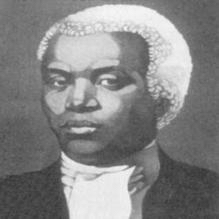
2. Benjamin Banneker: The Inventor of the Clock

We might not be able to tell time if Benjamin Banneker hadn’t invented the clock. When Banneker was 22 in 1753, he had only seen “two timepieces in his lifetime — a sundial and a pocket watch,” according to PBS.

Benjamin Banneker

So, Banneker, who was largely self-taught, created the first clock in the United States, which he built out of wood based on his drawings and calculations. PBS wrote, “The clock continued to run until it was destroyed in a fire forty years later.”

Banneker, who was a talented astronomer, also created one of the U.S.’s first almanacs. In his almanac, he successfully predicted eclipses and other astronomical events, listed the tides, and included information on medicines and medical treatments.

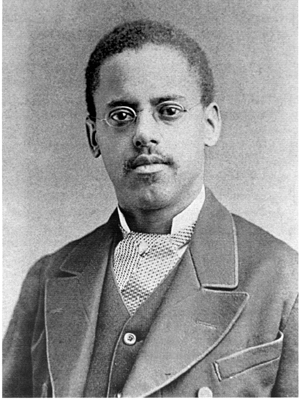
3. Lewis Latimer: The Inventor of the Carbon Light Bulb Filament

The Baha’i writings tell us that the “light of the intellect is the highest light that exists.” But we might still be trying to gain knowledge by candlelight if Lewis Latimer hadn’t invented the carbon filament in 1881.

Lewis Latimer

Often when people think of the invention of the light bulb, they think of Thomas Edison. But the light bulb that Edison created had a very short lifespan and died after a few days.

When Latimer, the son of formerly enslaved people, invented the carbon filament, light bulbs became more practical and long-lasting. His success rivaled Edison’s, and he later went to work with Edison at the Edison Electric Light Company in 1884. Latimer was also known for co-inventing an improved bathroom for railroad trains.

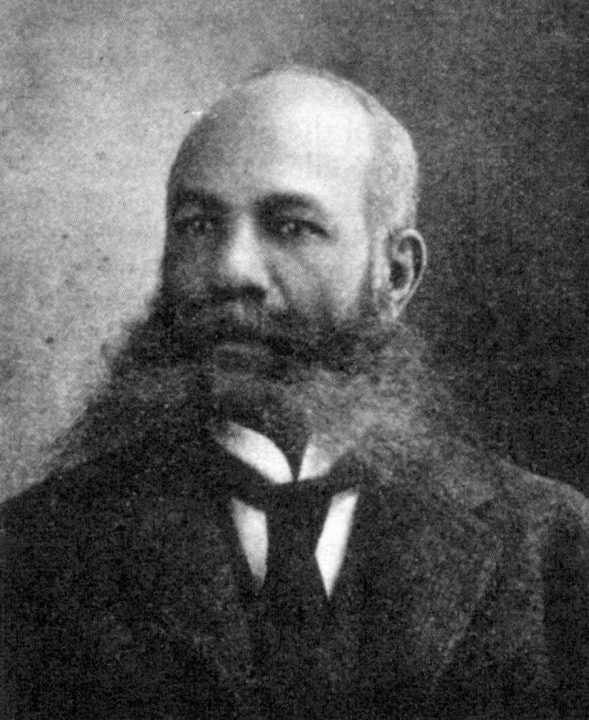
4. Alexander Miles: The Inventor of Automatic Elevator Doors

Alexander Miles

Before Alexander Miles invented the automatic elevator door in 1887, using an elevator was very dangerous. People had to close the shaft and elevator doors themselves manually, and those who forgot to do so often fell down the elevator shafts to their death or received multiple injuries if they survived. 

After Miles’s daughter fell down an elevator shaft and almost died, he decided that he would make it his mission to develop a solution. He invented a mechanism that automatically opens and closes elevator shaft doors, turning elevators into what we now use today.

5. George T. Sampson: The Inventor of the Clothes Dryer

Can you imagine having to hang clothes outside on a line to dry them? It was very time-consuming, and people had to hope their clothes wouldn’t be ruined by the weather, animals, or insects.

George T. Sampson’s patent for the clothes dryer

So, every time I do my laundry, I’m grateful that George T. Sampson patented the clothes dryer in 1892 and a sled propeller in 1885.

In his patent, he wrote, “My invention relates to improvements in clothes-driers. The object of my invention is to suspend clothing in close relation to a stove by means of frames so constructed that they can be readily placed in proper position and put aside when not required for use.”

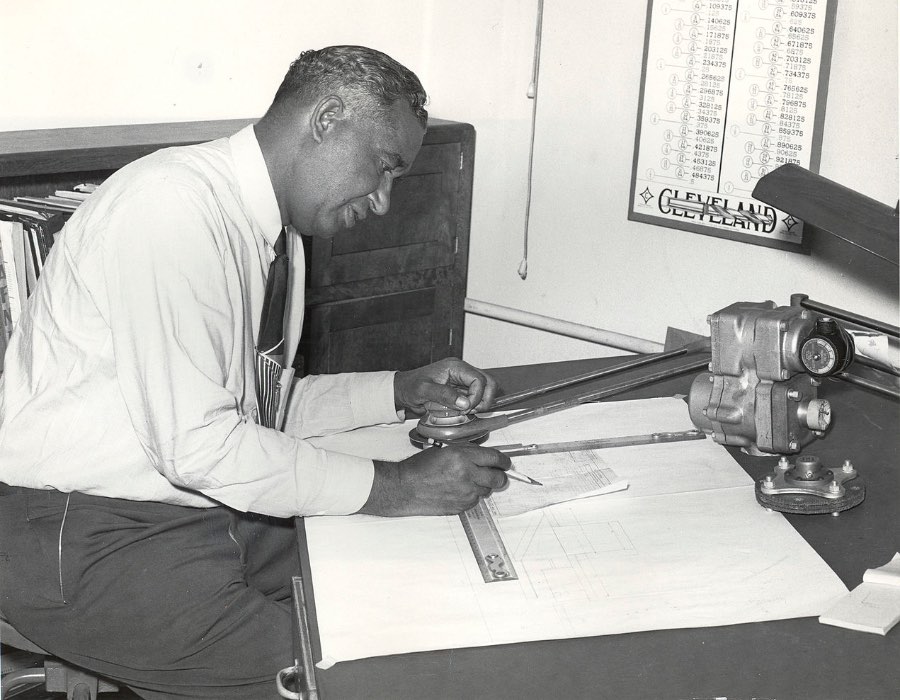
6. Frederick McKinley Jones: The Inventor of Refrigerated Trucks

The Baha’i writings confirm the connection between our physical and spiritual health. Abdu’l-Baha explained:

The more healthful his body, the greater will be the power of the spirit of man; the power of the intellect, the power of the memory, the power of reflection will be greater.

Prior to the invention of refrigerated trucks, keeping food from spoiling — and potentially causing illness — was extremely difficult. Fortunately, Frederick McKinley Jones patented more than 60 inventions in his lifetime, including the cooling system used to refrigerate produce on trucks during extended periods.

Frederick McKinley Jones, CC BY-SA 2.0

He came up with this idea in the 1930s and received a patent for his invention in 1940. He later co-founded the U.S. Thermo Control Company, later known as Thermo King, which was critical in preserving blood, food, and supplies during World War II.

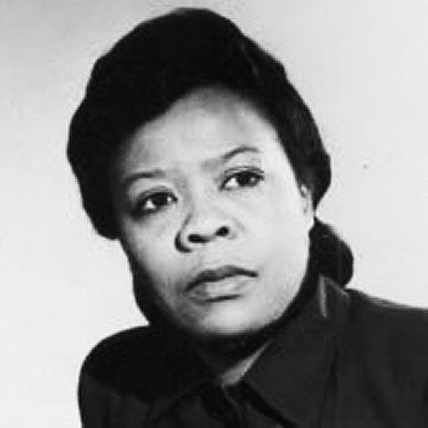
7. Marie Van Brittan Brown: The Inventor of the Home Security System

The Baha’i writings contain more than two dozen prayers for protection — and along with asking God to keep us safe, many of us also turn on a home security system at night. We’re able to do that thanks to Marie Van Brittan Brown. 

Marie Van Brittan Brown

As a nurse, Van Brittan Brown often worked long hours and would come home late at night to an empty home because her husband also worked irregular hours as an electronic technician. Scared after being in the house alone at night, Marie decided to develop a solution that would make her home safer.

In 1966, Van Brittan Brown co-invented the first home security system with her husband, Albert Brown. Their security system consisted of four peepholes, a sliding camera that could capture images of people who were different heights, television monitors, two-way microphones that enabled them to communicate with the person outside, a remote to unlock the door, and an emergency alarm button that contacted the police.

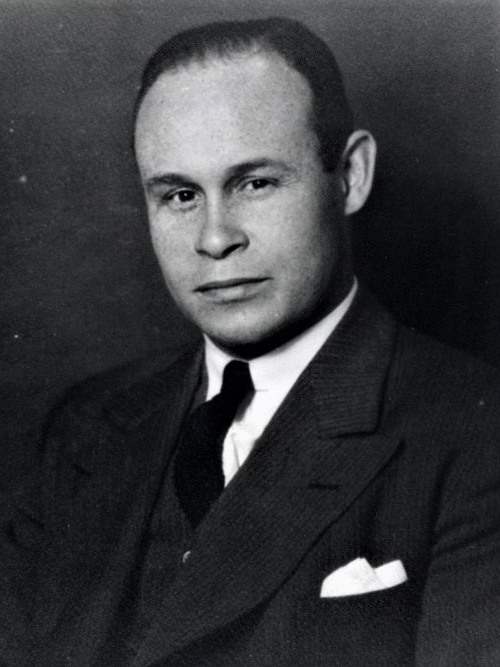
8. Charles Richard Drew: The Inventor of Blood Banks

The Baha’i writings tell us that “an able physician does not treat all ailments in the same manner but varies the treatments and remedies in accordance with the requirements of these various ailments and conditions.” Every two seconds in the United States, an “able physician” determines that someone needs a blood transfusion. 

Charles Richard Drew

Fortunately, surgeon Charles Richard Drew discovered in 1941 how to do long-term storage of blood plasma, organized the United States’ first large-scale blood bank, and created “bloodmobiles” – refrigerated blood donation trucks.

Born in 1904, Drew’s inventions in preserving blood plasma saved thousands of lives during World War II, and the American Red Cross adopted his process and techniques. Sadly, despite Drew’s remarkable inventions in the blood banking process, the Red Cross excluded African Americans from donating blood, making Drew unable to participate.

9. Dr. Shirley Ann Jackson: The Inventor of the Fiber-Optic Cable

The Universal House of Justice, the democratically elected governing council for the Baha’is of the world, wrote in 2015 that “technological advancement is integral to the emergence of a global civilization.” 

Dr. Shirley Ann Jackson, a theoretical physicist and the first African-American woman to receive a doctorate from M.I.T. in 1973, conducted groundbreaking scientific research that laid the foundation for the inventions of the touch-tone telephone, the portable fax machine, call waiting, caller ID, and the fiber-optic cable.

She is currently the 18th president of Rensselaer Polytechnic Institute in Troy, New York. And just think, without fiber-optic cables, you might not have been able to read this article on the internet. 

That raises the question: Could humanity go one week without these inventions that African Americans brought to the world? Black people have contributed so much in the fields of science, math, and technology — achievements worthy of being honored and celebrated every day.

Just think, Black people were able to accomplish such greatness despite centuries of genocide, slavery, racism, and oppression. Imagine how much more could be achieved if we lived in a world without racism and where Black people experienced the justice, equity, recognition, and appreciation we all deserve.


Source link

Regenerative Agriculture: A Force for Changing the World

Regenerative Agriculture: A Force for Changing the World

Over half of the world’s population now has a smartphone. Each one of these devices is more powerful than the Apollo Guidance Computer, which was used to get astronauts to the Moon six times. 

So here’s a question: why are we still not able to solve humanity’s big problems on this planet when one smartphone, in theory, could take us back to walk again on Earth’s closest celestial body?

RELATED: Agriculture: the Secret Ingredient to Global Peace and Prosperity

Clearly, information, technology, and connectivity cannot affect change on their own. 

Several severe global environmental crises now beset us, including climate change, biodiversity loss, food insecurity, and mass migration due to environmental degradation. If our technology can’t do it, what will it take to transcend these crises and begin living in a better and more sustainable reality?

The Baha’i teachings offer a unique and surprising answer to that important question. Baha’u’llah, the prophet and founder of the Baha’i Faith, said, “Special regard must be paid to agriculture.

Accordingly, I invite you to consider one big idea with an immediate window of opportunity for implementation and a global network of farmers with the capacity to implement it. But first, I also ask that you suspend the temptation to dismiss this idea as impossible before taking the time to consider how fundamental changes in agriculture could turn farming from a major driver of climate change into a net-positive force in reversing it. 

The idea is not centered on agriculture writ large but actually on a subset of agriculture as practiced by small-scale family farmers, also known as “smallholders,” who have fewer than five acres or two hectares of land. There are around 500 million smallholder farms throughout the Global South — the developing and emerging economies in Africa, Asia, Latin America, and Oceania — and a third of the world’s people, some 2.5 billion, live and work on these farms. 

Smallholders already produce over 30 percent of the world’s food and up to 80 percent in some parts of Asia and sub-Saharan Africa, despite lower yields and efficiencies of operation on average. No matter where they grow food in the world, smallholders have traditionally been ignored by governments and left to their own devices, with little or no training or support to improve their crop productivity. 

In fact, smallholders now represent the largest underperforming segment of the world’s economy. 

As a global community, we have not paid sufficient attention to these farmers or given them sufficient resources. The Baha’i teachings say that the farmer is “the first active agent in human society:”

The question of economics must commence with the farmer and then be extended to the other classes inasmuch as the number of farmers is far greater than all other classes. Therefore, it is fitting to begin with the farmer in matters related to economics for the farmer is the first active agent in human society. 

Many examples exist, including my own experience with the Smallholder Farmers Alliance in Haiti, which shows that when smallholder farmers receive a minimum of support and training, they can increase crop yields by 40 to 50 percent. 

Smallholder farmers can feed the world.

Now, take into consideration that the world’s population is projected to grow from the present 8.2 billion to approximately 10 billion by 2050, a stunning increase of 20 percent over the next quarter century. During this period, food production will need to increase by around 30 to 40 percent, taking into account both the increased population and changing diets as more people move into middle-income brackets, which typically results in more meat consumption. How can we produce this additional food without further harming the environment, particularly when the global food system is already responsible for up to one-third of climate change?

The big idea in response to this question is to support smallholders in growing the additional food the world needs using a new methodology called regenerative agriculture

Additionally, and importantly, this food should be produced in the areas where it is most needed so that it is not imported, thereby reducing its carbon footprint and supporting the local economy. 

What makes this realistic and doable? All of the projected net global population increase of two billion people will take place in the Global South, precisely where there are smallholder farms with the potential to grow all the additional food needed to feed this increased population.

The key to unlocking this potential is regenerative agriculture, a sustainable farming methodology that replenishes soil nutrients, helps to clean waterways and air, captures carbon, and creates biodiverse farming systems that function holistically and support the well-being of all forms of life within its boundaries and beyond. 

Regenerative agriculture is not a new system; on the contrary, it is rooted in Indigenous wisdom and sustainable ancestral agroecological traditions. These traditions have now been integrated with decades of scientific and applied research by the global communities of organic farming, agroecology, holistic grazing, and agroforestry.

More accurately, regenerative agriculture is, to a large extent, a smallholder movement because the methodology is uniquely applicable to small-scale and labor-intensive farming, as opposed to large-scale industrial farming based on extensive monoculture fields used to grow hybrid or GMO crops dependent on chemical inputs.

This emerging smallholder regenerative movement is now at an early stage, involving an estimated five million smallholders practicing at least the core tenets of regenerative agriculture. 

RELATED: Adasíyyih: A Baha’i Village Becomes a Model Farming Community

However, with some strategic and targeted support, regenerative agriculture has the potential to explode into a mass movement involving hundreds of millions of smallholders throughout Africa, Asia, and Latin America. Collectively, those regenerative-practicing smallholder farmers are capable of producing the added food the world needs by 2050 while at the same time becoming a major force in reversing climate change. 

Recent studies involving farming systems and pasture trials suggest that we could sequester more than 100 percent of current annual CO2 emissions with a switch to regenerative agriculture, not to mention the positive impact on biodiversity, water supply, food security, and migration due to environmental degradation.

When tree planting by regenerative smallholders is factored in, their climate mitigation role grows exponentially. Even without much external support, they are already responsible for a significant percentage of all trees planted in the Global South, either as planted forests or individual trees. And it turns out that smallholders own more than a quarter of all planted forestland worldwide and play a substantial role in the management of global forests.

Whether it is buying credits based on carbon sequestered by trees or payments for climate-friendly regenerative stewardship of farmland, many of the world’s largest corporations and financial institutions are exploring ways to become “nature positive.” This has begun to generate new sources of income for smallholders, with both the payments and backup field data provided via the smartphones mentioned at the outset. 

When the history of the modern smallholder regenerative movement is eventually written, accuracy will require the inclusion of the pioneering model farming community of Adasiyyih in what is now Jordan as one of its earliest and most precedent-setting examples. Established in 1901 under the leadership of Abdu’l-Baha, one of the central figures of the Baha’i Faith, the breakthrough farming practices initiated at Adassiyyih represent a 60-year case study of a village engaged in regenerative agriculture. Abdu’l-Baha wrote that: “… the skillful farmer always hath an abundance of crops and harvests. He will find the good and fertile ground. He will plant his seeds, water the soil, and bring in his rich and heavenly harvest.

In Paul Hanley’s new book “Adasíyyih: The Story of Abdu’l-Baha’s Model Farming Community,” he combines extensive research with his own deep interest in agricultural systems to translate this remarkable and groundbreaking example into practical lessons for the contemporary smallholder regenerative agriculture movement. Interestingly, the sections of the book that focus on community and faith have particular resonance.

Today, regenerative practitioners are expanding their focus from individual farms to also include the areas surrounding those farms. Referred to as a “landscape level” regenerative approach, this includes ensuring the well-being of nearby communities. Hanley describes at length how the development and nurturing of the community itself, in the Adasiyyih example, went much further to position a well-functioning and participatory community as the central organizing force guiding the implementation of regenerative agriculture in the surrounding area. The lesson is that community building drives regenerative agriculture rather than being its beneficiary, a concept that also resonates with the Baha’i-inspired Foundation for the Application and Teaching of Science (FUNDAEC) and their community-based programs linking education and development.

One of the other key messages Hanley elucidates is the role of faith in both community building and agriculture. 

In Adasiyyih and its surrounding farms and villages, the Baha’i Faith provides the spiritual impetus necessary to carry out and sustain the model. However, the broader implications ask us to understand the importance of faith, including spiritual or Indigenous traditions, and how we want to define them in implementing regenerative agriculture. They become the key to effective and sustainable community development, which is itself a central component of regenerative farming that is not currently given sufficient importance. 

RELATED: Baha’i Lessons for Twenty-First-Century Farming Communities

Why? Because faith traditions are critical in inspiring respect for nature, reinforcing the importance of environmental responsibility, and imbuing the role of the farmer with the dignity and respect it deserves. 

Abdu’l-Baha can be considered one of the forerunners of today’s smallholder regenerative movement, but it is also true that later, a Baha’i named Richard St. Barbe Baker played an important role in expanding our understanding of trees in regenerative methodology. St. Barbe Baker’s early efforts with smallholder farmers planting trees in Kenya and Nigeria led to a lifetime as a forest crusader. Paul Hanley’s biography, “Man of the Trees: Richard St. Barbe Baker, The First Global Conservationist,” contains countless examples that can inform contemporary efforts to incorporate tree planting into the cultural DNA of today’s rural communities. 

Regenerative agriculture has begun to recast smallholder farmers as both climate and food champions. Paul Hanley has made a significant contribution to our understanding of this new perspective by writing two books that further unlock the smallholder regenerative movement’s enormous potential impact on the world.

Paul Hanley’s books “Adasíyyih: The Story of Abdu’l-Baha’s Model Farming Community,” “Man of the Trees: Richard St. Barbe Baker, the First Global Conservationist,” and a children’s book, “Richard St. Barbe Baker: Child of the Trees,” are all available from the Baha’i Bookstore and other online booksellers.


Source link

Home Privacy Policy Terms Of Use Anti Spam Policy Contact Us Affiliate Disclosure DMCA Earnings Disclaimer