Baha’is all around the globe recently celebrated four Baha’i Intercalary Days, also called “Ayyam-i-Ha,” and many dedicated some of the time during those days to serving others. In act, we’ve…
On a music streaming service this morning, I happened to hear one of the many recorded versions of the song “No Man Is an Island,” which I remembered singing it at summer…
How does an artist depict the human spirit’s journey? The Austrian Baha’i artist Claus Mayrhofer, who adopted the artist’s name Barabbas, attempted to do just that throughout his career.
Barabbas was an extreme individualist in his work as a painter. No art historian has been able to assign him or his work to one of the existing art movements.
Born in Vienna, a cosmopolitan city known for producing unique works for centuries in music, painting, and science, Barabbas was fascinated by the avant-garde jazz scene there as a young man. In 1967, he became a Baha’i, and the principles of his faith were reflected in his impressive paintings.
In 1986, Barabbas moved to Bali, where he spent three years as part of a UNESCO transcultural exchange program sponsored by the Ministry of Education, working with Udayana University in Denpasar. He then moved to Australia, where he lived in Bendigo until his death in 2009. He was also a member of the Spiritual Assembly of the Baha’i community in the greater Bendigo area. Barabbas’s visual work has been shown in 45 exhibitions in Australia, Germany, France, and Austria.
What inspired Barabbas and made his paintings so unique? Let him speak for himself from his diary entry dated November 22, 1990:
From the beginning, my painting had nothing to do with pop art, psychedelic art, etc. My painting developed through my engagement with the carvings of the Papuans on the Sepik (River), with Maori tattoos and with Hundertwasser. I also immersed myself in the art of Gauguin — who directed my attention to the Pacific region — Kandinsky, Kupka, Paul Klee and Klimt.
Barabbas worked as an artist in an extremely individualistic realm, in which Native American folk art, the magic of the Orient, the primitive, fairy-tale quality of the naive, as well as abstraction and pop art, all flowed in. As he himself emphasized, Barabbas was concerned with the “timeless capture of the unmeasurable,” for which he coined the term Overground in the 1960s. For him, Overground meant a counterpoint to “underground” — signifying subtle spirituality, unity in art, and the desire to integrate this artistic inspiration into all areas of human life.
Berthold Ecker, art historian and curator of modern art at the Vienna Museum, described Barabbas as the most paradigmatic Austrian painter of the 1960s and 1970s, saying that his art reveals a powerful, thoughtful, and consistently developed body of work in which playful lightness and the primal power of the forces of nature are in a tense exchange.
The Baha’i writings explicitly value art and our engagement in it very highly — as an expression of the spiritual. Abdu’l-Bahasaid:
All Art is a gift of the Holy Spirit. When this light shines through the mind of a musician, it manifests itself in beautiful harmonies. Again, shining through the mind of a poet, it is seen in fine poetry and poetic prose. When the Light of the Sun of Truth inspires the mind of a painter, he produces marvellous pictures. These gifts are fulfilling their highest purpose, when showing forth the praise of God.
While Barabbas initially painted small-format pictures, in the 1970s, his attention turned to the creation of monumental, large-format works. In 1975, he created the 200 square meter painting “Big Bang,” also called “Genesis,” which is dedicated to the unity of humanity. It was exhibited in 1975 and 2013 in the Vienna Künstlerhaus. The realization of the unity of humanity, a coexistence of all people in peace and harmony, is one of the essential ethical principles of the Baha’i Faith.
Barabbas symbolically depicted numerous Baha’i principles in this gigantic painting, whose rediscovery Gerhard F. Schweter described in his speech at the opening of the exhibition in the Vienna Künstlerhaus in 2013
The ’Big Bang’ had an extremely dramatic fate, and it is only thanks to the initiative of a few committed people that the monumental painting is hanging here at all. After its first exhibition in 1975, it was stored in the basement of the Künstlerhaus, was forgotten, did not appear in a later inventory and was rediscovered in 2011 thanks to the persistence of family members. So it was as good as gone for 36 years. This is not the only reason why it can be compared to Gustav Klimt’s ’Beethoven Frieze’ from 1902. In the extraordinary giant painting ’Big Bang’ we experience the painter Barabbas as a deeply heartfelt mystic and partly also as a romantic. He shows us a concrete utopia based on the writings of a new universal religion whose ultimate goal is the unity of humanity.
Today, Barabbas’s painting “Big Bang” is the property of the City of Vienna, displayed in the depot of the Vienna Museum.
Barabbas worked on the mammoth painting, as he called it, for three months. He later commented on it in a letter:
You have to remember that I painted the giant picture like a scroll (from right to left), but never had more than five to seven meters of canvas in front of me to work on. In other words: what I had previously painted was rolled away so that I could continue working.
Accordingly, the painting can be viewed as having three distinct parts: right, center, and left.
The Right Part of ‘Big Bang’
On the far right, Barabbas depicted the creation of the universe. Then man appears. His first cry is indicated in the stylized symbol of the sunflower, slightly to the right of the center, which represents the beginning of life. Further development is symbolized by the stylized representation of the formula of Einstein’s theory of relativity: E=mc². This is followed, in the left quarter, by a double figure walking forward, representing the dual nature of humans as both physical and spiritual beings.
The Middle Part of ‘Big Bang’
In the middle of the painting, the path of life leads through trials to the goal of the incomprehensible, depicted as the yellow light in the center. Without conscious effort, this journey of life into the light is not possible. First, we must climb the mountain of purifying our ego.
After passing spiritual tests and overcoming the mountain of the ego, the path continues through a gate — also a symbol for The Bab, Baha’u’llah’s herald and predecessor, whose name means the gate. This represents the birth of a new spiritual existence. Those who are not attached to worldly and material things, symbolized by the two pastel-colored sunflowers, show that only light and transparent beings can float through this gate.
Attracted by the light, the purified person immerses himself in the eternal mystery — the tabernacle, the proximity of the Creator. In the innermost core, emitting dazzling and radiant light, is the Baha’i symbol of the “Greatest Name:” “Ya Baha’u’l-Abha” — which, in English, means: “O Thou Glory of Glories,” and refers to the prophet and founder of the Baha’i Faith, Baha’u’llah. (This sacred symbol is not visible in most photographs and can only be seen in the original painting.)
This Baha’i message of the oneness of humanity refers to the beginning of an age of global unity. From this bright center, nine rays emanate in all directions. In a sense, the concept of the Big Bang is repeated here, but this time on a spiritual level — a new humanity is created, and the impetus is given for a further step in human evolution.
In the “Big Bang,” everything begins anew from the center, and everything is in flux. The future leads to a new beginning, and a new world is created. The left side — the end of the picture — is actually not an end. The large, hanging yellow drops on the left side mean that the spiritual development of humanity continues and always will. Barabbas said: “Actually, the whole picture drips and runs from my longing heart. It is dedicated to the unity of humanity.”
Also, on the left side of the painting, on the way to the future, a house by a lake, mountains, and forest appears in an air bubble. On the far left of the painting, one of Baha’u’llah’s “Hidden Words” appears: “O Son of Man! Rejoice in the gladness of thine heart, that thou mayest be worthy to meet Me and to mirror forth My beauty.”
With this work, Barabbas wanted to depict the cycle of life and creation, full of intense colors like precious stones, along with the mysterious labyrinths where we can each go on an external and internal journey of discovery, indulge, dream, and find our true selves.
This essay was initially published at: https://www.perspektivenwechsel-blog.de/bahai-artikel/barabbas-kuenstler
(The rights to all images in this article belong to the author.)
An African American woman, who was born into enslavement, later became a famous public speaker, inspiring suffragist, and devoted Baha’i. Learn about the life of Coralie Franklin Cook.
Coralie Cook’s Background, Family, and Career
Coralie Cook was born in 1861 in Lexington, Virginia to enslaved parents, Albert and Mary Elizabeth Edmondson Franklin.
Coralie Franklin Cook
She was a great-granddaughter of Brown Colbert — the grandson of Elizabeth Hemings, the matriarch of the enslaved Hemings family at President Thomas Jefferson’s Monticello. Elizabeth Hemings was the mother of Sally Hemings — the famous enslaved woman who was impregnated at least six times by her enslaver, Thomas Jefferson, who was 30 years older than her.
In 1880, Coralie became the first known descendant of people enslaved by Thomas Jefferson to earn a college degree when she graduated from Storer College in Harper’s Ferry, West Virginia. She taught English and elocution at Storer College and purchased her own home from the college in 1884 when she was just 23 years old.
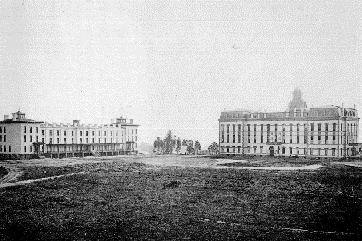
Harper’s Ferry, West Virginia in 1865
She later moved to Washington D.C. and became a faculty member at Howard University. She was the Chair of Oratory at Howard and taught elocution there. That’s where she met her husband, George Cook.
Like Coralie, her husband, George, was born into slavery in Winchester, Virginia, in 1855. He managed to escape from slavery, attend school, and graduate from Howard University with a bachelor’s degree in 1886 and a law degree in 1898. He was the Professor of Commercial and International Law and the Dean of the School of Commerce and Finance. Coralie and George got married on August 31, 1898, and had one son, George William Cook Junior.
In addition to teaching at Howard University, Coralie was the second woman of color to be appointed by the judges of the Supreme Court of the District of Columbia to the Board of Education. She held this position for 12 years — the longest term held by any board member. She was also the director of the Home for Colored Children and Aged Women and a member of the Red Cross, the Juvenile Protective Society, and the NAACP.
Coralie Cook’s Work As A Famous Writer, Speaker, and Suffragist
Coralie was an ardent activist, dedicated to obtaining equal rights for women, especially the right to vote.
the female sex is treated as though inferior, and is not allowed equal rights and privileges. …Neither sex is superior to the other in the sight of God. Why then should one sex assert the inferiority of the other, withholding just rights and privileges as though God had given His authority for such a course of action?
He also spoke about the unique and vital role that mothers have in society:
In the necessity of life, woman is more instinct with power than man, for to her he owes his very existence.
If the mother is educated then her children will be well taught. When the mother is wise, then will the children be led into the path of wisdom. If the mother be religious she will show her children how they should love God. If the mother is moral she guides her little ones into the ways of uprightness.
It is clear therefore that the future generation depends on the mothers of today.
In her editorial, “Votes for Mothers,” published by the NAACP magazine, “The Crisis,” Coralie wrote:
Mothers are different, or ought to be different, from other folk. The woman who smilingly goes out, willing to meet the Death Angel, that a child may be born, comes back from that journey, not only the mother of her own adored babe, but a near-mother to all other children. As she serves that little one, there grows within her a passion to serve humanity; not race, not class, not sex, but God’s creatures as he has sent them to earth.
It is not strange that enlightened womanhood has so far broken its chains as to be able to know that to perform such service, woman should help both to make and to administer the laws under which she lives, should feel responsible for the conduct of educational systems, charitable and correctional institutions, public sanitation and municipal ordinances in general. Who should be more competent to control the presence of bar rooms and ‘red-light districts’ than mothers whose sons they are meant to lure to degradation and death? Who knows better than the girl’s mother at what age the girl may legally barter her own body? Surely not the men who have put upon our statute books, 16, 14, 12, aye be it to their eternal shame, even 10 and 8 years, as ‘the age of consent!’
If men could choose their own mothers, would they choose free women or bondwomen? …I transmit to the child who is bone of my bone, flesh of my flesh and thought of my thought; somewhat of my own power or weakness. Is not the voice which is crying out for ‘Votes for Mothers’ the Spirit of the Age crying out for the Rights of Children?
Suffragette Banner
Coralie was a founding member of the National Association of Colored Women’s Clubs and a member of the National American Women’s Suffrage Association. Coralie, who was recognized nationally as an excellent public speaker, was the only African American woman who was invited to speak at Susan B. Anthony’s 80th birthday party in 1900.
However, she had spent so much of her life advocating for the rights of women and women of color and had grown disappointed by white women’s reluctance to work with Black women within the suffrage movement. Disheartened that the movement had, in her words, “turned its back on the woman of color” and did not view the rights of African American women as a priority, Coralie expressed her grievances in her speech.
…no woman and no class of women can be degraded and all womankind not suffer thereby.
Coralie said, “…And so Miss Anthony, in behalf of the hundreds of colored women who wait and hope with you for the day when the ballot shall be in the hands of every intelligent woman; and also in behalf of the thousands who sit in darkness and whose condition we shall expect those ballots to better, whether they be in the hands of white women or Black, I offer you my warmest gratitude and congratulations.”
She would later refuse to participate in white-dominated suffragist organizations and activities and became very active in the fight against Jim Crow laws.
As author and college professor Paula Giddings wrote, “Throughout their history, Black women also understood the relationship between the progress of the race and their own feminism. Women’s rights were an empty promise if Afro-Americans were crushed under the heel of a racist power structure. In times of racial militancy, Black women threw their considerable energies into that struggle—even at the expense of their feminist yearnings.”
Coralie Cook’s Life As a Baha’i and Racial Justice Activist
Coralie and George learned about the Baha’i Faith in 1910 and became Baha’is in 1913. In the Baha’i Faith, racism is regarded as “the most vital and challenging issue” confronting the United States.
Coralie and George organized Baha’i events at Howard University, including one talk by Abdu’l-Baha, and they even won awards for their social welfare work in the African American community.
In a letter she wrote to Abdu’l-Baha in 1914, she described how egregious racism was in the U.S.:
Knowledge of the progress of the colored people during their fifty years of freedom has astounded the world and incited the envy and hatred of those who prophesied their extinction and argued their inability to work for themselves.
In the midst of unfriendly surroundings they have accumulated $7,000,000,000 worth of property raising a million and a half of dollars in the past year alone for educational work, coming out of slavery with 95 percent of their whole number unable to read or write to say that number is reduced to only 30 percent an advance surpassing that of the whites during the same period.
Instead of this marvelous achievement appealing to all that is best and noblest in the whites, it has seemed to have a contrary effect. Laws are being passed in many sections compelling colored people to live in segregated districts, where they have had handsome houses among white residences these houses have been attacked, lives endangered, valuable property ruthlessly destroyed, anonymous orders to vacate, if ignored, have even resulted in the use of dynamite and total destruction of a house and its contents, the Law Courts offer no redress for the word of a black man is not taken against that of a white man where Judge and Jury are all of the dominant class.
She believed that the Baha’i teachings are “not only the last hope of the colored people, but must appeal strongly to all persons regardless of race or color…” So, she encouraged Baha’is to “stand by the teachings though it requires superhuman courage…”
She worked for racial justice and taught the oneness of humanity until she passed away in 1942. What a remarkable woman in our history to look up to.
When I reflect on the Baha’i teachings, which stunningly prefigure many of the discoveries of modern physics, I see an interesting pattern.
As a physicist, I’ve noticed that most of the clearest scientific expressions and explanations in the Baha’i teachings come from the writings and talks of Abdu’l-Baha. Looking carefully, those explanations usually trace back to the original concept provided by Baha’u’llah. However, ultimately Abdu’l-Baha seems uniquely capable of pulling these concepts out, explaining them in clear, modern language, and rendering them intelligible to us—or at least to me.
For example on the question of the ultimate substance of matter, in Baha’u’llah’s “Tablet of Wisdom” we can see the presence of the ideas later expressed by Abdu’l-Baha:
… He (Socrates) it is who perceived a unique, a tempered, and a pervasive nature in things, bearing the closest likeness to the human spirit, and he discovered this nature to be distinct from the substance of things in their refined form. – Baha’u’llah, Tablets of Baha’u’llah, p. 146.
This, I suspect, forms the kernel of the idea that underlies Abdu’l-Baha’s statement that:
Even the ether, the forces of which are said in natural philosophy to be heat, light, electricity and magnetism, is an intelligible and not a sensible reality. – Abdu’l-Baha, Some Answered Questions, newly revised edition, pp. 93-94.
Perhaps this alludes to the other uniquely modern ideas from the Baha’i teachings about non-existence of rest and a void, which both flow from the concept of a pervasive and spirit-like essence underlying all matter. For those reasons and from my perspective, it seems it would behoove us to pay extremely careful attention to what Abdu’l-Baha says about science and the universe, despite how deceptively simple it may sound.
With hindsight we can easily see the many important principles contained in Abdu’l-Baha’s writings and speeches—for example, the understanding that both matter and light arises from the ether, the understanding that this field represents a non-physical “intellectual reality” and that absolute rest is impossible via his statement “that motion be an inseparable concomitant of existence.”These conceptsexpose some of the core ideas of quantum mechanics and later field theory—which developed as guiding lights of contemporary science long after Abdu’l-Baha first expressed them.
Louis de Broglie
All this makes me wonder how a scientist existing before the advent of the quantum wave function might have used Abdu’l-Baha’s statements to hasten these discoveries. One could imagine an insightful individual who might have taken Abdu’l-Baha’s statements on ether and matter to heart, and seen, as the pioneering French physicist Louis de Broglie eventually postulated, that matter might be modeled as a wave; or later understood that this same field could also explain electromagnetism. Yet still, this kind of discovery requires formulating these principles in terms of the problems and the mathematics at hand, which makes me doubt anyone will discover a fully formed theory of physics hidden in scripture. Instead, we can sometimes find principles which should inspire and hopefully point the direction towards fruitful scientific inquiry.
With that in mind, let’s take a closer look at some of the probable truths contemporary science still wrestles with and attempts to prove, and see if we can find corollaries or clues within the Baha’i teachings. Several ideas seem to be suggested in the Baha’i writings which many physicists think are true, but haven’t conclusively proven yet. I’ll list two of the most important ones here:
The Cosmos Exhibits Self-similarity
This concept perhaps should really belong in the category of known scientific facts, since this is a plainly observed phenomena of our universe, due to the nature of our physical laws. While it hasn’t yet been conclusively proven—it would be a very difficult theory to prove, after all—most scientists already accept it; and most laymen do, too. In part, it has driven the development of such emerging sciences as fractal mathematics. The Baha’i teachings express this cosmic self-similarity in terms of the obvious patterns of nature, from the smallest element to the largest:
… earthly and heavenly, material and spiritual, accidental and essential, particular and universal, structure and foundation, appearance and reality and the essence of all things, both inward and outward—all of these are connected one with another and are interrelated in such a manner that you will find that drops are patterned after seas, and that atoms are structured after suns in proportion to their capacities and potentialities. – Abdu’l-Baha, Tablet of the Universe, provisional translation.
The Cosmos is Infinite
Despite the belief that our universe originated with a singularity, scientists now have a strong suspicion that our cosmos is infinite, populated by a multi-verse. In fact, the infinite nature of the universe is now almost a requirement for many existing theories beyond the standard model. Since science centers so much on measurement, this theory also approaches impossibility in terms of proof—but the Baha’i teachings have proclaimed the infinitude of the universe since the beginning of the revelation:
Know thou that the expressions of the creative hand of God throughout His limitless worlds are themselves limitless. Limitations are a characteristic of the finite, and restriction is a quality of existent things, not of the reality of existence. – Ibid.
This week, Baha’is around the world will celebrate four days of festivities, gifts, parties, service projects and charitable humanitarian work during the Baha’i holidays called Ayyam-i-Ha. That Persian phrase designates the Baha’i Intercalary Days, describing the four or five days in the annual Baha’i calendar that don’t fall into any given month. Baha’is set aside those days for joyous celebrations and preparation for the Baha’i fast that always follows Ayyam-i-Ha.
Confused? Let’s start by explaining that the Baha’is of the world, just like many other major global Faiths, have a unique calendar.
Most of the world’s calendars base their months, either roughly or exactly, on the phases of the moon or the earth’s 365¼ day rotation around the sun. Actually, one trip around the sun takes our planet 365 days, 5 hours and 50+ minutes, which makes solar calendars tough to calibrate. The lunar calendars depend on the moon’s 28-day cycle around the Earth to mark the passage of time. Some calendars, notably the Islamic one, have twelve lunar months, strictly calibrated to the moon’s phases. Even the universally-accepted symbol for Islam – the new or crescent moon – comes from the Muslim calendar.
Much of the Christian world uses the solar Gregorian calendar, which also has twelve months, but which extends those months to fill out a full solar year – which explains why the length of the Gregorian months varies, from 28 to 31 days. The Gregorian calendar, adopted by Pope Gregory XIII in 1582, was initially designed to keep the Easter celebration closest to its original date on the Vernal Equinox. Some Eastern Orthodox Christian communities, most notably in Russia and nearby countries, still use the predecessor to the Gregorian calendar, the Julian. Both of these calendars use “leap” or intercalary days to account for the extra time of the earth’s solar orbit, adding a day every third or fourth year.
The Hebrew calendar used by much of the Jewish community combines solar and lunar observations to produce a lunisolar schedule, which operates on a cycle of 19 years.
Hindu Calendar from 1871
The Hindu calendar, called the Vikrami lunar calendar, allows most of the people of India and Nepal to mark their religious activities and festivals. In the Hindu calendar, a lunar month can have 29 or 30 days – which means twelve lunar months adds up to about 360 days, and that the Hindus have to insert an additional 13th month every few years.
Here’s the problem with all of these calendars, whether they’re based on astronomy or arithmetic:
Every calendar that uses astronomy to mark its months has to base its dates on consistent observation of the Earth’s sky and its moon and stars. Astronomical calendars like the Islamic calendar and the old Hebrew calendar work that way, and they’re very accurate – except when you try to figure out when a particular date will occur.
On the other hand, every calendar based on a strict set of mathematical rules, like the Gregorian calendar or the current Jewish calendar, makes it simple to calculate when a particular date will occur – but arithmetically-calculated calendars sacrifice accuracy. Their accuracy diminishes slowly over time, because the Earth’s rotation varies, and because of that extra five hours and fifty-some minutes every year, which leap year tries to make up for in the Gregorian calendar.
Understanding the Baha’i Calendar
The Baha’i calendar uses a new and different approach that accounts for and corrects both of these inherent problems. It has a unique system of nineteen months, each made up of nineteen days. That means 361 days every year have very specific, arithmetically predictable dates. When the end of the 18th month occurs, the Baha’i calendar inserts four or five intercalary days, which flexibly correct the calendar every year to synchronize it exactly with the earth’s rotation around the sun.
The Baha’i calendar has more new features, as well – each day begins and ends at sunset; New Year’s day happens on March 21st, the Spring Equinox in the Northern Hemisphere; and instead of being named for pagan Roman holidays like the Gregorian months, the Baha’i calendar’s months all are named for aspirational spiritual qualities and attributes:
…Splendor, Glory, Beauty, Grandeur, Light, Mercy, Words, Perfection, Names, Might, Will, Knowledge, Power, Speech, Questions, Honor, Sovereignty, Dominion, and Loftiness. Meditating upon these sublime attributes, man is enabled to gaze beyond the curve of time, wherein the swing and change of planetary movements exists, to the eternal qualities that stabilize the soul.
As the seasons return with their quaternary beauty, as the seed sacrifices to the mystery of the harvest, we see reflected in the mirror of the physical world the spiritual spring-time when the Word of God is planted in the heart of man by the coming of God’s Messengers. – Shoghi Effendi, Principles of Baha’i Administration, pp. 53-54.
What cause would you give your life for? When we think about early African Baha’is who died as a result of their beliefs, the names of Enoch Olinga (Uganda, 1979) and Duarte Vieira (Guinea-Bissau, 1966) come to our minds.
But there were other Baha’i martyrs in Africa — one of them was Joaquim Sampaio. Mr. Sampaio was born in Angola, near the city of Malanje, in 1922. In those days, Angola was an impoverished Portuguese colony, and it was forced to grow cotton as a commodity crop for Portugal.
Joaquim Sampaio
From his early youth, Joaquim developed a deep interest in spiritual and religious subjects. He read and studied the Bible, and eventually, he claimed to have a spiritual gift, announcing that a great message from God was coming, which would unite all peoples. He also said that this message had not yet reached Malanje, but that he would recognize it when it appeared. By then, his radiant spirituality had made him known in the Malanje area as the “Revealed One.”
In 1956, he received a letter from his uncle Francisco Ebo in Luanda, who told him that a new divine message had indeed appeared. Joaquim was very curious and answered his uncle with three straight questions: Where was the center of this new Faith? What nationality is this messenger? What is his mission?
The answer from Mr. Ebo came a few weeks later: The center of the new Faith is in the Holy Land, in Haifa; the messenger, Baha’u’llah, came from the East, from Persia; his message is to unite all humanity. Having read this answer, Joaquim Sampaio said to his family and friends: “This is the Faith I have been waiting for!”
After a few weeks, Mr. Sampaio traveled to Luanda to meet his uncle Francisco and other Baha’is. They had long, deep, and significant conversations. The Baha’is of Luanda were impressed with Mr. Sampaio’s discourse, his conviction, and his enthusiasm. Back in Malanje, Mr. Sampaio claimed openly to be a Baha’i, stirring family and friends with the news of the new revelation. In the following weeks, they received a visit from the Baha’is of Luanda, several persons from the Malanje area accepted the Faith, and, in 1957, the first Spiritual Assembly of the Baha’is of Malanje was elected.
Joaquim Sampaio was married and had five children. His life wasn’t easy. He worked as a foreman for Cotonang, a cotton plantation company. He earned 350 escudos a month when, at that time, a good pair of shoes cost 250 escudos. When John Robarts visited Angola in 1959 and met Mr. Sampaio in Luanda, he described him with these words: “Sampaio is thin, undernourished. I suspect he is at a starvation level and eating almost nothing so that his family can have more.”
Joaquim Sampaio and his family.
In his spare time, Joaquim would ride his bicycle to go to various villages near Malanje to carry the Baha’i message to others. Mrs. Hilda Xavier Rodrigues, a Baha’i living in Luanda, described him this way: “He is the type who would love to go out and pioneer all over the country, such a spirit he has. I love the way he feels the [Baha’i] Cause and tells his friends to unite and be prudent, be silent, be observant.”
During his travels to Malanje’s neighboring villages, Mr. Sampaio no doubt witnessed the terrible conditions in which rural populations lived, forced to cultivate and produce large quantities of cotton, and often prevented from maintaining their traditional agricultural crops, which meant many went hungry.
Mr. Sampaio’s enthusiasm for the revelation of Baha’u’llah and for teaching the Baha’i Faith led, in 1957, several students from the Evangelical school in Quizanga to abandon the church and accept the Baha’i Faith. Joaquim’s activities as Baha’i became more and more visible. It didn’t take long for the colonial authorities to raise eyebrows at the man who they called “that propagandist of the Baha’i Faith.” Family and friends warned Joaquim to be careful and keep a low profile. After all, this new religion was not known to the authorities, and his teaching it to others could bring him bad consequences. But Joaquim ignored the warnings.
The police of Malanje detained Mr. Sampaio on several occasions due to his Baha’i activities. In one of the statements recorded at the police station, Mr. Sampaio is described as “the main preacher of the Baha’i Faith in Malanje,” even though Baha’is have no clergy. The statement includes Joaquim’s narrative of his discovering the Baha’i Faith and his mystical dreams. As he told the police:
… he read Baha’i books and liked them a lot because they were not against his religion, nor against the government, there only one God and the Bible seems to be one of his bases. When he began to have doubts, he began recording them in a notebook. At night he began to have visions in which a figure he could not recognize appeared to him, and clarified his doubts about several passages of the Bible that until then were incomprehensible to him. He told these visions to several friends, and these friends later asked him to learn more about the new religion.
John Robarts with Bahais in Luanda, Sampaio is in the middle, 1960.
In early January 1960, Mr. Sampaio wrote a letter to a Baha’i committee. His words were almost a premonition:
The people of Angola are afraid because they are slaves of another race and have always been dominated. We are told that if we accept the [Baha’i] Faith we will probably be arrested. It is a shame that this spirit of fear dominates the people of Angola, because if God freed them from their cage, they would still be afraid to fly. Only the revealed ones are not afraid because they are servants of Baha’u’llah. This is not due to a lack of willingness to convey the Glad Tidings, but because people are afraid unless the enemies of the Faith stop harassing them. But the people testify that this, in fact, is the Promised One that the people are waiting for. Let’s see if in 1960, Angola will become freer.
However, during that time, Angola became less and less free, and the activities of the Baha’is were being monitored by PIDE, the national political police. In June 1960, a document from PIDE stated that the Baha’i Faith could be a source of political unrest masquerading as a religion, and the Baha’is “are being used for the de-nationalization movement” with its “principles and teachings of development, peace and equal rights.” These allegations were not true, but in late 1960, a general strike broke out among the cotton farmers around Malanje. It was violently repressed throughout the province. In February of 1961, Angola’s War of Liberation began, and unprecedented violence and repression spread across the entire country. Any African considered suspicious by the colonial authorities would be arrested, detained, and imprisoned, his fate unknown.
Soon, PIDE began to arrest prominent Baha’is in Malanje and Luanda. They were all sent to a prison camp at Baia dos Tigres in southern Angola. In the middle of the night, the PIDE detained Mr. Sampaio at his home, and he was never seen again.
Angolan Baha’is understand that Joaquim Sampaio died in prison because of his firm belief in the Baha’i Faith. Most likely, he was the first Angolan Baha’i martyr. Abdu’l-Baha, in a speech he gave in North America in 1912, praised such martyrs and spelled out the reasons a person would give his life for his beliefs:
Through the teachings of Baha’u’llah the horizon of the East was made radiant and glorious. Souls who have hearkened to His words and accepted His message live together today in complete fellowship and love. They even offer their lives for each other. They forego and renounce worldly possessions for one another, each preferring the other to himself. This has been due to the declaration and foundation of the oneness of the world of humanity. Today in Persia there are meetings and assemblages wherein souls who have become illumined by the teachings of Baha’u’llah — representative Muslims, Christians, Jews, Zoroastrians, Buddhists and of the various denominations of each — mingle and conjoin in perfect fellowship and absolute agreement. A wonderful brotherhood and love is established among them, and all are united in spirit and service for international peace. More than twenty thousand Baha’is have given their lives in martyrdom for the Cause of God. The governments of the East arose against them, bent upon their extermination. They were killed relentlessly, but day by day their numbers have increased, day by day they have multiplied in strength and become more eloquent. They have been strengthened through the efficacy of a wonderful spiritual power.
Historian Moojan Momen recalls that the political unrest that plagued several African countries eager for independence “had a great impact on a growing Baha’i community.” Regarding the Baha’is of Angola, he adds:
The Roman Catholic clergy decided to take advantage of the fears of the Portuguese authorities and accused the Baha’is of being terrorists. Many believers were detained and interrogated. Among the main victims was Joaquim Sampaio. He was taken away in the middle of the night and they never saw him again. It is believed that he was executed or died in a prison camp …
Many, many people have given their lives for their firm belief in the Baha’i teachings of peace, love, and unity. Their courageous acceptance of those spiritual teachings transcended even the fear of death.
I recently came across this old 1974 photo of me, aged 22, holding my new baby son Will. Sometime late that month, 50 years ago, I made the most momentous decision of my life – to become a Baha’i.
Paul Hanley and his son, 1974.
In a sense, I had no choice.
I first heard the word Baha’i from a friend in high school. I went to the school library and looked it up in the World Book Encyclopedia. I liked what I saw, but somehow got the impression that this was an Iranian religion. Little did I know that there was a thriving Baha’i community in Regina, Saskatchewan, where I lived.
Maybe five years later an acquaintance knocked on my door, and without saying much handed me the book Baha’i World Faith, and left.
I started reading, but found the book hard to penetrate. Still, something compelled me to keep at it and the words started to resonate within me, even though I didn’t fully understand them.
After studying the Baha’i teachings for a few years, I realized that they now made complete sense to me. I particularly appreciated the idea that all religions, from the Christian faith I grew up in, to the Eastern religions I was attracted to as a youth coming of age in the sixties, as well as Indigenous spiritual wisdom from around the world, were all part of a gradual unfoldment of the divine teachings delivered by a series of messengers, such as Christ, Buddha, Deganawida, and many others. I realized, too, that Baha’u’llah, the prophet and founder of the Baha’i Faith, was the most recent of these spiritual messengers.
Baha’u’llahwrote that his sole desire was “the regeneration of the whole world and the establishment of the unity of its peoples.” As someone involved in the environmental movement, I related strongly to that message. I understood that the Baha’is had a comprehensive plan to make Baha’u’llah’s revelation a reality – a plan now gradually unfolding around the globe. I hoped that I could contribute to it in some way, and that my little son would grow up to live in a peaceful world.
This passage from a particular text by Baha’u’llah had a profound effect on my decision: “… he who turneth away from this Beauty hath also turned away from the Messengers of the past and showeth pride towards God from all eternity to all eternity.”
I had a strong feeling that this was true, and I could not turn away, which is why I say I had no choice.
Shortly after becoming a Baha’i, I had a powerful dream. In the dream I was at the Baha’i Institute, a facility just outside Fort Qu’appelle, the town I lived in at the time. In the dream it was November, the time of year in Saskatchewan before the first snow when everything seems hard, frozen, dead. I was asked to go out and get a pail of water from the well. I walked out, feeling the cold, but as I came closer to the well it became warm. The trees had leafed out, but these trees and the other plants were of a different kind; there are no words to describe them, but I’ll just say they were multi-dimensional. The colors and fragrances were tactile, I could feel them. In that dream world I could smell colors and see fragrances.
I found myself in the most beautiful garden; everything was hyper-real, like the normal world but transcendent. I lowered the pail into the well and drew out what I can only describe as living water, water with multiple dimensions, water that could satisfy all thirsts. As I carried the water back to the building everything turned back into a normal cold November day in Saskatchewan.
For me, that dream was a powerful confirmation of my decision, which has stayed with me for more than 50 years. Now I am 72. If there is anything I have learned from life that is worth passing on, it is simply to invite everyone to seriously investigate Baha’u’llah’s stupendous revelation.
The sacred writings of Baha’u’llah, who lived from 1817 to 1892, extend from 1852, the year of the inception of the Baha’i Faith, to 1892, the year of his ascension – 40 years of revelation.
Both the Faiths of the Bab (1819-1850), the prophet who paved the way for the coming of Baha’u’llah, and of Baha’u’llah are characterized by an unprecedented ocean of revelatory outpouring.
That is why Baha’i scripture constitutes almost a library, rather than one or a few books.
In addition, there is no historical or objective doubt about the authenticity of these writings. The writings of Baha’u’llah by himself would be the equivalent of one hundred books, and the Baha’is have the originals. These writings address all kinds of issues in a variety of styles. However, despite the amazing diversity and plurality of Baha’u’llah’s writings, they all represent a grand divine order and unity:
Incline thine ear and hear! This is the voice of My pen raised before mystics, then divines, and then kings and rulers. – Ishráqát, p. 260.
This statement of Baha’u’llah unveils a unique order and unity. As he notes, he revealed his writings in three stages. The first stage of his revelation Baha’u’llah addressed to the mystics, the second to the divines and clerics, and the third to the kings and rulers of the world. This order is not accidental. The logical and dialectical structure of this order is itself another testimony to the primordial unity, originality, novelty and purity of Baha’u’llah’s consciousness.
In this reflection we will explore these three stages, the corresponding principle announced by each of them, and the logical connection and unity of all three.
The principle explained in the first stage is the mystical consciousness – that reality is ultimately spiritual. The second stage emphasizes historical consciousness and extends that dynamism to the realm of religion and the word of God. The third principle in the final stage of Baha’u’llah’s revelation emphasizes global consciousness and its twin requirements of the oneness of humankind and universal peace. Together, these three principles – mystical, historical and global – constitute an organic unity, and this unity defines the uniqueness of Baha’u’llah’s message.
1. Mystical Consciousness
The first stage of Baha’u’llah’s revelation, from 1852 to 1860, took place during much of his exile in Baghdad. Some of his principal works from this stage – TheHidden Words, The Four Valleys, The Ode of the Dove, and The Seven Valleys – emphasize the spiritual interpretation of reality.
According to the writings of Baha’u’llah, reality expresses ultimately diverse manifestations of divine names and attributes. All beings therefore are sublime mirrors in which the divine revelation is reflected and made manifest. This radical affirmation of the sacredness of all beings and the cosmic solidarity and unity of all things is based upon the idea that the ultimate truth of all beings is the very divine revelation that is enshrined within their inmost hearts. History, then, is a spiritual journey towards the realization and unfoldment of this all-encompassing inherent divine revelation in the lives of human beings. In Baha’u’llah’s The Hidden Words we read:
O Son of Man! Thou art My dominion and My dominion perisheth not, wherefore fearest thou thy perishing? Thou art My light and My light shall never be extinguished, why dost thou dread extinction? Thou art My glory and My glory fadeth not; thou art My robe and My robe shall never be outworn. Abide then in thy love for Me, that thou mayest find Me in the realm of Glory.
The principle of the spiritual nature of all beings differentiates the viewpoint of Baha’u’llah from all materialistic worldviews and all social theories that divest sociocultural order from spiritual values and moral orientation. Thus, according to Baha’u’llah, one of the most important foundations of social order is the commitment of society to moral and spiritual values.
Such a spiritual orientation means that we should observe reality as an interconnected unity, rather than a set of fragmented, independent, solid objects. The truth of everything is the divine revelation, meaning that all beings are interconnected and one. However, this same spiritual understanding of existence implies an opposite principle as well. Consciousness is always a unique and individual reality. Therefore, humans as independent spiritual beings all have the duty to think for themselves. The metaphysics compatible with this mystical consciousness – unity in diversity – calls for an ever-increasing unification of the planet and all of its peoples.
2. Historical Consciousness
Although Baha’u’llah’s first principle sequesters his message from any materialistic worldview, the second constitutive principle of his worldview differentiates his vision from all religious forms of traditionalism.
This second principle is the principle of historical consciousness or the historicity of life. In the second stage of his revelation, from 1860 to 1867, during the last years of his stay in Baghdad and continuing during his banishment to Istanbul and Adrianople, Baha’u’llah spoke in terms of issues that relate to sacred scriptures.
Here the divines and the learned of various religious persuasions became the direct recipients of his writings. Chief among these works are the Book of Certitude and the New Wondrous Book. This dynamic conception is particularly relevant to the realm of human culture and society.
Social reality is a perpetually advancing phenomenon. Such dynamism applies not only to the realm of human cultural institutions but also to the realm of the revelation of divine word itself. Baha’is call this all-encompassing and radical affirmation of historical consciousness in the writings of Baha’u’llah the principle of progressive revelation.
Culture and society are defined by perpetual change and transformation, which means that the revelation of the eternal Will of God becomes something historical and dynamic as well. Baha’u’llah, therefore, sees in all diverse religions one and the same eternal truth. That creative divine Will reflects itself in the form of new laws and doctrines, in different ages, in accordance with the level of the development of humanity and the specific needs of all people at that particular stage of advancement. Thus for Baha’u’llah, all prophets of God represent one and the same eternal reality, who appear in different ages as diverse and historically-specific human persons with different laws as required by the material and spiritual development of society in that stage of humankind’s development. In other words, the message of this second principle is the unity in diversity of all religions:
The All-Knowing Physician hath His finger on the pulse of mankind. He perceiveth the disease, and prescribeth, in His unerring wisdom, the remedy. Every age hath its own problem, and every soul its particular aspiration. The remedy the world needeth in its present-day afflictions can never be the same as that which the subsequent age may require. Be anxiously concerned with the needs of the age ye live in, and center your deliberations on its exigencies and requirements. – Gleanings from the Writings of Baha’u’llah
Although historical consciousness is present in the philosophical systems of a number of philosophers like Hegel and Marx, Baha’u’llah’s principle is qualitatively different. First, this historical dynamic never ends in an ultimate historical state. Thus, for Baha’u’llah, even the truth of his own revelation is relative to the present stage of development of humanity, and therefore his revelation is not the last divine revelation. Divine revelation, on the contrary is eternal and everlasting. Secondly, Baha’u’llah applies this historical logic not only to the realm of human culture, but also to the realm of the revelation of divine word as well.
3. Global Consciousness
The unity of the first and second principles implies the third principle of the worldview of Baha’u’llah. The two first principles together declare the necessity of the renewal of spiritual order at this stage of the maturation of humanity in ways that accord with the fundamental challenge of historical development in this age.
The third principle of Baha’u’llah’s worldview is the principle of the oneness of humankind and the imperative of universal peace. According to this Baha’i vision of the world’s future, an effective and just solution to diverse problems of humanity at this stage of its development requires the adoption of a global consciousness that is based upon the fundamental premise of the essential unity of the entire human race.
This global approach is not simply a cult of brotherly love or a utopian fantasy. Emphasized through his letters to the rulers of the world in 1867-1868, and elaborated throughout the rest of his life, Baha’u’llah’s third principle calls for the emergence of a new culture of peace and unity, a new consultative and democratic international structure, and new consultative and just social institutions. Baha’u’llah’s teachings aim to create a social order defined by the principle of unity in diversity:
That one indeed is a man who, today, dedicateth himself to the service of the entire human race. The Great Being saith: Blessed and happy is he that ariseth to promote the best interests of the peoples and kindreds of the earth. … It is not for him to pride himself who loveth his own country, but rather for him who loveth the whole world. The earth is but one country, and mankind its citizens.
Anyone can see the remarkable dialectical nature of these three stages. The first stage emphasizes the abstract and mystical unity of humanity. The second stage negates that abstraction and affirms the historical diversity and the dynamic nature of the spirit. The third stage affirms the concrete, historically-specific unity of humankind.
If you haven’t already gotten to know Baha’u’llah’s short book “The Hidden Words,” then you might want to get a copy. And if you’re already familiar with it but haven’t given it a close look in a while, I suggest you throw yourself into it.
Made up of 153 brief passages revealed by Baha’u’llah in 1858, as he walked on the banks of the river Tigris in Baghdad, Iraq, “The Hidden Words” is direct and straightforward, yet endlessly nuanced and esoteric. It speaks straight to the reader but always holds new stores of meaning. “The Hidden Words” defies the dry sort of reading that occurs in academic settings or the half-absent scroll-through typical to the social media experience. Instead, it is written in the voice of God, as a divine love letter to the human reader. Here is some of the language of the heart one finds within:
“Thou art My lamp and My light is in thee.”
“I have made death a messenger of joy to thee. Wherefore dost thou grieve?”
“Purge thy heart from malice and, innocent of envy, enter the divine court of holiness.”
“Thy heart is My home; sanctify it for My descent.”
With other books, the main interest of the reader is to obtain information. Reading is just a way of extracting the elements of knowledge contained within its pages. But this book is different. It facilitates experiences of inner transformation. I think the following three passages show this well. In one, Baha’u’llah explains the reason why we were created: “O Son of Man! Veiled in My immemorial being and in the ancient eternity of My essence, I knew My love for thee; therefore I created thee, have engraved on thee Mine image and revealed to thee My beauty.”
He also describes the hidden potentials inside each one of us in this passage: “O Son of Spirit! Noble have I created thee, yet thou hast abased thyself. Rise then unto that for which thou wast created.” And again, in this one: “O Befriended Stranger! The candle of thine heart is lighted by the hand of My power, quench it not with the contrary winds of self and passion. The healer of all thine ills is remembrance of Me, forget it not. Make My love thy treasure and cherish it even as thy very sight and life.”
“The Hidden Words” attracts us into an enveloping experience of spiritual search. It lends itself to moments of meditation we normally have away from a screen or book. It makes us want to soak ourselves in its words. And one of the best ways to experience that is — dare I say it — to memorize them. Fortunately, that doesn’t imply we should memorize the whole thing as a large block! In my experience, moving through too much text too quickly almost certainly hampers meditation. The main thing is to be able to recall individual sayings, which are usually no longer than a handful of sentences, and to be able to let them sink in, even with our eyes off the page.
I’ve recently developed the habit of keeping a tiny paper copy of “The Hidden Words” in my pocket at all times. When the moment feels right, which often happens unexpectedly, I pull it out and choose a passage at random. I focus on it deeply and try to commit its words to memory. Once I think I have it, I close the book, leaving my finger as a bookmark, and repeat the passage to myself until I’m sure I’ve memorized it.
This is something I’ve found works for me; other people might find other methods more spiritually uplifting. What matters is that each of us identify practices that help us hold true to our spiritual path.
Memorizing and meditating on individual passages of “The Hidden Words” has helped make the conversational nature of prayer more concrete for me. On the one hand, I have everything I want to say to God. And on the other hand, in order to hear what God has to say to me, I don’t have to rely on doubtful interpretations of spiritual feelings inside of me or of external events around me: I can focus my attention on what God has revealed for humanity in the sacred writings of Baha’u’llah. There’s always insight that can be gleaned through turning my mind and heart to the word of God.
To be mindful of God’s presence as we think something through is a kind of prayer. I can hold myself in silence as I allow the passage to address me. I can put questions to God about the meaning of specific lines and reflect on its significance and implications for my own life. Before I have any more to say to God, I must remember that he already has so much to say to me. And so much of it is contained in the 153 short messages of love that make up Baha’u’llah’s “The Hidden Words.”
Baha’is belong to the world’s newest major Faith, founded by Baha’u’llah, a 19th Century Persian mystic, prophet and prisoner who taught the unity of all nations, races and religions.
The Baha’i Faith tends to spread its message gently and quietly, and yet, in the past 150 years, it has become one of the most widespread religions on Earth. Representing all nationalities, backgrounds, ethnicities, social classes, and every beautiful color of the human race, you probably have Baha’is living in your community or somewhere near you.
If you look carefully you might even recognize them – Baha’is generally tend toward happiness, try to have a positive, radiant, healthy outlook on life, and express their love for humanity by engaging in volunteer work for children, the elderly and the poor. Baha’is do their utmost to exemplify the spiritual teachings of Baha’u’llah, which call upon everyone to know and love God and carry forth an ever-advancing civilization:
He is a true Baha’i who strives by day and by night to progress along the path of human endeavor, whose cherished desire is so to live and act as to enrich and illumine the world; whose source of inspiration is the essence of Divine Perfection, whose aim in life is to conduct himself so as to be the cause of infinite progress. – Abdu’l-Baha, The Baha’i World, vol. 2, p. xvi.
This series of nine short essays attempts to answer two of the most common questions people who encounter the Baha’i teachings ask – what does it mean to be a Baha’i, and how do you become one?
#1 – Progressive Revelation
Baha’is believe that all of the founders of the world’s major Faiths — including Moses, Abraham, Christ, Muhammad, Krishna, Buddha, and now Baha’u’llah — have appeared at intervals throughout history to write the chapters in a single great religion. Together these Manifestations and Prophets, sent by a loving Supreme Being to enable us to seek the answers to our deepest inner questions, have created a sequential, linked historical pattern of mystical and practical teachings Baha’is call progressive revelation.
In other words, Baha’is see the entire epic scope of religious revelation and belief as one single system.
Instead of competing messages from disparate and conflicting Messengers, Baha’is focus on the unity of all Faiths, the common messages of their Founders, and the essential oneness of their teachings. In the simplest terms, Baha’is believe that one God has given us one continuous Faith. Like teachers in a school, the Founders of the world’s great Faiths progressively reveal the knowledge and insight humanity needs to keep moving forward.
This simple and yet profound way to look at religion means Baha’is accept all of the major Faiths as legitimate and true. Religion is one, Baha’u’llah taught, revealed over the course of time by one loving God through a series of Divine Educators.
Baha’is come from Christian, Moslem, Jewish, Buddhist, Hindu and all other religious traditions; and Baha’is also come from agnostic and atheist and spiritual backgrounds. Becoming a Baha’i means embracing the one Faith that does not reject other Faiths.
Baha’u’llah wrote:
The fundamental purpose animating the Faith of God and His Religion is to safeguard the interests and promote the unity of the human race, and to foster the spirit of love and fellowship amongst men. – Gleanings from the Writings of Baha’u’llah, p. 215.
The essence of the Baha’i teachings — love, harmony and peace – reflect the essential message of all spiritual truths. Baha’is want to spread the love and unity Baha’u’llah describes, so the Baha’i community welcomes everyone. Please follow along in this series of articles as we discover how Baha’is lead their lives and what it means to be a Baha’i.
How do we move towards a more inclusive reality beyond the trappings of adversarial partisan politics?
We might want to try these six unity-building principles from the Baha’i teachings. They aren’t answers in themselves, but rather they suggest a new way of looking at the world that can allow for diverse people to contribute to a dynamic process of community transformation.
1. The Oneness of Humanity is a Universal Truth
We as a human race are increasingly coming to recognize our oneness. We are one interconnected human family in the most literal sense: genetic studies prove that every one of us is a distant cousin to every other human being on Earth. We live on one common planetary homeland and share one common biosphere, and we are now living in a moment of intensifying global interdependence. Pollution and war in one part of the world causes ripples that effect every other part of the planet, whether by contaminating a shared water source or by displacing millions of people across borders. We are so deeply connected it is as if we are the cells of one body, and if one part of the human body is sick or distressed, the rest of the body will suffer as well. We need a new model of social organization, so recognizing the fundamental truth of humanity’s oneness is paramount.
2. Humans Have the Capacity for Cooperation
The idea that humans are essentially selfish and must fight for power over others is part of the fabric of the world’s political life. But humans aren’t intractably corrupt, selfish, and aggressive; we also have the capacity for cooperation, reciprocity, and mutual service. What we need, now more than ever, are forums for community development that revolve around consultation and mutual respect. We must seek out new models of governance that reflect the human capacity for altruism.
3. Diversity is Necessary for Unity
Unity does not mean uniformity; instead we need diversity to bring new perspectives and innovation to solving our complex problems. Through a Baha’i model, the voices of those who have been historically the most marginalized must be brought to the center. The colonial and imperial projects that have oppressed masses of people over hundreds of years have their legacy in social structures that still value the privileged few. Real social prosperity can’t be realized until we have a framework that incorporates diverse voices from all segments of society into the work of governing human affairs.
4. Social Change Demands Universal Participation
Today people all over the world are mired in a culture of expecting the “experts” to solve our problems: waiting for elected politicians or other community leaders to make things right. How can we empower each other to see ourselves as agents of change within our local communities and focus on the positive change we can each contribute to? How can we break free from the false dichotomies of “the advanced” and “the backward”, the “developed” and the “underdeveloped?” All people must have a seat at the table, because each person is the real expert of his or her life.
5. History can be Reframed
Just like the development of an individual through stages of infancy, childhood, and adolescence, humanity has evolved from a “childhood” of independent tribal societies through an “adolescence” of more complex and integrated national communities. We now stand at the cusp of a collective coming of age: the emergence of a truly global civilization. More and more, we can see the emergence of worldviews that emphasize humanity’s unity and oneness. Some people still cling to the old narratives that say, “it always has been and always will be this way,” but we are living through a time of advancing global interdependence that has never been seen before. Now everyone on Earth has the choice to learn to accept responsibility for the welfare of the entire human family.
6. Humans Have Both a Spiritual and Material Dimension
Our spiritual dimension is as important our material dimension, and we desperately need social structures that provide for the development of both. This is not an assertion of a particular religious ideology. Rather, it expresses the idea that many people do feel love and connection to the Earth, to other humans, and to that unknowable essence that some people call God. Beyond having basic material necessities for survival, people need spiritual healing. People need to feel loved. The development of spiritual qualities such as love, justice, trustworthiness, patience, and gratitude, help us to connect authentically with each other and to contribute to social progress.
Moving Beyond the Political Divide
The solutions to the complex problems we face will not come easily, and they can’t be reduced to simple slogans. The reality of unity will only emerge organically, in relation to how well we as citizens build authentic bonds of trust, conquer our prejudices and establish new forums for true collaboration.
How long will humanity persist in its waywardness? How long will injustice continue? How long is chaos and confusion to reign amongst men? How long will discord agitate the face of society?… The winds of despair are, alas, blowing from every direction, and the strife that divideth and afflicteth the human race is daily increasing. The signs of impending convulsions and chaos can now be discerned, inasmuch as the prevailing order appeareth to be lamentably defective. – Gleanings from the Writings of Baha’u’llah, p. 216.
We can consume our time rallying against the continual assaults of a defective model of governance, or we can devote our energies towards promoting a new set of values and a new way of relating.
More than ever, we need to replace outdated modes of thought and behavior with a worldview that recognizes the oneness of humanity.
Within the New York City Baha’i Center sits the John Birks Gillespie Auditorium, dedicated to the late jazz great, affectionately referred to as “Dizzy” due to his playful on-stage antics. Of course, many folks will remember his trumpeting skills; some might recall his mischievous humor, and still others may fondly think of his famous bent trumpet and puffy cheeks. People may also know of his numerous awards and accolades. However, perhaps not as many may know that this trumpet virtuoso and famous bebop musician was a Baha’i.Dizzy Gillespie wrote:
Becoming a Baha’i changed my life in every way and gave me a new concept of the relationship between God and man—between man and his fellow man—man and his family… I became more spiritually aware, and when you’re spiritually aware, that will be reflected in what you do… The [Baha’i] writings gave me new insight on what the plan is—God’s plan—for this time, the truth of the oneness of God, the truth of the oneness of the prophets, the truth of the oneness of mankind.
Born in South Carolina, John Birks Gillespie was the youngest of nine children. He began learning piano at the tender age of four, when many of us were playing at the park, and not quite ready for school. As his father was in a band, he was around many instruments as a child. By the age of 12, Dizzy had taught himself to play the trumpet. His high-caliber talents eventually earned him a musical scholarship to the Laurinburg Institute in North Carolina.
This gifted young man went on to create remarkable music. In addition to playing the trumpet, Dizzy was also a scat singer and composer, an innovator, and an improviser.
Watching YouTube videos of his performances alongside other musicians, demonstrating his fantastic horn techniques, showcasing his charming demeanor, and using his characteristic bent trumpet was not only entertaining but inspiring. But his musical prowess only reveals one mere facet of this talented man; he was also a spiritual being, attracted to the writings of Baha’u’llah—the prophet and founder of the Baha’i Faith.
The William Sears’ book “Thief in the Night”—a great book that reads like a mystery novel and encourages independent investigation of reality—impacted Dizzy’s soul and led him to the Baha’i Faith. Learning about the spiritual side of this musical genius reminded me how music can cheer our hearts, and take our minds off our worries and sadness. Music is an art form that truly can “moveth the hearts.” I’ve felt this power firsthand when I’ve struggled through challenging times—times when listening to an upbeat song helped take my mind off my pain.
Music is, in fact, so vital to all of us that Baha’u’llah discusses this topic in his book of laws:
We, verily, have made music as a ladder for your souls, a means whereby they may be lifted up unto the realm on high; make it not, therefore, as wings to self and passion. – The Most Holy Book, p. 38.
Isn’t that a lovely analogy? Thinking of music as a “ladder for [our] souls” provides a mental picture of that spiritual ladder quite literally lifting us off the ground. In other words, music helps connect us to the ethereal side of ourselves and lets us forget about worldly matters.
In yet another excerpt from the Baha’i writings, music is used as an important metaphor for teaching us about unity in diversity:
The diversity in the human family should be the cause of love and harmony, as it is in music where many different notes blend together in the making of a perfect chord. – Abdu’l-Baha, Paris Talks, p. 53.
This quote from the Baha’i teachings is a particular favorite of mine, and I’m sure many people can relate to its gentle reminder that, despite our superficial physical differences, we are all one human race, and we should be loved and appreciated for the uniqueness of our individuality. When united, different musical notes create a beautiful song, just as different human personalities, ethnicities, sizes, and shapes create our beautiful global human family.
The life of this jazz legend, and the importance of music to our spiritual existence, cannot be solely contained within the confines of this short article. The legacy of Dizzy’s music will endure for future generations to enjoy. His timeless songs, and the joyfulness of his music will continue on, inspiring, uplifting and feeding our souls.
I hope this essay will encourage readers to learn more about Dizzy’s life, listen to his music, and delve deeper into the Faith he followed.