

Losing the Stigma: May is Mental Health Awareness Month

Have you been seeing lime green ribbons tied to trees this month? Those would be in honor of Mental Health Awareness Month.
Mental Health Awareness Month (MHA) was first observed in the United States in May of 1949. Started by the Mental Health Organization, each year the MHA releases a toolkit of materials to facilitate outreach activities for the month.
For 2022, the month’s theme is “Back to Basics,” observed with film screenings, media, and local events, all based on this theme. The goal: to provide “foundational knowledge about mental health and information for anyone whose mental health is a cause for concern.”
So who needs to be concerned about mental health? Everyone!
We should be just as concerned about our mental and spiritual health as the health of any part of our physical body, the Baha’i teachings say. Abdu’l-Baha wrote:
Illness which occur by reason of physical causes should be treated by doctors with medical remedies; those which are due to spiritual causes disappear trough spiritual means. Thus an illness caused by affliction fear, nervous impressions, will be helped more effectively by spiritual rather than by physical treatment. Hence, both kinds of treatment should be followed; they are not contradictory.
RELATED: Trauma: How Can We Heal Our Wounded Souls?
We have no trouble going to see the doctor to treat physical illness – yet when it comes to mental or emotional issues, stigmas still exist. Education and frank discussion can help to change this. According to the National Alliance on Mental Illness, 1 in 5 adults in the United States experience mental illness each year. We’ve all had struggles to varying degrees, or have a friend or family member who has.
In an interview, Dr. Christina Rajlal and Director Stacy Kuwahara of Kern Behavior Health and Recovery explain:
“It’s critical to let our community know that it truly is okay to acknowledge their feelings and to reach out for help if needed.” Dr. Rosia said.
Rosia also pointed out that the past 2 years of the pandemic have shown just how important it is to start these conversations around mental wellness, not only with our loved ones and family members, but with the whole community.
Behavioral Health Director, Stacy Kuwahara went on to say:
“Despite the stigmas associated with mental health, I encourage everyone to understand just how normal it is, not only to experience it, but to seek help.”
She said that services addressed should be for total well-being – both mental and spiritual health.
This leads to the conclusion that now, more than ever, it takes a village. Being in touch with our families, friends, and neighbors is no longer a luxury but a necessity. We need to connect with each other on a deep, caring level for the benefit of ourselves and for society. Not only do studies show that socializing, connection, and serving others improves the brain, it also has a profound effect on the spirit.
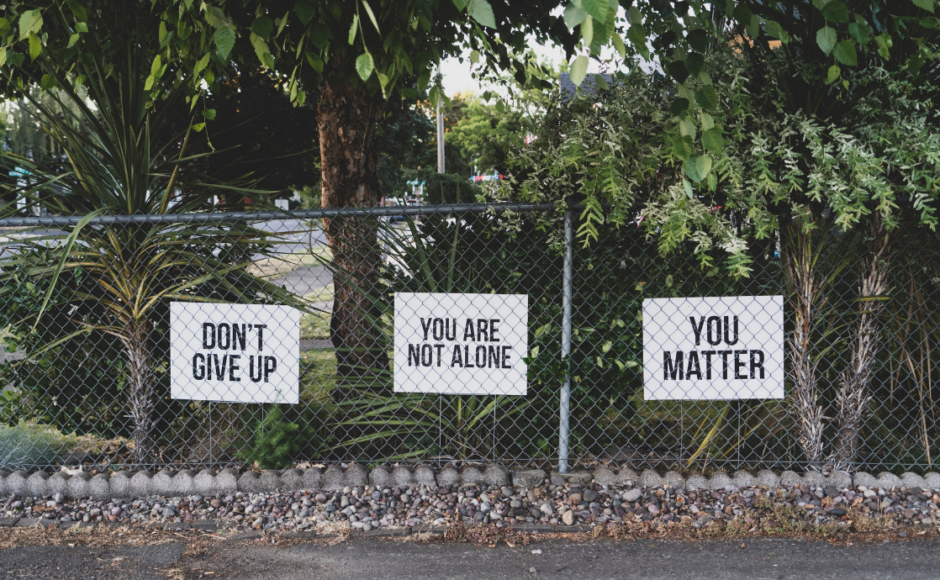
Baha’is see this process of focusing on the well-being of others as one of the cornerstones of good mental and spiritual health:
Every imperfect soul is self-centered and thinketh only of his own good. But as his thoughts expand a little he will begin to think of the welfare and comfort of his family. If his ideas still more widen, his concern will be the felicity of his fellow citizens; and if still they widen, he will be thinking of the glory of his land and of his race. But when ideas and views reach the utmost degree of expansion and attain the stage of perfection, then will he be interested in the exaltation of humankind. He will then be the well-wisher of all men and the seeker of the weal and prosperity of all lands. This is indicative of perfection.
Thus, the divine Manifestations of God had a universal and all-inclusive conception. They endeavoured for the sake of everyone’s life and engaged in the service of universal education. The area of their aims was not limited — nay, rather, it was wide and all-inclusive.
Therefore, ye must also be thinking of everyone, so that mankind may be educated, character moderated and this world may turn into a Garden of Eden.
RELATED: 8 Tips to Have a Healthy Spiritual Life
So let’s talk about our feelings. No one need struggle in silence. As just one example, don’t hesitate to check up on your children today. Are they having emotional issues around school, bullying, or friendships? What about your mom? Could she be holding back her recent feelings of depression so as not to burden you? Does your partner not want to drain you with sharing their work stresses? Is your postpartum girlfriend struggling? What about your neighbors? How can you be of service if they are in need?
In all cases, if you ever hear any mention of suicide, do take it very seriously.
Let’s not allow mental health awareness to end this month, but keep the green ribbons up and the conversation going, so we can hold this very important issue predominantly in our hearts and minds throughout the year – because no one is an island, and we all need each other.
Free mental health resources:
Change Your Algorithm
A mental wellness program that offers free 1-hour mental health classes online and in Los Angeles, CA. Classes are led by certified mental health therapists that can provide you with the tools needed to take care of your mind during a time of fear and uncertainty. Yes, it’s all free. Their motto:
“There is no judgement here, just healing.”
This free app offers 24/7 chat. It connects you to caring listeners from a variety of online communities that you can explore and join. I joined it just for the great community and fun events. Their takeaway:
“You are not alone.”
National Suicide Prevention Lifeline:
(800) 273-TALK or (800) 273-8255
Source link