




Health

Home Health

Losing the Stigma: May is Mental Health Awareness Month

Losing the Stigma: May is Mental Health Awareness Month

Have you been seeing lime green ribbons tied to trees this month? Those would be in honor of Mental Health Awareness Month.

Mental Health Awareness Month (MHA) was first observed in the United States in May of 1949. Started by the Mental Health Organization, each year the MHA releases a toolkit of materials to facilitate outreach activities for the month.  

For 2022, the month’s theme is “Back to Basics,” observed with film screenings, media, and local events, all based on this theme. The goal: to provide “foundational knowledge about mental health and information for anyone whose mental health is a cause for concern.” 

So who needs to be concerned about mental health? Everyone! 

We should be just as concerned about our mental and spiritual health as the health of any part of our physical body, the Baha’i teachings say. Abdu’l-Baha wrote:

Illness which occur by reason of physical causes should be treated by doctors with medical remedies; those which are due to spiritual causes disappear trough spiritual means. Thus an illness caused by affliction fear, nervous impressions, will be helped more effectively by spiritual rather than by physical treatment. Hence, both kinds of treatment should be followed; they are not contradictory.

RELATED: Trauma: How Can We Heal Our Wounded Souls?

We have no trouble going to see the doctor to treat physical illness – yet when it comes to mental or emotional issues, stigmas still exist. Education and frank discussion can help to change this. According to the National Alliance on Mental Illness, 1 in 5 adults in the United States experience mental illness each year. We’ve all had struggles to varying degrees, or have a friend or family member who has. 

In an interview, Dr. Christina Rajlal and Director Stacy Kuwahara of Kern Behavior Health and Recovery explain:

“It’s critical to let our community know that it truly is okay to acknowledge their feelings and to reach out for help if needed.” Dr. Rosia said.

Rosia also pointed out that the past 2 years of the pandemic have shown just how important it is to start these conversations around mental wellness, not only with our loved ones and family members, but with the whole community.

Behavioral Health Director, Stacy Kuwahara went on to say:

“Despite the stigmas associated with mental health, I encourage everyone to understand just how normal it is, not only to experience it, but to seek help.”

She said that services addressed should be for total well-being – both mental and spiritual health.

This leads to the conclusion that now, more than ever, it takes a village. Being in touch with our families, friends, and neighbors is no longer a luxury but a necessity. We need to connect with each other on a deep, caring level for the benefit of ourselves and for society. Not only do studies show that socializing, connection, and serving others improves the brain, it also has a profound effect on the spirit.
Baha’is see this process of focusing on the well-being of others as one of the cornerstones of good mental and spiritual health:

Every imperfect soul is self-centered and thinketh only of his own good. But as his thoughts expand a little he will begin to think of the welfare and comfort of his family. If his ideas still more widen, his concern will be the felicity of his fellow citizens; and if still they widen, he will be thinking of the glory of his land and of his race. But when ideas and views reach the utmost degree of expansion and attain the stage of perfection, then will he be interested in the exaltation of humankind. He will then be the well-wisher of all men and the seeker of the weal and prosperity of all lands. This is indicative of perfection.

Thus, the divine Manifestations of God had a universal and all-inclusive conception. They endeavoured for the sake of everyone’s life and engaged in the service of universal education. The area of their aims was not limited — nay, rather, it was wide and all-inclusive.

Therefore, ye must also be thinking of everyone, so that mankind may be educated, character moderated and this world may turn into a Garden of Eden

RELATED: 8 Tips to Have a Healthy Spiritual Life

So let’s talk about our feelings. No one need struggle in silence. As just one example, don’t hesitate to check up on your children today. Are they having emotional issues around school, bullying, or friendships? What about your mom? Could she be holding back her recent feelings of depression so as not to burden you? Does your partner not want to drain you with sharing their work stresses? Is your postpartum girlfriend struggling? What about your neighbors? How can you be of service if they are in need? 

In all cases, if you ever hear any mention of suicide, do take it very seriously. 

Let’s not allow mental health awareness to end this month, but keep the green ribbons up and the conversation going, so we can hold this very important issue predominantly in our hearts and minds throughout the year – because no one is an island, and we all need each other.

Free mental health resources:

Change Your Algorithm 

A mental wellness program that offers free 1-hour mental health classes online and in Los Angeles, CA. Classes are led by certified mental health therapists that can provide you with the tools needed to take care of your mind during a time of fear and uncertainty. Yes, it’s all free. Their motto:

There is no judgement here, just healing.”

7 Cups

This free app offers 24/7 chat. It connects you to caring listeners from a variety of online communities that you can explore and join. I joined it just for the great community and fun events. Their takeaway:

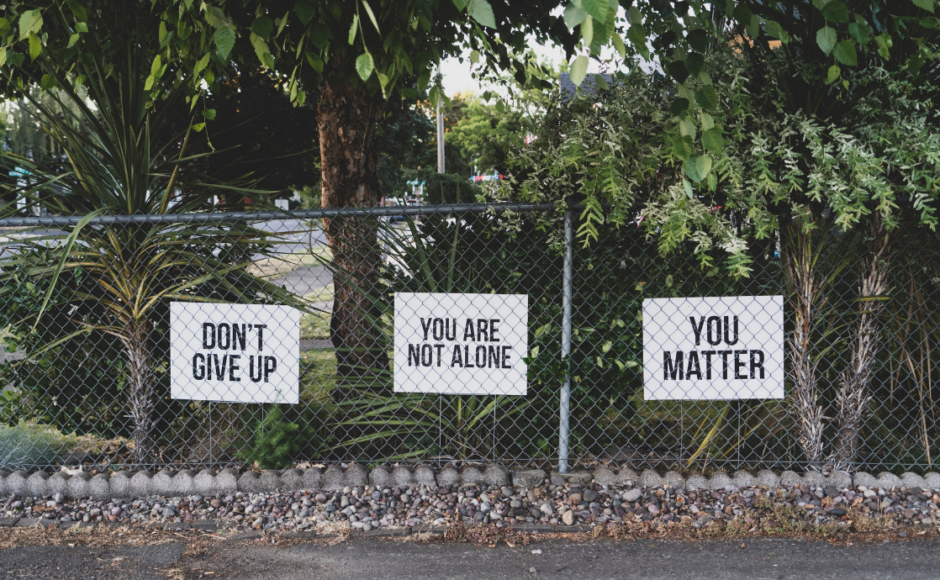
“You are not alone.”

National Suicide Prevention Lifeline:

(800) 273-TALK   or   (800) 273-8255


Source link
Cathartic Healing: How to Emotionally Purge in 7 Ways

Cathartic Healing: How to Emotionally Purge in 7 Ways

Thirteen years ago, I came home sobbing from the latest misogynoir, exclusion, and isolation I experienced at my high school. I expected to seek consolation from my mother, but was surprised when she simply responded with the words: “Good. Write it out.”

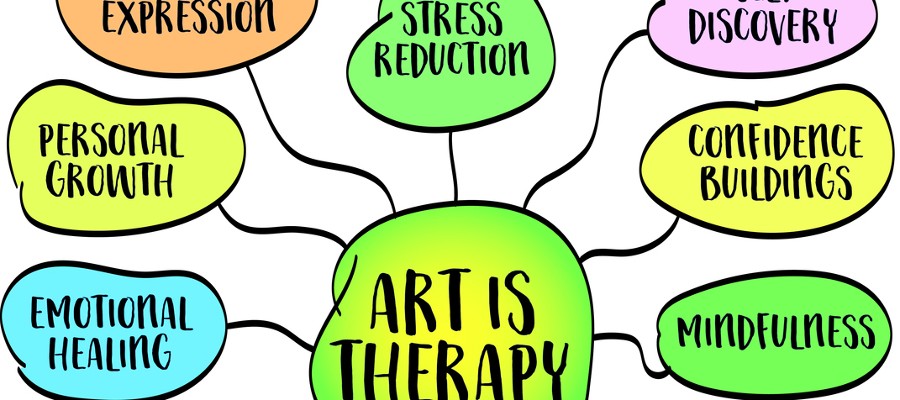
Although I had written some poems before, I hadn’t yet learned to see poetry as a therapeutic outlet. However, from then on, I would make a habit of purging my emotions through the most healing art form I have ever experienced.

As Baha’u’llah, the prophet and founder of the Baha’i Faith, wrote:

Every word of thy poetry is indeed like unto a mirror in which the evidences of the devotion and love thou cherishest for God and His chosen ones are reflected.

…Its perusal hath truly proved highly impressive, for it was indicative of both the light of reunion and the fire of separation.

Emotional Purging: Defining Catharsis

I channeled this fire inside my heart as a new light was reflected through my art. Shortly after I began to experience the healing power of poetry, I would learn that there was a word for this releasing of my pain through the written word: catharsis.

Merriam-Webster defines “catharsis” as a “purification or purgation of the emotions (such as pity and fear) primarily through art” and “a purification or purgation that brings about spiritual renewal or release from tension.”

How to Purge Your Emotions in 7 Ways

Unfortunately, we all experience pain in our lives. However, when you don’t release that tension and stuff all of those feelings inside, you suffer — emotionally and physically, worsening your well-being and quality of life. 

Catharsis is an important step we must take to heal from our trauma and refresh our mind, heart, body, and soul. Below are seven practices that help me emotionally purge. I believe they can help you all too.

1. Cry It Out

Don’t swallow those tears that have been rising in the back of your throat and welling up your eyes. Purge your emotions by giving yourself permission to cry. There is a Jewish proverb that says, “What soap is for the body, tears are for the soul.” 

As long as you’re careful not to get stuck in a depressive state, crying can help relax you, likely because it stimulates the release of endorphins — neurochemicals that mask pain. If you don’t have the energy to cry, let your pen do it for you.

2. Write It Out

Baha’u’llah wrote:

The pen groaneth and the ink sheddeth tears…

Although writing about and reflecting on your traumatic experiences can be a very emotional process, studies have found that this “expressive writing” leads to extraordinary health benefits in the long term. 

According to a journal article titled “Emotional and Physical Health Benefits of Expressive Writing,” published in Advances in Psychiatric Treatment, longer-term benefits of expressive writing are:

Health outcomes

• Fewer stress-related visits to the doctor

• Improved immune system functioning

• Reduced blood pressure

• Improved lung function

• Improved liver function

• Fewer days in hospital

• Improved mood/affect

• Feeling of greater psychological well-being

• Reduced depressive symptoms before examinations

• Fewer post-traumatic intrusion and avoidance symptoms

Social and behavioural outcomes

• Reduced absenteeism from work

• Quicker re-employment after job loss

• Improved working memory

• Improved sporting performance

• Higher students’ grade point average

• Altered social and linguistic behaviour

So, it’s no surprise that the Baha’i writings say, “One hour’s reflection is preferable to seventy years of pious worship.” 

Whether you journal, write poetry, or create some other form of art that channels your pain into something useful or beautiful, recording your reflections, experiences, and lessons learned can not only heal yourself, but it can also resonate with and inspire others who are going through what you have experienced.

3. Work Out

When I’m feeling frustrated or distressed, I love to exercise, as it also gives me that euphoric feeling from endorphins. Studies have shown that regular exercise can be just as effective as an antidepressant for your mood. 

For example, in 2019, Karmel Choi, a clinical and research fellow at the Harvard T.H. Chan School of Public Health, found that with each significant boost in physical activity, the odds of becoming depressed dropped by 26%. She explained, “This increase in physical activity is what you might see on your activity tracker if you replaced 15 minutes of sitting with 15 minutes of running, or one hour of sitting with one hour of moderate activity like brisk walking.” 

RELATED: 9 Health and Wellness Tips From a Baha’i Perspective

The central figures of the Baha’i Faith understood the connection between our physical, mental, emotional, and spiritual well-being. Abdu’l-Baha stated: 

Between material things and spiritual things there is a connection. The more healthful his body the greater will be the power of the spirit of man; the power of the intellect, the power of the memory, the power of reflection will be greater.

With every yoga, dance, or pilates workout I do, I can feel my energy levels rising, my mood brightening, and the weight of the stress and tension melting away. 

4. Breathe It Out

Certain breathing exercises can be just as effective at calming my nervous system as any exercise routine. I gravitate towards Kundalini yogic breathing techniques, such as the commonly practiced Breath of Fire.

Not only is the Breath of Fire amazing for stress release, but research has also found that it improves digestion and respiratory function as well as enhances mindfulness and concentration. I definitely recommend it for mental clarity and coherence.

5. Tap It Out

EFT (Emotional Freedom Techniques) tapping is a powerful therapeutic method that combines cognitive therapy with acupressure. It’s an easy-to-learn type of acupressure that involves tapping on specific acupressure points on the body while acknowledging the negative thoughts, emotions, and beliefs that you need to release and accepting yourself throughout the process. 

According to a journal article titled “Clinical EFT as an Evidence-Based Practice for the Treatment of Psychological and Physiological Conditions: A Systematic Review,” published in Frontiers in Psychology, “RCTs [randomized controlled trials] have found EFT treatment to be effective for (a) psychological conditions such as anxiety, depression, phobias, and posttraumatic stress disorder (PTSD); (b) physiological issues such as pain, insomnia, and autoimmune conditions; (c) professional and sports performance; and (d) biological markers of stress.”

Whenever I do EFT tapping, I notice immediate results.

6. Talk It Out

After crying, writing, exercising, breathing, or tapping has calmed you down and helped you think more clearly, you may want to have a heart-to-heart with the person who has hurt you and tell them how certain words and actions make you feel. 

People who care about each other in a relationship usually don’t intend to hurt each other so it’s important to let someone know what you need in a relationship so they can avoid making the same mistakes in the future.

In a letter written on behalf of Shoghi Effendi to an individual Baha’i in 1945, the Baha’is are advised to “overlook each other’s mistakes, apologize for harsh words they have uttered, forgive and forget.”

7. Pray and Meditate for a New Route

In a prayer revealed by the Bab, the forerunner of Baha’u’llah, it says:

O Lord! Thou art the Remover of every anguish and the Dispeller of every affliction.

Pray for healing and help from God as you seek answers to a problem or clarity about a new direction you’d like to take. When you pair prayer with meditation to receive guidance and then follow it up with action, trust that you will be supported as you act on the inspiration that comes from your sincere prayers and meditations.

RELATED: How To Start Creating Your New Future

Moreover, at a talk in Paris in 1911, Abdu’l-Baha said:

If we are hemmed in by difficulties we have only to call upon God, and by His great Mercy we shall be helped. If sorrow and adversity visit us, let us turn our faces to the Kingdom and heavenly consolation will be outpoured. If we are sick and in distress let us implore God’s healing, and He will answer our prayer. 

When our thoughts are filled with the bitterness of this world, let us turn our eyes to the sweetness of God’s compassion and He will send us heavenly calm! If we are imprisoned in the material world, our spirit can soar into the Heavens and we shall be free indeed!

I hope these seven tips help you purge those toxic emotions and experience healing and heavenly calm.


Source link

Home Privacy Policy Terms Of Use Anti Spam Policy Contact Us Affiliate Disclosure DMCA Earnings Disclaimer