Self-Help

Home Self-Help

How Meditation Jump-Started My Journey Out of Darkness

[ad_1]

Have you ever heard people talk about “the dark night of the soul?” I’m not sure if I had before, but when you go through the hardest period of your life, you know what that truly means. The dark night of the soul is a place you are not sure you will come back from, it’s darker than you can imagine, and it’s very hard to find any remnant of light! Your soul questions your purpose and faith in this life. When you are in that space, darkness has overtaken you, and feelings of loss and hopelessness abound. 

Had I not grown up with the Baha’i teachings, I’m not sure I would have made it out of that dark place. But thankfully that was not the case and somehow it helped to have a very basic understanding of the reason for tests and difficulties. 

Abdu’l-Baha, the son of the prophet and founder of the Baha’i Faith, shared during one of his talks in Paris:

“The mind and spirit of man advance when he is tried by suffering. The more the ground is ploughed the better the seed will grow, the better the harvest will be. Just as the plough furrows the earth deeply, purifying it of weeds and thistles, so suffering and tribulation free man from the petty affairs of this worldly life until he arrives at a state of complete detachment. His attitude in this world will be that of divine happiness. Man is, so to speak, unripe: the heat of the fire of suffering will mature him. Look back to the times past and you will find that the greatest men have suffered most.”

It was during this time of extreme tests that I found new tools and started a new path! I was introduced to a New York Times best selling author and thought leader who is transforming lives all around the world with his knowledge and teachings. Dr. Joe Dispenza is exploring the intersection of neuroscience, quantum physics, epigenetics, and brain chemistry to help individuals understand how to transform their lives through the process of meditation and changing your thoughts, it’s not enough to only meditate, you must also change the way you think. He explains in “You are the Placebo Making Your Mind Matter”:

“… First, everyday I would put all of my conscious attention (meditation) on this intelligence within me and give it a plan, a template, a vision, with very specific orders… And second, I wouldn’t let any thought slip by my awareness that I didn’t want to experience…”

I was first attracted to his book “Breaking the Habit of Being Yourself” and in this book he shares a formula of how to create lasting change in your life.

Step 1: Create an intention, get clear on exactly what you are working to manifest, go into meditation and be as clear and creative as you can and “see” with your inner eye all the details you can imagine, the more you can imagine the outcome, the better the results. 

Step 2: Do not get up from your meditation until you can live in the emotion of how you would feel if that intention had already materialized.

I was so excited to learn this formula because it reminded me of something I read when I was a teenager by Shoghi Effendi, the great-grandson of Baha’u’llah. He wrote to an individual and since then, people have called his response “The Five Steps of Prayer for Solving Problems.” 

In step five, Shoghi Effendi said to “act as though it had already been answered…” and for over 35 years, I could not understand how to do that. But when I learned about Dr. Joe’s formula, all of a sudden it made sense. Don’t get up from your meditation until you can LIVE in the emotion had it already been achieved! Oh, act as though it had already been answered! And at this moment, everything changed for me. 

Here are two of the five steps from Shoghi Effendi:

1st Step:  “Pray and meditate about it. Use the prayers of the Manifestations as they have the greatest power. Then remain in the silence of contemplation for a few minutes….”

5th Step: “ACT; Act as though it had all been answered. Then act with tireless, ceaseless energy. And as you act, you, yourself, will become a magnet, which will attract more power to your being, until you become an unobstructed channel for the Divine power to flow through you.”

Discovering Dr. Joe’s work was transformative for me, because all my life, I grew up in a religion that taught us the power of our thoughts. But I did not “believe” it impacted the material world, I really just thought it impacted the spiritual world. Now I know, backed by science that Abdu’l-Baha was being literal when he said:

“When a thought of war comes, oppose it by a stronger thought of peace. A thought of hatred must be destroyed by a more powerful thought of love…”

The advances in the sciences and connecting it to spirituality is a growing industry. There are many scientific studies that have proven that we influence our bodies based on what we think and feel. Harvard did a study where they took subjects who had never played the piano before and had some practice scales in their minds without ever touching a piano and another group practice the scales on the piano. The group that practiced on the piano, their finger strength increased by 53%, whereas the group that never lifted a finger and only practiced in their minds, their finger strength grew by 35%. 

Another study took a group of men in their 70s and 80s on a five-day retreat. Once there they were asked to behave like they were 22 years younger. They were asked to actively reminisce: there were posters of women hanging on the walls of their generation 22 years previous, they played music of that time period, and they watched old movies and television shows. The researchers provided an environment that really made them feel and imagine their lives from 22 years ago. There was a significant result, not only were their bodies stronger at the end of the retreat but they also had improvements in their weight, height, and even the length of their fingers grew. The “men literally became younger.”

And another Harvard study looked at hotel maids who did not exercise. They had two groups — the first group changed nothing, but in the second group, they explained that the work they are doing exceeds the Surgeon General’s recommended exertion for daily exercise. Nothing in their lives changed except that they now understood that the work they were performing could be considered exercise. After 30 days the control group was exactly the same, whereas the group who now considered their work to be exercise lost an average of two pounds, lowered their body fat percentage, and their blood pressure dropped by an average of 10 points.

These are just a few of the many studies that prove our “beliefs” have a direct physical impact on our reality.  

Abdu’l-Baha reminds us of this truth: “The reality of man is his thought” — as does Jesus Christ who said, “For as he thinketh in his heart, so is he,” and Buddha who said, “Our life is shaped by our mind, for we become what we think.” 

These statements are not just feel-good beliefs. They actually frame our perception of reality and influence our lives to a great degree.

I am now coming to realize how vital it is to understand the spiritual writings of the Baha’i Faith and how science every day proves its efficacy.

We must become aware of our thoughts — the good and the bad — and we must get intentional with creating the future in which we want to live. We must realize that every thought we have influences the outcome of our reality. I have found the best way to do this is through meditation. The meditative process shows you very clearly what you are thinking about, and if you want to change the record that is playing over and over again, then we must create a new intention.  

Bahá’u’lláh has written:

“Meditate profoundly, that the secret of things unseen may be revealed unto you, that you may inhale the sweetness of a spiritual and imperishable fragrance, and that you may acknowledge the truth…so that light may be distinguished from darkness, truth from falsehood, right from wrong, guidance from error, happiness from misery, and roses from thorns.”

Because meditation has become a daily practice for me, I’m better equipped to create the future I desire. I’ve learned to let go of the things I cannot control. This allows so much freedom from stress and anxiety, and if I employ the steps of Dr. Joe for creating a new reality and Shoghi Effendi’s advice on the dynamics of prayer for solving problems, then I am creating my reality instead of being a victim of its circumstances. 

To share this with others, I recently started a meditation group that’s open to all. It’s great for beginners and those wanting to take their practice further.

We all have this ability at our fingertips. It’s not easy, but with practice and commitment, it will change your outlook on life and provide you with a new process to deal with life’s beauty and challenges.

[ad_2]
Source link

Lessons on Spiritual Courage: Reclaiming Native Narratives

[ad_1]

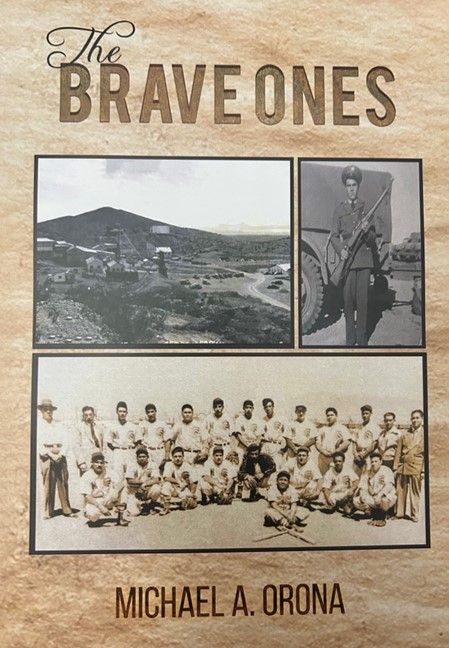
In “The Brave Ones,” Michael Orona’s compelling narrative transcends beyond physical courage and delves into spiritual courage and resilience, highlighting the power of remaining steadfast in the face of oppression. As Baha’u’llah, the prophet and founder of the Baha’i Faith, wrote:

The source of courage and power is the promotion of the Word of God, and steadfastness in His Love.

Inspired by his personal experiences, family history, and the Baha’i teachings, Michael Orona discusses how the characters in his novel embody this spiritual courage and steadfastness, reflects on the ongoing fight for representation, and explores the lessons his book offers for today’s social justice movements.

Michael Orona

Radiance Talley: Hi, Michael! The title “The Brave Ones” suggests acts of courage. How do your characters embody spiritual courage, and how does this align with the Baha’i view of steadfastness in the face of injustice?

Michael Orona: The title “The Brave Ones” carries deep spiritual significance that goes far beyond physical courage. It’s about a profound inner transformation and the courage to reimagine human possibility in the face of systemic oppression.

Spiritual courage, from a Baha’i perspective, isn’t about confrontation, but rather the ability to maintain dignity, hope, and foresight when every system is designed to break your spirit. My characters embody this through their refusal to be defined by their circumstances.

Consider the Baha’i principle articulated by Shoghi Effendi about the American believers’ special calling — to have the “moral courage and fortitude” to address fundamental issues facing humanity. The characters in the book live by this principle. They’re not just fighting against discrimination; they’re creating alternative models for the advancement of not only their own community, but also for the advancement of their oppressors. 

The Indigenous peoples in the story — members of the Yaqui Nation from Sonora — represent this beautifully. They could have accepted their limited circumstances. Instead, they dream beyond their immediate reality and then act. Their dreams and the action to make them a reality symbolize hope — a spiritual act of resistance that transcends physical constraints.

Abdu’l-Baha’s teachings profoundly influenced how I conceived spiritual courage. He spoke about the Indigenous peoples of America having the potential to “enlighten the whole world” if properly educated and guided. My characters embody this — they’re not victims waiting to be saved, but transformative agents with inherent spiritual power.

“The Brave Ones” is a testament to this spiritual courage — a celebration of Indigenous peoples who refuse to be broken, who see beyond current realities to potential futures of unity and justice. I believe this embodies us as Native people, it’s who we are. 

Radiance: Did you draw from personal experiences, oral histories, or Baha’i teachings on the value of diverse cultures?

Michael: The book is deeply rooted from personal experience, family narratives, and the Baha’i teachings that have shaped my life.

Growing up, I was steeped in my Indigenous cultural heritage in large part to the profound support of my late Apache father, Dr. Joel Orona, and my Yaqui mother, Esther Orona. Storytelling wasn’t just a tradition in our family — it was a way of preserving history, of maintaining cultural identity, and spiritual development. The oral histories my grandparents and elders shared with me as a child were living histories, not just personal narratives but collective experiences of resistance, resilience, and survival. It was through these stories that I was taught the importance of being of service not only to my own community, but to the global community. It was through these stories that I was reminded of the responsibility to honor the legacy of my ancestors. 

As a child of the 1970s, I was acutely aware of the lack of diversity and limited representation of Indigenous peoples in the media. I remember watching television or going to the movies and rarely seeing people on screen who looked like me. Those rare times when Indigenous people were portrayed, it was done by non-Native actors in a demeaning manner.  The watershed moment for me was watching Alex Haley’s “Roots” on television — a chronicle that brought the history of African Americans to the forefront. The importance of seeing the struggle and unique perspective from another marginalized community gave me hope that someday I would have the opportunity to share the historical challenges and success of my own people.  

The Baha’i teachings were instrumental in shaping my perspective on cultural diversity. Baha’u’llah’s message on this topic was revolutionary, it was not about reforming existing social norms, but fundamentally shattering the very notion of racial superiority. This wasn’t just a social justice message, but a message of spiritual transformation.

Abdu’l-Baha’s teachings were particularly profound in the writing of the book. He spoke about the unique spiritual potential of Indigenous peoples, stating we will “enlighten the whole world” and serve as spiritual “standard bearers.”  This isn’t patronizing but rather the sincere belief, acknowledgment, and recognition of the inherent spiritual wisdom found within Indigenous communities that have been historically and systematically marginalized.

Ultimately, the book is an embodiment of the Baha’i principle of the oneness of humanity. It’s not just about documenting historical struggles, but about creating a vision of human potential that transcends racial, cultural, and historical divisions. 

"The Brave Ones" by Michael Orona"The Brave Ones" by Michael Orona
“The Brave Ones” by Michael Orona

Radiance: How do the themes of “The Brave Ones” resonate with today’s social justice movements? What lessons can readers draw from this historical narrative?

Michael: The story of “The Brave Ones” is not just a historical account, but a powerful lens through which we can understand the ongoing struggles for equity, solidarity, and human dignity. I believe the narrative of Indigenous peoples fighting for equality in partnership with African Americans speaks directly to the intersectional nature of social justice movements today.

First and foremost, the book illuminates the power of unexpected alliances. At a time of profound racial discrimination, these communities found strength in their shared marginalized experience.  Today, we see similar dynamics in modern social justice movements — whether its organizations focused on Indigenous rights, economic empowerment, or struggles against systemic oppression. The lesson is clear: solidarity and collaboration across different marginalized communities is not just possible, but essential.

The book underscores how systemic discrimination creates seemingly insurmountable barriers. Members of the Yaqui community in the book faced limited opportunities, forced to live under difficult circumstances with little hope for advancement. This mirrors the ongoing challenges faced by Indigenous peoples around the world and other communities of color — unequal access to education, economic opportunities, and social mobility. Yet, the story is ultimately one of hope and resistance, showing how collective action can challenge and ultimately transform unjust systems.

Moreover, the narrative underscores the importance of telling our own stories. For too long, Indigenous peoples have been relegated to the margins of historical narratives, our experiences either silenced or misrepresented. “The Brave Ones” is part of a broader movement to reclaim our narrative, to center Indigenous voices and perspectives. This resonates deeply with contemporary calls for authentic representation and self-determination.

The themes of dignity, resilience, and a shared humanity are particularly relevant in our current social and political climate. We continue to grapple with historical injustices, systemic racism, and the ongoing impacts of colonization. The book offers a blueprint for understanding how communities can come together, recognize their common struggles, and work toward collective liberation.

I was inspired to write this story by the experiences shared by my grandparents and their generation — a reminder that our current struggles are deeply connected to historical experiences of oppression and resistance. The book is not just about the past; it’s a call to action for today’s generation to continue the work of building a more just and equitable society.

Ultimately, “The Brave Ones” teaches us that change is possible when we recognize our shared humanity, when we have the courage to challenge the status quo, and when we stand in solidarity with one another. It’s a message of hope that I believe is more crucial now than ever before.

Radiance: A reviewer mentioned that this story “finally broke the barrier” for Indigenous people to tell their own stories. What challenges do Indigenous authors face in having their narratives published and recognized, and how does the Baha’i Faith encourage perseverance in such efforts?

Michael: The publishing world has long been a gatekeeping system that marginalizes Indigenous voices. For generations, our stories have been told through a colonial lens — filtered, misinterpreted, and often romanticized or vilified by non-Indigenous writers. Breaking through these barriers requires persistent courage and a commitment to authentic storytelling.

Indigenous authors face multiple systemic challenges. First, there’s the structural inequality in publishing: limited representation in editorial boards, fewer publishing opportunities, and a publishing industry that historically prioritizes mainstream narratives. Many publishers view Indigenous stories as niche or unmarketable, failing to recognize the universal humanity and complexity of our experiences.

Our narratives are often expected to conform to stereotypical expectations — stories of trauma, historical suffering, or exotic cultural experiences that fit comfortable narratives about Indigenous peoples. But we are not museum artifacts or historical footnotes. We are a living, evolving people with rich, nuanced stories that speak to contemporary human experiences.

The Baha’i Faith has been instrumental in giving me the spiritual strength to persist. The principles of the Baha’i Faith, including the oneness of humanity, universal education, and the independent investigation of truth, are not philosophical concepts, but active guides for my writing and activism. The Faith encourages us to see beyond divisive boundaries, to recognize the inherent worth of every human being, and to work tirelessly for justice and understanding.

When I face rejection or encounter systemic barriers, I draw strength from the Baha’i teachings about perseverance. We believe that true progress comes through consistent, compassionate effort. Just as the members of the Yaqui community in my book refused to be defined by their circumstances, I refuse to let institutional barriers silence our stories.

The process of writing “The Brave Ones” was itself an act of spiritual and cultural resistance. By centering Indigenous agency, showing our community’s resilience, and highlighting our partnerships across racial lines, I’m challenging the dominant narratives that have historically marginalized us.

Moreover, my work is part of a broader movement of Indigenous authors reclaiming our narrative space. Indigenous authors have been instrumental in breaking down these barriers, proving that our stories are not just important — they are essential to understanding the full complexity of the human experience.

My Faith teaches me that every voice matters, that every story has the potential to bridge understanding. By persistently sharing our narratives, we challenge systemic inequities and create opportunities for genuine dialogue and mutual respect.

This is why “The Brave Ones” is more than a book. It’s a testament to the power of storytelling as a form of cultural preservation, resistance, and hope.

Radiance: Thank you, Michael, for sharing your profound insights and reflections. If you all are enjoying this Q&A, be on the lookout for part three where we’ll discuss practical actions we all can take to promote justice and harmony!

[ad_2]
Source link

Finding Strength and Unity: Native American Proverbs About Life

[ad_1]

Growing up during segregation in the United States, my grandfather, who was Cherokee, Black, and Irish, had a difficult life, to say the least. But, my mother told me, while he chanted his Cherokee chants, he seemed happy. In fact, that Cherokee chant was one of the few cultural traditions that he passed down to his children.

“It was the string that kept us connected…,” my mother says. She taught me and my siblings this chant and shared a Cherokee story she had learned later in life, one filled with wisdom and guidance — a testament to the enduring spiritual legacy of Indigenous people. 

RELATED: From Media to Movies: Addressing Native American Stereotypes

A letter written on behalf of Shoghi Effendi, the Guardian of the Baha’i Faith, to the National Spiritual Assembly of Central America and Mexico echoed this sentiment, highlighting their transformative potential: 

If the light of Divine Guidance enters properly into the lives of the Indians, it will be found that they will arise with a great power and will become an example of spirituality and culture to all of the people in these countries.

RELATED: Standard-Bearers: The Spirituality of Native Americans

Native American Proverbs and Stories About Life

The Cherokee story emphasized the importance of the choices we make in life in the battle between our higher and lower natures. As Abdu’l-Baha, one of the central figures of the Baha’i Faith, wrote:

For the inner reality of man is a demarcation line between the shadow and the light, a place where the two seas meet…

This timeless truth is beautifully illustrated in the story, which goes as follows: 

A young boy, angry with another boy for treating him badly, went to his grandfather, who proceeded to tell him a story. “I too, at times, have felt a great hate for those that have taken so much, with no sorrow for what they do. But hate wears you down, and hate does not hurt your enemy. Hate is like taking poison and wishing your enemy would die. I have struggled with these feelings many times,” he said. 

“It is as if there are two wolves inside me; one wolf is good and does no harm. He lives in harmony with all around him and does not take offense when no offense was intended. He will only fight when it is right to do so, and in the right way. But the other wolf is full of anger. The littlest thing will set him into a fit of temper.”

He continued, “He fights everyone, all the time, for no reason. He cannot think because his anger and hate are so great. It is helpless anger, because his anger will change nothing. Sometimes it is hard to live with these two wolves inside me because both of the wolves try to dominate my spirit.”

The boy stared deeply into his grandfather’s eyes and asked, “Which wolf will win, Grandfather?” 

Smilingly, the grandfather replied, “The one I feed.”

So, are we feeding the wolf of love, harmony, and hope, or anger, hatred, and hopelessness? 

I know that it can be challenging to be optimistic in depressing and dangerous times, but as Louise Profeit-LeBlanc’s grandmother told her, “Whatever you need is around you! It is not what you want, but what you need that will be provided to you.”

Photo of Louise Profeit-LeBlanc, courtesy of Louise Profeit-LeBlanc.

Louise Profeit-LeBlanc, a storyteller, artist, and member of the Nacho N’yak Dän First Nation of central Yukon, Canada, shared that this Native American proverb reminds her that “the Creator provides for us, and it might not be what we want, but it will be what will make us grow.”

She added, “It makes us less material and more appreciative of everything we might need in terms of our livelihood, our well-being, and also, for the happiness and joy we bring to others.”

Native American Proverbs About Oneness

“We are all related” is Nadema Agard’s favorite Native American proverb. A Cherokee, Lakota, and Powhatan artist, educator, consultant, curator, and storyteller, Nadema often highlights this teaching in her work.

Photo of Nadema Agard, courtesy of Nadema Agard.

Moreover, the Baha’i writings emphasize humanity’s oneness and interconnectedness:

This limitless universe is like the human body, all the members of which are connected and linked with one another with the greatest strength. How much the organs, the members and the parts of the body of man are intermingled and connected for mutual aid and help, and how much they influence one another! In the same way, the parts of this infinite universe have their members and elements connected with one another, and influence one another spiritually and materially.

Not only are we all members of one human family, but we are all also connected to the heavenly kingdom. One of Medicine Eagle’s favorite Native American proverbs is from the Hopi people, which states, “The one is the all. The all are the one.” 

This Hopi proverb reminds Medicine Eagle — a holistic healthcare practitioner and member of the Anishinaabe nation — that “there is but a veil of separation between us and the spirit realm.” 

medicine eaglemedicine eagle
Photo of Medicine Eagle, courtesy of Medicine Eagle.

He wrote, “We all act as though there is a separation from the divine, yet there is no such thing! All created things come from God, and all things are good. We condition things to be not good through our gift of free will. This is the biggest illusion we face as beings.” 

To overcome this illusion, all we have to do is turn towards God and look within ourselves. Baha’u’llah, the prophet and founder of the Baha’i Faith, revealed a powerful admonition, encouraging us to rise to our higher nature:

Turn thy sight unto thyself, that thou mayest find Me standing within thee, mighty, powerful and self-subsisting.

I hope these Baha’i teachings and Native American proverbs inspire you to look within, uncover your strength, and awaken the vast potential waiting to be tapped. These gems of guidance remind us that we are all part of something greater — a divine oneness that unites us with each other and with our Creator. The choice is ours: Which wolf will we feed, and how will we reflect this unity in our lives?

[ad_2]
Source link

9 Interfaith Quotes and Prayers to Find Peace of Mind and Heart

[ad_1]

There is an African proverb that says, “When there is no enemy within, the enemies outside cannot hurt you.” So, how do you find peace of mind and heart?

In a world of distracting chaos, depressing conflict, distressing challenges, and addictive consumerism, finding inner peace can feel elusive. Yet, timeless spiritual and religious teachings offer helpful insights and comforting prayers to guide all of us on our journeys. 

Explore how the following quotes and prayers from world religions and ancient spiritual traditions can unlock a peaceful, resilient spirit and bring tranquility to both your heart and mind.

Baha’i Quotes About How to Find Peace of Mind and Heart

A Baha’i study circle in Nedrini, Panama

If you’re wondering how to find peace of mind and heart, the Baha’i writings offer helpful guidance on this subject. 

First, we can’t have a peaceful mind and heart without having a loving mind and heart. At a talk in New York in 1912, Abdu’l-Baha, one of the central figures of the Baha’i Faith, was asked, “Is peace a greater word than love?” 

Abdu’l-Baha exclaimed, “No! Love is greater than peace, for peace is founded upon love. Love is the objective point of peace, and peace is an outcome of love. Until love is attained, peace cannot be…”

When we are kindled by the fire of the love of God in our hearts and look for the loveable divine qualities in every person and created thing, we will find that we are more at peace with ourselves and everyone around us. 

In a treatise written by Abdu’l-Baha in 1875, he identified the different capabilities that an individual needs to develop to experience pleasure and peace. He explained that “the happiness and greatness, the rank and station, the pleasure and peace, of an individual have never consisted in his personal wealth, but rather in his excellent character, his high resolve, the breadth of his learning, and his ability to solve difficult problems.” 

It’s important that we strengthen and develop these qualities, as they enhance our personal happiness and peace and build the resilience that we need to navigate the challenging moments in our lives.

A Buddhist Quote About the Importance of a Peaceful Mind

It’s fascinating that breadth of learning not only fosters peace but that peace of mind is also conducive to greater knowledge. 

In the Dhammapada, the Buddha states, “If a man’s thoughts are unsteady, if he does not know the true law, if his peace of mind is troubled, his knowledge will never be perfect.” 

When our thoughts are flighty, unsettled, and anxious, it’s difficult to focus, think deeply, and meditate on divine guidance. So, we have to clear and calm our minds to receive greater insights and understanding.

Yogic, Buddhist, and Cherokee Quotes About the Importance of a Peaceful Heart

As a yoga fan, I enjoy the peace of mind and body that yoga often brings. However, I was even more excited to learn about the spiritual teachings that ancient yogis have shared about how important a peaceful heart is for fostering harmonious relationships.

In “The Yoga Sutras of Patanjali,” it says, “Where the heart is full of kindness which seeks no injury to another, either in act or thought or wish, this full love creates an atmosphere of harmony, whose benign power touches with healing all who come within its influence. Peace in the heart radiates peace to other hearts, even more surely than contention breeds contention.”

Likewise, The Sutra Collection, a sacred Buddhist text, asks us to abstain from calumny and slander —also regarded as grievous sins in the Baha’i Faith — and avoid repeating what would “raise a quarrel against the people.”

A Cherokee proverb beautifully captures this spirit of compassionate silence and open-hearted communication: “O Great Spirit, help me always to speak the truth quietly, to listen with an open mind when others speak, and to remember the peace that may be found in silence.”

Continuing in this spirit, The Sutra Collection concludes, “Thus he lives as a binder together of those who are divided, an encourager of those who are friends, a peacemaker, a lover of peace, impassioned for peace, a speaker of words that make for peace.”

A Taoist Prayer for Peace of Mind and Heart

“Lao-Tsu’s Peace Prayer” beautifully illustrates how important peaceful hearts are for creating a peaceful world. He wrote:

If there is to be peace in the world,

There must be peace in the nations.

If there is to be peace in the nations,

There must be peace in the cities.

If there is to be peace in the cities,

There must be peace between neighbors.

If there is to be peace between neighbors,

There must be peace in the home.

If there is to be peace in the home,

There must be peace in the heart.

A Baha’i Prayer for Peace of Mind and Heart

A prayer gathering at the Baha’i Center in Lauro de Freitas, BrazilA prayer gathering at the Baha’i Center in Lauro de Freitas, Brazil
A prayer gathering at the Baha’i Center in Lauro de Freitas, Brazil

As we strive to cultivate inner peace, turning to prayer can be a powerful balm and refuge. The following Baha’i prayer offers profound words of solace and strength, imploring our Creator to renew your spirit and restore peace to your mind and heart: 

Create in me a pure heart, O my God, and renew a tranquil conscience within me, O my Hope! Through the spirit of power confirm Thou me in Thy Cause, O my Best-Beloved, and by the light of Thy glory reveal unto me Thy path, O Thou the Goal of my desire! Through the power of Thy transcendent might lift me up unto the heaven of Thy holiness, O Source of my being, and by the breezes of Thine eternity gladden me, O Thou Who art my God! 

Let Thine everlasting melodies breathe tranquillity on me, O my Companion, and let the riches of Thine ancient countenance deliver me from all except Thee, O my Master, and let the tidings of the revelation of Thine incorruptible Essence bring me joy, O Thou Who art the most manifest of the manifest and the most hidden of the hidden!

[ad_2]
Source link

Cathartic Healing: How to Emotionally Purge in 7 Ways

[ad_1]

Thirteen years ago, I came home sobbing from the latest misogynoir, exclusion, and isolation I experienced at my high school. I expected to seek consolation from my mother, but was surprised when she simply responded with the words: “Good. Write it out.”

Although I had written some poems before, I hadn’t yet learned to see poetry as a therapeutic outlet. However, from then on, I would make a habit of purging my emotions through the most healing art form I have ever experienced.

As Baha’u’llah, the prophet and founder of the Baha’i Faith, wrote:

Every word of thy poetry is indeed like unto a mirror in which the evidences of the devotion and love thou cherishest for God and His chosen ones are reflected.

…Its perusal hath truly proved highly impressive, for it was indicative of both the light of reunion and the fire of separation.

Emotional Purging: Defining Catharsis

I channeled this fire inside my heart as a new light was reflected through my art. Shortly after I began to experience the healing power of poetry, I would learn that there was a word for this releasing of my pain through the written word: catharsis.

Merriam-Webster defines “catharsis” as a “purification or purgation of the emotions (such as pity and fear) primarily through art” and “a purification or purgation that brings about spiritual renewal or release from tension.”

How to Purge Your Emotions in 7 Ways

Unfortunately, we all experience pain in our lives. However, when you don’t release that tension and stuff all of those feelings inside, you suffer — emotionally and physically, worsening your well-being and quality of life. 

Catharsis is an important step we must take to heal from our trauma and refresh our mind, heart, body, and soul. Below are seven practices that help me emotionally purge. I believe they can help you all too.

1. Cry It Out

Don’t swallow those tears that have been rising in the back of your throat and welling up your eyes. Purge your emotions by giving yourself permission to cry. There is a Jewish proverb that says, “What soap is for the body, tears are for the soul.” 

As long as you’re careful not to get stuck in a depressive state, crying can help relax you, likely because it stimulates the release of endorphins — neurochemicals that mask pain. If you don’t have the energy to cry, let your pen do it for you.

2. Write It Out

Baha’u’llah wrote:

The pen groaneth and the ink sheddeth tears…

Although writing about and reflecting on your traumatic experiences can be a very emotional process, studies have found that this “expressive writing” leads to extraordinary health benefits in the long term. 

According to a journal article titled “Emotional and Physical Health Benefits of Expressive Writing,” published in Advances in Psychiatric Treatment, longer-term benefits of expressive writing are:

Health outcomes

• Fewer stress-related visits to the doctor

• Improved immune system functioning

• Reduced blood pressure

• Improved lung function

• Improved liver function

• Fewer days in hospital

• Improved mood/affect

• Feeling of greater psychological well-being

• Reduced depressive symptoms before examinations

• Fewer post-traumatic intrusion and avoidance symptoms

Social and behavioural outcomes

• Reduced absenteeism from work

• Quicker re-employment after job loss

• Improved working memory

• Improved sporting performance

• Higher students’ grade point average

• Altered social and linguistic behaviour

So, it’s no surprise that the Baha’i writings say, “One hour’s reflection is preferable to seventy years of pious worship.” 

Whether you journal, write poetry, or create some other form of art that channels your pain into something useful or beautiful, recording your reflections, experiences, and lessons learned can not only heal yourself, but it can also resonate with and inspire others who are going through what you have experienced.

3. Work Out

When I’m feeling frustrated or distressed, I love to exercise, as it also gives me that euphoric feeling from endorphins. Studies have shown that regular exercise can be just as effective as an antidepressant for your mood. 

For example, in 2019, Karmel Choi, a clinical and research fellow at the Harvard T.H. Chan School of Public Health, found that with each significant boost in physical activity, the odds of becoming depressed dropped by 26%. She explained, “This increase in physical activity is what you might see on your activity tracker if you replaced 15 minutes of sitting with 15 minutes of running, or one hour of sitting with one hour of moderate activity like brisk walking.” 

RELATED: 9 Health and Wellness Tips From a Baha’i Perspective

The central figures of the Baha’i Faith understood the connection between our physical, mental, emotional, and spiritual well-being. Abdu’l-Baha stated: 

Between material things and spiritual things there is a connection. The more healthful his body the greater will be the power of the spirit of man; the power of the intellect, the power of the memory, the power of reflection will be greater.

With every yoga, dance, or pilates workout I do, I can feel my energy levels rising, my mood brightening, and the weight of the stress and tension melting away. 

4. Breathe It Out

Certain breathing exercises can be just as effective at calming my nervous system as any exercise routine. I gravitate towards Kundalini yogic breathing techniques, such as the commonly practiced Breath of Fire.

Not only is the Breath of Fire amazing for stress release, but research has also found that it improves digestion and respiratory function as well as enhances mindfulness and concentration. I definitely recommend it for mental clarity and coherence.

5. Tap It Out

EFT (Emotional Freedom Techniques) tapping is a powerful therapeutic method that combines cognitive therapy with acupressure. It’s an easy-to-learn type of acupressure that involves tapping on specific acupressure points on the body while acknowledging the negative thoughts, emotions, and beliefs that you need to release and accepting yourself throughout the process. 

According to a journal article titled “Clinical EFT as an Evidence-Based Practice for the Treatment of Psychological and Physiological Conditions: A Systematic Review,” published in Frontiers in Psychology, “RCTs [randomized controlled trials] have found EFT treatment to be effective for (a) psychological conditions such as anxiety, depression, phobias, and posttraumatic stress disorder (PTSD); (b) physiological issues such as pain, insomnia, and autoimmune conditions; (c) professional and sports performance; and (d) biological markers of stress.”

Whenever I do EFT tapping, I notice immediate results.

6. Talk It Out

After crying, writing, exercising, breathing, or tapping has calmed you down and helped you think more clearly, you may want to have a heart-to-heart with the person who has hurt you and tell them how certain words and actions make you feel. 

People who care about each other in a relationship usually don’t intend to hurt each other so it’s important to let someone know what you need in a relationship so they can avoid making the same mistakes in the future.

In a letter written on behalf of Shoghi Effendi to an individual Baha’i in 1945, the Baha’is are advised to “overlook each other’s mistakes, apologize for harsh words they have uttered, forgive and forget.”

7. Pray and Meditate for a New Route

In a prayer revealed by the Bab, the forerunner of Baha’u’llah, it says:

O Lord! Thou art the Remover of every anguish and the Dispeller of every affliction.

Pray for healing and help from God as you seek answers to a problem or clarity about a new direction you’d like to take. When you pair prayer with meditation to receive guidance and then follow it up with action, trust that you will be supported as you act on the inspiration that comes from your sincere prayers and meditations.

RELATED: How To Start Creating Your New Future

Moreover, at a talk in Paris in 1911, Abdu’l-Baha said:

If we are hemmed in by difficulties we have only to call upon God, and by His great Mercy we shall be helped. If sorrow and adversity visit us, let us turn our faces to the Kingdom and heavenly consolation will be outpoured. If we are sick and in distress let us implore God’s healing, and He will answer our prayer. 

When our thoughts are filled with the bitterness of this world, let us turn our eyes to the sweetness of God’s compassion and He will send us heavenly calm! If we are imprisoned in the material world, our spirit can soar into the Heavens and we shall be free indeed!

I hope these seven tips help you purge those toxic emotions and experience healing and heavenly calm.

[ad_2]
Source link

What Are the 5 Different Types of Social Support?

[ad_1]

When we experience the different types of social support, we feel close to and cared for by our community. In contrast, as noted in chapter 11 of “Health Promotion in Health Care – Vital Theories and Research,” published online by the National Library of Medicine, “The opposite of social support is loneliness.”

This chapter explained that “social support is a predictor of physical and mental health, and a buffer that protects (or ’buffers’) people from the bad effects of stressful life events,” having a significant “impact on psychological distress, quality of life, loneliness, burden of care, as well as anxiety, depression, hope, meaning, self-transcendence, and mortality risk.”

RELATED: The 9 Different Types of Safety: From Physical to Emotional

A robust culture of social support fosters an environment where, as the Universal House of Justice puts it, “Fear of failure finds no place. Mutual support, commitment to learning, and appreciation of diversity of action are the prevailing norms.”

Learn about the following five different types of support and how you can practice them in your everyday interactions.

1. Emotional Support

Emotional support involves acts of physical and emotional comfort that express sympathy, empathy, care, and concern. Abdu’l-Baha, one of the central figures of the Baha’i Faith, highlighted the importance of consoling those in need, asking us to “raise the fallen” and “comfort the sorrowful.” Examples of this type of social support include:

  • Hugging someone who has had a bad day.
  • Checking in with someone who is going through a difficult time to let them know that you are there for them.
  • Visiting someone in a hospital, hospice, or nursing home to brighten their day and take their mind off of their injury or illness.
  • Listening to someone’s problems without interrupting, judging, criticizing, or changing the subject.
  • Being physically present with someone as you empathize with their feelings and validate their experiences.

2. Esteem Support

definition of encouragement for esteem supportdefinition of encouragement for esteem support

“The friends everywhere need encouragement,” wrote the Universal House of Justice in a 1996 message to the Baha’is of the world.

Esteem support refers to encouraging messages that boost someone’s self-esteem and confidence in their abilities. Examples of esteem support include:

  • Offering positive feedback to motivate someone who has taken on a new project or challenge.
  • Recognizing someone’s accomplishments and celebrating their successes.
  • Letting someone know that you believe that they have what it takes to achieve their dreams.
  • Praising a person’s positive qualities and attributes and complimenting their talents and skill sets.
  • Challenging a person’s negative beliefs about themselves by reminding them of what they are capable of.

3. Social Network Support

social network supportsocial network support

“Social network support is defined as the messages that help to enhance one’s sense of belonging to a specific group with similar interests or situations,” according to a journal article titled “Understanding the Different Types of Social Support Offered by Audience to A-List Diary-Like and Informative Bloggers,” published in Cyberpsychology, Behavior, and Social Networking. Here are examples of social network support:

  • Organizing regular gatherings to bond and connect people who share the same interests and values.
  • Connecting someone with other friends in their social network who would be interested in supporting their initiatives.
  • Ensuring that all members of a community feel welcomed and included.
  • Collaborating on projects with others who have similar goals.
  • Introducing someone to a mentor who can provide personalized guidance and help them feel more connected and supported within a professional network.

4. Informational Support

Informational support is the advice, guidance, or knowledge that helps individuals solve problems, make informed decisions, or understand situations more clearly. Examples of this type of social support include:

  • Teaching someone about a topic that they are interested in.
  • Offering guidance based on your area of expertise.
  • Directing someone to informative resources that would enhance their understanding.
  • Conducting detailed research for someone to help inform their decision.
  • Giving advice about how to solve a problem.

Of course, make sure that you ask a person if they would like your advice before you offer it. Studies have shown that too much unsolicited advice and undesired critical feedback can actually worsen a person’s mental and physical health, as well as their relationship satisfaction.

5. Tangible Support

At a talk in London in 1911, Abdu’l-Baha said, “We know that to help the poor and to be merciful is good and pleases God, but knowledge alone does not feed the starving man, nor can the poor be warmed by knowledge or words in the bitter winter; we must give the practical help of Loving-kindness.” 

“Practical help” is what tangible support is all about. Tangible support, also referred to as instrumental support, encompasses the physical acts of service and responsibilities we take on to help alleviate someone’s burden. Examples of tangible support include:

  • Giving money to the homeless and financially destitute.
  • Offering a ride to someone who doesn’t have a car.
  • Taking meals to someone who is too sick to cook for themselves.
  • Helping someone pack and move to their new home.
  • Offering to babysit for someone who needs to attend an important appointment.

All of these different types of support are expressions of love for those around us. As Abdu’l-Baha advised:

Strive to increase the love-power of reality, to make your hearts greater centers of attraction and to create new ideals and relationships.

First of all, be ready to sacrifice your lives for one another, to prefer the general well-being to your personal well-being. Create relationships that nothing can shake; form an assembly that nothing can break up; have a mind that never ceases acquiring riches that nothing can destroy.

By understanding and practicing these types of social support, we can strengthen our relationships and create a more compassionate and connected community. Social support truly is the glue that binds strong and lasting relationships together.

[ad_2]
Source link

The 9 Different Types of Safety: From Physical to Emotional

[ad_1]

Shoghi Effendi, the Guardian of the Baha’i Faith, stated that the Baha’i community “should feel it to be its first and inescapable obligation to nurture, encourage, and safeguard every minority belonging to any faith, race, class, or nation within it.”

To “safeguard” means, as Merriam-Webster defines it, “to make safe: PROTECT.” What comes to mind when you think of needing to feel safe? My mind immediately thinks of psychological and emotional safety, my mother thinks of medical and social safety, my brother thinks of physical safety, and my friend thinks of financial safety. 

This made me realize how important it is for us all to understand the different types of safety if we’re going to do our best to safeguard every marginalized community from the various forms of harm.

1. Physical Safety

Ensuring that oppressed demographics are physically safe necessitates protecting them from physical threats, violence, and exploitation. The urgent need for physical protection is evident in these alarming statistics: 

In 2022, there were 13,278 victims of reported hate crime incidents in the United States, 59 percent of which were racially motivated. Globally, an estimated 49.6 million people were in modern slavery on any given day in 2021, including forced labor, forced marriage, and sex trafficking. Additionally, the World Health Organization (WHO) reported that “on average, 736 million and up to 852 million women who were aged 15 years or older in 2018 (almost 1 in 3 women)” have experienced physical or sexual violence.

RELATED: Over 90,000 Black Women and Girls Are Missing and Forgotten

What are we doing to ensure that every member of our human family is protected from all forms of physical harm? Abdu’l-Baha, one of the central figures of the Baha’i Faith, explained that “if someone oppresses, injures, and wrongs another,” the “community has the right of defense and of self-protection; moreover, the community has no hatred nor animosity for the murderer: it imprisons or punishes him merely for the protection and security of others.”

He continued:

… the constitution of the communities depends upon justice. … Then what Christ meant by forgiveness and pardon is not that, when nations attack you, burn your homes, plunder your goods, assault your wives, children, and relatives, and violate your honour, you should be submissive in the presence of these tyrannical foes, and allow them to perform all their cruelties and oppressions.

No, the words of Christ refer to the conduct of two individuals towards each other: if one person assaults another, the injured one should forgive him. But the communities must protect the rights of man.

RELATED: What Is Power Without Love? Explore MLK and Baha’i Quotes

2. Environmental Safety

The right to adequate sanitation and hygiene, clean air and water, a stable climate, and protection from hazardous chemicals, soil contamination, and dangerous levels of radiation are basic human rights that have been denied to so many. 

This denial of basic environmental rights has dire consequences. According to WHO, “24% of all estimated global deaths are linked to the environment.” For example, 3.8 million people die every year from household air pollution, and “91% of the world’s population live in places where [outside] air pollution levels exceed WHO guideline limits.”

Addressing these pressing issues, the Universal House of Justice, the global governing body of the Baha’i Faith, highlighted in a 2017 letter:

One of the most pressing problems of humanity in the current century is how a growing, rapidly developing, and not yet united global population can, in a just manner, live in harmony with the planet and its finite resources.

Certain biological realities present themselves when an organism negatively affects or exceeds the capacity of its ecosystem. The limited availability and inequitable distribution of resources profoundly impact social relations within and between nations in many ways, even to the point of precipitating upheaval and war.

“Local and national governments need to introduce policies and make investments that support cleaner transport, energy-efficient housing, power generation, industry and better municipal waste management,” wrote Dr. Maria Neira, the WHO Director for the Department of Public Health, Environmental and Social Determinants of Health. 

“But we can also lead change at community and individual level. This can include commitments to cycle or take public transport to work, when safe routes are available; to recycle waste or compost; or conserve water and energy at home and in the office. Strategies such as “pedibus” initiatives can encourage children to walk to school safely, and the creation of urban gardens can provide both healthy foods and venues for social interaction and physical activity.”

RELATED: 4 Benefits of Going Vegan for the World — and You

3. Financial Safety

Impoverished communities are the most vulnerable to environmental instability, enduring higher exposure to pollution, inadequate sanitation, and the growing threats of climate change. These challenges are compounded by widespread malnutrition and limited access to essentials like clean water, electricity, and basic healthcare. Sadly, more than 700 million people around the world live in extreme poverty, struggling to survive on less than $2.15 a day.

Baha’u’llah “admonished all that we must be the servants of the poor, helpers of the poor, remember the sorrows of the poor, associate with them; for thereby we may inherit the Kingdom of heaven.”

People who are financially secure have enough money to cover their expenses and meet their needs without fear of running out for retirement and possible emergencies. Financial safety and security include access to financial literacy, stable employment, fair wages, and protection from exploitation and financial abuse. If you’d like to learn more about the solutions that the Baha’i writings have offered to reduce the wealth gap, read my article, “How to Reduce the Wealth Gap — With Augusto Lopez-Claros.” 

Most of those living in extreme poverty are people of color. Not only do they lack financial safety, but they also don’t experience social safety.

RELATED: Reducing Poverty Amongst Marginalized Women and Communities

4. Social Safety

Social safety ensures that individuals feel included and respected within a society and involves protection from discrimination, exclusion, and exploitation based on social identity, such as race, gender, and class. 

Ask yourself: Can women be safe from sexist comments and actions in your presence? Can people of color be safe from racial microaggressions and macroaggressions in your community? We can socially safeguard others by advocating for social justice and fostering just, supportive, and inclusive communities.

As the Universal House of Justice wrote in a 2020 letter to the Baha’is of the United States:

We ardently pray that the American people will grasp the possibilities of this moment to create a consequential reform of the social order that will free it from the pernicious effects of racial prejudice and will hasten the attainment of a just, diverse, and united society that can increasingly manifest the oneness of the human family.

5. Spiritual Safety

“One of the forms of prejudice which afflict the world of mankind is religious bigotry and fanaticism. When this hatred burns in human hearts, it becomes the cause of revolution, destruction, abasement of humankind and deprivation of the mercy of God,” said Abdu’l-Baha at a talk in Colorado in 1912.

Because of religious bigotry, hundreds of millions of people around the world are denied spiritual safety. A  just, diverse, and united society would allow everyone the freedom to express, explore, and practice their spiritual or religious beliefs without fear of persecution, coercion, and discrimination. We can spiritually safeguard others by promoting religious freedom and creating interfaith fellowships and dialogues to enhance mutual understanding.

6. Emotional Safety

Emotional safety is crucial for fostering mutual understanding, trust, and intimacy. It is the assurance that one can express their feelings, thoughts, and vulnerabilities without fear of judgment, betrayal, rejection, or ridicule. This freedom to be authentic, without having to mask one’s emotions and put up guards, is a vital aspect of mental health.

We can emotionally safeguard others by cultivating inclusive, respectful, trustworthy, and compassionate spaces, practicing active and empathetic listening, validating others’ feelings and diverse experiences to foster a sense of security and belonging, and implementing conflict resolution strategies that prioritize understanding and reconciliation.

7. Psychological Safety

People who are denied psychological safety don’t have that freedom to express their perspectives. Psychological safety involves creating an environment where individuals feel safe to voice their thoughts, perceptions, and opinions without fear of retribution, humiliation, isolation, or manipulation.

RELATED: Spiritual Clarity to Resist the Different Types of Gaslighting

We can psychologically safeguard others by creating safe spaces that encourage honest, open communication without the risk of being subjected to gaslighting, mind games, and other forms of psychological abuse — abuse that is prevalent in physical and digital spaces.

8. Cyber Safety

As people spend more and more of their time online, cyber safety has become increasingly important. Cyber safety involves protecting individuals from online threats such as identity theft, cyberbullying, catfishing, online predators, privacy breaches, and exposure to harmful and inappropriate content.

We can safeguard others in this way by implementing privacy protections, using security tools, and educating people about cybersecurity and positive, healthy, appropriate, and safe online behavior.

9. Medical Safety

Last but not least, medical safety ensures access to quality healthcare and protecting individuals from medical errors, unsafe treatments, and inadequate health services. This includes the right to receive proper medical care, accurate diagnoses, and effective treatments while being safeguarded from harm and medical racism within the healthcare system. 

For example, according to the CDC, “Black women are three times more likely to die from a pregnancy-related cause than White women,” and “more than 80% of pregnancy-related deaths in the U.S. are preventable.” 

RELATED: How to Reduce Black Maternal Mortality in the U.S.

As we care for humanity and safeguard our most vulnerable populations, let’s remember these nine different types of safety. By prioritizing financial, emotional, social, environmental, spiritual, psychological, cyber, medical, and physical safety, we can better ensure the well-being of both ourselves and others.

[ad_2]
Source link

Home Privacy Policy Terms Of Use Anti Spam Policy Contact Us Affiliate Disclosure DMCA Earnings Disclaimer