Self-Help

Home Self-Help

What Are the 5 Different Types of Social Support?

[ad_1]

When we experience the different types of social support, we feel close to and cared for by our community. In contrast, as noted in chapter 11 of “Health Promotion in Health Care – Vital Theories and Research,” published online by the National Library of Medicine, “The opposite of social support is loneliness.”

This chapter explained that “social support is a predictor of physical and mental health, and a buffer that protects (or ’buffers’) people from the bad effects of stressful life events,” having a significant “impact on psychological distress, quality of life, loneliness, burden of care, as well as anxiety, depression, hope, meaning, self-transcendence, and mortality risk.”

RELATED: The 9 Different Types of Safety: From Physical to Emotional

A robust culture of social support fosters an environment where, as the Universal House of Justice puts it, “Fear of failure finds no place. Mutual support, commitment to learning, and appreciation of diversity of action are the prevailing norms.”

Learn about the following five different types of support and how you can practice them in your everyday interactions.

1. Emotional Support

Emotional support involves acts of physical and emotional comfort that express sympathy, empathy, care, and concern. Abdu’l-Baha, one of the central figures of the Baha’i Faith, highlighted the importance of consoling those in need, asking us to “raise the fallen” and “comfort the sorrowful.” Examples of this type of social support include:

  • Hugging someone who has had a bad day.
  • Checking in with someone who is going through a difficult time to let them know that you are there for them.
  • Visiting someone in a hospital, hospice, or nursing home to brighten their day and take their mind off of their injury or illness.
  • Listening to someone’s problems without interrupting, judging, criticizing, or changing the subject.
  • Being physically present with someone as you empathize with their feelings and validate their experiences.

2. Esteem Support

definition of encouragement for esteem supportdefinition of encouragement for esteem support

“The friends everywhere need encouragement,” wrote the Universal House of Justice in a 1996 message to the Baha’is of the world.

Esteem support refers to encouraging messages that boost someone’s self-esteem and confidence in their abilities. Examples of esteem support include:

  • Offering positive feedback to motivate someone who has taken on a new project or challenge.
  • Recognizing someone’s accomplishments and celebrating their successes.
  • Letting someone know that you believe that they have what it takes to achieve their dreams.
  • Praising a person’s positive qualities and attributes and complimenting their talents and skill sets.
  • Challenging a person’s negative beliefs about themselves by reminding them of what they are capable of.

3. Social Network Support

social network supportsocial network support

“Social network support is defined as the messages that help to enhance one’s sense of belonging to a specific group with similar interests or situations,” according to a journal article titled “Understanding the Different Types of Social Support Offered by Audience to A-List Diary-Like and Informative Bloggers,” published in Cyberpsychology, Behavior, and Social Networking. Here are examples of social network support:

  • Organizing regular gatherings to bond and connect people who share the same interests and values.
  • Connecting someone with other friends in their social network who would be interested in supporting their initiatives.
  • Ensuring that all members of a community feel welcomed and included.
  • Collaborating on projects with others who have similar goals.
  • Introducing someone to a mentor who can provide personalized guidance and help them feel more connected and supported within a professional network.

4. Informational Support
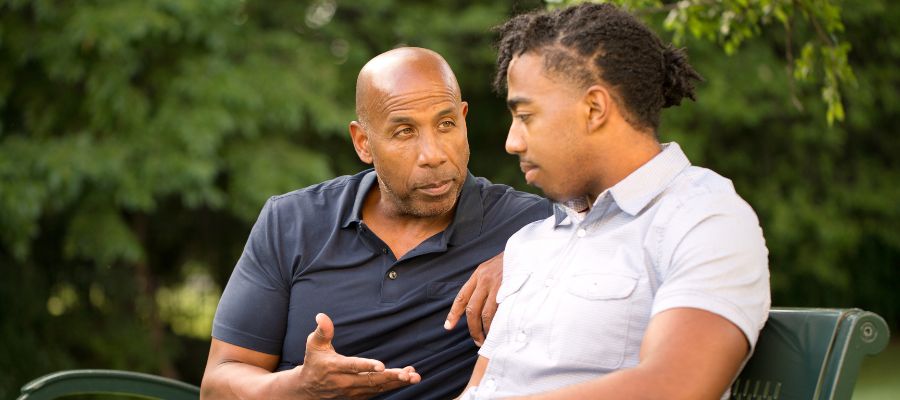
Informational support is the advice, guidance, or knowledge that helps individuals solve problems, make informed decisions, or understand situations more clearly. Examples of this type of social support include:

  • Teaching someone about a topic that they are interested in.
  • Offering guidance based on your area of expertise.
  • Directing someone to informative resources that would enhance their understanding.
  • Conducting detailed research for someone to help inform their decision.
  • Giving advice about how to solve a problem.

Of course, make sure that you ask a person if they would like your advice before you offer it. Studies have shown that too much unsolicited advice and undesired critical feedback can actually worsen a person’s mental and physical health, as well as their relationship satisfaction.

5. Tangible Support

At a talk in London in 1911, Abdu’l-Baha said, “We know that to help the poor and to be merciful is good and pleases God, but knowledge alone does not feed the starving man, nor can the poor be warmed by knowledge or words in the bitter winter; we must give the practical help of Loving-kindness.” 

“Practical help” is what tangible support is all about. Tangible support, also referred to as instrumental support, encompasses the physical acts of service and responsibilities we take on to help alleviate someone’s burden. Examples of tangible support include:

  • Giving money to the homeless and financially destitute.
  • Offering a ride to someone who doesn’t have a car.
  • Taking meals to someone who is too sick to cook for themselves.
  • Helping someone pack and move to their new home.
  • Offering to babysit for someone who needs to attend an important appointment.

All of these different types of support are expressions of love for those around us. As Abdu’l-Baha advised:

Strive to increase the love-power of reality, to make your hearts greater centers of attraction and to create new ideals and relationships.

First of all, be ready to sacrifice your lives for one another, to prefer the general well-being to your personal well-being. Create relationships that nothing can shake; form an assembly that nothing can break up; have a mind that never ceases acquiring riches that nothing can destroy.

By understanding and practicing these types of social support, we can strengthen our relationships and create a more compassionate and connected community. Social support truly is the glue that binds strong and lasting relationships together.

[ad_2]
Source link

Losing the Stigma: May is Mental Health Awareness Month

[ad_1]

Have you been seeing lime green ribbons tied to trees this month? Those would be in honor of Mental Health Awareness Month.

Mental Health Awareness Month (MHA) was first observed in the United States in May of 1949. Started by the Mental Health Organization, each year the MHA releases a toolkit of materials to facilitate outreach activities for the month.  

For 2022, the month’s theme is “Back to Basics,” observed with film screenings, media, and local events, all based on this theme. The goal: to provide “foundational knowledge about mental health and information for anyone whose mental health is a cause for concern.” 

So who needs to be concerned about mental health? Everyone! 

We should be just as concerned about our mental and spiritual health as the health of any part of our physical body, the Baha’i teachings say. Abdu’l-Baha wrote:

Illness which occur by reason of physical causes should be treated by doctors with medical remedies; those which are due to spiritual causes disappear trough spiritual means. Thus an illness caused by affliction fear, nervous impressions, will be helped more effectively by spiritual rather than by physical treatment. Hence, both kinds of treatment should be followed; they are not contradictory.

RELATED: Trauma: How Can We Heal Our Wounded Souls?

We have no trouble going to see the doctor to treat physical illness – yet when it comes to mental or emotional issues, stigmas still exist. Education and frank discussion can help to change this. According to the National Alliance on Mental Illness, 1 in 5 adults in the United States experience mental illness each year. We’ve all had struggles to varying degrees, or have a friend or family member who has. 

In an interview, Dr. Christina Rajlal and Director Stacy Kuwahara of Kern Behavior Health and Recovery explain:

“It’s critical to let our community know that it truly is okay to acknowledge their feelings and to reach out for help if needed.” Dr. Rosia said.

Rosia also pointed out that the past 2 years of the pandemic have shown just how important it is to start these conversations around mental wellness, not only with our loved ones and family members, but with the whole community.

Behavioral Health Director, Stacy Kuwahara went on to say:

“Despite the stigmas associated with mental health, I encourage everyone to understand just how normal it is, not only to experience it, but to seek help.”

She said that services addressed should be for total well-being – both mental and spiritual health.

This leads to the conclusion that now, more than ever, it takes a village. Being in touch with our families, friends, and neighbors is no longer a luxury but a necessity. We need to connect with each other on a deep, caring level for the benefit of ourselves and for society. Not only do studies show that socializing, connection, and serving others improves the brain, it also has a profound effect on the spirit.

Baha’is see this process of focusing on the well-being of others as one of the cornerstones of good mental and spiritual health:

Every imperfect soul is self-centered and thinketh only of his own good. But as his thoughts expand a little he will begin to think of the welfare and comfort of his family. If his ideas still more widen, his concern will be the felicity of his fellow citizens; and if still they widen, he will be thinking of the glory of his land and of his race. But when ideas and views reach the utmost degree of expansion and attain the stage of perfection, then will he be interested in the exaltation of humankind. He will then be the well-wisher of all men and the seeker of the weal and prosperity of all lands. This is indicative of perfection.

Thus, the divine Manifestations of God had a universal and all-inclusive conception. They endeavoured for the sake of everyone’s life and engaged in the service of universal education. The area of their aims was not limited — nay, rather, it was wide and all-inclusive.

Therefore, ye must also be thinking of everyone, so that mankind may be educated, character moderated and this world may turn into a Garden of Eden. 

RELATED: 8 Tips to Have a Healthy Spiritual Life

So let’s talk about our feelings. No one need struggle in silence. As just one example, don’t hesitate to check up on your children today. Are they having emotional issues around school, bullying, or friendships? What about your mom? Could she be holding back her recent feelings of depression so as not to burden you? Does your partner not want to drain you with sharing their work stresses? Is your postpartum girlfriend struggling? What about your neighbors? How can you be of service if they are in need? 

In all cases, if you ever hear any mention of suicide, do take it very seriously. 

Let’s not allow mental health awareness to end this month, but keep the green ribbons up and the conversation going, so we can hold this very important issue predominantly in our hearts and minds throughout the year – because no one is an island, and we all need each other.

Free mental health resources:

Change Your Algorithm 

A mental wellness program that offers free 1-hour mental health classes online and in Los Angeles, CA. Classes are led by certified mental health therapists that can provide you with the tools needed to take care of your mind during a time of fear and uncertainty. Yes, it’s all free. Their motto:

“There is no judgement here, just healing.”

7 Cups

This free app offers 24/7 chat. It connects you to caring listeners from a variety of online communities that you can explore and join. I joined it just for the great community and fun events. Their takeaway:

“You are not alone.”

National Suicide Prevention Lifeline:

(800) 273-TALK   or   (800) 273-8255

[ad_2]
Source link

The 9 Different Types of Safety: From Physical to Emotional

[ad_1]

Shoghi Effendi, the Guardian of the Baha’i Faith, stated that the Baha’i community “should feel it to be its first and inescapable obligation to nurture, encourage, and safeguard every minority belonging to any faith, race, class, or nation within it.”

To “safeguard” means, as Merriam-Webster defines it, “to make safe: PROTECT.” What comes to mind when you think of needing to feel safe? My mind immediately thinks of psychological and emotional safety, my mother thinks of medical and social safety, my brother thinks of physical safety, and my friend thinks of financial safety. 

This made me realize how important it is for us all to understand the different types of safety if we’re going to do our best to safeguard every marginalized community from the various forms of harm.

1. Physical Safety

Ensuring that oppressed demographics are physically safe necessitates protecting them from physical threats, violence, and exploitation. The urgent need for physical protection is evident in these alarming statistics: 

In 2022, there were 13,278 victims of reported hate crime incidents in the United States, 59 percent of which were racially motivated. Globally, an estimated 49.6 million people were in modern slavery on any given day in 2021, including forced labor, forced marriage, and sex trafficking. Additionally, the World Health Organization (WHO) reported that “on average, 736 million and up to 852 million women who were aged 15 years or older in 2018 (almost 1 in 3 women)” have experienced physical or sexual violence.

RELATED: Over 90,000 Black Women and Girls Are Missing and Forgotten

What are we doing to ensure that every member of our human family is protected from all forms of physical harm? Abdu’l-Baha, one of the central figures of the Baha’i Faith, explained that “if someone oppresses, injures, and wrongs another,” the “community has the right of defense and of self-protection; moreover, the community has no hatred nor animosity for the murderer: it imprisons or punishes him merely for the protection and security of others.”

He continued:

… the constitution of the communities depends upon justice. … Then what Christ meant by forgiveness and pardon is not that, when nations attack you, burn your homes, plunder your goods, assault your wives, children, and relatives, and violate your honour, you should be submissive in the presence of these tyrannical foes, and allow them to perform all their cruelties and oppressions.

No, the words of Christ refer to the conduct of two individuals towards each other: if one person assaults another, the injured one should forgive him. But the communities must protect the rights of man.

RELATED: What Is Power Without Love? Explore MLK and Baha’i Quotes

2. Environmental Safety

The right to adequate sanitation and hygiene, clean air and water, a stable climate, and protection from hazardous chemicals, soil contamination, and dangerous levels of radiation are basic human rights that have been denied to so many. 

This denial of basic environmental rights has dire consequences. According to WHO, “24% of all estimated global deaths are linked to the environment.” For example, 3.8 million people die every year from household air pollution, and “91% of the world’s population live in places where [outside] air pollution levels exceed WHO guideline limits.”

Addressing these pressing issues, the Universal House of Justice, the global governing body of the Baha’i Faith, highlighted in a 2017 letter:

One of the most pressing problems of humanity in the current century is how a growing, rapidly developing, and not yet united global population can, in a just manner, live in harmony with the planet and its finite resources.

Certain biological realities present themselves when an organism negatively affects or exceeds the capacity of its ecosystem. The limited availability and inequitable distribution of resources profoundly impact social relations within and between nations in many ways, even to the point of precipitating upheaval and war.

“Local and national governments need to introduce policies and make investments that support cleaner transport, energy-efficient housing, power generation, industry and better municipal waste management,” wrote Dr. Maria Neira, the WHO Director for the Department of Public Health, Environmental and Social Determinants of Health. 

“But we can also lead change at community and individual level. This can include commitments to cycle or take public transport to work, when safe routes are available; to recycle waste or compost; or conserve water and energy at home and in the office. Strategies such as “pedibus” initiatives can encourage children to walk to school safely, and the creation of urban gardens can provide both healthy foods and venues for social interaction and physical activity.”

RELATED: 4 Benefits of Going Vegan for the World — and You

3. Financial Safety

Impoverished communities are the most vulnerable to environmental instability, enduring higher exposure to pollution, inadequate sanitation, and the growing threats of climate change. These challenges are compounded by widespread malnutrition and limited access to essentials like clean water, electricity, and basic healthcare. Sadly, more than 700 million people around the world live in extreme poverty, struggling to survive on less than $2.15 a day.

Baha’u’llah “admonished all that we must be the servants of the poor, helpers of the poor, remember the sorrows of the poor, associate with them; for thereby we may inherit the Kingdom of heaven.”

People who are financially secure have enough money to cover their expenses and meet their needs without fear of running out for retirement and possible emergencies. Financial safety and security include access to financial literacy, stable employment, fair wages, and protection from exploitation and financial abuse. If you’d like to learn more about the solutions that the Baha’i writings have offered to reduce the wealth gap, read my article, “How to Reduce the Wealth Gap — With Augusto Lopez-Claros.” 

Most of those living in extreme poverty are people of color. Not only do they lack financial safety, but they also don’t experience social safety.

RELATED: Reducing Poverty Amongst Marginalized Women and Communities

4. Social Safety

Social safety ensures that individuals feel included and respected within a society and involves protection from discrimination, exclusion, and exploitation based on social identity, such as race, gender, and class. 

Ask yourself: Can women be safe from sexist comments and actions in your presence? Can people of color be safe from racial microaggressions and macroaggressions in your community? We can socially safeguard others by advocating for social justice and fostering just, supportive, and inclusive communities.

As the Universal House of Justice wrote in a 2020 letter to the Baha’is of the United States:

We ardently pray that the American people will grasp the possibilities of this moment to create a consequential reform of the social order that will free it from the pernicious effects of racial prejudice and will hasten the attainment of a just, diverse, and united society that can increasingly manifest the oneness of the human family.

5. Spiritual Safety

“One of the forms of prejudice which afflict the world of mankind is religious bigotry and fanaticism. When this hatred burns in human hearts, it becomes the cause of revolution, destruction, abasement of humankind and deprivation of the mercy of God,” said Abdu’l-Baha at a talk in Colorado in 1912.

Because of religious bigotry, hundreds of millions of people around the world are denied spiritual safety. A  just, diverse, and united society would allow everyone the freedom to express, explore, and practice their spiritual or religious beliefs without fear of persecution, coercion, and discrimination. We can spiritually safeguard others by promoting religious freedom and creating interfaith fellowships and dialogues to enhance mutual understanding.

6. Emotional Safety

Emotional safety is crucial for fostering mutual understanding, trust, and intimacy. It is the assurance that one can express their feelings, thoughts, and vulnerabilities without fear of judgment, betrayal, rejection, or ridicule. This freedom to be authentic, without having to mask one’s emotions and put up guards, is a vital aspect of mental health.

We can emotionally safeguard others by cultivating inclusive, respectful, trustworthy, and compassionate spaces, practicing active and empathetic listening, validating others’ feelings and diverse experiences to foster a sense of security and belonging, and implementing conflict resolution strategies that prioritize understanding and reconciliation.

7. Psychological Safety

People who are denied psychological safety don’t have that freedom to express their perspectives. Psychological safety involves creating an environment where individuals feel safe to voice their thoughts, perceptions, and opinions without fear of retribution, humiliation, isolation, or manipulation.

RELATED: Spiritual Clarity to Resist the Different Types of Gaslighting

We can psychologically safeguard others by creating safe spaces that encourage honest, open communication without the risk of being subjected to gaslighting, mind games, and other forms of psychological abuse — abuse that is prevalent in physical and digital spaces.

8. Cyber Safety

As people spend more and more of their time online, cyber safety has become increasingly important. Cyber safety involves protecting individuals from online threats such as identity theft, cyberbullying, catfishing, online predators, privacy breaches, and exposure to harmful and inappropriate content.

We can safeguard others in this way by implementing privacy protections, using security tools, and educating people about cybersecurity and positive, healthy, appropriate, and safe online behavior.

9. Medical Safety

Last but not least, medical safety ensures access to quality healthcare and protecting individuals from medical errors, unsafe treatments, and inadequate health services. This includes the right to receive proper medical care, accurate diagnoses, and effective treatments while being safeguarded from harm and medical racism within the healthcare system. 

For example, according to the CDC, “Black women are three times more likely to die from a pregnancy-related cause than White women,” and “more than 80% of pregnancy-related deaths in the U.S. are preventable.” 

RELATED: How to Reduce Black Maternal Mortality in the U.S.

As we care for humanity and safeguard our most vulnerable populations, let’s remember these nine different types of safety. By prioritizing financial, emotional, social, environmental, spiritual, psychological, cyber, medical, and physical safety, we can better ensure the well-being of both ourselves and others.

[ad_2]
Source link

9 Interfaith Quotes and Prayers to Find Peace of Mind and Heart

[ad_1]

There is an African proverb that says, “When there is no enemy within, the enemies outside cannot hurt you.” So, how do you find peace of mind and heart?

In a world of distracting chaos, depressing conflict, distressing challenges, and addictive consumerism, finding inner peace can feel elusive. Yet, timeless spiritual and religious teachings offer helpful insights and comforting prayers to guide all of us on our journeys. 

Explore how the following quotes and prayers from world religions and ancient spiritual traditions can unlock a peaceful, resilient spirit and bring tranquility to both your heart and mind.

Baha’i Quotes About How to Find Peace of Mind and Heart

A Baha’i study circle in Nedrini, Panama

If you’re wondering how to find peace of mind and heart, the Baha’i writings offer helpful guidance on this subject. 

First, we can’t have a peaceful mind and heart without having a loving mind and heart. At a talk in New York in 1912, Abdu’l-Baha, one of the central figures of the Baha’i Faith, was asked, “Is peace a greater word than love?” 

Abdu’l-Baha exclaimed, “No! Love is greater than peace, for peace is founded upon love. Love is the objective point of peace, and peace is an outcome of love. Until love is attained, peace cannot be…”

When we are kindled by the fire of the love of God in our hearts and look for the loveable divine qualities in every person and created thing, we will find that we are more at peace with ourselves and everyone around us. 

In a treatise written by Abdu’l-Baha in 1875, he identified the different capabilities that an individual needs to develop to experience pleasure and peace. He explained that “the happiness and greatness, the rank and station, the pleasure and peace, of an individual have never consisted in his personal wealth, but rather in his excellent character, his high resolve, the breadth of his learning, and his ability to solve difficult problems.” 

It’s important that we strengthen and develop these qualities, as they enhance our personal happiness and peace and build the resilience that we need to navigate the challenging moments in our lives.

A Buddhist Quote About the Importance of a Peaceful Mind

It’s fascinating that breadth of learning not only fosters peace but that peace of mind is also conducive to greater knowledge. 

In the Dhammapada, the Buddha states, “If a man’s thoughts are unsteady, if he does not know the true law, if his peace of mind is troubled, his knowledge will never be perfect.” 

When our thoughts are flighty, unsettled, and anxious, it’s difficult to focus, think deeply, and meditate on divine guidance. So, we have to clear and calm our minds to receive greater insights and understanding.

Yogic, Buddhist, and Cherokee Quotes About the Importance of a Peaceful Heart

As a yoga fan, I enjoy the peace of mind and body that yoga often brings. However, I was even more excited to learn about the spiritual teachings that ancient yogis have shared about how important a peaceful heart is for fostering harmonious relationships.

In “The Yoga Sutras of Patanjali,” it says, “Where the heart is full of kindness which seeks no injury to another, either in act or thought or wish, this full love creates an atmosphere of harmony, whose benign power touches with healing all who come within its influence. Peace in the heart radiates peace to other hearts, even more surely than contention breeds contention.”

Likewise, The Sutra Collection, a sacred Buddhist text, asks us to abstain from calumny and slander —also regarded as grievous sins in the Baha’i Faith — and avoid repeating what would “raise a quarrel against the people.”

A Cherokee proverb beautifully captures this spirit of compassionate silence and open-hearted communication: “O Great Spirit, help me always to speak the truth quietly, to listen with an open mind when others speak, and to remember the peace that may be found in silence.”

Continuing in this spirit, The Sutra Collection concludes, “Thus he lives as a binder together of those who are divided, an encourager of those who are friends, a peacemaker, a lover of peace, impassioned for peace, a speaker of words that make for peace.”

A Taoist Prayer for Peace of Mind and Heart

“Lao-Tsu’s Peace Prayer” beautifully illustrates how important peaceful hearts are for creating a peaceful world. He wrote:

If there is to be peace in the world,

There must be peace in the nations.

If there is to be peace in the nations,

There must be peace in the cities.

If there is to be peace in the cities,

There must be peace between neighbors.

If there is to be peace between neighbors,

There must be peace in the home.

If there is to be peace in the home,

There must be peace in the heart.

A Baha’i Prayer for Peace of Mind and Heart

A prayer gathering at the Baha’i Center in Lauro de Freitas, BrazilA prayer gathering at the Baha’i Center in Lauro de Freitas, Brazil
A prayer gathering at the Baha’i Center in Lauro de Freitas, Brazil

As we strive to cultivate inner peace, turning to prayer can be a powerful balm and refuge. The following Baha’i prayer offers profound words of solace and strength, imploring our Creator to renew your spirit and restore peace to your mind and heart: 

Create in me a pure heart, O my God, and renew a tranquil conscience within me, O my Hope! Through the spirit of power confirm Thou me in Thy Cause, O my Best-Beloved, and by the light of Thy glory reveal unto me Thy path, O Thou the Goal of my desire! Through the power of Thy transcendent might lift me up unto the heaven of Thy holiness, O Source of my being, and by the breezes of Thine eternity gladden me, O Thou Who art my God! 

Let Thine everlasting melodies breathe tranquillity on me, O my Companion, and let the riches of Thine ancient countenance deliver me from all except Thee, O my Master, and let the tidings of the revelation of Thine incorruptible Essence bring me joy, O Thou Who art the most manifest of the manifest and the most hidden of the hidden!

[ad_2]
Source link

Entitlement: Detrimental to Your Spiritual Health

[ad_1]

If you live in the developed world like I do you enjoy certain advantages that a lot of people in other places do not: electricity, running water, plentiful food and clothing—and particularly jobs.

Why do refugees flee their poor, oppressive or conflict-ridden countries and endure great hardship to make it to Europe or the United States? It’s simple: they want to get to a country where they can live better lives. In their situation, anyone would do the same thing. When refugees arrive in the developed world, with hard work and ingenuity they can get a job or create a business and make a good living—a living that includes a peaceful society, human rights and freedoms, functioning utilities, cars, gyms and a wealth of advantages over their homelands.

However, the developing world uses most of the world’s resources. On average, an inhabitant of North America consumes around 90 kilograms (kg) of resources each day. In Europe, consumption is around 45 kg per day, while in Africa people consume only around 10 kg per day.

All of the wealth in the developed world is used without much thought to this huge disparity. With our dependence on these material things, though, comes the darker side: entitlement. In North America, Europe and certain other developed regions of the world, many people feel entitled to their patterns of over-consumption. They believe their lifestyle is their right. But that sense of entitlement is detrimental to spiritual growth and overall health—mind, body and spirit.

An entitled person feels that he/she deserves to be given something, whether it is a high paying job, financial support or some special privilege—without working hard for it or giving anything back. I don’t know about you, but I’ve known many people like this, who feel they don’t have to work at certain jobs just because they got educated and earned a degree. They are convinced that their degree entitles them to a high paying job right out of school, rather than accepting a more entry-level position.

Actually, I was one of them. So I understand the feelings of having gone to a university, gotten a degree and then smugly nurturing an entitled mindset that I immediately deserved a great job with good pay. I learned a valuable lesson when this did not happen. I learned that my degree was not going to financially support me without a lot more hard work on my part.

I should have known better anyway as my Baha’i parents taught me at an early age that life was not easy and nothing would be handed to me on a platter. I have very loving and kind parents who worked hard, so I saw as I grew up the importance of a good work ethic. In fact, my parents definitely followed the Baha’i teachings to “accustom your children to hardship:”

…Endeavour to rectify the conduct of men, and seek to excel the whole world in moral character. While the children are yet in their infancy feed them from the breast of heavenly grace, foster them in the cradle of all excellence, rear them in the embrace of bounty. Give them the advantage of every useful kind of knowledge. Let them share in every new and rare and wondrous craft and art. Bring them up to work and strive, and accustom them to hardship. Teach them to dedicate their lives to matters of great import, and inspire them to undertake studies that will benefit mankind. – Abdu’l-Baha, Selections from the Writings of Abdu’l-Baha, p. 102.

I was a very headstrong child and as such I wanted to make my own money and have my own job. So I got a job at the age of 14 at a fast-food restaurant. I have pretty much worked ever since, even working two jobs plus full time coursework during my university years. Now I’m not saying everyone should or even can do this—we all have our unique strengths and drives.

I do, however, see quite a bit of this spiritual illness called entitlement with many people and, I often wonder, is it the parents’ fault for not introducing their children to hardship at an early age by making them do chores or some kind of work around the house? Perhaps it is. Of course it is not done out of malice, but instead out of love. Giving your children responsibilities in the household will help them cultivate a sense of work ethic early on. Sadly, though, it doesn’t help the entitled child when everything is done for him or her, but instead thwarts her or his spiritual growth, as well as the child’s mental and physical health and happiness.

Entitled people can burden a community, government and families. They often demand or expect others to finance their lives, while they exert minimal effort at supporting themselves. Somewhere in the midst of growing up, they learned not to be bothered by burdening others, in spite of being quite capable themselves. Sadly, this kind of laziness born of entitlement is detrimental to their spiritual growth, physical attainments, health and even mental capabilities. It will also affect their happiness in the long term, resulting in an eventual drop in self-esteem and self-respect.

This is why it is imperative that children learn at an early age that life is not easy, and that they are not entitled to a free ride. Teaching children not to feel entitled shouldn’t communicate neglect or hold back love from them, but should teach them that hard work will help them to be well-rounded and capable adults who have the potential—with enough hard work and dedication—to transform the world.

[ad_2]
Source link

Finding Strength and Unity: Native American Proverbs About Life

[ad_1]

Growing up during segregation in the United States, my grandfather, who was Cherokee, Black, and Irish, had a difficult life, to say the least. But, my mother told me, while he chanted his Cherokee chants, he seemed happy. In fact, that Cherokee chant was one of the few cultural traditions that he passed down to his children.

“It was the string that kept us connected…,” my mother says. She taught me and my siblings this chant and shared a Cherokee story she had learned later in life, one filled with wisdom and guidance — a testament to the enduring spiritual legacy of Indigenous people. 

RELATED: From Media to Movies: Addressing Native American Stereotypes

A letter written on behalf of Shoghi Effendi, the Guardian of the Baha’i Faith, to the National Spiritual Assembly of Central America and Mexico echoed this sentiment, highlighting their transformative potential: 

If the light of Divine Guidance enters properly into the lives of the Indians, it will be found that they will arise with a great power and will become an example of spirituality and culture to all of the people in these countries.

RELATED: Standard-Bearers: The Spirituality of Native Americans

Native American Proverbs and Stories About Life

The Cherokee story emphasized the importance of the choices we make in life in the battle between our higher and lower natures. As Abdu’l-Baha, one of the central figures of the Baha’i Faith, wrote:

For the inner reality of man is a demarcation line between the shadow and the light, a place where the two seas meet…

This timeless truth is beautifully illustrated in the story, which goes as follows: 

A young boy, angry with another boy for treating him badly, went to his grandfather, who proceeded to tell him a story. “I too, at times, have felt a great hate for those that have taken so much, with no sorrow for what they do. But hate wears you down, and hate does not hurt your enemy. Hate is like taking poison and wishing your enemy would die. I have struggled with these feelings many times,” he said. 

“It is as if there are two wolves inside me; one wolf is good and does no harm. He lives in harmony with all around him and does not take offense when no offense was intended. He will only fight when it is right to do so, and in the right way. But the other wolf is full of anger. The littlest thing will set him into a fit of temper.”

He continued, “He fights everyone, all the time, for no reason. He cannot think because his anger and hate are so great. It is helpless anger, because his anger will change nothing. Sometimes it is hard to live with these two wolves inside me because both of the wolves try to dominate my spirit.”

The boy stared deeply into his grandfather’s eyes and asked, “Which wolf will win, Grandfather?” 

Smilingly, the grandfather replied, “The one I feed.”

So, are we feeding the wolf of love, harmony, and hope, or anger, hatred, and hopelessness? 

I know that it can be challenging to be optimistic in depressing and dangerous times, but as Louise Profeit-LeBlanc’s grandmother told her, “Whatever you need is around you! It is not what you want, but what you need that will be provided to you.”

Photo of Louise Profeit-LeBlanc, courtesy of Louise Profeit-LeBlanc.

Louise Profeit-LeBlanc, a storyteller, artist, and member of the Nacho N’yak Dän First Nation of central Yukon, Canada, shared that this Native American proverb reminds her that “the Creator provides for us, and it might not be what we want, but it will be what will make us grow.”

She added, “It makes us less material and more appreciative of everything we might need in terms of our livelihood, our well-being, and also, for the happiness and joy we bring to others.”

Native American Proverbs About Oneness

“We are all related” is Nadema Agard’s favorite Native American proverb. A Cherokee, Lakota, and Powhatan artist, educator, consultant, curator, and storyteller, Nadema often highlights this teaching in her work.

Photo of Nadema Agard, courtesy of Nadema Agard.

Moreover, the Baha’i writings emphasize humanity’s oneness and interconnectedness:

This limitless universe is like the human body, all the members of which are connected and linked with one another with the greatest strength. How much the organs, the members and the parts of the body of man are intermingled and connected for mutual aid and help, and how much they influence one another! In the same way, the parts of this infinite universe have their members and elements connected with one another, and influence one another spiritually and materially.

Not only are we all members of one human family, but we are all also connected to the heavenly kingdom. One of Medicine Eagle’s favorite Native American proverbs is from the Hopi people, which states, “The one is the all. The all are the one.” 

This Hopi proverb reminds Medicine Eagle — a holistic healthcare practitioner and member of the Anishinaabe nation — that “there is but a veil of separation between us and the spirit realm.” 

medicine eaglemedicine eagle
Photo of Medicine Eagle, courtesy of Medicine Eagle.

He wrote, “We all act as though there is a separation from the divine, yet there is no such thing! All created things come from God, and all things are good. We condition things to be not good through our gift of free will. This is the biggest illusion we face as beings.” 

To overcome this illusion, all we have to do is turn towards God and look within ourselves. Baha’u’llah, the prophet and founder of the Baha’i Faith, revealed a powerful admonition, encouraging us to rise to our higher nature:

Turn thy sight unto thyself, that thou mayest find Me standing within thee, mighty, powerful and self-subsisting.

I hope these Baha’i teachings and Native American proverbs inspire you to look within, uncover your strength, and awaken the vast potential waiting to be tapped. These gems of guidance remind us that we are all part of something greater — a divine oneness that unites us with each other and with our Creator. The choice is ours: Which wolf will we feed, and how will we reflect this unity in our lives?

[ad_2]
Source link

Why Do We Have Good and Bad Dreams?

[ad_1]

According to the Sleep Foundation, most people dream for around two hours every night. Dreaming is a universal experience, regardless of whether or not you remember them upon waking. 

RELATED: A Spiritual Guide to the Dream World

From understanding our spiritual reality to healing from our traumatic experiences, here are nine spiritual and scientific reasons why we have good and bad dreams.

1. We Have Dreams to Understand Our Spiritual Reality

Abdu’l-Baha, one of the central figures of the Baha’i Faith, explained that the human spirit has “two modes of operation and understanding. One mode is through the mediation of bodily instruments and organs.” For example, the spirit uses the ears to hear and the eyes to see the physical world. 

Spiritual traveling, our spirit’s second mode of operation, doesn’t require these organs and limbs. For example, we still hear, taste, touch, feel, see, and move in our dreams without our physical bodies. The dream world helps us understand the abilities and immortality of the human spirit and the freedom we will have once we leave this physical realm. Abdu’l-Baha said:

This body is even as the cage and the spirit is like the bird: We observe that this bird, unencumbered by its cage, soars freely in the world of sleep. Therefore, should the cage be broken, the bird would not only continue to exist but its senses would be heightened, its perception would be expanded, and its joy would grow more intense.

2. We Have Dreams to Connect With Our Angels and Ancestors

As we spiritually travel in the dream world, we can also connect with the spirits of our loved ones who have passed away. 

RELATED: What Does It Mean When You Dream of Dead People?

“Again, for instance, a person is dead, is buried in the ground,” Abdu’l-Baha explained. “Afterward, you see him in the world of dreams and speak with him, although his body is interred in the earth. Who is the person you see in your dreams, talk to and who also speaks with you? This again proves that there is another reality different from the physical one which dies and is buried.” 

3. We Have Dreams to Solve Problems

The Baha’i writings encourage us to pray for our loved ones who have passed away because when we are in a receptive attitude, they can make suggestions to us when we are in difficult situations. This sometimes happens while we are sleeping.

Abdu’l-Baha said:

The soul journeys, perceives, senses. It often happens that a man in a state of wakefulness has not been able to accomplish the solution of a problem, and when he goes to sleep, he will reach that solution in a dream.

That is what happened to Dimitry Mendeleev, the chemist who devised the periodic table. He was having trouble creating a pattern that connected the chemical elements until he came up with the idea in his dreams. 

He wrote, “I saw in a dream a table where all the elements fell into place as required. Awakening, I immediately wrote it down on a piece of paper…”

Dreams have led to numerous scientific discoveries throughout history, such as the structure of the atom, the development of insulin, and Einstein’s Theory of Relativity.

Studies have shown that dreams offer solutions and insights “the night after a triggering event, and also six to seven days later.” So, the next time you need help solving a problem, you might want to sleep on it.

4. We Have Bad Dreams to Heal From Trauma

“Dreams provide a form of overnight therapy,” said Matthew Walker, the professor of neuroscience and psychology at the University of California, Berkeley, and the founder and director of the Center for Human Sleep Science. “It’s not time that heals all wounds. It’s time during dream sleep that provides emotional convalescence.”

In an interview for the Lex Fridman Podcast, he explained how dreams act like a “nocturnal soothing bomb” that takes the edge off of difficult and painful experiences so we can feel better about them the next day. “It’s not just that you dream. It’s what you dream about that also matters,” he said.

Professor Walker said they’ve discovered that people who dreamed of their painful experiences gained “resolution to their clinical depression one year later, whereas people who were dreaming just as much but not dreaming about the trauma itself did not go on to gain as much clinical resolution to their depression.”

He explained that dreaming about “emotional events allows mental-health resolution, keeping our minds safe from the clutches of anxiety and reactive depression.”

5. We Have Good Dreams, Bad Dreams, and Nightmares to Spark Our Creativity

“When I placed my head upon my pillow, I did not sleep, nor could I be said to think… I saw — with shut eyes, but acute mental vision — I saw the pale student of unhallowed arts kneeling beside the thing he had put together,” recounted author Mary Shelley. It was a nightmare that inspired her to write one of the most famous science fiction novels, “Frankenstein.”

She said, “I saw the hideous phantasm of a man stretched out, and then, on the working of some powerful engine, show signs of life, and stir with an uneasy, half-vital motion. …Swift as light and as cheering was the idea that broke upon me. ’I have found it! What terrified me will terrify others; and I need only describe the spectre which had haunted my midnight pillow.’”

Frankenstein isn’t the only novel that was inspired by a bad dream. Robert Louis Stevenson dreamed of the plot for his fantasy thriller novel, “The Strange Case of Dr. Jekyll and Mr. Hyde.” His wife could hear him screaming from a nightmare. When she woke him up, he said, “Why did you wake me? I was dreaming a fine bogey tale.” His final draft was finished in just six days.

Of course, good dreams have inspired many creative works too. Paul McCartney dreamed of the entire melody for the Beatles’ hit song “Yesterday” in a dream, and the surrealist artist Salvador Dali described his paintings as “hand-painted dream photographs.” 

6. We Have Bad Dreams and Nightmares to Warn Us of Potential Threats

In addition to making us more creative, nightmares can also make us more alert. Harvard psychologist Deirdre Barrett believes that nightmares are the brain’s way of alerting our attention to issues that we need to address.

“Nightmares probably evolved to help make us anxious about potential dangers,” Barrett said, as told by Live Science. “Even post-traumatic nightmares, which just re-traumatize us, may have been useful in ancestral times when a wild animal that had attacked you, or a rival tribe that had invaded might well be likely to come back.” She explained that conscious awareness of the concerns that are raised in your dreams may be enough to stop dreaming about them.

7. We Have Good, Bad, and Confusing Dreams to Process Our Memories and Information

Sleep experts believe that dreaming strengthens our memory and recall of information, lets go of erroneous or unnecessary information, and reviews or analyzes events we’ve recently experienced.

For example, Abdu’l-Baha said, “during the day a man becomes engaged in a quarrel and dispute. Later, in the world of the dream, these same circumstances appear to him. This is a confused dream. It has no interpretation and contains no discoveries. Before the person dreamed, he was overcome with delusions.”

8. We Have Bad Dreams and Nightmares if We’re Fatigued or Fearful

Nightmares can be triggered by many factors, including sleep deprivation, stress, anxiety, medications, and even scary movies.

After a conversation with Abdu’l-Baha, Mrs. May Maxwell, an early American Baha’i, explained that dreams that result from these influences are examples of the body influencing the soul, as opposed to the Holy Spirit influencing the soul, which is what prophetic dreamers experience.

9. We Have Good and Bad Dreams to Predict the Future

According to Ward Hill Lamon, President Abraham Lincoln’s former law partner and friend, Lincoln dreamed of his assassination. 

RELATED: Prophetic Dreams: Understanding Their Meaning and Insights

In the dream, “he walked into the East Room of the White House to find a covered corpse guarded by soldiers and surrounded by a crowd of mourners. When Lincoln asked one of the soldiers who had died, the soldier replied, ‘The president. He was killed by an assassin.’”

As the Baha’i writings say:

Awake, the eye sees only a short distance, but in the realm of dreams one who is in the East may see the West. Awake, he sees only the present; in sleep he beholds the future.

Now, I don’t want you all to get too scared if you have dreamed of yourself or a loved one dying. Sometimes, those dreams serve as warnings. 

For example, seven years ago, I dreamed that my father had a heart attack and died. While still in the dream, I “woke up” shaken and told my mother about it. Surprisingly, she calmly responded, “Good, that means we can prevent it.” Then I finally woke up. Naturally, I felt very confused and distressed. I told my mother about my dream within a dream, and to my shock and amazement, she said the exact same thing that her dream self had said: “Good, that means we can prevent it.” 

Around a year later, my father had a severe hemorrhagic stroke. His doctor told my mother that his chances of surviving were slim. But, with the power of hundreds of prayers, he survived. Although my dream did predict his serious health scare, we were able to prevent him from dying. 

And, of course, I’ve had good dreams that have come true too. I hope you all find healing, discoveries, insights, and spiritual connections in the fascinating world of dreams.

[ad_2]
Source link

Home Privacy Policy Terms Of Use Anti Spam Policy Contact Us Affiliate Disclosure DMCA Earnings Disclaimer