Bahai Faith

Home Bahai Faith Page 4

Observing the Martyrdom of the Bab

[ad_1]

Streaking across the heavens in 1843, a great comet alarmed many and served to validate the belief of others that the Second Coming of Christ was imminent. In that same year, poet James Russell Lowell wrote in “The Crisis”

Once to every man and nation comes the moment to decide.

Some great Cause, God’s new Messiah…

The early to mid-nineteenth century witnessed a world gripped by millennial zeal, as Biblical scholars across the globe deduced from their studies and mathematical calculations, based on scripture, that Christ would return sometime during the mid-1840’s. Some chose 1844 as the precise year. Reactions to these millennialists varied; some were excommunicated from their churches, some committed to mental institutions, some ridiculed, some respected and listened to (Harriet Livermore preached Christ’s return on the floor of the U.S. House of Representatives), while another had great followings from which sprang the Seventh Day Adventists–a religious denomination that calls 1844 “The Year of Disappointment.”

One group from Germany, the Templars, moved to Palestine and established a community at the foot of Mount Carmel in Haifa to await the Return. They inscribed above their doors, “Der Herr ist Nahe” (The Lord is Near).

In the year 1844, an official of the U. S. Patent Office wrote in a report that he believed everything that could possibly be worthwhile had already been invented, and said the Patent Office might just as well close its doors. Yet from that time on, there has been a constant and ever-increasing amount of new inventions and discoveries. That very year, on the 24th of May, Samuel F. B. Morse sent out the first telegraphic communication, tapping out this Bible text,

What hath God Wrought? – Numbers 23:23.

The press hailed Morse’s invention as a modern miracle and scholars of Scripture asked,

Is this not still another proof that the hour has come for Christ’s appearance? Is it not written in the Book of Job that only God can send “lightnings that they may go and say unto thee here we are!” – quoted in William Sears, Release the Sun, p. 192.

On the preceding evening, in a modest home in Shiraz, Persia, Siyyid Ali-Muhammad, a direct descendent of the Prophet Muhammad through both his mother and his father, laid claim to a direct Revelation from God, announcing:

I am, I am the Promised One! I am the One Whose name you have for a thousand years invoked, at Whose mention you have risen, Whose advent you have longed to witness, and the hour of Whose Revelation you have prayed God to hasten. – quoted by Shoghi Effendi, God Passes By, p. 21.

Although the Bab brought his own religion and his own holy book, he proclaimed his entire purpose was to prepare the way for the coming of an even greater revelation:

The purpose underlying this Revelation, as well as those that preceded it, has, in like manner, been to announce the advent of the Faith of Him Whom God will make manifest. – The Bab, Selections from the Writings of the Bab, p. 105.

That is just one of many references the Bab made to Baha’u’llah, the prophet-founder of the Baha’i Faith.

Hundreds of thousands of people became Babis, but the Bab’s followers were cruelly persecuted. Fanatical leaders within the Persian Shi’a Islamic community feared losing their power over the people, and jealous government officials felt their political careers would be in jeopardy should this new Faith continue to spread unchecked. Over 20,000 lives, including that of the gentle Bab himself, were sacrificed in unspeakably cruel and vicious attacks.

Following the public execution of the Bab by firing squad, the authorities had his body tossed at the edge of a moat, intent on it being devoured by animals. Sentinels were stationed to guard it from being retrieved by the Bab’s followers. But they kept a constant watch, waiting for the sentinels to be distracted or drift off to sleep. Their patience was rewarded, and they succeeded in rescuing the remains which were kept hidden for many years, having to be moved from place to place to avoid discovery. Finally they were interred on Mount Carmel in the Holy Land—in the exact spot designated by Baha’u’llah—directly above the street of the homes of the Templars. A befitting monument has now been erected over this final resting place.

Location of The Bab’s martyrdomLocation of The Bab’s martyrdom
Location of The Bab’s martyrdom

The martyrdom of the Bab and his followers, rather than wiping out the new religion, only served to kindle the flame in the hearts of the believers and whet the curiosity of others, many of whom investigated the new Faith and joined it.

And, as foretold by the Bab, his revelation was quickly followed by the Baha’i Faith. Baha’u’llah’s teachings revolve around unity and oneness:

  • The unity of God. There is only one God, by whatever name people choose.
  • The essential unity of all religions. All the major religions have been direct revelations from the one God and are like the chapters of a single book, each one following logically and developing further the great author’s message.
  • The oneness of humanity. There is only one race, the human race, and our outward differences are to be appreciated for their variety and beauty, like the beautiful blending of various flowers in a magnificent garden.

Followers of Baha’u’llah are called Baha’is, and though they profess the Baha’i Faith, the lives and revelations of the Bab and Baha’u’llah are so closely intertwined as to be practically inseparable. Therefore, the year 1844, the date of the Declaration of the Bab, is considered the first year in the Baha’i calendar.

Today Baha’is all around the world observe this solemn anniversary called the Martyrdom of the Bab.

[ad_2]
Source link

A Spiritual Guide to the Dream World

[ad_1]

We spend nearly one-third of our lives sleeping and we can’t function physically without it. But I’ve often wondered if there is also a spiritual reason we need to sleep — and dream. 

Does our need for sleep coincide with a desire to enter a world where the spirit can roam free without the limitations of the physical body? Dreams are one of the most fascinating phenomena that we experience in our lives, and the Baha’i writings have an answer for every question I’ve ever had about this subject.

Baha’u’llah, the prophet and founder of the Baha’i Faith, wrote that “God embraceth worlds besides this world, and creatures apart from these creatures.” He explained that the world we live in while we’re awake is completely different and separate from the dream world, which is within us and has “neither beginning nor end.”

Baha’u’llah wrote that when our spirits transcend “the limitations of sleep” and detach from “all earthly attachment,” God lets us travel throughout “a realm which lieth hidden in the innermost reality of this world.” In this dream realm, there may be messages to meditate on and secrets to discover.

image of a silhouette walking into the lightimage of a silhouette walking into the light

It’s fascinating to think of what traveling looks like without physical means. When we are awake, there is a limit to how fast we can travel on public transportation, but, according to the Baha’i writings, we can travel throughout the planet “in sleep, in the twinkling of an eye.” In the early 1900s, Abdu’l-Baha, the son of Baha’u’llah and his designated successor and interpreter of the Baha’i writings, called this “spiritual traveling.”

Abdu’l-Baha explained, “In the time of sleep this body is as though dead; it does not see nor hear; it does not feel; it has no consciousness, no perception—that is to say, the powers of man have become inactive, but the spirit lives and subsists. Nay, its penetration is increased, its flight is higher, and its intelligence is greater.”

It seems like our spiritual powers and abilities are limitless when we dream. To help us understand this freedom we have when our physical bodies are not in charge, Abdu’l-Baha used the analogy of a bird in a cage: “Our body is like the cage, and the spirit is like the bird. We see that without the cage this bird flies in the world of sleep; therefore, if the cage becomes broken, the bird will continue and exist. Its feelings will be even more powerful, its perceptions greater, and its happiness increased.”

an eyean eye

Abdu’l-Baha further explained the powers and freedoms our spirits have in the dream world. He said, “in the state of sleep without eyes it sees; without an ear it hears; without a tongue it speaks; without feet it runs.” 

So, how much importance should we place on the events that take place in our dreams? If our perceptions and intelligence are greater in this state, can our dreams provide us with worthy insight into the future?

When asked about the immortality of the spirit, Abdul-Baha referenced dreams. He said: 

“How often it happens that it [the spirit] sees a dream in the world of sleep, and its signification becomes apparent two years afterward in corresponding events. In the same way, how many times it happens that a question which one cannot solve in the world of wakefulness is solved in the world of dreams. In wakefulness the eye sees only for a short distance, but in dreams he who is in the East sees the West. Awake he sees the present; in sleep he sees the future.”

I know I’ve had dreams that predicted my father’s health scare, and other dreams that predicted the birth of some of my nieces and nephews. Dreams can serve as warnings, reminders, or exciting glimpses into the future. But how can we know which dreams will come true and which won’t? I know I go through times when many of my dreams seem like they could have a lot of merit, and other times, it feels like everything I’m dreaming is complete nonsense. So, is it something we are doing wrong? Do we have control over the accuracy of our dreams?

a mystical image of a woman’s face encompassing the universea mystical image of a woman’s face encompassing the universe

The Baha’i writings tell us there is no doubt that “truth is often imparted through dreams” but at the same time, dreams and visions are always “influenced more or less by the mind of the dreamer and we must beware of attaching too much importance to them.”

In a letter written in 1925 on behalf of Shoghi Effendi, the Guardian of the Baha’i Faith, he wrote, “The purer and more free from prejudice and desire our hearts and minds become, the more likely is it that our dreams will convey reliable truth, but if we have strong prejudices, personal likings and aversions, bad feelings or evil motives, these will warp and distort any inspirational impression that comes to us.”

So, he advised us to strive to “become pure in heart” and detached from everything that is not good and godly. Then, he wrote, “our dreams as well as our waking thoughts will become pure and true.”

a little girl scared under the coversa little girl scared under the covers

Just because some dreams won’t come true, it doesn’t mean they can’t be coherent, relaxing, or exciting. But, sometimes we have delusions or nightmares — bad dreams that are uncomfortable, scary, or stressful. After speaking with Abdu’l-Baha about dreams, Mrs. May Maxwell, an early American Baha’i, said her conversation with him led her to understand that these dreams result from “various influences like fatigue, fear, etc.” These confusing dreams are created when our bodies influence our souls‚ as opposed to our souls influencing our bodies.

Abdu’l-Baha said that we have three kinds of dreams, and the confused dream is the one type of dream that has no truth or significance. For example, Abdu’l-Baha said, “during the day a man becomes engaged in a quarrel and dispute. Later, in the world of the dream, these same circumstances appear to him. This is a confused dream. It has no interpretation and contains no discoveries. Before the person dreamed, he was overcome with delusions. It is clear that this kind of dream bears no interpretation and is confused.”

a woman praying near candlelight before beda woman praying near candlelight before bed

As a Baha’i, it gives me so much solace and comfort to know that, as Abdu’l-Baha explained, although “Those who have ascended have different attributes from those who are still on earth, yet there is no real separation.” Since time is an illusion while we are in this earthly realm, what we know of as time does not exist in the afterlife. In addition, prayer helps our spirits transcend the physical limitations we have and connect to our angels and ancestors while we are still here.

Abdu’l-Baha said, “In prayer there is a mingling of station, a mingling of condition. Pray for them as they pray for you! When you do not know it, and are in a receptive attitude, they are able to make suggestions to you, if you are in difficulty. This sometimes happens in sleep.” So, if we pray before we go to bed and are receptive to the wisdom of those who have come before us, we just may meet them and receive guidance in the world of dreams.

Indeed, Abdu’l-Baha wrote, “When thou desirest and yearnest for meeting in the world of vision; at the time when thou art in perfect fragrance and spirituality, wash thy hands and face, clothe thyself in clean robes, turn toward the court of the Peerless One, offer prayer to Him and lay thy head upon the pillow. When sleep cometh, the doors of revelation shall be opened and all thy desires shall become revealed.”

[ad_2]
Source link

We’ve Reached the Limits of Partisan Politics

[ad_1]

The principal teaching of the Baha’i Faith is the oneness of humanity. Baha’u’llah wrote, “The earth is but one country and mankind its citizens” over 100 years ago.

By now, we can all see that humanity is essentially interdependent; the oneness of humanity has become a spiritual truth also confirmed by all the sciences of our era. That’s the fundamental purpose of the Baha’i Faith—to “promote the unity of the human race, and to foster the spirit of love and fellowship amongst men.” – Baha’u’llah, Gleanings from the Writings of Baha’u’llah, p. 215.

However, in the United States, like many other countries that rely upon a partisan system of governance, people are accustomed to taking sides. In an extremely heated political climate, the idea of fostering the spirit of love and fellowship with someone across the political divide may seem disingenuous at best, and life-threatening at worst. Our deepest fears and longings related to economics, race equity, immigration, and justice have all tied themselves into the values of our various political parties. Our sense of social progress and justice rests with our hopes for victory over the “other side.”

But if we really want to promote the oneness of humanity, why do we accept any partisan system of social organization that necessarily divides us into camps and pits us against each other? How can we expect to arrive at a state of unity by using a process that inherently creates and fosters disunity?

As a member of the Baha’i Faith and an American, I vote—but I do my best not to identify with any political party, and I avoid engaging in political activity. This doesn’t mean that I don’t have a sense of justice or a vision for real social transformation. I do. I just think that partisanship is fundamentally inimical to the principle of humanity’s oneness, and therefore it cannot logically move us forward to a place where the principle of oneness forms the basis of governance.

The Limits of Partisan Politics

Political polls continually show that Americans are bitterly divided along party lines, but this shouldn’t be surprising to anyone. If anything, it should confirm that the Western liberal democratic tradition of multiparty competition is working as intended.

Our system is built around enormous and deeply questionable assumptions about human reality: primarily that humans are selfish and competitive by nature, and that it is in our own best interest to be antagonistic towards the needs, values, and interests of our political rivals. Partisan politics demands that we always have “winners” and “losers.”

In my country, across all party lines, Americans are cynical towards government and mistrustful of corporate, financial, and political corruption that serves the interests of only a few powerful people or groups. But, to many, no other way of social interaction seems possible. We are literally caught in a frantic cycle of adversarial political backlash, and social media only seems to fuel our anger, fear, and frustration.

Within this narrative, serious social change is framed in terms of rallying against the un-favored party or politician, and then electing the right party or politician who can transform society into what we want it to be. But regardless of whatever party or politician is in power, the real root of the problem is that we are trapped in a divisive “us versus them” framework of competition, with all of its inevitable corruption, which allows for certain voices and interests to be privileged over others, and which paralyzes ordinary citizens from becoming agents of change in their own communities.

The partisan political system itself, with all of its narrow, built-in assumptions about human reality, forms one of the biggest obstacles to realizing the truly united and freely-functioning countries we would all like to see.

So if we want real social transformation, honest change and justice for all, we shouldn’t be looking for the perfect new candidate. We should search for a whole new way of relating to each other, and a bold new vision of society to actively work towards.

Baha’is believe that the only way to really break free of the profound social disunity in our societies—whether politically, racially, religiously, or otherwise—is to build true, authentic human solidarity, in a systematic manner, among all people. If we really want to see positive social change, we have to learn to build unity:

The welfare of any segment of humanity is inextricably bound up with the welfare of the whole. Humanity’s collective life suffers when any one group thinks of its own well-being in isolation from that of its neighbours or pursues economic gain without regard for how the natural environment, which provides sustenance for all, is affected… The world is in desperate need of a shared ethic, a sure framework for addressing the crises that gather like storm clouds. – The Universal House of Justice, March 1, 2017.

Love and unity are the needs of the body politic today. Without these there can be no progress or prosperity attained. – Abdu’l-Baha, The Promulgation of Universal Peace, p. 171.

[ad_2]
Source link
5 Ways to Prepare for the Next World

[ad_1]

During this unprecedented time in history, I find myself reflecting on my life’s purpose and my mortality. 

More than ever, I feel the need to focus on preparing myself for the next realm of my existence. In searching the Baha’i writings for guidance, I discovered five steps to help in this process:

1. Don’t be afraid

The Baha’i teachings assure us that if we live our lives in accordance with the spiritual guidance the Faith gives us, the world to come is a wonderful place with joys that we could never imagine. In The Hidden Words, Baha’u’llah wrote:

I have made death a messenger of joy to thee. Wherefore dost thou grieve? I made the light to shed on thee its splendor. Why dost thou veil thyself therefrom? 

Baha’u’llah’s writings also promise that “Days of blissful joy, of heavenly delight, are assuredly in store for you. Worlds, holy and spiritually glorious, will be unveiled to your eyes.”

RELATED: The Survival of the Soul after Death

2. Practice mindfulness in my daily thoughts and actions

Mindfulness is not my strong suit! When all the esoteric explanations of mindfulness are said and done, the best way for me to understand and practice mindfulness is to simply pay attention. What am I thinking, feeling, and doing right now? How am I speaking and relating to others in any given moment?  

Referring to our future transition to the next world, Baha’u’llah advises us to be conscious and accountable for our actions each day and every minute, so that when our time of return comes, we are prepared to stand in the Creator’s presence:

Set before thine eyes God’s unerring Balance and, as one standing in His Presence, weigh in that Balance thine actions every day, every moment of thy life. Bring thyself to account ere thou art summoned to a reckoning, on the Day when no man shall have strength to stand for fear of God, the Day when the hearts of the heedless ones shall be made to tremble. 

3. Focus on loving, connection, and service

Our world is in turmoil. Rather than concentrating on the chaos, though, the Baha’i teachings tell me that I can be part of the solution: unity. I can help do that by focusing on developing meaningful relationships in my community and serving others. All that I will take with me after I pass on are the loving connections I fostered in this world, and all that will matter is the love I gave while here on Earth. Abdu’l-Baha wrote:

It is incumbent upon the loved ones of God to exercise the greatest care and prudence in all things, whether great or small, to take counsel together and unitedly resist the onslaught of the stirrers up of strife and the movers of mischief. They must endeavor to consort in a friendly spirit with everyone, must follow moderation in their conduct, must have respect and consideration one for another and show loving-kindness and tender regard to all the peoples of the world. 

The fleeting hours of man’s life on earth pass swiftly by and the little that still remaineth shall come to an end, but that which endureth and lasteth for evermore is the fruit that man reapeth from his servitude at the Divine Threshold.

4. Cultivate spiritual qualities

In the life beyond, the Baha’i teachings and the teachings of many other Faiths tell us, our inner virtues become our most important qualities. The more I can deepen, polish, and develop my virtues in this world, the richer I will be in the next. 

RELATED: The Hidden Nature of Life After Death

Just as the fetus grows arms and legs inside the womb in order to thrive here on Earth, we cultivate the spiritual qualities in this material world necessary to navigate the life ahead. The more spiritual virtues I develop here, the better prepared I will be to flourish in the life to come. These virtues include compassion, truthfulness, justice, love, and faith, among many others, as Baha’u’llah said in The Hidden Words:

My first counsel is this: Possess a pure, kindly and radiant heart, that thine may be a sovereignty ancient, imperishable and everlasting.

Holy words and pure and goodly deeds ascend unto the heaven of celestial glory. Strive that your deeds may be cleansed from the dust of self and hypocrisy. 

5. Nurture my relationship with God

Each person has their own personal relationship with God. This precious gift, unique to every soul, means that fostering this bond with our Creator, now, is the best preparation for the life to come. This can be accomplished through prayer and meditation and by listening to our intuition—that “small still voice” (1 Kings 19:12) inside. Trust in God, communion, and love for God are our greatest connections with Him, as Baha’u’llah wrote: 

Love Me, that I may love thee. If thou lovest Me not, My love can in no wise reach thee. Know this, O servant.

O moving form of dust! I desire communion with thee, but thou wouldst put no trust in Me. The sword of thy rebellion hath felled the tree of thy hope. At all times I am near unto thee, but thou art ever far from Me. Imperishable glory I have chosen for thee, yet boundless shame thou hast chosen for thyself. While there is yet time, return, and lose not thy chance.

If I can follow my own advice, and try my best to care for and develop my own inner spiritual life using these five steps, I feel confident that my “second birth” into the next world will happen in a joyful, loving way.

[ad_2]
Source link

What Is the Purpose of Our Lives?

[ad_1]

When a baby is born into this world, she “dies” with respect to the warm comfortable mother’s womb where she has happily lived for nine months. 

She leaves that life forever as she enters this life – with no idea that this life even exists. This life, then, represents the afterlife of the mother’s womb.

The sole purpose of the baby being in the mother’s womb is to grow all the organs and limbs she will need in order to function in this life. 

Taking this analogy a step further, this life is the womb for the next life. 

With all the issues we deal with every day – our health, relationships, careers, finances, possessions, hobbies, you name it – the sole purpose of our being in this womb we call Earth is to develop our souls for the next life, the life of the spirit. Everything else in our lives ends with our deaths. Only our souls go on to the next plane of existence. 

So how do we develop our souls for that next life? The Baha’i teachings have answers to that critical question. 

First, those teachings recommend that we recognize the message of God for the age we live in; and second, we then “observe every ordinance” that message contains:

The first duty prescribed by God for His servants is the recognition of Him Who is the Dayspring of His Revelation and the Fountain of His laws, Who representeth the Godhead in both the Kingdom of His Cause and the world of creation. … It behoveth every one who reacheth this most sublime station, this summit of transcendent glory, to observe every ordinance of Him Who is the Desire of the world. These twin duties are inseparable. Neither is acceptable without the other. Thus hath it been decreed by Him Who is the Source of Divine inspiration.

Baha’is believe God has revealed His will periodically throughout history through His messengers, the founders of the major world religions – Abraham, Krishna, Moses, Zoroaster, Buddha, Christ, Muhammad, and for this new day in human history, Baha’u’llah, the founder of the Baha’i Faith. 

Recognizing the divine authority of a messenger of God requires that we conduct our own independent investigation of truth, willing to let go of all prejudices, superstitions, and beliefs that prevent us from objectively evaluating and accepting that new message. Only when we very humbly open our minds and hearts to the possibility of someone being a messenger of God can we accept his teachings as the Word of God, and understand God’s will. 

Also, as the second part of Baha’u’llah’s injunction asks, we must be willing to follow the principles, teachings, and laws revealed by God’s messenger. These “twin duties,” the Baha’i teachings assure us, will help us become more spiritual beings. 

Here are just a few ways we can do this: 

1. Develop a close relationship with God by praying; loving and praising Him; continually thanking Him for the countless blessings He has bestowed upon us throughout our lives; having faith and trusting in His grace that He is always there for us, loving us and protecting us, at all times and under all conditions. 

2. Acquire God-like attributes and strive to make our daily behavior reflect these attributes – such as love, compassion, forgiveness, kindness, justice, patience, trustworthiness, integrity, courtesy, the Golden Rule, etc. 

3. Be of service to others. The more we serve other people, the more selfless we become. Moreover, Baha’u’llah said that work performed in the spirit of service is worship. 

4. Stay focused on our spiritual nature: our reality is our soul, not our body. 

5. Strive to be in unity and harmony with all people, regardless of who they are and what they believe. 

6. In this new day, Baha’u’llah taught that all human beings must fully embrace the indisputable fact that humankind is one family. There is only one race – the human race. We are all one beautiful human flower garden. We need to accept and appreciate our diversity, not condemn and destroy it.

As a corollary to this, we must do everything in our power to totally eliminate all our prejudices – racial, religious, gender, cultural, political, national, economic, educational, tribal, etc. Not only does this greatly benefit our souls; it also brings about desperately needed unity and harmony. 

All of this requires commitment. Our daily words and actions, based on total unconditional commitment to become deeply spiritual, are the true reflection of who we are as human beings.  

Because we’re human, though, we’ll always fall short of these high ideals. But we must keep trying, no matter how difficult or painful. God knows our hearts. He knows how sincere we are in our daily efforts to become the noble spiritual human beings we were created to be.   

We must constantly give ourselves love, kindness, gentleness, and forgiveness, and we must appreciate who we are. These two powerful quotations from the writings of Baha’u’llah elaborate further on these exalted themes: 

… The nature of the soul after death can never be described, nor is it meet and permissible to reveal its whole character to the eyes of men. The Prophets and Messengers of God have been sent down for the sole purpose of guiding mankind to the straight Path of Truth. The purpose underlying their revelation hath been to educate all men, that they may, at the hour of death, ascend, in the utmost purity and sanctity and with absolute detachment, to the throne of the Most High … – Gleanings from the Writings of Baha’u’llah 

… man can never hope to attain unto the knowledge of the All-Glorious, can never quaff from the stream of divine knowledge and wisdom … unless and until he ceases to regard the words and deeds of mortal men as a standard for the true understanding and recognition of God and His Prophets. – The Book of Certitude

[ad_2]
Source link

Meteor or Metaphor: Finding Meaning in Suffering

[ad_1]

Night descended on Yosemite National Park, the beginning of a twilight adventure for our family.

We groped in the backpack for a flashlight, quickly shined it on the paved path, and then turned it off again. Slowly, our eyes adjusted to the dark. Our ears cocked to the chants of hoot owls, the Gregorian monks of the forest, and to the rustling of deer that shied away from the soft plodding of our footfalls. A dim moon finally turned the path ghostly silver. The thunder of the distant waterfall lured us along. Then, as we came around a bend, the bellowing falls suddenly loomed before us like a white skyscraper, enshrouded in mist, silencing the children’s voices into a rare state of reverence.

We knelt on the path, rolled to our elbows and finally onto our backs, and stared straight up at the summer constellations. The sky had deepened to a dimensionless velvet ocean. I thought about time and space and what they meant in a sky like that. The context of our own comings and goings began to slide down on the relevance scale like water molecules hurtling over the cliff and into the torrent.

We lay silently below Yosemite Falls, searching for the first spit of stardust, for some suggestion of ancient cosmic dust. We had never seen a meteor shower so far from city lights, and this was the big one, the annual Perseid. Under a mid-August panoply of stars, we awaited our cleansing, due to begin at 11:00 pm.

Perseus did not disappoint us. A brilliant raking light suddenly speckled the infinite night, and then another. The earth had intercepted the comet’s concourse once again on its race around the sun, unloosing spangles of gargantuan glitter to rain down on earth.

I was not prepared for the sense of awe that stuck in my own throat as we lay there, wondering how many rainbows of light had spilled from the universe over the millennia, as trustworthy as rock and rain and starlight — and how many meteor showers had gone unnoticed by city dwellers collected under clusters of streetlights, spotlights, and lamplights.

Looking up, the trivialities of the daily human experience suddenly paled against this annual galactic tradition. How could we have missed the drama before? It made me feel insignificant. What comes of a lifetime of struggle and effort? What point was there to each human life in a universe so vast? Is humanity a mere speck on a random planet?

Suddenly, the deeper spiritual truth of the scientific metaphor descended on me, shouting not of hopelessness but of meaning. Until we experience the depth of true darkness, I realized, we do not see pure light. In the humbling of such moments, we listen more closely, we look more intently, and the mysteries of the universe reveal themselves to us. We awaken to a new gratitude that we have the gift of senses to perceive such beautiful light.

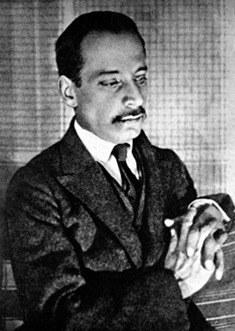
Rainer Maria Rilke

Similarly, all our lives, we shy away from darkness, even though times of pain, doubt, or loneliness in the universe could be our finest. As Rainer Maria Rilke pleaded, in Letters to a Young Poet: “Live the questions now. Perhaps you will then gradually, without noticing it, live along some distant day into the answer.”

The Baha’i teachings suggest that even when the sky rains hardship upon us, the meaning becomes clear as we learn to accept life’s ephemeral discomforts with “radiant acquiescence.” These encounters with the contrast between birth and death, gain and loss, evolution and decline can awaken wonderment, as they strengthen our resilience, convictions, faith and compassion – like strokes of light on a dark canvas.

Yesterday, a man sitting near me in a public square wore a shirt that read “God doesn’t waste human suffering.” A few blocks away at a peace rally, a mother spoke who had started an international peace movement after losing a son in battle. Her audience surely grasped the need to let go of grief and embrace the strengths it offers us — and to accept the joys that come with greater reverie after enduring adversity.

As Baha’u’llah, the Founder of the Baha’i Faith, wrote:

“My calamity is my providence. Outwardly it is fire and vengeance, but inwardly it is light and mercy. ”¹

A study of altruists in society conducted at Humboldt University identified “overcoming hardship” as one of the prevailing common childhood experiences of adults who later become the beneficent leaders in society. ² Hardship, it seems, is a prerequisite for maturation. An untested spirit, like an unplayed instrument, can never exude the same resonance when played.

For me, a night that began on the brink of despair about humanity’s in the universe had ended with a sense of the oneness of all things. The meaning of “light and mercy” sank in as I lay there and watched the shooting stars pierce the night sky with these clear words: Be grateful for the darkness. It opens our eyes to true illumination.

1) Hidden Word of Baha’u’llah #51, Baha’i Publishing Trust, 1985 reprint; p. 52.
2) Oliner, S. & P. Toward a Caring Society, Praeger, Westport, Connecticut, 1995; p. 202.

[ad_2]
Source link

5 Ways to Combat Depression and Pessimism

[ad_1]

If you’re like me, you’ve spent some time in recent months and years feeling ineffective – because of the seemingly intractable problems we humans face as a result of endemic injustice and disunity. 

Those problems, complex and enormous, each tie to all the others like a huge ball of impossibly tangled yarn. As we survey climate change, a global pandemic, racism, civil unrest, inequity, and long-standing wounds on every side, it seems easy to feel small and powerless, and to want to curl into a ball and hide. 

Add to these shared communal problems all our individual heartaches — illness, broken relationships, loneliness, work problems, financial woes — and we can feel overwhelmed, as if nothing we do makes a much of a difference. Our world obviously requires a massive amount of change to heal, and so many people feel they can’t muster what it takes.

RELATED: Seven Symptoms of Spiritual Imbalance and How to Heal Them

But the Baha’i writings tell us that in such moments, powerful actions we can each take really do exist. These five inner and outer actions are available to everyone:

1. We can remind ourselves that God is in control and has a plan for humanity:

Like a loving parent, the Baha’i teachings tell us, the Creator has never left humanity without spiritual and practical guidance, and His divine messengers continue to bring a sequential, regularly renewed, and evolving plan for our individual and collective growth at ever higher levels of development. We are on the cusp of our collective adulthood, and adolescence is a turbulent time. We can choose to alleviate our suffering by aligning ourselves with the side of justice. When we act selfishly, outside our collective good, we will suffer and cause the suffering of others, both physically and spiritually.

Baha’u’llah explained this present era as a necessary part of our transformation as a world citizenry: 

… these great oppressions that have befallen the world are preparing it for the advent of the Most Great Justice. … These fruitless strifes, these ruinous wars, shall pass away, and the Most Great Peace shall come.

Understanding our struggles as necessary for our development and learning may give us some perspective and keep us from despair.  

2. We can pray for ourselves, for others, for the healing of this world:

We may feel we can do little to help in this world. But God is All-Powerful, and prayer is our link to that power. We can always ask God’s assistance and know that in His mercy, He will provide what we need, and assist others as well. 

When I am low and feel helpless, I sometimes recite this short Baha’i prayer to remind me Who is in charge: “Armed with the power of Thy Name, nothing can ever hurt me. And with Thy love in my heart, all the world’s afflictions can in no wise alarm me.”

3. We can focus on what brings us joy and energy, and limit what drags us down:

I find that while I need to be concerned with and aware of what is happening in the world — and working hard to bring positive change — excessive focus on the brokenness of old systems and ways of thinking tends to disempower and drain me. So I’m careful to limit my exposure to negative and divisive media outlets, partisanship on either side, gossip and backbiting, debased entertainment, and shocking clickbait. I don’t feed my body a diet of junk food; why would I fill my head with garbage? 

The Baha’i teachings say spiritual reality and our spiritual qualities are the source of joy and energy. Abdu’l-Baha explained: 

There is no human being untouched by these two influences [joy and pain]; but all the sorrow and the grief that exist come from the world of matter – the spiritual world bestows only the joy!

We also know that when we are uplifted ourselves, we create happiness in those around us. Abdu’l-Baha encouraged this: “I want you to be happy … to laugh, smile and rejoice in order that others may be made happy by you.”

4. We can look for the signs of the Divine in every aspect of the Creation:

The Baha’i writings say, “Every created thing is a door to the knowledge of God.” The sun speaks to God’s illumination and power. A seed stands for humility, sacrifice, and potential, a flower for beauty and sweetness, a mountain for the Creator’s might and steadfastness. So time spent outdoors may well lift our spirits and help us gain perspective. 

With regard to us humans, God has made all these essentially spiritual attributes latent within us. We all have the capacity for steadfastness, humility, generosity, forgiveness, and love. Also, when we look for and recognize others’ divine qualities, we feel hopeful. We can see and nurture these qualities in ourselves, in our children, and in each other. They are the essence of who we are meant to be. 

RELATED: Why We Need to Start Thinking in a Win-Win Mindset

5. Finally, we can look beyond ourselves and dedicate ourselves to serving others:

Our misery is often increased by our focus on our own pain. We might be anxious about the future, or sad about the past. We may have suffered great traumas and losses. This life is full of such tests – but we can alleviate some of our pain by helping someone else. Abdu’l-Baha was reported to have suggested:

Be not the slave of your moods, but their master. But if you are so angry, so depressed and so sore that your spirit cannot find deliverance and peace even in prayer, then quickly go and give some pleasure to someone lowly or sorrowful, or to a guilty or innocent sufferer! Sacrifice yourself, your talent, your time, your rest to another, to one who has to bear a heavier load than you — and your unhappy mood will dissolve …

Serving others can mean volunteering your time and talents for a socially-minded organization, although it can also take many simpler forms: listening to a friend, checking in on someone you haven’t heard from in a while, offering assistance to a neighbor or relative, thinking of your job as the highest service you can render to humanity, and reaching out in love to all who cross your path.

We live in transformative and volatile years of great suffering and great possibilities for real and positive change, personally and collectively. But we are not powerless, and the small things we do to keep our perspective and to spread God’s love and healing message can have a huge effect.  

[ad_2]
Source link

Building Family Unity From the Inside Out

[ad_1]

Our families are the building blocks of society, and where we can start to build uncompromising unity — it’s where we have the opportunity to model and live out our faith in action. How do we continue to walk in love when we have strife and discord with our loved ones? We do this through the self-care of our spirits. 

I am sure you have had this experience. A loved one says something to you that feels personal and you feel attacked. You move to defend words, and then you justify your actions.  Your emotions are your brain’s split-second response to the situation, and they kick off changes in your body. However, this defensive posture, resulting from our unchecked ego, causes us to forget who we are as spiritual beings.

Baha’u’llah, the prophet and founder of the Baha’i Faith, wrote, “Wert thou to attain to but a dewdrop of the crystal waters of divine knowledge, thou wouldst readily realize that true life is not the life of the flesh but the life of the spirit…”  The Baha’i Writings also tell us that “We must strive unceasingly and without rest to accomplish the development of the spiritual nature in man, and endeavor with tireless energy to advance humanity toward the nobility of its true and intended station.”

When we lose our spiritual grounding, we slip into a defensive mode, which has nothing to do with the soul and everything to do with the ego. We need to pause and take a deep breath. Through the teachings of the Manifestations of God, we can detach from the emotion of the moment and remember that beneath the surface of this behavior is a feeling, and beneath that feeling is a need. I need to look objectively at the interaction and ask, “What do I need right now? What does my loved one need?” Is my ego reacting, or am I in control of the situation objectively and spiritually from a place that has nothing to do with ego but everything to do with my higher self, my soul.

This critical step requires equanimity, which results from remembering who we are and who our loved ones are to God. Baha’u’llah reminded us of this when he wrote:   

O SON OF MAN!

Veiled in My immemorial being and in the ancient eternity of My essence, I knew My love for thee; therefore I created thee, have engraved on thee Mine image and revealed to thee My beauty. 

We have all been engraved with God’s image. We have an inherent nobility because we are a reflection of God’s love. However, when our ego gets in the way, and we become arrogant and prideful, we forget his reality. One way we can remedy our unchecked ego is to hold ourselves accountable or practice self-inquiry each day. Not only is this a best practice, but Baha’u’llah also called on all of us to do this when he wrote:

O SON OF BEING! Bring thyself to account each day ere thou art summoned to a reckoning; for death, unheralded, shall come upon thee and thou shalt be called to give account for thy deeds.

Before holding ourselves accountable, we have to ask God to clear the clutter from our thoughts so that we can ascertain the truth about ourselves and where we have fallen short. 

Open my eyes that I may see wondrous things from Your law.

This is where we can make strides in reclaiming the love and compassion we feel for our loved ones. We must be humble and recognize that “I am only human, I am bound to misstep, yet I can avoid repeating the offense and do better.” The act of self-inquiry requires that we authentically acknowledge our human shortcomings, not in skill or aptitude, but where we have caused pain for another, usually resulting from our self-doubt, which is generally the result of being fearful. 

A wise teacher once taught me that “FEAR” is False Evidence Appearing Real. It is an illusion, and if I am not aware of this, I will act or react and thereby short-change not only myself but also those around me. We learn from Baha’u’llah that the entire physical world is an illusion. He wrote:

O FLEETING SHADOW! Pass beyond the baser stages of doubt and rise to the exalted heights of certainty. Open the eye of truth, that thou mayest behold the veilless Beauty and exclaim: Hallowed be the Lord, the most excellent of all creators!

When it comes down to it, our reality is not “real,” yet our physical experience gives us a frame of reference that shapes our perception of the world. We have to ask ourselves, “How much of my experience, what I am feeling, and what I am thinking and observing from my loved ones is real or an illusion based on my own experience?” 

Illusory thoughts can create fear — fear of lack of control, helplessness, abandonment, you name it. Abdu’l-Baha, the son of Baha’u’llah and his designated successor, reminded us that we must learn to change our frame of reference, to look at something from a different vantage point. It is incumbent upon us to see from our loved one’s perspective, empathize with them during a storm, and envelope them with God’s love and compassion. After all, as Abdu’l-Baha wrote:

The fleeting hours of man’s life on earth pass swiftly by and the little that still remaineth shall come to an end, but that which endureth and lasteth for evermore is the fruit that man reapeth from his servitude at the Divine Threshold.

In this context, the personal insights and greater self-awareness developed through self-inquiry are essential to living with purpose and meaning. Traits associated with keeping our ego in check allow us to come from a peaceful place of humility, empathy, and active listening and are vital to maintaining trust and partnership.

Through self-inquiry, we discern our triggers. In a heated moment, we have a choice: to lash out defensively or humble ourselves and move forward with nobility, love, and patience so that we can maintain the health, safety, security, and unity of our home. 

The sacred writings of many faiths encourage this. In Romans 14:19 in the Bible, we’re told, “Let us therefore make every effort to do what leads to peace and to mutual edification.”

And in a talk in Paris in 1911, Abdu’l-Baha encouraged us when he said: “When a thought of war comes, oppose it by a stronger thought of peace. A thought of hatred must be destroyed by a more powerful thought of love.” 

We must remember that God, in His ever forbearance and patience toward us, gently corrects us when we are not in alignment with His words by calling us to accountability to Him. When we meet each other in a spirit of humility, reverence, and true love for one another, God invites us, as Isaiah 1:18 said in the Bible, “Come now, let us reason together, says the LORD: though your sins are like scarlet, they shall be as white as snow; though they are red like crimson, they shall become like wool.”

The family is the nucleus of civilization and the basic social unit of society. We know this not only through the teachings of the Manifestations of God but research also clearly shows that the institution of the family is the first form of community. Abdu’l-Baha gave us insight into how we can create a home that nurtures the family:

My home is the home of peace. My home is the home of joy and delight. My home is the home of laughter and exultation. Whosoever enters through the portals of this home, must go out with gladsome heart. This is the home of light; whosoever enters here must become illumined. This is the home of knowledge: the one who enters it must receive knowledge. This is the home of love: those who come in must learn the lessons of love; thus, may they know how to love each other.

Our families are the gateway to building an ever-advancing civilization. Let the joy and tranquillity in one’s home be where faith can always be felt — and where the changes and chances of this life leave your faith unshaken.

[ad_2]
Source link

My 50th Baha’i Anniversary, and a Powerful Dream

[ad_1]

I recently came across this old 1974 photo of me, aged 22, holding my new baby son Will. Sometime late that month, 50 years ago, I made the most momentous decision of my life – to become a Baha’i.

Paul Hanley and his son, 1974.

In a sense, I had no choice.

I first heard the word Baha’i from a friend in high school. I went to the school library and looked it up in the World Book Encyclopedia. I liked what I saw, but somehow got the impression that this was an Iranian religion. Little did I know that there was a thriving Baha’i community in Regina, Saskatchewan, where I lived.

Maybe five years later an acquaintance knocked on my door, and without saying much handed me the book Baha’i World Faith, and left.

I started reading, but found the book hard to penetrate. Still, something compelled me to keep at it and the words started to resonate within me, even though I didn’t fully understand them.

After studying the Baha’i teachings for a few years, I realized that they now made complete sense to me. I particularly appreciated the idea that all religions, from the Christian faith I grew up in, to the Eastern religions I was attracted to as a youth coming of age in the sixties, as well as Indigenous spiritual wisdom from around the world, were all part of a gradual unfoldment of the divine teachings delivered by a series of messengers, such as Christ, Buddha, Deganawida, and many others. I realized, too, that Baha’u’llah, the prophet and founder of the Baha’i Faith, was the most recent of these spiritual messengers.

Baha’u’llah wrote that his sole desire was “the regeneration of the whole world and the establishment of the unity of its peoples.” As someone involved in the environmental movement, I related strongly to that message. I understood that the Baha’is had a comprehensive plan to make Baha’u’llah’s revelation a reality – a plan now gradually unfolding around the globe. I hoped that I could contribute to it in some way, and that my little son would grow up to live in a peaceful world.

This passage from a particular text by Baha’u’llah had a profound effect on my decision: “… he who turneth away from this Beauty hath also turned away from the Messengers of the past and showeth pride towards God from all eternity to all eternity.”

I had a strong feeling that this was true, and I could not turn away, which is why I say I had no choice.

Shortly after becoming a Baha’i, I had a powerful dream. In the dream I was at the Baha’i Institute, a facility just outside Fort Qu’appelle, the town I lived in at the time. In the dream it was November, the time of year in Saskatchewan before the first snow when everything seems hard, frozen, dead. I was asked to go out and get a pail of water from the well. I walked out, feeling the cold, but as I came closer to the well it became warm. The trees had leafed out, but these trees and the other plants were of a different kind; there are no words to describe them, but I’ll just say they were multi-dimensional. The colors and fragrances were tactile, I could feel them. In that dream world I could smell colors and see fragrances.

I found myself in the most beautiful garden; everything was hyper-real, like the normal world but transcendent. I lowered the pail into the well and drew out what I can only describe as living water, water with multiple dimensions, water that could satisfy all thirsts. As I carried the water back to the building everything turned back into a normal cold November day in Saskatchewan.

For me, that dream was a powerful confirmation of my decision, which has stayed with me for more than 50 years. Now I am 72. If there is anything I have learned from life that is worth passing on, it is simply to invite everyone to seriously investigate Baha’u’llah’s stupendous revelation.

[ad_2]
Source link

If We’re Spiritual Beings, Why Do We Live in a Physical World?

[ad_1]

During my half-century as a university professor and publishing scholar, I devoted a good deal of time to an obvious but puzzling question: If we presume an omnipotent Creator exists, why did He decide to give a physical dimension to His creation? 

Or, stated in more personal terms, if the creation of human beings lies at the heart of the purpose of physical reality—as most religions suppose—then why did the Creator decide that we would benefit from waking up in an environment where we think we are physical beings, when we really aren’t; where we think we own stuff, when we actually don’t; and where we seem to constantly worry about dying, when our conscious self together with all our essential human powers will endure forever as properties of our eternal soul?
My first attempt to get to the heart of this question, a book entitled The Metaphorical Nature of Physical Reality, discussed the premise that physical reality is a poetic or metaphorical expression of abstract virtues and, as such, provides a foundational methodology for human beings to become introduced to a higher, nobler, and more permanent spiritual reality. 

In this work, I applied the terms and techniques of literary studies, which describe how metaphor works, to demonstrate that analogical processes provide a useful means for the human mind to be introduced to, acquire, and understand ephemeral or metaphysical realities—making it possible for us to approach the entire physical part of our lives as a dramatic teaching device.

RELATED: The Physical World: One Great Parable of Life

My next book-length study of this subject, The Purpose of Physical Reality: The Kingdom of Names, dealt with the way in which physical reality and our experience in it might correctly be described as a classroom where we prepare for the continuation of personal development after the dissociation of our selves—our soul with all its complement of powers and faculties—from our physical body. 

This work concludes by observing that one of the really useful devices this classroom offers us as preparation for that transition—we might think of it as a workshop or “breakout” session—is aging, an ingeniously devised experience in which we gradually watch our skin become wrinkled, feel our joints falter, our organs failing, and the whole organic physical construct become incrementally more dysfunctional until it dies, decomposes, and, according to Walt Whitman, becomes “leaves of grass,” or, in my own case, a bit of crab grass.

The next stage in my study of physical reality as an expression of a coherent and logically structured expression of a divine plan for human education was The Arc of Ascent: The Purpose of Physical Reality II. The central thesis of this book—that individual spiritual development in the context of the physical classroom is inextricably linked to our reality as inherently social beings—led me to the conclusion that all individual virtue is largely theoretical until practiced and developed in the context of human relationships. 

For example, a hermit dwelling in a mountain cave may consider himself to be extremely mystical and spiritual, completely kind and selfless, but neither he nor we can be sure he has acquired such virtues unless and until he emerges from his seclusion to help somebody, not once, but enough times that his theoretical virtues become habituated and thus integral attributes of his character.

The thesis of the series of essays you’re reading now came from ideas developed in my third assault on this endlessly fascinating question, entitled Close Connections: The Bridge between Spiritual and Physical Reality. As the title implies, this lengthy and complex discourse analyzes how the gap between the metaphysical and physical aspects of reality is bridged constantly and bi-directionally on both the cosmic and the individual level. Stated axiomatically, this work compares the theory that an essentially unknowable metaphysical being—the Creator—runs physical reality, with the parallel theory that an essentially knowable metaphysical being—the human soul—operates the human body. 

RELATED: Why Do Spiritual Beings Need a Physical World?

As Abdu’l-Baha so clearly pointed out in a talk he gave in Paris, God employs His messengers as intermediaries between Himself and physical reality, even as we employ our brains as intermediaries between our “essential self” and our bodies:

Like the animal, man possesses the faculties of the senses, is subject to heat, cold, hunger, thirst, etc.; unlike the animal, man has a rational soul, the human intelligence, whereby he can think abstractly, or meditate and reflect on philosophical or theological questions.

This intelligence of man is the intermediary between his body and his spirit.

When man allows the spirit, through his soul, to enlighten his understanding, then does he contain all Creation; because man, being the culmination of all that went before and thus superior to all previous evolutions, contains all the lower world within himself. Illumined by the spirit through the instrumentality of the soul, man’s radiant intelligence makes him the crowning-point of Creation.

If this thesis is correct, even as you at this moment read this essay, you and I are conversing soul-to-soul by means of a series of intermediaries.

The written expression of ideas emanated from my conscious mind through the intermediary of my brain. It was then published here at BahaiTeachings.org, and is at this moment being translated by your senses into abstract concepts through the capacity of your brain, which then transforms the complex of symbols that constitute human language into meaning.

Your conscious mind then considers these ideas, and either rejects them as unworthy of being retained or stores them in the repository of your memory and the convictions of your inner being.

So, to put it in terms that contemporary physics might find appealing: how can we defend the thesis that essentially metaphysical beings—and therefore, for the majority of contemporary scientists, nonexistent beings—think themselves capable of operating heavy machinery without hurting anyone?

In Close Connections I discuss critical questions related to evolution, particle physics, astrophysics, history, cosmology, anthropology, medicine, physiology, psychiatry, and all sorts of other fields directly affected by the assertions that metaphysical reality exists and, more important, that there is a strategic and systematic interplay between the metaphysical and physical aspects of reality. Most important in this study is the consideration that these relationships are at the heart of any understanding about how reality works at every level of existence.

My overall objective in Close Connections is to demonstrate an integrative view of reality provided in and corroborated by authoritative Baha’i texts. But since I cannot in a single series of essays discuss all the support for a thesis wrought over ten years, several books, and hundreds of pages of research, I have decided to focus here on one of the fundamental themes in that study: the relationship between the religious axiom that the human purpose is to love God, and the decision of the Creator to make the method by which we can attain this love relationship subtle, indirect, initially physical, poetic, and, consequently, largely hidden and concealed from intuitive knowledge.

In other words, how do we love God when we cannot possibly know the essential reality of God?

This represents a supremely difficult challenge—unless, of course, we are first led out of the cave of ignorance by mentors, and set on the path of willed, self-sustained progress, a process that translates well the Latin verb educare (to lead out) into the English cognate “to educate.” 

Coupled with this idea is another equally enigmatic concept: love. Since, according to the Baha’i teachings, the human purpose is to learn to know and to worship God, or to love and to express that love in action, then it is crucial that we understand how both processes work, as neither learning nor loving can be coerced, even by God, because both require us to employ our free will, and our will cannot be free if it is coerced.

So please follow along in this series of essays as we explore what the Baha’i teachings recommend when they ask us to kindle the fire of divine love in our hearts and souls.

This series of essays is adapted from John Hatcher’s address to the 2005 Association for Baha’i Studies Conference titled The Huri of Love, which comprised the 23rd Hasan M. Balyuzi Memorial Lecture.

[ad_2]
Source link

How an Animal Helped Heal My PTSD

[ad_1]

I held Darwin’s food bowl out to him. It was breakfast time at PrimRose Donkey Sanctuary, usually Darwin’s favorite time of day. He hung his head and turned away. 

Darwin had come to PrimRose a year earlier, emaciated, teeth worn down to nubs, his tawny-grey and white coat patchy and dull. He’d been nursed back to health with meals of warm mash made of hay pellets, and lots of love.  

I’d already been volunteering for several months at the sanctuary. I had never intended to volunteer but my daughter Mehra had been insistent. “You should go, Mom. You’ll love it.” 

She had started volunteering at PrimRose and kept pestering me to go. I refused. As much as I loved animals, I was struggling enough. At five years old I’d been molested by a family acquaintance, and by the time the submerged memory surfaced, my life was in flaming ruins. After a divorce and years of counseling, now, in my second marriage, I was as happy as I’d ever been. I was learning to heal myself using energy healing techniques similar to Reiki, but even so, despair and feelings of panic were never far away. I’d learned that doing too much, over-extending myself, led to downward spirals that could last days, weeks, or even years. 

RELATED: Is Caring For Your Mental Health a Spiritual Practice?

I’d been a Baha’i since 1992, but the struggles I had since childhood continued. Baha’u’llah’s teachings challenged me, gave me hope and made me rise beyond my small perspectives, but some of them seemed incomprehensible to me, like this one: “I swear by My life! Nothing save that which profiteth them can befall my loved ones. To this testifieth the Pen of God, the Most Powerful, the All-Glorious, the Best-Beloved.” 

I longed to trust God, longed to release myself from fear, but although I had faith in God, I didn’t trust Him. After all, couldn’t God have stopped me from being abused? Deep down, I felt abandoned. If I was going to stay safe, it was up to me. 

“No,” I told Mehra. “I’ve got enough to do!” 

But Mehra was relentless. Every Sunday when she got back from volunteering, I heard stories about the sanctuary’s residents. There was Hannah, the mini donkey shaped like a dumpling who threw tantrums if she was separated from her best friend Sadie; Harry, a nervous, overweight fellow who liked to be in charge; Joey, a huge donkey who was gentle and affectionate, despite his heartbreaking history of abuse, and Sheeyore, an aged sway-backed donkey who had dementia and “introduced” herself over and over.

What could it hurt, going occasionally? I won’t commit to anything, I told myself. 

At first, I was overwhelmed. New situations are hard for me, and I had so much to learn. But far from being depleted, I found being around the donkeys deeply healing, like on the day I was troubled about a family situation. The donkeys seemed to sense my sadness and stayed close. Three of the bigger donkeys surrounded me and took turns resting their heads on my shoulder, giving me “hugs.” One of them nibbled my cheek in a kiss. They stood in a protective half-circle, nuzzling and kissing me, while tears streamed down my cheeks.  

Like me, the donkeys were survivors. Some of them, like the chocolate-brown hinny named Carl, carried deep psychological scars, and didn’t let humans close to them. Others, like gentle Joey, seemed to realize they were finally home, finally safe. 

I had mentioned to Sheila, the sanctuary founder, that I struggled with PTSD but had found relief doing energy healing. When Darwin arrived, so broken and close to death, Sheila asked if I could work with him. Everything I’d learned about healing had to be adapted to equines, but miraculously, Darwin lived. As he gained strength, it was a joy seeing him living his “happy ending.” 

I continued working with the sanctuary animals, working with the same white-knuckle determination that I did for my own healing, trusting in God … sort of. Mostly, I trusted in my own determination to fix everything. Every so often, a donkey that I’d worked with died, reminding me that I wasn’t God. “Release the outcome” became my mantra. I even convinced myself that I was doing it. 

Maybe because of his Lazarus-like recovery, Darwin was special to me. He reminded me of my big-hearted white labradoodle, Oliver, who’d died suddenly almost three years earlier. Even though both had suffered at human hands before being rescued, like Oliver, Darwin loved people. And, like Oliver, Darwin loved to eat.

Darwin had a stall right next to where Sheila prepared meals for special-needs residents. As his breakfast mash cooled from the boiling water used to make it, Darwin would crane his neck around the edge of the stall, fixing an eye on Sheila. With lower lip trembling in anticipation, he’d loudly complain about how long it was taking. “It’s coming! It’s coming!” she’d say, laughing. His lunch, being prepared at the same time, was set aside for later. By 10:30, Darwin would be back to his stall, standing vigil for his next meal.  

Sweet Darwin

But now Darwin had turned away from his food. 

Fighting back fear, I worked with him, trying to help balance his system. But although he looked brighter by the time I left, I couldn’t pinpoint the problem. 

RELATED: My Grief Over the Loss of Plants and Animals

It was soon found – toxicology reports revealed that he’d ingested poison. A visitor to the sanctuary had fed Darwin daisies which are toxic to equines. When I saw Darwin the following Sunday, dread prickled through me. Darwin was dying. 

My determination kicked into high gear. I won’t LET him die!, I said to myself. I worked with Darwin for three hours, trying everything I could think of. He was so weak he staggered as he walked. His head looked like it ached. As I massaged his head and ears, Darwin bumped his head on my leg, rubbing it against me.

It was so hard leaving him that day. I gave him a kiss on his neck. “I love you,” I whispered. 

I’d felt a sense of foreboding about Darwin for weeks, but I’d pushed it down. An image kept flashing in my mind of me reading an email with the subject line, “Darwin passed away…” The flashing image only made me more determined. Instead of “Release the outcome,” I doubled down. 

Andrea with Lamont

I emailed everyone I could think of. “Please pray!” I begged. With so many of us praying, God had to listen! One day as I prayed, in my mind’s eye I saw Darwin before me, enveloped in light. It’s working!, I thought. Sheila’s progress reports seemed to agree. 

A few days later, I checked my email. One subject line rushed at me: “Darwin passed away …” I fell back into my chair. I read the email several times in disbelief. Darwin was gone. Despite everything, he was gone, three years to the day that my dog Oliver had passed. I collapsed into wrenching sobs. 

I don’t know how long I cried, but after some time, something shifted. A quiet stillness entered my heart. God was with me. I felt nudged to look deeper. There was something here for me to learn: God was the one who decided life and death, not me. 

Yet … I still felt Darwin with me. Just like the strange vision of the email foretelling Darwin’s passing, an image flashed before me. Darwin. He was young, his coat thick and lustrous. He looked so vibrant, so content. So happy. While there was no way to prove that Darwin was still there in spirit, living his “happy ending” forever, peace welled up within me. Somehow, even though the outcome was not what I wanted, all was well. 

Darwin was well. As was I. 

A serenity came to me that day, formed from my futile attempts to control life, with all its ebbs and flows. It reminded me of decades before when I’d thought my life was over. A wise man, praying over me, quoted the Bible: “Be still and know that I am God.” Like Darwin, far from being abandoned, I’d been carried through so many dire storms over the years that I’d lost count.

Baha’u’llah’s emphatic promise that “… Nothing save that which profiteth them can befall my loved ones” has begun to resonate within me as I find myself circling closer and closer into the mystery and grace of its luminous inner meaning.

I still don’t know why Darwin died, or why I was abused, or why so much suffering exists in the world. All I know is that for the trials we go through, there is grace. As the pain plows its deep furrows into us, our harvest can be peace — peace that comes from surrendering to God’s will, peace that comes from trusting that all will be well.

[ad_2]
Source link

Praying for—and With—Your Children – BahaiTeachings.org

[ad_1]

The miracle of childbirth transforms people. Parents and grandparents feel mesmerized watching each infant emerge and evolve into an intelligent, creative being with unique personality traits and proclivities. We wonder: What is my role in sculpting this soft, sweet ball of human clay? The way we spend our time, the words we speak, and the sheer number of times we cuddle will all gently influence the child’s destiny, even though genetics have already programmed so many indicators of personality and potential.

Today’s parents refer to an arsenal of books, websites, friends and paraphernalia to help them become the best parents they can be. They may study ways to educate their child at home, and may sign up for school waiting lists while the baby still wears diapers. In wealthy communities, they price out everything from beds to backpacks to intercoms to car seats. Sometimes parents forget a simple parenting aid that comes free of charge and never needs revision, a new battery, a subscription renewal or a systems update: Prayer.

RELATED: My 3-Year-Old Says His First Prayer

I know Baha’is who begin praying for their children still at rest in the womb, and who help their babies hear the cadence of prayer even while too young to understand the words. They discuss concepts and memorize daily prayers as they teach their toddlers, and they use prayer to calm their children at ages when some parents struggle to find adequate means to teach impulse control or mindfulness.

When my own children were young, we prayed and read inspirational quotes together daily and also during a weekend tradition spending time at the lake, but I also prayed very hard on my own for them to maximize their potential. Amazed, I realized that they soon could read and think and theorize beyond their years. Where were these prayers leading them? It became a little scary to me at times. Ah, I realized, I had not spoken specifically enough in my prayers. I began to pray that they would maximize their potential to serve humanity.

I saw an almost immediate change. Over the coming years, their interests took on a more expansive scope. They thought about how their skills fit into a broader global context, how their science or literacy or language skills could solve environmental challenges or unite and uplift people who needed more equity or empathy. They set life goals and career paths based on this sense of purpose. I felt such relief.

Only when they had reached well into adulthood did I realize that I also needed to pray for my children to maximize their potential to find personal happiness, by starting families and experiencing the love that comes to parents as they have their own children. My prayers aligned with their evolving steps toward family life, sometimes confounding coincidence. What a fascinating realization, to see how effectively prayer can help us serve our children’s needs during all phases of life.

My children were half-grown when I learned of the Baha’i Faith and its beautiful prayers, and began to use them for a child’s development and a parent’s hopes and dreams. What a boon the Baha’i Writings have become. As I began to meditate on these prayers while working to help children link education with service to humanity, my “family” grew to include children in schools around the world. Prayer became a plumb line for me, helping me face with inspiration and integrity the obligations that assailed me to offer this extended family the same sense of purpose I sought for my own children. Miracles have fallen into my life for the past 32 years as a result of the third prayer listed in this essay, a prayer so powerfully and frequently answered. I wish that same gift for every parent of faith, because prayer lies so close within our grasp.

May the following prayers by Abdul-Baha provide inspiration to enhance your specific appeals as you raise your children and grandchildren, cradling each sweet ball of human clay with wonderment, to discover who they might become.

A Daily Prayer for Pregnant Mothers:

O my Lord, I dedicate that which is in my womb unto Thee. Then cause it to be a praiseworthy child in Thy Kingdom and a fortunate one by Thy favor and Thy generosity; to develop and to grow up under the charge of Thine education. Verily, Thou art the Gracious! Verily, Thou art the Lord of Great Favor! – Abdu’l-Baha, Baha’i Prayers, p. 66.

A Daily Prayer for Young Children to Understand and Memorize:

O God, guide me, protect me, make of me a shining lamp and a brilliant star. Thou art the Mighty and the Powerful. – Ibid., p. 36.

A Parent’s Prayer that Children will Find a Purpose for Unique Talents:

O Thou kind Lord! These lovely children are the handiwork of the fingers of Thy might and the wondrous signs of Thy greatness. O God! Protect these children, graciously assist them to be educated and enable them to render service to the world of humanity. O God! These children are pearls, cause them to be nurtured within the shell of Thy loving-kindness. Thou art the Bountiful, the All-Loving. – Ibid., p. 34.

RELATED: O God! Educate These Children

A Parent’s Prayer that Adolescents will Embrace Service and Spiritual Leadership:

O Lord! Make this youth radiant, and confer Thy bounty upon this poor creature. Bestow upon him knowledge, grant him added strength at the break of every morn and guard him within the shelter of Thy protection so that he may be freed from error, may devote himself to the service of Thy Cause, may guide the wayward, lead the hapless, free the captives and awaken the heedless, that all may be blessed with Thy remembrance and praise. Thou art the Mighty and the Powerful. – Ibid., p. 37.

A Parent’s Prayer that Youth will Offer Inspiration to their Generation:

O Thou kind Lord! Graciously bestow a pair of heavenly wings unto each of these fledglings, and give them spiritual power, that they may wing their flight through this limitless space and may soar to the heights of the Abha Kingdom. O Lord! Strengthen these fragile seedlings that each one may become a fruitful tree, verdant and flourishing.

Render these souls victorious through the potency of Thy celestial hosts, that they may be able to crush the forces of error and ignorance and to unfurl the standard of fellowship and guidance amidst the people; that they may, even as the reviving breaths of the spring, refresh and quicken the trees of human souls and like unto vernal showers make the meads of that region green and fertile. Thou art the Mighty and the Powerful; Thou art the Bestower and the All-Loving. – Baha’i Prayers and Readings (Australia), pp. 356-357.


[ad_2]
Source link

Why Do We Have Good and Bad Dreams?

[ad_1]

According to the Sleep Foundation, most people dream for around two hours every night. Dreaming is a universal experience, regardless of whether or not you remember them upon waking. 

RELATED: A Spiritual Guide to the Dream World

From understanding our spiritual reality to healing from our traumatic experiences, here are nine spiritual and scientific reasons why we have good and bad dreams.

1. We Have Dreams to Understand Our Spiritual Reality

Abdu’l-Baha, one of the central figures of the Baha’i Faith, explained that the human spirit has “two modes of operation and understanding. One mode is through the mediation of bodily instruments and organs.” For example, the spirit uses the ears to hear and the eyes to see the physical world. 

Spiritual traveling, our spirit’s second mode of operation, doesn’t require these organs and limbs. For example, we still hear, taste, touch, feel, see, and move in our dreams without our physical bodies. The dream world helps us understand the abilities and immortality of the human spirit and the freedom we will have once we leave this physical realm. Abdu’l-Baha said:

This body is even as the cage and the spirit is like the bird: We observe that this bird, unencumbered by its cage, soars freely in the world of sleep. Therefore, should the cage be broken, the bird would not only continue to exist but its senses would be heightened, its perception would be expanded, and its joy would grow more intense.

2. We Have Dreams to Connect With Our Angels and Ancestors

As we spiritually travel in the dream world, we can also connect with the spirits of our loved ones who have passed away. 

RELATED: What Does It Mean When You Dream of Dead People?

“Again, for instance, a person is dead, is buried in the ground,” Abdu’l-Baha explained. “Afterward, you see him in the world of dreams and speak with him, although his body is interred in the earth. Who is the person you see in your dreams, talk to and who also speaks with you? This again proves that there is another reality different from the physical one which dies and is buried.” 

3. We Have Dreams to Solve Problems

The Baha’i writings encourage us to pray for our loved ones who have passed away because when we are in a receptive attitude, they can make suggestions to us when we are in difficult situations. This sometimes happens while we are sleeping.

Abdu’l-Baha said:

The soul journeys, perceives, senses. It often happens that a man in a state of wakefulness has not been able to accomplish the solution of a problem, and when he goes to sleep, he will reach that solution in a dream.

That is what happened to Dimitry Mendeleev, the chemist who devised the periodic table. He was having trouble creating a pattern that connected the chemical elements until he came up with the idea in his dreams. 

He wrote, “I saw in a dream a table where all the elements fell into place as required. Awakening, I immediately wrote it down on a piece of paper…”

Dreams have led to numerous scientific discoveries throughout history, such as the structure of the atom, the development of insulin, and Einstein’s Theory of Relativity.

Studies have shown that dreams offer solutions and insights “the night after a triggering event, and also six to seven days later.” So, the next time you need help solving a problem, you might want to sleep on it.

4. We Have Bad Dreams to Heal From Trauma

“Dreams provide a form of overnight therapy,” said Matthew Walker, the professor of neuroscience and psychology at the University of California, Berkeley, and the founder and director of the Center for Human Sleep Science. “It’s not time that heals all wounds. It’s time during dream sleep that provides emotional convalescence.”

In an interview for the Lex Fridman Podcast, he explained how dreams act like a “nocturnal soothing bomb” that takes the edge off of difficult and painful experiences so we can feel better about them the next day. “It’s not just that you dream. It’s what you dream about that also matters,” he said.

Professor Walker said they’ve discovered that people who dreamed of their painful experiences gained “resolution to their clinical depression one year later, whereas people who were dreaming just as much but not dreaming about the trauma itself did not go on to gain as much clinical resolution to their depression.”

He explained that dreaming about “emotional events allows mental-health resolution, keeping our minds safe from the clutches of anxiety and reactive depression.”

5. We Have Good Dreams, Bad Dreams, and Nightmares to Spark Our Creativity

“When I placed my head upon my pillow, I did not sleep, nor could I be said to think… I saw — with shut eyes, but acute mental vision — I saw the pale student of unhallowed arts kneeling beside the thing he had put together,” recounted author Mary Shelley. It was a nightmare that inspired her to write one of the most famous science fiction novels, “Frankenstein.”

She said, “I saw the hideous phantasm of a man stretched out, and then, on the working of some powerful engine, show signs of life, and stir with an uneasy, half-vital motion. …Swift as light and as cheering was the idea that broke upon me. ’I have found it! What terrified me will terrify others; and I need only describe the spectre which had haunted my midnight pillow.’”

Frankenstein isn’t the only novel that was inspired by a bad dream. Robert Louis Stevenson dreamed of the plot for his fantasy thriller novel, “The Strange Case of Dr. Jekyll and Mr. Hyde.” His wife could hear him screaming from a nightmare. When she woke him up, he said, “Why did you wake me? I was dreaming a fine bogey tale.” His final draft was finished in just six days.

Of course, good dreams have inspired many creative works too. Paul McCartney dreamed of the entire melody for the Beatles’ hit song “Yesterday” in a dream, and the surrealist artist Salvador Dali described his paintings as “hand-painted dream photographs.” 

6. We Have Bad Dreams and Nightmares to Warn Us of Potential Threats

In addition to making us more creative, nightmares can also make us more alert. Harvard psychologist Deirdre Barrett believes that nightmares are the brain’s way of alerting our attention to issues that we need to address.

“Nightmares probably evolved to help make us anxious about potential dangers,” Barrett said, as told by Live Science. “Even post-traumatic nightmares, which just re-traumatize us, may have been useful in ancestral times when a wild animal that had attacked you, or a rival tribe that had invaded might well be likely to come back.” She explained that conscious awareness of the concerns that are raised in your dreams may be enough to stop dreaming about them.

7. We Have Good, Bad, and Confusing Dreams to Process Our Memories and Information

Sleep experts believe that dreaming strengthens our memory and recall of information, lets go of erroneous or unnecessary information, and reviews or analyzes events we’ve recently experienced.

For example, Abdu’l-Baha said, “during the day a man becomes engaged in a quarrel and dispute. Later, in the world of the dream, these same circumstances appear to him. This is a confused dream. It has no interpretation and contains no discoveries. Before the person dreamed, he was overcome with delusions.”

8. We Have Bad Dreams and Nightmares if We’re Fatigued or Fearful

Nightmares can be triggered by many factors, including sleep deprivation, stress, anxiety, medications, and even scary movies.

After a conversation with Abdu’l-Baha, Mrs. May Maxwell, an early American Baha’i, explained that dreams that result from these influences are examples of the body influencing the soul, as opposed to the Holy Spirit influencing the soul, which is what prophetic dreamers experience.

9. We Have Good and Bad Dreams to Predict the Future

According to Ward Hill Lamon, President Abraham Lincoln’s former law partner and friend, Lincoln dreamed of his assassination. 

RELATED: Prophetic Dreams: Understanding Their Meaning and Insights

In the dream, “he walked into the East Room of the White House to find a covered corpse guarded by soldiers and surrounded by a crowd of mourners. When Lincoln asked one of the soldiers who had died, the soldier replied, ‘The president. He was killed by an assassin.’”

As the Baha’i writings say:

Awake, the eye sees only a short distance, but in the realm of dreams one who is in the East may see the West. Awake, he sees only the present; in sleep he beholds the future.

Now, I don’t want you all to get too scared if you have dreamed of yourself or a loved one dying. Sometimes, those dreams serve as warnings. 

For example, seven years ago, I dreamed that my father had a heart attack and died. While still in the dream, I “woke up” shaken and told my mother about it. Surprisingly, she calmly responded, “Good, that means we can prevent it.” Then I finally woke up. Naturally, I felt very confused and distressed. I told my mother about my dream within a dream, and to my shock and amazement, she said the exact same thing that her dream self had said: “Good, that means we can prevent it.” 

Around a year later, my father had a severe hemorrhagic stroke. His doctor told my mother that his chances of surviving were slim. But, with the power of hundreds of prayers, he survived. Although my dream did predict his serious health scare, we were able to prevent him from dying. 

And, of course, I’ve had good dreams that have come true too. I hope you all find healing, discoveries, insights, and spiritual connections in the fascinating world of dreams.

[ad_2]
Source link

Quantum Mechanics, Modern Physics and the Baha’i Teachings

[ad_1]

When I reflect on the Baha’i teachings, which stunningly prefigure many of the discoveries of modern physics, I see an interesting pattern.

As a physicist, I’ve noticed that most of the clearest scientific expressions and explanations in the Baha’i teachings come from the writings and talks of Abdu’l-Baha. Looking carefully, those explanations usually trace back to the original concept provided by Baha’u’llah. However, ultimately Abdu’l-Baha seems uniquely capable of pulling these concepts out, explaining them in clear, modern language, and rendering them intelligible to us—or at least to me.

For example on the question of the ultimate substance of matter, in Baha’u’llah’s “Tablet of Wisdom” we can see the presence of the ideas later expressed by Abdu’l-Baha:

… He (Socrates) it is who perceived a unique, a tempered, and a pervasive nature in things, bearing the closest likeness to the human spirit, and he discovered this nature to be distinct from the substance of things in their refined form. – Baha’u’llah, Tablets of Baha’u’llah, p. 146.

This, I suspect, forms the kernel of the idea that underlies Abdu’l-Baha’s statement that:

Even the ether, the forces of which are said in natural philosophy to be heat, light, electricity and magnetism, is an intelligible and not a sensible reality. – Abdu’l-Baha, Some Answered Questions, newly revised edition, pp. 93-94.

Perhaps this alludes to the other uniquely modern ideas from the Baha’i teachings about non-existence of rest and a void, which both flow from the concept of a pervasive and spirit-like essence underlying all matter. For those reasons and from my perspective, it seems it would behoove us to pay extremely careful attention to what Abdu’l-Baha says about science and the universe, despite how deceptively simple it may sound.

With hindsight we can easily see the many important principles contained in Abdu’l-Baha’s writings and speeches—for example, the understanding that both matter and light arises from the ether, the understanding that this field represents a non-physical “intellectual reality” and that absolute rest is impossible via his statement “that motion be an inseparable concomitant of existence.” These concepts expose some of the core ideas of quantum mechanics and later field theory—which developed as guiding lights of contemporary science long after Abdu’l-Baha first expressed them.

Louis de Broglie

All this makes me wonder how a scientist existing before the advent of the quantum wave function might have used Abdu’l-Baha’s statements to hasten these discoveries. One could imagine an insightful individual who might have taken Abdu’l-Baha’s statements on ether and matter to heart, and seen, as the pioneering French physicist Louis de Broglie eventually postulated, that matter might be modeled as a wave; or later understood that this same field could also explain electromagnetism. Yet still, this kind of discovery requires formulating these principles in terms of the problems and the mathematics at hand, which makes me doubt anyone will discover a fully formed theory of physics hidden in scripture. Instead, we can sometimes find principles which should inspire and hopefully point the direction towards fruitful scientific inquiry.

With that in mind, let’s take a closer look at some of the probable truths contemporary science still wrestles with and attempts to prove, and see if we can find corollaries or clues within the Baha’i teachings. Several ideas seem to be suggested in the Baha’i writings which many physicists think are true, but haven’t conclusively proven yet. I’ll list two of the most important ones here:

The Cosmos Exhibits Self-similarity

This concept perhaps should really belong in the category of known scientific facts, since this is a plainly observed phenomena of our universe, due to the nature of our physical laws. While it hasn’t yet been conclusively proven—it would be a very difficult theory to prove, after all—most scientists already accept it; and most laymen do, too. In part, it has driven the development of such emerging sciences as fractal mathematics. The Baha’i teachings express this cosmic self-similarity in terms of the obvious patterns of nature, from the smallest element to the largest:

… earthly and heavenly, material and spiritual, accidental and essential, particular and universal, structure and foundation, appearance and reality and the essence of all things, both inward and outward—all of these are connected one with another and are interrelated in such a manner that you will find that drops are patterned after seas, and that atoms are structured after suns in proportion to their capacities and potentialities. – Abdu’l-Baha, Tablet of the Universe, provisional translation.

The Cosmos is Infinite

Despite the belief that our universe originated with a singularity, scientists now have a strong suspicion that our cosmos is infinite, populated by a multi-verse. In fact, the infinite nature of the universe is now almost a requirement for many existing theories beyond the standard model. Since science centers so much on measurement, this theory also approaches impossibility in terms of proof—but the Baha’i teachings have proclaimed the infinitude of the universe since the beginning of the revelation:

Know thou that the expressions of the creative hand of God throughout His limitless worlds are themselves limitless. Limitations are a characteristic of the finite, and restriction is a quality of existent things, not of the reality of existence. – Ibid.

[ad_2]
Source link

Losing the Stigma: May is Mental Health Awareness Month

[ad_1]

Have you been seeing lime green ribbons tied to trees this month? Those would be in honor of Mental Health Awareness Month.

Mental Health Awareness Month (MHA) was first observed in the United States in May of 1949. Started by the Mental Health Organization, each year the MHA releases a toolkit of materials to facilitate outreach activities for the month.  

For 2022, the month’s theme is “Back to Basics,” observed with film screenings, media, and local events, all based on this theme. The goal: to provide “foundational knowledge about mental health and information for anyone whose mental health is a cause for concern.” 

So who needs to be concerned about mental health? Everyone! 

We should be just as concerned about our mental and spiritual health as the health of any part of our physical body, the Baha’i teachings say. Abdu’l-Baha wrote:

Illness which occur by reason of physical causes should be treated by doctors with medical remedies; those which are due to spiritual causes disappear trough spiritual means. Thus an illness caused by affliction fear, nervous impressions, will be helped more effectively by spiritual rather than by physical treatment. Hence, both kinds of treatment should be followed; they are not contradictory.

RELATED: Trauma: How Can We Heal Our Wounded Souls?

We have no trouble going to see the doctor to treat physical illness – yet when it comes to mental or emotional issues, stigmas still exist. Education and frank discussion can help to change this. According to the National Alliance on Mental Illness, 1 in 5 adults in the United States experience mental illness each year. We’ve all had struggles to varying degrees, or have a friend or family member who has. 

In an interview, Dr. Christina Rajlal and Director Stacy Kuwahara of Kern Behavior Health and Recovery explain:

“It’s critical to let our community know that it truly is okay to acknowledge their feelings and to reach out for help if needed.” Dr. Rosia said.

Rosia also pointed out that the past 2 years of the pandemic have shown just how important it is to start these conversations around mental wellness, not only with our loved ones and family members, but with the whole community.

Behavioral Health Director, Stacy Kuwahara went on to say:

“Despite the stigmas associated with mental health, I encourage everyone to understand just how normal it is, not only to experience it, but to seek help.”

She said that services addressed should be for total well-being – both mental and spiritual health.

This leads to the conclusion that now, more than ever, it takes a village. Being in touch with our families, friends, and neighbors is no longer a luxury but a necessity. We need to connect with each other on a deep, caring level for the benefit of ourselves and for society. Not only do studies show that socializing, connection, and serving others improves the brain, it also has a profound effect on the spirit.

Baha’is see this process of focusing on the well-being of others as one of the cornerstones of good mental and spiritual health:

Every imperfect soul is self-centered and thinketh only of his own good. But as his thoughts expand a little he will begin to think of the welfare and comfort of his family. If his ideas still more widen, his concern will be the felicity of his fellow citizens; and if still they widen, he will be thinking of the glory of his land and of his race. But when ideas and views reach the utmost degree of expansion and attain the stage of perfection, then will he be interested in the exaltation of humankind. He will then be the well-wisher of all men and the seeker of the weal and prosperity of all lands. This is indicative of perfection.

Thus, the divine Manifestations of God had a universal and all-inclusive conception. They endeavoured for the sake of everyone’s life and engaged in the service of universal education. The area of their aims was not limited — nay, rather, it was wide and all-inclusive.

Therefore, ye must also be thinking of everyone, so that mankind may be educated, character moderated and this world may turn into a Garden of Eden. 

RELATED: 8 Tips to Have a Healthy Spiritual Life

So let’s talk about our feelings. No one need struggle in silence. As just one example, don’t hesitate to check up on your children today. Are they having emotional issues around school, bullying, or friendships? What about your mom? Could she be holding back her recent feelings of depression so as not to burden you? Does your partner not want to drain you with sharing their work stresses? Is your postpartum girlfriend struggling? What about your neighbors? How can you be of service if they are in need? 

In all cases, if you ever hear any mention of suicide, do take it very seriously. 

Let’s not allow mental health awareness to end this month, but keep the green ribbons up and the conversation going, so we can hold this very important issue predominantly in our hearts and minds throughout the year – because no one is an island, and we all need each other.

Free mental health resources:

Change Your Algorithm 

A mental wellness program that offers free 1-hour mental health classes online and in Los Angeles, CA. Classes are led by certified mental health therapists that can provide you with the tools needed to take care of your mind during a time of fear and uncertainty. Yes, it’s all free. Their motto:

“There is no judgement here, just healing.”

7 Cups

This free app offers 24/7 chat. It connects you to caring listeners from a variety of online communities that you can explore and join. I joined it just for the great community and fun events. Their takeaway:

“You are not alone.”

National Suicide Prevention Lifeline:

(800) 273-TALK   or   (800) 273-8255

[ad_2]
Source link

How to Spiritually Deal with Workplace Bullying and Backbiting

[ad_1]

Have you ever had a terrible boss or colleague, one who had obviously forgotten they were no longer in middle school?

Workplace bullying sadly happens on a different level than in middle school—and it can feel even worse. As adults, we should have matured and learned about that thing called “communication” rather than that thing called “passive-aggressiveness.”

We spend most of our adult lives at the workplace, so a bullying issue with a colleague or boss that can’t be resolved with mature direct communication usually results in a very stressful situation. It can cause mental anguish that leads to health problems such as high blood pressure, sleep disturbances, anxiety, and much more. It can also be harder to simply walk away from if you are the sole breadwinner for your family, or even when jobs are hard to come by.

I’ve had clients, friends and family members voice many complaints about this subject. One client had such a mean and horrible boss that after doing her due diligence and trying to resolve the matter through the appropriate channels, nothing changed—and her blood pressure rose so high she had to take a leave of absence. What do you think this kind of stress will eventually do to her body if not resolved?

The Baha’i teachings use a term called “backbiting” that aptly describes this form of harmful, passive-aggressive behavior. Webster’s defines it this way: “to slander someone absent.” Make no mistake about it—ruining someone’s reputation by backbiting is bullying. The victim of this may not know what exactly has been said, but they can feel its effects. The spirit or intuition always knows. This type of behavior actually starts with adults, and then sends a very bad message to friends, family and yes, even their own children:

If any soul speak ill of an absent one, the only result will clearly be this: he will dampen the zeal of the friends and tend to make them indifferent. For backbiting is divisive, it is the leading cause among the friends of a disposition to withdraw. If any individual should speak ill of one who is absent, it is incumbent on his hearers, in a spiritual and friendly manner, to stop him, and say in effect: would this detraction serve any useful purpose? …No, never! On the contrary, it would make the dust to settle so thickly on the heart that the ears would hear no more, and the eyes would no longer behold the light of truth. – Abdu’l-Baha, Selections from the Writings of Abdu’l-Baha, pp. 230-231.

The long-lasting effects of backbiting and bullying, being rude, not smiling, talking trash, gossiping, being unkind, mean or moody with others at the workplace can reach far and wide. When those behaviors escalate, people do the worst things to each other, including throwing their colleague under the bus with the boss, stealing clients, lying, maligning motives, and trying to make people look bad in front of others to satisfy a deeper insecurity and ugliness.

If you feel the need to backbite and talk negatively about others to make yourself feel better about yourself, there is something wrong inside you, not with the other person. Any time you catch yourself backbiting, you should examine your own motives, and stop the behavior.

I personally suffered from childhood bullying at a young age—eleven—simply because I was the new girl in school, and a popular boy liked me. Who really cares about boys at that age anyway? I had to talk my way out of a fight, and then toughen up at an age when all I wanted to do is play with friends and be carefree.

More recently, as an adult, I had to deal with a more passive-aggressive version of bullying from a colleague. This came to me as a shock, because I expected adults to be more mature and well, adult. This person behaved terribly toward me, for no apparent reason at all. Maybe his insecurities were eating him up from the inside out, and he felt the need to direct it all at me—I don’t know. While I tried my best to be nice to this person and ignore his very moody and terrible behavior, in the end it proved impossible. When it became clear nothing would be done about it, I had to end our business relationship.

I know that having my own business allows this kind of freedom, and I realize that it can be harder for a person who works for someone else to do the same. However, every person should stand up for themselves when they’re treated poorly, and we should do that for each other, too. Why is it so hard for some people to stand up for what’s right, regardless of the outcome? It might be uncomfortable in the short term but, in the long term it can become the healthiest and most rewarding feeling, because you actively sought justice. It also creates a healthy effect in the community. Bullying behavior should not be tolerated, ignored or rewarded.

In one of my University courses on health years ago I heard a shocking statistic: that 80% of Americans have been or are on an anti-anxiety or depression pharmaceutical. That’s a staggering number! There are a myriad of causes for this, including legitimate mental illness, but I would suggest that much anxiety and depression come from backbiting and bullying. Have people forgotten how to simply be kind to each other? Are they are too self-absorbed in their own misery? Or maybe, they don’t realize how we are all truly connected to each other? It isn’t just your family or friends who connect you to others, it is everyone.

[ad_2]
Source link

3 Ways to Deal with Any Crisis of Conscience

[ad_1]

Conscience is a thousand swords. – Shakespeare

There is a higher court than courts of justice and that is the court of conscience. It supersedes all other courts. – Gandhi

There comes a time when one must take a position that is neither safe, nor politic, nor popular, but he must take it because conscience tells him it is right. – Martin Luther King Jr.

When did your last crisis of conscience happen? Large or small, we all have them. You face a tough decision, and that still small voice inside your soul says “Wait a minute. Am I doing the right thing?”

When your conscience asks you that question, it might be about something minor, something seemingly unimportant; or it might be the most important decision of your entire life.

A friend of mine told me about her recent little crisis of conscience—a vegetarian for years, she had breakfast in a restaurant with her sister, and her sister ordered eggs and bacon. “That bacon on my sister’s plate smelled so good I just could not resist. It was so good, but eating it made me feel terrible,” she said. In response, I had to tell her the old joke about the difference between eggs and bacon: the chicken was involved, but the pig was committed. (In hindsight, however, I suspect that didn’t make her feel any better.)

At the other end of the seriousness spectrum from my friend’s relatively minor crisis, the hundreds of thousands of refugees now pouring into Europe from Syria have generated a major crisis of conscience for millions of Europeans and their governments. As I write this today, Pope Francis just told a joint session of the American Congress that “We must not be taken aback by their numbers, but rather view them as persons, seeing their faces and listening to their stories, trying to respond as best we can to their situation.” This good advice—that a crisis of conscience should always first consider the human beings involved—resonates powerfully with the Baha’i teachings:

O ye beloved of the Lord! The Kingdom of God is founded upon equity and justice, and also upon mercy, compassion, and kindness to every living soul. Strive ye then with all your heart to treat compassionately all humankind… – Abdu’l-Baha, Selections from the Writings of Abdu’l-Baha, p. 158.

This short quote from the Baha’i teachings gives us three clear, specific guidelines for dealing with any crisis of conscience:

  1. Equity and Justice;
  2. Mercy and kindness;
  3. Treat compassionately all humankind.

When you’re having a crisis of conscience, and trying to answer a hard moral question, first ask yourself: What’s fair and just? How could I be most equitable here?

I learned about justice and equity from my mother, who had a terrific way of showing us fairness—when I was a child, and my little brother and I got a treat, we would usually have to split it. A brownie, a candy bar, a banana—no matter what it was, it needed to be shared fairly and equitably. Mom’s rule: one person cuts it in half, the other one chooses. I guarantee it—you’ve never seen such precise and careful measuring. Since I was usually the one to divide the treat, and my brother got to choose first, I made sure each half perfectly reflected the other half. Try it: one cuts, the other chooses.

Once you’ve determined the fairness of the situation, you can begin to apply a liberal personal dose of mercy and kindness. Most crises of conscience are driven not only by questions of justice, but also by questions of kindness. Ask yourself: how could I best respond to this crisis of conscience and act with the most mercy and kindness? This step encourages everyone to consider, when their crisis of conscience comes, the effects their decision will have on the others around them. Our minds all want fairness, but our hearts and souls want love and kindness even more.

One person I know recently faced a crisis of conscience when he had to decide how to respond to an insult. He heard from a third party that a friend—or at least someone he had thought of as a friend—had said something negative about him. He knew that the just and equitable path involved going directly to that friend and asking him about it, but he felt that a direct confrontation would only make things worse—and compromise the one who told him about the insult. So he decided, in the interests of tempering justice with mercy and possibly sustaining the friendship, to increase his efforts to be kind toward his backbiting friend. After a month of that effort, without ever mentioning it, he received an unsolicited apology for the insult, and knew he had made the right decision.

Then, finally, you can consider how your crisis of conscience will reflect the virtue of compassion toward all humankind.

This initially sounds similar to the second decision-making step, with its focus on mercy and kindness, but factoring in compassion toward all involves another, even higher level of consideration. Compassion means deep sympathy, and that emotion allows us to put ourselves in the place of others and then contemplate the long-term results on humanity, on posterity and on the planet. With the third, compassionate step, the Baha’i teachings ask us to consider the impact of our conscience and its decisions on the whole world—to become world-minded.

Here’s a simple example: I have a friend who needed a new car, and after discussing it he realized he had to balance his desire for something fast, low and red with his desire for a livable future for the world’s children. He faced a crisis of conscience between his own warring desires. He wound up with something in between—shiny and red, but also with a very low impact on the environment. That choice, he told me, he saw as the most compassionate toward future generations.

Everyone has decisions to make, and we all have to factor in the impact of our conscience on those decisions. If you use this simple three-step tool to make your moral choices—justice, kindness and compassion for all humanity—it will transform those decisions into ones truly congruent with your innermost values.

[ad_2]
Source link

Psychology or Religion—Which One Works for You?

[ad_1]

At their peak, religion and psychotherapy become one. – Marianne Williamson

When we were both in graduate school, I asked a friend of mine to tell me about his religion. He said “Psychotherapy–I worship at the altar of Freud and Jung every week.” I laughed, but later I realized that modern psychology does serve as a kind of religion for millions of people. Psychology has replaced religion for many people, and millions now utilize it for self-knowledge and understanding. But not everyone sees it as a panacea. “A secular cult of self,” one critic called the contemporary practice of psychotherapy, “now part of the problem of modern life, rather than part of its resolution.”

So what’s your religion—an actual religion, or the science of psychology? Which one do you use to explore your self, your psyche, your soul? Which one explains your inner reality best?

Of course, we’ve always wondered about the human mind and the inner self. Socrates, Plato and Aristotle wrote treatises on consciousness, and defined early psychology as the study of the soul. The great Islamic philosophers and scientists Avicenna, Alhazen, Witelo and Ahmed ibn Sahl al-Balkhi identified, described and treated the first neuropsychiatric disorders. During the Enlightenment, Descartes, Kant, Locke and Liebniz advanced a whole host of psychological concepts in their books and essays. But no one truly practiced psychology or called themselves a psychologist until the 19th Century.

In fact, the actual science of psychology and the Baha’i Faith emerged into the world’s consciousness at about the same time, in the mid- to late-1800s. When psychology began as a separate scientific discipline in the 1870’s–founded by a perspicacious German physician named Wilhelm Wundt–it faced tremendous opposition from traditionalists, from the clergy and from the general public, in much the same way the Baha’i Faith did at its inception. Many people saw psychology as the modern equivalent of witchcraft, mistrusting its motives and dismissing its claims.

Now, however, a century and a half later, psychology has firmly entrenched itself into our collective mindset, at least in the western world. We recognize its insights into the human psyche, and understand that it has helped many people lead happier and better-adjusted lives.

During the past hundred years, though, the relationship between psychology and religion has progressed, from open antagonism to complementary and sometimes even congruent worldviews. Humanistic, transpersonal and positive psychology now emphasize intellectual, emotional and spiritual growth, the actualization of inner potential, and the innate nobility of each person. That holistic approach to life, with its emphasis on transcendence and the inner values that make us more fully human, has enormous resonance with the Baha’i principles.

Carl Jung

Many contemporary psychologists and psychiatrists have advanced thoughts and theories in concert with various aspects of the Baha’i teachings—Abraham Maslow, Carl Rogers, Rollo May, Viktor Frankl, R.D. Laing and several others. However, one of the great pioneers and thinkers in psychology, Carl Jung, seemed to have a particularly harmonious, Baha’i-like viewpoint that spanned multiple areas of interest. Since Jung is regarded as the founder of analytical psychology, and as the first psychologist to focus his attention on mental health rather than mental illness, in this short series of essays we’ll explore some of the remarkable parallels between the Baha’i teachings and the discoveries and theories in Jung’s work.

Unlike Freud, Jung accepted the role of faith and the existence of God:

If one attempts to assign to religion its place in man’s evolution, it seems not so much to be a lasting acquisition, as a parallel to the neurosis which the civilized individual must pass through on his way from childhood to maturity. – Freud

God has fallen out of containment in religion and into human hearts—God is incarnating. Our whole unconscious is in an uproar from the God Who wants to know and to be known. – Jung

Unlike his contemporaries, Jung’s view of the human psyche included a powerful spiritual component, a theistic psychology that emphasized seeking and finding healthy, lasting inner meaning:

I have frequently seen people become neurotic when they content themselves with inadequate or wrong answers to the questions of life. They seek position, marriage, reputation, outward success of money, and remain unhappy and neurotic even when they have attained what they were seeking. Such people are usually confined within too narrow a spiritual horizon. Their life has not sufficient content, sufficient meaning. If they are enabled to develop into more spacious personalities, the neurosis generally disappears. – Jung

Jung’s concepts have a remarkable resonance with the Baha’i teachings, and in some cases even use the same kinds of language. Compare this quote to the one above, for example:

One who is imprisoned by desires is always unhappy; the children of the Kingdom have unchained themselves from their desires. Break all fetters and seek for spiritual joy and enlightenment; then, though you walk on this earth, you will perceive yourselves to be within the divine horizon… But man himself may become a captive to the things he has invented. His true second birth occurs when he is freed from all material things: for he only is free who is not a captive to his desires. – Abdu’l-Baha, Abdu’l-Baha in London, pp. 87-88.

Please follow along in this series of essays as we take a unique look at the founder of analytical psychology and the ways the Baha’i teachings inform and underpin his insights into the human mind and soul.

[ad_2]
Source link

Is Caring For Your Mental Health a Spiritual Practice?

[ad_1]

The Baha’i writings emphatically state that mental health struggles are separate from the life of the soul: “The soul of man is exalted above and is independent of all infirmities of the body or mind.” But there also appears to be a strong correlation between spiritual strength and mental health management. 

Even as a mental health professional myself, I’m still seeking to understand the connection between spirituality and mental health, and learning how to apply the spiritual teachings of my faith to my life. 

I have experienced anxiety and depression at different points of my life and have come to feel that perhaps such struggles are part of our spiritual journey in this life and preparation for the next. Going through bouts of anxiety and depression were a catalyst for me to reflect on my purpose. I found myself asking: Why am I experiencing these tests and difficulties? Have I done something wrong to deserve this?

At times, these questions led me to question how much I was serving my community and whether I was doing my part as a professional counselor to truly help my clients. They led me to examine my underlying prejudices, my fear of failure and my need to please others. 

I have begun to grasp that some things are in my power to change and some are not.  Some of my struggles may be biologically inherited, and some may be a consequence of the environments I find myself in — and I may never be able to differentiate between them. But as painful as such challenges can be, the challenges we face can provide opportunities to grow in areas such as patience, forbearance, and tolerance.

The central figures of the Baha’i Faith have shared some wisdom in this regard. In a 1911 speech, Abdu’l-Baha, the son of Baha’u’llah, the founder and prophet of the Baha’i Faith, said: “Test are benefits from God, for which we should thank Him. Grief and sorrow do not come to us by chance, they are sent to us by the Divine Mercy for our own perfecting.”

Coming to this understanding has led me on a path of discovering what virtues I need to work on to grow spiritually. I’m learning to be honest with myself as a human being, as a member of my faith community and as a professional — to acknowledge what I’m capable of, listen to my inner voice, and practice truthfulness, which Baha’u’llah told us is the “foundation of all human virtues.”

All the prophets of God endured intense persecution and needed to take time to focus on their own wellness, pray, and reflect. For example, Moses went to the mountain, and Christ went to the wilderness. And although these holy figures had spiritual power beyond our capabilities, they were human as well. Shoghi Effendi, the Guardian of the Baha’i Faith, wrote: 

“As we suffer these misfortunes we must remember that the Prophets of God Themselves were not immune from these things which men suffer. They knew sorrow, illness and pain too. They rose above these things through Their spirits, and that is what we must try and do too, when afflicted. The troubles of this world pass, and what we have left is what we have made of our souls; so it is to this we must look — to becoming more spiritual, drawing nearer to God, no matter what our human minds and bodies go through.”

Though there’s still stigma surrounding mental illness, it’s important that we move past those attitudes. Seeking help and support from a trained mental health professional can be essential. Therapy provides a safe and confidential space to explore any concerns a person may need to address, and furthermore, most clinicians today understand the importance of incorporating spirituality into their practice. 

The skills used in therapy are fundamentally derivative of all spiritual traditions. They incorporate faith over fear as a coping skill, overcoming worries, changing anxious thoughts into peaceful ones, practicing grounding and mindfulness, strength-based methods, redirection, cognitive-behavioral approaches, and the idea that pure thoughts lead to pure actions. 

When seeking an appropriate counselor, the initial intake interview can provide you with the opportunity to develop rapport with your clinician and determine if they respect your religious beliefs, and if they are open to using spiritual tools. Remember, the most essential spiritual quality is truthfulness: if you are not capable of being honest with your therapist, progress in counseling will be impossible.

Additionally, taking time to rely on the Divine remedy — the Word of God — has brought me much healing and helped me cope with my own mental health struggles. When we are in pain, we can lose sight that our faith in God can pull us through times of distress. I find comfort in one of my favorite quotes from the Baha’i writings: 

“Rely upon God. Trust in Him. Praise Him, and call Him continually to mind. He verily turneth trouble into ease, and sorrow into solace, and toil into utter peace. He verily hath dominion over all things.”

Keeping our thoughts centered on prayer and the Word of God is critical, but we also have physical bodies that require training. Our minds benefit from exercise and training, which is why practices such as meditation and mindfulness better prepare us to be able to cope with the stressors of life.  

[ad_2]
Source link

How Meditation Jump-Started My Journey Out of Darkness

[ad_1]

Have you ever heard people talk about “the dark night of the soul?” I’m not sure if I had before, but when you go through the hardest period of your life, you know what that truly means. The dark night of the soul is a place you are not sure you will come back from, it’s darker than you can imagine, and it’s very hard to find any remnant of light! Your soul questions your purpose and faith in this life. When you are in that space, darkness has overtaken you, and feelings of loss and hopelessness abound. 

Had I not grown up with the Baha’i teachings, I’m not sure I would have made it out of that dark place. But thankfully that was not the case and somehow it helped to have a very basic understanding of the reason for tests and difficulties. 

Abdu’l-Baha, the son of the prophet and founder of the Baha’i Faith, shared during one of his talks in Paris:

“The mind and spirit of man advance when he is tried by suffering. The more the ground is ploughed the better the seed will grow, the better the harvest will be. Just as the plough furrows the earth deeply, purifying it of weeds and thistles, so suffering and tribulation free man from the petty affairs of this worldly life until he arrives at a state of complete detachment. His attitude in this world will be that of divine happiness. Man is, so to speak, unripe: the heat of the fire of suffering will mature him. Look back to the times past and you will find that the greatest men have suffered most.”

It was during this time of extreme tests that I found new tools and started a new path! I was introduced to a New York Times best selling author and thought leader who is transforming lives all around the world with his knowledge and teachings. Dr. Joe Dispenza is exploring the intersection of neuroscience, quantum physics, epigenetics, and brain chemistry to help individuals understand how to transform their lives through the process of meditation and changing your thoughts, it’s not enough to only meditate, you must also change the way you think. He explains in “You are the Placebo Making Your Mind Matter”:

“… First, everyday I would put all of my conscious attention (meditation) on this intelligence within me and give it a plan, a template, a vision, with very specific orders… And second, I wouldn’t let any thought slip by my awareness that I didn’t want to experience…”

I was first attracted to his book “Breaking the Habit of Being Yourself” and in this book he shares a formula of how to create lasting change in your life.

Step 1: Create an intention, get clear on exactly what you are working to manifest, go into meditation and be as clear and creative as you can and “see” with your inner eye all the details you can imagine, the more you can imagine the outcome, the better the results. 

Step 2: Do not get up from your meditation until you can live in the emotion of how you would feel if that intention had already materialized.

I was so excited to learn this formula because it reminded me of something I read when I was a teenager by Shoghi Effendi, the great-grandson of Baha’u’llah. He wrote to an individual and since then, people have called his response “The Five Steps of Prayer for Solving Problems.” 

In step five, Shoghi Effendi said to “act as though it had already been answered…” and for over 35 years, I could not understand how to do that. But when I learned about Dr. Joe’s formula, all of a sudden it made sense. Don’t get up from your meditation until you can LIVE in the emotion had it already been achieved! Oh, act as though it had already been answered! And at this moment, everything changed for me. 

Here are two of the five steps from Shoghi Effendi:

1st Step:  “Pray and meditate about it. Use the prayers of the Manifestations as they have the greatest power. Then remain in the silence of contemplation for a few minutes….”

5th Step: “ACT; Act as though it had all been answered. Then act with tireless, ceaseless energy. And as you act, you, yourself, will become a magnet, which will attract more power to your being, until you become an unobstructed channel for the Divine power to flow through you.”

Discovering Dr. Joe’s work was transformative for me, because all my life, I grew up in a religion that taught us the power of our thoughts. But I did not “believe” it impacted the material world, I really just thought it impacted the spiritual world. Now I know, backed by science that Abdu’l-Baha was being literal when he said:

“When a thought of war comes, oppose it by a stronger thought of peace. A thought of hatred must be destroyed by a more powerful thought of love…”

The advances in the sciences and connecting it to spirituality is a growing industry. There are many scientific studies that have proven that we influence our bodies based on what we think and feel. Harvard did a study where they took subjects who had never played the piano before and had some practice scales in their minds without ever touching a piano and another group practice the scales on the piano. The group that practiced on the piano, their finger strength increased by 53%, whereas the group that never lifted a finger and only practiced in their minds, their finger strength grew by 35%. 

Another study took a group of men in their 70s and 80s on a five-day retreat. Once there they were asked to behave like they were 22 years younger. They were asked to actively reminisce: there were posters of women hanging on the walls of their generation 22 years previous, they played music of that time period, and they watched old movies and television shows. The researchers provided an environment that really made them feel and imagine their lives from 22 years ago. There was a significant result, not only were their bodies stronger at the end of the retreat but they also had improvements in their weight, height, and even the length of their fingers grew. The “men literally became younger.”

And another Harvard study looked at hotel maids who did not exercise. They had two groups — the first group changed nothing, but in the second group, they explained that the work they are doing exceeds the Surgeon General’s recommended exertion for daily exercise. Nothing in their lives changed except that they now understood that the work they were performing could be considered exercise. After 30 days the control group was exactly the same, whereas the group who now considered their work to be exercise lost an average of two pounds, lowered their body fat percentage, and their blood pressure dropped by an average of 10 points.

These are just a few of the many studies that prove our “beliefs” have a direct physical impact on our reality.  

Abdu’l-Baha reminds us of this truth: “The reality of man is his thought” — as does Jesus Christ who said, “For as he thinketh in his heart, so is he,” and Buddha who said, “Our life is shaped by our mind, for we become what we think.” 

These statements are not just feel-good beliefs. They actually frame our perception of reality and influence our lives to a great degree.

I am now coming to realize how vital it is to understand the spiritual writings of the Baha’i Faith and how science every day proves its efficacy.

We must become aware of our thoughts — the good and the bad — and we must get intentional with creating the future in which we want to live. We must realize that every thought we have influences the outcome of our reality. I have found the best way to do this is through meditation. The meditative process shows you very clearly what you are thinking about, and if you want to change the record that is playing over and over again, then we must create a new intention.  

Bahá’u’lláh has written:

“Meditate profoundly, that the secret of things unseen may be revealed unto you, that you may inhale the sweetness of a spiritual and imperishable fragrance, and that you may acknowledge the truth…so that light may be distinguished from darkness, truth from falsehood, right from wrong, guidance from error, happiness from misery, and roses from thorns.”

Because meditation has become a daily practice for me, I’m better equipped to create the future I desire. I’ve learned to let go of the things I cannot control. This allows so much freedom from stress and anxiety, and if I employ the steps of Dr. Joe for creating a new reality and Shoghi Effendi’s advice on the dynamics of prayer for solving problems, then I am creating my reality instead of being a victim of its circumstances. 

To share this with others, I recently started a meditation group that’s open to all. It’s great for beginners and those wanting to take their practice further.

We all have this ability at our fingertips. It’s not easy, but with practice and commitment, it will change your outlook on life and provide you with a new process to deal with life’s beauty and challenges.

[ad_2]
Source link

7 Powerful Prayers for Help From God

[ad_1]

Prayer is the sweetest state in the world. Through prayer, we converse and commune with the Architect of the Universe — our Creator who knows us better than we know ourselves. 

RELATED: 6 Tips for Your Daily Prayers

Reciting and meditating on the verses of God can refresh, inspire, and heal your body, mind, and soul. Whether you’re experiencing sorrow, crises, or calamities, these powerful Baha’i prayers for help from God can uplift, guide, and assist you when you are in need.

RELATED: 6 Powerful Prayers for Safety and Protection

1. A Short Prayer to Ask God for Help During Difficulty

This short, but powerful, prayer is likely one of the most known and recited prayers by Baha’is around the world. The Bab, the forerunner and herald of Baha’u’llah, the prophet and founder of the Baha’i Faith, revealed this prayer for us to ask God for help in times of difficulty:

Is there any Remover of difficulties save God?  Say: Praised be God!  He is God!  All are His servants, and all abide by His bidding!

2. A Short Prayer Asking for Help and Guidance

Regardless of what problems we are facing, this short, powerful prayer asks God for help, guidance, and inspiration. Baha’u’llah wrote:

In regard to his affairs, let him repeat nineteen times:

‘Thou seest me, O my God, detached from all save Thee and cleaving unto Thee. Guide me, then, in all mine affairs unto that which profiteth me for the glory of Thy Cause and the loftiness of the station of Thy loved ones.’

Let him then reflect upon the matter and undertake whatever cometh to mind. This vehement opposition of the enemies will indeed give way to supreme prosperity.

3. A Prayer for Aid and Assistance

This has always been one of my favorite Baha’i prayers for aid and assistance. Baha’u’llah beautifully illustrated our journey to be closer to God through these holy words:

O Thou Whose face is the object of my adoration, Whose beauty is my sanctuary, Whose habitation is my goal, Whose praise is my hope, Whose providence is my companion, Whose love is the cause of my being, Whose mention is my solace, Whose nearness is my desire, Whose presence is my dearest wish and highest aspiration, I entreat Thee not to withhold from me the things Thou didst ordain for the chosen ones among Thy servants. Supply me, then, with the good of this world and of the next.

Thou, truly, art the King of all men. There is no God but Thee, the Ever-Forgiving, the Most Generous.

4. A Prayer Asking God to Help Just Governments

Abdu’l-Baha, the son of Baha’u’llah and the authorized interpreter of the Baha’i writings, revealed this prayer, asking God to help every just government that protects the poor and weak:

O my God! O Thou Who endowest every just power and equitable dominion with abiding glory and everlasting might, with permanence and stability, with constancy and honour! Aid Thou by Thy heavenly grace every government that acteth justly towards its subjects and every sovereign authority, derived from Thee, that shieldeth the poor and the weak under the banner of its protection.

I beseech Thee, by Thy divine grace and surpassing bounty, to aid this just government, the canopy of whose authority is spread over vast and mighty lands and the evidences of whose justice are apparent in its prosperous and flourishing regions. Assist, O my God, its hosts, raise aloft its ensigns, bestow influence upon its word and its utterance, protect its lands, increase its honour, spread its fame, reveal its signs, and unfurl its banner through Thine all-subduing power and Thy resplendent might in the kingdom of creation.

Thou, verily, aidest whomsoever Thou willest, and Thou, verily, art the Almighty, the Most Powerful.

5. A Prayer for Help in Fulfilling Our Hopes

In this prayer that Abdu’l-Baha revealed, we ask for divine grace and blessings, imploring God to help us achieve what we have hoped for:

O God! Grant Thy favour, and bestow Thy blessing. Vouchsafe Thy grace, and give a portion of Thy bounty. Enable these men to witness during this year the fulfilment of their hopes. Send down Thy heavenly rain, and provide Thy plenteousness and abundance. Thou art the Powerful, the Mighty.

6. A Prayer for Help With Serving Humanity

Baha’u’llah revealed this prayer to assist us in becoming steadfast in our faith and service to humanity:

O my God! O my God! I testify that this is Thy Day which hath been mentioned in Thy Books, Thy Epistles, Thy Psalms and Thy Tablets. In it Thou hast manifested that which was hidden in Thy Knowledge and stored up in the repositories of Thine unfailing protection. I beseech Thee, O Lord of the world, by Thy Most Great Name whereby the limbs of the people were shaken, to assist Thy servants and Thy handmaidens to become steadfast in Thy Cause and to arise in Thy service.

Verily, Thou art potent to do whatsoever Thou willest, and in Thy grasp are the reins of all things. Thou protectest whomsoever Thou willest through Thy Power and Dominion. And verily, Thou art the Almighty, the All-Subduing, the Most Powerful.

7. A Prayer for Assistance in Becoming Strengthened and United

This prayer by Abdu’l-Baha implores God to strengthen, unite, and “lead us to the well-spring of Life”:

O Thou divine Providence, pitiful are we, grant us Thy succour; homeless wanderers, give us Thy shelter; scattered, do Thou unite us; astray, gather us to Thy fold; bereft, do Thou bestow upon us a share and portion; athirst, lead us to the well-spring of Life; frail, strengthen us that we may arise to help Thy Cause and offer ourselves as a living sacrifice in the pathway of guidance.

As Abdu’l-Baha wrote:

O thou who art turning thy face towards God! Close thine eyes to all things else, and open them to the realm of the All-Glorious. Ask whatsoever thou wishest of Him alone; seek whatsoever thou seekest from Him alone.

With a look He granteth a hundred thousand hopes, with a glance He healeth a hundred thousand incurable ills, with a nod He layeth balm on every wound, with a glimpse He freeth the hearts from the shackles of grief. He doeth as He doeth, and what recourse have we? He carrieth out His Will, He ordaineth what He pleaseth. Then better for thee to bow down thy head in submission, and put thy trust in the All-Merciful Lord.

[ad_2]
Source link

The Baha’i Definition of Paradise: The First Day of Ridvan

[ad_1]

Starting today, and for the next twelve days, Baha’is all around the world will celebrate Ridvan, which means “paradise,” the holiest and most joyous time of the Baha’i year.

Pronounced rez-vahn, the Baha’i teachings refer to this 12-day period every spring as “the King of Festivals,” because it marks the anniversary of the declaration of a new religion in an earthly paradise of a rose-scented, birdsong-filled garden.

RELATED: From Prison to Poverty and Exile: Baha’u’llah’s Journey

That actual garden, named Ridvan or Paradise by Baha’u’llah, witnessed the birth of the Baha’i Faith, the world’s newest independent religion, in April of 1863.

The bank of the Tigris River in Baghdad, Iraq.


It happened on a verdant island in the Tigris River near Baghdad. The garden on that island marks the exact spot where Baha’u’llah first declared his mission and inaugurated the Baha’i Faith, as he recounted in his Book of Certitude:

Consider how all created things eloquently testify to the revelation of that inner Light within them. Behold how within all things the portals of the Ridvan of God are opened, that seekers may attain the cities of understanding and wisdom, and enter the gardens of knowledge and power. Within every garden they will behold the mystic bride of inner meaning enshrined within the chambers of utterance in the utmost grace and fullest adornment.

A decade before his momentous declaration, in 1853, the Persian government had exiled Baha’u’llah to Baghdad, fearing the rapid spread of his teachings and their progressive impact on society. In April of 1863, because Baha’u’llah’s message of oneness and harmony continued to spread and threaten the clerics and their hold on power, he faced another exile – described in Star of the West Magazine by Jinab-i-Fadil:

At last the enemies of the Cause secured from the government authorities an order banishing Baha’u’llah from Baghdad. It first read that he should go, alone. But later this was changed, permitting his family and a few followers to accompany him. The band of exiles left Baghdad and paused, first, in a beautiful garden outside the city. Here they sojourned for twelve days. A tent was pitched for Baha’u’llah, and around it the tents for the others. These days in the garden are called “The days of Ridvan” and they are of supreme importance, for it was then that Baha’u’llah declared, to a few followers, his great mission and began to build the palace of peace and unity for the world. He revealed many wonderful verses which sing the melodies of the New Day of God.

When the twelve days were over, the party, mounted on horses and donkeys and guarded by Turkish soldiers, set out again. The believers who could not accompany them were utterly broken-hearted. It was as though Baha’u’llah was a king starting upon a glorious journey. Outwardly, an exile – but in his spirit a great light was shining.

Baha’u’llah, his family, and the band of exiles and believers who accompanied them faced a grueling, arduous overland journey to Constantinople. It took them four months of traveling, on foot and horseback, through the deserts and mountains of Asia Minor in the heat of the summer. During that period Baha’u’llah continued to proclaim the mission of his new Faith – the oneness of humanity and peace between all nations – to a widening circle of new adherents and followers in each village they passed through.

Constantinople circa 1870 – 7 years after Baha’u’llah arrived there in exile.

This profound announcement transformed the occasion of Baha’u’llah’s banishment from crisis to victory.

RELATED: How Baha’u’llah’s Followers Learned Not to Fear Death

The flower pots on the ground mark the location of the bench where Bahá’u’lláh often sat when He visited the replica of the Ridvan garden in Israel, c. 1920

So each year in April, the twelve days of Ridvan – which Baha’is observe this year from sunset on April 20th to sunset on May 2nd – commemorate Baha’u’llah’s sojourn in the garden, and joyously celebrate the birth of his new Faith. To commemorate and observe this holiday, Baha’i communities and their friends around the world remember the eve of Baha’u’llah’s banishment from Baghdad to Istanbul, not as a time of sorrow or regret, but as a happy festival of revelation and renewal.

In that way, the Ridvan Baha’i holy days symbolize the power of the prophet of God to bring forth light from darkness and win triumph from seeming defeat, as Abdu’l-Baha said in this 1912 speech he gave in New York City:

The Persian government believed the banishment of [Baha’u’llah] from Persia would be the extermination of his cause in that country. These rulers now realized that it spread more rapidly. His prestige increased, his teachings became more widely circulated. The chiefs of Persia then used their influence to have Baha’u’llah exiled from Baghdad. He was summoned to Constantinople by the Turkish authorities. While in Constantinople he ignored every restriction, especially the hostility of ministers of state and clergy. The official representatives of Persia again brought their influence to bear upon the Turkish authorities and succeeded in having Baha’u’llah banished from Constantinople to Adrianople, the object being to keep him as far away as possible from Persia and render his communication with that country more difficult. Nevertheless the cause still spread and strengthened.

Baha’is believe that Baha’u’llah’s announcement of his new revelation in the paradise of the Ridvan garden brought a new, inner paradise to humanity.

The Garden of Ridvan in Baghdad, Iraq.

During that first day of Ridvan in 1863 Baha’u’llah revealed the Suriy-i-Sabr, known as the “Tablet of Job.” In it, Baha’u’llah wrote a sentence that revealed one of the great themes of the Baha’i teachings, the concept of progressive revelation and the inherent unity of all religions:

God hath sent down His Messengers to succeed to Moses and Jesus, and He will continue to do so till ‘the end that hath no end;’ so that His grace may, from the heaven of Divine bounty, be continually vouchsafed to mankind.

A decade later, in 1873, Baha’u’llah referred to that first day of Ridvan as the moment when all humanity was “immersed in the sea of purification:”

Verily, all created things were immersed in the sea of purification when, on that first day of Ridvan, We shed upon the whole of creation the splendours of Our most excellent Names and Our most exalted Attributes. This, verily, is a token of My loving providence, which hath encompassed all the worlds.

[ad_2]
Source link

World Peace: Utopian Fantasy or Achievable Goal?

[ad_1]

Say the phrase “world peace” in mixed company and you’ll likely get a few scoffing dismissals, chuckles, or skeptical side-eye glances. Apparently many people see a peaceful world as an unachievable dream.

Obviously some have concluded that world peace represents a utopian fantasy, that because of humanity’s long past history of war and violence, we’re permanently doomed to wage bloody conflict with each other.

RELATED: Peace, Our Most Precious Possession

We human beings are basically violent creatures, this kind of thinking goes, so we’ll always have war.

This simplistic conclusion has led to thousands of books, articles and scientific papers on the subject, many concluding that human beings have natural genetic programming that makes them aggressive, contentious, and combative.

The psychiatrist Sigmund Freud advanced the idea when he said that all humans have within us a reservoir of “aggressive energy” that naturally emerges as violence.

This basic philosophy – humans as inherently warlike beings – has been buttressed and supported by some scientists and philosophers for a very long time. One recent magazine essay in The National Interest titled “What Our Primate Relatives Say About War” maintained that we’ve warred with and killed each other for so long “Because we are human.” 

Another article in the “New Scientist” journal asserted that warfare has “played an integral part in our evolution,” treating it as a given that war would always be with us. Even the respected research journal Science claimed in 2016 that “death in warfare is so common in hunter-gatherer societies that it was an important evolutionary pressure on early Homo sapiens.”

Simply summarized, this cynical philosophy says war is inevitable and always will be, because violence is embedded in our DNA. 

The Baha’i teachings most definitely do not subscribe to that theory – Baha’is understand that peace isn’t just a pipedream. Instead, Baha’is believe that human beings have kind, compassionate, and loving capabilities that can overcome violence – and that Baha’u’llah’s new revelation has set in motion a practical, comprehensive peace plan now working towards the time when humanity will have succeeded in a gradual and permanent eradication of warfare worldwide. 

Baha’is are not naïve – they recognize the violent human impulses that have brought about war in the past, but also diligently work toward the day when a lasting peace will become a global reality. Abdu’l-Baha, in a speech he gave in the United States in 1912, said:

Universal peace is assured by Baha’u’llah as a fundamental accomplishment of the religion of God – that peace shall prevail among nations, governments and peoples, among religions, races and all conditions of mankind. 

Skeptics should know that millions of people around the world, from all continents, cultures and civilizations, are putting the Baha’i peace plan into action every day. 

RELATED: How You Can Build Global Unity From the Grassroots Up

In the course of human history, this represents something entirely unprecedented. For the first time, a grassroots global peace force has formed – a nonviolent, cross-cultural, unified mass movement devoted to ending war forever. You may not have noticed it yet, because its tactics and techniques are themselves quietly peaceful, but that movement, the Baha’i cause, has marshalled a dedicated army of peacemakers unparalleled throughout the existence of our species.

That movement takes its inspiration and its directions directly from Baha’u’llah’s writings:

The Great Being, wishing to reveal the prerequisites of the peace and tranquillity of the world and the advancement of its peoples, hath written: The time must come when the imperative necessity for the holding of a vast, an all-embracing assemblage of men will be universally realized. The rulers and kings of the earth must needs attend it, and, participating in its deliberations, must consider such ways and means as will lay the foundations of the world’s Great Peace amongst men.

We have enjoined upon all mankind to establish the Most Great Peace – the surest of all means for the protection of humanity … for this is the supreme instrument that can ensure the security and welfare of all peoples and nations. 

God’s purpose in sending His Prophets unto men is twofold. The first is to liberate the children of men from the darkness of ignorance, and guide them to the light of true understanding. The second is to ensure the peace and tranquillity of mankind, and provide all the means by which they can be established. 

O ye rulers of the earth! Wherefore have ye clouded the radiance of the Sun, and caused it to cease from shining? Hearken unto the counsel given you by the Pen of the Most High, that haply both ye and the poor may attain unto tranquillity and peace. We beseech God to assist the kings of the earth to establish peace on earth. 

Abdu’l-Baha put it this way:

There is not one soul whose conscience does not testify that in this day there is no more important matter in the world than that of universal peace. 

With those powerful statements in mind, let’s explore the framework Baha’u’llah and Abdu’l-Baha – the prophet and founder of the Baha’i Faith and his son and successor – revealed for the establishment of this enormous, ambitious and ultimate human goal of universal peace. Please follow along in this series of essays on the Baha’i peace plan, and see if it can help you understand that peace is truly possible.

[ad_2]
Source link

Tie Your Camel, But Trust in God

[ad_1]

“Tie your camel, but trust in God.” That’s not exactly how the saying goes; The original Islamic Hadith – a collection of sayings from the prophet Muhammad — states the reverse: “Trust in God, but tie your camel.” Before Muhammad, Hippocrates said something similar: “Prayer indeed is good, but while calling on the gods a man should himself lend a hand.” And the same idea is also echoed in the proverb: “Call on God, but row away from the rocks.”

Hippocrates

But isn’t it the same thing as the title of this article? Well, perhaps not exactly.

RELATED: Embracing Spiritual Confirmations

What “Trust in God, but tie your camel” points out is that although God’s will is supreme, we still have free will and the responsibility to decide our fates. To me, this advice was addressed to a people who already trusted in God completely. They realized that He is the most powerful, the Creator and the controller of all things. In comparison to God, the individual is powerless. 

That’s why many Muslims use the phrase, “Inshallah” — God willing. “So, I’ll meet you at 3 p.m.?” a friend asks. “Inshallah,” replies the Muslim. It is an expression of the fact that even if we make plans, our fates are always in God’s hands.

How God’s will and our will coexist is one of the most puzzling paradoxes of life. But if we accept the teachings of the Manifestations of God — divine messengers such as Christ, Muhammad, and Baha’u’llah,  the prophet and founder of the Baha’i Faith — that we have to choose good over evil, we accept this unsolvable conundrum and simultaneously put our trust in God and “tie our camels”… or, these days, “lock our cars.“ In other words, we fully put our lives in God’s hands but, at the same time, take care of the practicalities of life: take care of our health, protect our possessions, plan for the future. Trust in God does not mean ignoring the day-to-day tasks that make up our lives.

But what about the reverse? “Tie your camel, but trust in God.” While Muhammad’s saying was addressed to a God-trusting community with an emphasis on “tying your camel,” many of us don’t come from God-trusting communities. Many of us have been raised in a society that puts all responsibility on the individual, which often leads to immense fear and anxiety: “Will my loved ones get harmed in an accident? Will I miss my flight? Will I lose a lot of money buying or selling a house?” 

Around 10 years ago, my wife and I relocated from China to Australia. What made this move so challenging was that my wife was four months pregnant, and I didn’t have a job lined up. Despite sending resumes all across Sydney, I could only get a day of work here and there. Because I didn’t have regular work, I couldn’t show real estate a pay slip, so we couldn’t rent a place. I was really stressed. And to be frank, at that time, I don’t think I was able to trust in God. But soon enough, I did get a stable job, we found a place to live, and my wife gave birth to a healthy baby boy. So, looking back, there was no reason to fret — all I had to do was do my small part and trust in God.

RELATED: Seeing the Unseen Reality

Everything in life can be a huge source of worry, so trusting God gains importance as we balance practicality with peace of mind. After we have done our small part of packing the passports, saving enough money in the bank, eating well, and exercising, we should relinquish our need to try to control our ultimate destiny. 

We can fully give ourselves to God, fully trusting in him. We can remember the words of Baha’u’llah: 

“Keep your gaze centred on Him Who is the Sovereign Word of Truth: place your whole reliance upon Him, and beg of Him to destine for you what is meet and fitting. Resign your affairs into the hands of God, the Lord of creation.”

It’s not about giving ourselves to God — because we are already his. It’s about fully realizing this fact and releasing our imaginary grip on life. 

[ad_2]
Source link

Home Privacy Policy Terms Of Use Anti Spam Policy Contact Us Affiliate Disclosure DMCA Earnings Disclaimer