Since time immemorial, prayers have been offered by individuals during times of sickness and collectively in ceremonies to celebrate the Divine Reality and to ask for blessings.
Current scientific exploration of metaphysical issues — such as the dynamics of prayer and meditation in healing — is fraught with challenges because of our inability to measure non-material aspects of these phenomena. On the other hand, Baha’u’llah, the prophet and founder of the Baha’i Faith, expounded on the future of science and stated that one of the two signs for the coming of age of the human race will be the emergence of science as a “divine philosophy.” “This is an indication of the splendours of the future stupendous expansion of knowledge.” Although we are far from reaching humanity’s coming of age, we might envision the possibility that the expansion of knowledge would include unraveling the spiritual power of prayer and meditation.
“It is the language of the soul to commune with its Creator, a way of giving expression to spiritual aspirations.”
In their 2009 book “How God Changes Your Brain,” neuroscientist Andrew Newberg and therapist Mark Robert Waldman wrote that “Most dictionaries define prayer as the act of communicating with a deity, especially in the form of a request or a petition for help. Meditation, however, is commonly defined as a contemplative reflection or mental exercise designed to bring a heightened level of spiritual awareness.” For people living in ancient times, prayer was the only means of seeking solace and security. It is the language of the soul to commune with its Creator, a way of giving expression to spiritual aspirations.
As to meditation, Abdu’l Baha, the son of Baha’u’llah, said in a speech in 1913, “It is an axiomatic fact that while you meditate you are speaking with your own spirit. In that state of mind you put certain questions to your spirit and the spirit answers: the light breaks forth and the reality is revealed.”
A 2016 Gallup poll of religiosity in the United States revealed that 89% of American adults believe in God or a Universal Spirit. In another survey, 87% of participants said that religion was important in their lives. Additional research shows that 76% of Americans pray daily, with many acknowledging that they turn to prayers for assistance to overcome disease.
Sir Francis Galton
While the adherents of religions exercise the practice of prayer as a matter of faith, scientists have been interested in the health benefits of prayer since at least the 19th century. In 1872 Sir Francis Galton, for instance, conducted a retrospective study of the effects of prayer on the British monarchs. In more recent times, similar research has been vigorously pursued. Its goal is to discover the nature and depth of prayer’s healing effect on distress and disease as well as on people’s well-being. In a carefully designed study of 990 cardiac patients using randomized, controlled, double-blind, and prospective investigation it was found that intercessory prayers may be effective as an addition to standard treatment of these patients. A Swedish study of kidney transplant patients also reported that those patients who were prayed for were better able to cope with stress and had less organ rejection.
However, some people feel that researchers who are seeking hard evidence of the power of prayer have misunderstood its nature, judging its benefits solely by its physical effect on an individual. Prayers, and meditation, for that matter, can be viewed as tools for relaxation and serenity — having neurophysiological effects on the brain, heart, blood pressure, and muscle tension. But from the perspective of religion and spirituality, they may have other effects that are not measurable by means available to science.
Abdu’l-Baha tells us, “There are two ways of healing sickness, material means and spiritual means. The first is by the use of remedies of medicine; the second consists in praying to God and in turning to Him. Both means should be used and practiced.” Medical science uses clinical observation and technology to diagnose and treat disease and to restore health. Prayer is a spiritual process that enhances healing and restores hope and wholeness. Together these two complement one another. In his 2002 book “Inner Quest,” author Pandit Rajmani Tigunait wrote that “Spirituality is a complete science that entails a comprehensive study of the intrinsic nature of the soul and its relationship both to the external world and to universal consciousness.”
In a talk in London in 1913, Abdu’l-Baha stated that“Meditation is the key to opening the doors of mysteries; in that subjective mood he is immersed in the ocean of spiritual life and can unfold the secrets of things-in-themselves. To illustrate this, think of man as endowed with two kinds of sight; when the power of insight is being used the outward power of vision does not see.” Abdu’l-Baha nevertheless draws our attention to the fact that “some thoughts are useless… But if the faculty of meditation is bathed in the inner light and characterized with divine attributes, the results will be confirmed.”
Exploring the mystery of the effect of prayer and meditation on our mind and soul is a daunting task. Research in neuroscience has shown that meditation and prayer have beneficial effects on the frontal cortex and limbic system of the brain, bringing a sense of joy, love, and optimism. The effect of meditation on the brain is particularly important because, as Newberg and Waldman wrote, “it counteracts our biological propensity to react to dangerous situation with animosity or fear. However, it also appears to make us more sensitive to the suffering of others.”
Can science find any pathway of healing through faith and prayers? As Newberg and Waldman also wrote in their book, it has been hypothesized that our neuropeptides — the transmitters of neurons — and immune system are biological pathways that may connect mental processes, including prayer and meditation. In addition, a research study at Harvard University showed that meditation might help to prevent brain degeneration and cognitive decline. The more we meditate on the Word of God, or for a specific objective, the more the thalamus — the center of information processing — in the brain is activated and increases in size. Spiritual practices can have an effect on neurotransmitters. “For example, a 65 percent increase in dopamine was found when individuals practice yoga nidra, a form of meditation in which a person maintains conscious awareness,” wrote Newberg and Waldman
Researchers have found more biologically beneficial effects from meditation than from prayer. This may be partially because there has been more research conducted with respect to the former, but it may also be due to the spiritual nature of prayer, which does not lend itself to scientific measurement. For example, scientific research has found a significant reduction in stress, anxiety, blood pressure, and suppression of the release of cortisol, also known as the stress hormone, in those who regularly meditate. Researchers have also noted a boost to the immune response, positive mood states, relaxation, and more tolerance to pain. However, while meditation and prayer may have positive physical and physiological effects on the body, such changes do not explain the mystery nor define the mechanism of such effects.
Although many research studies on the effect of prayer on healing have been favorable, some others reported negative results. This should not be surprising due to the intangible and spiritual nature of prayer, which is dependent not only on the sincerity of the individual who offers prayers but also on the wisdom of divine intervention. From a Baha’i point of view, while prayer and meditation are important and praiseworthy, people must remain mindful that ultimately it is God’s will that determines whether a cure will be granted or not.
Every year, around the vernal equinox, the world seems to come alive. Depending on where you live in the Northern Hemisphere, trees and bushes that were once icy and barren begin to bear buds, leaves, flowers, or fruit. The grass becomes greener, hibernating animals come out to explore, and insects that were burrowed under the ground hatch from their eggs and emerge to the surface.
“In the spring there are the clouds which send down the precious rain, the musk-scented breezes and life-giving zephyrs; the air is perfectly temperate, the rain falls, the sun shines, the fecundating wind wafts the clouds, the world is renewed, and the breath of life appears in plants, in animals and in men,” said Abdu’l-Baha, one of the central figures of the Baha’i Faith. “Earthly beings pass from one condition to another.”
If all of this rebirth and renewal is happening during spring to every plant and animal in the world, what kind of spiritual transformation is happening to people?
The Significance of Spring for Our Spiritual Transformation
I remember my winter during the height of the coronavirus quite clearly…
Just like many other living beings, I spent the winter hibernating and staying cooped up indoors — because I had no interest in being out in the cold unless I had to, and I also happened to be a germaphobe during COVID-19. So, when the clouds disappeared, and the temperature finally hit 70 degrees, I couldn’t help but step outside and take a few long deep breaths. I inhaled and exhaled — the air was so sweet, I felt like I could taste it. As I walked and soaked in the warm heat of the sun, my body felt soothed, and my mind felt at ease. I knew that my spirit was being revived just like the rest of the world.
Abdu’l-Baha said it’s as if the Earth is dead and lifeless during the winter. But when spring comes, “it finds a new spirit, and produces endless beauty, grace and freshness. Thus the spring is the cause of new life and infuses a new spirit.”
I could feel that I was becoming alive with this new spirit. Of course, this spiritual regeneration and renewal didn’t happen like clockwork once the sun came out. I spiritually recuperated for 19 days from the beginning of March until the first day of spring – the Baha’i new year.
During these 19 days, Baha’is fast — we do not eat or drink anything from sunrise to sunset. But this abstention from food is merely symbolic and is, as Shoghi Effendi, the Guardian of the Baha’i Faith, explained, “ a reminder of abstinence from selfish and carnal desires.”
He also wrote that the fasting period is “essentially a period of meditation and prayer, of spiritual recuperation, during which the believer must strive to make the necessary readjustments in his inner life, and to refresh and reinvigorate the spiritual forces latent in his soul. Its significance and purpose are, therefore, fundamentally spiritual in character.”
Every year during March, I make sure to prioritize my spiritual health and tune into my spirit. I engage in self-reflection, clarify what goals I’d like to accomplish in the coming year, and work on breaking old unwanted habits. I thank God for my blessings, ask forgiveness for my wrongdoings, and strive to cleanse and purify my heart and soul. That way, when I emerge from my hibernation, I feel both physically and spiritually refreshed and transformed.
“Jesus Christ said ‘Ye must be born again’ so that divine Life may spring anew within you,” said Abdu’l-Baha at a talk in Bristol, England in 1911.
Be kind to all around and serve one another; love to be just and true in all your dealings; pray always and so live your life that sorrow cannot touch you. Look upon the people of your own race and those of other races as members of one organism; sons of the same Father; let it be known by your behaviour that you are indeed the people of God. Then wars and disputes shall cease and over the world will spread the Most Great Peace.
The Spiritual Meaning of Spring for Humanity
Baha’is believe that world peace is not just a naïve hope or wishful thinking, but it is actually inevitable. We understand that the world is going through very turbulent and trying times, but as Shoghi Effendi wrote:
We stand on the threshold of an age whose convulsions proclaim alike the death-pangs of the old order and the birth-pangs of the new.
“The whole earth,” wrote Baha’u’llah, the prophet and founder of the Baha’i Faith, “is now in a state of pregnancy. The day is approaching when it will have yielded its noblest fruits, when from it will have sprung forth the loftiest trees, the most enchanting blossoms, the most heavenly blessings.”
Just like the Earth goes through different seasons and cycles, Baha’is believe that humanity goes through various stages of development. And in every stage, God sends Messengers (i.e., Zoroaster, the Buddha, Krishna, Moses, Jesus Christ, Mohammed, the Bab, and Baha’u’llah) to reveal more of His unfolding revelation to society.
Right now, humanity is in its turbulent adolescence age. But Baha’is believe that “when the impetuosity of youth and its vehemence reach their climax,” we will reach maturity and enter the stage of adulthood. We believe that the revolutionary teachings of Baha’u’llah — such as the equality of men and women, the harmony of science and religion, the elimination of the extremes of wealth and poverty, the abolition of all forms of prejudice, and the oneness of humanity — will help usher humanity towards maturity.
This period of time is the Promised Age, the assembling of the human race to the “Resurrection Day” and now is the great “Day of Judgment.” Soon the whole world, as in springtime, will change its garb. The turning and falling of the autumn leaves is past; the bleakness of the winter time is over. The new year hath appeared and the spiritual springtime is at hand.
The black earth is becoming a verdant garden; the deserts and mountains are teeming with red flowers; from the borders of the wilderness the tall grasses are standing like advance guards before the cypress and jessamine trees; while the birds are singing among the rose branches like the angels in the highest heavens, announcing the glad-tidings of the approach of that spiritual spring, and the sweet music of their voices is causing the real essence of all things to move and quiver.
This “spiritual spring” is so meaningful and significant because, as Abdu’l-Baha said, it’s the “age of spiritual awakening” where “the world has entered upon the path of progress into the arena of development, where the power of the spirit surpasses that of the body. Soon the spirit will have dominion over the world of humanity.”
Happy New Year! No, we’re not three months late—because today, on the vernal equinox, people all over the planet celebrate New Year’s Day, including the Baha’is. Have you ever heard…
If you’ve ever grieved over a major loss in life, you know how profoundly painful it can be – so is there a way to creatively transform that pain into something else, something better?
Grief and loss can trigger many emotions and physical responses, some we can anticipate, some of which we cannot.
But despite how terrible we may feel in our grief and loss, this passage from Abdu’l-Baha humbly reminds us of the deep purpose and power of grief in our own personal development: “Grief and sorrow do not come to us by chance, they are sent to us by the Divine Mercy for our own perfecting.”
Emotions of grief and loss can be triggered through the death of a loved one, but also by the loss of a relationship or a job, or a decline in health, or even from tragedies that happen to others. Oftentimes, when we experience such traumatic events, we feel unlike ourselves, clouded, heavy-hearted and out of sorts with the world. Other issues such as depression, physical illness, and confusion begin to come to the surface. As a result we feel out of control and develop the inability to articulate in words how we feel and how we process our loss or trauma.
Men who suffer not, attain no perfection. The plant most pruned by the gardeners is that one which, when the summer comes, will have the most beautiful blossoms and the most abundant fruit. The labourer cuts up the earth with his plough, and from that earth comes the rich and plentiful harvest. The more a man is chastened, the greater is the harvest of spiritual virtues shown forth by him.
So the next time you find yourself grieving, make art. The arts offer us all a wonderful opportunity to process grief, express our inner thoughts, and channel unspeakable and difficult-to-verbalize feelings.
Participating in a creative activity encourages us to use our imaginations, and detach ourselves from the pain we feel in moments of sadness. Unlike bottling up our feelings inside, the arts invite us to nurture our emotions in creative ways in a safe space. By being creative in times of loss and grief, we give ourselves license to express our imaginative powers and become open to divine inspiration. When we open our hearts to grieving through art and creation, we open ourselves to a conversation, one of meditation and spiritual communion:
A conversation can be held, but not as our conversation. There is no doubt that the forces of the higher worlds interplay with the forces of this plane. The heart of man is open to inspiration; this is spiritual communication. As in a dream one talks with a friend while the mouth is silent, so is it in the conversation of the spirit. – Abdu’l-Baha, Paris Talks
Engaging in any creative process gives us a break from cogitating, talking and doing, to simply being in the moment. By taking part in an artistic practice, it can act as the thread between our heads, hearts and hands. Reflecting on the outcome of our creative process often enables us to tell our story and process our emotions outside the moments of loss and grief.
Creating beauty out of pain can be incredibly cathartic, and also reinforces our resiliency as humans. For many artists, experiences of grief, sorrow, and adversity often lead to some of their greatest works. This is not to say that all artists should attempt to lead miserable lives, or continuously torture themselves, but that adversity could also present future opportunities and a depth in their work that otherwise could not be achieved:
O sincere servant of the True One! I hear thou art grieved and distressed at the happenings of the world and the vicissitudes of fortune. Wherefore this fear and sorrow? The true lovers of [Baha’u’llah], and they that have quaffed the Cup of the Covenant fear no calamity, nor feel depressed in the hour of trial. They regard the fire of adversity as their garden of delight, and the depth of the sea the expanse of heaven. – Abdu’l-Baha, Selections from the Writings of Abdu’l-Baha
Research has shown that the grieving process has various stages. Denial, pain, anger, and depression can transition into an upward turn, reconstruction and acceptance. An artistic practice allows us to experience these extreme emotions in a safe way, and enables us to feel empowered to accept and then process the grief and pain, mobilizing us on the path toward healing. Like any language, art provides the key that enables us to speak the true feelings of the heart:
… the function of language is to portray the mysteries and secrets of human hearts. The heart is like a box, and language is the key. Only by using the key can we open the box and observe the gems it contains. – Abdu’l-Baha, The Promulgation of Universal Peace
By transforming our grief and sorrow into art, we can also pray to the Creator, detaching ourselves from the difficulties of this earthly life and asking for his protection and guidance. After all, Baha’u’llah has blessed those who engage in the arts and handicrafts, considering artistic endeavor as a form of worship – so why not use our pain as a way to grow closer to God, by engaging in creativity?
Blessed is he who in the days of God will engage in handicrafts. This is a bounty from God, for in this Most Great Dispensation it is acceptable in the sight of God for man to occupy himself in a trade which relieveth him of depending upon charity. The craft of every craftsman is regarded as worship. – Baha’u’llah, from a tablet translated from Persian.
Dear readers: I’d love to hear from you and learn about the creative ways you’ve channelled your sadness and grief. Please share in the comments below!
As a neuroscientist, I’m always trying to understand how our brain deals most effectively with the daily issues we encounter.
So once the end of February rolls around and my fellow Baha’is and I start to prepare for the Fast, it’s always helpful for me to understand some of the possible underlying reasons behind fasting. Baha’is fast every year for primarily spiritual reasons, but the Baha’i teachings also say that “innumerable effects and benefits are concealed therein:”
Even though outwardly the Fast is difficult and toilsome, yet inwardly it is bounty and tranquillity …. Verily, I say, fasting is the supreme remedy and the most great healing …. All praise be to the one true God Who hath assisted His loved ones to observe the Fast and hath aided them to fulfill that which hath been decreed in the Book.
Aside from the spiritual component, science has begun to find some very interesting pieces of biological information as to why fasting may ultimately help us on our path towards living a truly healthy, spiritual life. So if you’d like to join the global Baha’i community in its annual Fast, keep in mind some of the tangible benefits that voluntary fasting during the daylight hours may provide for your brain.
Fasting forces your brain to adapt and ultimately become more efficient. Our brain evolved over the course of millions of years, and for the vast majority of that time we lived from moment to moment. We didn’t have access to fast food or even regular meals, and not finding food would mean certain death. Our brain knew this, so it evolved to focus intently when we approached starvation mode, because this was the time when we needed to have our wits about us to find food.
In neuroscience, we see this occurring as a sort of “switch” that gets flipped in our brains when we’ve gone about 16 hrs. without any calories. That switch still exists in our brain, and research suggests that it still functions as it did thousands of years ago. This means that once your brain realizes that you haven’t had any food for about 16 hours (possibly 12 hours in women) it activates that switch to make you more focused, more alert and mentally on top of your game.
The brain is a remarkably adaptable machine, and activation of this fasting “switch” may increase natural chemicals in your brain that help make it a more efficient machine. Research indicates that intermittent fasting in this way can increase these natural chemicals (known as growth factors) which help act like your brains’ personal housekeeper, cleaning up debris and recycling anything needed for future activity.
When you consider that your brain has about 85 billion neurons with thousands of connections to each of those, it’s easy to see why this housekeeping is critical. Research studies point to this housekeeping component as a way to prevent Alzheimer’s, Parkinson’s, age-related memory loss and even cancer, so it’s obviously important to keep a clean brain! An added benefit of increasing these natural growth factors in the brain is that they seem to act as natural antidepressants. In fact, we think that many of the antidepressant drugs on the market these days work by artificially increasing these brain growth factors.
Finally, there are some very interesting findings in the field of neuroscience around training your willpower. We all have a network in our brain that has the job of acting as a “brake” on our emotions and the distractions in our lives. This is fairly unique to humans. That mental brake is why you can resist the temptation to eat that delicious piece of chocolate ganache cake sitting on a stranger’s plate next to you as you wait for your meal at a restaurant, whereas a dog would simply pounce on the plate to satisfy his hunger. This brake however, allows us to do some other very uniquely human things like empathize with others, even if we don’t agree with them, or show kindness to a total stranger.
Contemporary neuroscience research suggests that we can strengthen this internal brake by activating it regularly, just like a muscle that you would train in the gym. The willpower necessary to inhibit your basic desire to eat and drink during the daylight hours for 19 days (in combination with the willpower to clear your mind for regular prayer), serves to slowly develop that brake. It may ultimately allow you to become more focused, more empathetic and to regulate your emotions more efficiently.
If you think about fasting from this perspective, then it really provides a means towards creating the best environment in our brain for modeling true Baha’i behaviors—love for others, kindness, empathy and a true sense of spiritual kinship with all humanity. Isn’t that something that our society needs now more than ever?
One common theme often emerges from the biographies of social trailblazers — their acknowledgment of a higher force guiding their lives.
In those biographies and autobiographies, we hear of “callings” and “visions” and a sense that the individual’s contributions add to the larger orchestra of humanity’s progress and advancement. Since spiritual forces transcend time and place, we sometimes note that individuals in vastly different environments seem to be “moving” to a common harmony at play at that moment in human history.
Those things all happened in the contemporaneous lives of two great women of modern history – Tahirih (born Fatimeh) from Iran and Sojourner Truth (born Isabella Baumfree) from the United States of America.
Isabella Baumfree was born into slavery in 1797 in Ulster County, New York, and endured decades of hardship and suffering. She was separated from her parents at age 9 and sold with a flock of sheep for $100. Ten years later, in 1827, she escaped slavery but continued to endure much suffering. When she moved to New York City, her religious faith deepened, and although she had no formal education, she acquired a vast and deep knowledge of the Bible. She recognized her strong voice and became a traveling orator. She chose her new name, Sojourner Truth, in 1843 and turned her life over to God, traveling from church to church, sharing the message of Jesus Christ. She died in 1883 after a life of sacrifice for the greater good.
Tahirih was born as Fatimeh in the city of Qazvin, Iran, in 1817. From a young age, she showed great interest in religion and spirituality and sought knowledge at every opportunity. She was attracted to the message of spiritual teachers who were preparing their followers for a new religion, and when she came upon the writings of Siyyid Ali Muhammad — the Bab — she readily accepted him as the new prophet of God for that era:
There is no paradise more wondrous for any soul than to be exposed to God’s Manifestation in His Day, to hear His verses and believe in them, to attain His presence, which is naught but the presence of God, to sail upon the sea of the heavenly kingdom of His good-pleasure, and to partake of the choice fruits of the paradise of His divine Oneness. – The Bab, Selections from the Writings of the Bab, p. 77.
As a result of becoming a follower of the Bab, her Muslim family ostracized and disowned her, and she was ultimately murdered for her beliefs in 1852 after leading a life dedicated to truth and freedom.
As one reads the biographies of these two amazing women, several common themes emerge from their lives. Both women rose above seemingly unsurmountable oppression to become clear clarions of truth and reality. Centuries later, their messages are widely accepted, but it is awe-inspiring to imagine that they recognized the reality of oneness when nearly none of their contemporaries were able to similarly do so. Both of these remarkable contemporary women invoked a higher power and were thus able to transcend their environments.
A Calling from God
What precipitates a handful of human souls throughout history to rise among their peers to speak out? What gives them such a burning interest in influencing the social norms of their communities? In the case of Tahirih and Sojourner Truth, a soon-to-be-published book titled “The Calling“ suggests there is a spirit of the age that vibrates throughout civilizations, touching the hearts and souls of humanity. Some souls are highly moved by this spirit, and their response is a source of the quickening of other hearts.
Both Tahirih and Sojourner Truth attributed their awakening spirit to a higher force that came to them. In Tahirih’s case, her recognition of the Bab came to her in a dream. For Sojourner True, a vision confirmed and caused her to fully align her life with the teachings of Jesus Christ.
The Power of the Word
Both Tahirih and Sojourner Truth were able to articulate their vision and spirit very effectively. Tahirih was a well-admired writer and poet, and her spoken word moved masses of people to follow her, even in a culture that held women in very low regard. Likewise, Sojourner Truth, although not formally educated, was a masterful orator whose speeches moved people’s hearts. She delivered her most famous speech, titled “Ain’t I a Woman?” in 1851 at the Ohio Women’s Rights Convention.
The combination of these two women’s non-constrainable spirits and their gift for touching hearts resulted in a great deal of travel and a departure from their homes and families to connect with an ever-growing number of individuals who succeed in inspiring others through their speeches.
Sacrifice
Their suffering and sacrifice most tightly bind together Tahirih and Sojourner Truth — and they did so willingly. Both women had families but chose their calling over the advantages and ease that would have perhaps accompanied a safer, more domestic life. Tahirih left her family to look for the Promised One, and ultimately, her family betrayed her. Sojourner Truth was also separated from her first husband, whom she loved, and then her child was sold illegally without her knowledge. She unwillingly sacrificed the chance to raise her child. Both women found a higher calling than their physical families and associated themselves with an allegiance to the broader spiritual and social good.
Why did Sojourner Truth and Tahirih exhibit such courage in their respective communities? Those who’ve studied their lives point to one theme that emerges very clearly: they both exhibited a seemingly unquenchable fearlessness. Notwithstanding what they had to overcome – deeply ingrained, violent prejudices based on race, gender, and faith–they continued to speak out day after day. Sojourner Truth was so confident that her son should not have been illegally sold that she overcame tremendous obstacles and became one of the first Black women to challenge a white man in court. Tahirih, for her part, must have known that her actions would result in her death, and nevertheless, she carried forward fearlessly, regardless of the consequences. In societies steeped in prejudice against women and people of color, they stood firm and triumphed in their fearless commitment to social good.
These precious women are now surely reunited with their beloved Creator. Although they came from vastly different societies and contexts, they emerged through their spiritual capacities to be quite similar in their worldview and vision. They are champions for all those who yearn for the recognition of the equality of women and men, the establishment of human rights for every single human soul, and the oneness of humanity. Who are the souls among us today breaking the norms of their society and emerging as leaders of our collective consciousness?
In the October 12, 1952 issue of Ebony magazine, a feature article appeared titled, “Baha’i Faith, Only Church in World That Does Not Discriminate.”
At that time, Ebony magazine enjoyed a huge share of the African-American media market across the United States and wielded considerable influence on popular Black opinion.
Displayed prominently on page 39 was a photograph of the Baha’i intellectual and Harlem Renaissance hero, Alain Locke, featured in a number of articles in this series. Next to the picture of Alain Locke is a photograph of Robert S. Abbott, founder of The Chicago Defender, which, prior to World War I, emerged as the nation’s most influential Black weekly newspaper. Abbott’s original motto for the Defender (self-styled as the “World’s Greatest Weekly”) was “American race prejudice must be destroyed.”
Portrait of Robert Sengstacke Abbott (1870 – 1940)
The Defender had one animating impulse as the hallmark of its outspoken journalism — a strident and trenchant criticism of racism, bigotry, and discrimination against African Americans, quite similar to the Baha’i teachings on the issue, expressed here by Abdu’l-Baha in a talk he gave in Montreal in 1912:
All prejudices are against the will and plan of God. Consider, for instance, racial distinction and enmity. All humanity are the children of God; they belong to the same family, to the same original race. There can be no multiplicity of races, since all are the descendants of Adam. This signifies that racial assumption and distinction are nothing but superstition. …
Therefore, all prejudices between man and man are falsehoods and violations of the will of God. God desires unity and love; He commands harmony and fellowship.
The Chicago Defender’s founder, Robert Sengstacke Abbott (1868–1940) — LL.M., Legum Magister, meaning master of laws in Latin, an internationally recognized post-Juris Doctor (JD) law degree — was one of the greatest newspaper publishers of all time.
The acclaimed sociologist Gunnar Myrdal (awarded The Sveriges Riksbank Prize in Economic Sciences in Memory of Alfred Nobel in 1974), in his magisterial work “An American Dilemma: The Negro Problem and Modern Democracy” — cited in the 1954 U.S. Supreme Court’s landmark decision, Brown v. Board of Education of Topeka, Kansas — proclaimed that the Black press was “‘the greatest single power in the Negro race’.”
Abbott’s motto, “With drops of ink, we make millions think,” frequently appeared in The Chicago Defender. In fact, he had the power to influence and, therefore, change the entire United States of America, which he did by launching and catalyzing what is known as the “Great Migration,” when more than six million African Americans moved from the rural South to the cities of the North, Midwest, and West from around 1916 to 1970. Mr. Abbott became a Baha’i in 1934, thereby publicizing an otherwise little-known social movement at the time into something that would become better-known thanks to the many articles on the Baha’i Faith that The Chicago Defender would publish during Abbott’s illustrious and distinguished career.
Since the 1912 visit of Abdu’l-Baha to the United States, the Black media mogul had been a long-time admirer and friend of the Baha’i Faith. (Mark Perry effectively rediscovered Robert S. Abbott’s compelling Baha’i story, including information published in this article).
In 1912, the year the Defender’s first newsstand sales began, Abbott attended Abdu’l-Baha’s first of three visits to Chicago in a meeting held at Jane Addams’s Hull House. As Abbott recalled years later, Abdu’l-Baha placed his hand on Abbott’s head and said that “he would get from me some day a service for the benefit of humanity.” Perry notes that, as early as 1924, Abbott and his wife, Helen, appeared in the Chicago Baha’i community membership list. Abbott read and studied a number of Baha’i books prior to becoming a Baha’i during the 26th annual National Baha’i Convention of 1934, held in Foundation Hall at the Baha’i House of Worship in Wilmette, Illinois.
The Jane Addams Hull House complex once covered a city block on Chicago’s West Side. (Chicago Historical Society, Barnes Crosby photo)
One news story, published in March 1924 in The Chicago Defender, reported that Robert S. Abbott presented a lecture, “Friendly Race Relations,” to students and faculty at Northwestern University in Evanston, Illinois, under the auspices of the “Race Friendship League.” In describing the gist of the lecture, the Defender reporter wrote:
Students of Northwestern University, Evanston, gathered recently at Garrott Hall, under the auspices of the Race Friendship League, a body of professors and students intensely interested in race relations. The speaker of the evening was Robert S. Abbott of the Chicago Defender. …
Dr. Abbott, as the guest at the meeting, chose as his topic, “Friendly Race Relations.” By way of introduction, attention was directed to the great Bahai movement that is attempting, through religious forces of the present day, to bring about the hoped-for fatherhood of God and brotherhood of man. …
“I feel,” said Dr. Abbott, “that America will never take its place alongside the nations in the world until she makes up her mind that the black man and the black woman, the black boy and the black girl are sharing and sharing alike with the whites of this country in everything that makes for peace, happiness and contentment. I feel that no church has done its full duty to God and man until its doors are thrown open to all, regardless of race or color. When all races come together and serve God under one vine and fig tree, and not until then, will the blessings of God come to this nation of ours.”
– “Northwestern Students Hear Editor Abbott,” The Chicago Defender (National edition) March 22, 1924, p. 4.
Little is known about Abbott’s relationship with the Baha’i community in the intervening years prior to his declaration of faith in 1934. Yet, as noted and quoted above, it is noteworthy that Dr. Abbott publicly promoted the ideals of the Baha’i Faith a full decade before his public declaration of his faith as a Baha’i.
Robert S. Abbott and his mother Flora.
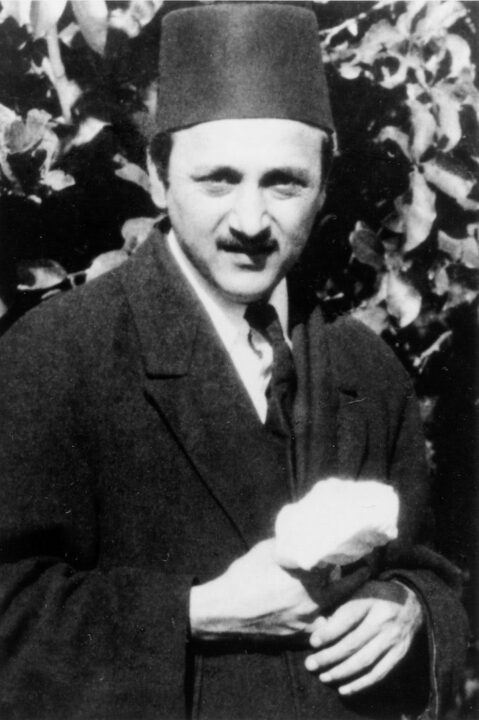
Dr. Zia Bagdadi, perhaps the most active and prominent promoter of the Baha’i Faith among Chicago’s African Americans, had served as one of Abdu’l-Baha’s attendants in 1912. Perry notes that “it is quite likely that Dr. Bagdadi first met Abbott at the Hull House talk and was present when Abdu’l-Baha spoke to the fledgling publisher.” After Abbott became a Baha’i, Shoghi Effendi (Abdu’l-Baha’s grandson and appointed successor) wrote to Dr. Bagdadi, stating that Abbott “may truly be regarded as your spiritual son,” which shows that friendship with Dr. Bagdadi was Abbott’s primary connection with the Baha’i community before his conversion. (See Perry, “Robert S. Abbott and the Chicago Defender,” NewPittsburgh Courier (Nov. 11, 1995), p. 7.)
Abbott’s declaration of faith as a Baha’i occurred on Sunday, June 3, 1934, the final day of the 1934 National Baha’i Convention, held in “Foundation Hall” at the Baha’i House of Worship in Wilmette, Illinois. Dr. Bagdadi and the convention delegates witnessed and described a “touching and impressive incident,” which he recounted a few days later in a letter to Shoghi Effendi:
Just before the closing of this Convention, speaking on the subject of publicity, I happened to think of Doctor Abbot [sic], Negro publisher of a newspaper in Chicago. I mentioned how I succeeded in publishing Baha’i articles on the first page of his paper. As I finished this statement, someone in the audience shouted, “Dr. Abbot [sic] is now here with us.” The Delegates expressed their desires to hear a word from him, and he responded by declaring his faith in the Baha’i Cause! This was one of the happiest moments in the Convention.
– Ibid.
On June 9, 1934, The Chicago Defender itself reported on the 1934 American Baha’i national convention, stating, in part:
Robert S. Abbott, editor and publisher of The Chicago Defender, addressed the delegates and visitors to the convention Sunday afternoon. His talk was one of the highlights of the program. The editor is intensely interested in the Baha’i movement, and is thoroughly in accord with its broad principles as was evidenced by his excellent remarks during the convention.
– “Baha’i Delegates End 26th Annual Convention: Followers of Faith Gather at Temple in Wilmette.” The Chicago Defender (June 9, 1934), 4.
As recounted by Louis Gregory, this is what Dr. Abbott said:
Dear friends: Sorry I am hoarse and do not want to find it necessary to speak all over again. Happy am I to see people whom I have been praying to God all my life to see, those who recognize me as a man. Everywhere I have travelled I have been received as a man save in my own country. Here my people have been cruelly treated and even burned at the stake! … Abdu’l-Baha when in America put His hand on my head and told me that He would get from me some day a service for the benefit of Humanity. I am identifying myself with this Cause and I go up with you or down with you. Anything for this Cause! Let it go out and remove the darkness everywhere. Save my people! Save America from herself!
– Perry, “Robert S. Abbott and the Chicago Defender,” New Pittsburgh Courier (Nov. 11, 1995), p. 7.
Abbott’s interest in the Baha’i religion was no mere passing fancy; rather, his passion and fervent enthusiasm were translated into a significant number of articles on the Baha’i movement that Dr. Abbott published (and sometimes personally authored) in The Chicago Defender, which reached a remarkably wide readership within the Black community across the United States.
Note: This two-part essay originated in this previously-published journal article by the author: “The Baha’i ‘Race Amity’ Movement and the Black Intelligentsia in Jim Crow America: Alain Locke and Robert S. Abbott.” Baha’i Studies Review 17 (cover date, 2011; publication date, 2012): pp. 3–46, available online: https://bahai-library.com/buck_race_amity_movement.
Meet Miami’s first Black millionaire — Dana Albert Dorsey, a real estate magnate, philanthropist, Miami’s most famous early Black resident, and a Baha’i.
Dorsey, a sharecropper’s son, was born in 1872 in Quitman, Fulton County, Georgia, as the first child in his family to be born free — not born into slavery. He had only a fourth-grade formal education, and afterward went on to become a self-made man, a generous and celebrated philanthropist, and a follower of the Baha’i Faith. Therein lies an amazing tale.
As a young man, Dorsey moved to Miami in 1897. A carpenter by trade, he worked for the Florida First East Coast Railroad Company, owned by Henry Morrison Flagler. During this time, he realized that there was a need to provide housing for Black workers — so Dorsey began to invest in real estate.
By custom and Jim Crow-era law, Black people were not allowed to own or rent residences or commercial properties in white-dominated Miami during that time. This racist policy was enforced by race-restrictive covenants in property deeds, prohibiting Black people from purchasing or leasing property in areas where white people lived — and promoting the income inequality that still exists between Black people and other people in the United States today.
In 1896, when the city first incorporated, Miami’s original Charter even called for a separate area to be set aside for African Americans. More than half a century later, on May 3, 1948, in the landmark case of Shelley v. Kraemer, the U.S. Supreme Court ruled unanimously that such racial covenants in housing were unconstitutional.
So, in what was originally and derogatorily known as “Colored Town”— its name was changed in 1937 to Washington Heights, but the area is popularly known today as Overtown — in Miami’s northwest sector, Dana Dorsey purchased his first parcel of land for $25, with income he gained using his carpentry skills. On this small plot of land, in an area near the old Seaboard Station at N.W. 7th Avenue and N.W. 19th Street, Dorsey designed and constructed a small rental house. He continued to buy lots for $25 each, and soon accumulated large blocks of real estate. In this way, Dorsey began to make his fortune as a real estate developer. (For a detailed description of the area’s history, see: Paul S. George, “Colored Town: Miami’s Black Community, 1896–1930,” Florida Historical Quarterly Vol. 56, No. 4 (April 1978), pp. 432–447.)
A newspaper ad for Dana A. Dorsey real estate.
But Dana Albert Dorsey wasn’t only interested in making money. He invested in real estate and built homes with the higher and more altruistic goal of improving the condition of the Black community by providing affordable housing, educational opportunities, and wholesome recreation. In an era of lynching, vicious prejudice, and the patent evils of racism, he exemplified the Baha’i ideal of work as worship, when done in service to humanity:
It is enjoined upon every one of you to engage in some form of occupation, such as crafts, trades and the like. We have graciously exalted your engagement in such work to the rank of worship unto God, the True One. Ponder ye in your hearts the grace and the blessings of God and render thanks unto Him at eventide and at dawn. Waste not your time in idleness and sloth. Occupy yourselves with that which profiteth yourselves and others. …
Hold ye fast unto the cord of material means, placing your whole trust in God, the Provider of all means. When anyone occupieth himself in a craft or trade, such occupation itself is regarded in the estimation of God as an act of worship; and this is naught but a token of His infinite and all-pervasive bounty. – Baha’u’llah, Tablets of Baha’u’llah, p. 26.
Work done in the spirit of service is the highest form of worship. – Abdu’l-Baha, Divine Philosophy, p. 83.
In 1914, Dana Dorsey was listed as the only African American real estate agent in Miami. In 1918, he purchased Elliot Key and the barrier island now known as Fisher Island (today an exclusive luxury island in Biscayne Bay near Miami Beach) so he could provide a public beach for African Americans to enjoy —since “white” beaches did not accept them. That same year, the Miami Daily Metropolis reported that Dorsey had purchased Fisher Island:
… to form a company for the development of the tract as a high-class colored resort and subdivision with a hotel, cottages for well-to-do men of his own race and boats to convey them back and forth between the mainland and the island so there will be no conflict of the races in the project.
The Dorsey House.
Dorsey’s accomplishments not only served Miami’s Black community, but they also soon became historically important. For instance, Dorsey helped organize South Florida’s first Black-owned bank, the Mutual Industrial Benefit and Saving Association. He later owned Florida’s Negro Savings Bank. His Dorsey Hotel was the first Black-owned hotel in Miami. As a community leader, Dorsey served as chairman of the Colored Advisory Committee to the Dade County School Board, and also gave of his time as registrar for Black men during World War I.
Success as a real estate developer led to Dorsey’s legacy as a philanthropist, and his contributions to Miami are lasting and significant. For instance, in the 1930s, Dorsey donated, to the Miami-Dade School District, the property located at Northwest 71st Street and 17th Avenue in the Liberty City area of Miami, on which the Miami Dorsey High School was built in 1936. In 1970, that school was converted to what is now the D.A. Dorsey Technical College (a.k.a. D.A. Dorsey Educational Center), the longest-running successful adult education program in Miami-Dade County.
As a benefactor, Dorsey financially backed the historically Black Bethune-Cookman College (now University), according to one of his granddaughters, LaShonne Edwards. On February 14, 1940, just fifteen days before his death, Dorsey donated the land on which the future Dorsey Memorial Library would be built. Opened on August 13, 1941, the Dorsey Memorial Library was located in segregated Overtown. On January 17, 2018, the city of Miami held a ceremonial groundbreaking to launch a $1.3 million renovation project for the historic preservation of one of the hallmark monuments of Black Miami, saying in its official report:
The Dorsey Memorial Library is significant for its historical associations and stands as a testament to the segregation of the races, and in Miami, the lingering prejudice towards people of color. The building played a key role in the education of many African American citizens who lived in the Overtown area during a time when there were few educational options. In the all-too-recent past, African Americans in Miami suffered egregious treatment and limited civil rights, as they were severely limited in their choices of places to live, socialize, recreate and educate.
But before his library dedicated to the education of Black Miami opened, on Thursday, February 29, 1940, Dorsey died. Flags were flown at half-staff in Overtown, and businesses closed during funeral services when Dorsey’s body was laid to rest in Lincoln Memorial Park, Miami’s African American cemetery during the Jim Crow era. Some 2,000 mourners attended.
By today’s standards, Dana Albert Dorsey would have been a billionaire at the time of his passing. Dorsey owned property not only in Dade and Broward counties, but in Cuba and the Bahamas as well. His extensive land holdings are considered to be the largest ever held by a Black man in Dade County.
To honor Dorsey, Third Avenue in Overtown was renamed “D. A. Dorsey Way” (also designated NW 3rd Avenue Business Corridor). The D. A. Dorsey House (250 NW 9th Street, built in 1913 for his second wife, Rebecca Livingston) in Overtown is a historical landmark. Adding to his legacy is the Dana Dorsey Memorial Park.
This, in brief, highlights what we now know about D.A. Dorsey’s illustrious life and legacy of service to humanity. However, very little is known of Dorsey’s connection with the Baha’i Faith. In “How Miami’s Renowned Black Entrepreneur Became a Baha’i,” I explored D.A. Dorsey’s introduction to the Baha’i teachings of interracial harmony and the oneness of humanity, which he welcomed and readily embraced.
If I asked you to name five famous Black people, living or deceased, who would you come up with? I asked this same question in an interactive presentation I gave four years ago for Black History Month, and the responses were what I expected.
Most people mentioned performers like Ray Charles, athletes like Michael Jordan, and activists like Dr. Martin Luther King Jr. This is because the media tends to spotlight African Americans when they are in an entertainment role, and our education system has a pattern of teaching us about the same handful of Black champions for social justice.
Of course, Black contributions to arts and culture and social justice are wonderful. But when the only positive images shown of Black people are of us performing for a crowd or working to bring about equality, it’s easy to think that that’s all we’ve done and mistakenly believe that we haven’t contributed anything else worthwhile to civilization. But the reality is that people of African descent have contributed so much to life as we know it and created many of our modern conveniences — and those stories need to be told too.
There is also a spiritual basis for learning this history. In the holy writings of the Baha’i Faith, Black people are compared to “the pupil of the eye which is dark in colour, yet it is the fount of light and the revealer of the contingent world.”
Of this comparison, Abdu’l-Baha, one of the central figures of the Baha’i Faith, wrote in 1902:
…Verily, the faces of these are as the pupil of the eye. Although the pupil is created black, yet it is the source of light. I hope God will make these black ones the glory of the white ones, and as a depository of the lights of the Love of God.
With that in mind, here are nine of the numerous African American inventors who changed the world:
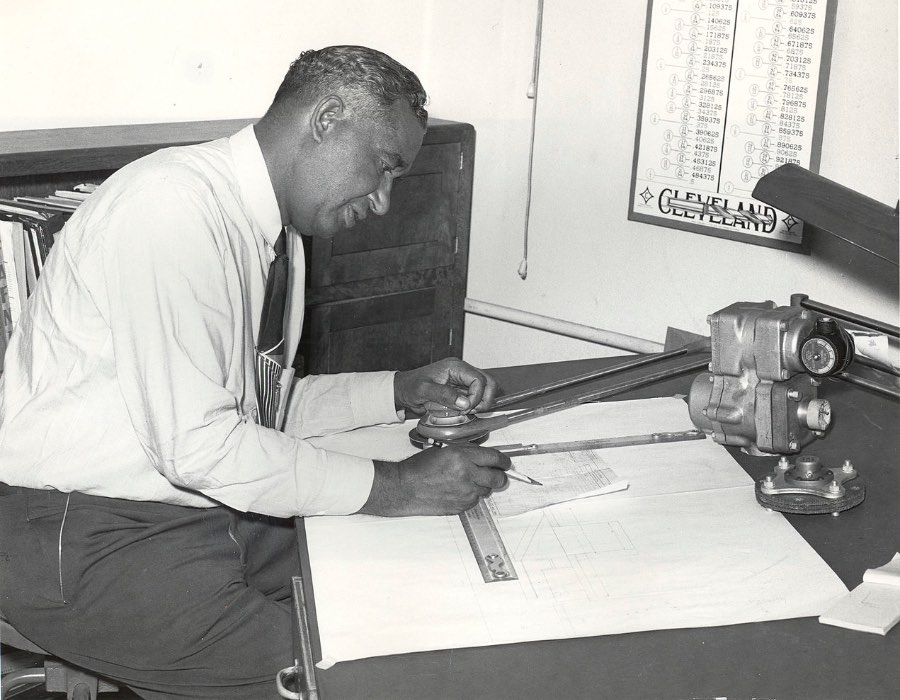
1. Garrett Morgan: The Inventor of the Three-Light Traffic Light
See how, in this day, the scope of sciences and arts hath widened out, and what wondrous technical advances have been made, and to what a high degree the mind’s powers have increased, and what stupendous inventions have appeared.
Garrett Morgan
That quote comes to mind when I think of Garrett Morgan. He only had an elementary school education, and yet, he created several inventions, such as the gas mask and the improved sewing machine.
After these inventions became very successful, Morgan was able to save enough money to purchase a car and was the first Black person in Cleveland to own an automobile. While driving, Morgan witnessed a severe car accident at an intersection and invented the “yield” component of the traffic light in 1923 to warn drivers when they should start slowing down to a stop. His life-saving invention could definitely be described as “stupendous.”
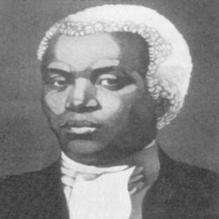
2. Benjamin Banneker: The Inventor of the Clock
We might not be able to tell time if Benjamin Banneker hadn’t invented the clock. When Banneker was 22 in 1753, he had only seen “two timepieces in his lifetime — a sundial and a pocket watch,” according to PBS.
Benjamin Banneker
So, Banneker, who was largely self-taught, created the first clock in the United States, which he built out of wood based on his drawings and calculations. PBS wrote, “The clock continued to run until it was destroyed in a fire forty years later.”
Banneker, who was a talented astronomer, also created one of the U.S.’s first almanacs. In his almanac, he successfully predicted eclipses and other astronomical events, listed the tides, and included information on medicines and medical treatments.
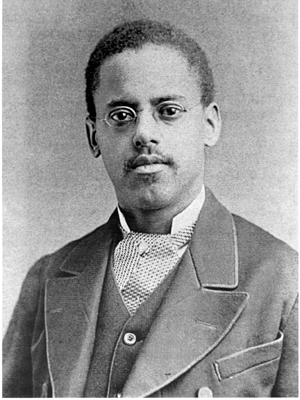
3. Lewis Latimer: The Inventor of the Carbon Light Bulb Filament
The Baha’i writings tell us that the “light of the intellect is the highest light that exists.” But we might still be trying to gain knowledge by candlelight if Lewis Latimer hadn’t invented the carbon filament in 1881.
Lewis Latimer
Often when people think of the invention of the light bulb, they think of Thomas Edison. But the light bulb that Edison created had a very short lifespan and died after a few days.
When Latimer, the son of formerly enslaved people, invented the carbon filament, light bulbs became more practical and long-lasting. His success rivaled Edison’s, and he later went to work with Edison at the Edison Electric Light Company in 1884. Latimer was also known for co-inventing an improved bathroom for railroad trains.
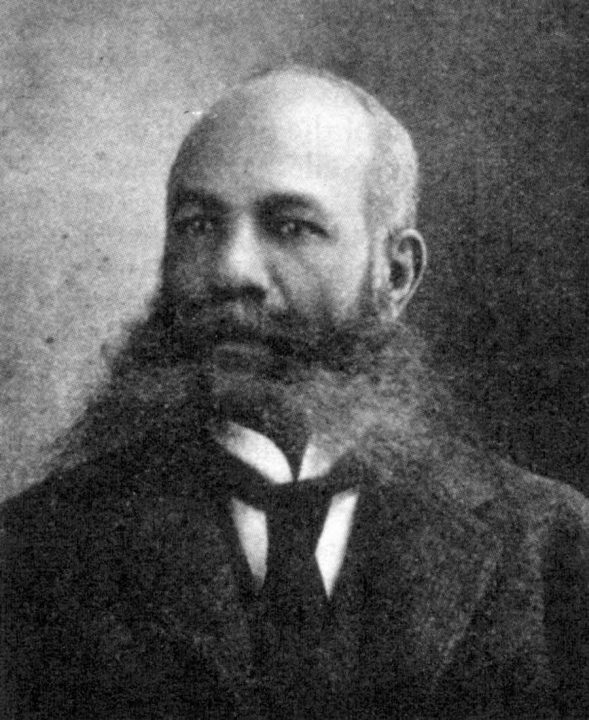
4. Alexander Miles: The Inventor of Automatic Elevator Doors
Alexander Miles
Before Alexander Miles invented the automatic elevator door in 1887, using an elevator was very dangerous. People had to close the shaft and elevator doors themselves manually, and those who forgot to do so often fell down the elevator shafts to their death or received multiple injuries if they survived.
After Miles’s daughter fell down an elevator shaft and almost died, he decided that he would make it his mission to develop a solution. He invented a mechanism that automatically opens and closes elevator shaft doors, turning elevators into what we now use today.
5. George T. Sampson: The Inventor of the Clothes Dryer
Can you imagine having to hang clothes outside on a line to dry them? It was very time-consuming, and people had to hope their clothes wouldn’t be ruined by the weather, animals, or insects.
George T. Sampson’s patent for the clothes dryer
So, every time I do my laundry, I’m grateful that George T. Sampson patented the clothes dryer in 1892 and a sled propeller in 1885.
In his patent, he wrote, “My invention relates to improvements in clothes-driers. The object of my invention is to suspend clothing in close relation to a stove by means of frames so constructed that they can be readily placed in proper position and put aside when not required for use.”
6. Frederick McKinley Jones: The Inventor of Refrigerated Trucks
The Baha’i writings confirm the connection between our physical and spiritual health. Abdu’l-Baha explained:
The more healthful his body, the greater will be the power of the spirit of man; the power of the intellect, the power of the memory, the power of reflection will be greater.
Prior to the invention of refrigerated trucks, keeping food from spoiling — and potentially causing illness — was extremely difficult. Fortunately, Frederick McKinley Jones patented more than 60 inventions in his lifetime, including the cooling system used to refrigerate produce on trucks during extended periods.
He came up with this idea in the 1930s and received a patent for his invention in 1940. He later co-founded the U.S. Thermo Control Company, later known as Thermo King, which was critical in preserving blood, food, and supplies during World War II.
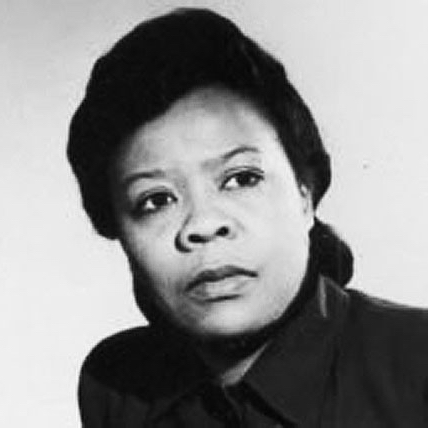
7. Marie Van Brittan Brown: The Inventor of the Home Security System
The Baha’i writings contain more than two dozen prayers for protection — and along with asking God to keep us safe, many of us also turn on a home security system at night. We’re able to do that thanks to Marie Van Brittan Brown.
Marie Van Brittan Brown
As a nurse, Van Brittan Brown often worked long hours and would come home late at night to an empty home because her husband also worked irregular hours as an electronic technician. Scared after being in the house alone at night, Marie decided to develop a solution that would make her home safer.
In 1966, Van Brittan Brown co-invented the first home security system with her husband, Albert Brown. Their security system consisted of four peepholes, a sliding camera that could capture images of people who were different heights, television monitors, two-way microphones that enabled them to communicate with the person outside, a remote to unlock the door, and an emergency alarm button that contacted the police.
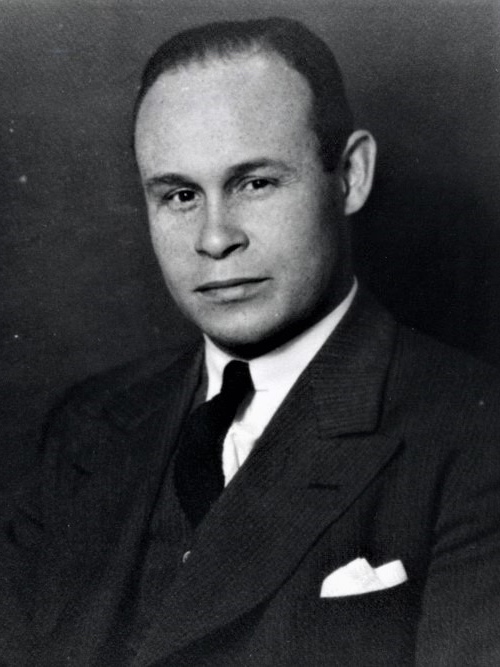
8. Charles Richard Drew: The Inventor of Blood Banks
The Baha’i writings tell us that “an able physician does not treat all ailments in the same manner but varies the treatments and remedies in accordance with the requirements of these various ailments and conditions.” Every two seconds in the United States, an “able physician” determines that someone needs a blood transfusion.
Charles Richard Drew
Fortunately, surgeon Charles Richard Drew discovered in 1941 how to do long-term storage of blood plasma, organized the United States’ first large-scale blood bank, and created “bloodmobiles” – refrigerated blood donation trucks.
Born in 1904, Drew’s inventions in preserving blood plasma saved thousands of lives during World War II, and the American Red Cross adopted his process and techniques. Sadly, despite Drew’s remarkable inventions in the blood banking process, the Red Cross excluded African Americans from donating blood, making Drew unable to participate.
9. Dr. Shirley Ann Jackson: The Inventor of the Fiber-Optic Cable
The Universal House of Justice, the democratically elected governing council for the Baha’is of the world, wrote in 2015 that “technological advancement is integral to the emergence of a global civilization.”
Dr. Shirley Ann Jackson, a theoretical physicist and the first African-American woman to receive a doctorate from M.I.T. in 1973, conducted groundbreaking scientific research that laid the foundation for the inventions of the touch-tone telephone, the portable fax machine, call waiting, caller ID, and the fiber-optic cable.
She is currently the 18th president of Rensselaer Polytechnic Institute in Troy, New York. And just think, without fiber-optic cables, you might not have been able to read this article on the internet.
That raises the question: Could humanity go one week without these inventions that African Americans brought to the world? Black people have contributed so much in the fields of science, math, and technology — achievements worthy of being honored and celebrated every day.
Just think, Black people were able to accomplish such greatness despite centuries of genocide, slavery, racism, and oppression. Imagine how much more could be achieved if we lived in a world without racism and where Black people experienced the justice, equity, recognition, and appreciation we all deserve.
The second Baha’i century began and World War II neared its end in 1944 — and the first second-century Baha’is were born. That generation made a major impact on the fortunes of the Baha’i Faith in the West.
Nineteen years later, in 1963, the first Universal House of Justice was elected by the world’s Baha’is, launching its initial plans for sharing the Baha’i teachings globally. During that period, the Baha’i Faith grew exponentially, fed by the fresh energy of a new and unique generation of youth. In its retrospective of the 20th century called “Century of Light,” the Universal House of Justice wrote:
No segment of the [Baha’i] community made a more energetic or significant contribution to this dramatic process of growth than did Baha’i youth … During the past hundred years our world underwent changes far more profound than any in its preceding history, changes that are, for the most part, little understood by the present generation. These same hundred years saw the Baha’i Cause emerge from obscurity, demonstrating on a global scale the unifying power with which its Divine origin has endowed it. As the century drew to its close, the convergence of these two developments became increasingly apparent.
Babies born since 1944 began to come of age in the 1960s, deemed one of the top three decades of spiritual revival in history, because of its huge increase in the range of beliefs and worldviews.
I wanted to preserve the feelings experienced by this generation who became Baha’is during their teens and early twenties — those “second century believers” — who, after their independent searches for truth, accepted the Baha’i Faith. I gathered responses about their feelings and experiences during those unique times, including what attracted them, why they became Baha’is, and why they’ve remained in the Faith.
New trends emerged in the 1960s: environmentalism, second-wave feminism, all brought about by a youth counterculture that aimed to counteract materialism, racism, tradition, and war. In the United States, a youthful President Kennedy brought an energy that inspired the youth, challenging them to contribute to the public good by saying, “Ask not what your country can do for you — ask what you can do for your country.” The U.S. government created the Peace Corps, spurring young people to volunteer to altruistically serve in other countries.
People of color increasingly asserted their rights. In 1963, the African American civil rights leader Reverend Dr. Martin Luther King Jr. delivered to a quarter million pro-civil rights demonstrators a speech envisioning a world where citizens would all live in racial harmony. The American Indian Movement formed in 1968 to support Indigenous people seeking to gain tribal sovereignty. Movements dedicated to freedom, equality, and peace flourished throughout the world.
When I reached out to those who had become Baha’is during that turbulent period in history, the respondents shared these thoughts:
Together with our parents and teachers, we organized public talks and protests. We also lobbied the faculty to create a Black history course.
In my area, the social atmosphere was mostly subtle racism … I was protesting the racism.
Our generation were social activists at a very young age …That was so important to my life. … I was working with the Black Panthers’ food programs before and after I became Baha’i.
Clergy seldom supported the noble protests of Black people about their treatment in America.
International crises arose, such as the United States naval blockade of Cuba because Soviets placed nuclear missiles there aimed at US targets. Future Baha’is were paying attention:
One of my defining moments was during the Cuban missile crisis — we would walk to school wondering where to build our bomb shelters. I wondered why we hated the Russians and decided I would someday go talk to them, so I started studying Russian — our school actually offered it in sixth through twelfth grade.
The decade spawned the war in Vietnam, which ravaged the lives of young American men who were drafted and sent on nebulous missions in chaotic jungle terrain. They returned home with stories of hellish anarchy and suicidal missions, along with a new commitment to oppose war:
… my generation realized we were being used. Americans had always wanted to believe we lived in the most perfect and just country in the history of the planet [which] is what we were constantly told, except by a few protestors popularly labeled fools …
I couldn’t even imagine the horror of anyone that was drafted. There was a very strong sense of dread when becoming draft age. They didn’t even know what they were fighting and dying for. The Vietnam war was a big part of our life.
Respondents lamented how their churches ignored the war and the racism that seemed to be devouring the country. They expressed dismay over clergy who voiced support for the war:
I was dismayed … by the political war support of Christian clergy who seemed not to care about the fate of the young men of my generation … my closest friends had come back deeply wounded mentally and physically.
Many intuited that there must be a pathway to world peace and love, and searched independently, prompted by a feeling that answers would be available:
From when I was around nine or ten years old, I used to walk to my hometown library to check out books attributed to Buddha and Krishna and also Zen thinking, because I felt moved to find out if those writings provided any clues, any wisdom, about life.
Those who searched for answers often objected to the magical thinking they’d encountered in churches, and others felt deeply troubled by religious leaders who couldn’t answer their questions:
I loved Jesus and identified as a Christian, but at seven I was ‘excused’ from my Presbyterian Sunday School after suggesting that if the Magi who visited the infant Jesus were — as our teacher explained — priests of another religion, then God’s truth must have been given other Faiths.
Previously, the Baha’i Faith had been relatively unknown in the United States, and embracing it often seemed like a daring step. Some future Baha’is first heard of the Faith from classmates:
I was taking a World Religion course and it occurred to me that to solve the world’s problems, everyone should have the same religion. Making that statement to about the only person in the enormous cafeteria at the time, I got this reaction: ‘Are you a Baha’i?’ At first, I rejected it outright. When I realized what the implications were that Baha’u’llah was the return of the spirit of Christ, I went ballistic.
Other accounts focused on the mystical aspects of the Baha’i teachings, like this one which describes the effects on a visitor at a Baha’i fireside gathering:
The feeling in that room was powerfully uplifting like nothing I had experienced before. In fact, I experienced that same extraordinary feeling, which I am not certain was the Holy Spirit, over the next few months which convinced me, even more than the beautiful and very logical writings of the Faith, that Baha’u’llah was indeed the Promised return of Jesus.
Many respondents reported experiencing dreams, coincidences, and premonitions that led them to the Baha’i Faith:
… one night, I was just talking to God and saying something like, ‘I wish there was a religion that taught that all of these religions had come from God.’ Literally within a few days of that ‘prayer’, I ran into a Baha’i who spent two or three hours talking to me about his religion.
After this girl learned about the Baha’i Faith at age 14, it changed her behavior so thoroughly that her mother was astonished — and also became a Baha’i:
I’d call [becoming a Baha’i] an awakening … I made drastic changes right away, but it was not pushed on me. I had sought it out … It was like being reborn. I put away pot, etc., became chaste, started listening to my parents. My mom even joined the Faith, after seeing my turnaround.
This man could feel a spirit emanating from a house on the street where a Baha’i fireside was being held:
The Holy Spirit was so tangible that people walked off the street to ask what was going on there. There were 20+ people of all ages and types and colors — hippies, students, working people aged 18-40 — which for me was unusual enough, but the feeling in that room was powerfully uplifting like nothing I had experienced before.
Asked about the reasons for remaining in the Baha’i Faith, this respondent said:
… the Holy Spirit, which the [Baha’i] writings make easier to bring to mind, is the most convincing and powerful proof of the validity of faith in God, in this and in all of the inspired dispensations of His prophets.
When these children of the 1960s encountered the Baha’i teachings, the social upheaval going on around them compelled further investigation — and the Baha’i Faith expanded rapidly.
1. Look for a Life Partner Who Has Many Virtuous Qualities
Karen and Lameh Fananapazir
My mother, Barbara Talley, has been married to my father, Gile Talley, for 44 years. While they were dating, she realized that he was the nicest man she had ever met. They continue to be kind and respectful to each other four decades later.
That’s why she told me to look at a potential partner’s virtuous qualities first. “It’s nice that he or she is fine, but you will never find your soulmate if you’re not looking at their soul,” she says.
Susan Troxel, who has been married to her husband, Rick Troxel, for almost 46 years, agreed that the character of the person you’re thinking about marrying is most important. She advised singles to see if their romantic interest is truthful, trustworthy, kind, and compassionate.
Susan wrote, “Physical beauty fades for all of us, but the qualities of the soul are lasting. There needs to be respect and mutual support for each other’s spiritual pathway. It’s good to look at a prospective mate’s relationships with family and friends, as well as how they handle money. And very important is how they handle tests; are they willing to look at their own part and not blame others? Are they willing to sit down and pray and talk things out? Are they open to learning from their mistakes?”
My mom added, “We have guidance [from the Baha’i writings] to be pure, kind, and radiant and writings against being kind to the liar, the tyrant, and the thief, so don’t marry a liar, a tyrant, or a thief. If they are not kind and trustworthy, it’s a deal breaker. Keep that in mind before you take that vow.”
Since people are often on their best behavior during the courting phase, my mom says singles should also look at their prospect’s relationships with those who are close to them. “Find someone who treats their parents and siblings with respect. You’re marrying into a village,” she says.
BAHÁ’Í marriage is the commitment of the two parties one to the other, and their mutual attachment of mind and heart. Each must, however, exercise the utmost care to become thoroughly acquainted with the character of the other, that the binding covenant between them may be a tie that will endure forever.
“Remember that the journey of life is long and fraught with many surprises and ups and downs,” wrote Dr. Lameh Fananapazir. He has been married to his wife, Karen Fananapazir, for 49 years. “Your focus must be lasting virtues…Be clear-eyed and aware that time is not going to improve a flawed and unspiritual character.”
2. Look For Someone You Can Have a Spiritual Relationship With
Karen and Lameh Fananapazir
When you find someone who has those virtuous qualities that you are looking for, it’s easier to establish a spiritual relationship with that person. Abdu’l-Baha wrote that “husband and wife should be united both physically and spiritually, that they may ever improve the spiritual life of each other, and may enjoy everlasting unity throughout all the worlds of God.”
So, Karen asked singles “to look for someone you can love and trust and who in turn also places his reliance and trust in God.” As you two strive to better the world and grow closer to God together, you ultimately grow closer to each other.
3. Find Someone You Are Physically Attracted to
My parents
Although physical beauty can fade, my dad says that physical attraction is important in a romantic relationship. Abdu’l-Baha wrote, “As for the question regarding marriage under the Law of God: first thou must choose one who is pleasing to thee…”
We should look for a romantic partner who is pleasing to our eyes and soul, because marriage is a physical and spiritual relationship. Everyone deserves someone who sees both their inner and outer beauty.
4. Find Someone You Are Compatible With
Susan and Rick Troxel
“Beyond the prerequisite attraction and affinity,” Rick suggested that singles seek “deep, nurturing compatibility, and commitment.” He listed several helpful questions that each new couple should ask each other:
“How easy is it to be open, honest, and expressive with each other?
Do you mostly share the same values, and respect and support even those you might not entirely share?
Can you each commit to the same kind of relationship?
How do you handle disagreements?
[How do you handle] decision-making in general?
Are you both of good character, in both deeds and words, in basically all contexts?
Do you appreciate how your potential partner relates to others?
Can you perform acts of service together and mutually support each other’s individual acts of service?
When one of you is stressed (or joyful, for that matter), what does that bring out in the other?
How well are you matched on what is viewed as stressful or challenging versus what is comfortable or adventurous/fun?”
Rick wrote, “Implicit in this, I guess, is to know oneself as much as possible, as holistically and integrated as possible. This facilitates the other’s investigation of you. It helps you distinguish your likes from dislikes, deep needs from more superficial desires, and where you can and can’t flex. It may help distinguish your true self from your social environment, upbringing, habits and customs, and popular trends.”
5. Look for Someone You Can Accept Completely
My parents
My mom says you shouldn’t look for a fixer upper that you intend to change to your liking. “It’ll put a strain on the relationship if you are going into it saying, ‘I don’t accept you for who you are, but if you become this other person, I will,’” she explained.
“We each have our path and will grow at our own pace or perhaps not at all. If you can’t accept the person fully for who they are now, then wait until you can find someone that you can accept.”
“Lastly, look for someone who can be a very, very good friend — someone you feel you can talk to about anything,” Susan wrote. My parents say it’s easier to cultivate a close friendship when you have things in common, like similar values and lifestyles.
And, my mom says it’s also important to “find someone who makes you laugh.” Laughing together is a great way to bond two friends. It is physically and spiritually relaxing and can help get people through tough times.
As Abdu’l-Baha wrote, a married couple’s purpose must be “to become loving companions and comrades and at one with each other for time and eternity.…”
I hope this advice from older couples helps all of you singles out there find your eternal partner and forever friend.
In the summer of 2017, I helped develop a project in Atlanta, Georgia, focused on a proposed memorial for the enslaved Africans once sold there – and it led me to a giant.
We planned to situate the memorial at the Crawford Frazier Brokerage, an auction house that once stood on the grounds of Five Points MARTA (Metropolitan Atlanta Rapid Transportation Authority) station in downtown Atlanta.
After we had completed the final design for the project and secured the necessary funding, we engaged in ongoing talks with the city about the logistical concerns surrounding the work. During our consultation, the design team decided to approach famed civil rights activist and Congressman John Lewis about the proposal to see if he would be willing to offer his support, an endorsement we hoped would go a long way toward persuading any reluctant officials in city government.
So, on a sunny weekday in August, I found myself in a boardroom in an elegantly appointed office in a downtown Atlanta high–rise, my cream–colored cotton suit creased and wrinkled from the afternoon heat. I sat in one of the large, comfortable leather armchairs, thinking about the man I would soon meet. I thought of the grainy Black and white footage of him as a youthful civil rights worker from Troy, Alabama, leading a group of some 600 peaceful protesters across a bridge in Selma, Alabama, named after Edmund Pettus – a Confederate war veteran and former grand dragon of the Ku Klux Klan.
That day would come to be known as Bloody Sunday. The clubs that split heads open that day – the tear gas that burned the eyes – the ironclad feet of horses that trampled over men, women, and children alike – those searing images had left burn marks on my consciousness.
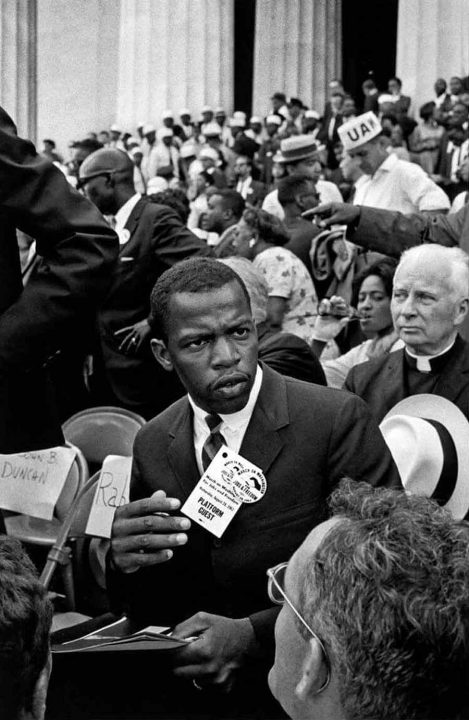
I thought of the March on Washington in 1963, when a 23-year-old John Lewis, a seasoned veteran of the freedom movement by then, stood before a crowd of thousands to deliver one of the keynote addresses. I thought of his years of public service and how his principled stand on human rights, environmental justice, and religious pluralism had become beacons of hope for a wayward society lost in the wilderness of racism, materialism, and moral relativism.
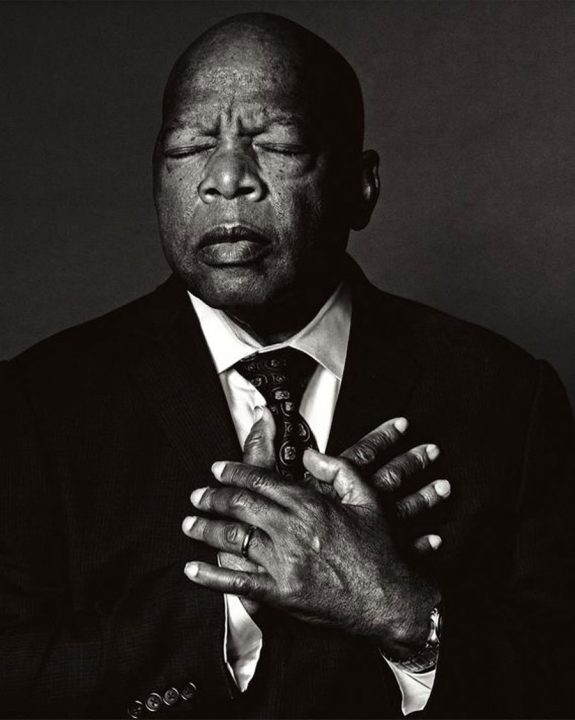
Yes, John Robert Lewis, diminutive in stature yet possessing monumental courage, cast a long shadow that I felt honored to stand in. So, as I waited, my palms sweating in anticipation, I steadied myself to meet a man who had contended with the forces of evil in life’s public arena many times over. The cuts and bruises his body suffered, wounds still visible today, show the scarred evidence of his moral convictions. The desecration of the flesh and the consecration of the spirit makes those scars both painful and beautiful to see.
If you plant a seed in the ground, a tree will become manifest from that seed. The seed sacrifices itself to the tree that will come from it. The seed is outwardly lost, destroyed; but the same seed which is sacrificed will be absorbed and embodied in the tree, its blossoms, fruit and branches. If the identity of that seed had not been sacrificed to the tree which became manifest from it, no branches, blossoms or fruits would have been forthcoming.
When Congressman Lewis finally walked into the room and I rose to greet him, it felt, in some sense, like a confluence of histories. In his seven decades, he had seen and done so much. His life and the lives of many others – some known, some unknown – represented the sacrificial seeds from which my freedoms germinated. My generation entered the world on the worn heels of those who had marched towards a future made from the mystical intercourse of faith and fortitude. We were the children of the midwives of the movement, men and women alike, who birthed us into a world a little less threatening than the one they had known.
As we shook hands and I looked into his deep, knowing eyes, I could sense a kind of stillness, a quiet nobility, the acquired dignity of the tested. That grounding force seemed to anchor him to some unstated principled conviction. In his smile, I saw a calming reassurance. I felt a deeply rooted joy, an earned contentment known only to those who have offered up the best of themselves in service to others. In that same talk, Abdu’l-Baha said:
… man must sacrifice the qualities and attributes of the world of nature for the qualities and attributes of the world of God. For instance, consider the substance we call iron. Observe its qualities; it is solid, black, cold. These are the characteristics of iron. When the same iron absorbs heat from the fire, it sacrifices its attribute of solidity for the attribute of fluidity. It sacrifices its attribute of darkness for the attribute of light, which is a quality of the fire. It sacrifices its attribute of coldness to the quality of heat which the fire possesses so that in the iron there remains no solidity, darkness or cold. It becomes illumined and transformed, having sacrificed its qualities to the qualities and attributes of the fire.
I spent 45 minutes with John Lewis that day, telling him about my artistic vision, how I hoped to bend light and shadow to tell a painful story. Mostly, though, I listened. I listened as he spoke about the cleansing capacity of truth. I listened as he talked about life and legacy — about the bliss of purposeful suffering and the urgent need for courage.
When I was a small boy, one of the first things I learned in art class was how to make a vessel out of clay. I remember stacking coils of red modeling clay, one on top of the other, as I dipped my fingers in water to form a weld between layers. All of the students in the class followed the same painstaking process, yet all of the cups looked slightly different. Some were slim, some were more rotund. Others slumped a little to one side or the other, but the one quality they all had in common was they could all hold water. This essential capacity defined their function.
Spending time with John Lewis reminded me of that important lesson. Leadership has no definitive form. It can reside in anyone. The person embodying it can be large or small, Black or white, male or female, rich or poor, educated or not. If the heart is open, we can recognize its substance and its fundamental irony: the path to leadership runs through the crucible of service, and the road to nobility admits only the sincerely humble.
As I gathered with Congressman Lewis and others for a group photograph before I left, I noticed his powerful posture of submission. He stood there with his hands clasped in front of him, and his head slightly bowed – his face radiant with a beautiful smile. In the photograph, it is evident that I am several inches taller than him, but I knew I was in the presence of a giant.
Ultimately, the proposed memorial wasn’t realized, despite the congressman’s enthusiastic support. The divisive nature of politics can grind many worthwhile projects to a halt, but for me, that isn’t what I remember most. I remember, for a brief moment in time, in an office in an unassuming building in downtown Atlanta, I sat and talked with John Robert Lewis, a servant, a quiet warrior for justice, a humble leader.
…man must become evanescent in God. Must forget his own selfish conditions that he may thus arise to the station of sacrifice. It should be to such a degree that if he sleep, it should not be for pleasure, but to rest the body in order to do better, to speak better, to explain more beautifully, to serve the servants of God and to prove the truths. When he remains awake, he should seek to be attentive, serve the Cause of God and sacrifice his own stations for those of God. When he attains to this station, the confirmations of the Holy Spirit will surely reach him, and man with this power can withstand all who inhabit the earth.
Within the New York City Baha’i Center sits the John Birks Gillespie Auditorium, dedicated to the late jazz great, affectionately referred to as “Dizzy” due to his playful on-stage antics. Of course, many folks will remember his trumpeting skills; some might recall his mischievous humor, and still others may fondly think of his famous bent trumpet and puffy cheeks. People may also know of his numerous awards and accolades. However, perhaps not as many may know that this trumpet virtuoso and famous bebop musician was a Baha’i.Dizzy Gillespie wrote:
Becoming a Baha’i changed my life in every way and gave me a new concept of the relationship between God and man—between man and his fellow man—man and his family… I became more spiritually aware, and when you’re spiritually aware, that will be reflected in what you do… The [Baha’i] writings gave me new insight on what the plan is—God’s plan—for this time, the truth of the oneness of God, the truth of the oneness of the prophets, the truth of the oneness of mankind.
Born in South Carolina, John Birks Gillespie was the youngest of nine children. He began learning piano at the tender age of four, when many of us were playing at the park, and not quite ready for school. As his father was in a band, he was around many instruments as a child. By the age of 12, Dizzy had taught himself to play the trumpet. His high-caliber talents eventually earned him a musical scholarship to the Laurinburg Institute in North Carolina.
This gifted young man went on to create remarkable music. In addition to playing the trumpet, Dizzy was also a scat singer and composer, an innovator, and an improviser.
Watching YouTube videos of his performances alongside other musicians, demonstrating his fantastic horn techniques, showcasing his charming demeanor, and using his characteristic bent trumpet was not only entertaining but inspiring. But his musical prowess only reveals one mere facet of this talented man; he was also a spiritual being, attracted to the writings of Baha’u’llah—the prophet and founder of the Baha’i Faith.
The William Sears’ book “Thief in the Night”—a great book that reads like a mystery novel and encourages independent investigation of reality—impacted Dizzy’s soul and led him to the Baha’i Faith. Learning about the spiritual side of this musical genius reminded me how music can cheer our hearts, and take our minds off our worries and sadness. Music is an art form that truly can “moveth the hearts.” I’ve felt this power firsthand when I’ve struggled through challenging times—times when listening to an upbeat song helped take my mind off my pain.
Music is, in fact, so vital to all of us that Baha’u’llah discusses this topic in his book of laws:
We, verily, have made music as a ladder for your souls, a means whereby they may be lifted up unto the realm on high; make it not, therefore, as wings to self and passion. – The Most Holy Book, p. 38.
Isn’t that a lovely analogy? Thinking of music as a “ladder for [our] souls” provides a mental picture of that spiritual ladder quite literally lifting us off the ground. In other words, music helps connect us to the ethereal side of ourselves and lets us forget about worldly matters.
In yet another excerpt from the Baha’i writings, music is used as an important metaphor for teaching us about unity in diversity:
The diversity in the human family should be the cause of love and harmony, as it is in music where many different notes blend together in the making of a perfect chord. – Abdu’l-Baha, Paris Talks, p. 53.
This quote from the Baha’i teachings is a particular favorite of mine, and I’m sure many people can relate to its gentle reminder that, despite our superficial physical differences, we are all one human race, and we should be loved and appreciated for the uniqueness of our individuality. When united, different musical notes create a beautiful song, just as different human personalities, ethnicities, sizes, and shapes create our beautiful global human family.
The life of this jazz legend, and the importance of music to our spiritual existence, cannot be solely contained within the confines of this short article. The legacy of Dizzy’s music will endure for future generations to enjoy. His timeless songs, and the joyfulness of his music will continue on, inspiring, uplifting and feeding our souls.
I hope this essay will encourage readers to learn more about Dizzy’s life, listen to his music, and delve deeper into the Faith he followed.
Learn from Sadie Oglesby, a historical Black Baha’i from Boston, who understood how urgent it was for everyone to make working for race unity a priority. She and her husband Mabry became Baha’is in 1914 and spoke about what standing up for racial justice and unity entails.
Standing Up for Racial Justice: Sadie and Mabry Oglesby’s Response to the Red Summer of 1919
In the early 20th century, hundreds of thousands of African Americans migrated from the South to the Northeast, Midwest, and West to flee from the racial violence and massacres and the return of the Ku Klux Klan.
A photo of white men stoning an African American during the 1919 Chicago race riot
No less serious is the stress and strain imposed on the fabric of American society through the fundamental and persistent neglect, by the governed and governors alike, of the supreme, the inescapable and urgent duty—so repeatedly and graphically represented and stressed by ‘Abdu’l-Bahá in His arraignment of the basic weaknesses in the social fabric of the nation—of remedying, while there is yet time, through a revolutionary change in the concept and attitude of the average white American toward his Negro fellow citizen, a situation which, if allowed to drift, will, in the words of ‘Abdu’l-Bahá, cause the streets of American cities to run with blood, aggravating thereby the havoc which the fearful weapons of destruction, raining from the air, and amassed by a ruthless, a vigilant, a powerful and inveterate enemy, will wreak upon those same cities.
During this period, as stated by the U.S. National Archives and Records Administration, “the political and legal gains won by African Americans during Reconstruction were dismantled, particularly by denying African Americans their voting rights and legalizing racial segregation, most notably in the 1896 U.S. Supreme Court decision Plessy v. Ferguson, which made racial segregation legal until 1954. In addition to those suffering these political and legal injustices, thousands of African Americans were hanged, burned to death, shot to death, tortured, mutilated, and castrated by white mobs who almost never were prosecuted for their crimes.”
The Red Summer was a pattern of violence that white Americans inflicted on African American individuals, veterans, homes, and communities after World War I during the summer of 1919. More than 24 cities had their own Red Summers, including but not limited to, Elaine, Arkansas, Charleston, Chicago, Houston, and Washington D.C. In Chicago, for example, white rioters burned down at least 1,000 Black homes, and they never faced any consequences.
A photo of an African American family leaving their home that was damaged from the Chicago race riot of 1919
“These hate campaigns are on in every group being fanned into flames so rapidly by the ignorant that it does not require one to be a prophet to see that society is sleeping on an active volcano which shows every sign of eruption at any moment,” wrote Sadie and Mabry Oglesby in their letter dated September 1, 1919, to a fellow Baha’i after the riots in Washington, D.C., and Chicago.
“We believe that the Bahá’ís have a great opportunity as well as a great responsibility to bring this great life-giving information to the world. … To this end we suggest the following for your consideration: 1st. United prayers over a continued period. … 2nd. Conference initiated by Bahá’ís visiting together leaders of races, churches, groups. … We believe that the general unrest at this time properly handled can be used to stimulate great Bahá’í activities everywhere and will be the means of opening many doors for spreading the Cause never before opened. ‘To sit to talk, to listen—there is no virtue in that. To rise, to act, to help—that is a Baha’i life. Deeds are the standard.’”
As Baha’u’llah, the prophet and founder of the Baha’i Faith, wrote:
Let deeds, not words, be your adorning.
Between 1921 and 1936, Baha’is hosted race amity conventions in major cities across the country to bridge the racial divide during segregation.
What Sadie Oglesby Learned About the Importance of Working for Unity in Diversity After Meeting Shoghi Effendi
Sadie and her daughter Bertha made history by being the first African American women to go on a Baha’i pilgrimage and visit Acre and Haifa, Israel in 1927. Sadie was also the first African American to meet Shoghi Effendi during his time in Haifa as the Guardian of the Baha’i Faith.
In Sadie’s first conversation with Shoghi Effendi, he asked her how many Black Baha’is there were in the United States. It’s important to keep in mind that the two major racial demographics during this time in the United States were white and Black people. When Sadie told him that there were very few, he — using the respectful terminology to refer to Black people at the time — said that Abdu’l-Baha, one of the central figures of the Baha’i Faith, “loved the colored people very much and that the Cause needs the colored people and cannot be established without them.”
Shoghi Effendi stressed how important diverse representation was in the Baha’i Faith. According to Sadie’s notes, he said, “a colored believer should be elected upon each committee even if it required that the same one be elected upon each committee.”
Before American scientists widely published data that all humans descend from a common ancestor in Africa, Sadie understood this truth about humanity’s origins. She said, “Shoghi Effendi, it presents itself to me thuswise: since the infancy of the human family, races and nations one after another have arisen and fallen in their long march around the cycles and to maturity and at this time, the oldest race represented upon the earth is the colored race, while the youngest or last to have attained a high civilization is the white race, and in order to close this cycle and save the civilization of this day, the oldest and youngest or first and last, that is the white and colored, or outer ends of the cycle must link together, then the inner, or intermediate races will automatically take their places in the circle.”
Shoghi Effendi said, “That is true, but if we fail to do this, we will be dispersed.”
Shoghi Effendi encouraged her to share the unifying messages of the Baha’i Faith in the South when she felt that she had done everything she could in the Northeast. He also emphasized how important it was for Baha’is to speak up about racism and be perfect examples of race unity.
Sadie recorded her last conversation with Shoghi Effendi. He told her, “You must be earnest and constant in your effort to press to the understanding of the believers the vital need of a perfect unity between the white and colored people. Be eager, earnest and forceful in this matter, and be assured that the invisible concourse will assist you in your work and we will support you, I will pray for you, I will pray for you at the Holy Shrine. I will pray for you. Be confident.”
Sadie did as Shoghi Effendi asked her to when she returned to the U.S. At the 1927 National Baha’i Convention, she spoke extensively about her conversations with Shoghi Effendi about the urgency of working for race unity. She said, “We are not the same people we were before we went away. …So I know what my work is now, as I never knew it before.”
Sadie Oglesby at a meeting among Boston Baha’is in the 1920s. Photo courtesy of National Baha’i Archives.
For the next ten years, Sadie worked tirelessly to bridge the racial divide at a time when it was dangerous to do so in the U.S. She regularly wrote to Shoghi Effendi and updated him about her efforts. And, he always answered her letters and prayed for her success.
In a letter Shoghi wrote to Mabry dated May 23, 1927, he wrote, “My dear co-worker: Just a word that I wish to add in person in order to express my pleasure and delight at having met our dear and devoted Baha’i sister Mrs. Oglesby, whose pure faith, tender devotion and ardent zeal I shall ever remember.”
In a letter written by Shoghi Effendi to the Bahá’ís of North America in 1938, he wrote:
As to racial prejudice, the corrosion of which, for well-nigh a century, has bitten into the fiber, and attacked the whole social structure of American society, it should be regarded as constituting the most vital and challenging issue.
…The ceaseless exertions which this issue of paramount importance calls for, the sacrifices it must impose, the care and vigilance it demands, the moral courage and fortitude it requires, the tact and sympathy it necessitates, invest this problem, which the American believers are still far from having satisfactorily resolved, with an urgency and importance that cannot be overestimated.
May we all heed the wise words of Shoghi Effendi and follow the fearless examples of the Oglesbys in our efforts to work for racial justice and unity today.
How does an artist depict the human spirit’s journey? The Austrian Baha’i artist Claus Mayrhofer, who adopted the artist’s name Barabbas, attempted to do just that throughout his career.
Barabbas was an extreme individualist in his work as a painter. No art historian has been able to assign him or his work to one of the existing art movements.
Born in Vienna, a cosmopolitan city known for producing unique works for centuries in music, painting, and science, Barabbas was fascinated by the avant-garde jazz scene there as a young man. In 1967, he became a Baha’i, and the principles of his faith were reflected in his impressive paintings.
In 1986, Barabbas moved to Bali, where he spent three years as part of a UNESCO transcultural exchange program sponsored by the Ministry of Education, working with Udayana University in Denpasar. He then moved to Australia, where he lived in Bendigo until his death in 2009. He was also a member of the Spiritual Assembly of the Baha’i community in the greater Bendigo area. Barabbas’s visual work has been shown in 45 exhibitions in Australia, Germany, France, and Austria.
What inspired Barabbas and made his paintings so unique? Let him speak for himself from his diary entry dated November 22, 1990:
From the beginning, my painting had nothing to do with pop art, psychedelic art, etc. My painting developed through my engagement with the carvings of the Papuans on the Sepik (River), with Maori tattoos and with Hundertwasser. I also immersed myself in the art of Gauguin — who directed my attention to the Pacific region — Kandinsky, Kupka, Paul Klee and Klimt.
Barabbas worked as an artist in an extremely individualistic realm, in which Native American folk art, the magic of the Orient, the primitive, fairy-tale quality of the naive, as well as abstraction and pop art, all flowed in. As he himself emphasized, Barabbas was concerned with the “timeless capture of the unmeasurable,” for which he coined the term Overground in the 1960s. For him, Overground meant a counterpoint to “underground” — signifying subtle spirituality, unity in art, and the desire to integrate this artistic inspiration into all areas of human life.
Berthold Ecker, art historian and curator of modern art at the Vienna Museum, described Barabbas as the most paradigmatic Austrian painter of the 1960s and 1970s, saying that his art reveals a powerful, thoughtful, and consistently developed body of work in which playful lightness and the primal power of the forces of nature are in a tense exchange.
The Baha’i writings explicitly value art and our engagement in it very highly — as an expression of the spiritual. Abdu’l-Bahasaid:
All Art is a gift of the Holy Spirit. When this light shines through the mind of a musician, it manifests itself in beautiful harmonies. Again, shining through the mind of a poet, it is seen in fine poetry and poetic prose. When the Light of the Sun of Truth inspires the mind of a painter, he produces marvellous pictures. These gifts are fulfilling their highest purpose, when showing forth the praise of God.
While Barabbas initially painted small-format pictures, in the 1970s, his attention turned to the creation of monumental, large-format works. In 1975, he created the 200 square meter painting “Big Bang,” also called “Genesis,” which is dedicated to the unity of humanity. It was exhibited in 1975 and 2013 in the Vienna Künstlerhaus. The realization of the unity of humanity, a coexistence of all people in peace and harmony, is one of the essential ethical principles of the Baha’i Faith.
Barabbas symbolically depicted numerous Baha’i principles in this gigantic painting, whose rediscovery Gerhard F. Schweter described in his speech at the opening of the exhibition in the Vienna Künstlerhaus in 2013
The ’Big Bang’ had an extremely dramatic fate, and it is only thanks to the initiative of a few committed people that the monumental painting is hanging here at all. After its first exhibition in 1975, it was stored in the basement of the Künstlerhaus, was forgotten, did not appear in a later inventory and was rediscovered in 2011 thanks to the persistence of family members. So it was as good as gone for 36 years. This is not the only reason why it can be compared to Gustav Klimt’s ’Beethoven Frieze’ from 1902. In the extraordinary giant painting ’Big Bang’ we experience the painter Barabbas as a deeply heartfelt mystic and partly also as a romantic. He shows us a concrete utopia based on the writings of a new universal religion whose ultimate goal is the unity of humanity.
Today, Barabbas’s painting “Big Bang” is the property of the City of Vienna, displayed in the depot of the Vienna Museum.
Barabbas worked on the mammoth painting, as he called it, for three months. He later commented on it in a letter:
You have to remember that I painted the giant picture like a scroll (from right to left), but never had more than five to seven meters of canvas in front of me to work on. In other words: what I had previously painted was rolled away so that I could continue working.
Accordingly, the painting can be viewed as having three distinct parts: right, center, and left.
The Right Part of ‘Big Bang’
On the far right, Barabbas depicted the creation of the universe. Then man appears. His first cry is indicated in the stylized symbol of the sunflower, slightly to the right of the center, which represents the beginning of life. Further development is symbolized by the stylized representation of the formula of Einstein’s theory of relativity: E=mc². This is followed, in the left quarter, by a double figure walking forward, representing the dual nature of humans as both physical and spiritual beings.
The Middle Part of ‘Big Bang’
In the middle of the painting, the path of life leads through trials to the goal of the incomprehensible, depicted as the yellow light in the center. Without conscious effort, this journey of life into the light is not possible. First, we must climb the mountain of purifying our ego.
After passing spiritual tests and overcoming the mountain of the ego, the path continues through a gate — also a symbol for The Bab, Baha’u’llah’s herald and predecessor, whose name means the gate. This represents the birth of a new spiritual existence. Those who are not attached to worldly and material things, symbolized by the two pastel-colored sunflowers, show that only light and transparent beings can float through this gate.
Attracted by the light, the purified person immerses himself in the eternal mystery — the tabernacle, the proximity of the Creator. In the innermost core, emitting dazzling and radiant light, is the Baha’i symbol of the “Greatest Name:” “Ya Baha’u’l-Abha” — which, in English, means: “O Thou Glory of Glories,” and refers to the prophet and founder of the Baha’i Faith, Baha’u’llah. (This sacred symbol is not visible in most photographs and can only be seen in the original painting.)
This Baha’i message of the oneness of humanity refers to the beginning of an age of global unity. From this bright center, nine rays emanate in all directions. In a sense, the concept of the Big Bang is repeated here, but this time on a spiritual level — a new humanity is created, and the impetus is given for a further step in human evolution.
In the “Big Bang,” everything begins anew from the center, and everything is in flux. The future leads to a new beginning, and a new world is created. The left side — the end of the picture — is actually not an end. The large, hanging yellow drops on the left side mean that the spiritual development of humanity continues and always will. Barabbas said: “Actually, the whole picture drips and runs from my longing heart. It is dedicated to the unity of humanity.”
Also, on the left side of the painting, on the way to the future, a house by a lake, mountains, and forest appears in an air bubble. On the far left of the painting, one of Baha’u’llah’s “Hidden Words” appears: “O Son of Man! Rejoice in the gladness of thine heart, that thou mayest be worthy to meet Me and to mirror forth My beauty.”
With this work, Barabbas wanted to depict the cycle of life and creation, full of intense colors like precious stones, along with the mysterious labyrinths where we can each go on an external and internal journey of discovery, indulge, dream, and find our true selves.
This essay was initially published at: https://www.perspektivenwechsel-blog.de/bahai-artikel/barabbas-kuenstler
(The rights to all images in this article belong to the author.)
Often, when women of color are vocal about discrimination, they become the targets of hostile sexism and are tone policed or silenced.
And, if you were a Black woman during segregation, speaking up about racial injustice — regardless of how famous and talented you were — could cost you your career.
That’s what happened to Hazel Dorothy Scott, a famous Black musician, jazz singer, and actress, after she stood up for what was right. She was blacklisted, and her legacy was almost forgotten, but the truth can’t be buried forever. Here is her story.
Hazel Scott
Hazel Scott was born on June 11, 1920 in Port of Spain, Trinidad to R. Thomas Scott, an academic scholar, and Alma Long Scott, a classical pianist, saxophonist, and music teacher.
Musically gifted from a young age, Hazel was able to play the piano by ear at just three years old. Whenever her mother’s music students would hit a wrong note, she would even yelp with disapproval. No one realized that Hazel’s cries were a sign of her sensitive ear until she went to the piano one day and played “Gentle Jesus” — a church hymn that her grandmother sang to her during her nap times.
All art is a gift of the Holy Spirit. When this light shines through the mind of a musician, it manifests itself in beautiful harmonies. …These gifts are fulfilling their highest purpose, when showing forth the praise of God.
When Alma noticed her daughter’s natural talent, she set aside her own dreams of making it in the music industry and focused on developing Hazel’s gift. In 1924, Alma moved to Harlem, New York, with her daughter and mother. She played in several all-female bands and became friends with several famous African-American musicians, including Art Tatum, Lester Young, and Fats Waller, who helped guide Hazel with her music. In 1928, Hazel auditioned for enrollment in the Juilliard School of Music. Although students had to be at least 16 to enroll, eight-year-old Hazel was given the chance to audition with the help of her family friends.
Baha’u’llah, the prophet and founder of the Baha’i Faith, described“music as a ladder for [the] souls, a means whereby they may be lifted up unto the realm on high…” And Professor Oscar Wagner was definitely uplifted after he heard Hazel’s rendition of Rachmaninoff’s “Prelude in C-Sharp Minor.” He realized that she was a musical genius and offered her a scholarship, so he could teach her privately.
Not long after she graduated from high school, Hazel debuted in the Broadway musical revue, “Sing Out the News.” The next year, when singer Billie Holiday could no longer perform at Café Society, New York City’s first fully integrated night club, she insisted that Hazel replace her, and Hazel became the nightclub’s new headliner. She was both a talented pianist and singer, and her “Bach to Boogie” recordings broke sales records across the country.
Hazel never let her rising fame prevent her from standing up for racial justice. She was one of the first Black performers to refuse to play before segregated audiences. She asked:
Why would anyone come to hear me, a Negro, and refuse to sit beside someone just like me?
As a promising actress, Hazel also spoke about racism in the film industry as well. She demanded pay equal to her white counterparts and refused to play subservient, stereotypical roles. She even advocated for other Black female actresses to be dressed in proper attire in films as well.
Before she became a Baha’i, she already understood, that “racial prejudice, the corrosion of which, for well-nigh a century, has bitten into the fiber, and attacked the whole social structure of American society” should “be regarded as constituting the most vital and challenging issue” in the United States.
Shoghi Effendi, the Guardian of the Baha’i Faith, described the “ceaseless exertions which this issue of paramount importance calls for, the sacrifices it must impose, the care and vigilance it demands, [and] the moral courage and fortitude it requires.”
Flyer for the Hazel Scott Show
After word spread about her efforts to bring about racial equality in Hollywood, she stopped receiving movie offers, and her concert dates became very limited. Even her television show, the Hazel Scott Show, came to an end after a few months despite the great ratings it received. She was the first African American to host a television show.
Hazel was brilliant — she spoke seven languages and could play two pianos simultaneously. She was an inspiring activist and artist to live up to, sacrificing her career to stand up for racial justice. She became a Baha’i on December 1, 1968, after she learned about the Baha’i Faith from Dizzy Gillespie. She passed away in 1981.
A few words of advice and inspiration: That’s what my co-workers and I were asked to share with the young people we work with in New York City. They’re between the ages of 18 and 24 and are serving the community by maintaining urban farms and giving fresh food and produce to their communities. We supervise their work and see ourselves as their mentors.
To that end, in their remarks, my colleagues mostly echoed each other’s sentiments — we talked about maintaining high expectations, offered encouragement for completing their service, and expressed gratitude for the work they’d already finished. One of the most common comments was focused on the dwindling motivation amongst the young people in the final months of their service term.
As an elaboration on this theme, one staff member discussed discipline, pointing out how motivation and discipline don’t have to be linked. He told the young people how even if our motivation rises and falls, if we practice discipline, we can achieve what we set out to accomplish.
I hadn’t thought much about how these two are different. Motivation is the desire to do something, while discipline is the actual persistence and active component of doing it.
By nature of how many of us were raised, we often can meet expectations and practice consistency when we receive external supervision or support. Unfortunately, many or the structures in our lives that emphasize the creation of disciplined goals do not focus on our more internal or spiritual well-being.
In tracking my own internal development, I have noticed I have a high motivation for many different and great things, but my discipline could use some work. My ability to consistently take steps towards achieving a goal or developing a healthy habit often falters.
As one of the central tenants of the Baha’i Faith is unity in diversity, there is no one specific lifestyle that all Baha’is are expected to lead but, there are clearly stated guidelines for the way we should lead our lives mentioned in Baha’i scriptures. For example, there is an emphasis on praying and reading divine scriptures every morning and evening. Baha’u’llah, the prophet and founder of the Baha’i Faith, wrote, “Recite ye the verses of God every morn and eventide.”
Daily prayer is a standard for all Baha’is, whether we are busy or not, and whether we work in a standard 9-to-5 office setting or have a nontraditional schedule. While reflecting on how to create discipline and approach different goals with consistency, this passage made me realize that no matter how much I have going on, it helps to create some kind of regular structure for whatever it is I am approaching when it comes to my spiritual well-being. This can look like paying attention to my morning ritual and incorporating meditation or prayer, or it might look like taking note every time I feel like I am bending the truth. Whatever my goal may be for internal growth, having structure is something that can help increase our ability to be consistent and disciplined.
While simple, being consistent with prayer and reflecting on writings rooted in spirituality can start and end my day in an intentional way. This intentionality might also set the tone for approaching the many scattered goals I have with a mindset of deliberate consistency. Indeed, Abdu’l-Baha, the son of Baha’u’llah, and his designated successor wrote that “Perseverance is an essential condition. In every project firmness and steadfastness will undoubtedly lead to good results; otherwise it will exist for some days, and then be discontinued.”
Instead of viewing motivation as the precursor to discipline, I have begun to consider the relationship as a much more co-created one. As I am working to become more disciplined in my daily life, I will likely also feel an upsurge in motivation.
When something seems more feasible, we are much more likely to attempt to do it. When something feels impossible, it is more challenging to take action. Being disciplined, even with one or two things, can provide the evidence that we need to regain our confidence. It is then that we can begin planning to do things that seem difficult to accomplish. For example, if I am able to control my spending habits for a few months, I will probably feel more able to consistently connect with my friends to discuss how we can more effectively contribute to the well-being of our community.
The Baha’i writings also suggest we always be vigilant of ways to bring joy to others. We can tap into deeper sources of motivation within ourselves by being disciplined about seeing the world through this lens. As Abdu’l-Baha encouraged us:
Be ye always the source of happiness to the hearts, for the best of men is one who winneth the hearts and refraineth from troubling any soul, and the worst of men is one who vexeth the hearts and causeth people to be grieved. Always endeavour to gladden the people and to rejoice their hearts so that ye may be enabled to guide them.
In order for us to pursue creative pursuits, strengthen our mental health, and be a part of organic community-building efforts through developing healthy relationships and friendships, we have to self-regulate and act as our own supervisors. I am realizing that taking ownership, practicing patience and perseverance, and resisting the tendency to give up will allow for my discipline and motivation to bloom together. I am excited to move past goal-setting and into action.
In part one, Michael Orona and I explored untold stories of solidarity between Indigenous Yaqui miners and African Americans. In part two, we delved into the power of spiritual courage and resilience. Now, in part three, we turn our focus to how we can promote unity and harmony in society.
The Baha’i writings call us to practice a high standard of love and unity. In a tablet to the Baha’is of the United States and Canada in 1916, Abdu’l-Bahawrote:
The divine friends must be attracted to and enamored of each other and ever be ready and willing to sacrifice their own lives for each other.
Justice is vital to the establishment of unity and harmony at all levels of society, as it provides the standard by which individual conduct and collective effort are judged. A requirement for living a life of service to humanity, then, is constant effort to develop truthfulness, trustworthiness, and justice, ensuring that they are ever-present in thought and action.
Radiance Talley: Hi, Michael! In your novel, “The Brave Ones,” your characters create unity and challenge societal norms through their actions. What Baha’i teachings or personal reflections inspire your vision of unity, and what actions can readers take to promote justice and harmony in their own communities?
Michael Orona: Unity is not just an abstract concept, but a transformative power that can reshape societal structures. In “The Brave Ones,” the unintentional partnership between members of the Indigenous Yaqui community and African Americans represents a profound truth: our shared humanity transcends the artificial boundaries created by racism and discrimination.
The Baha’i teachings of the oneness of humanity are fundamental to my understanding of social transformation. We believe that humanity is like a garden — its beauty lies in its diversity. Just as a garden thrives when different flowers grow together, societies flourish when diverse communities recognize their interconnectedness. This principle guided the development of the characters in my book to look beyond their immediate circumstances and forge a collective path forward.
In my decades of human rights work around the world, I’ve witnessed how unity can emerge from the most challenging circumstances. The Baha’i principle of universal education is crucial here. Education is not just about academic knowledge, but about developing empathy, understanding, and the capacity to see beyond superficial differences. Readers can start by educating themselves about the histories and experiences of marginalized communities.
Michael Orona
Practical Actions to Promote Unity, Justice, and Harmony in Society
Some practical actions for promoting justice and harmony might include:
1. Active Listening:
Truly hear the stories of communities different from your own. Understanding comes before solidarity and collaboration.
2. Amplify Marginalized Voices:
Use your platforms, whether personal or professional, to create space for Indigenous, Black, and other underrepresented narratives. Give these individuals the opportunity to lead discussions and share their unique perspectives.
3. Build Unexpected Partnerships:
Like the characters in my book, seek connections across apparent divides. Unity often emerges from the most unexpected places.
4. Practice Extreme Empathy:
Go beyond sympathy. Develop a genuine commitment to understanding the lived experiences of others. This means spending the time to build lasting friendships.
My Chihene Apache and Yaqui heritage, along with my belief as a member of the Baha’i Faith, has taught me that justice is not a destination but a continuous journey. Each small act of understanding, each moment of genuine connection, contributes to a more harmonious world.
The story of the Yaqui miners is a microcosm of a larger truth: when we recognize our shared humanity, we can challenge even the most entrenched systems of oppression. It’s not about erasing our differences, but about celebrating them while recognizing our fundamental unity.
The well-being of mankind, its peace and security, are unattainable unless and until its unity is firmly established.
This is not just a spiritual principle, but a practical blueprint for social transformation. To the readers of “The Brave Ones,” I say this: Be courageous. Be curious. See the humanity in every person. The most profound revolutions begin with individual acts of understanding and compassion. Our world doesn’t need more division. It needs more bridges.
Radiance: Absolutely, that’s beautifully said. I would also add that this extreme empathy should result in compassionate action, where people speak up and stand up within their spheres of influence to advocate for the rights of marginalized voices and effect meaningful and lasting change. Thank you, Michael, for taking the time to answer my questions with such wisdom and heart.
A friend of mine has a 9-year-old daughter who came home from school last week in tears. “Mom, my teacher says the world will run out of water by 2040….
In “The Brave Ones,” Michael Orona’s compelling narrative transcends beyond physical courage and delves into spiritual courage and resilience, highlighting the power of remaining steadfast in the face of oppression. As Baha’u’llah, the prophet and founder of the Baha’i Faith, wrote:
The source of courage and power is the promotion of the Word of God, and steadfastness in His Love.
Inspired by his personal experiences, family history, and the Baha’i teachings, Michael Orona discusses how the characters in his novel embody this spiritual courage and steadfastness, reflects on the ongoing fight for representation, and explores the lessons his book offers for today’s social justice movements.
Michael Orona
Radiance Talley: Hi, Michael! The title “The Brave Ones” suggests acts of courage. How do your characters embody spiritual courage, and how does this align with the Baha’i view of steadfastness in the face of injustice?
Michael Orona: The title “The Brave Ones” carries deep spiritual significance that goes far beyond physical courage. It’s about a profound inner transformation and the courage to reimagine human possibility in the face of systemic oppression.
Spiritual courage, from a Baha’i perspective, isn’t about confrontation, but rather the ability to maintain dignity, hope, and foresight when every system is designed to break your spirit. My characters embody this through their refusal to be defined by their circumstances.
Consider the Baha’i principle articulated by Shoghi Effendi about the American believers’ special calling — to have the “moral courage and fortitude” to address fundamental issues facing humanity. The characters in the book live by this principle. They’re not just fighting against discrimination; they’re creating alternative models for the advancement of not only their own community, but also for the advancement of their oppressors.
The Indigenous peoples in the story — members of the Yaqui Nation from Sonora — represent this beautifully. They could have accepted their limited circumstances. Instead, they dream beyond their immediate reality and then act. Their dreams and the action to make them a reality symbolize hope — a spiritual act of resistance that transcends physical constraints.
Abdu’l-Baha’s teachings profoundly influenced how I conceived spiritual courage. He spoke about the Indigenous peoples of America having the potential to “enlighten the whole world” if properly educated and guided. My characters embody this — they’re not victims waiting to be saved, but transformative agents with inherent spiritual power.
“The Brave Ones” is a testament to this spiritual courage — a celebration of Indigenous peoples who refuse to be broken, who see beyond current realities to potential futures of unity and justice. I believe this embodies us as Native people, it’s who we are.
Radiance: Did you draw from personal experiences, oral histories, or Baha’i teachings on the value of diverse cultures?
Michael: The book is deeply rooted from personal experience, family narratives, and the Baha’i teachings that have shaped my life.
Growing up, I was steeped in my Indigenous cultural heritage in large part to the profound support of my late Apache father, Dr. Joel Orona, and my Yaqui mother, Esther Orona. Storytelling wasn’t just a tradition in our family — it was a way of preserving history, of maintaining cultural identity, and spiritual development. The oral histories my grandparents and elders shared with me as a child were living histories, not just personal narratives but collective experiences of resistance, resilience, and survival. It was through these stories that I was taught the importance of being of service not only to my own community, but to the global community. It was through these stories that I was reminded of the responsibility to honor the legacy of my ancestors.
As a child of the 1970s, I was acutely aware of the lack of diversity and limited representation of Indigenous peoples in the media. I remember watching television or going to the movies and rarely seeing people on screen who looked like me. Those rare times when Indigenous people were portrayed, it was done by non-Native actors in a demeaning manner. The watershed moment for me was watching Alex Haley’s “Roots” on television — a chronicle that brought the history of African Americans to the forefront. The importance of seeing the struggle and unique perspective from another marginalized community gave me hope that someday I would have the opportunity to share the historical challenges and success of my own people.
The Baha’i teachings were instrumental in shaping my perspective on cultural diversity. Baha’u’llah’s message on this topic was revolutionary, it was not about reforming existing social norms, but fundamentally shattering the very notion of racial superiority. This wasn’t just a social justice message, but a message of spiritual transformation.
Abdu’l-Baha’s teachings were particularly profound in the writing of the book. He spoke about the unique spiritual potential of Indigenous peoples, stating we will “enlighten the whole world” and serve as spiritual “standard bearers.” This isn’t patronizing but rather the sincere belief, acknowledgment, and recognition of the inherent spiritual wisdom found within Indigenous communities that have been historically and systematically marginalized.
Ultimately, the book is an embodiment of the Baha’i principle of the oneness of humanity. It’s not just about documenting historical struggles, but about creating a vision of human potential that transcends racial, cultural, and historical divisions.
Radiance: How do the themes of “The Brave Ones” resonate with today’s social justice movements? What lessons can readers draw from this historical narrative?
Michael: The story of “The Brave Ones” is not just a historical account, but a powerful lens through which we can understand the ongoing struggles for equity, solidarity, and human dignity. I believe the narrative of Indigenous peoples fighting for equality in partnership with African Americans speaks directly to the intersectional nature of social justice movements today.
First and foremost, the book illuminates the power of unexpected alliances. At a time of profound racial discrimination, these communities found strength in their shared marginalized experience. Today, we see similar dynamics in modern social justice movements — whether its organizations focused on Indigenous rights, economic empowerment, or struggles against systemic oppression. The lesson is clear: solidarity and collaboration across different marginalized communities is not just possible, but essential.
The book underscores how systemic discrimination creates seemingly insurmountable barriers. Members of the Yaqui community in the book faced limited opportunities, forced to live under difficult circumstances with little hope for advancement. This mirrors the ongoing challenges faced by Indigenous peoples around the world and other communities of color — unequal access to education, economic opportunities, and social mobility. Yet, the story is ultimately one of hope and resistance, showing how collective action can challenge and ultimately transform unjust systems.
Moreover, the narrative underscores the importance of telling our own stories. For too long, Indigenous peoples have been relegated to the margins of historical narratives, our experiences either silenced or misrepresented. “The Brave Ones” is part of a broader movement to reclaim our narrative, to center Indigenous voices and perspectives. This resonates deeply with contemporary calls for authentic representation and self-determination.
The themes of dignity, resilience, and a shared humanity are particularly relevant in our current social and political climate. We continue to grapple with historical injustices, systemic racism, and the ongoing impacts of colonization. The book offers a blueprint for understanding how communities can come together, recognize their common struggles, and work toward collective liberation.
I was inspired to write this story by the experiences shared by my grandparents and their generation — a reminder that our current struggles are deeply connected to historical experiences of oppression and resistance. The book is not just about the past; it’s a call to action for today’s generation to continue the work of building a more just and equitable society.
Ultimately, “The Brave Ones” teaches us that change is possible when we recognize our shared humanity, when we have the courage to challenge the status quo, and when we stand in solidarity with one another. It’s a message of hope that I believe is more crucial now than ever before.
Radiance: A reviewer mentioned that this story “finally broke the barrier” for Indigenous people to tell their own stories. What challenges do Indigenous authors face in having their narratives published and recognized, and how does the Baha’i Faith encourage perseverance in such efforts?
Michael: The publishing world has long been a gatekeeping system that marginalizes Indigenous voices. For generations, our stories have been told through a colonial lens — filtered, misinterpreted, and often romanticized or vilified by non-Indigenous writers. Breaking through these barriers requires persistent courage and a commitment to authentic storytelling.
Indigenous authors face multiple systemic challenges. First, there’s the structural inequality in publishing: limited representation in editorial boards, fewer publishing opportunities, and a publishing industry that historically prioritizes mainstream narratives. Many publishers view Indigenous stories as niche or unmarketable, failing to recognize the universal humanity and complexity of our experiences.
Our narratives are often expected to conform to stereotypical expectations — stories of trauma, historical suffering, or exotic cultural experiences that fit comfortable narratives about Indigenous peoples. But we are not museum artifacts or historical footnotes. We are a living, evolving people with rich, nuanced stories that speak to contemporary human experiences.
The Baha’i Faith has been instrumental in giving me the spiritual strength to persist. The principles of the Baha’i Faith, including the oneness of humanity, universal education, and the independent investigation of truth, are not philosophical concepts, but active guides for my writing and activism. The Faith encourages us to see beyond divisive boundaries, to recognize the inherent worth of every human being, and to work tirelessly for justice and understanding.
When I face rejection or encounter systemic barriers, I draw strength from the Baha’i teachings about perseverance. We believe that true progress comes through consistent, compassionate effort. Just as the members of the Yaqui community in my book refused to be defined by their circumstances, I refuse to let institutional barriers silence our stories.
The process of writing “The Brave Ones” was itself an act of spiritual and cultural resistance. By centering Indigenous agency, showing our community’s resilience, and highlighting our partnerships across racial lines, I’m challenging the dominant narratives that have historically marginalized us.
Moreover, my work is part of a broader movement of Indigenous authors reclaiming our narrative space. Indigenous authors have been instrumental in breaking down these barriers, proving that our stories are not just important — they are essential to understanding the full complexity of the human experience.
My Faith teaches me that every voice matters, that every story has the potential to bridge understanding. By persistently sharing our narratives, we challenge systemic inequities and create opportunities for genuine dialogue and mutual respect.
This is why “The Brave Ones” is more than a book. It’s a testament to the power of storytelling as a form of cultural preservation, resistance, and hope.
Radiance:Thank you, Michael, for sharing your profound insights and reflections. If you all are enjoying this Q&A, be on the lookout for part threewhere we’ll discuss practical actions we all can take to promote justice and harmony!
Set in the 1940s American Southwest, Michael Orona’s novel “The Brave Ones” shines a light on an important but lesser-known chapter of American history. Through the shared struggles of Indigenous Yaqui miners and African Americans, this story explores the untold partnerships of resilience, unity, and solidarity in the pursuit of racial equality and justice.
The stronger the ties of fellowship and solidarity amongst men, the greater will be the power of constructiveness and accomplishment in all the planes of human activity.
Drawing from his Apache and Yaqui heritage, an extensive career in foreign policy and advocacy for the rights of Indigenous people, and the Baha’i teachings, Michael Orona’s insights highlight the relevance of these stories for today.
Michael Orona
Radiance Talley: Hi, Michael! Thank you for taking the time to answer my questions with such detail and depth. What inspired you to set “The Brave Ones” in the 1940s American Southwest? How does this time and place shape the story’s themes of collaboration and resistance?
Michael Orona: Set in the American Southwest during the 1940s, “The Brave Ones” offers a unique Native American perspective on the struggle for equality and social justice. Rampant social and racial discrimination offered little opportunity for a recently arrived community of Indigenous Yaqui miners from Sonora, Mexico. However, members of this community had the courage to challenge the status quo and forge a new way of life through an unintentional partnership with African Americans. The story offers a unique Indigenous perspective in the struggle for equity, social justice, and racial integration that has long been forgotten or ignored.
The setting was chosen because of the critical period that represented a complex intersection of Native American, Latino, and Anglo cultures, with deep-rooted systems of profound racial tension and discrimination, particularly for Indigenous peoples. This era provided a powerful backdrop to explore the themes of a shared humanity, resistance, and collaborative struggles that are central to the book.
Stories about Indigenous peoples are often confined to the 1800s due to longstanding stereotypes, historical biases, and the way history has traditionally been taught and represented in popular culture. The “vanishing Indian” stereotype ignores the survival, resilience, and adaption of Native peoples, perpetuating the idea that we belong only to the past. The setting was also chosen to educate readers of the important contributions made by Indigenous peoples prior to the civil rights movement.
This period in American history represented a crucible of racial dynamics — a place where discrimination was explicit and brutal, but also where the seeds of resistance and mutual understanding could take root. The Indigenous community of Yaqui miners that is central to the book, fled from Sonora, Mexico to the United States to escape extreme social and racial barriers. However, in the United States, they were essentially trapped in a system that offered little opportunity beyond dangerous labor in the copper mines and a lack of educational opportunities for their children. By setting the story in this specific time and place, I wanted to illuminate a powerful, often-forgotten chapter of American history where marginalized communities found strength in unity.
Also, the 1940s represented a pivotal moment in our nation’s history as that era served as a crucial precursor to the Civil Rights Movement, making the setting an ideal lens to examine these themes. During World War II, large numbers of Native Americans and African Americans volunteered to serve their country in the fight against tyranny abroad, yet systemic racism and segregation at home persisted. This contradiction is a theme also explored in the book.
I am a product of a long line of Native American storytellers and artists. The book draws directly from personal and family experiences, particularly stories shared by my Yaqui grandfather and elders about the challenges they faced during that era. The book is based on the struggle for dignity and respect shared with me by my elders and others of that generation.
Moreover, this period resonates deeply with universal principles of the oneness of humanity and justice that have guided my work. The story becomes not just a historical account, but a testament to the transformative power of recognizing our shared humanity, even, or especially, in the most challenging circumstances.
Radiance: Can you share more about the historical relationship between Indigenous Yaqui miners and African Americans? How did their experiences of discrimination intersect?
Michael: The experiences of Indigenous peoples and African Americans not only in the 1940s, but throughout history, are deeply interconnected through shared experiences of systemic discrimination and oppression. Both communities faced brutal marginalization yet found strength in solidarity — a theme explored in the book and a passion of mine that I find time to underscore in public talks and presentations.
For the Indigenous Yaqui community portrayed in the book, life in the American Southwest was defined by limited opportunities. They were essentially trapped due to limitations imposed upon them by a racist system. However, they had the courage to challenge the status quo and forge a new way of life. This mirrors the experiences of African Americans during the same period — albeit that took place largely in another region of the country — constrained by racist systems that limited economic mobility and freedom.
What fascinated me was the potential for unexpected solidarity. The book explores how Indigenous and African American communities, both experiencing systemic oppression, could forge an unintentional partnership to challenge the status quo. This wasn’t theoretical solidarity. It was practical, lived cooperation in the face of systemic racism. Both groups understood intimately how discriminatory systems worked to suppress their potential, and they recognized that collaboration offered the best path forward. They recognized their shared humanity. A lived reality that has been largely overlooked in American historical narratives but is central to the history of this country.
The book, “The Brave Ones,” isn’t just a historical account. It’s a testament to human resilience, to the power of recognizing our shared humanity even, and especially, when systems are designed to divide us.
Radiance: As you know, the Baha’i Faith emphasizes the unity of humanity, the elimination of racial prejudice, and the spiritual roles of the standard bearers and the pupil of the eye. How did these teachings influence your depiction of the partnership between Indigenous people and African Americans in “The Brave Ones”? Are there specific Baha’i quotes or principles that guided your writing?
Michael: The Baha’i teachings and its universal principles were fundamental to me writing “The Brave Ones.” The principles of the Faith weren’t just background — they were the heartbeat of the narrative.
One of the most powerful guiding principles came from Abdu’l-Baha’s profound statement:
Attach great importance to the Indigenous population of America…should they be educated and guided, there can be no doubt that they will become so illumined as to enlighten the whole world.
This quote deeply influenced how I approached the creation of the Indigenous characters in the book — not as victims, but as resilient sources of profound wisdom and transformation.
The “pupil of the eye” metaphor was particularly transformative in my development of the African American characters. The pupil is the source of light — not just for the eye, but for humanity. Both powerful quotes recognize the unique historical witness of the members of these two powerful communities. Indigenous peoples and African Americans have endured tremendous suffering, which has cultivated an extraordinary sensitivity to oppression and a deep capacity for empathy and social justice.
The 2020 letter from the Universal House of Justice was another crucial inspiration. The letter underscores that racism “deprives a portion of humanity of the opportunity to cultivate and express the full range of their capability and to live a meaningful and flourishing life.” This guided my narrative approach, showing how systemic racism constrains human potential, but also how solidarity can break those constraints.
Another pivotal Baha’i principle I wove throughout the book is the concept of the “two wings” — that humanity can only truly progress when women and men are equal. I use this as an analogy for racial unity as well. Just as a bird cannot fly with one weak wing, society cannot advance while entire communities are marginalized.
Shoghi Effendi’s powerful directive from “The Advent of Divine Justice” was always in my mind: Every Baha’i community should feel it their “first and inescapable obligation to nurture, encourage, and safeguard every minority.” This isn’t a theoretical principle for me, but a lived commitment to amplifying voices that have been historically silenced.
The Faith’s approach of “constructive resistance” was crucial. This isn’t about opposing or fighting, but about transforming through unity, dialogue, education, collaboration, and mutual understanding. My characters don’t just resist — they create alternative possibilities through cooperation and a shared vision.
Baha’u’llah’s revolutionary message was about more than reform — it was about radical reimagining. His teachings didn’t just challenge racial superiority — they disintegrated those notions entirely. My book attempts to show not just the pain of discrimination, but the transformative power of recognizing our shared humanity.
Ultimately, “The Brave Ones” is my humble attempt to put these Baha’i principles into narrative form — to show how all communities around the world can transcend historical divisions and create something miraculous together.
Radiance: How did you develop the characters in “The Brave Ones” to authentically reflect the struggles and triumphs of Indigenous peoples and African Americans during that time?
Michael: Developing the characters for “The Brave Ones” was intensely personal and deeply rooted in research, investigation, and conversations with individuals and living family members that witnessed this period of history. My approach was rooted in honoring the lived experiences of my ancestors, my grandparents, my elders, and members of the broader Indigenous and African American community.
First and foremost, I drew from family stories, historical narratives, and my own lived experience growing up in the Southwest. Being from a long line of Native American storytellers — my late father, Dr. Joel Orona, was an Apache author and poet, and my mother, Esther Orona, is of Yaqui heritage who both went through their own trials and tribulations — I had a wealth of generational narratives to draw upon. The characters aren’t fictional constructs, but composites of real people, even family members, who lived through extraordinary times.
I was intentional about avoiding stereotypical representations. Too often, Indigenous and African American characters are relegated to supporting roles or simplified narratives. I wanted to put Indigenous peoples at the forefront of telling our own stories. This meant creating multidimensional characters with agency, complexity, and inner lives.
More importantly, I wasn’t interested in creating a narrative of pure victimhood. I wanted the Indigenous and African American characters to demonstrate incredible courage, creativity, and resilience. They challenge the status quo not through grand, Hollywood-style moments, but through daily acts of dignity, solidarity, and hope.
I also felt it was important to underscore the internal struggles of characters navigating multiple identities. Life in the Southwestern United States during the 1940s was a complex landscape of racial discrimination, and my characters reflect the nuanced ways people survived and resisted. They’re not just fighting external oppression, but also wrestling with questions of identity, belonging, and possibility. I must say, I appreciate the positive response I have received from members of these communities on how the characters are portrayed in the book.
Every character carries the weight of historical trauma, but also the potential for transformation. They embody what Abdul-Baha spoke about — the possibility of being “illumined” and potentially “enlightening the whole world.”
Ultimately, developing these characters was an act of love — love for my ancestors, for the communities that have been marginalized, and for the potential of human beings to transcend the systems that seek to divide us.
Radiance: Why do you think the partnership between Indigenous peoples and African Americans has been largely overlooked in American history, and what do you hope your novel achieves in addressing this gap?
Michael: This is a question that’s deeply personal and critically important to me.
Indigenous peoples and African Americans have been forged by historical hardships in this country. Members of both communities have had to transcend unspeakable tragedy and indescribable suffering. This includes the Trans-Atlantic slave trade, forced displacement, assimilation, and genocide.
Consider the historical context. From the 1830s to 1850s, when Native Americans were being forcibly removed from their traditional lands through the Indian Removal Act, African Americans were simultaneously being enslaved to produce the cotton on the same Indigenous land that fueled America’s economic rise. These weren’t separate histories — they were interconnected systems of oppression.
But there is also a powerful shared humanity — a historical intersection that I have shared in previous presentations. There are numerous historical intersections between Black and Native peoples that have led to groundbreaking collaboration, innovation, and new perspectives that have been ignored, forgotten, or erased to our own detriment. Keeping these communities from recognizing their shared humanity was a deliberate strategy of colonial and post-colonial power structures.
If humanity is to achieve its full potential, then every individual and support from all members of society are needed to overcome this vital and challenging issue. It’s important to underscore that preventing a segment of humanity from expressing or achieving its full capability is detrimental to the rest of society.
My novel aims to do several critical things: First, it makes visible a history that has been intentionally obscured. By putting Indigenous peoples at the center of the narrative, I’m challenging the typical marginalization of these communities in American storytelling. Second, I want to demonstrate the power of collective resistance and collaboration between two important communities — Indigenous peoples and African Americans. The characters in “The Brave Ones” don’t just suffer; they create alternative possibilities through cooperation and a shared vision. Third, I hope to inspire contemporary conversations about collaboration and the oneness of humanity. As James Baldwin powerfully said, “You think your pain and your heartbreak are unprecedented in the history of the world, but then you read.”
The Baha’i principle of unity deeply informs this approach. We are not separate — we are interconnected. As Archbishop Desmond Tutu said, “A person is a person because they recognize others as persons.”
My goal is not just to tell a historical story, but to create a bridge of understanding. By revealing these hidden histories of collaboration, I hope to inspire current and future generations to recognize our shared humanity and work together for justice and equality.
This isn’t just a book — it’s an invitation to see our history, and ourselves, differently.
Radiance: Thank you for sharing your inspiration behind “The Brave Ones” and the historical importance of unearthing this shared journey of Indigenous and African Americans. If you all enjoyed this interview, be sure to check out part two where we’ll explore how the characters embody this transformative courage and challenge systemic oppression while holding onto their dignity and hope!
What cause would you give your life for? When we think about early African Baha’is who died as a result of their beliefs, the names of Enoch Olinga (Uganda, 1979) and Duarte Vieira (Guinea-Bissau, 1966) come to our minds.
But there were other Baha’i martyrs in Africa — one of them was Joaquim Sampaio. Mr. Sampaio was born in Angola, near the city of Malanje, in 1922. In those days, Angola was an impoverished Portuguese colony, and it was forced to grow cotton as a commodity crop for Portugal.
Joaquim Sampaio
From his early youth, Joaquim developed a deep interest in spiritual and religious subjects. He read and studied the Bible, and eventually, he claimed to have a spiritual gift, announcing that a great message from God was coming, which would unite all peoples. He also said that this message had not yet reached Malanje, but that he would recognize it when it appeared. By then, his radiant spirituality had made him known in the Malanje area as the “Revealed One.”
In 1956, he received a letter from his uncle Francisco Ebo in Luanda, who told him that a new divine message had indeed appeared. Joaquim was very curious and answered his uncle with three straight questions: Where was the center of this new Faith? What nationality is this messenger? What is his mission?
The answer from Mr. Ebo came a few weeks later: The center of the new Faith is in the Holy Land, in Haifa; the messenger, Baha’u’llah, came from the East, from Persia; his message is to unite all humanity. Having read this answer, Joaquim Sampaio said to his family and friends: “This is the Faith I have been waiting for!”
After a few weeks, Mr. Sampaio traveled to Luanda to meet his uncle Francisco and other Baha’is. They had long, deep, and significant conversations. The Baha’is of Luanda were impressed with Mr. Sampaio’s discourse, his conviction, and his enthusiasm. Back in Malanje, Mr. Sampaio claimed openly to be a Baha’i, stirring family and friends with the news of the new revelation. In the following weeks, they received a visit from the Baha’is of Luanda, several persons from the Malanje area accepted the Faith, and, in 1957, the first Spiritual Assembly of the Baha’is of Malanje was elected.
Joaquim Sampaio was married and had five children. His life wasn’t easy. He worked as a foreman for Cotonang, a cotton plantation company. He earned 350 escudos a month when, at that time, a good pair of shoes cost 250 escudos. When John Robarts visited Angola in 1959 and met Mr. Sampaio in Luanda, he described him with these words: “Sampaio is thin, undernourished. I suspect he is at a starvation level and eating almost nothing so that his family can have more.”
Joaquim Sampaio and his family.
In his spare time, Joaquim would ride his bicycle to go to various villages near Malanje to carry the Baha’i message to others. Mrs. Hilda Xavier Rodrigues, a Baha’i living in Luanda, described him this way: “He is the type who would love to go out and pioneer all over the country, such a spirit he has. I love the way he feels the [Baha’i] Cause and tells his friends to unite and be prudent, be silent, be observant.”
During his travels to Malanje’s neighboring villages, Mr. Sampaio no doubt witnessed the terrible conditions in which rural populations lived, forced to cultivate and produce large quantities of cotton, and often prevented from maintaining their traditional agricultural crops, which meant many went hungry.
Mr. Sampaio’s enthusiasm for the revelation of Baha’u’llah and for teaching the Baha’i Faith led, in 1957, several students from the Evangelical school in Quizanga to abandon the church and accept the Baha’i Faith. Joaquim’s activities as Baha’i became more and more visible. It didn’t take long for the colonial authorities to raise eyebrows at the man who they called “that propagandist of the Baha’i Faith.” Family and friends warned Joaquim to be careful and keep a low profile. After all, this new religion was not known to the authorities, and his teaching it to others could bring him bad consequences. But Joaquim ignored the warnings.
The police of Malanje detained Mr. Sampaio on several occasions due to his Baha’i activities. In one of the statements recorded at the police station, Mr. Sampaio is described as “the main preacher of the Baha’i Faith in Malanje,” even though Baha’is have no clergy. The statement includes Joaquim’s narrative of his discovering the Baha’i Faith and his mystical dreams. As he told the police:
… he read Baha’i books and liked them a lot because they were not against his religion, nor against the government, there only one God and the Bible seems to be one of his bases. When he began to have doubts, he began recording them in a notebook. At night he began to have visions in which a figure he could not recognize appeared to him, and clarified his doubts about several passages of the Bible that until then were incomprehensible to him. He told these visions to several friends, and these friends later asked him to learn more about the new religion.
John Robarts with Bahais in Luanda, Sampaio is in the middle, 1960.
In early January 1960, Mr. Sampaio wrote a letter to a Baha’i committee. His words were almost a premonition:
The people of Angola are afraid because they are slaves of another race and have always been dominated. We are told that if we accept the [Baha’i] Faith we will probably be arrested. It is a shame that this spirit of fear dominates the people of Angola, because if God freed them from their cage, they would still be afraid to fly. Only the revealed ones are not afraid because they are servants of Baha’u’llah. This is not due to a lack of willingness to convey the Glad Tidings, but because people are afraid unless the enemies of the Faith stop harassing them. But the people testify that this, in fact, is the Promised One that the people are waiting for. Let’s see if in 1960, Angola will become freer.
However, during that time, Angola became less and less free, and the activities of the Baha’is were being monitored by PIDE, the national political police. In June 1960, a document from PIDE stated that the Baha’i Faith could be a source of political unrest masquerading as a religion, and the Baha’is “are being used for the de-nationalization movement” with its “principles and teachings of development, peace and equal rights.” These allegations were not true, but in late 1960, a general strike broke out among the cotton farmers around Malanje. It was violently repressed throughout the province. In February of 1961, Angola’s War of Liberation began, and unprecedented violence and repression spread across the entire country. Any African considered suspicious by the colonial authorities would be arrested, detained, and imprisoned, his fate unknown.
Soon, PIDE began to arrest prominent Baha’is in Malanje and Luanda. They were all sent to a prison camp at Baia dos Tigres in southern Angola. In the middle of the night, the PIDE detained Mr. Sampaio at his home, and he was never seen again.
Angolan Baha’is understand that Joaquim Sampaio died in prison because of his firm belief in the Baha’i Faith. Most likely, he was the first Angolan Baha’i martyr. Abdu’l-Baha, in a speech he gave in North America in 1912, praised such martyrs and spelled out the reasons a person would give his life for his beliefs:
Through the teachings of Baha’u’llah the horizon of the East was made radiant and glorious. Souls who have hearkened to His words and accepted His message live together today in complete fellowship and love. They even offer their lives for each other. They forego and renounce worldly possessions for one another, each preferring the other to himself. This has been due to the declaration and foundation of the oneness of the world of humanity. Today in Persia there are meetings and assemblages wherein souls who have become illumined by the teachings of Baha’u’llah — representative Muslims, Christians, Jews, Zoroastrians, Buddhists and of the various denominations of each — mingle and conjoin in perfect fellowship and absolute agreement. A wonderful brotherhood and love is established among them, and all are united in spirit and service for international peace. More than twenty thousand Baha’is have given their lives in martyrdom for the Cause of God. The governments of the East arose against them, bent upon their extermination. They were killed relentlessly, but day by day their numbers have increased, day by day they have multiplied in strength and become more eloquent. They have been strengthened through the efficacy of a wonderful spiritual power.
Historian Moojan Momen recalls that the political unrest that plagued several African countries eager for independence “had a great impact on a growing Baha’i community.” Regarding the Baha’is of Angola, he adds:
The Roman Catholic clergy decided to take advantage of the fears of the Portuguese authorities and accused the Baha’is of being terrorists. Many believers were detained and interrogated. Among the main victims was Joaquim Sampaio. He was taken away in the middle of the night and they never saw him again. It is believed that he was executed or died in a prison camp …
Many, many people have given their lives for their firm belief in the Baha’i teachings of peace, love, and unity. Their courageous acceptance of those spiritual teachings transcended even the fear of death.
Tonight Baha’is observe the anniversary of the passing of Abdu’l-Baha, who ascended to the next world more than a hundred years ago – and left the world a legacy of universal love.
In those observances, which will take place sequentially at 1:00 a.m. in each time zone as the planet spins on its axis, the world’s Baha’is will unitedly recognize Abdu’l-Baha’s life of great service and devotion to the Baha’i ideals of peace, love, and unity. For the span of an entire 24-hour day, Baha’is everywhere will pray together, read from Abdu’l-Baha’s writings, and commemorate his unprecedented promulgation of peace.
Simply, Abdu’l-Baha lived to love and serve others. In an informal talk to a group of college students recorded in the Baha’i magazine Star of the West, he defined what any person’s loving legacy might look like — inadvertently describing his own:
Man must so live that he may become beloved in the sight of God, beloved in the estimation of the righteous ones and beloved and praised by the people. When he reaches this station the feast of eternal happiness is spread before him. His heart is serene and composed because he finds himself accepted at the threshold of His Highness, the One. His soul is in the utmost felicity and bliss even if he be surrounded by mountains of tests and difficulties. He will be like unto a sea on the surface of which one may see huge white waves, but in its deeps it is calm, unruffled and undisturbed. If he trusts his happiness to worldly objects and fluctuating conditions he is doomed to disappointment. Should he gain a fortune and anchor his happiness to that he may hypnotize himself into a state of so-called joy for a few days, and then that very fortune will become a mill-stone around his neck, the cause of his worry and melancholy.
But if he lives in accordance with the good-pleasure of the Lord he will be favoured at the court of the Almighty. He will be drawn nigh unto the throne of Majesty. He will be respected by all mankind and loved and honoured by the believers. This fortune bestows eternal happiness. The tree of this fortune is ever green. The autumnal wind does not sear its leaves nor does the frost of winter rob it of its perennial freshness. This is a happiness which is not followed by any misery but is always a source of gratefulness and blessedness. The most great, peerless gift of God to the world of humanity is happiness born of love …
At the age of 77, on November 28, 1921, the leader of the Baha’i community, born Abbas Effendi and fondly called “The Master;” the son of Baha’u’llah, the prophet and founder of the Baha’i Faith, and the Center of his Covenant; dearly loved and revered around the world for his service to humanity and his advocacy for peace and unity; knighted by the British Empire for his work feeding the poor and averting famine in Palestine during World War I; drew his final breath and passed into the next world.
Abdu’l-Baha, a prisoner and an exile for most of his life, never let his imprisonment compromise his joy, his love, or his service to humanity.
His passing unleashed a torrent of profound distress and grief, not just for the Baha’is around the world but for everyone who knew him or knew of him. People from every religion and no religion deeply mourned. Abdu’l-Baha’s funeral service brought together even the divided Holy Land, drawing admirers from every race, religion, age, background, class, and walk of life. A great sense of loss and grief gripped those who attended, and its intensity united them. In the Holy Land, Abdu’l-Baha’s unprecedented impact, and the outpouring of emotion that accompanied it, resulted in an unparalleled funeral.
Abdu’l-Baha was memorialized and laid to rest on Tuesday, November 29th, 1921 on the slope of Mount Carmel in Haifa, Palestine. Thousands upon thousands of people walked up the steep mountainside, “A great throng,” the British High Commissioner of Palestine wrote, “had gathered together, sorrowing for His death, but rejoicing also for His life.”
The Governor of Jerusalem said “I have never known a more united expression of regret and respect than was called forth by the utter simplicity of the ceremony.”
Media observers estimated that more than ten thousand people attended: Arabs, Turks, Persians, Kurds, Armenians, Europeans, Americans, Jews, Catholics, Orthodox Christians, Anglicans, Druze, Muslims, and Baha’is, government officials and clergy and the wealthiest and the poorest, all there to show their abiding respect for the man one newspaper account called “The Personification of Humanitarianism.”
Mourning, moaning, and lamenting, the huge crowd collectively felt such a deep sense of loss that many attendees struggled with their emotions. The sounds of sobbing and weeping filled the air. The mourners wept because they had lost someone so unique and so humble, so wise and selfless and dedicated to the service of others, that they feared they had lost something irreplaceable, something enormously precious, not just a man but a truly heroic and transcendent soul.
Their sorrow was understandable. Many in that gigantic crowd literally owed their lives to Abdu’l-Baha, either for the generous donations he had given the poor for decades, or for the grain he had stored to feed the starving people of Palestine during World War I, or for his long history of tending to the sick regardless of their class or creed, or for the kind spiritual counsel he gave to everyone.
If the old saying that you can judge a man by his funeral is true, then Abdu’l-Baha’s interment produced one of the most spontaneous, profound, and public outpourings of affection, warmth and tenderness the Holy Land had ever seen — and proved Abdu’l-Baha’s teaching that happiness born of love lasts forever.
Growing up during segregation in the United States, my grandfather, who was Cherokee, Black, and Irish, had a difficult life, to say the least. But, my mother told me, while he chanted his Cherokee chants, he seemed happy. In fact, that Cherokee chant was one of the few cultural traditions that he passed down to his children.
“It was the string that kept us connected…,” my mother says. She taught me and my siblings this chant and shared a Cherokee story she had learned later in life, one filled with wisdom and guidance — a testament to the enduring spiritual legacy of Indigenous people.
A letter written on behalf of Shoghi Effendi, the Guardian of the Baha’i Faith, to the National Spiritual Assembly of Central America and Mexico echoed this sentiment, highlighting their transformative potential:
If the light of Divine Guidance enters properly into the lives of the Indians, it will be found that they will arise with a great power and will become an example of spirituality and culture to all of the people in these countries.
The Cherokee story emphasized the importance of the choices we make in life in the battle between our higher and lower natures. As Abdu’l-Baha, one of the central figures of the Baha’i Faith, wrote:
For the inner reality of man is a demarcation line between the shadow and the light, a place where the two seas meet…
This timeless truth is beautifully illustrated in the story, which goes as follows:
A young boy, angry with another boy for treating him badly, went to his grandfather, who proceeded to tell him a story. “I too, at times, have felt a great hate for those that have taken so much, with no sorrow for what they do. But hate wears you down, and hate does not hurt your enemy. Hate is like taking poison and wishing your enemy would die. I have struggled with these feelings many times,” he said.
“It is as if there are two wolves inside me; one wolf is good and does no harm. He lives in harmony with all around him and does not take offense when no offense was intended. He will only fight when it is right to do so, and in the right way. But the other wolf is full of anger. The littlest thing will set him into a fit of temper.”
He continued, “He fights everyone, all the time, for no reason. He cannot think because his anger and hate are so great. It is helpless anger, because his anger will change nothing. Sometimes it is hard to live with these two wolves inside me because both of the wolves try to dominate my spirit.”
The boy stared deeply into his grandfather’s eyes and asked, “Which wolf will win, Grandfather?”
Smilingly, the grandfather replied, “The one I feed.”
So, are we feeding the wolf of love, harmony, and hope, or anger, hatred, and hopelessness?
I know that it can be challenging to be optimistic in depressing and dangerous times, but as Louise Profeit-LeBlanc’s grandmother told her, “Whatever you need is around you! It is not what you want, but what you need that will be provided to you.”
Photo of Louise Profeit-LeBlanc, courtesy of Louise Profeit-LeBlanc.
Louise Profeit-LeBlanc, a storyteller, artist, and member of the Nacho N’yak Dän First Nation of central Yukon, Canada, shared that this Native American proverb reminds her that “the Creator provides for us, and it might not be what we want, but it will be what will make us grow.”
She added, “It makes us less material and more appreciative of everything we might need in terms of our livelihood, our well-being, and also, for the happiness and joy we bring to others.”
Native American Proverbs About Oneness
“We are all related” is Nadema Agard’s favorite Native American proverb. A Cherokee, Lakota, and Powhatan artist, educator, consultant, curator, and storyteller, Nadema often highlights this teaching in her work.
Photo of Nadema Agard, courtesy of Nadema Agard.
Moreover, the Baha’i writings emphasize humanity’s oneness and interconnectedness:
This limitless universe is like the human body, all the members of which are connected and linked with one another with the greatest strength. How much the organs, the members and the parts of the body of man are intermingled and connected for mutual aid and help, and how much they influence one another! In the same way, the parts of this infinite universe have their members and elements connected with one another, and influence one another spiritually and materially.
Not only are we all members of one human family, but we are all also connected to the heavenly kingdom. One of Medicine Eagle’s favorite Native American proverbs is from the Hopi people, which states, “The one is the all. The all are the one.”
This Hopi proverb reminds Medicine Eagle — a holistic healthcare practitioner and member of the Anishinaabe nation — that “there is but a veil of separation between us and the spirit realm.”
Photo of Medicine Eagle, courtesy of Medicine Eagle.
He wrote, “We all act as though there is a separation from the divine, yet there is no such thing! All created things come from God, and all things are good. We condition things to be not good through our gift of free will. This is the biggest illusion we face as beings.”
To overcome this illusion, all we have to do is turn towards God and look within ourselves. Baha’u’llah, the prophet and founder of the Baha’i Faith, revealed a powerful admonition, encouraging us to rise to our higher nature:
Turn thy sight unto thyself, that thou mayest find Me standing within thee, mighty, powerful and self-subsisting.
I hope these Baha’i teachings and Native American proverbs inspire you to look within, uncover your strength, and awaken the vast potential waiting to be tapped. These gems of guidance remind us that we are all part of something greater — a divine oneness that unites us with each other and with our Creator. The choice is ours: Which wolf will we feed, and how will we reflect this unity in our lives?